CHT
Beitlich factory visit (20-01-04)
On
the 20th of January 2004, yet another cold winter day in Germany,
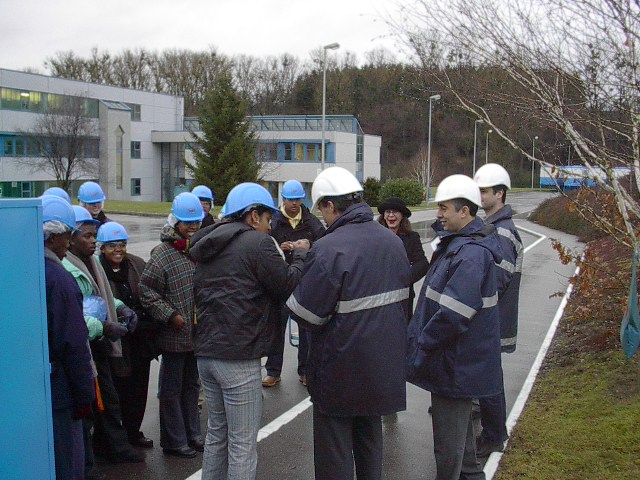
a group of 21 students from various institutions of South Africa
on the language and cultural program in Germany, had an opportunity
to visit a chemicals production plant named CHT R. Beitlich. The
company was founded 51 years ago and is now distributed worldwide.
There are plants located in places like Turkey, India, Bombay,
Hong Kong, Indonesia, France and South Africa (Durban) to mention
a few.
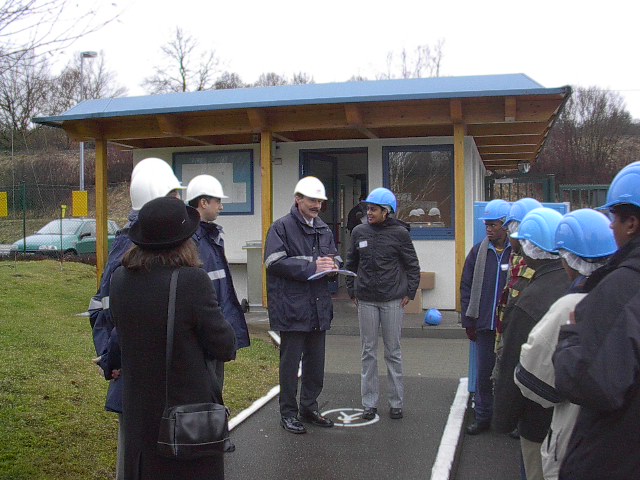
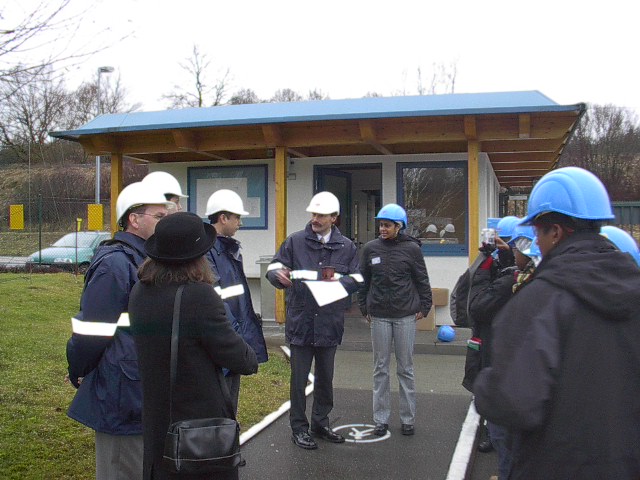
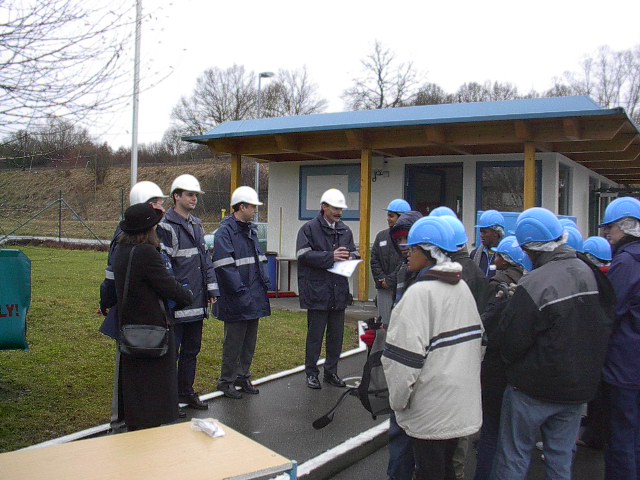
The group was welcomed by the plant manager, Dr. Hettich, who
gave an overview of the company. Mr. Walker, Deniz and Hausch
showed us around the plant and explained the processes involved.
To ensure our safety as visitors, everyone was given a helmet
and safety spectacles. The group was split into two for the plant
tour.
The company produces chemicals that are used in textile industries.
The chemicals produced are in the form of liquid, paste, powder
and flock. Flock is a defined cotton fibre cut into extremely
small diameters (ranging around 0,5 – 0,3 mm). At first,
we found it strange that they differentiated between flock and
powder because flock looked like a powder. The diagram below illustrates
the general plant process.
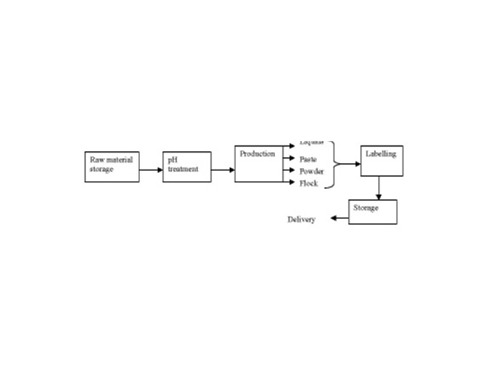
The
raw material (most of which is liquid) arrives on the plant in
tank trucks from where it is pumped into reservoirs for storage
before use. It is important to know things such as the tanks’
materials of construction and suitable storage temperature and
pressure. For instance, a viscous material like glycerine is kept
at 700 C to decrease its viscosity. That makes the liquid easy
to pump through to the next section.
The
liquids are pumped to another building for pH treatment. The production
of the chemicals takes place in the reactor under either neutral,
acidic or alkaline conditions. The production of chemicals takes
place in the reactors made of a specialised kind of steel. The
reactor used and recipe determines the expected product.
The
type of packaging used depends on the product. Liquids and paste
are kept in poly-vinyl or plastic drums and buckets. Powder and
flock is kept in bags and cardboards. The contents have to be
labelled after packaging. The labels reflected on the package
are checked using a computer. The bar code on the labelling sticker
has to match the one programmed in the computer. This is done
in order to make sure that there are no mislabelled packages.
The products are then stored and are thus ready to be delivered
to their respective orders.
In textile industries, paste is used for printing. Labels of certain
companies and decorations are printed using paste. Flock is used
to thicken and decorate the fabric. An example of an application
of the liquid produced is to coat linen for bedding to reduce
the fabric flammability. Some of the liquids are used for pre-treatment
of materials like cotton and wool.
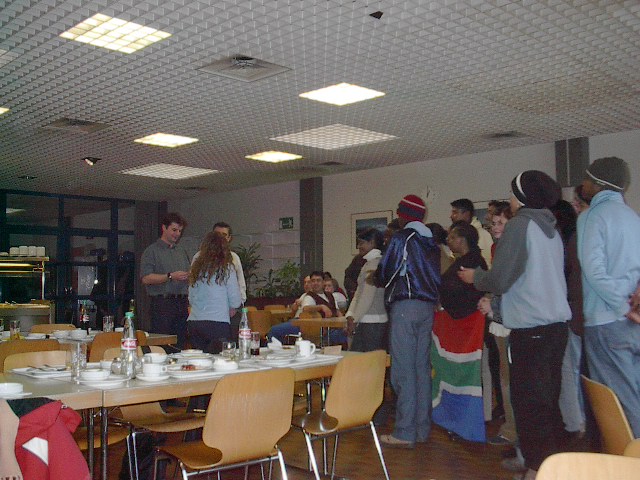
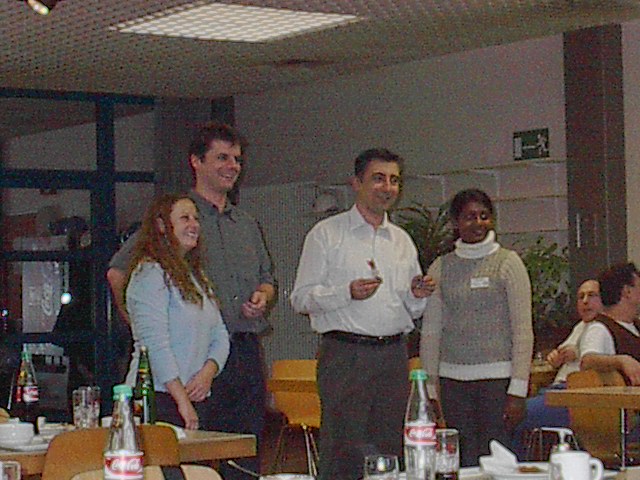
We had a very warm and nice lunch afterward.
Report by Unathi Jack (Peninsula Technikon)