Daimler
AG 2008
The
Daimler AG experience
The future is made of dreams
Daimler
Plant Tour
Located in
Sindelfingen near Stuttgart is the Daimler Factory known for its
strong brands and comprehensive portfolio of automobiles.
The eagerness
and exhilaration was sweltering as we entered the gate and spot
our very own South African National flag proudly hoisted up high
in the German Company entrance.
Having been
guided on the factory tour with high concentration on passenger
vehicles, we were all blown away. Robotic technology and human
interaction in the manufacturing plan is remarkable, this innovative
system enables co-ordinated teamwork which leads to faster, versatile
and superior quality that Mercedes Benz is about. It was evident
enough that quality is the Company’s philosophy as every
phase of the production process is thoroughly inspected prior
moving the vehicle to the next phase.
We were astounded
by the ‘behind the scenes’ activities in the manufacturing
processes. It suddenly crossed my mind that next time I see a
Merc on the road, it is likely that I saw it in process before
the intended customer, interesting!
I believe
that this tour was a breeder of future Mercedes Benz buyers; I’m
pretty convinced the group will agree with me.
Motlatsi Moeketsi
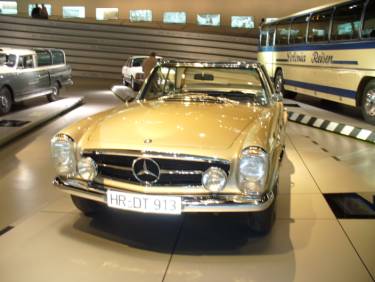
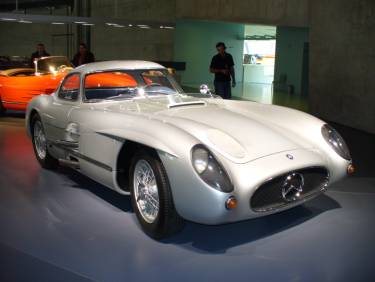
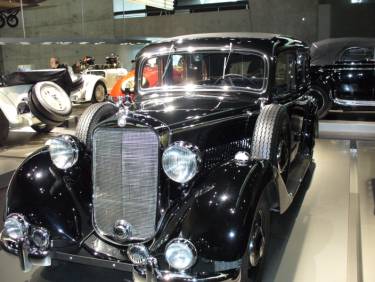
Daimler Museum
The Mercedes
-Benz Museum is situated in Mercedesstraße 100, Stuttgart.
The architecture is a double helix; this theme is used because
of its connection to the human being's genetics. There is a spatial
feeling throughout the building which is accomplished by using
high roofs and no right angles. The building consists out of eight
floors, where each floor has its own theme or era.
When we started our museum tour, everybody was given a 'receiver
unit' and earphones. By using this device you could listen to
a virtual tour guide throughout the museum. The tour starts by
entering an elevator which is only programmed to go to the eighth
floor. The eight floor is where it all begins; the tour through
the museum and the birth of the automobile.
The building is divided into two different tours, the 'Legend
tour' and the 'Collection tour’. In the Collection tour
there are five Collection rooms and each room has its own specific
theme. The themes are as follows, Gallery of Voyagers, Gallery
of Carriers, Gallery of Helpers, Gallery of Celebrities and the
Gallery of Heroes. The Legend tour is made up out of seven rooms
that are in chronological order from the eighth floor all the
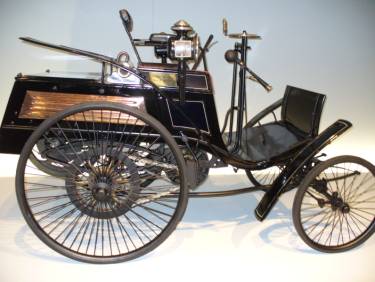
way down to the second floor. This tour is started off by the
Pioneers room where the invention of the automobile is the main
theme. On the seventh floor the history of the birth of Mercedes
as a brand could be seen. The name Mercedes is named after the
daughter of a car dealer, Emil Jellinek. In the time gap of 1909
and 1944, the automobile technology took a new direction where
speed and new fuel was the main concern. Thus on level six the
Times of Change could be found. The Second World War was over
and this era is known as the 'Wunderjahre'.The era influenced
the form and diversity of Mercedes-Benz's design drastically and
this change could be seen on level five. Mercedes-Benz came with
new developments on safety and environmental friendliness in the
1960's which also brought about changes in the design and shape
of the automobiles that could be seen on level four. Level three
is focused on global transportation methods and therefore it is
called "Moving the World". On Level two, the Legend
Tour is concluded with Mercedes-Benz's racing- and records history
and is named The Silver Arrows.
I found the Mercedes-Benz Museum very interesting and definitely
one of the experiences I would remember long after I go back to
South-Africa.
Thomas Botha
On behalf
of the group, we would love to sincerely express our gratitude
to Daimler AG, Mercedes–Benz South Africa and all the Sponsors
for affording us an opportunity to finally visit the exquisite
Daimler Premises in Germany.
Thanking You
Motlatsi & Thomas
Last
Update (30/01/08)