Tübingen
South Africa Program 2009
South
African Dinner 2009
a report written by Mignon Eckard
On Thursday,
the 29th of January, as part of the final event of our group program,
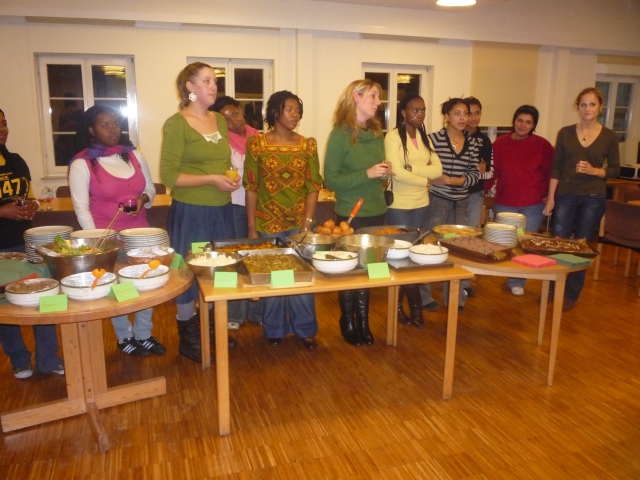
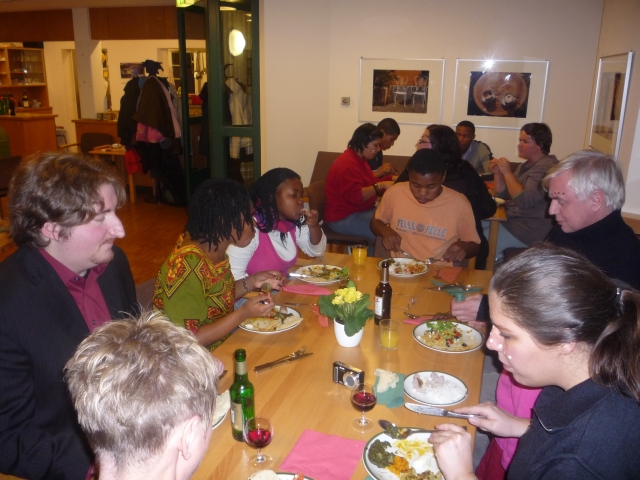
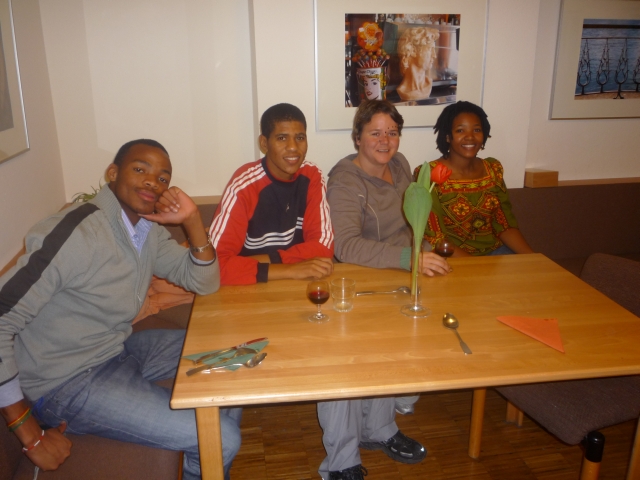
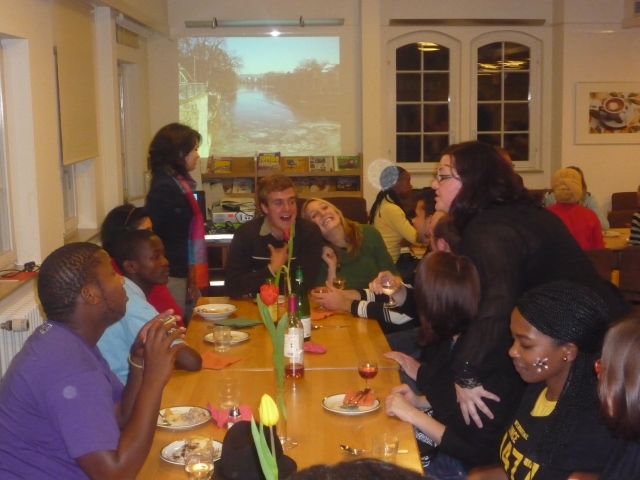
we hosted a dinner for our lecturers and other important people
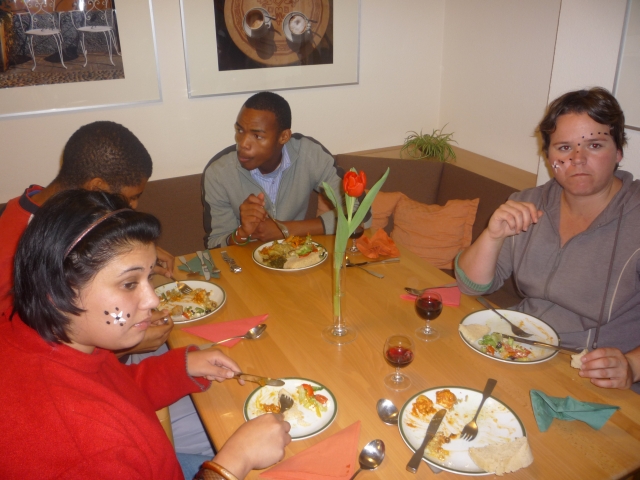
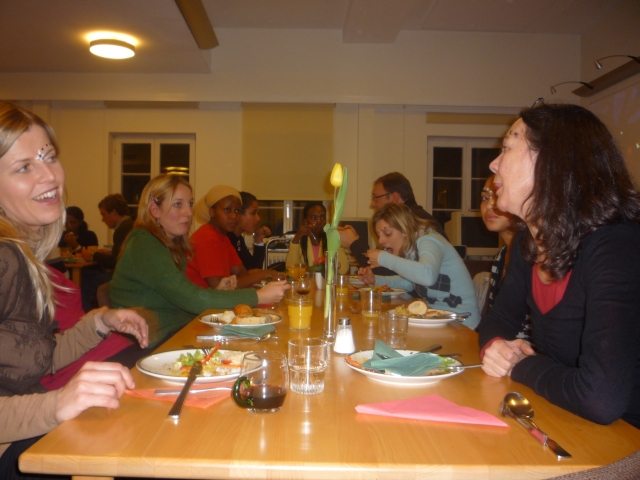
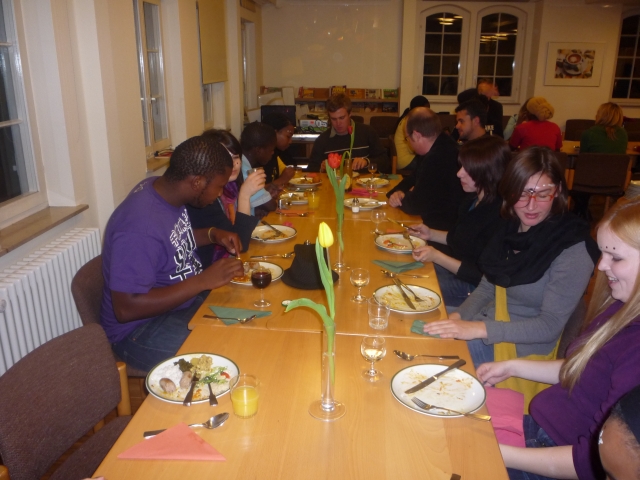
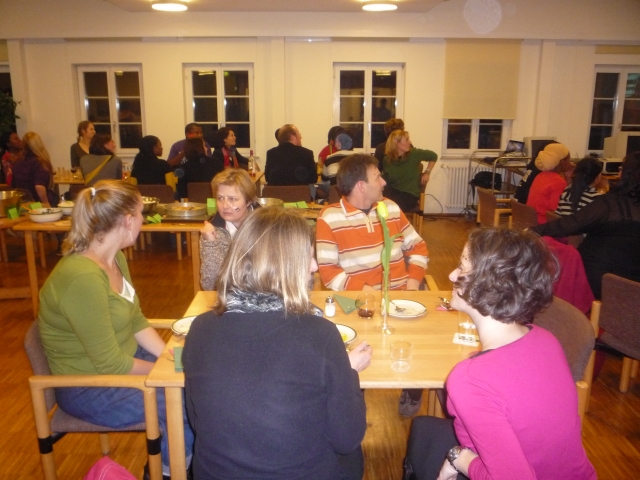
involved in the program. During this dinner, traditional South African
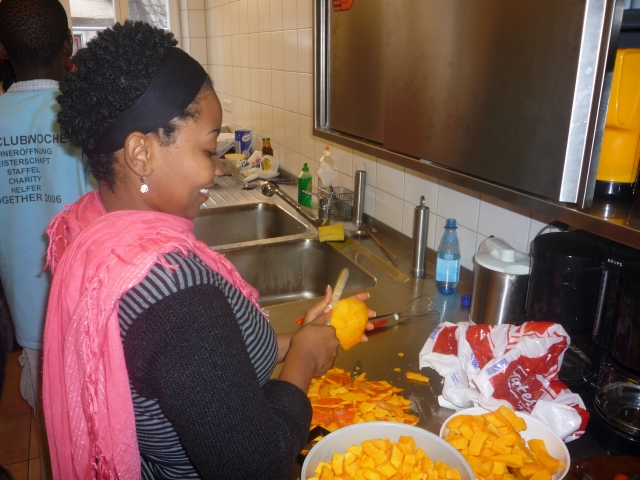
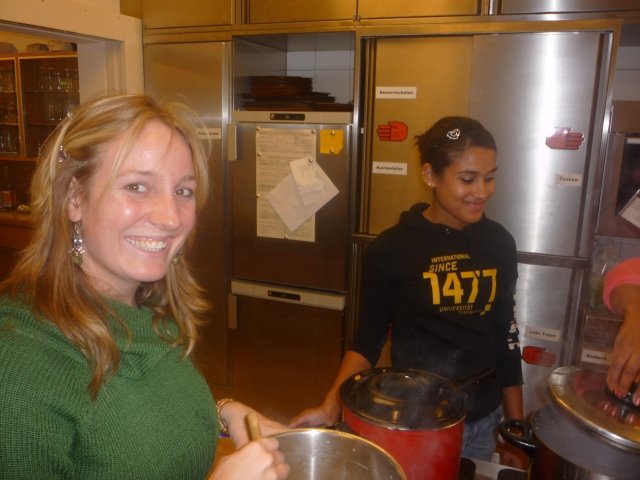
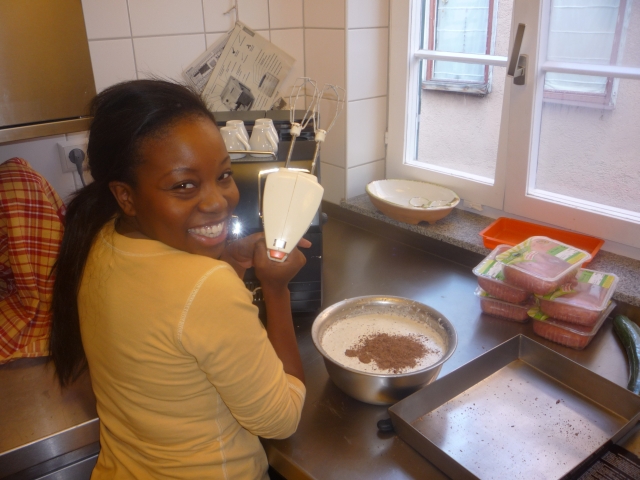
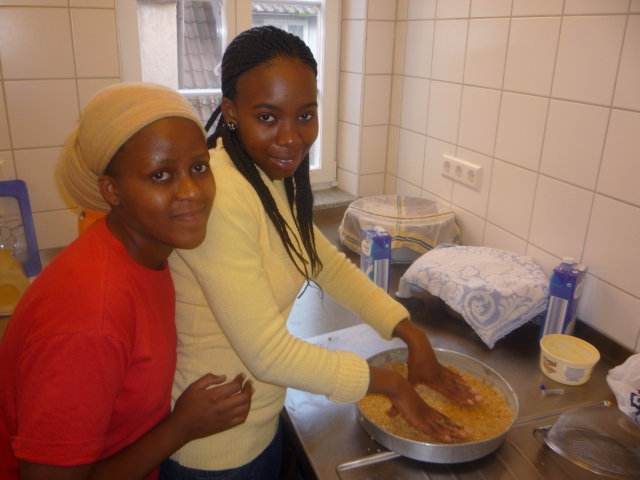
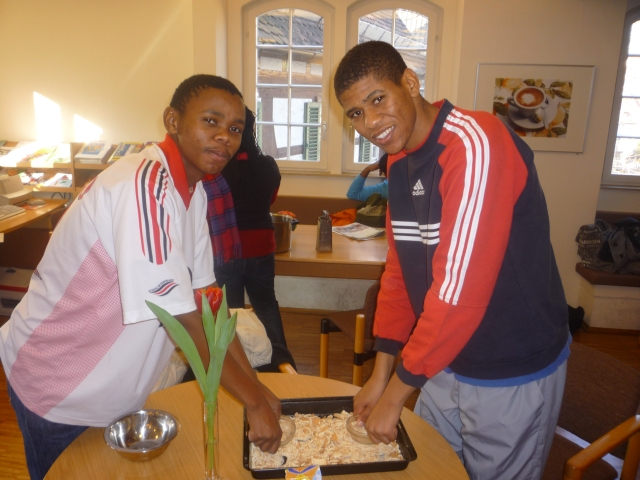
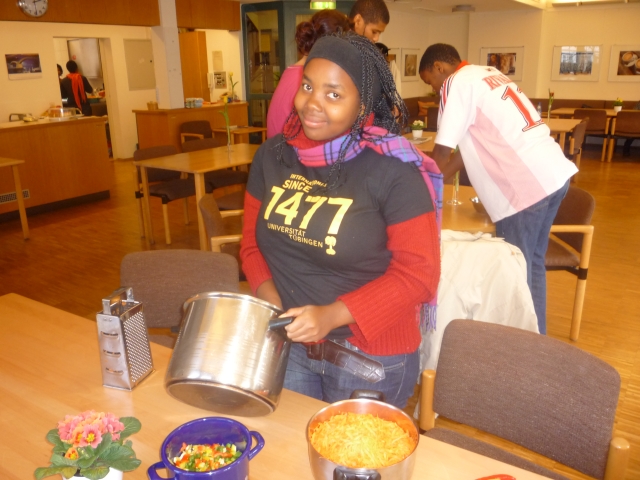
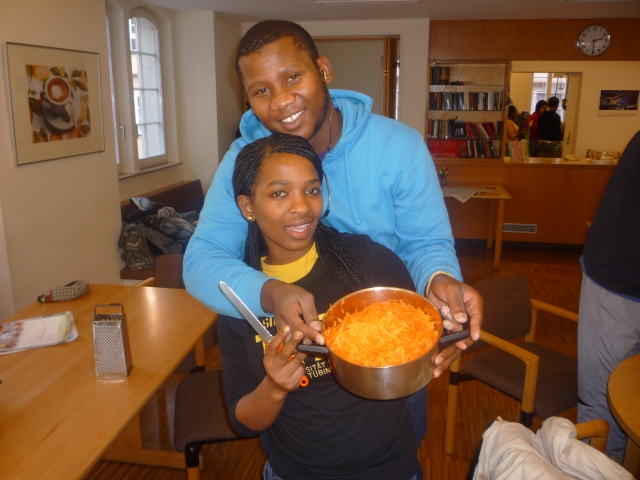
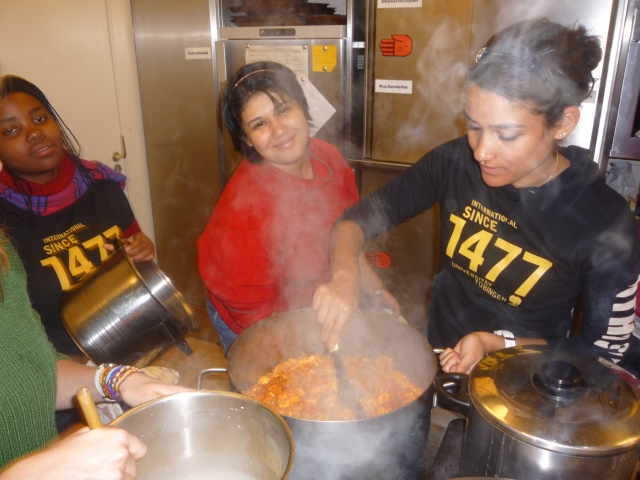
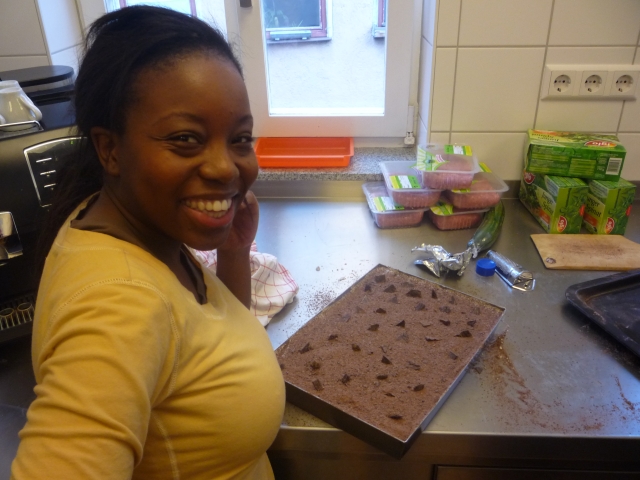
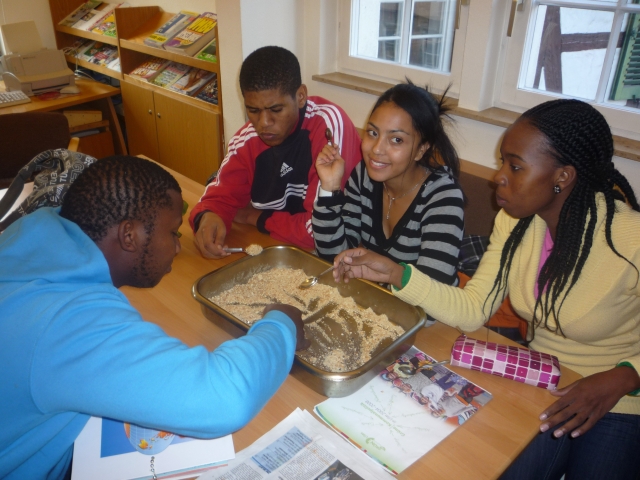
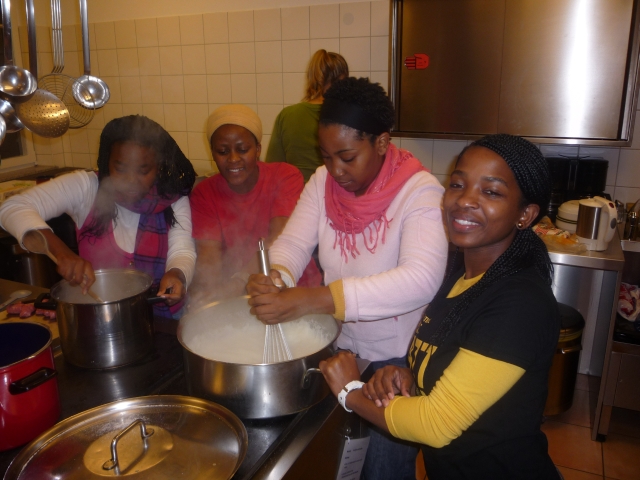
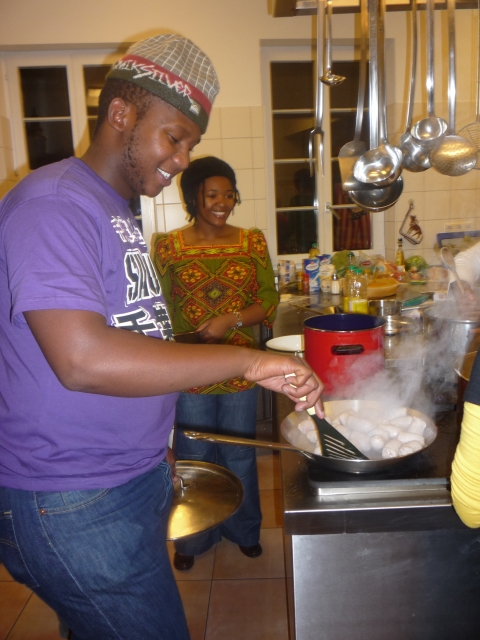
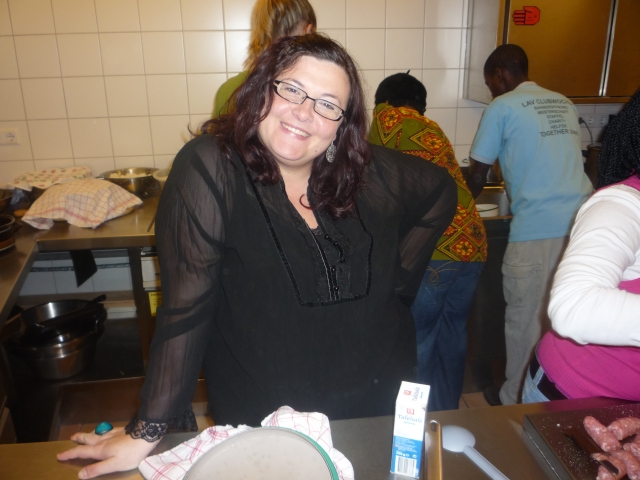
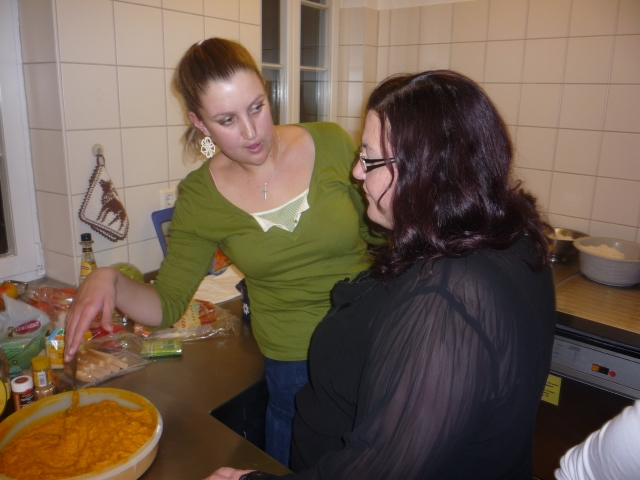
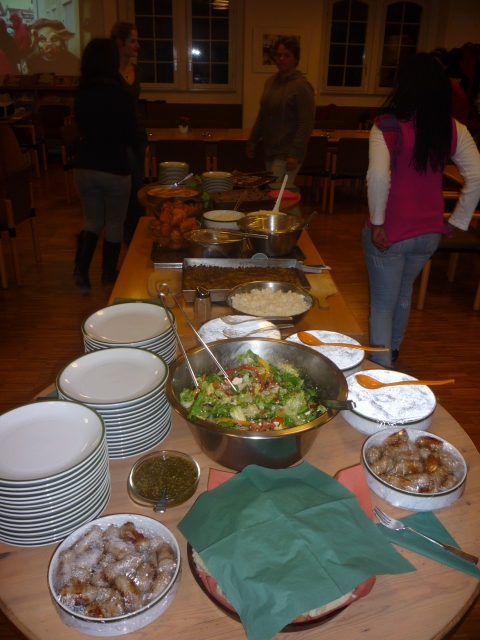
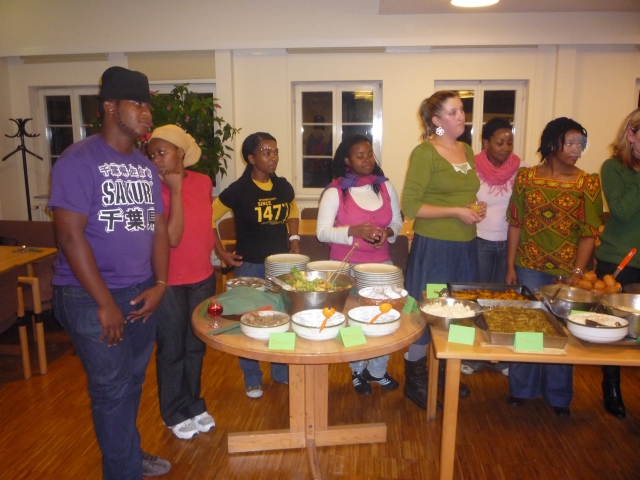
food was served, which we prepared during the day. The preparation
that preceded the evening's festivities was almost as fun as the
evening itself, as we sang and danced while preparing our food.
What surprised me was the fact that the ingredients were easily
obtainable here in Tübingen (except for boerewors!)
This evening
was not only special as it was our last evening in Tübingen, and
as we were showcasing our tradition to our German guests, but also
because it managed to unite the group one last time in our effort
to give our guests the best tastes of South African food and culture.
The response to our food from our German guests also made us proud
of what we had prepared, as they thoroughly enjoyed sampling South
African cuisine.
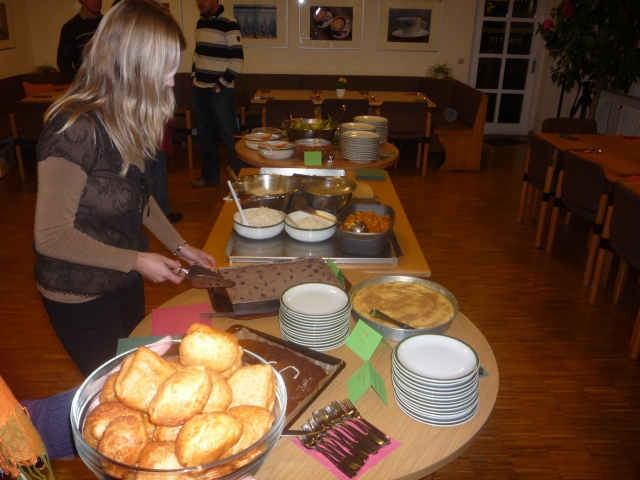
After we had enjoyed our delicious meals (which
included pap, samp and beans, vetkoek, chakalaka, bobotie, morogo,
bratwurst, melktert, pampoenkoekies and peppermint tart), all the
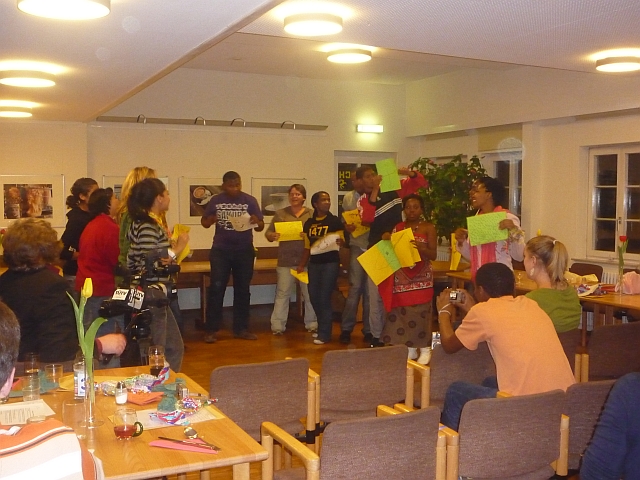
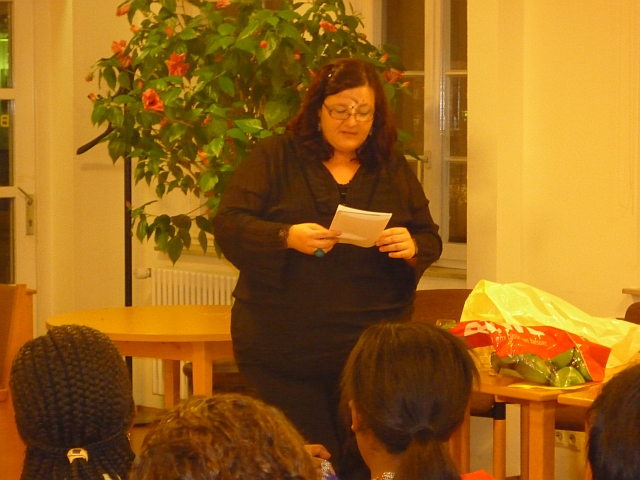
group members received a certificate of participation of the Tübingen
South Africa program. Gifts were also given to the team leaders
and to our group leader, Lidia, as well as to the German lecturers
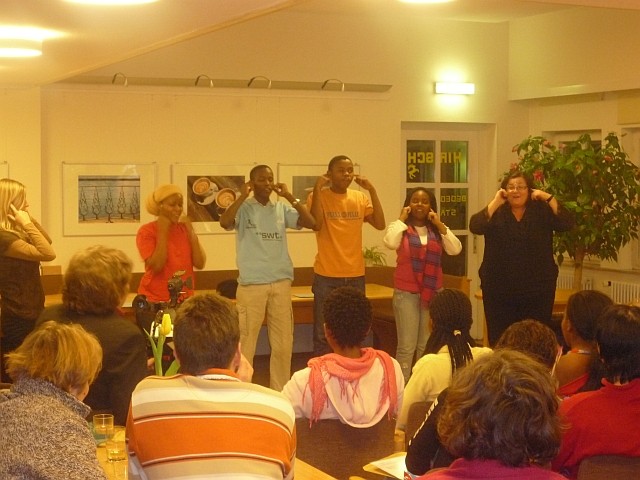
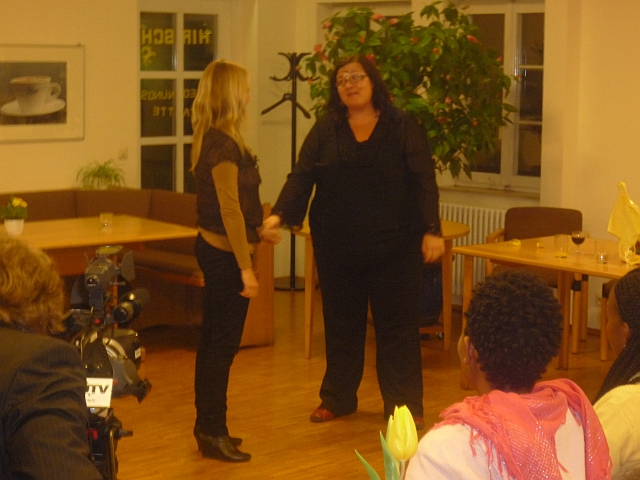
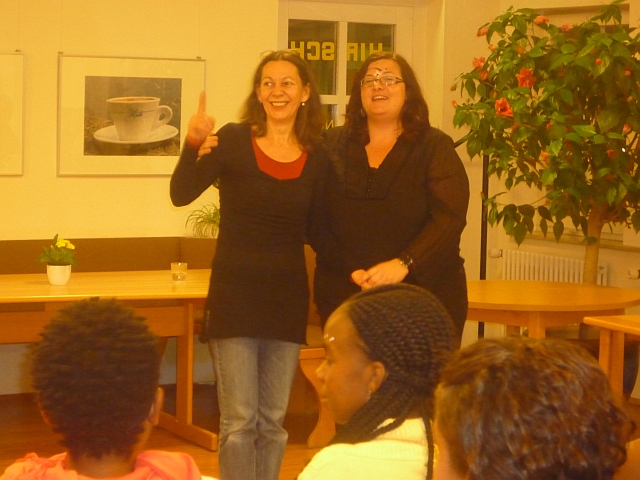
whose hard work resulted in a performance from each of the German
classes. This was highly entertaining not only to us, but to the
guests as well.
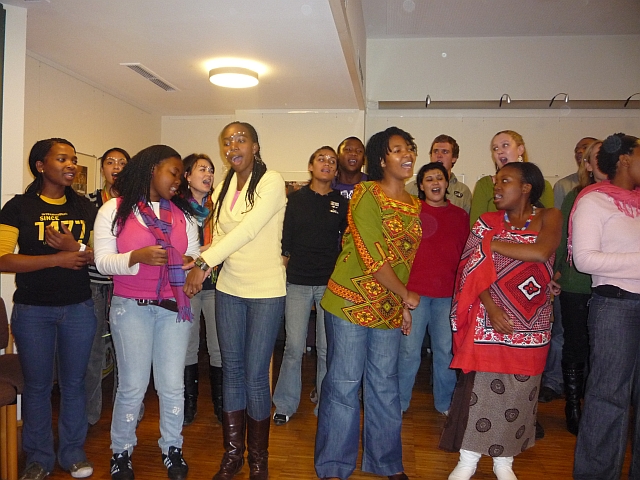
We ended this wonderful evening in true South African
style, with songs, dances, a smile on each face and a tear in some
eyes. To me, this was the perfect way to end an amazing time in
Tübingen. Thank you so much to everyone that made this wonderful
experience possible for us, through their hard work, effort and
dedication. I thoroughly enjoyed these three weeks and will miss
everyone here so much.
Mignon Eckard

|
|
Thomas
Bilda / © Universität
Tübingen
|