Kunsthistorisches Institut

Formen der Zeit. Zur Erfindung der Zeitmatrix im Mittelalter

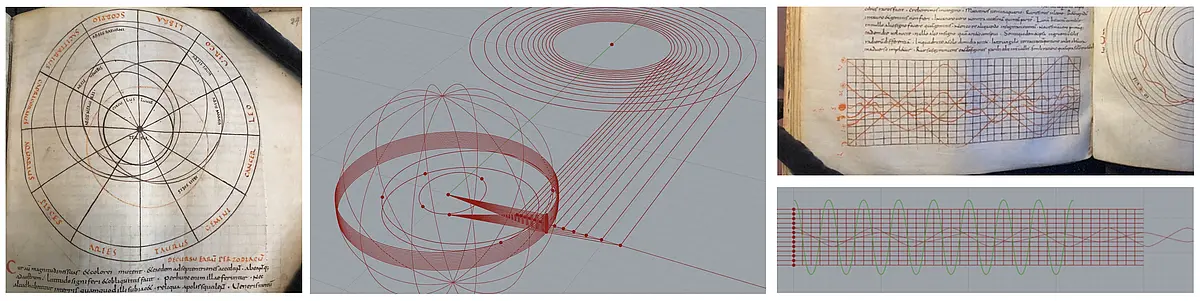
Wie lässt sich etwas so schwer Fassbares wie Zeit im Bild sichtbar machen? Das Projekt FORMEN DER ZEIT untersucht, wie Zeit im 9. und 10. Jahrhundert auf der Fläche geordnet, modelliert und anschaulich gemacht wurde. Im Zentrum stehen Diagramme: vormoderne „Zeitmatrizen“, die keine Abfolgen historischer Ereignisse darstellen, sondern Zeit als eigene Größe erfassen. Sie finden sich in Handschriften, in denen kosmologisches und musikalisches Wissen eng miteinander verknüpft ist. Das Projekt fragt daher, wo die Verbindung kosmologischer und musikalischer Modelle im Quadrivium besonders produktiv zur Ausbildung neuer Darstellungsverfahren beigetragen hat — Verfahren, die unsere Notations- und Visualisierungssysteme bis heute prägen.

Methodisch geht FORMEN DER ZEIT zugleich der Frage nach, welchen Beitrag digitale Verfahren zur Erforschung vormoderner Vorstellungen von Temporalität leisten können. Das Projekt erschließt mittelalterliche Diagramme des Quadriviums mit digitalen Methoden neu. In Kooperation mit Zoltán Bereczki (University of Debrecen) werden historische Zeitstrukturen durch parametrische Modellierung systematisch rekonstruiert und in dynamische digitale Modelle überführt. Dadurch werden die prozessualen und prozeduralen Dimensionen der Diagramme sichtbar, nachvollziehbar und experimentell erfahrbar.

Auf diese Weise verbindet FORMEN DER ZEIT mediävistische Grundlagenforschung mit innovativen digitalen Visualisierungs- und Analysetools. Das Projekt schärft den Blick dafür, wie heutige Systeme der Notation und Darstellung zeitlicher Abläufe mit vormodernen Wissenskulturen verbunden sind — und wie sich eine visuelle Metaphysik der Zeit im Mittelalter beschreiben lässt.

Das Projekt wird gefördert von der Baden-Württemberg Stiftung im Rahmen des Eliteprogramms für Postdocs (https://www.bwstiftung.de/de/programme/eliteprogramm-fuer-postdocs). Die Laufzeit beträgt drei Jahre (Januar 2026 bis Dezember 2028). 

Projektmitarbeit

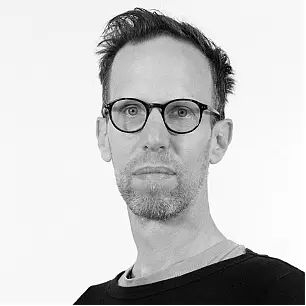
Zoltán Bereczki studied at the Budapest University of Technology and Economics (MSc in Architecture and Engineering, postgraduate specialisation in Preservation of the Built Heritage) and at the University of Pécs (PhD and habilitation in Architectural Sciences). His research focus is the Gothic period. His PhD thesis examined Gothic design and construction, and his habilitation project explored the procedural nature of Gothic architecture and organic urban forms. In this project, he translates medieval diagrams into operational systems through procedural algorithms. In his free time, he is a member of a punk rock band and goes rock climbing if possible.
 

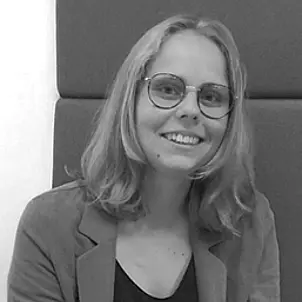
Viviane Arnold studied Politics and German Studies (B.A.) in Tübingen und is currently doing her M.A. in German Literature. She is focusing on medieval literature with particular interest in vernacular manuscripts and early printings. Her M.A. thesis will focus on the depiction of genitals in medieval fiction. An important aspect of medieval studies is to admire books and their content as objects of and within time. Her work in the FdZ-project adds a further dimension to this perspective: early medieval concepts and depiction of time in multidimensional space. The manuscript thus becomes a record of the representation of time over time and thereby a reflection of a phenomenon that remains unexplained to this day.  In her free time, she enjoys swimming and horse riding.
 

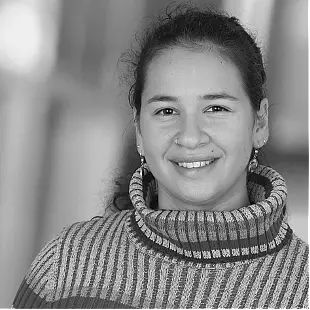
Sarah Güzel-Leypold is a bachelor graduate of the University of Tübingen, where she discovered a particular interest in the diagrammatic art of the early Middle Ages. In her research, she adopts an interdisciplinary approach on Art History, continuously seeking to integrate computer scientific perspectives. This further manifested in her BA thesis which used digital visualization methods to deepen the understanding of the Plinian diagrams (also researched in this project). In her free time, she can usually be found hiking or exploring the cuisines of the world.
 

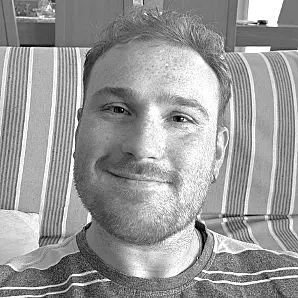
Joshua Landzaad studied an M.Sc. in Medieval Literatures and Cultures in the University of Edinburgh and is currently undertaking an M.A. in Medieval Archaeology in the University of Tübingen. He is particularly interested in cultural interpretation of Medieval materials, both physical and written, in their time and in the present. His M.Sc. dissertation focused on the roles played by Icelandic sagas and French chansons de geste in their respective cultures in time and place and how they both interpreted their own past as a means to process the events unfolding in their present. His M.A. thesis will cover the development of defensive strategies in architecture in southern Ireland in response to the development of firearm technologies from the 13th to the 16th centuries. In his free time, he keeps active on the rugby pitch and enjoys watching the same on the weekends. He can often be found on the couch with a book in hand and a pen in the other, underlining passages that strike him as interesting or that could be used in a future setting of Dungeons and Dragons, which he sometimes runs campaigns for.