Urgeschichte und Naturwissenschaftliche Archäologie

News

Latest Publications

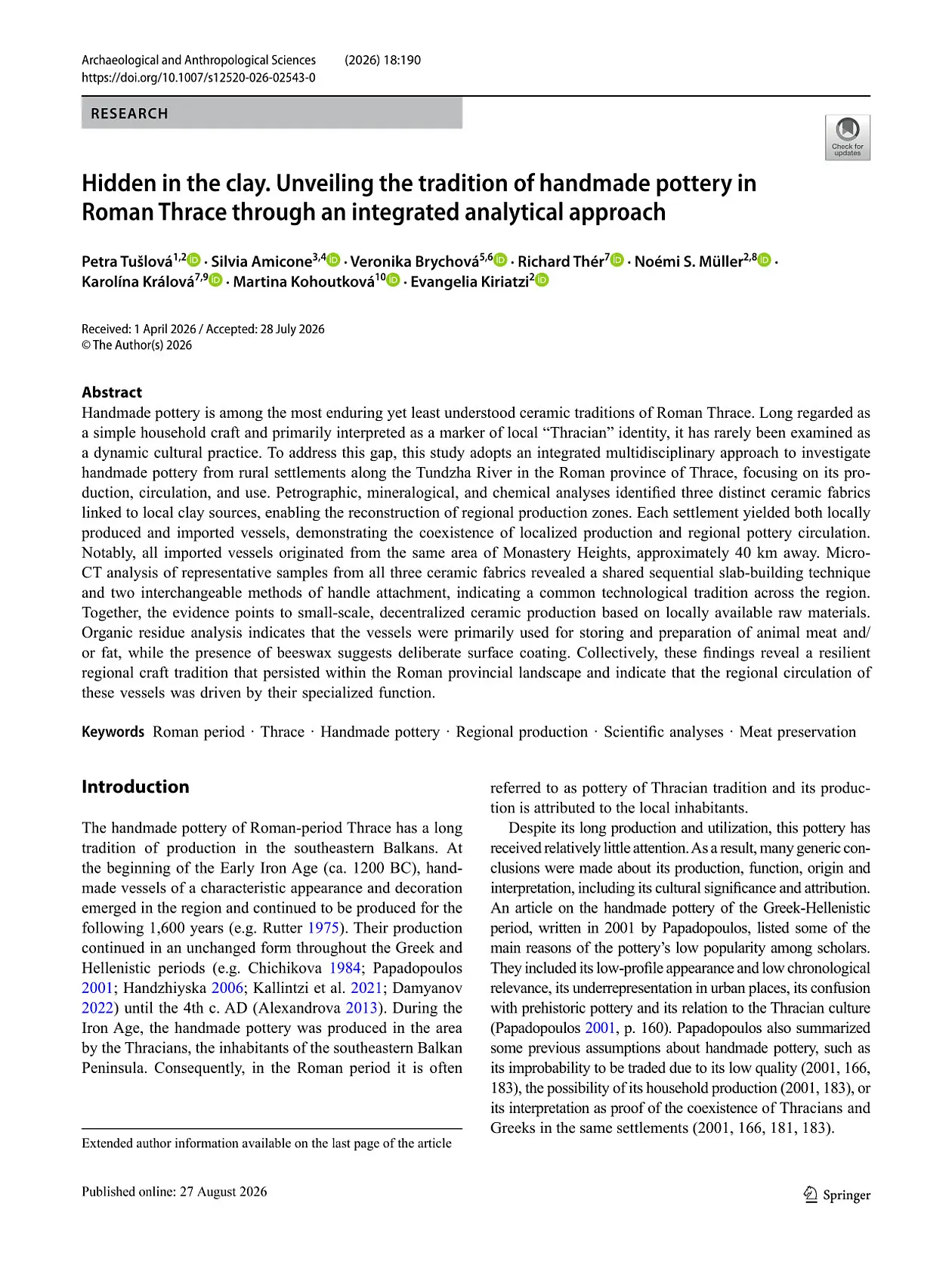
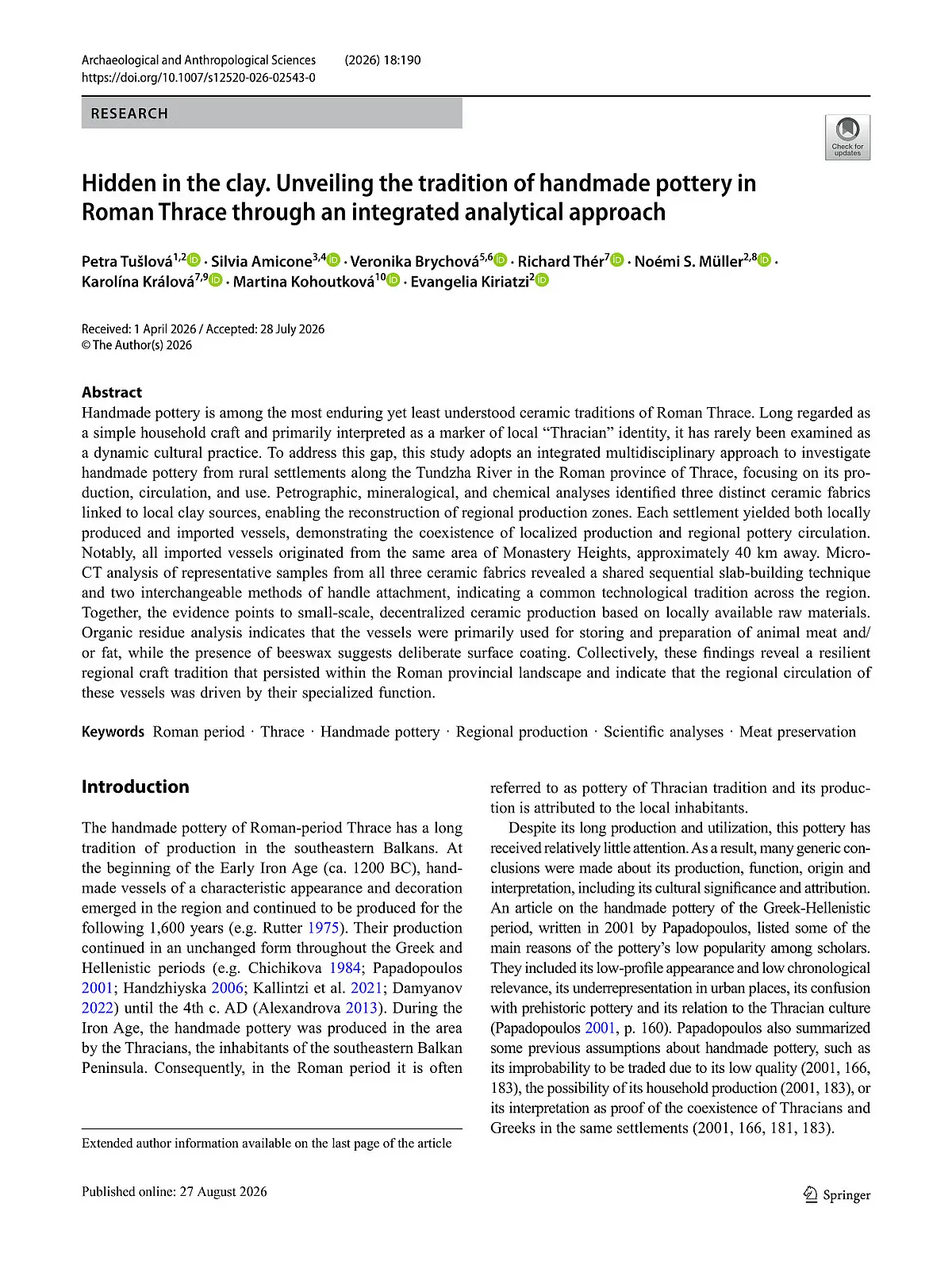
Hidden in the clay. Unveiling the tradition of handmade pottery in Roman Thrace through an integrated analytical approach

We are happy to share a new research paper lead by Petra Tušlová, a Marie Skłodowska-Curie research fellow associated with our research group, and co-authored by group member Silvia Amicone.
In this study, the research team examined handmade pottery from rural settlements along the Tundzha River in Roman Thrace, moving beyond its traditional reading as a simple marker of local identity. By combining archaeometric analyses with organic residue and micro-CT studies, the team reconstructed how these vessels were produced, exchanged between communities, and used, revealing a resilient regional craft tradition shaped by both local production and specialized circulation.

Link to the open access article "Hidden in the clay".


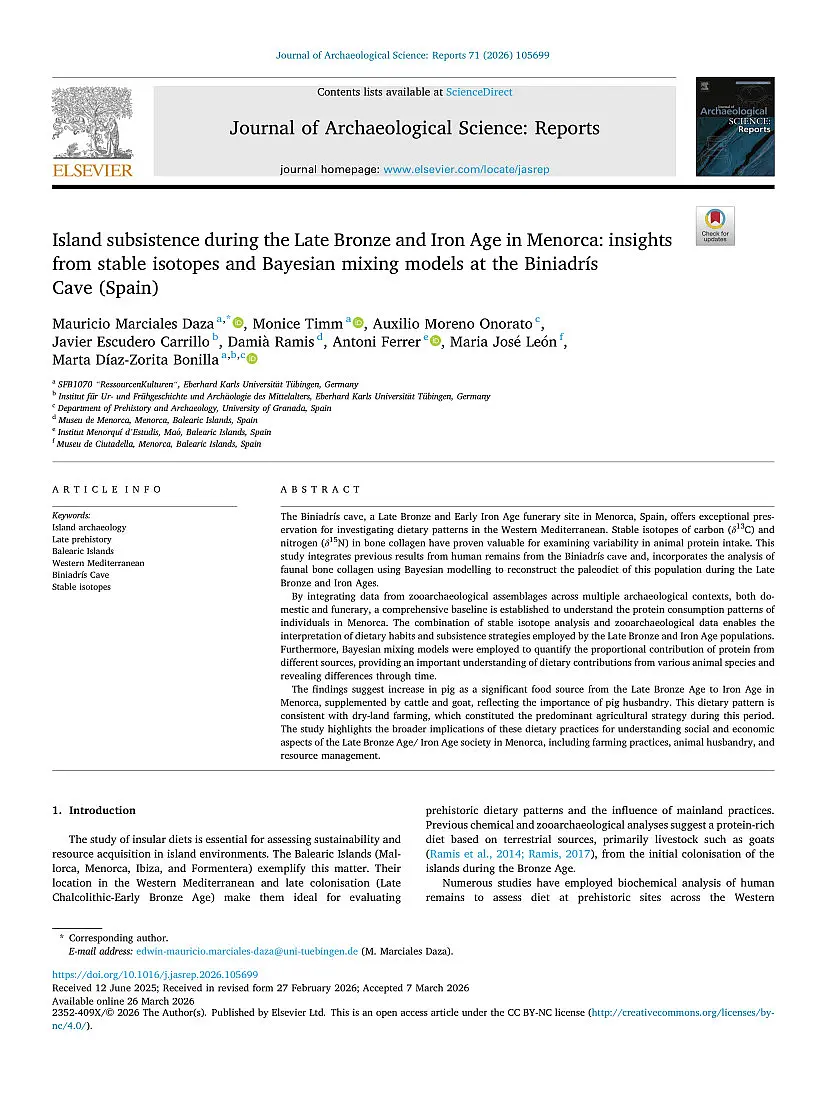
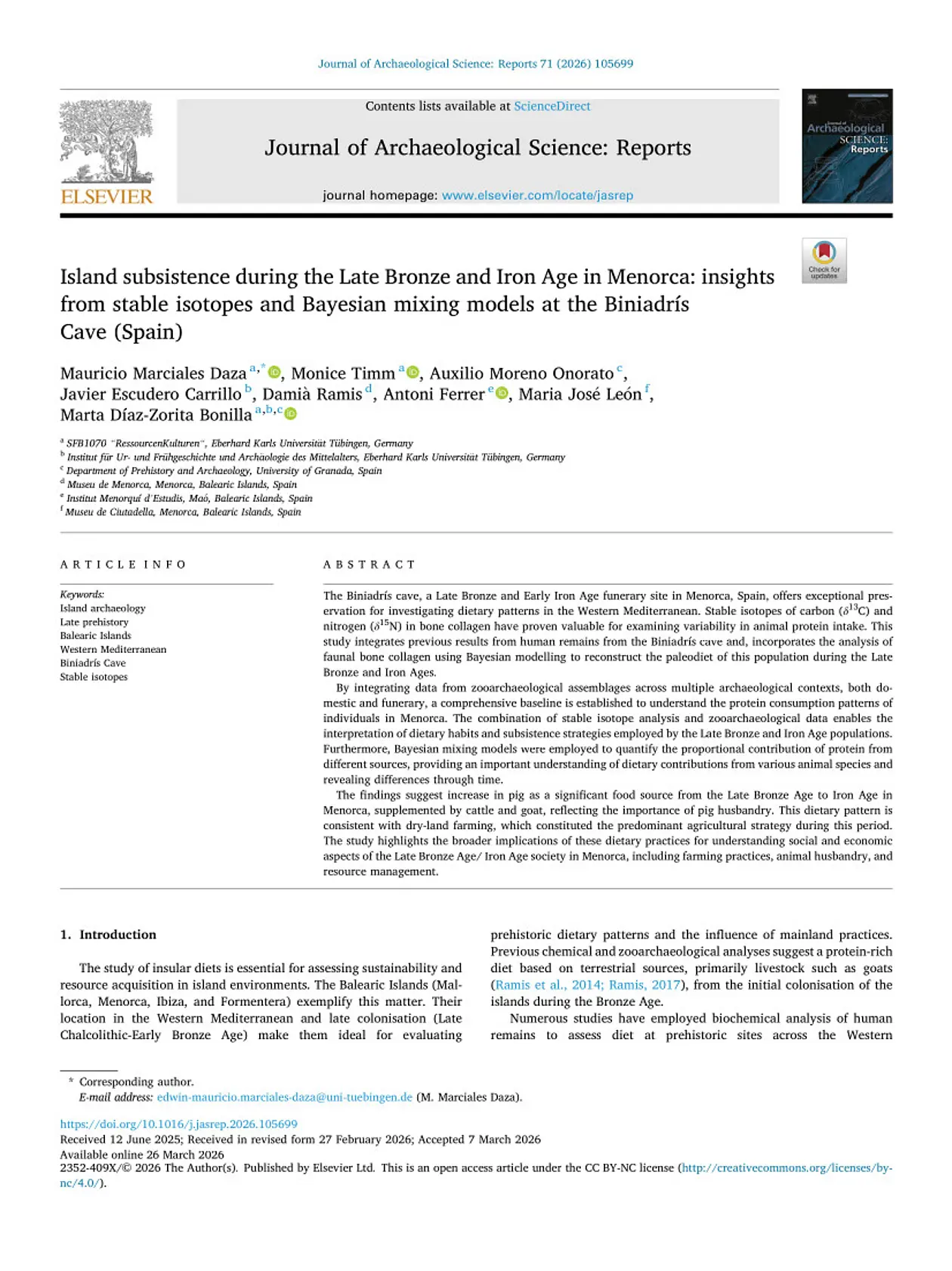
Island subsistence during the Late Bronze and Iron Age in Menorca: insights from stable isotopes and Bayesian mixing models at the Biniadrís Cave (Spain)

We are pleased to share a new study led by Mauricio Marciales Daza in collaboration with Marta Díaz-Zorita Bonilla and Javier Escudero Carrillo.
This paper investigates diet and subsistence strategies in late Bronze and early Iron Age Menorca through stable isotope analysis and Bayesian modelling of human and faunal remains from the Biniadrís cave. By integrating isotopic and zooarchaeological data, the authors reconstruct changing patterns of animal protein consumption through time. The results reveal the increasing importance of pigs alongside cattle and goats, highlighting the central role of pig husbandry, dry-land farming, and resource management in prehistoric Menorcan society.
Link to the open access article "Island subsistence during the Late Bronze and Iron Age in Menorca".


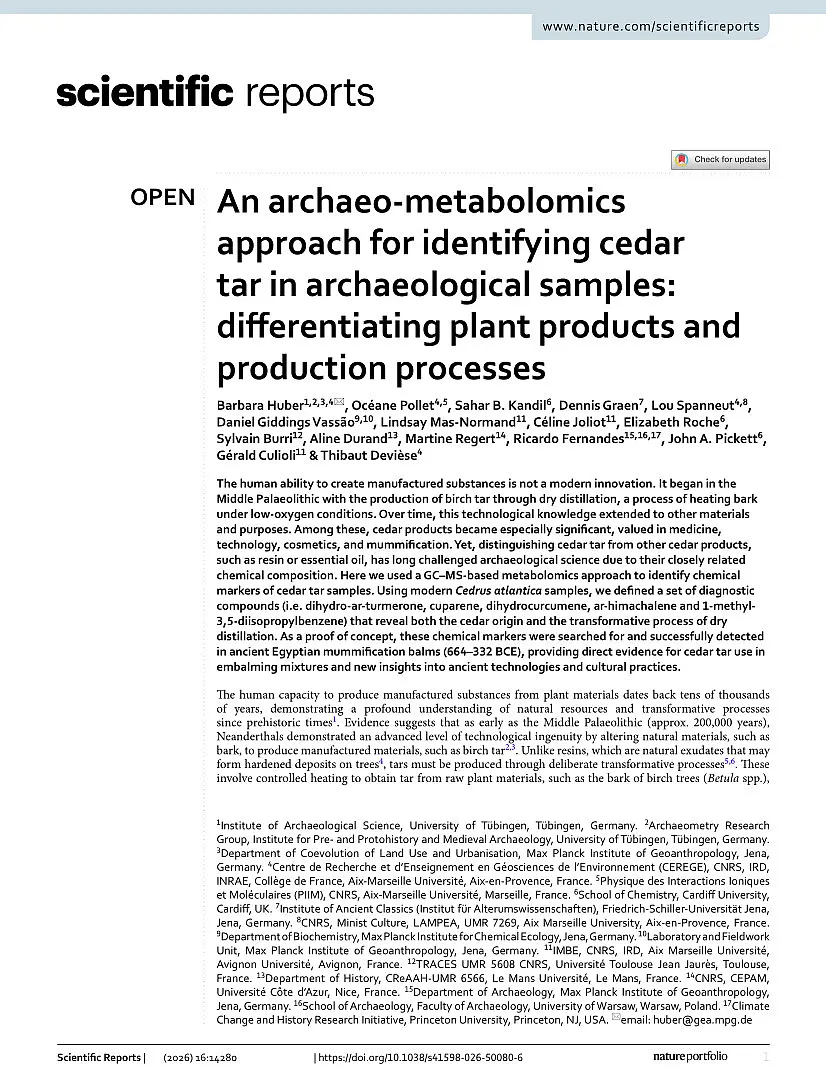
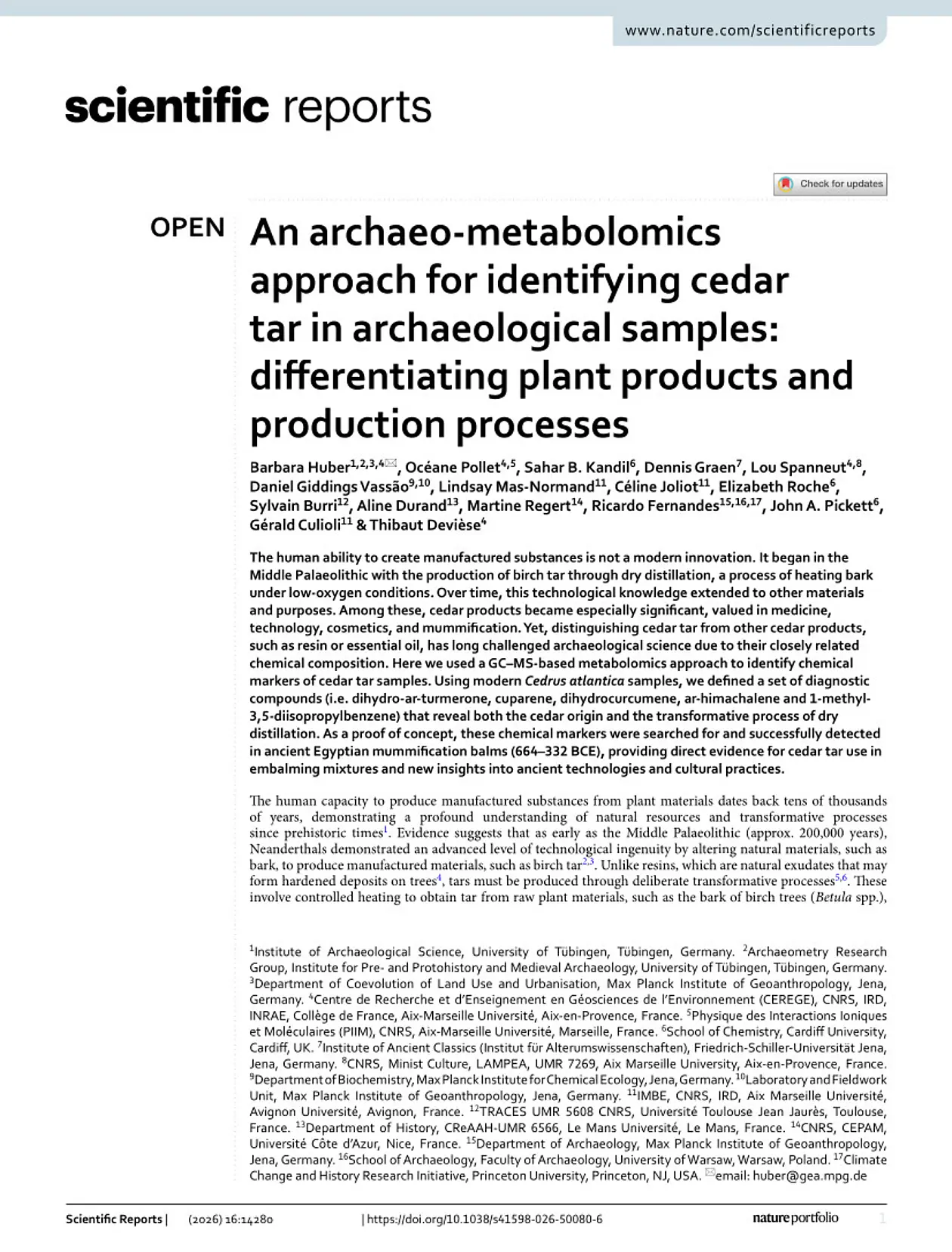
An archaeo-metabolomics approach for identifying cedar tar in archaeological samples: differentiating plant products and production processes

We are happy to share a new research article led by Barbara Huber.

In this paper, the interdisciplinary team of researchers show how an archaeometabolomics approach can distinguish between different cedar-derived products – such as tar, resin, and essential oil – in archaeological samples. By identifying diagnostic chemical markers, the study moves beyond simply detecting plant presence and instead reconstructs ancient production processes and material use. Applied to Egyptian mummification balms, the method provides direct evidence for cedar tar use and offers new insights into ancient technologies, craft knowledge, and cultural practices.

Link to the open access article "An archaeo-metabolomics approach for identifying cedar tar in archaeological samples".


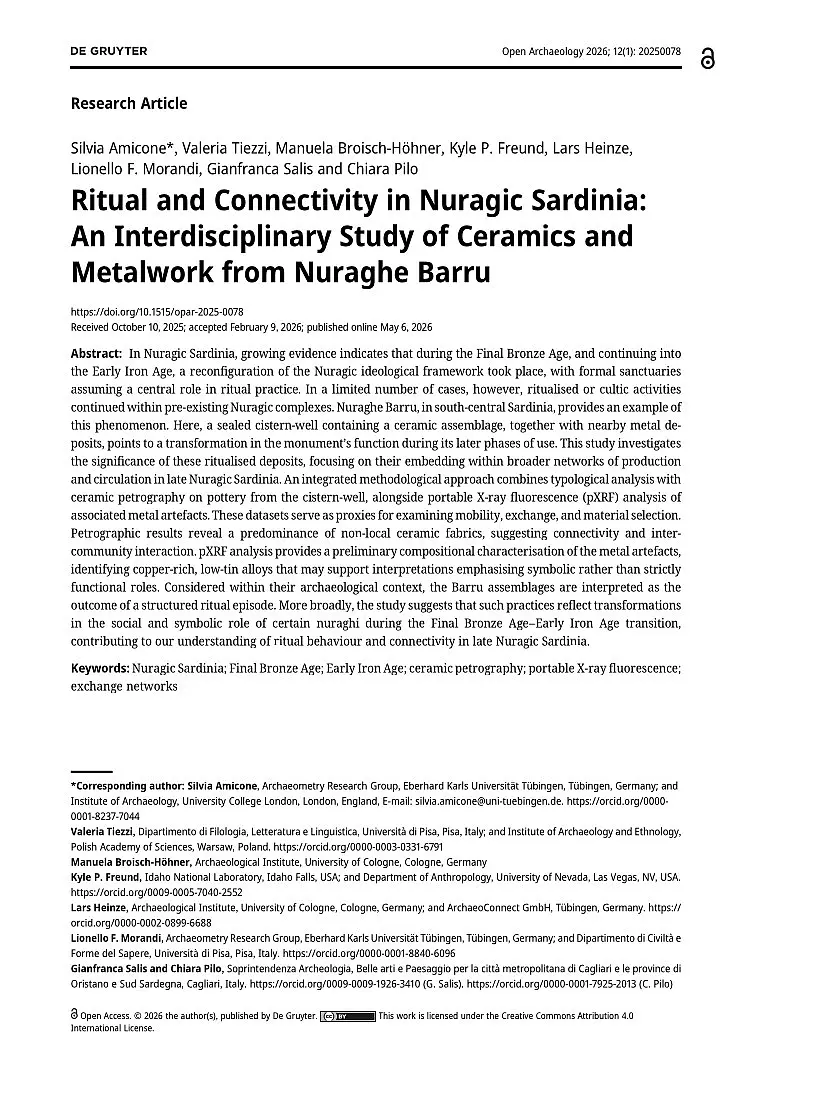
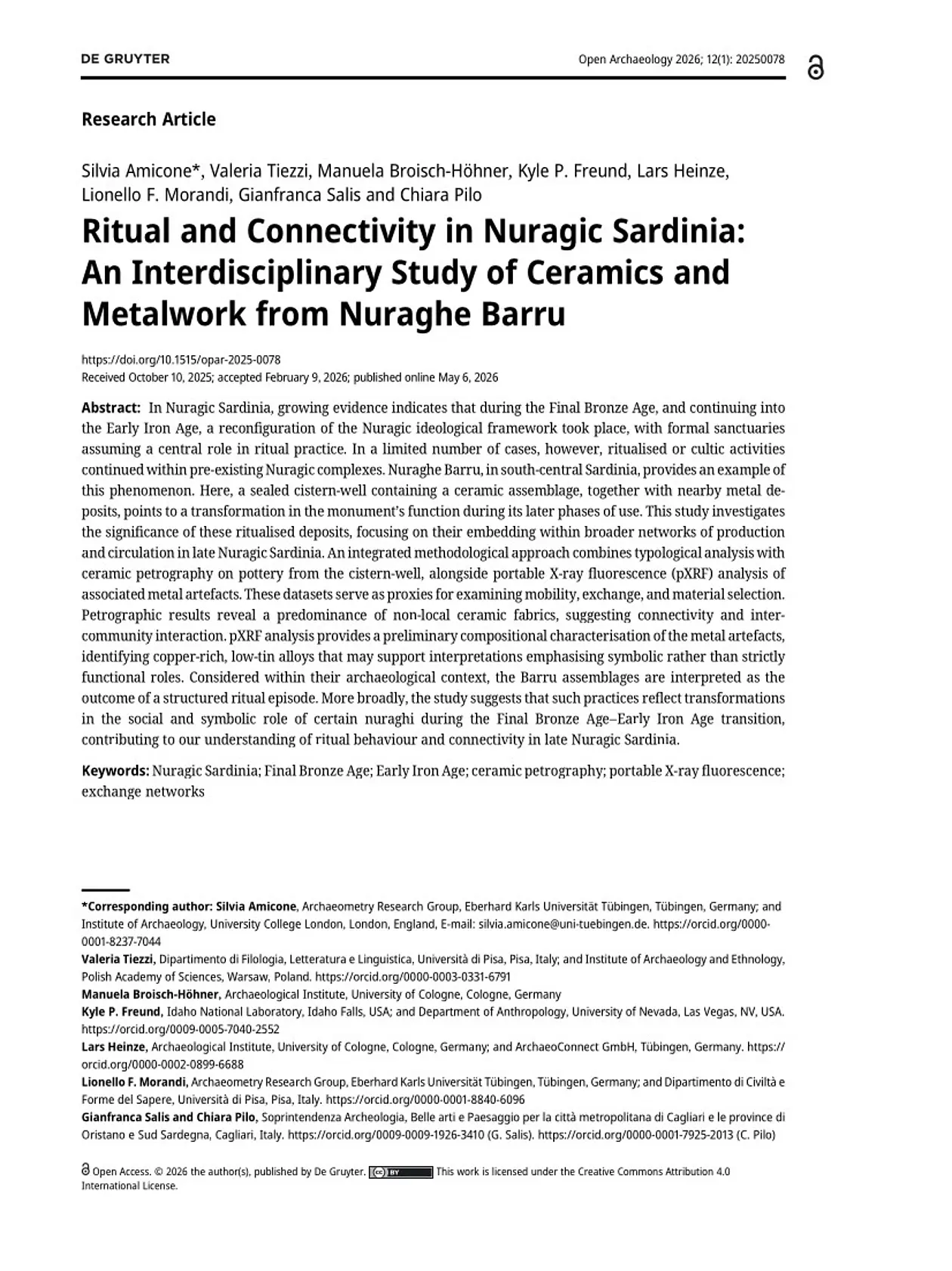
Ritual and Connectivity in Nuragic Sardinia: An Interdisciplinary Study of Ceramics and Metalwork from Nuraghe Barru

We are delighted to share a new research paper led by group member Silvia Amicone.
In this study, an interdisciplinary team examines ritual practices in late Nuragic Sardinia through ceramic and metal artefacts from Nuraghe Barru. By combining ceramic petrography and portable X-ray fluorescence (pXRF), the researchers identify patterns of production, exchange, and material selection. Their results point to strong inter-community connectivity, with mostly non-local ceramics and copper-rich alloys likely carrying symbolic meaning. The study shows how certain Nuragic monuments were reused for ritual purposes during the transition from the Final Bronze Age to the Early Iron Age.
Link to the open access article "Ritual and Connectivity in Nuragic Sardinia".