(Arif Luqman)
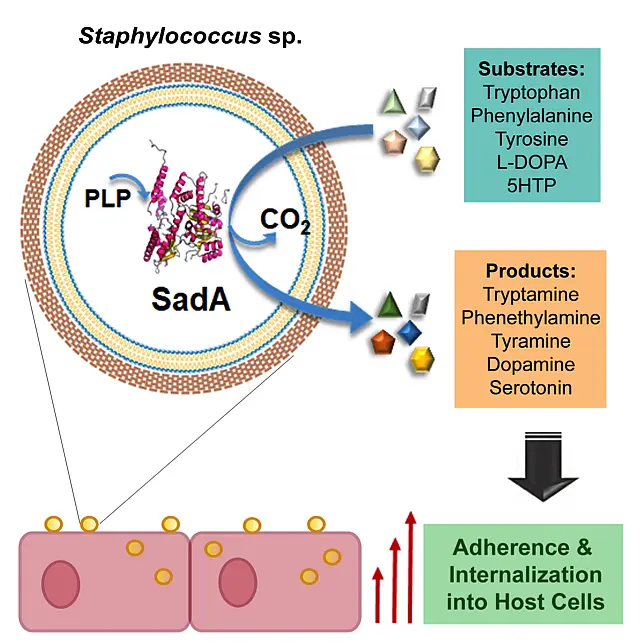
Staphylococcus is a genus of bacteria that has been reported to be part of human microbiota colonizing many parts of human body but there are not many information about human gut colonization by staphylococci. Our study found that staphylococci are prevalent in human fecal samples, means that staphylococci are most likely also prevalent in the human gut. Besides, we also found that in 60% of the collected fecal samples we detected staphylococci that express a gene named staphylococcal aromatic amino acid decarboxylase (sadA). This gene encodes a PLP-dependent decarboxylase that responsible to convert aromatic amino acids into corresponding trace amines (TAs). Further studies shown that sadA-expressing Staphylococcus exhibit an increased adherence and internalization into HT29 cells, a human colon adenocarcinoma cell line (Luqman et al., 2018).