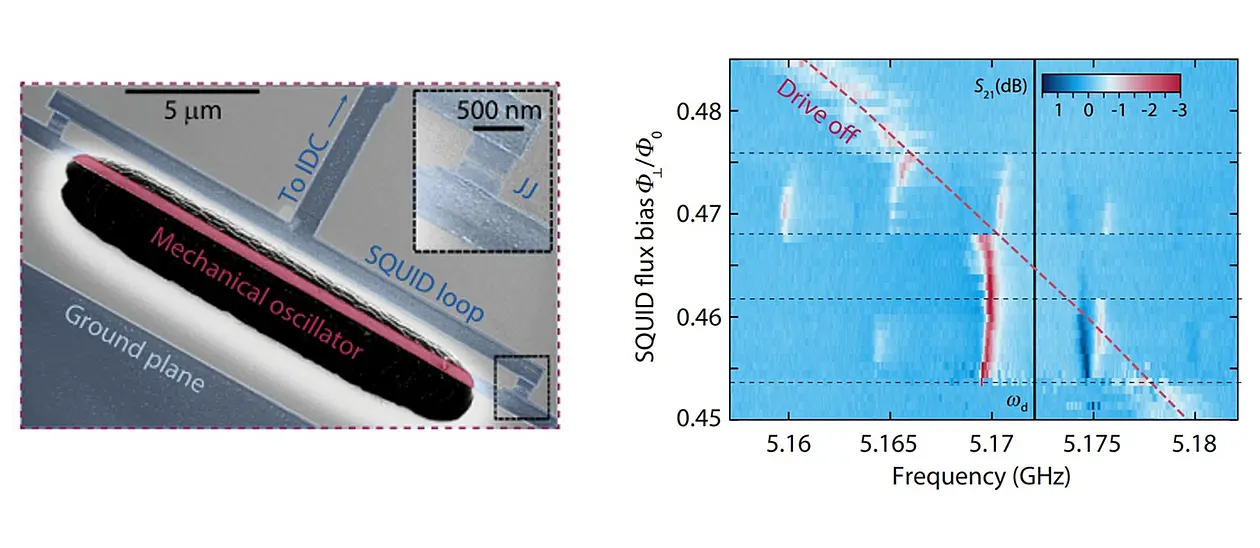
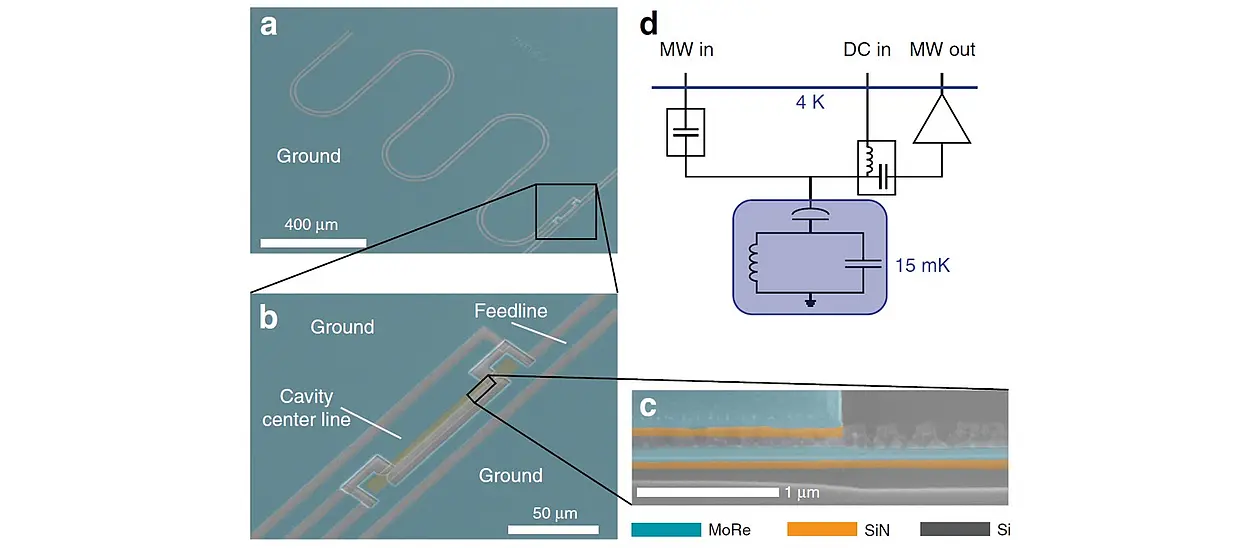
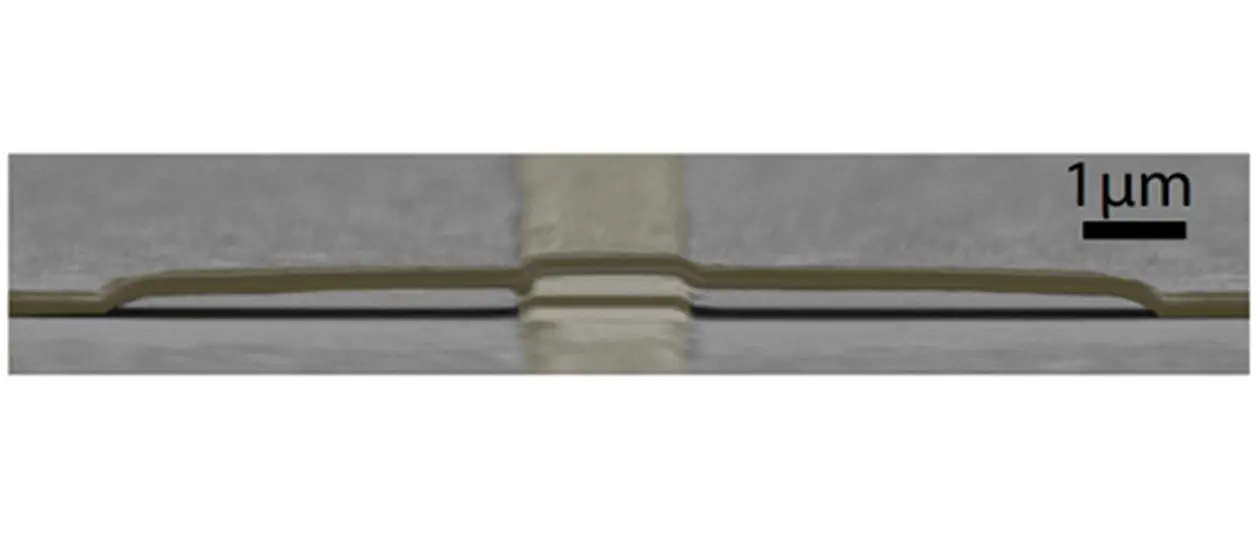
Microwave photons in LC circuits can be used to sense and control the displacement of micromechanical oscillators with a precision only limited by quantum mechanical uncertainties using the toolbox of cavity optomechanics. The classical route for realizing such electromechanical systems is to integrate the mechanical oscillator as a movable capacitance, but to achieve very large single-photon coupling rates we mainly focus on investigating the more recent approach of inductive coupling by integrating the mechanical element into the SQUID of a quantum interference circuit. Our main goals with these SQUID optomechanical or flux-mediated optomechanical devices are to reach for the first time the optomechanical single-photon regime, to realize large quadratic optomechanical coupling rates, and to use both for the controlled preparation of macroscopic mechanical quantum states of motion for sensing and for studying the interplay of quantum mechanics and gravity. In addition, we investigate possibilities to realize novel interaction and control schemes using the intrinsic Kerr nonlinearity of the SQUID circuit, multi-SQUID layouts, and flux-tunable circuit linewidths for dissipative coupling.
Funded by the German Research Foundation (DFG) via grant no. 511315638 (PI: Daniel Bothner) and by the Vector Foundation via grant no. P2023-0201 (PI: Daniel Bothner).