Urgeschichte und Naturwissenschaftliche Archäologie

Teaching

The courses listed below represent those offered in previous semesters and are subject to change in future semesters.

Bachelor’s courses

Bachelor's level courses from the Archaeometry group are part of the B.A. program Ur- und Frühgeschichtliche Archäologie und Archäologie des Mittelalters (UFGAM), which includes the B.Sc. minor Naturwissenschaftliche Archäologie (BNWA).

Winter Semester

Chemie für Archäologen

Verantwortlich: Prof. Dr. Susanne Greiff, Prof. Dr. Chris Miller & Priv.-Doz. Dr. Patrick Schmidt

Lehrsprache: Deutsch, Englisch

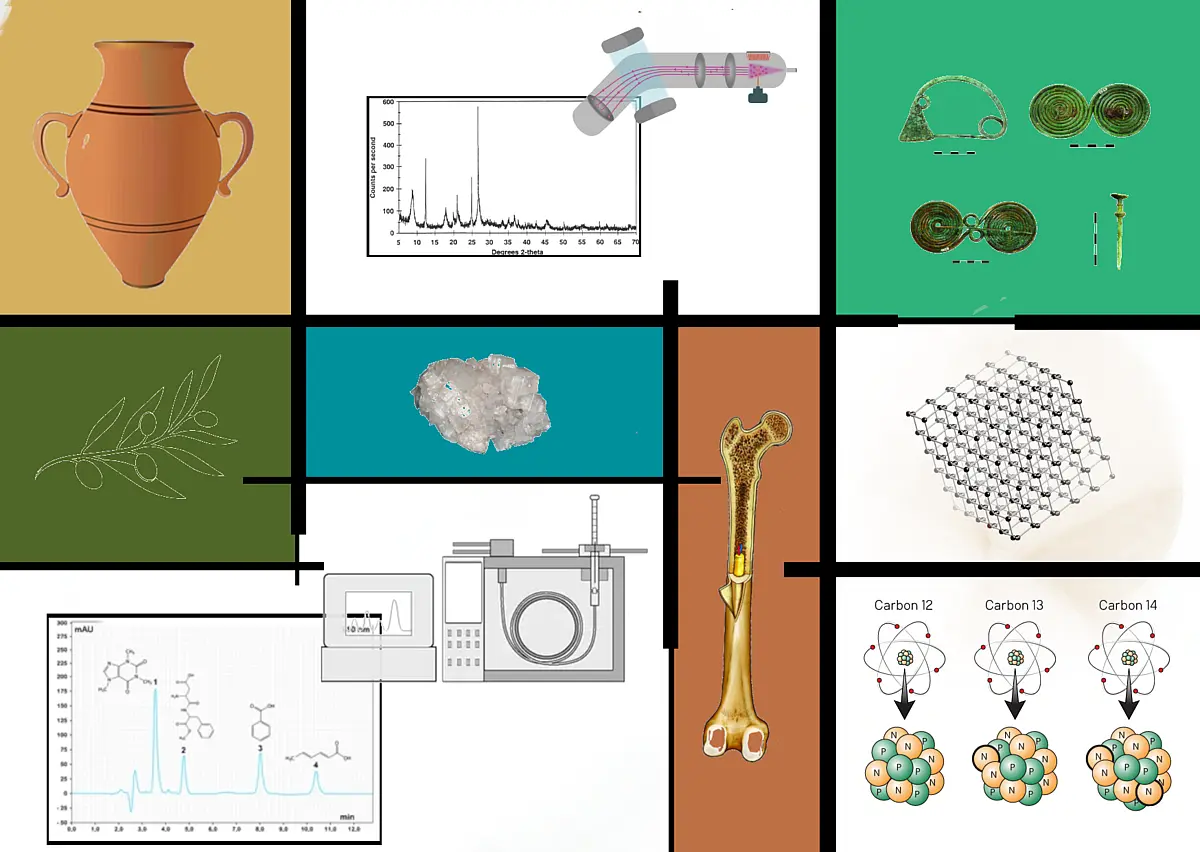
Die Vorlesungen und Übungen decken Basisthemen der Chemie ab und informieren über die Spannbreite der anwendungsorientierten Fragen und Methoden. Dadurch entsteht Grundlagenwissen zu den Bausteinen der Erde und den geochemischen Rahmenbedingungen, unter denen Menschen leb(t)en. Auch wichtige Methoden zur instrumentellen Analytik und Dokumentation von Funden und efunden werden vorgestellt. Wir beschäftigen uns mit anorganischen Naturstoffen wie Sedimenten, Mineralen und Gesteinen, aber auch mit Materialien organischen Ursprungs (Knochen, Holz, Fette) und künstlich erzeugten Stoffen.

In diesem Modul wird archäomaterialbezogenes Grundlagenwissen erarbeitet: Aus was bestehen archäologische Funde und Befunde eigentlich und welche Untersuchungsmethoden sind für was geeignet? Welche Erkenntnisse über menschliches Sein und Handeln kann ich mit Hilfe von chemischen Kenntnissen und Methoden ableiten? Warum kann ich z.B. mit bestimmten Isotopen datieren und mit anderen feststellen, dass sich jemand überwiegend von Fisch ernährt hat und in seiner Jugend in Skandinavien lebte?

Das Modul vermittelt einen Überblick über Grundlagen und Konzepte der Anwendung naturwissenschaftlicher Methodik in der Archäologie. Es dient als Basis für die weiterführenden BNWA-Module, in denen die erarbeiteten Kenntnisse dann mit forschungsrelevanten Themen bereichert und vertieft werden.

Geoarchäologie und Archäometrie

Verantwortlich: Prof. Dr. Susanne Greiff & Prof. Dr. Chris Miller

Lehrsprache: Deutsch, Englisch

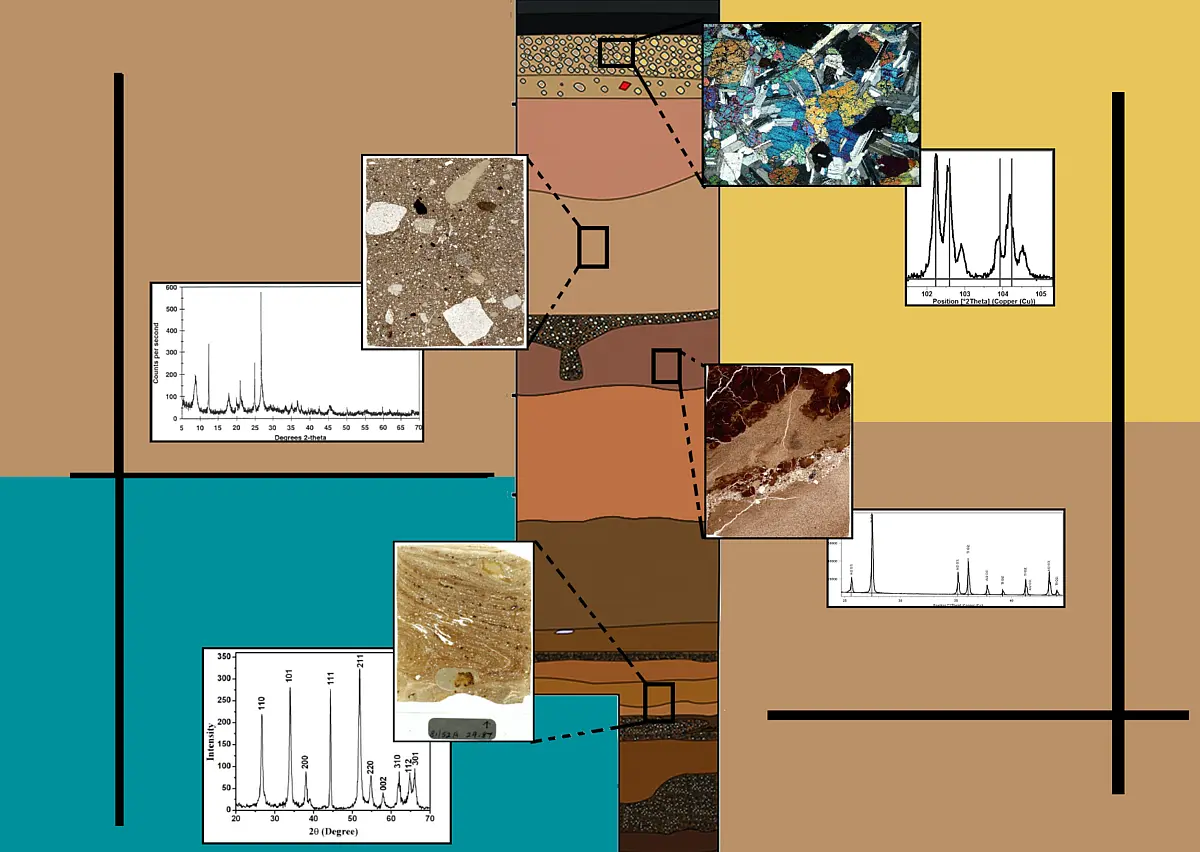
Geoarchäologie und Archäometrie zählen zu den Archäomaterialwissenschaften und stellen den Fund wie Befundstrukturen in einem gemeinsamen Zusammenhang dar. Die genaue Analyse mit naturwissenschaftlichen Methoden hilft uns zu rekonstruieren, wie der Mensch seine Umwelt als Ressource nutzte und diese aber auch nachhaltig beeinflusste.

Sie erhalten Einblicke in unterschiedliche Fragesellungen und einschlägige Methoden der Geoarchäologie und Archäometrie. Der Betrachtungsraum erstreckt sich von ganzen Landschaften über Strukturen einzelner Fundplätze bis hin zur Objektebene.

Dabei erarbeiten Sie sich u.a. Kenntnisse, wie archäologische Schichten zustande kommen und wie Menschen mit ihrer natürlichen Umwelt interagierten. Die Genese anthropogener Ablagerungen ist ebenfalls Teil des Kursangebots.

Werkstoffen und Technologien: Keramik, Fayence und Glas

Übung

Verantwortlich: Prof. Dr. Susanne Greiff

Lehrsprache: Deutsch

Die Veranstaltung ist für Leute gedacht, die mehr über archäologische Funde von der Materialseite her wissen möchten. Sie werden hier mehr über die Herstellung von Keramik, Glas und Ägyptische Fayencen erfahren und außerdem ein paar Methoden der Untersuchung kennenlernen. Wir arbeiten auch mit Originalfunden (ägyptische Fayenceobjekte) aus dem Museum der Universität und schauen uns Dünnschliffe von Keramiken an.

Damit erhalten Sie einen ersten Einblick in die grundlegenden Rohstoffe und Vorgänge, die für das Brennen von Keramik und die Glasherstellung wichtig sind. Sie sollen ein Gefühl für das Material und seine Eigenschaften entwickeln.

Dieses Modul besteht aus einer Vorlesungseinheit und einer praktischen Einheit.

Teaching contributions:

  • Einführung in die Ur- und Frühgeschichtliche Archäologie und Archäologie des Mittelalters
  • Einführung in die Naturwissenschaftliche Archäologie

Summer Semester

Authentizität in der Archäologie – von Fake News zu Fake Objects

Verantwortlich: Prof. Dr. Susanne Greiff

Lehrsprache: Deutsch

Authentizität in der Archäologie – archäologische Quellen zwischen Irrtum, Fälschung und Instrumentalisierung

Die archäologischen Wissenschaften sind naturgemäß aufgrund ihrer fachlichen Natur und der lückenhaften Überlieferung ihres Untersuchungsgegenstands auf interpretierende Forschungen angewiesen. Immer wieder kam und kommt es zu Fehlinterpretationen und Irrtümern, die aber häufig dem aktuellen Stand des Wissens und der Methodik ihrer Zeit geschuldet sind. Das andere Ende des Spektrums stellen absichtliche Auslassungen, tendenziöse Auslegungen und bewusste Fälschungen von Objekten, Texten, Bildern und Befunden dar. Welche Auswirkungen hat das auf das Fach Archäologie und seine Authentizität? Wie dehnbar ist Authentizität? Wer hat die Deutungshoheit? Mit welchen Methoden können wir Fälschungen und Irrtümer entlarven?

In diesem facettenreichen Seminar beschäftigen wir uns mit der ganzen Bandbreite archäologisch-historisch relevanter Quellen, ausgehend von Ausgrabungsbefunden, Fundobjekten, bis hin zu Bild- und Textquellen und deren Wirkkraft sowie Rekonstruktionen von Befunden aller Art.

Ein Schwerpunkt wird die Instrumentalisierung von Archäologie für politische Propaganda darstellen. Welche Beweggründe stehen dabei im Vordergrund und mit welchen Instrumenten wird hier operiert? Wer sind die relevanten Akteure? Wer beansprucht Deutungshoheit und warum?

Auf der Ebene der materiellen Kultur betrachten wir neben eindeutigen Fälschungen auch die Grauzonen: Was ist eine Fälschung, was ist eine Kopie, was ein Replikat? Wie können wir das mit unterschiedlichen stilistischen und naturwissenschaftlichen Methoden herausfinden? Welche Rolle spielt dabei der Kunstmarkt?

Inwieweit beeinflusst die Restaurierung von Objekten unser Bild von Authentizität? Wie entstehen Rekonstruktionen von Befunden und wie erkenne ich ein fundiertes Reenactment? Was führt zu kuriosen Fake-News wie z.B. der Behauptung, dass fast 300 Jahre des Mittelalters frei erfunden sind und wie unterschiedlich werden diese im Fach und in der breiten Öffentlichkeit rezipiert?

Schlecht gedachte und schlecht gemachte Archäologie kann ebenfalls zu einem Verlust der Authentizität beitragen. Wir kennen Fundkomplex, die aus ursprünglich nicht zusammenhängenden Objekten „komponiert“ wurden und mangelhaft ausgeführte Ausgrabungen. 

Wir wenden uns aber auch der Vergangenheit zu, wo man z.B. im Mittelalter versucht hat, durch gezielte Urkundenfälschung territoriale Besitzansprüche als historische Kontinuität zu legitimieren. Auch Markenfälschungen waren bereits ein probates Mittel, Dinge an den Mann (bewusst nicht gegendert) zu bringen. Man denke an die Ulfberht-Schwerter. Auch gefälschte Angaben zur Herkunft von Produkten sind bekannt, die man mit naturwissenschaftlichen Methoden entdecken kann.


Excursion into Brittany and Normandy

Lecturers: Prof. Dr. Martin Bartelheim, Prof. Dr. Susanne Greiff & Doris Schuller

Teaching language: German or English according to the demand

This module consists of a seminar during the semester and a field trip.

The 10-day tour covers the period from the early megalithic cultures right through to the Middle Ages.

The archaeological landscape and the natural environment are key themes, as is Brittany’s role in Bronze Age tin mining.

We will visit important museums and collections, as well as iconic archaeological sites and explore examples of medieval architecture.


Master’s courses

Master's level courses from the Archaeometry group are part of the M.Sc. program Archaeological Sciences and Human Evolution (ASHE), as well as the M.A. programs Ur- und Frühgeschichtliche Archäologie (UFG), Archäologie des Mittelalters und der Neuzeit (AdM), and Archeology (Arch).

Winter Semester

Introduction to Archaeometry

Coordinators: Dr. Silvia Amicone & Prof. Dr. Susanne Greiff

This module involves a rotation of lecturers from the Archaeometry group.

Teaching language: English

The basic idea and teaching background aim to show that Archaeometry is far more than mere instrumental analytics on pots and bones. It creates information at very different levels and provides information that is embedded in organic and inorganic materials, structures and written sources. Archaeometry is diverse in its contents, methods and outreach. Therefore, to some extent specialization is mandatory in our field. Archaeometry is embedded in scientific archaeological research promoting the understanding of how people lived in the past based on the study of human remains in their own context in combination with the analysis of their material culture.

This module is foundational for further master’s courses offered in archaeometry.

Material Science and Archaeological Ceramics: Ceramic Petrography and Geochemistry

Lecturers: Dr. Silvia Amicone & Dr. Sinem Hacıosmanoğlu

Teaching language: English

This course provides a broad introduction to the technological study of ceramics in archaeology through a material science approach and demonstrates their role in interpreting various aspects of past societies. This course via theoretical and practical lessons (handling artefacts, use of analytical instruments) aims to bridge the gap between archaeology and science by integrating both a detailed training in the use of scientific techniques for the analysis of ancient ceramic and an overview of the anthropology of technology. 

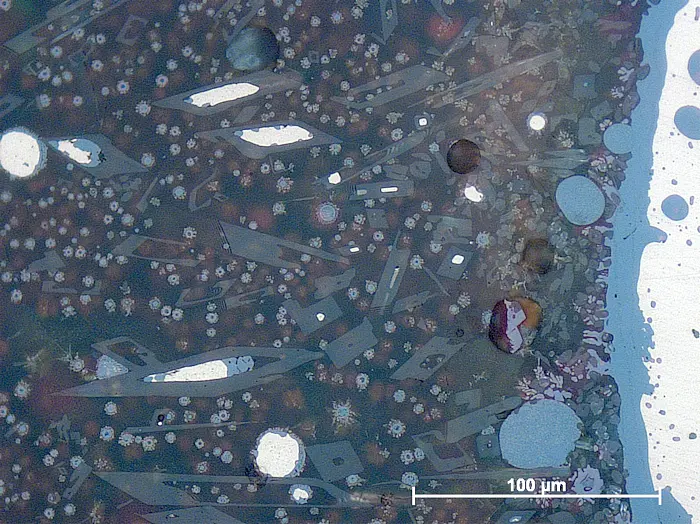
In particular, it provides in-depth training in the principles of thin section ceramic petrography its role alongside instrumental geochemistry in the interpretation of pottery provenance and manufacturing technology. The first lesson will introduce the students to the world of ceramic traditions, ceramic production sequence and the role of ethnography, experimentation and scientific analysis in interpreting past technology. Then, through a series of theoretical and practical lessons, students will be introduced to principles of optical microscopy and petrography and will learn how to apply them to the domain of ancient ceramics. The module will also demonstrate how data on provenance and technology can be used to tackle archaeological questions such as trade and exchange, craft practise and tradition. 

The course will be accessible to students in Natural Science with an interest in archaeometry and ancient ceramic technology and to students of Archaeology with an interest in the application of Material Sciences approaches to material culture. By the end of the course, students will have a good understanding of the foundations of the most established analytical techniques, practical experience in their application and data processing, as well as the ability to design research projects that employ instrumental analyses to address archaeological questions.

Processing, Analysis and Visualisation of Archaeological Data in R

Lecturer: Baptiste Solard

Teaching language: English

This course provides practical training in the processing, statistical analysis, and visualisation of archaeological data using the R programming language. It is intended for students wishing to apply quantitative approaches to a wide range of datasets, including those derived from geochemical, isotopic, and other archaeometric analyses.

The module combines short lectures with guided exercises, focusing on importing and organising data, exploring statistical patterns, applying appropriate data transformations, and producing clear, visualisations. By working through examples from different areas of archaeological science, students will learn how to structure analytical workflows in R and critically interpret statistical results in an archaeological context.

Field work in South Africa

Lecturer: Priv.-Doz. Dr. Patrick Schmidt

Teaching language: English/German

Future archaeologists are regularly trained to acquire field skills related to excavation (measurement, sorting/cleaning, diverse post-excavation techniques, etc.). However, the practical work of a professional archaeologist may also comprise other activities: collection studies, sampling of raw materials, field experimentation. In this field work, we teach these aspects based on South African Stone Age archaeology. Works in South Africa will last 3 weeks and take place in the end of the winter semester, exact dates to be decide. For specific questions and information on dates and content, please contact Patrick Schmidt (patrick.schmidtspam prevention@uni-tuebingen.de).

Note: This field work is listed under “Grabungspraktikum” on Alma.

Teaching contributions:

  • Introduction into Theory and Methods in Archaeology
  • Sacred Places and religious practices in ancient societies

Summer Semester

Adhesive Technology in the Stone Age: On Birch Tar, Coniferous Resins and Biomass Tars

Lecturers: Priv.-Doz. Dr. Patrick Schmidt

Teaching language: English

In this seminar, students will learn how to conduct and document experiments aiming to replicate different aspects of ancient pyrotechnology. A particular focus will lie on adhesive making (birch tar and other glues). The seminar will begin with a theoretical part and include a longer part of hands-on experimentations conducted by the students themselves. Practical classes will be held outside at our experimentation ground. We aim to have a one-week block seminar (5 days) in the end of the summer semester but exact dates can be decided together. 

In 2026, the block will start on the 23rd of July (these dates will change every year).

Archaeometallurgy

Lecturers: Prof. Dr. Roland Schwab

Teaching language: German or English according to the demand

Basic understanding of pre-industrial metal mining and metallurgy by a general introduction to physical metallurgy (phase diagrams, alloy theory, plastic deformation and recovery, solid-state transformations, etc.), ancient mining and pyro-metallurgical processes. Case studies in smelting, alloying and metal processing (casting, forming, surface treatments, etc.) within regional and chronological contexts.

(offered on a biweekly schedule)

Chemistry Crash Course

Lecturers: Prof. Dr. Susanne Greiff & Baptiste Solard

Teaching language: English

This course is meant to provide you with some basic chemical knowledge in order to understand materials from the archaeological record and the processes which build and change them.  Why does bone dissolve in some soil types but less in others? What is an isotope and why can we reconstruct both ancient diet and date archaeological layers with the help of carbon isotopes? How is iron ore converted into metallic iron? Why is gold a noble metal?  We start from a very basic level and will deliver archaeology-contextualized content. The course includes both lectures and exercises and focuses on inorganic chemistry.  With this course, we hope to build essential skills and knowledge for the students' future in Archaeological Sciences.

(offered as a block course)

Experimental Pyrotechnology

Lecturers: Diverse according to topic

Teaching language: English

The course provides an introductory approach to the study of ancient pyrotechnology through the lens of experimental archaeology. The first lesson will introduce the students to the world of experimental archaeology. Then, based on a series of theoretical and practical lessons, the students will be exposed to different case studies in which experimental archaeology is used to test a variety of different hypotheses about ancient firing techniques and the transformative power of fire.
At the end of the course, the participants will have acquired theoretical and practical experience in experimental archaeology, and they will have learned how to apply its study to pyrotechnology. In addition, they will have the ability to design research projects that employ experimental pyrotechnology to address archaeological questions.

Topic of the SoSe 2026: Bronze metallurgy, pigment production and gemstone processing
(Prof. Dr. Susanne Greiff, Dr. Sinem Hacıosmanoğlu & Baptiste Solard)

The module is divided into lectures and practical exercises. In the lectures, we discuss different types of experiments and how we can conduct and document them professionally. The scientific principles behind the individual experiments are also examined. The practical sessions consist of approximately five hands-on experiments, during which we test what we have discussed in the theory classes.

The course is part of the M.A. in Archaeology and priority will be given to student from this program.

Material Science and Archaeological Ceramics: Ancient Pottery and its Pigments

Lecturers: Dr. Silvia Amicone

Teaching language: English

This course offers a broad introduction to the technological study of pigments and decoration techniques in archaeological ceramics through a material science approach. It provides training in the principles of optical microscopy, X-ray diffraction, Raman spectroscopy, X-ray fluorescence and scanning electron microscopy, as needed for the interpretation of pottery decorations. 
At the end of the course, the participants will have a good understanding of the foundations of the most established archaeometric techniques employed in the study of different types of pottery pigments and decorations. In addition, they will acquire practical experience with these archaeometric techniques and their application to the study of pigments and decoration and the ability to design research projects that employ instrumental analyses to address archaeological questions.

(offered as a block course)

Organic Materials in Archaeological Contexts

Lecturers: Dr. Barbara Huber

Teaching language: English

This course introduces the study of organic materials in archaeological contexts through biomolecular approaches. It provides a broad overview of key analytical methods used to investigate ancient biomolecules, with a particular focus on metabolomics and lipid analysis of archaeological residues. Students will explore how these techniques enable the identification of past substances, practices, and environments, offering insights into diet, technology, trade, ritual, medicine and sensorial aspects. The course combines theoretical foundations with selected case studies to highlight the potential and limitations of biomolecular archaeology.

This module consists of a lecture unit and a practical and exercise unit.

Science and Technology of Ancient Glass – Medieval and Early Modern Glass

Lecturers: Prof. Dr. Susanne Greiff, Baptiste Solard & Dr. Bertram Jenisch

Teaching language: English

This lecture will examine the technical, scientific and social conditions surrounding glass production in Europe and the Mediterranean region during the Middle Ages and early modern period. We will also look at the infrastructure of glassworks and test our findings in practice by investigating a glassworks site in the Black Forest.

Research-based field survey: As part of a larger research programme on glass production in the Black Forest, we will examine the site of a glassworks. Located near Seelbach in the Ortenau district, this 16th-century glassworks is known from archaeological finds only. Through the field survey, we aim to systematically gain insights into the extent of the site, the product range and areas of activity. 

Silica Rocks as Raw Materials

Lecturers: Priv.-Doz. Dr. Patrick Schmidt

Teaching language: English

Basic introduction to silica rock raw materials in Palaeolithic and Neolithic contexts. Formation and geology, structure and mineralogy, provenance analyses, heat treatment.

Stable Isotopes in Bioarchaeology

Lecturers: Dr. Marta Díaz-Zorita Bonilla & Dr. Dorothée Drucker

Teaching language: English

The goal of this course is to provide students with theoretical background in the field of isotopic studies on biological material from archaeological contexts. This includes an introduction to common organic material used for isotopic tracking of environment, diet and mobility, the evaluation of conditions of preservation of organic material, and a survey of bulk stable isotope analysis commonly used for research in palaeodiet and mobility. In addition, the module will evaluate throughout several cases studies the application of isotopes in different chronological contexts.

Teaching contributions: