Institut für Astronomie & Astrophysik

Forschung 2017

Can one hear the shape of an ultra compact object?

October 2017

Sebastian H. Völkel, Kostas D. Kokkotas

Gravitational waves (GWs) from compact relativistic objects are among the most interesting objects to study nowadays. With their repeated detection by the GW detector LIGO, a new era ranging from astronomy to fundamental physics has begun. The GW detections do not only confirm the strong field regime of general relativity for the first time, but also provide currently the best evidence that black holes really exist in nature. Whether all of their properties agree with the predictions from general relativity, will be clarified by future detections that provide much higher signal to noise ratios.

In our recent works we study the GW properties of a broad class of horizonless ultra compact objects. It was known for a long time that horizonless objects being more compact than ordinary neutron stars, could mimic many observational features that one would expect from black holes. However, a clear way to distinguish such objects from black holes is to look at their GW emission. If gravitationally perturbed, both type of systems would emit gravitational waves with characteristic frequencies and damping times, known as the so called quasi-normal modes (QNMs). Their QNM spectra is genuinely different with respect to each other and can thus be used to study the properties of the source.

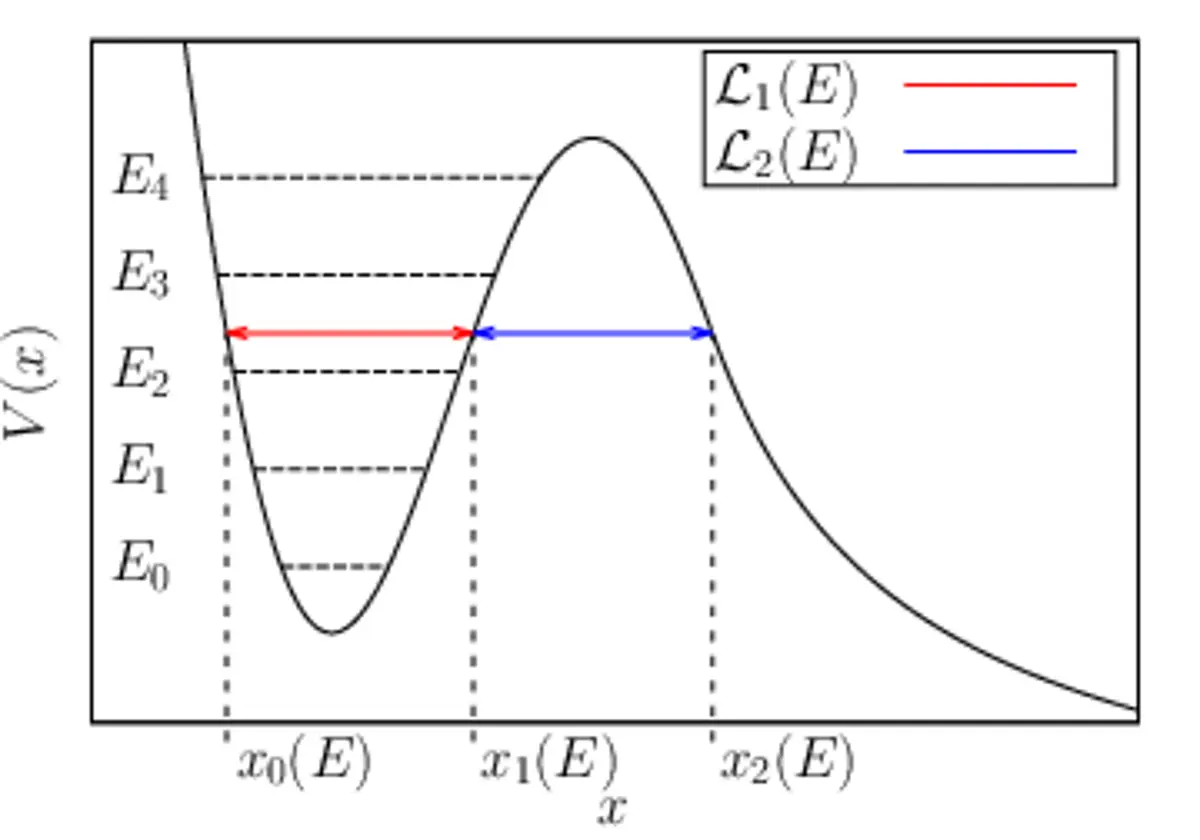
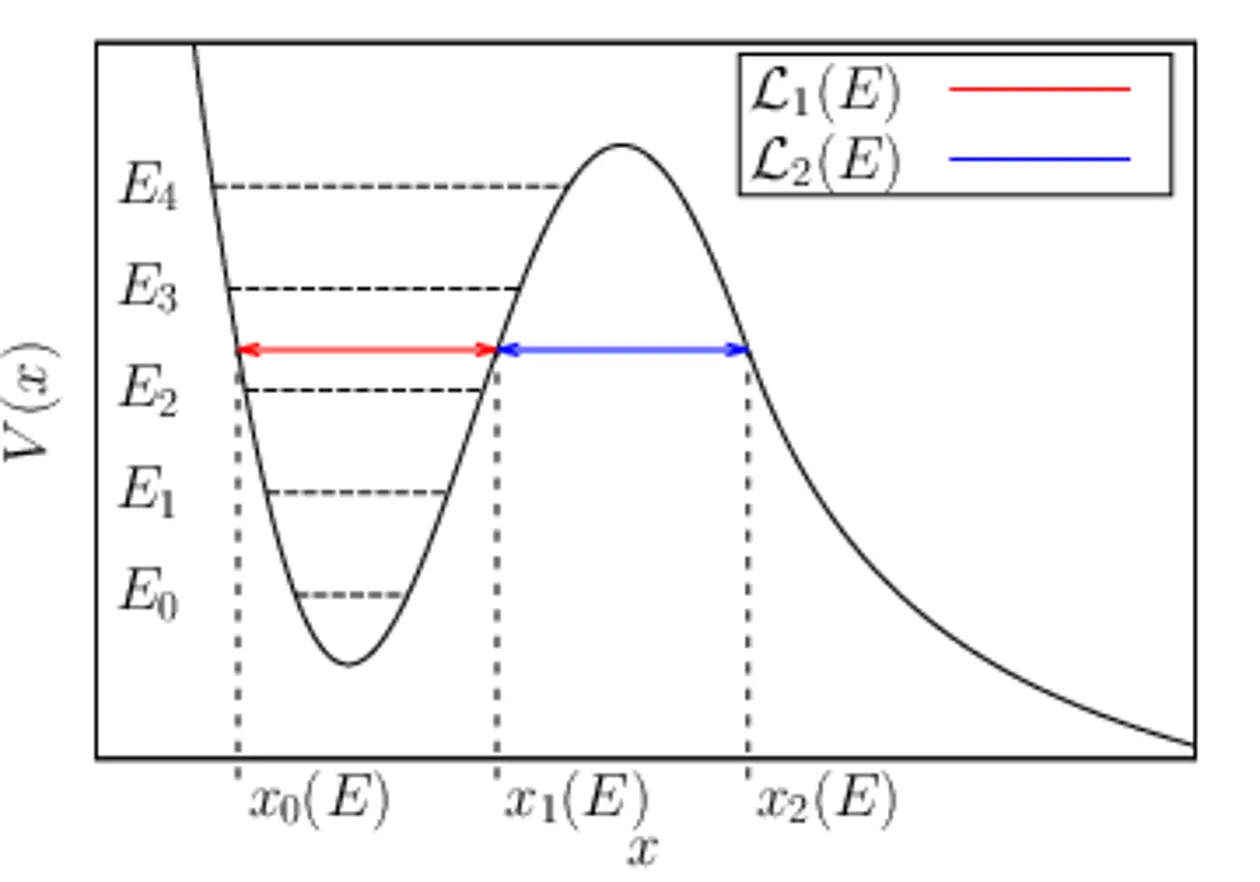
In our first paper [1] we provide a semi-analytic study of the so called axial QNM spectra of horizonless ultra compact objects. The semi-classical methods we used allow for a simplified treatment of the full problem and even to derive approximative full analytic results. Within the semi-classical description, we were also successful in solving the much more complicated inverse problem. The details are explained in our second paper [2], which shows how the inverse spectrum problem for the typical potentials of ultra compact horizonless objects shown in the figure can be reconstructed from the knowledge of the corresponding axial QNM spectrum. We address the detectability of such objects using gravitational wave detectors in another work with A. Maselli [3].

A more extensive overview with references to other important works can be found in our invited blog article for CQG+ [4].

[1] Völkel, S.H., & Kokkotas, K.D. (2017). A Semi-analytic Study of Axial Perturbations of Ultra Compact Stars. CQG, 34, 125006. arXiv:1703.08156
[2] Völkel, S.H., & Kokkotas, K.D. (2017). Ultra Compact Stars: Reconstructing the Perturbation Potential. CQG, 34, 175015. arXiv:1704.07517
[3] Maselli, A., Völkel, S.H. & Kokkotas, K.D. (2017). Parameter estimation of gravitational wave echoes from exotic compact objects. Phys. Rev. D, 96, 064045. arXiv:1708.02217
[4] Völkel, S.H. & Kokkotas, K.D. (2017). Can one hear the shape of an ultra compact object? CQG+
https://cqgplus.com/2017/10/02/can-one-hear-the-shape-of-an-ultra-compact-object/




Testing strong-field gravity with tidal Love numbers

March 2017

Vitor Cardoso, Edgardo Franzin, Andrea Maselli, Paolo Pani, and Guilherme Raposo

Exotic compact objects (ECO) without an event horizon may form in Nature and merge as binary systems, mimicking the coalescence of ordinary black holes. Several theoretical models predict microscopic and Planck scale corrections at the horizon level, which may lead these bodies to be significantly different from ordinary black holes. Such changes also affect their gravitational wave emission during the orbital inspiral, leading to signatures than can be constrained by data. Current and future instruments may thus provide new precious information on their features and on the occurrence of new physics. In this series of works we analyse the detectability of two smoking-gun effects:

(i) the presence of tidal deformability,
(ii) the absence of tidal heating.

In the last phase of the inspiral, tidal interactions play indeed an important role and modify the emitted gravitational signal. The latter shows large differences depending on whether the binary is composed by regular black holes or ECOs, and then it is potentially able to distinguish between the two classes. The bounds that can be derived on these effects strongly depend on the nature of the exotic object, and its specific internal structure, which also determines the form of the horizon-modifications. By analysing the output of both ground based and space interferometers, we find that Advanced LIGO is already able to set interesting constraints on some classes of ECOs, like the boson stars. These results strongly improve for massive and fast-rotating bodies. We show indeed that a space observatory as LISA would probe extremely compact objects, with masses comparable to those of supermassive black holes at the centre of a galaxy, and test quantum-gravity effects within highly-spinning binaries at cosmological distances.

Cardoso, V., Franzin, E., Maselli, A., Pani, P. & Raposo, G. (2017). Testing strong-field gravity with tidal Love numbers. Phys. Rev. D., 95, 084014. DOI: https://doi.org/10.1103/PhysRevD.95.084014
 

Black hole spectroscopy by ground based detectors

February 2017

Andrea Maselli, Kostas D. Kokkotas, Pablo Laguna

Black holes far from the equilibrium are strong emitters of gravitational radiation. They present rich spectrum of oscillations, called quasi normal modes (QNM), acting as a superposition of exponentially damped sinusoids, which decay until the black hole reaches a stationary quiet state, described by the Kerr metric. QNM carry precious information on the nature of the compact object, and, within General Relativity, they depend uniquely on the black hole mass and spin. Any deviation from such dependence may represent a crucial hint of the existence of exotic objects, or of a more fundamental theory. Gravity tests based on black hole spectroscopy require a detailed knowledge of the oscillations and of their uncertainties.

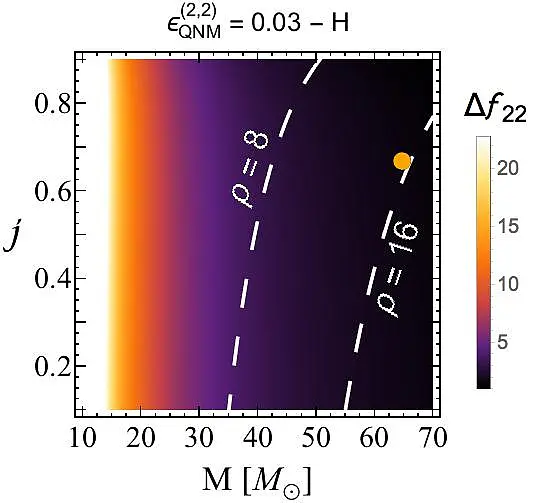
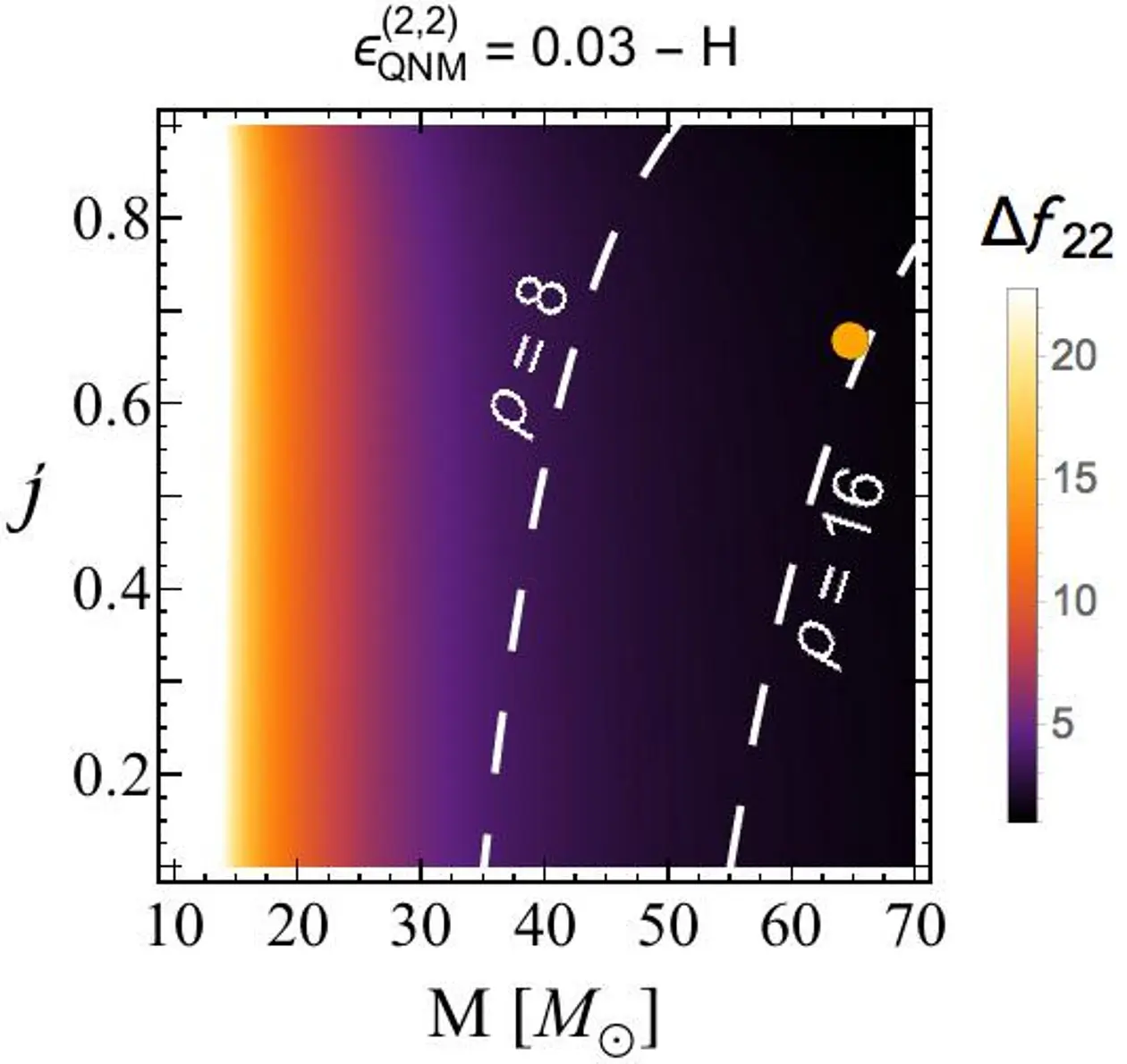
In our work we assess the detectability of QNM, produced by stellar mass black holes, by current and future ground based interferometers. Assuming different astrophysical scenario, we analyze the errors on the most relevant components of the QNM spectrum. We determine the accuracy with which LIGO and future facilities may constrain the mode parameters, i.e. frequencies and damping times, showing how they affect the black hole mass and spin measurements. We also analyze how a network of terrestrial observatories at design sensitivity improve these results, being a crucial and necessary ingredient to detect multiple QNM, which in turn, are essential to uniquely identify the ultimate nature of the perturbed compact object.

Maselli, A., Kokkotas, K.D., & Laguna, P. (2017). Observing binary black hole ringdowns by advanced gravitational wave detectors. Phys. Rev., D., 95, 104026. DOI https://doi.org/10.1103/PhysRevD.95.104026