Praktische Theologie III

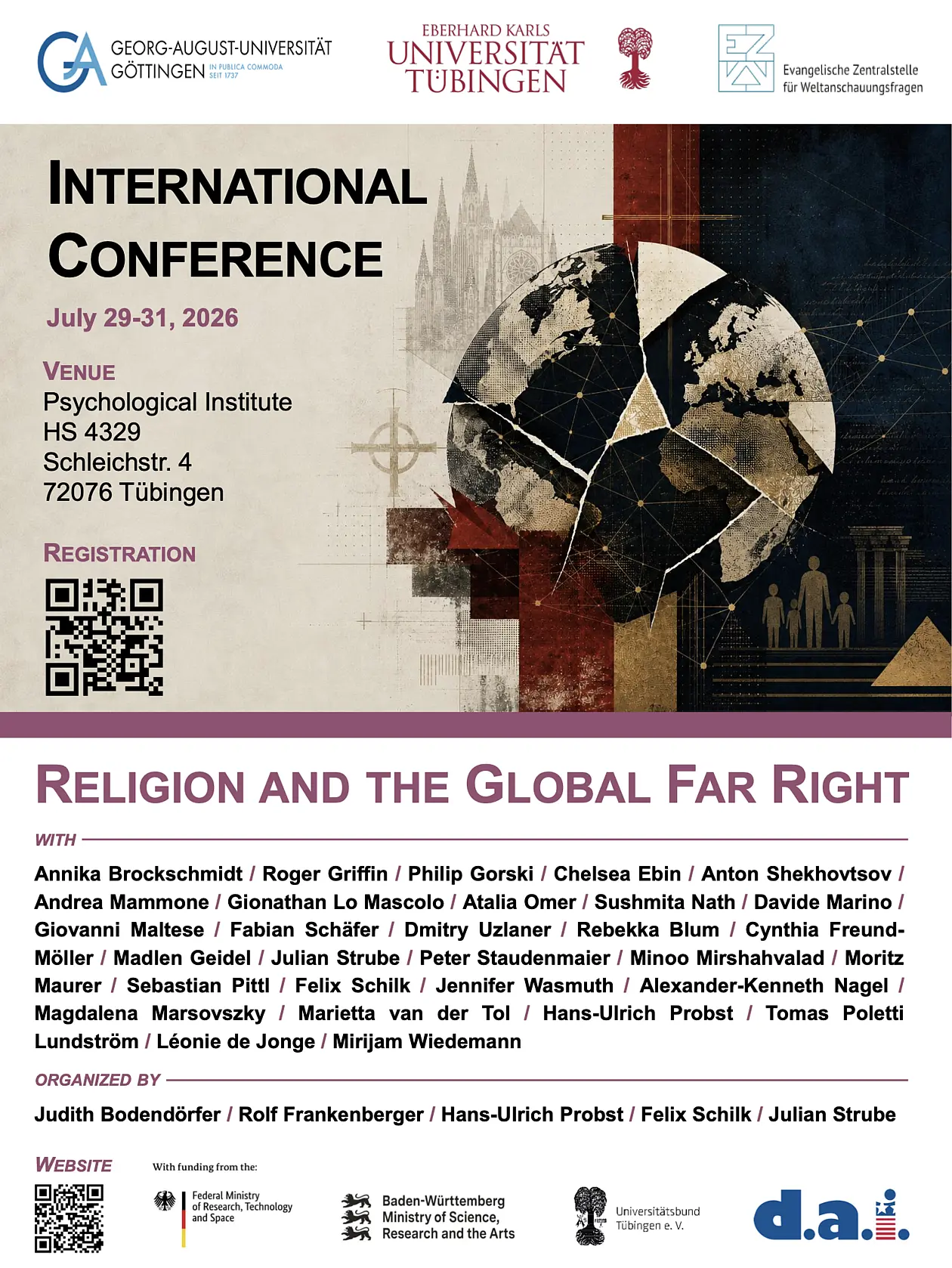
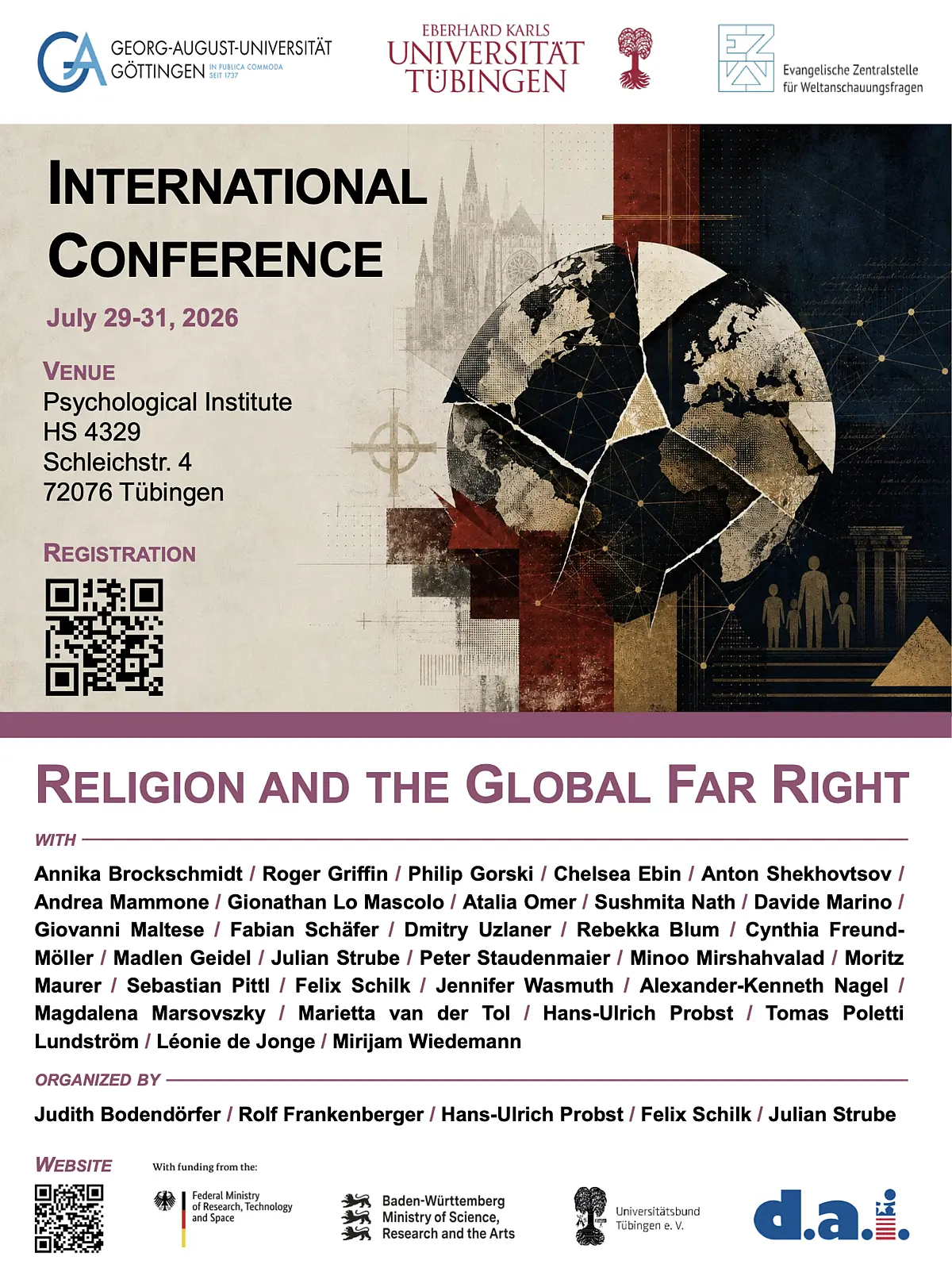
International Conference: Religion and the Global Far Right

July 29–31, 2026

The far right’s engagement with religion is complex and, despite its widely recognized centrality, has long remained underexplored. In light of current world political dynamics, this conference aims to illuminate how religion and the far right intertwine globally by examining their mutual entanglements, forms of appropriation, and claims to religious authenticity.
The conference will focus on religious fields that are understood as being subject to constant renegotiation and contestation. For example, Christianity is often presented in transdenominational ways by far-right actors and constitutes an essential component of far-right identity formation and historical narratives that challenge social plurality and democratic orders. This cannot be reduced to mere strategic appropriation; many in the far-right movement identify as devout Christians and see themselves as the “true” Christians, in contrast to a perceived corrupt mainstream.
These debates are inseparable from positions toward Islam and Judaism, especially regarding notions of the “Judeo-Christian West,” the “Great Replacement,” and calls for “remigration.” Yet far-right engagements with Islam and Judaism are marked by ambivalence, including orientalist-romanticized appreciations and selective valorizations. The project therefore also considers conversions, collaborations, and the active participation of Islamic and Jewish perspectives in these contexts.
A fuller understanding of these dynamics requires engagement with alternative religiosity and esotericism, which are central to both European “new right” ideologies and contexts such as the U.S. “Alt-Right” and Russian “Eurasianism.” This includes receptions of Julius Evola’s ideas (1898–1972), foundational for thinkers like Alain de Benoist and Aleksandr Dugin, as well as neopagan, and motifs inspired by Hinduism and East Asian traditions.
The conference panels will be organized thematically and will examine transnational networks, (supra-)nationalism, gender and sexuality, concepts of historical, anti-modernism, and political strategies. Roundtable discussions will consolidate the discussions and help establish focus, producing tangible insights into developments of increasingly urgent importance.


Registration is open until July 20, 2026


Programme

Wednesday, July 29, 2026

2:30 pm: Welcome and Introduction

Julian Strube, University of Göttingen
Judith Bodendörfer, Evangelische Zentralstelle für Weltanschauungsfragen Berlin
Rolf Frankenberger, Institute for Research on Far Right Extremism (IRex), University of Tübingen
Felix Schilk, University of Tübingen
Hans-Ulrich Probst, University of Tübingen

3:00 - 5:00 pm: Public Lecture and Roundtable

Public Keynote: The Religious Right in the USA
Annika Brockschmidt, Journalist
 
Roundtable The Far Right Across Borders: (Religious) Networks, Institutions, and Personal Connections
Philip Gorski, Yale University
Annika Brockschmidt, Journalist

5:30 - 7:30 pm: International Networks

Chelsea Ebin, Drew University
Mapping the Influence of the Transnational Nationalist Catholic Right

Anton Shekhovtsov, The Open Society Hub for the Politics of the Anthropocene at Central European University, Vienna
Antichrists and Empires: The Transnationalisation of Quasi-Religious Visions of the Russian Far Right and US Techno-Oligarchy

Andrea Mammone, Sapienza University of Rome
Italy’s far right and religion: From national history to global ties

Gionathan Lo Mascolo, Faith in Democracy, Berlin 
Religious Right Networks and Their Metapolitical Playbook

Thursday, July 30, 2026

9:00 – 11:00 am: (Beyond) Nationalism

Atalia Omer, University of Notre Dame 
Interfaith Violence: Judeo-Christian Zionism, Muslim Zionism, and Antisemitic Zionism

Davide Marino, University of Göttingen & Giovanni Maltese, University of Erlangen-Nuremberg 
Falun Gong and the Far-Right Question

Sushmita Nath, University of Leipzig 
Emerging as Bharat: The New Hindutva’s Post-national Pedagogical Transformational Agenda

Fabian Schäfer, University of Erlangen–Nuremberg 
Disinformation and Conspiracy Narratives in the Online Media Strategy of Happy Science (Kōfuku no Kagaku): Pathways into the Global Far Right
 

11:30 am - 1:30 pm: Anti-Genderism as a Political-Religious Glue in Far-Right Movements

Dmitry Uzlaner, Freie Universität Berlin 
The Moralist International in Times of War: Ruptures and Continuities in Russia's Traditional Values Agenda

Rebekka Blum, University of Marburg 
Securing patriarchal relationships and defending against challenges - how antifeminism unites various actors in a common enemy image

Cynthia Möller, Institute for Democracy and Civil Society 
Canonizing Transphobia: Anti-Trans Discourses as a Religious-Political Mobilization in the Global Far Right

Madlen Geidel, University of Erlangen–Nuremberg 
Christfluencer, Anti-Genderism, and Social Media A Netnography of Communication Strategies

3:00 - 5:00 pm: Anti-Modernism

Julian Strube, University of Göttingen
The Esoteric Far Right: From Völkisch Milieus to Global Politics

Peter Staudenmaier, Marquette University, Wisconsin 
Evola’s Traditionalism: Anti-Modernism as a Modern Construct

Minoo Mirshahvalad, University of Copenhagen 
How Julius Evola Shaped Italian Traditionalists’ Understanding of Shiʿism

Moritz Maurer, University of Vienna 
From Hyperborea to Tartaria: Right-Wing Utopias, Internet Culture, and the History of Esotericism
 

Friday, July 31, 2026

9:00 – 11:00 am: Apocalypse and the Far Right

Sebastian Pittl, University of Tübingen 
Secularized or Perverted Apocalypticism(s)?

Felix Schilk, University of Tübingen 
Apocalypticism and Far Right Narratives of Crisis and Decline

Jennifer Wasmuth, University of Göttingen 
…to Fulfill the Mission of the ‘Restainer’’ -The Katechon Motif in the War Theology of the Moscow Patriarchate

Alexander-Kenneth Nagel, University of Göttingen 
Like Soap Under a Lukewarm Stream of Water’ – On the Apocalyptic Temporality of Far Right Rhetoric
 

11:30 am – 1:30 pm: Religious-National Identity and Politics of Exclusion

Magdalena Marsovszky, University of Cologne
Hungary's Fundamental Law, the ‘Holy Crown’, the Historical Constitution and Metapolitics

Tomas Poletti Lundström, Uppsala University 
Evangelicalism and Fascism in Transhistorical Perspective

Jeanne Deysson (University of Strassburg and Heidelberg) & Hans-Ulrich Probst, University of Tübingen
Anti-liberal and anti-Muslim attitudes in evangelical Zionism

2:00 – 3:30 pm: Closing Remarks / Future Perspectives

Léonie de Jonge, University of Tübingen

Mirjam Wiedemann, Former Director of the Office for Questionable Religious and Ideological Offers


Useful Information for Organization

Conference Venue
The conference will take place at the
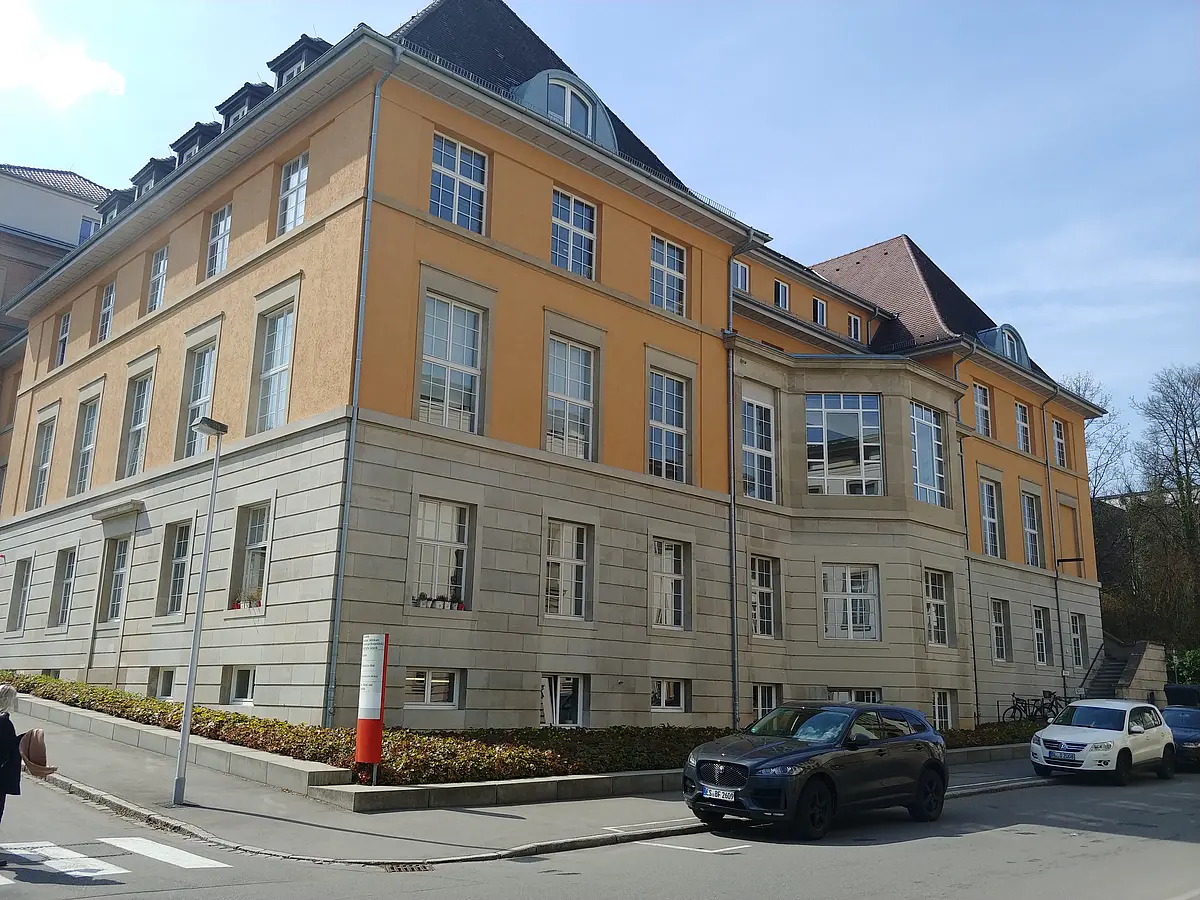
Psychological Institute of the University of Tübingen,
HS 4329
Schleichstr. 4, 72076 Tübingen, Germany

Accomodation

Speakers will be provided with accommodation. 
All other guests are kindly asked to arrange their own accommodation.

Contact Information

If you have any organisational questions, please do not hesitate to contact us: 
conference2026@ev-theologie.uni-tuebingen.de

Organizing committee

  • Julian Strube (University of Göttingen)
  • Judith Bodendörfer (Evangelische Zentralstelle für Weltanschauungsfragen)
  • Rolf Frankenberger (Institute for Research on Far Right Extremism (IRex), University of Tübingen)
  • Felix Schilk (University of Tübingen)
  • Hans-Ulrich Probst (University of Tübingen)
     

Fundings and Associated Organizations