
11.11.2026
The Preventable Rise of the Authoritarian – Longing for the Past and Redemption Through Destruction
The 13th Leipzig Authoritarianism Study 2026 has been available online since 11 November 2026, featuring a chapter by PD Dr Rolf Frankenberger and Tim Fröhlich
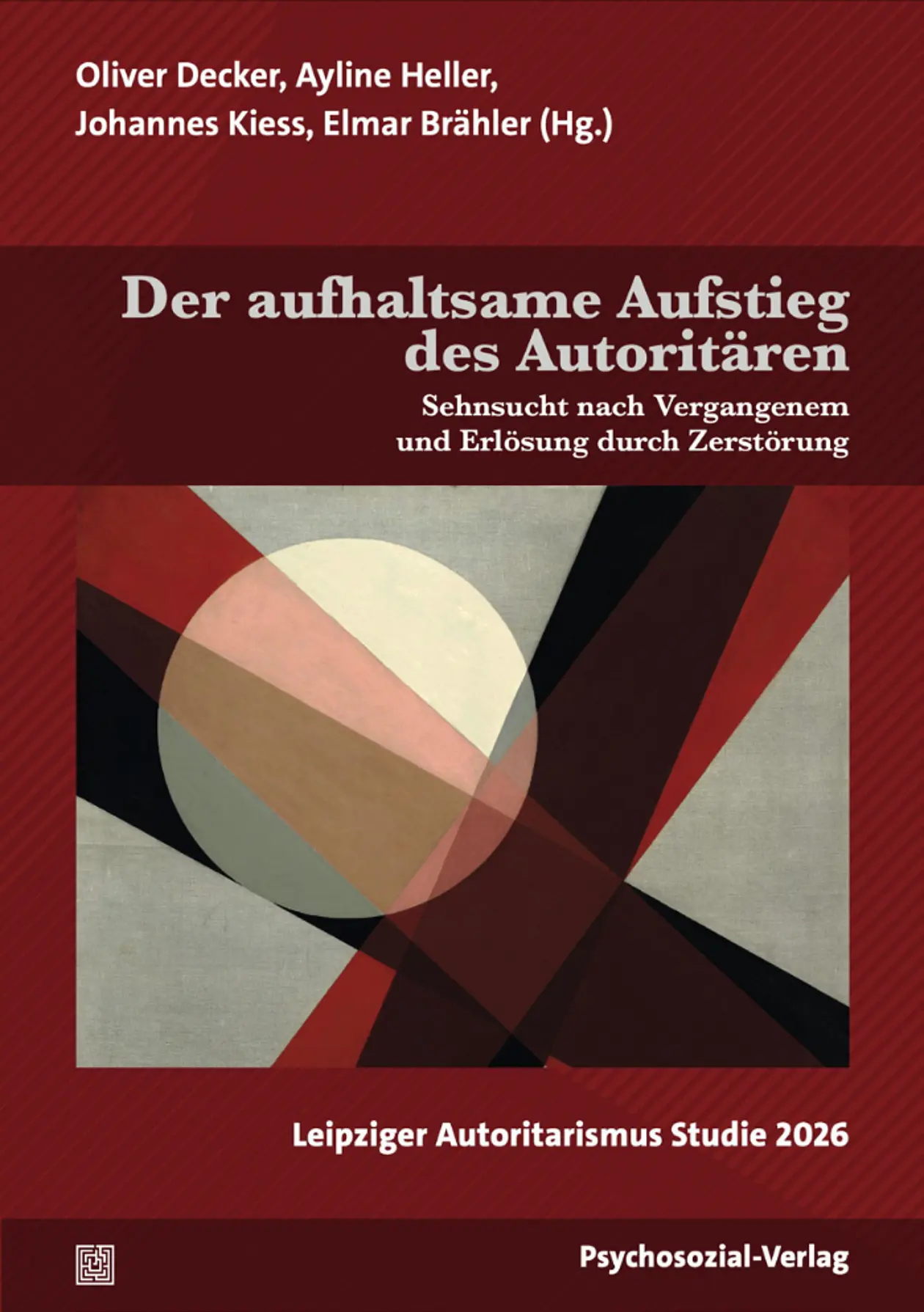
Under the title ‘The Preventable Rise of Authoritarianism’, the authors of the study analyse how far-right and authoritarian attitudes in Germany have changed by 2026, how prejudice and resentment have increased in these uncertain times, and how Germans view democracy.
Rolf Frankenberger and Tim Fröhlich have contributed a chapter to the study. It examines the link between far-right extremism and place-based identity – specifically, how the idealisation of rural and urban areas influences far-right attitudes.
Mobilisation by far-right political forces is unevenly distributed geographically. It is particularly prevalent in so-called rural areas – a finding that is often explained by a simplistic contrast between town and country (Belina, 2026). Rolf Frankenberger and Tim Fröhlich argue instead that it is not the place of residence as such, but rather a salient spatially-based identity and the associated idealisation of the urban or the rural that is decisive for the development of far-right attitudes. Using data from the 2026 Leipzig Authoritarianism Study and their own operationalisation of urban and rural idealisations as expressions of spatially-based identities, they are able to demonstrate that a salient rural identity is a driver of far-right attitudes, whilst urban identity has no influence.
Citation: Rolf Frankenberger & Tim Fröhlich (2026): Right-wing extremism and place-based identity – how the idealisation of the countryside and the city influences right-wing extremist attitudes. In Oliver Decker, Ayline Heller, Johannes Kiess and Elmar Brähler (eds.): The Unstoppable Rise of Authoritarianism. The Leipzig Authoritarianism Study 2026. Gießen: Psychosozial, pp. 175–200.
The full Leipzig Authoritarianism Study can be downloaded from the Heinrich Böll Foundation’s website.