Englisches Seminar

Student Projects

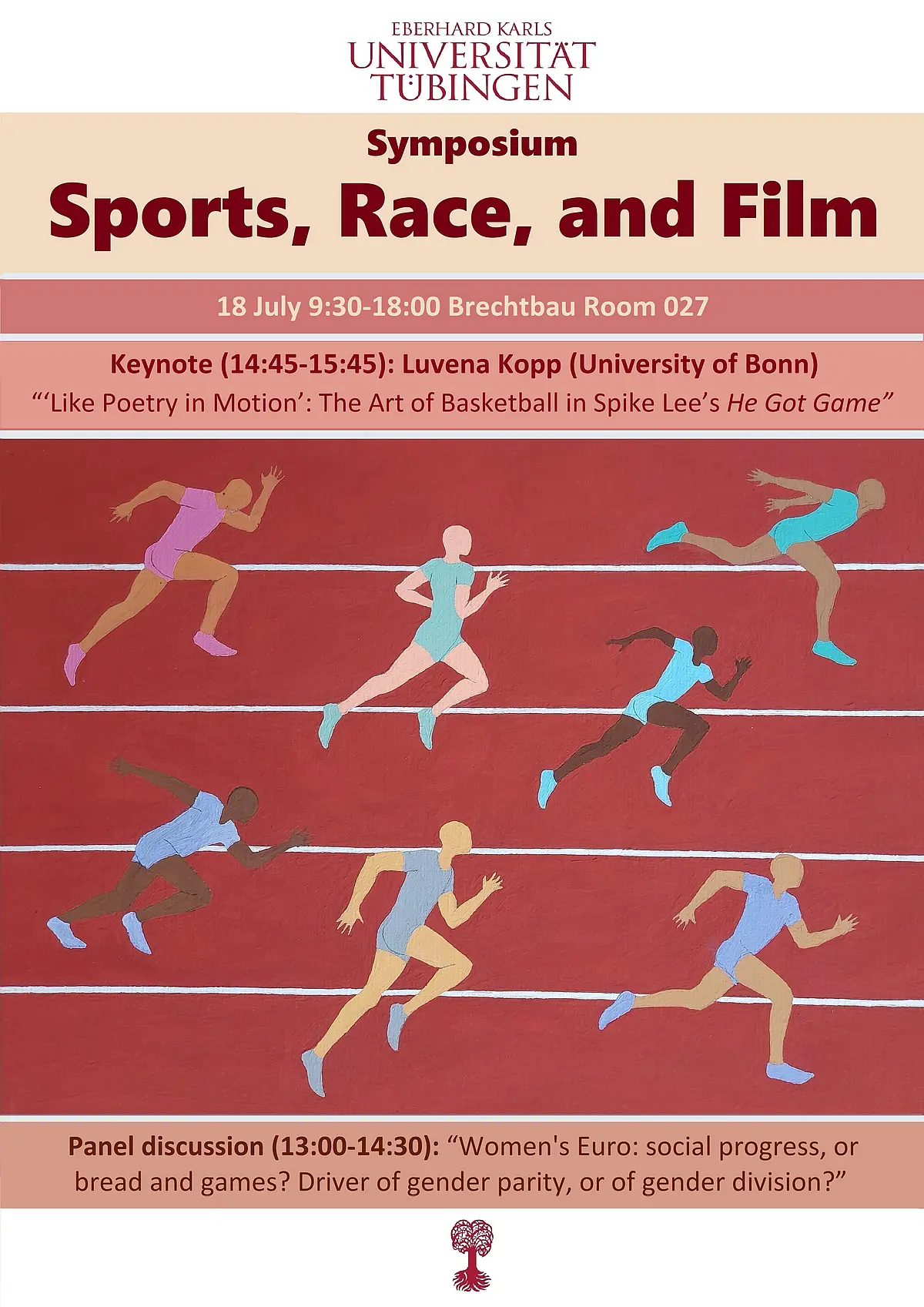
Symposium: Sports, Race, and Film

Student Project by Yuliia Nosova and Avi Spencer-Blume, July 2025


Friday, July 18, 2025, 9:30 - 18:30 h
Room 027, Wilhelmstraße 50 (Brechtbau)

The student symposium Sports, Race and Film was organized by Yuliia Nosova and Avi Spencer-Blume, students of Master American Studies and Bachelor Interdisciplinary American Studies, respectively. It was inspired by the seminars Sports and Race by Prof. Dr. Astrid Franke and Sports Film by PD Dr. Carsten Schinko.

The event features a film screening of Spike Lee’s He Got Game, a keynote by Dr. Luvena Kopp, a panel discussion on the Women’s UEFA Cup, as well as student talks. The main focus of the project is to learn about, explore and debate the cultural landscape on all matters pertaining to issues of race and sports. The symposium is also an opportunity for the attending public to become a part of the conversation.

Schedule

9:30Welcome! Introduction
9:45Ji Jinbing: “Reimagining Bruce Lee: Hybridity, Choreography, and Transnational Resonance”
10:30Alisson Tenorio: “Manny Pacquiao and Boxing as a Philippine National Culture”
11:15Coffee Break
11:30Hannah Martha Ashford: “Bend It Like Beckham: Representing Women of Colour”
12:15Lunch Break
13:00

Panel Discussion: “Women’s Euro: social progress, or bread and games? Driver of gender parity, or of gender division?”

UEFA organizes the Women's Euro. The organization claims that football (and thus, sports) unites people and is a viable, real tool against racism. UEFA also offers a toolkit of material against discrimination of many sorts, including racism and sexism. Is UEFA contributing to gender parity?

14:30Coffee Break
14:45Keynote Speaker Dr. Luvena Kopp, the Bonn Center for Dependency and Slavery Studies: “Like Poetry in Motion: The Art of Basketball in Spike Lee’s He Got Game”
15:45Intermission
16:00Film Screening: He Got Game (1998), Spike Lee

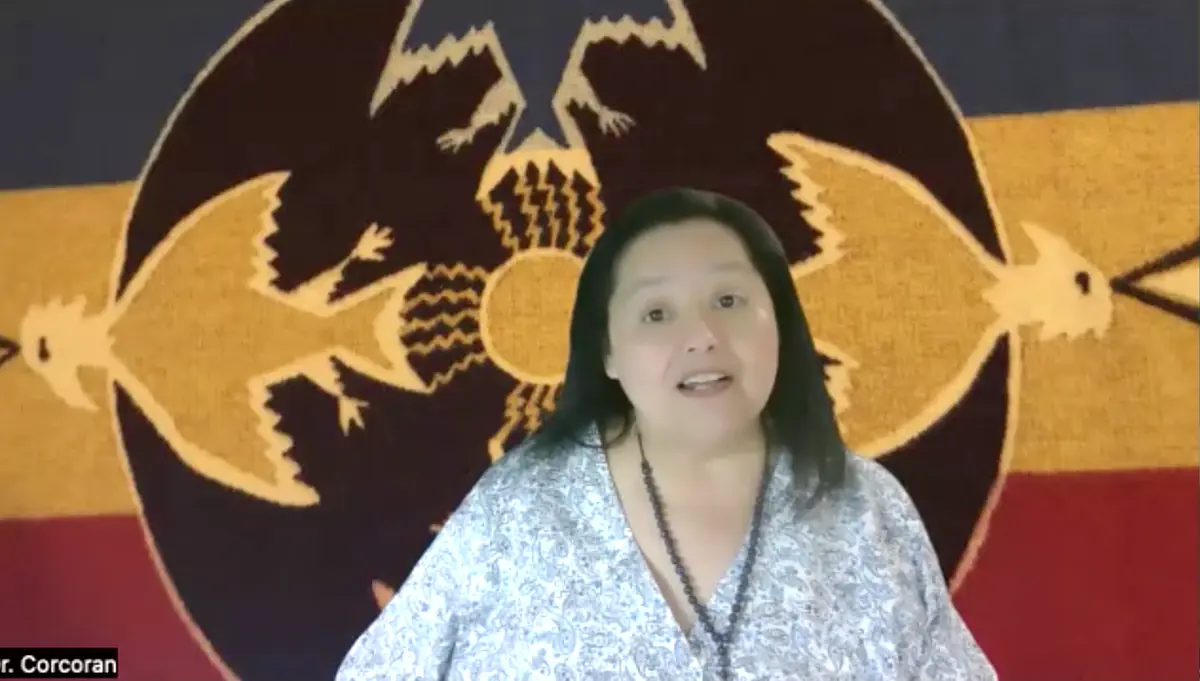
Interview with Carma Corcoran

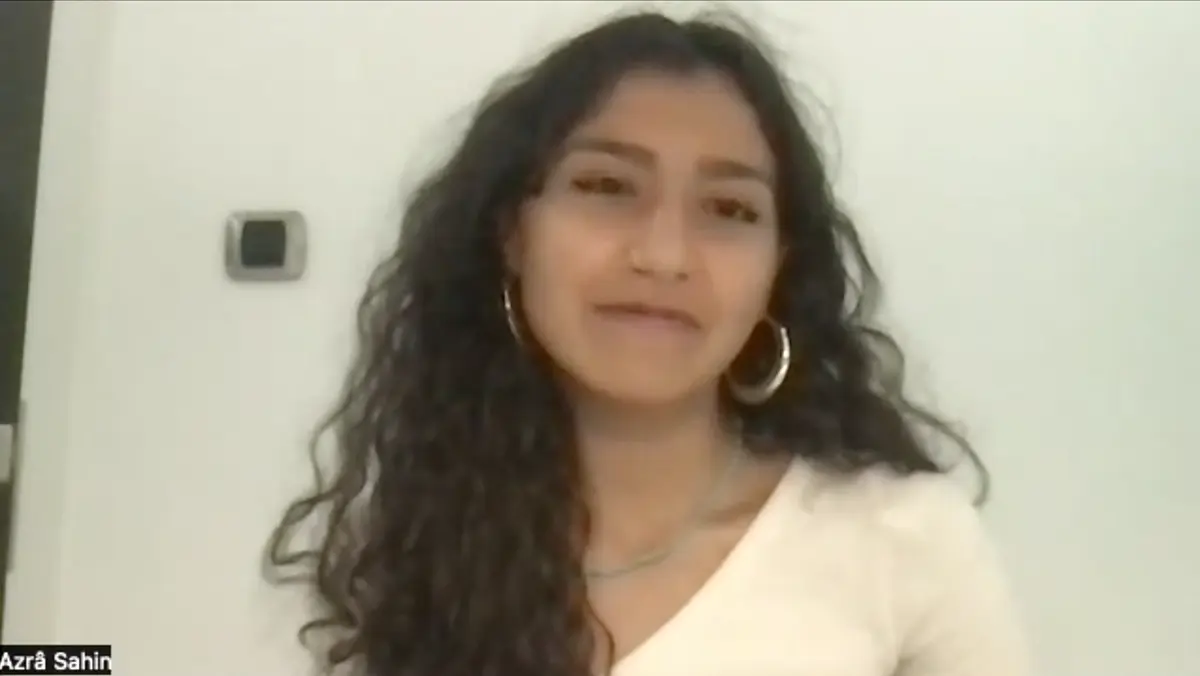
Student Project by Azrâ Sahin, May 2025

This interview was conducted by Azrâ Sahin, a student in the MA American Studies program. It is the result of her initiative within the degree to encourage conversations amplifying Native American and First Nations voices and critically engaging with issues of justice, decolonization and representation. This interview features Carma Corcoran, a Native American author, activist and professor whose work centers on justice, rehabilitation and cultural healing. Corcoran offers critical insights drawn from her professional and academic expertise into the systemic issues faced by Native communities, specifically Native American women involved in the justice system. The conversation explores key themes from her book, The Incarceration of Native American Women: Creating Pathways to Wellness and Recovery Through Gentle Action Theory, published in June 2023, Corcoran’s advocacy work and the ongoing Missing and Murdered Indigenous Women and Girls’ (MMIWG) crisis in North America. Carma Corcoran also provided valuable reflections on her teaching of Indian Law and its reception by students.


Comic "The Comet"

Student Project by Aaron König, May 2025


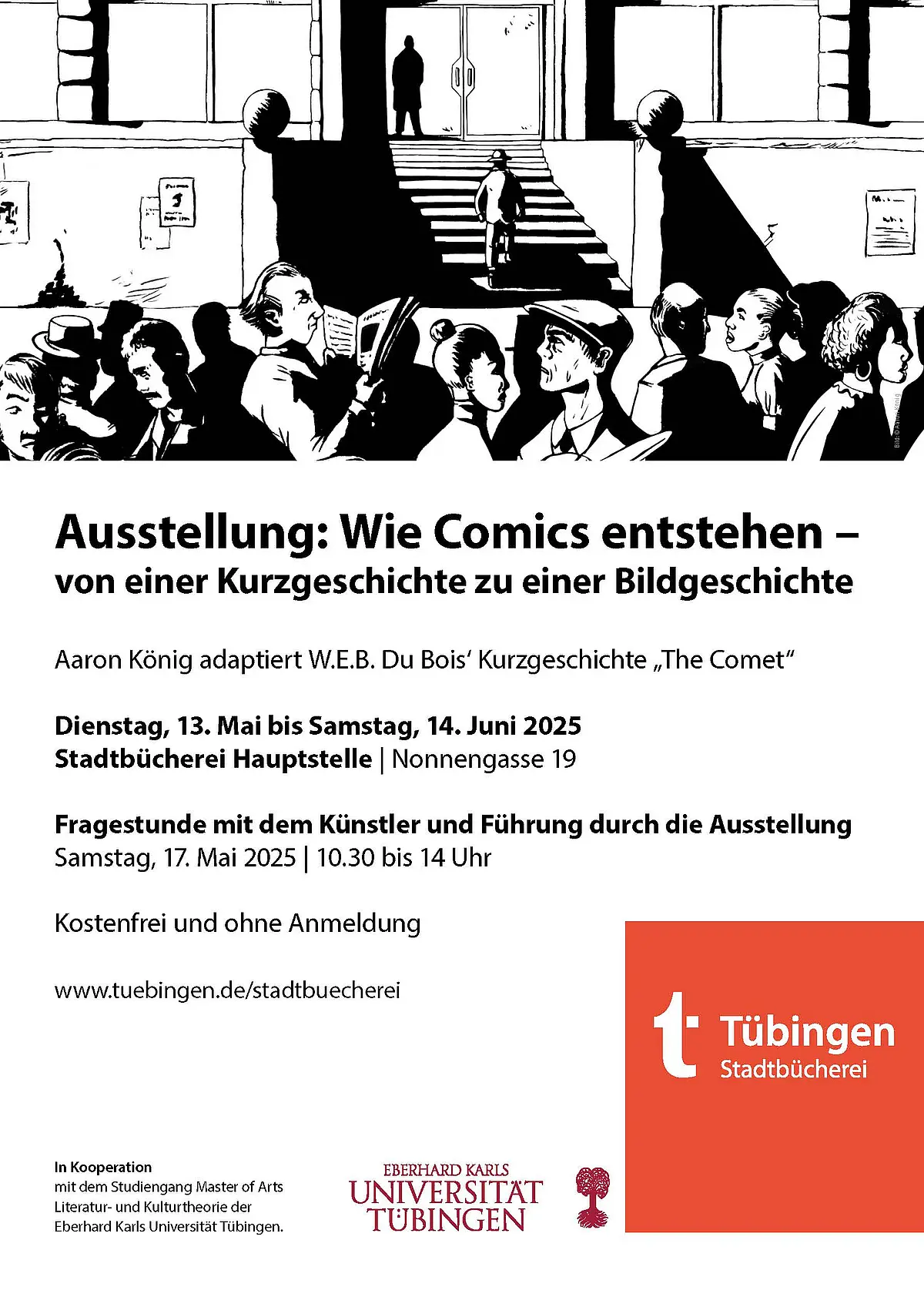
This comic is an experimental adaptation of W.E.B. Du Bois' short story "The Comet", first published in "Darkwater - Voices from within the Veil" in 1920. It was made as a part of the project module in the literary and cultural theory master at the University of Tübingen. 

The focus of the project was on the difficulties of adapting firstly any text, but especially a text as old, metaphorical and layered as Du Bois' work. The comic in combination with sketches, drafts, skripts and original drawings was shown to the public during a five week exhibition at the city library in Tübingen between May 13th and June 14th 2025.

Read the Comic

Project Details

At the heart of this exhibition is the adaptation of a short story as a comic. Most people will have read a comic before, and many will probably have a comic or two at home. The aim of this exhibition is to make the process of turning a text into a picture story tangible and to highlight the hurdles involved in such an adaptation. The focus is therefore not on the finished comic, but on the process of making it.
In the last few years of my studies in literary and cultural theory, I have mainly dealt with African-American texts and history with a focus on racism theory, violence and power. Through this I came across W.E.B. Du Bois (1868-1963), one of the most important African-American historians, sociologists and civil rights activists, who also wrote poems, short stories and novels - including the short story “The Comet”, which is the basis for my comic.

The adaptation of an African-American text dealing with racism by a white European like myself involves certain risks. It is important to avoid a disrespectful or insensitive take on the text, especially one that dilutes or obscures the astute exposure of the consequences of racism for the Black man and the white woman. As such, I have done extensive research into Du Bois' biography and the history of African-American comics. Nonetheless, this project is an experiment, therefore I welcome any feedback, criticism, questions or suggestions. Please feel free to send them to aaron.koenigspam prevention@student.uni-tuebingen.de. I look forward to hearing from you.

Through the exhibition, I hope to make the hurdles as well as the joys of my adaptation process visible. I deliberately chose the project in this form in order to challenge myself, especially in terms of drawing, and I can definitely say that I have succeeded in this. Among the numerous challenges throughout the process was drawing the same figure over a hundred times and making sure that it stays recognizable. You can decide for yourself whether this I have been successful in this. The aim of the exhibition was to make my process of creating the comic comprehensible in five steps. Which is why I highlighted Du Bois' original text as well as every step towards the finished comic page.

I also hope that the exhibition will reveal my passion not only for drawing, but also for the extraordinary basic text. Because despite all the efforts that the project has entailed, it has also been one of the most enriching experiences of my life and has taught me a lot both as an artist and as a person. I hope you enjoy reading the comic. Thank you.