Diversity and palaeoecology of the latest Cretaceous vertebrates from Transylvania
Drill a little bit deeper
Monitoring of Vertebrate Use of Caves
Exzellenzcluster TERRA
Exzellenzcluster HUMAN ORIGINS
Powerful Plants
Ökologische Entwicklung des ehemaligen Gipsbruchs Entringen/Breitenholz
From Ornaments to Ecosystems
Isotopenökologie des Wolfs in der Lausitz
Stable Isotope Analysis of Prehistoric Aquatic Resource Use at Hohle Fels
We are the Biogeology Research Group
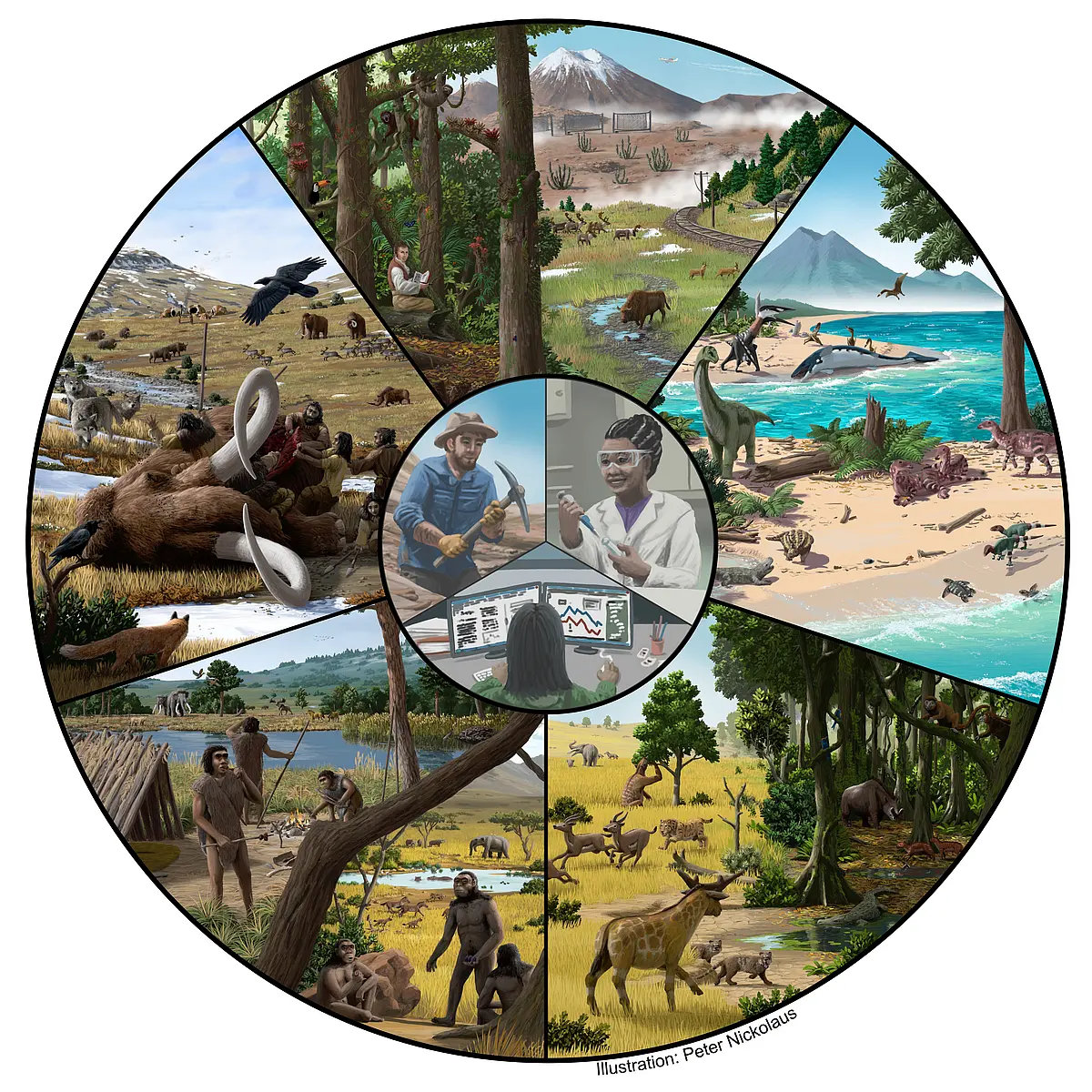
Our group explores how organisms have adapted to and influenced their environments over time, with a particular focus on hominid-related periods in Earth’s history. We investigate the ecological roles of both extinct and extant species, using isotopic analyses of ancient remains to reconstruct diets, habitats, and ecological niches. Our research spans a wide temporal and taxonomic range, from the woolly mammoths of the Siberian steppes to the great dinosaurs of deep time.
By reconstructing past ecosystems and analyzing long-term ecological dynamics, we contribute to a deeper understanding of biodiversity and environmental change. Our guiding principle:
We welcome our new technician for ancient proteins Benjamin Laubi, in the frame of the Cluster of Excellence HUMAN ORIGINS. He will working jointly with the working group Paleoproteomics.
New achievements:
Dorothée Drucker is now apl. Professor! Congratulations from the entire group!
Amanova, M., Drucker, D.G., Fontana, F., 2026. Insights into red deer ecology during the Late Epigravettian: New isotopic evidence from Riparo Tagliente (Italian prealps). Journal of Quaternary Science 41(5): 716-731. https://doi.org/10.1002/jqs.70069https://doi.org/10.1002/jqs.70069
Baumann, C., Streif, S., Akarsu, A.S., Nowak, C., Drucker, D.G., 2026. Retrospective isotope monitoring reveals spatial and temporal effects of anthropogenic pressures on the trophic ecology of European wildcats (Felis silvestris) in Germany. PLOS ONE 21(2): e0343705. https://doi.org/10.1371/journal.pone.0343705
Becker D., Mouhat Bourquard M., Maridet O., Vasilyan D., 2026. The Hipparionini horses (Equidae, Perissodactyla, Mammalia) from the Late Pliocene of Jradzor (Armenia). Swiss Journal of Palaeontology 145: 625-653. https://doi.org/10.3897/sjp.145.189856
Moreland, K.N., Wolf, W., Drucker, D.G., Weingarten, A., Reiter, E., Spyrou, M.A., Conard, N.J., Posth, C. 2026. Ancient DNA from the Upper Paleolithic mammoth ivory of Hohle Fels, Germany. Scientific Reports 16: 15181. https://doi.org/10.1038/s41598-026-46761-x
Yravedra, J., Courtenay, L.A., Gutiérrez, M., Reinoso-Gordo, J.F., Saarinen, J., Égüez, N., Luzón, C., Rodríguez-Alba, J.J., Titton, S., Montilla-Jiménez, E., Cámara-Donoso, J., Herranz-Rodrigo, D., Estaca, V., Serrano-Ramos, A., Amorós, G., Azanza, B., Bocherens, H., DeMiguel, D., González-Quiñones, J.J., Jiménez-Espejo, F., Kaakinen, A., Munuera, M., Piñero, P., Sánchez-Bandera, C., Viranta, S., Fortelius, M., Agustí, J., Blain, H.-A., Oms, O., Mallol, C., Barsky, D., Solano, J. A., Carrión, J., Jimenez-Arenas, J.M., 2026. When empirical data challenge entrenched interpretations: Revisiting the ”hyaenid metanarrative” at Fuente Nueva 3 archaeological site (Orce, Granada, Spain). Quaternary Science Reviews 389: 110120. https://doi.org/10.1016/j.quascirev.2026.110120
Dr. Chris Baumann gave an interview to SWR about the dietary behavior of modern wildcats (Felis silvestris)
Prehistoric Planet - Ice Age (Apple TV): Prof. Hervé Bocherens scientific advisor for the documentary series (released on 26th November 2025)
Dr. Dorothée Drucker was interviewed by Valérie Gillet for Horizon, the EU Research & Innovation Magazine on her research on mammoth bones in the frame of the ERC-funded project MAMBA
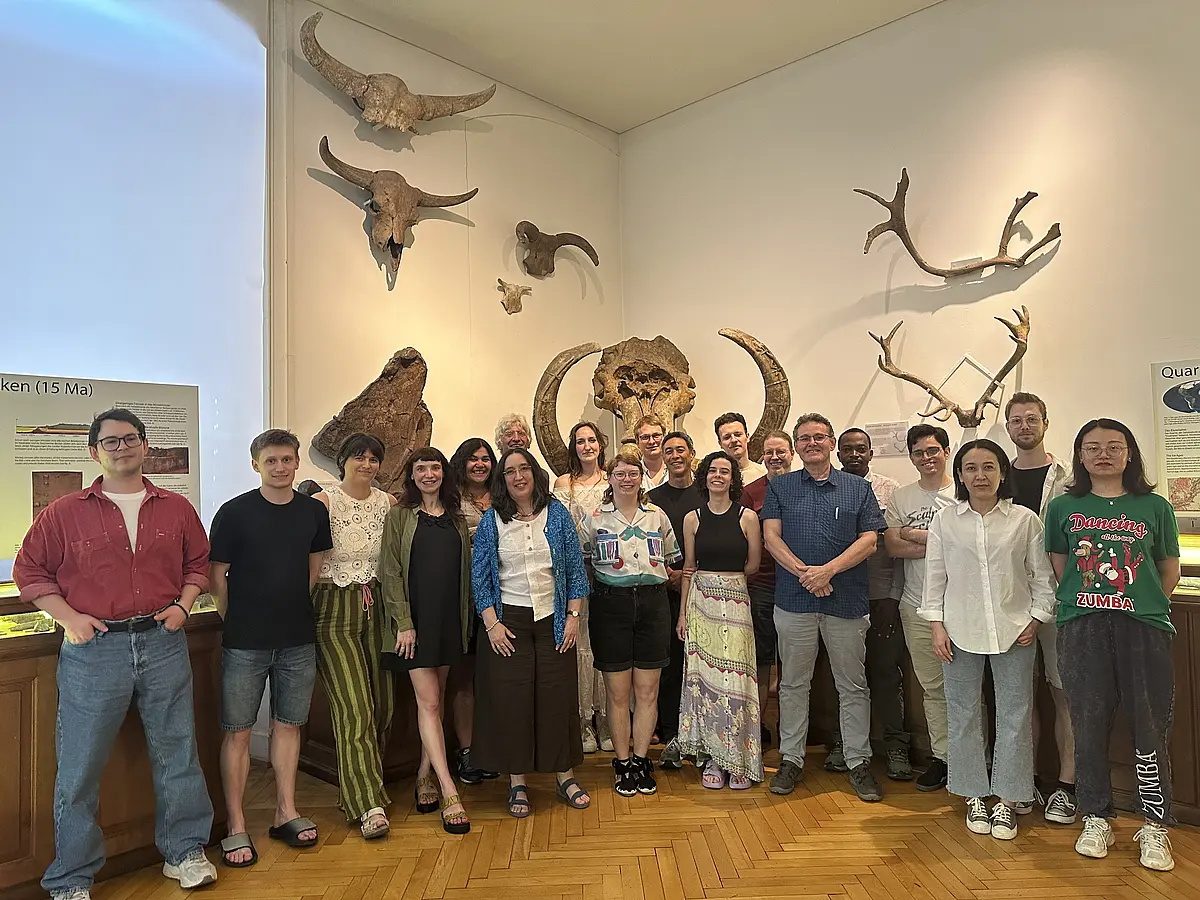
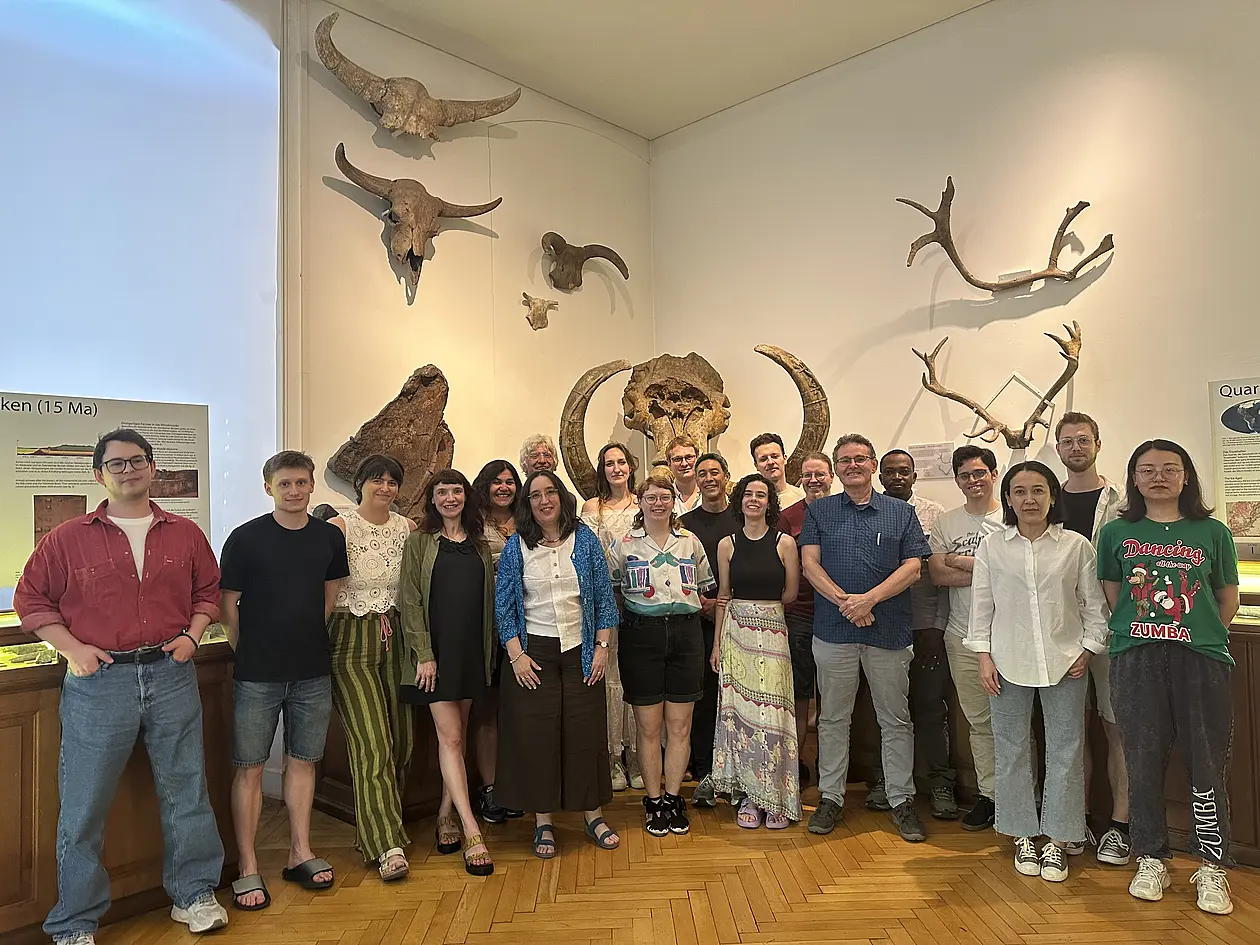
Biogeology Group 2026
Valentina and Jett won the price for the best poster 2025 at the EVEREST StEvE- Meeting.