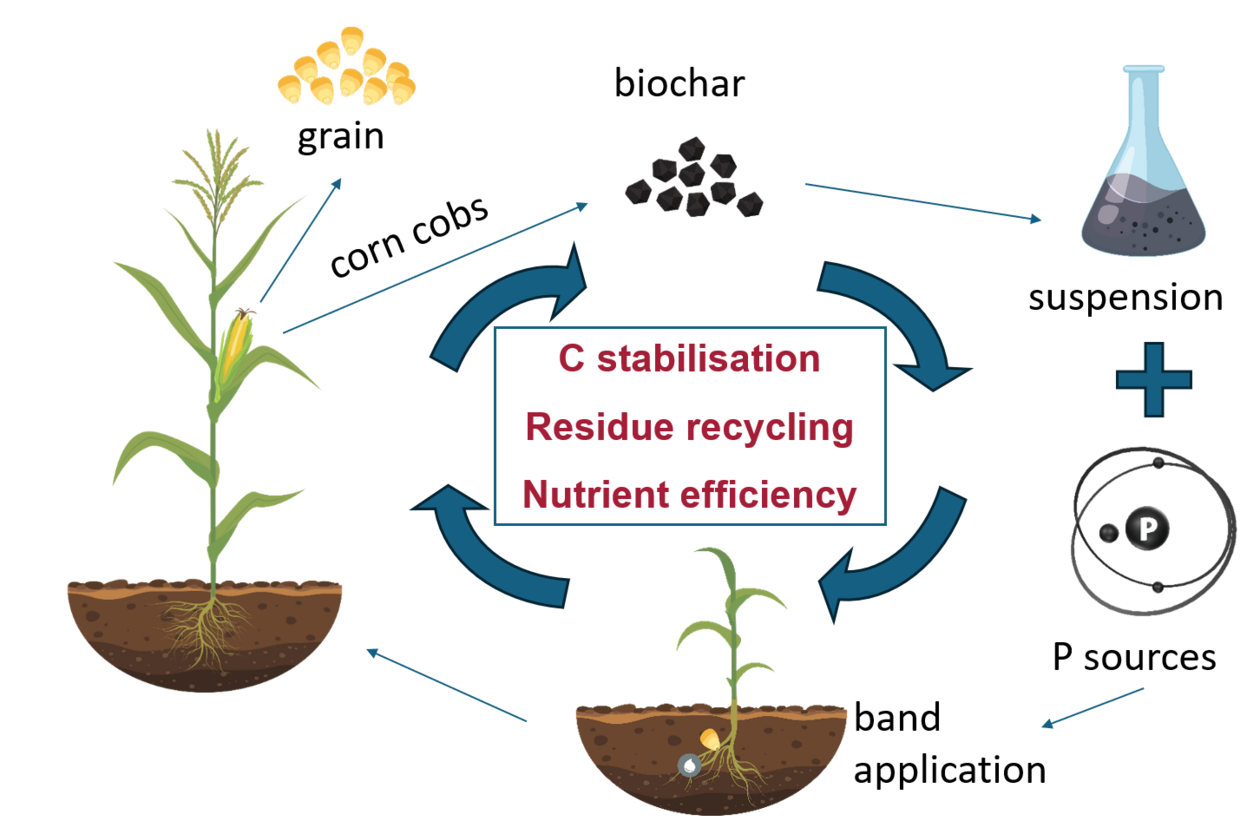
Key challenges for future-oriented and sustainable land management include closing nutrient cycles, promoting soil health and biodiversity, and enhancing soils’ role as carbon sinks to mitigate climate change. To address these challenges in a single management approach, the EcoFuture project aimed to develop and test a new biostimulating, multi-component fertiliser (EcoFuture KAP4) based on four recycled material streams: (1) ecologically certified fermentation residues from biogas plants as a nutrient source; (2) long grass as a “carrier matrix” and carbon source; (3) biochar from tree and shrub pruning to support carbon sequestration, reduce greenhouse gas emissions (bind CO2 and reduce N₂O), and improve soil water retention and drought resilience; and (4) a Sebacinal root endophyte as a synergistic component to enhance plant growth, stress tolerance, and nitrogen and phosphorus utilisation from organic residues.
EcoFuture brings together regional expertise from research and practice. The consortium consists of research groups from two universities (the University of Tübingen and the University of Hohenheim), a research institute (the Steinbeis Innovation Centre), and farming partners (Kastanienhof and Weiherhof farms and the Kleinhohenheim Experimental Station of the University of Hohenheim). The TERRA FutureLab coordinates networking with associations, producers, policymakers, scientists, and society to ensure rapid practical implementation and continuous development of EcoFuture KAP4.
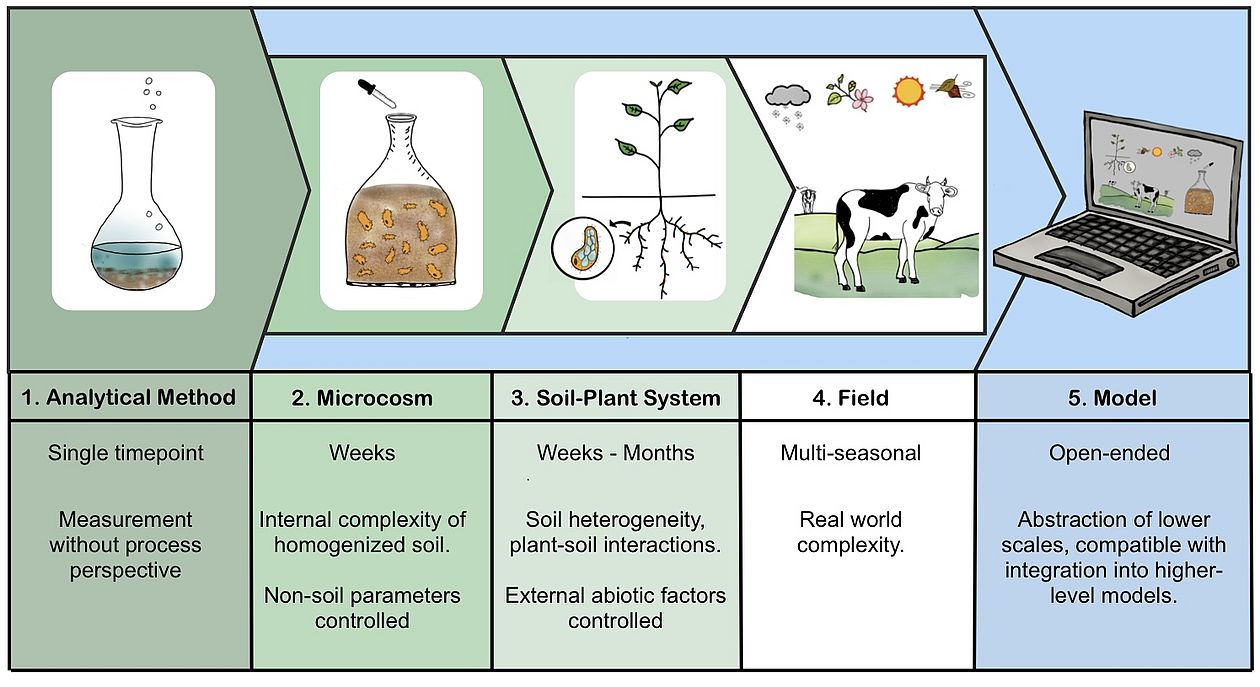
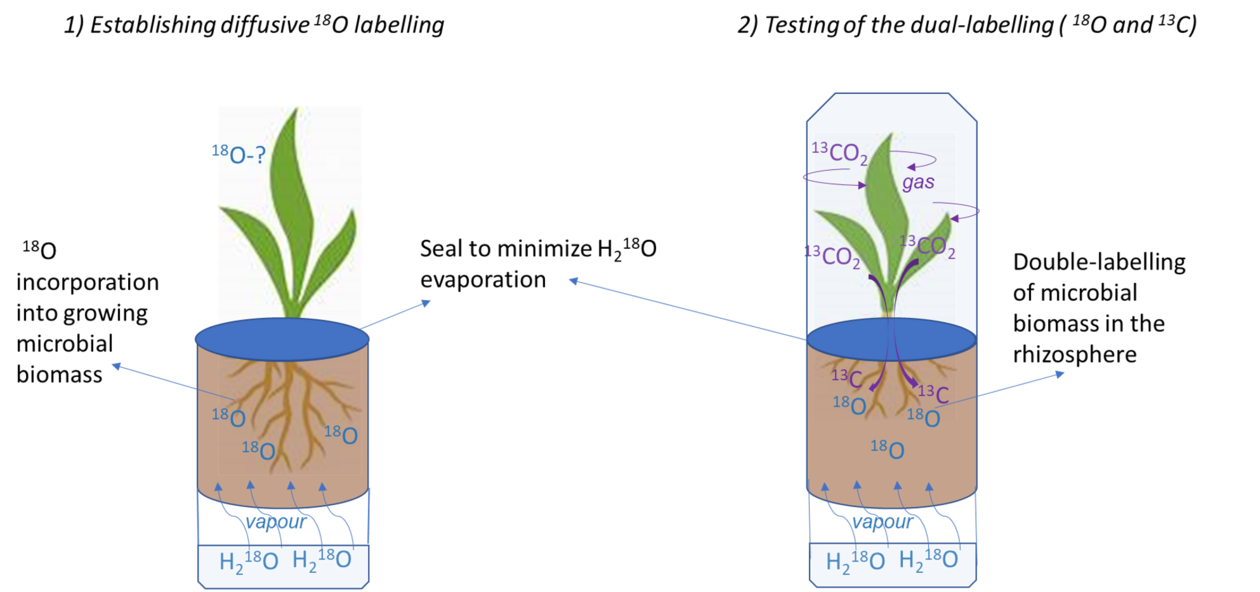
EcoFuture KAP4 will be tested for the presence and leachability of organic and inorganic pollutants. Controlled laboratory experiment will assess changes in soil nutrient dynamics, including mineralisation, immobilisation, leaching, and gaseous nitrogen losses. Field trials at three locations with differing geology, relief, soil type, and texture will use spring barley and winter wheat to evaluate the effects of EcoFuture KAP4 on nutrient availability, soil carbon balance, soil biodiversity (taxonomic and functional), crops’ nutrient supply and yield, and crop resilience to drought stress.
This innovative approach addresses all key future challenges by combining multiple synergistic components, providing a significant economic advantage for organic farms while closing local nutrient cycles.