Tübinger Forum für Wissenschaftskulturen

Reasoning, Computation & Languages

An Interdisciplinary Conference with Speakers from Logic, Philosophy & Computer Science


When:  1 - 3 July 2026

Where: Lecture Hall (1st floor)

Tübingen Forum for Science & Humanities

Doblerstr. 33, 72074 Tübingen

The conference is jointly organized by the Tübingen Forum for Science and Humanities together with Jean-Philippe Narboux (Professor of contemporary philosophy, Research Centre for Contemporary and German Philosophy, University of Strasbourg) and Laurent Bienvenu (Chargé de Recherche at CNRS, Laboratoire Bordelais de Recherche en Informatique (LaBRI), CNRS & University of Bordeaux).

About

Language has always accompanied computation and has served as one of the central media through which reasoning becomes explicit, communicable, and formalizable.
This conference explores the triangular relationship between reasoning, computation, and language. Reasoning aims at validity and justification; computation offers procedures for solving problems; and the relation between computation and correct reasoning is mediated by language —  whether in natural language, formal language, or something like a "language of thought". Once reasoning is expressed in such a medium, one can ask whether its forms can be governed by explicit rules and whether correct reasoning can be modeled as a kind of computation.

Two relations are central to the conference. The first concerns reasoning and computation: On the one hand, computation allows formalized reasoning to be made explicit, analyzed, and mechanically checked. On the other hand, impossibility results in logic and theoretical computer science reveal principled limitations to the idea that reasoning could be fully captured by computational procedures.
The second relation concerns natural and formal languages as vehicles of actual reasoning. Both have grammar and syntactic structure, yet differ in their expressivity, determinacy and degree of ambiguity. Both, however, shape how reasoning can be represented, communicated, and transformed.

Recent developments in large language models have created a newly productive interface between computation and language. In these models, linguistic representation becomes computationally tractable at an unprecedented scale. This invites us to ask whether, and in what sense, computation, reasoning and language share common forms of representation, transformation and inference.
The conference brings together perspectives from philosophy, logic, mathematics, computer science and cognitive science to examine how reasoning, computation and language mutually shape one another.

Speakers

  • Yannis Arazam (Research Center for Arabic classical Philosophy and Philosophy of Sciences, University Mohammed VI Polytechnic)
  • Brice Halimi (Dept. of History and Philosophy of Science, Université Paris Cité)
  • Tomasz Steifer (Center for Credible AI, Warsaw University of Technology)
  • Luca San Mauro (Dept. of Philosophy, University of Bari)
  • Andrew Arana (Dept. of Philosophy, Université de Lorraine)
  • Martin Butz (Dept. of Computer Science, University of Tübingen)
  • Manon Prost (Dept. of Philosophy, Université de Strasbourg)
  • Daniel Leube (Tübingen Forum for Science and Humanities, University of Tübingen)

Schedule

Wednesday, July 1stThursday, July 2ndFriday, July 3rd

09:00 - 09:15

Introduction from the organizers

  
09:15 - 10:15
Synergies in Logic - In the Light of Partial Information Decomposition (Daniel Leube)

09:15 - 10:15

Implicit Linguistic Aspects of Programming Languages (Baptiste Mélès) 

09:15 - 10:15

Human-Like Reasoning and the ARC Challenge (Martin Butz)

Coffee breakCoffee breakCoffee break

10:30 - 11:30

Dummett and the Logical Concept of Harmony (Yannis Arazam)

10:30 - 11:30

Functorial Context-Dependence (Brice Halimi)

10:30 - 11:30

Complexity of Infinite Argumentation (Luca San Mauro)

Coffee breakCoffee break 
12:00 - 13:00
Varieties of Reversals (Andrew Arana)
12:00 - 13:00
Machine Learning Models and their Expressivity, Theory and Practice (Tomasz Steifer)
 
Lunch breakLunch break 
15:00 - 16:00
Wittgenstein on Calculation, Experiment and Technique (Manon Prost)
15:00 - 16:00
Solomonoff Induction (Tom Sterkenburg)
 
 Coffee break 
16:00 - open end
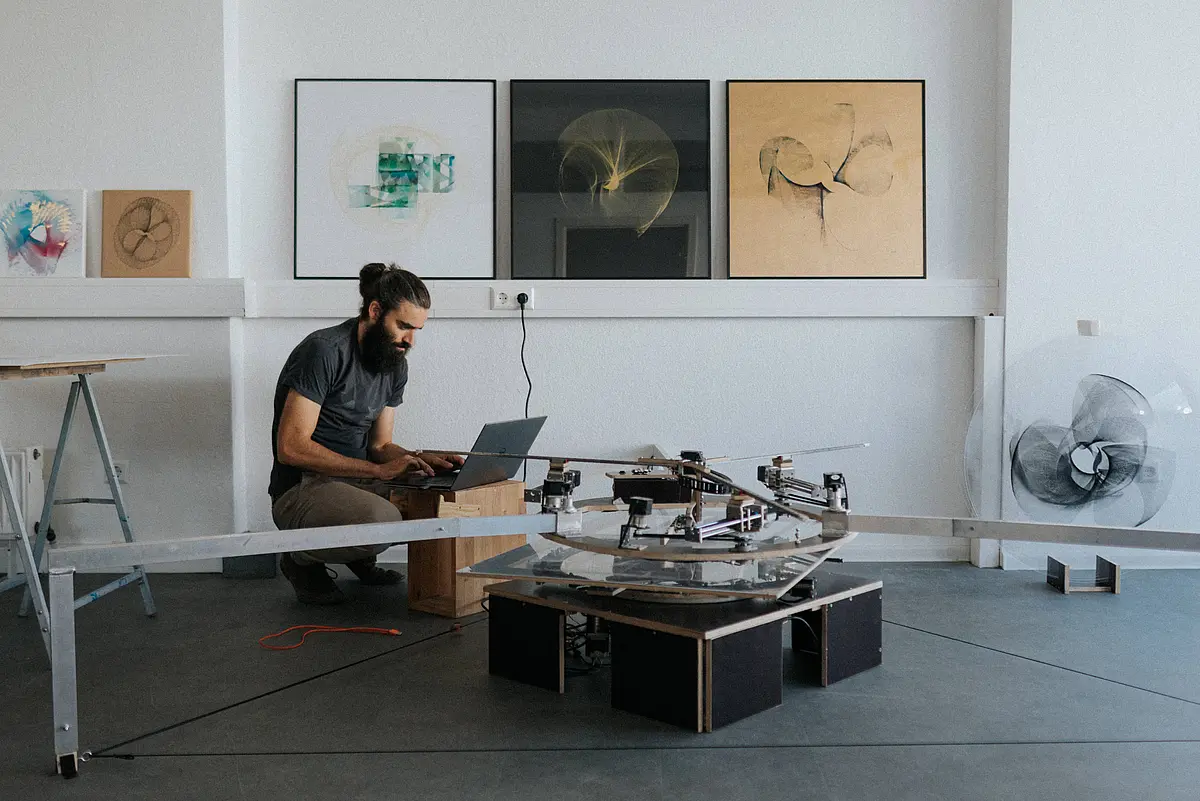
Art & Coffee
with Tübingen-based artist Robert Balke

16:30 - 17:30
Computable Bayesianism: Contents and Discontents (Francesca Zaffora Blando)

remotely via Zoom

 
18:30
Conference Dinner: Weinstube Forelle
  

Abstracts

Tom Sterkenburg: Solomonoff Induction

This talk discusses the Solomonoff approach to universal prediction. The crucial ingredient in the approach is the notion of computability, and I present the main idea as an attempt to meet two plausible computability desiderata for a universal predictor. This attempt is unsuccessful, which is shown by a generalization of a diagonalization argument due to Putnam. I then critically discuss purported gains of the approach, in particular it providing a foundation for the methodological principle of Occam’s razor, and it serving as a theoretical ideal for the development of machine learning methods.

Baptiste Mélès: Implicit linguistic aspects of programming languages

It may sound strange to use linguistics to examine formal languages such as programming languages. As a matter of fact, all their components seem to be explicit: alphabet, syntax, semantics. However, I will show that a linguistic approach may reveal some hidden aspects in the practice of such languages: concerning the alphabet, one should distinguish between a graphetics and a graphematics; the lexicon has a differential structure; a morphology is hidden under the syntax; a pragmatics comes on top of the semantics. All such features in the practice of programming languages makes their practice close to that of human languages.

Brice Halimi: Functorial Context-Dependence

Context-dependence covers all the cases in natural language where the semantic content of an expression depends on the context of its utterance. It is a massive and complex phenomenon, of which the case of indexicals (such as “I” or “here”) is a basic illustration. Context-dependence is supposed to elude any formal representation (this diagnosis defines “contextualism”), unless it is modeled on indexical context-dependence (“indexicalism”), or reduced to it (“minimalism”). In my talk, I will argue that these logico-philosophical stances are based on too narrow a picture of what a formal representation can be; that context-dependence, once it is approached as a radically dynamic process based on context-shift, is amenable to a formal representation; but that new mathematical concepts have to be called upon to that end. I will show that this perspective leads to understanding context-dependence as the transposition of semantic content from one context to another, and to analyzing the latter in the form of a functorial computation. Accordingly, two parallel aspects of the relationship between semantic content and linguistic meaning will be sharply distinguished.

Daniel Leube: Synergies in logic - in the light of partial information decomposition

Partial information decomposition (PID) is an extension of Shannon's classical information theory that aims to decompose multivariate mutual information into parts that are unique, redundant and synergistic with respect to some sources. Based on the concept of mereological PID I would like to argue that in a qualitative manner PID may also purposefully be applied to logical formulae. In this way, parthood lattices of mereological PID become interpretable as frames of possible worlds in Kripke semantics. This leads to new perspectives on classical vs. intuitionistic and modal logic in terms of how they deal with synergistic effects between atomic formulae.