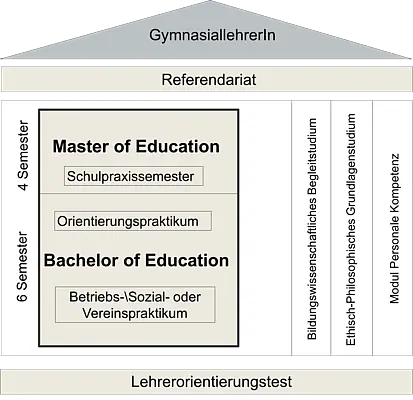
3.2 Qualification of students for the Islamic religious education at secondary schools (Gymnasien) in Baden-Wuerttemberg
3.2.1 Content-related dimension of the teacher training
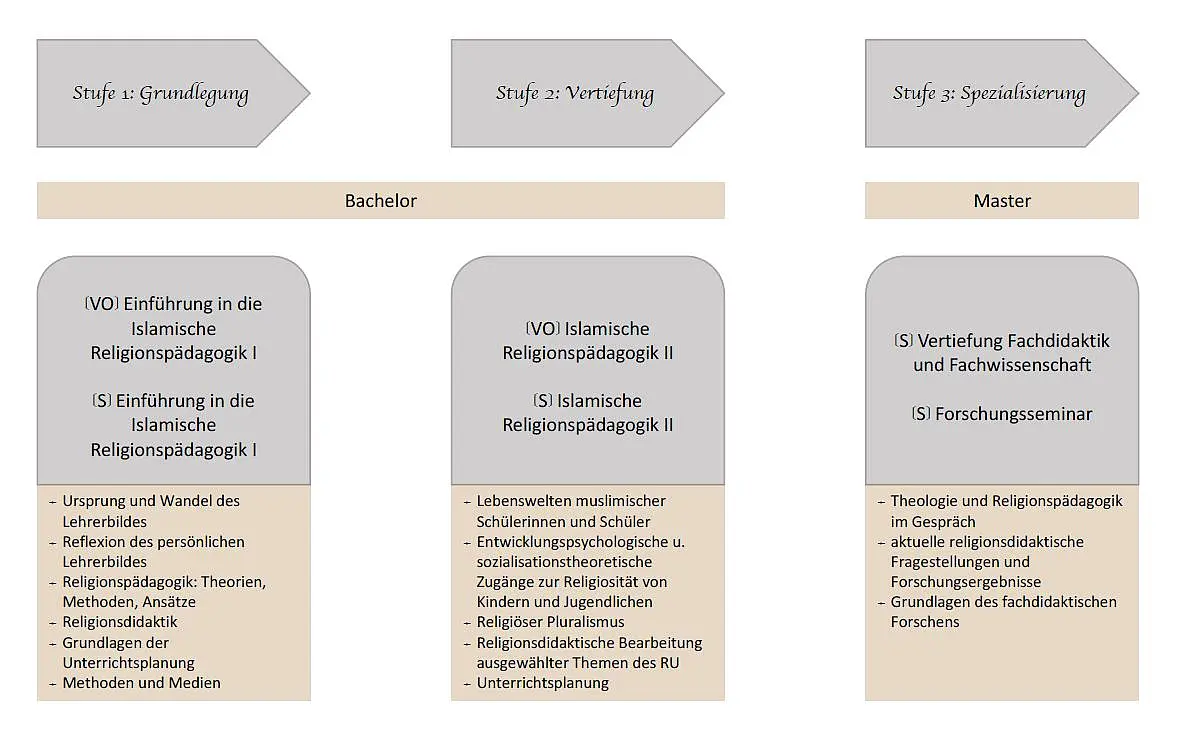
The qualification of students for the Islamic religious education at secondary schools in Baden-Wuerttemberg takes place in central dimensions that are relevant in all three above-mentioned training periods (groundwork, deepening, specialization) and are reflected in the framework of each particular portrayed focus:
a) Theological dimension: Knowing and reflecting Islam
Students are dealing with religious texts, the development of the history of ideas, theological key questions, cultural contexts, the spiritual dimension and the ethics of Islam in historical and contemporary perspectives. Moreover, classical and modern theological school of thoughts and the religious contemporary culture are reflected.
The following four dimensions primarily constitute the area of responsibility of the chair for Islamic Religious Education:
b) Pedagogical dimension: Teaching Islam
Students are dealing with situations relating to schools and social situations of Muslim pupils with general questions of religious education, formation and socialization, religious pedagogical theories and didactical models. Theological and pedagogical challenges are reflected.
c) Political dimension:
Students are dealing with guiding principles of „educational goals of schools“ schools in Baden- Wuerttemberg. They reflect the socio-political order to Islamic religious education within the framework of the liberal and constitutional basic order, which should enable pupils of Muslim belief to position themselves in questions of religion and belief, to reflect and to strengthen their identity and to feel home in the German society.
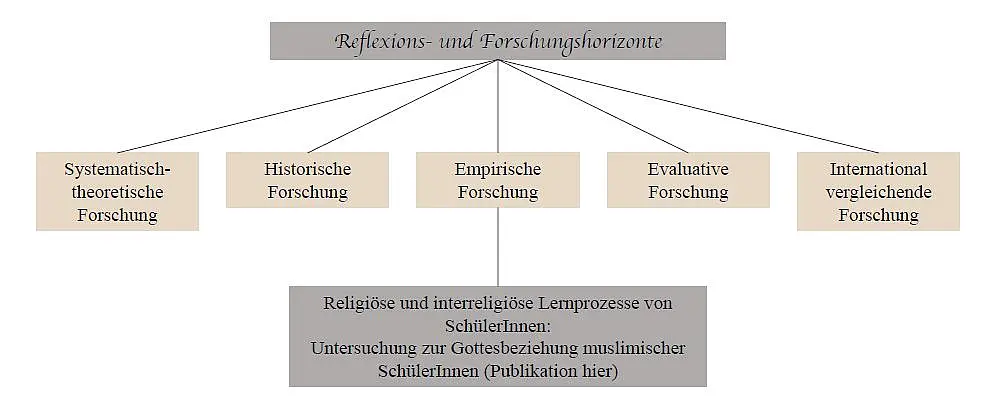
d) Research dimension
Students are dealing with research questions concerning religious teaching and educational processes. In the course of methodological and research seminars, they have the opportunity to deal with empirical research and to develop research designs.
e) Inter-religious dimension:
Students work on topics of the perspective of different religions in the framework of the project „interreligious meeting learning“ in cooperation with the Pädagogische Hochschule Heidelberg and concretize them in the inter-religious exchange. The core of the project is the method of personal meetings. Jewish, Catholic, Protestant, Muslim and Alevite students as well as students from the discipline of ethics take part in this project.
Students have the opportunity to participate in inter-religious seminars that are organized by the chairs for the Protestant, Catholic and Islamic religious education. They deal with inter-religious elements of their own religion in dialogue with other religions.