College of Fellows

Neuroscience and Society

Die Focus Group arbeitet an interdisziplinären Fragestellungen an der Schnittstelle von Neurowissenschaft und Geisteswissenschaften. Sie untersucht, inwiefern neurowissenschaftliche Forschungen Relevanz für die Geistes- und Sozialwissenschaften haben – und umgekehrt. Dass menschliches Verhalten und Handeln immer häufiger auf neuronale Prozesse zurückgeführt wird, stellt die Geistes- und Sozialwissenschaften, in deren Kompetenzbereich solche Fragen bislang fielen, vor Herausforderungen, bietet aber auch die Chance zu interdisziplinärer Forschungsarbeit. Durch das Überschreiten von Fächergrenzen öffnen sich hier unerwartete Perspektiven, sodass sich fachspezifische Fragen neu perspektivieren und gemeinsam Antworten finden lassen. Die Focus Group zielt auf einen Austausch zwischen Neuro- und Kognitionswissenschaften, Psychiatrie und Geistes- und Sozialwissenschaften wie Philosophie und Literaturwissenschaft und steht damit in der Tradition der vom Werner Reichardt Centrum für Integrative Neurowissenschaften und dem College of Fellows co-organisierten „CIN Dialogues at the Interface of the Neurosciences and the Arts and Humanities“. Sie bietet einen Ort für den interdisziplinären Dialog und die fächerübergreifende Zusammenarbeit an der Universität Tübingen, an der international renommierte Neurowissenschaften auf starke Geistes- und Sozialwissenschaften treffen. Sie organisierte ihre Aktivitäten im Sommersemester 2024 um den Aufenthalt und die Forschungsarbeit von Prof. Vittorio Gallese, der im Sommersemester 2024 als Humboldt-Forschungspreisträger nach Tübingen kam. Im Wintersemester 2024/25 und Sommersemester 2025 organisierte die Focus Group ihre Aktivitäten um die Forschungsarbeit von Prof. Patrick Haggard. Im Wintersemester 2025/26 und im Sommersemester 2026 organisierte die Focus Group ihre Aktivitäten um die Forschungsarbeit von Prof. Günther Knoblich.

Personen

Fellows/Gastprofessor*innen

Günther Knoblich
New Horizons Fellow
Psychology
2025

Fellowship: New Horizons Fellowship 
Affiliation (host institution, host scholar): Department of Psychology, hosted by Prof. Dr. Barbara Kaup and Jun.-Prof. Dr. David Dignath 
Stay in Tübingen (from – until): November 2025 June 2026
Research Project: Cognition and Communication
Research Areas: Psychology, Cognitive Science, Cognitive Neuroscience 

Publications

  1. Curioni, A., Voinov, P., Allritz, M., Wolf, T., Call, J., & Knoblich, G. (2022). Human adults prefer to cooperate even when it is costly. Proceeding of the Royal Society B, 289doi.org/10.1098/rspb.2022.0128
  2. Lewis, P. A., Knoblich, G., & Poe, G. (2018). How memory replay in sleep boosts creative problem solving. Trends in Cognitive Science, 22, 491-503.
  3. Marschner, M., Dignath, D., & Knoblich, G. (2024). Me or We? Action-Outcome Learning in Synchronous Joint Action. Cognition247.
     https://doi.org/10.1016/j.cognition.2024.105785
  4. Schweinfurth, M. K., Baldrige, D. B., Finnerty, K., Call, J., & Knoblich, G. (2022). Inter-individual coordination in walking chimpanzees. Current Biology. https://doi.org/10.1016/j.cub.2022.09.059
  5. Sebanz, N., & Knoblich, G. (2021). Progress in Joint-Action ResearchCurrent Directions in Psychological Science, 30, 138-143. doi:10.1177/0963721420984425
  6. Vesper, C., Schmitz, L., & Knoblich, G. (2017). Modulating action duration to establish non-conventional communication. Journal of Experimental Psychology: General, 146, 1722-1737.

For a full list of publications visit: https://somby.ceu.edu/gunther-knoblich-0

Contact:  Knoblichgspam prevention@ceu.edu 
About: Günther Knoblich is a Professor of Cognitive Science at Central European University, PU, Vienna. His main research interests include joint action, sense of agency, social cognition, communication, and problem solving. He was the coordinator of several interdisciplinary research projects such as an ERC Synergy project on Coordination, Communication, and Cultural Transmission (2015-2022), The EuroCores project EuroUnderstanding (2011-2014), and a ZiF research year on Embodied Communication in Humans and Machines (2005-2006, with Ipke Wachsmuth). He received his PhD from Hamburg University in 1997 and held research and faculty positions at the Max Planck Institute for Psychological Research, Rutgers University, the University of Birmingham, and the Donders Institute at Radboud University Nijmegen. 
 

Patrick Haggard
New Horizons Fellow
Neurosciences
2024

Fellowship: New Horizons Fellowship
Affiliation (host institution, host scholar): Lehrstuhl für Philosophie mit dem Schwerpunkt Kognitionswissenschaft, hosted by Prof. Dr. Hong Yu Wong
Stay in Tübingen (from – until): several short stays in 2024 and 2025
Research Project: Action and Body: an interdisciplinary mind sciences approach 
Research Areas: Human experimental psychology; consciousness science; neurophysiology

Publications

Selected recent publication:

  1. Haggard, P. (2024). An intellectual history of the “Libet experiment”: embedding the neuroscience of free will. In Proceedings of the Paris Institute for Advanced Study (Vol. 21). https://doi.org/10.5281/zenodo.13341982

A complete list of publications can be found: https://scholar.google.com/citations?user=NqmgC9gAAAAJ&hl=en 

Contact: p.haggardspam prevention@ucl.ac.uk
About: Patrick Haggard obtained his PhD in Experimental Psychology from Cambridge University in 1991.  He was a postdoctoral researcher at Oxford University from 1991 to 1994, before moving to University College London in 1995.  He was promoted to Full Professor in 2004, and became a Fellow of the British Academy in 2014.
 

Vittorio Gallese
Humboldt
Neuroscience
2024

Fellowship: Humboldt-Forschungspreis
Affiliation (host institution, host scholar): University of Tübingen
Stay in Tübingen (from – until): Summer semester 2024
Research Areas: Neurophysiology; cognitive neuroscience; social neuroscience; philosophy of the mind 
About: Vittorio Gallese, a professor of psychobiology at the Università degli Studi di Parma since 2006, is regarded as one of the world’s leading experts in the field of social neuroscience. He was a professor of experimental aesthetics at the University of London (2016–2018), an Einstein Visiting Fellow at the Berlin School of Mind and Brain (2016–2020), a KOSMOS Fellow at Humboldt University of Berlin (2013–2014), and a Visiting Professor at the University of California, Berkeley, USA (2002). Gallese is an expert in neurophysiology, cognitive neuroscience, social neuroscience, and the philosophy of the mind, and one of the discoverers of mirror neurons. In his research, he seeks to uncover the functional organization of the brain mechanisms underlying social cognition, such as empathy and sympathy, language, and aesthetic experience. His interdisciplinary work draws on insights and approaches from philosophy as well as psychology and neuroscience.
 

Beteiligte an der Universität Tübingen

Prof. Dr. Andreas Bartels

Neurowissenschaften/Werner Reichardt Centre for Integrative Neuroscience, Vision and Cognition

Jun.-Prof. Dr. David Dignath

Allgemeine Psychologie

Dr. Elisa Filevich

Hector-Institut für Empirische Bildungsforschung 

Prof. Dr. Michael Franke

Pragmatik und Linguistik; kooptiert als Professor für Informatik

Dr. Marlen Fröhlich

Archeology, Department of Paleoanthropology

Prof. Dr. Thomas Gasser

Neurowissenschaften/Universitätsklinikum, Abteilung Neurologie

PD Dr. Fotios Alexandros Karakostis

Paläoanthropologie, Senckenberg Institute 

Prof. Dr. Barbara Kaup

Psychologie, AG Sprache & Kognition

Prof. Dr. Dorothee Kimmich

Literaturwissenschaftliche Kulturwissenschaft/Deutsches Seminar

Prof. Dr. Claudia Maienborn

Semantik, Pragmatik, Sprache und Kognition

Prof. Dr. Monique Scheer

Empirische Kulturwissenschaft/Prorektorin für Internationales und Diversität

Prof. Dr. Claudio Tennie

Ur- und Frühgeschichte und Archäologie des Mittelalters

PD Dr. Niels Weidtmann

Interkulturelle Philosophie/College of Fellows

Prof. Dr. Felix Wichmann

Neurowissenschaft, Kognitionswissenschaft/Informatik, Neuronale Informationsverarbeitung/Bernstein Center for Computational Neuroscience Tübingen

Prof. Dr. Dirk Wildgruber

Neurowissenschaften/Psychiatrie/Universitätsklinikum, Arbeitsgruppe Affektive Neuropsychiatrie

Prof. Dr. Hong Yu Wong

Philosophie mit dem Schwerpunkt Kognitionswissenschaft/Philosophisches Seminar

Dr. Charley Wu

Exzellenzcluster – Maschinelles Lernen für die Wissenschaft

Veranstaltungen

Die Focus Group „Neuroscience and Society“ plant regelmäßige Arbeitstreffen. Bei Interesse melden Sie sich bitte bei niels.weidtmannspam prevention@uni-tuebingen.de.

Veranstaltungen mit Prof. Günther Knoblich, New Horizons Fellow (2025/2026)

24. Juni 2026
New Horizons Workshop
Language-based vs. language-free components of cognition: A comparative perspective on how language shapes thinking

Mit einer Keynote Lecture von Prof. Günther Knoblich: 
"Action Coordination and Teaching in Great Apes"

24. Juni 2026
Villa Köstlin (Rümelinstr. 27)


Workshop Abstract:
In this informal workshop, we will explore perspectives on the interplay between linguistic and non-linguistic cognition in the mind. A central question is whether certain cognitive functions may include both language-bound and language-independent components. Here, we adopt a comparative perspective, focusing on animal cognition and developmental changes in human cognition. Our aim is to create an open and friendly atmosphere that encourages discussion and idea sharing. Rather than showcasing completed research programs, the workshop will feature talks that present novel or developing ideas. Through this exchange, we hope to identify useful starting points for a meaningful distinction between linguistic and non-linguistic cognition.


Der Workshop wird organisiert von Dr. Karin Bausenhart, Prof. David Dignath und Prof. Barbara Kaup. 

29. April 2026
Semestereröffnung
Social Cognition and Cultural Transmission

Social Cognition and Cultural Transmission

29. April 2026 | Alte Aula

Humans pass on behaviors, ideas, and traditions within groups and across generations. This process of cultural transmission enables the accumulation of knowledge and thus forms the basis of human cultural evolution. An important question in Cognitive Science is which individual level processes enable humans to participate in cultural transmission. For a long time, the ability to imitate others, especially their tool use actions, was considered to be the key psychological mechanism on which cultural transmission rests. More recently, the research focus has shifted to mechanisms of interpersonal coordination and communication that enable humans to actively teach and understand each other and to thus learn in the context of cooperative joint action. In his talk, Günther Knoblich showed examples for comparative, developmental, and cognitive neuroscience studies addressing the psychological mechanisms that make human cultures possible.

Bio

Günther Knoblich is Professor of Cognitive Science at Central European University, Vienna. His research interests include joint action, communication, and problem solving. He coordinated several interdisciplinary research projects such as an ERC Synergy project on Coordination, Communication, and Cultural Transmission (2015-2022) and the EuroCores project EuroUnderstanding (2011-2014). He received his PhD from Hamburg University in 1997 and held research and faculty positions at the Max Planck Institute for Psychological Research, Rutgers University, Birmingham University, and the Donders Institute Nijmegen.

26. - 27. März 2026
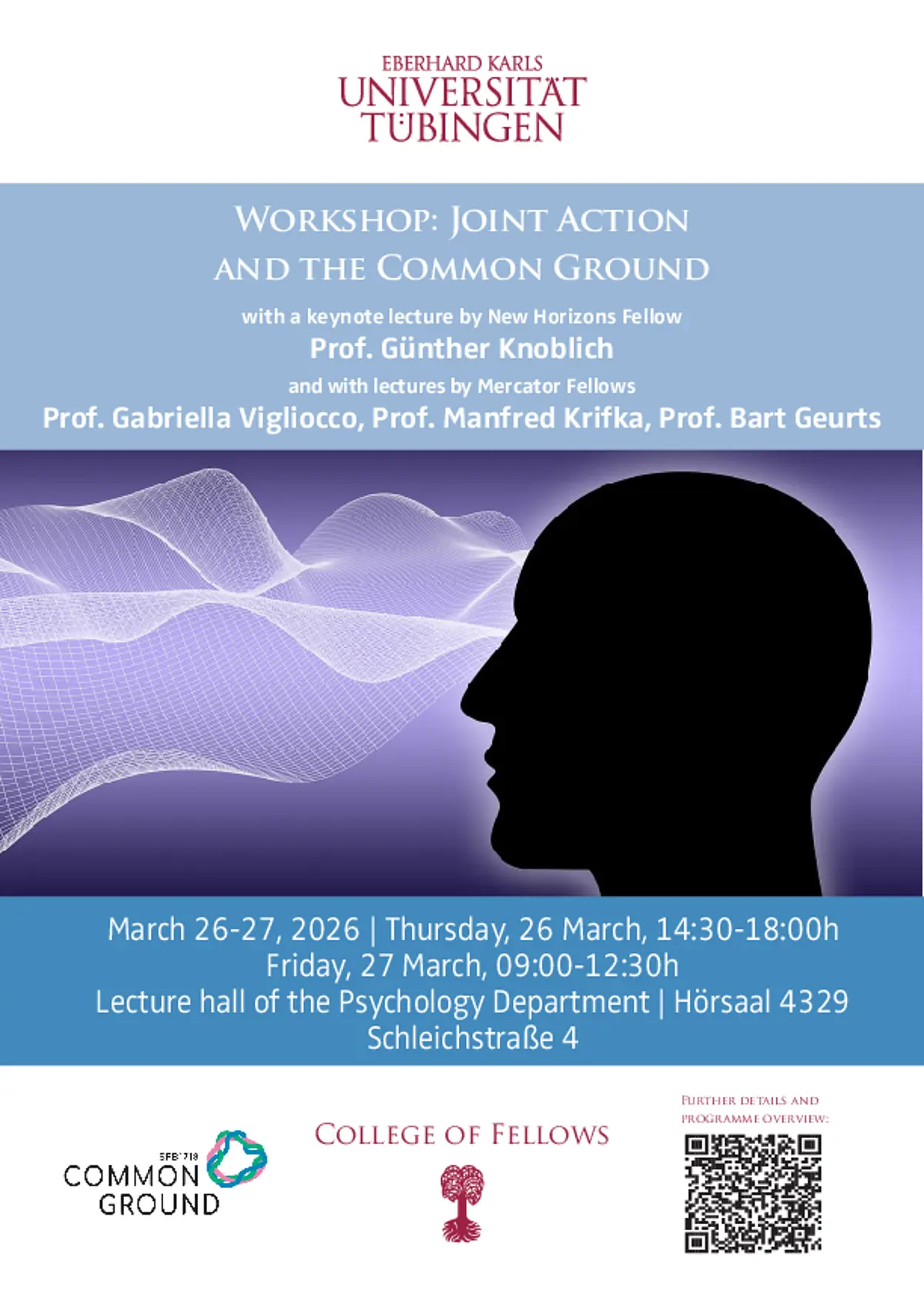
Workshop
Joint Action and the Common Ground

Joint Action and the Common Ground

26.-27. März 2026 | Hörsaal 4329, Psychologisches Institut, Schleichstr. 4, Tübingen

Workshop mit New Horizons Fellow Günther Knoblich und den Mercator Fellows Bart Geurts, Manfred Krifka und Gabriella Vigliocco, in Kooperation mit dem SFB Common Ground.  Kognition - Grammatik - Kommunikation

Zur Homepage des SFB Common Ground: https://uni-tuebingen.de/de/282342 


18. März 2026
Symposium
Linguistic and Non-Linguistic Cognition

Linguistic and Non-Linguistic Cognition

18. März 2026 | HSZ Morgenstelle N3 | Programm

Doppelsymposium im Rahmen der TeaP (Tagung experimentell arbeitender Psychologen) vom 15.03.-18.03.2026. Chairs: Barbara Kaup, David Dignath und Hong Yu Wong

This symposium examined the interplay between linguistic and non-linguistic cognition. While some cognitive functions appear to depend on language, others seem rather independent of it and many more integrate both aspects. In psychology, however, the distinction between linguistic and non-linguistic cognition is rarely made explicitly and there is currently no consensus on how language may shape, enable or constrain thought. The symposium brought together perspectives from cognitive research, developmental psychology and animal cognition to address three questions: 

1) How are language and thought related? 

2) Which cognitive functions are inherently linguistic, and which are not? 

3) To what extent can language modulate domains traditionally be considered non-linguistic? 

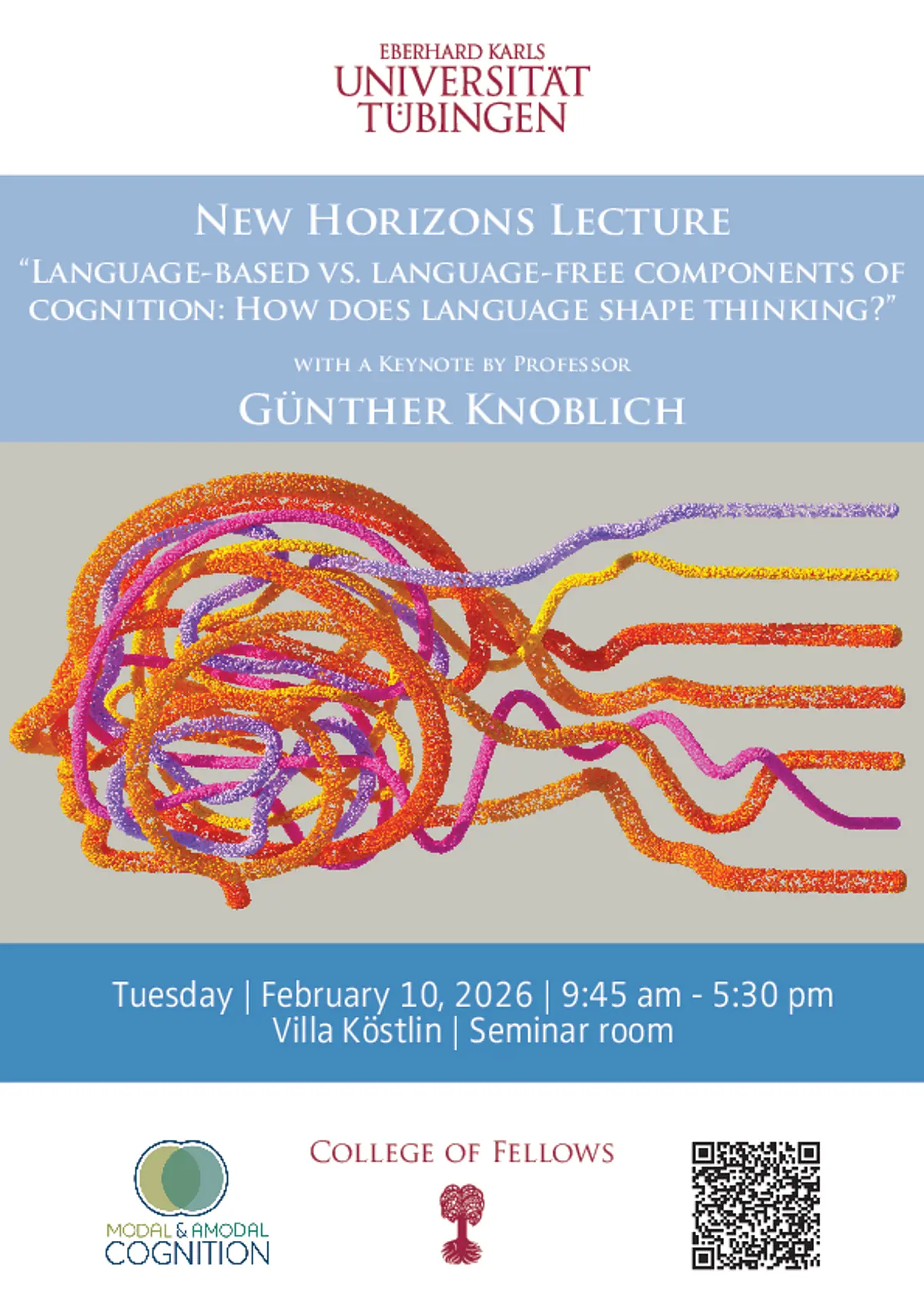
10. Februar 2026
New Horizons Workshop
Language-based vs. Language-free Components of Cognition: How Does Language Shape Thinking?

10. Februar 2026 Villa Köstlin Programm
In this informal workshop, we will explore perspectives on the interplay between linguistic and non-linguistic cognition in the human mind. A central question is whether certain cognitive functions may include both language-bound and language-independent components. A second question is how language may shape thinking. Our aim is to create an open and friendly atmosphere that encourages discussion and idea sharing. Rather than showcasing completed research programs, the workshop will feature talks that present novel or developing ideas. Through this exchange, we hope to identify useful starting points for a meaningful distinction between linguistic and non-linguistic cognition.

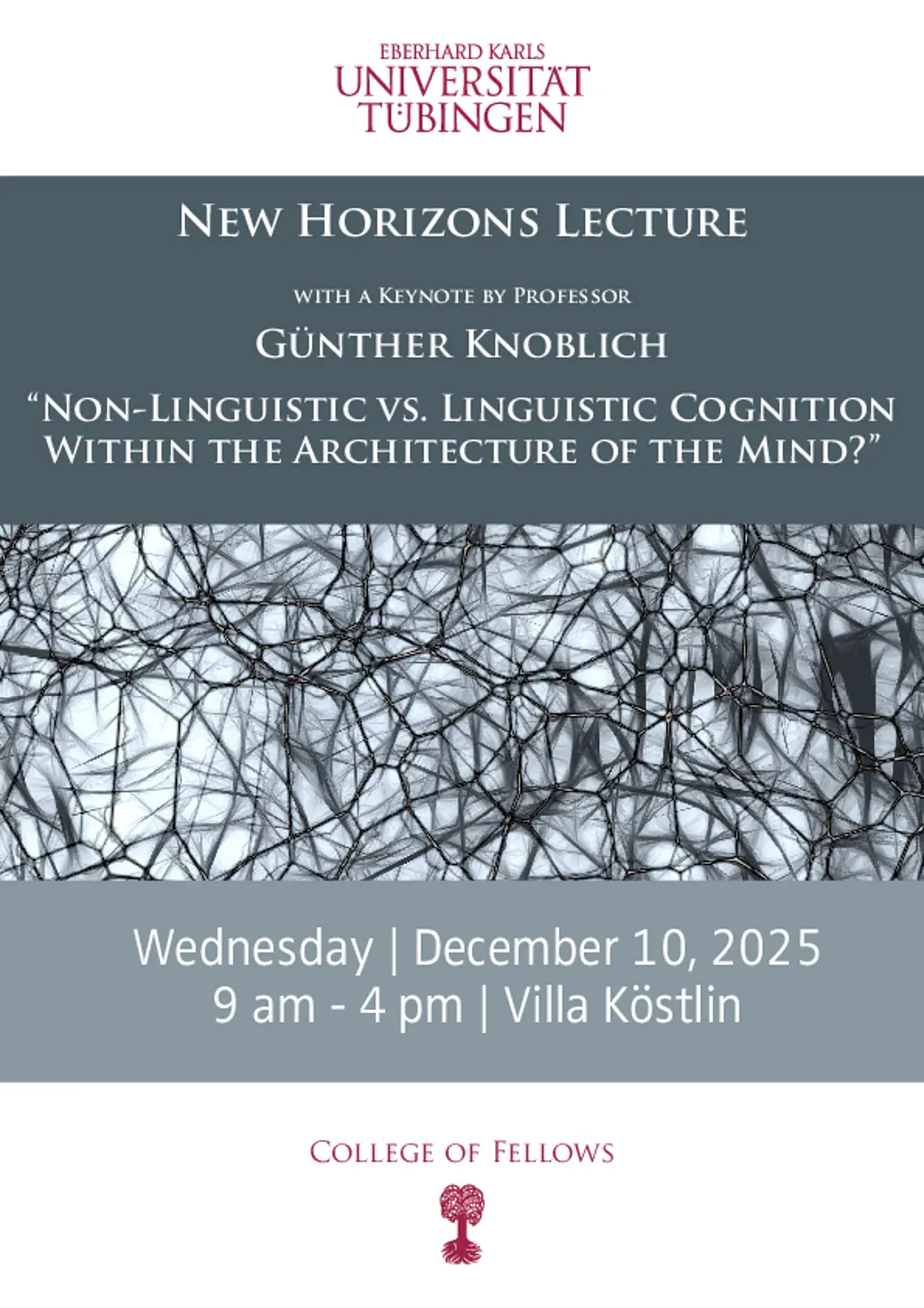
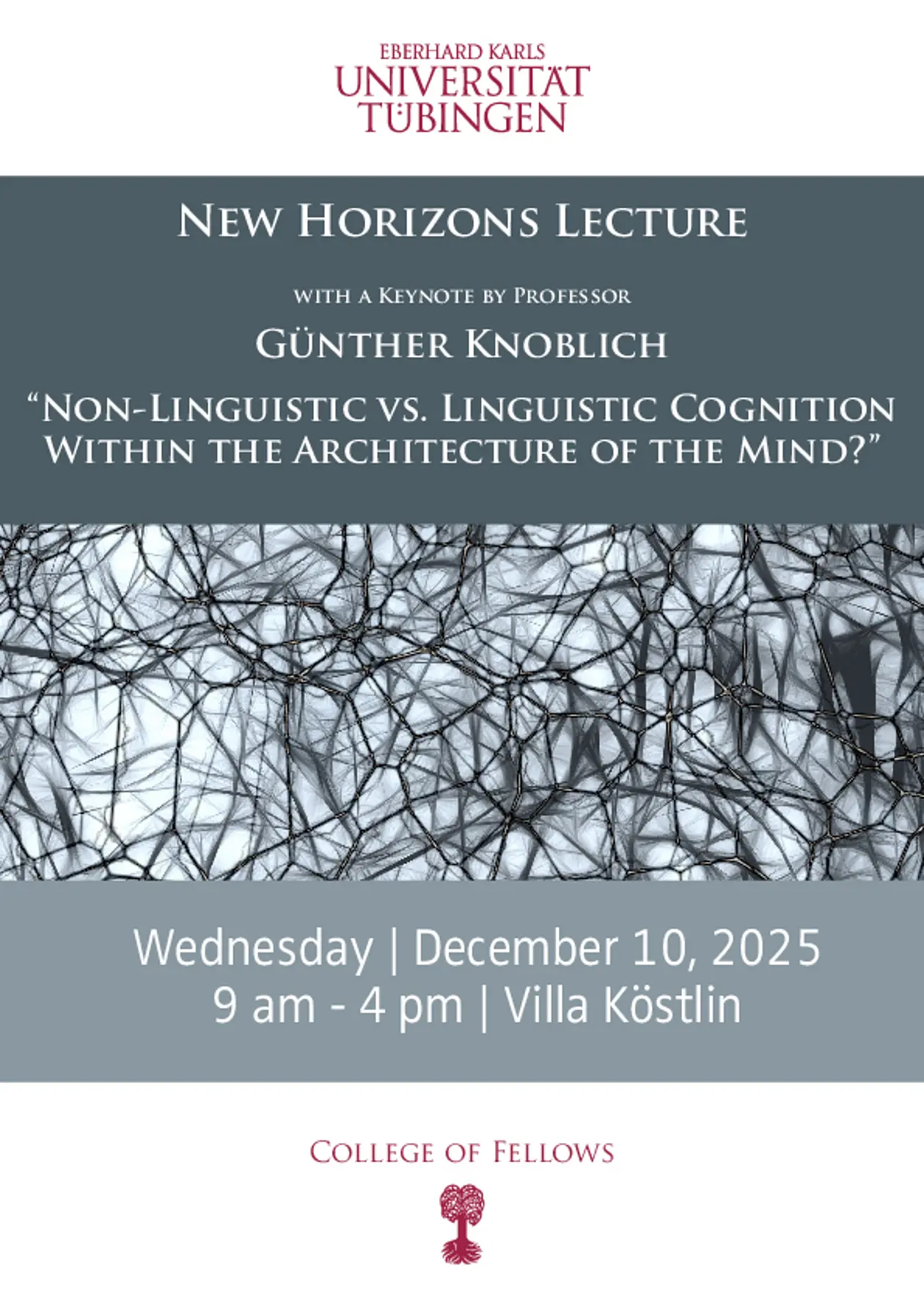
10. Dezember 2025
New Horizons Workshop
“Non-Linguistic vs. Linguistic Cognition Within the Architecture of the Mind”

“Non-Linguistic vs. Linguistic Cognition Within the Architecture of the Mind” mit Prof. Günther Knoblich 

10. Dezember 2025 | 9-16 Uhr   Villa Köstlin 

About: In this informal workshop, we will explore perspectives on how we can meaningfully distinguish between linguistic and non-linguistic cognition. A central question is whether certain cognitive functions may include both language-bound and language-independent components. Our aim is to create an open and friendly atmosphere that encourages discussion and idea sharing. Rather than showcasing completed research programs, the workshop will feature talks that present novel or developing ideas. Through this exchange, we hope to identify useful starting points for thinking about the interplay between linguistic and non-linguistic cognition.

Zum Programm.

New Horizons Workshop/Focus Group Meeting

12 November 2025, 16 Uhr

Hörsaal des Psychologischen Instituts, Schleichstraße 4

Keynote Lecture von Günther Knoblich: “Is Joint Action Prioritized in the Human Mind?”

Abstract: People perform joint actions because acting together allows them to achieve outcomes that they could not achieve alone, e.g., moving a heavy piece of furniture, or simply because it’s more fun doing things jointly than doing them individually, e.g., cooking together. I will present recent research from our lab that investigated whether joint action is prioritized over individual actions. First, we asked when people decide whether to perform an action individually or jointly. We investigated whether joint action is perceived as rewarding compared to individual action and therefore preferred. Second, we asked how joint actions are represented in the human mind. We investigated whether joint action representations or the representation of individual contributions to joint actions are prioritized in action control. Third, we asked whether joint action may improve thinking, in particular, creative problem solving. Here, we investigated whether solving difficult problems together is more easily achieved together than alone. 

Veranstaltungen mit Prof. Patrick Haggard, New Horizons Fellow (2024/2025)

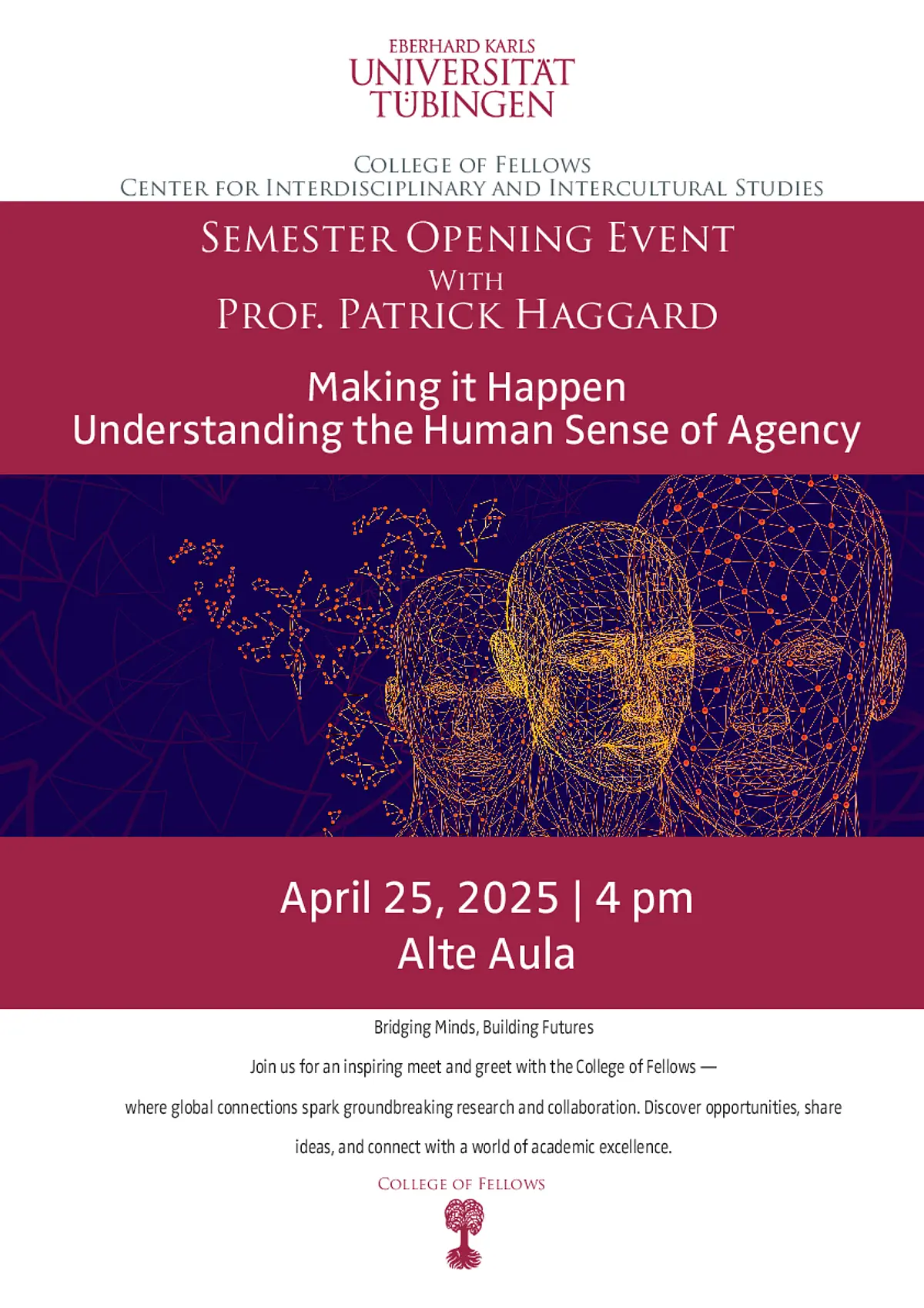
25. April 2025
Semester Opening
Making it Happen: Understanding the Human Sense of Agency

   25. April, 2025, 16 Uhr          Alte Aula

Our mental life is often dominated by what we are doing, and by what we are trying to achieve.  Psychologists use the term 'sense of agency' to refer to the experience of controlling one's own actions, and, through them, events in the outside world.  Our sense of agency is so ubiquitous that we are hardly aware of it as a distinct mental process, yet it clearly underpins many features of modern life, including legal responsibility, material culture, technology, and socio-political empowerment.  To make scientific progress, psychology often needs to measure things that are by nature elusive and hard to quantify: measuring the sense of agency proves particularly challenging. This talk describes how measuring sense of agency indirectly, through distortions of time perception that accompany goal-directed action, has shed important light on this key feature of mental life, and suggests some future research agendas for sense of agency.

23. April 2025
New Horizons Workshop
Perspectives on Metacognition

New Horizons Workshop | Vortrag von Prof. Patrick Haggard

 23. April | 12.00-15.00 Uhr    Villa Köstlin, Rümelinstraße 27 

12.00 - 13.00 Uhr
 

Elisa Filevich (Hector Institute)
„On Improving Domain-General Metacognition“,
commentator: Krisztina Orban (CIN/Philosophy)
 

13.00 - 14.00 Uhr


Patrick Haggard (UCL)
„2AFC approaches to measuring the sense of agency“,
commentator: Pablo Grassi (CIN)
 

14.00 - 15.00 Uhr


Helen Fischer (IWM)
„The role of metacognition in polarized domains: From climate change to COVID-19“,
commentator: Franka Baugstat (Philosophy/CIN) 

21. Februar 2025
Lunch Talk
Testing qualia experimentally

Fr, 21. Februar 2025, 12 Uhr
Villa Köstlin, Seminarraum (Rümelinstr. 27, 72070 Tübingen)

A structuring principle of phenomenology is that each sensation has its own distinct sensory quality. Explaining why this is the case is a rather hard problem. One simple theory links different qualia to the different neural receptors that turn physical stimuli into electrical messages in the nervous system. The different receptor types are sometimes called "labelled lines" to the brain, with the label being a distinctive sensory quality that is caused in virtue of the specific features of the receptor with which the line begins. I will talk about some experiments on human thermal sensation. Although temperature is a continuous physical dimension, there are specific skin receptor types for warm and for cold, that are activated only within a narrow temperature range. I will show that these indeed operate as 'labelled lines' for warmth and cold sensations. The ultimate explanation of thermosensory phenomenology may then be the molecular structure of the different receptors. This does not solve the hard problem of explaining why those molecular events lead to any subjective experience at all, as opposed to no experience. However, it may explain why warmth and cold feel qualitatively different. I will discuss the implications of bottom-up, receptor-based phenomenology for consciousness science more generally.

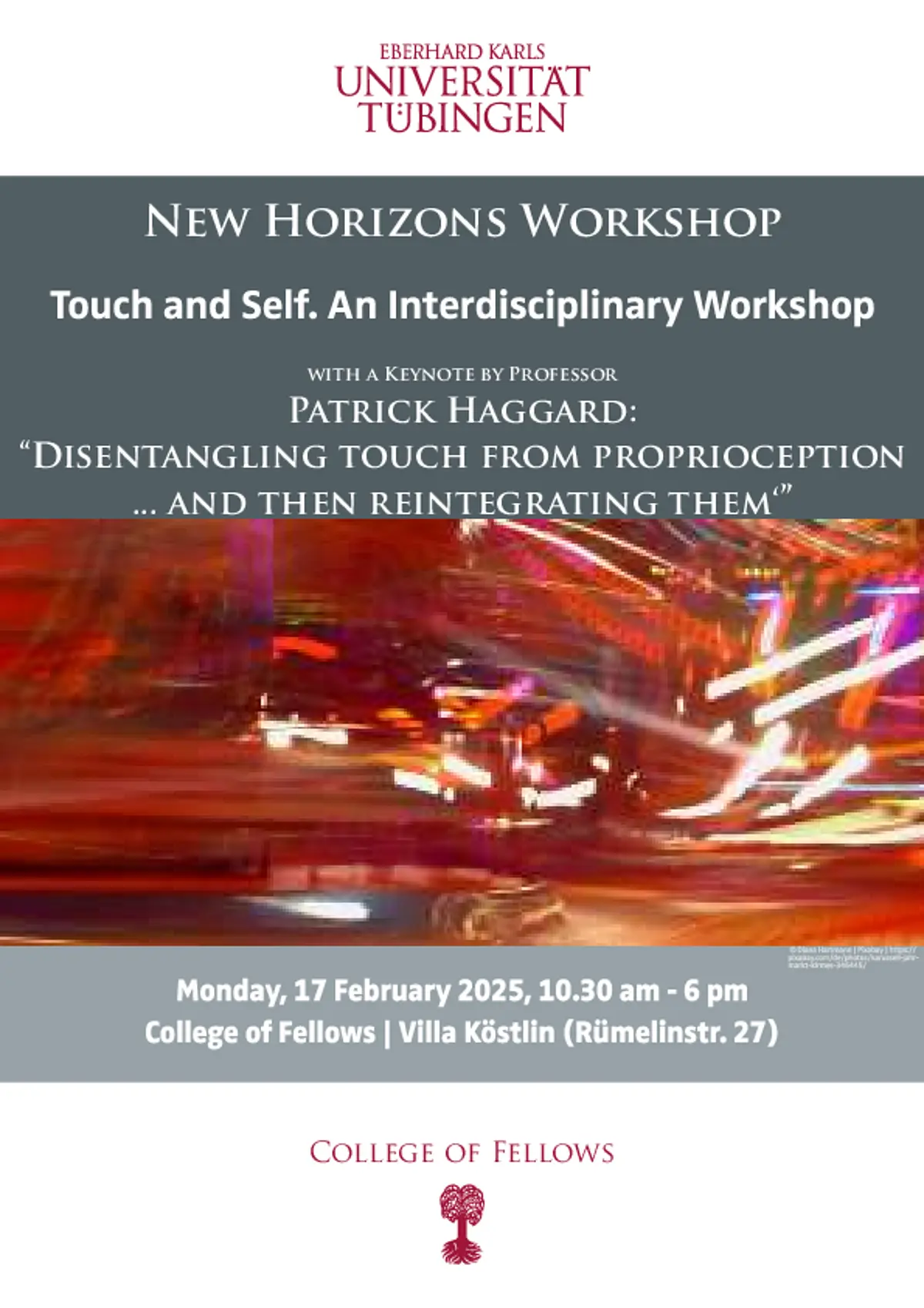
17. Februar 2025
New Horizons Workshop
Touch and the Self: An Interdisciplinary Workshop

Touch and the Self: An Interdisciplinary Workshop – Programm (Prof. Patrick Haggard/ Prof. Hong Yu Wong)

Program

10.30-11.30 Patrick Haggard (Neuroscience, UCL)
‘Disentangling touch from proprioception... and then reintegrating them’
11.30-12.30 Esther Kuehn (Neuroscience, Hertie/DZNE)
‘Touch and the Aging Self - From Aging Microstructure to Aging Cognition’

12.30-13.30 Lunch
13.30-14.30 Katherine J. Kuchenbecker (Robotics, MPI Intelligent Systems)
‘Technicalities: Sensing and Actuating Touch’
14.30-15.30 Krisztina Orban (Philosophy/Cogsci, CIN/Philosophy)
‘Touch and Self-directed Actions’
15.30-16.00 Coffee
16.00-17.00 Cornelius Schwarz (Neuroscience, CIN)
'Different functional neuronal systems modulate the brain’s own tactile input'

17.00-18.00 Hong Yu Wong (Philosophy/Cogsci, CIN/Philosophy)
'The Sense of Embodiment'

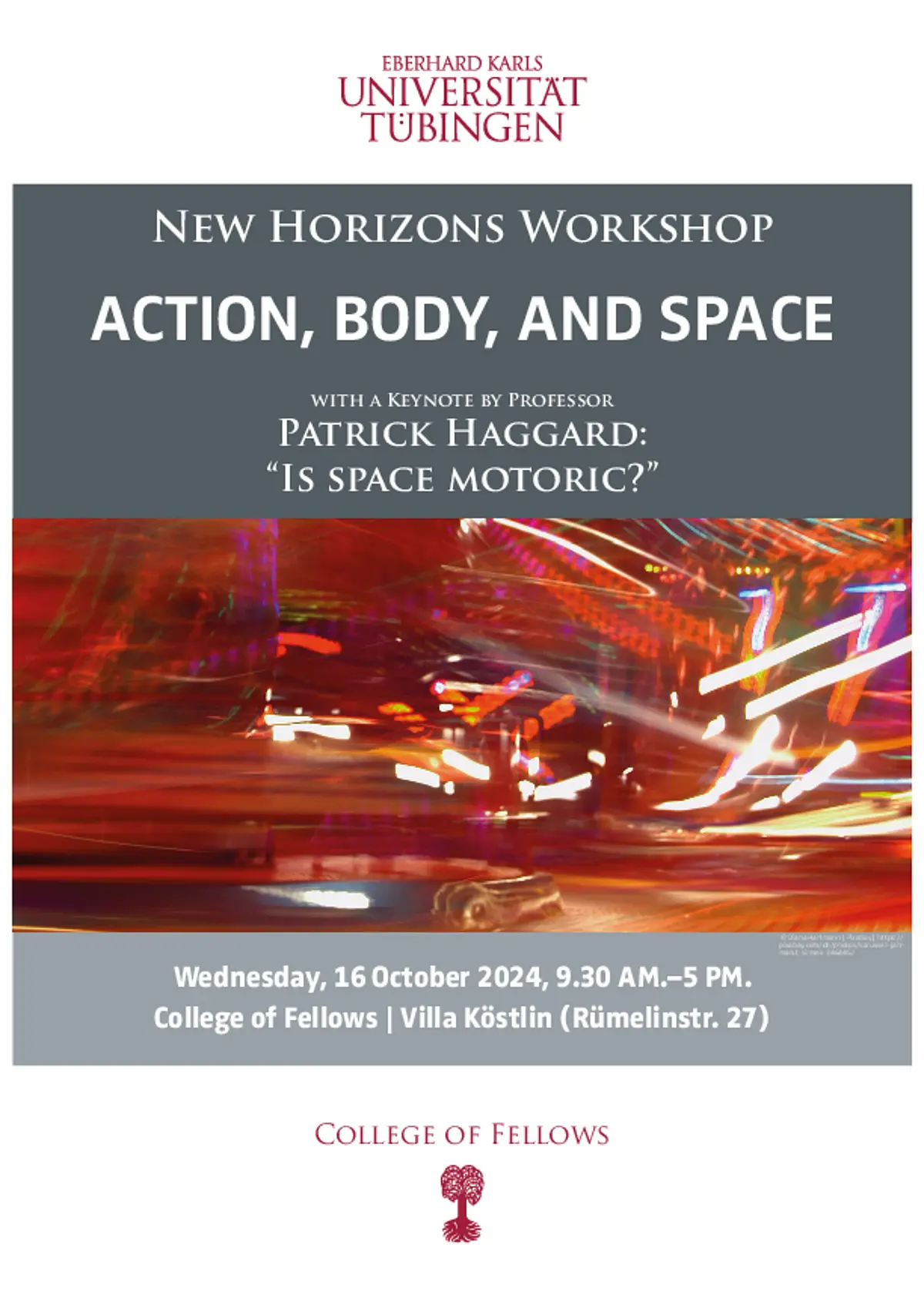
16. Oktober 2024
New Horizons Workshop
Action, Body, and Space


Mit einer Keynote von New Horizons Fellow Prof. Patrick Haggard: "Is Space Motoric?"

Mi, 16. Oktober 2024, 09:30 – 17:00 Uhr
Villa Köstlin (Rümelinstr. 27, Tübingen)

Das Programm finden Sie hier.

Veranstaltungen mit Prof. Vittorio Gallese, Humboldt Forschungspreis (2024)

9. Juli 2024
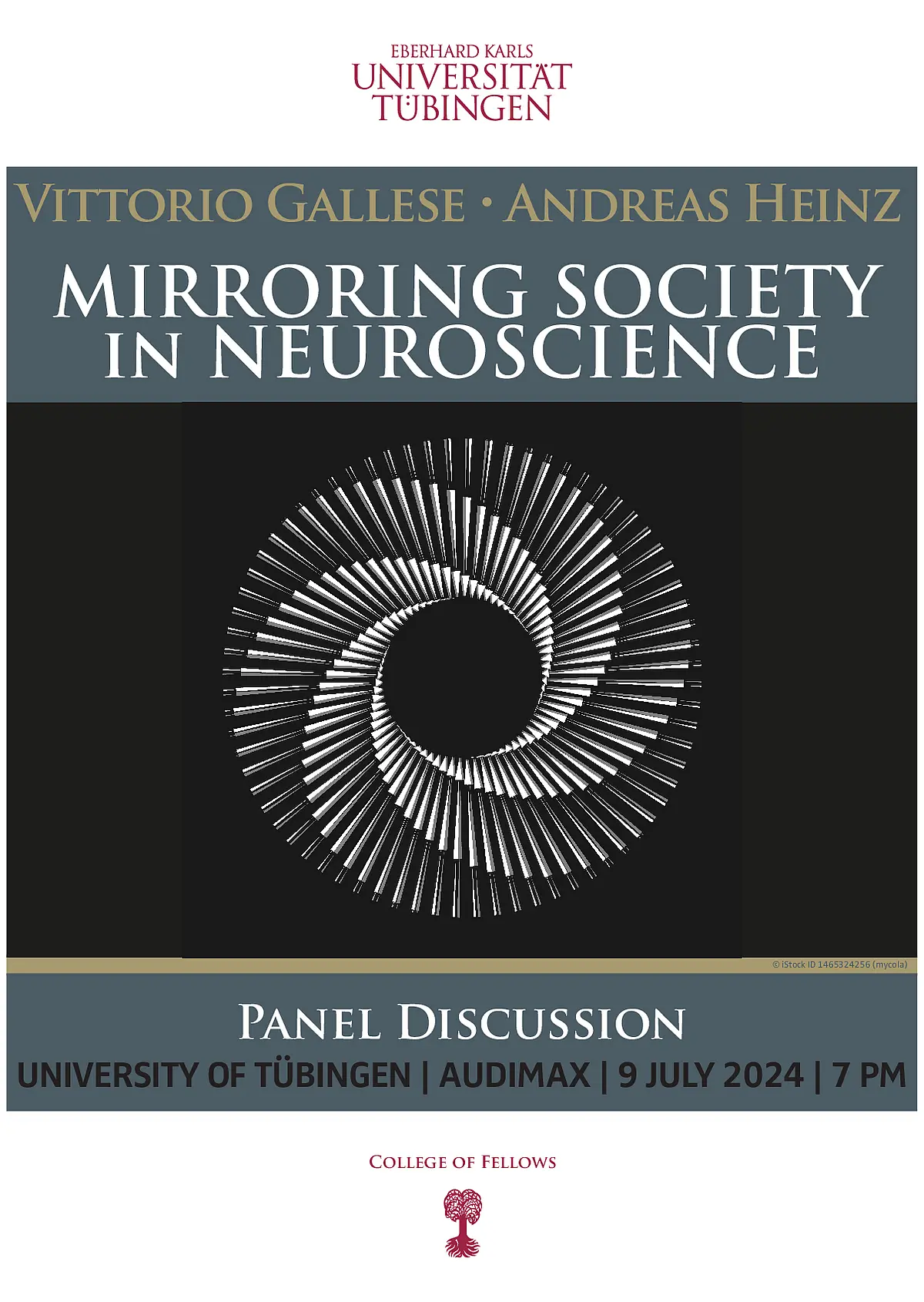
Podiumsdiskussion
Prof. Vittorio Gallese und Prof. Andreas Heinz

Unter dem Titel "Mirroring Society in Neuroscience" organisierte das College of Fellows am 9. Juli eine interdisziplinäre Podiumsdiskussion zwischen Vittorio Gallese und Andreas Heinz, Direktor der Klinik für Psychiatrie und Psychotherapie der Charité Berlin, in welcher sie aus unterschiedlichen Perspektiven die Spiegelungsverhältnisse von Gesellschaft und Neurowissenschaften erörterten und sich unter anderem folgenden Fragen widmeten:

Wo ist mein Verstand? Welchen Einfluss hat das Paradigma der embodied cognition (der ‚verkörperten‘ Kognition), die ihn nicht (allein) im Kopf lokalisiert, auf das Verständnis menschlicher Entwicklung und sozialer Interaktionen? Wie spiegeln neurowissenschaftliche Paradigmen oder auch pathologisierende psychiatrische Diagnosen gesellschaftliche Überzeugungen wider?

In diesem interdisziplinären Podiumsgespräch erörterten mit Prof. Vittorio Gallese und Prof. Andreas Heinz zwei Forschende, die angemessen komplexe Fragen an Gehirnfunktionen wie an psychische Gesundheit und Krankheit zu stellen suchen, aus unterschiedlichen Perspektiven die Spiegelungsverhältnisse von Gesellschaft und Neurowissenschaften. Denn die Funktionsweisen des Gehirns sind nicht zu beschreiben, wenn dessen kontinuierliche Wechselwirkungen mit dem Körper und dem sozialen Umfeld außer Acht gelassen werden. Auch medizinische und psychiatrische Diagnosen stehen immer im Kontext gesellschaftlicher Diskurse etwa über psychische Krankheit oder Gesundheit.

Gallese und Heinz hielten jeweils einen kurzen Impuls-Vortrag und führten im Anschluss eine moderierte Diskussion; beide sind nicht nur führende Fachvertreter ihrer jeweiligen Disziplinen, sondern auch versierte Verfechter des interdisziplinären Dialogs. 
Die Diskussion moderierte PD Dr. Niels Weidtmann (College of Fellows) und Prof. Andreas Bartels (Neurowissenschaften/ Werner Reichardt Centre for Integrative Neuroscience).

Focus Group "Neuroscience and Society"
Die Veranstaltung findet als eine der Aktivitäten der Focus Group "Neuroscience and Society"  am College of Fellows statt.
Die Focus Group Neuroscience and Society arbeitet an interdisziplinären Fragestellungen an der Schnittstelle von Neurowissenschaft und Geisteswissenschaften. Sie untersucht, inwiefern neurowissenschaftliche Forschungen Relevanz für die Geistes- und Sozialwissenschaften haben – und umgekehrt. Dass menschliches Verhalten und Handeln immer häufiger auf neuronale Prozesse zurückgeführt werden, stellt die Geistes- und Sozialwissenschaften, in deren Kompetenzbereich solche Fragen bislang fielen, vor Herausforderungen, bietet aber auch die Chance zu interdisziplinärer Forschungsarbeit. Durch das Überschreiten von Fächergrenzen öffnen sich hier unerwartete Perspektiven, sodass sich fachspezifische Fragen neu perspektivieren und gemeinsam Antworten finden lassen. 
Die Focus Group zielt auf einen Austausch zwischen Neuro- und Kognitionswissenschaften, Psychiatrie und Geistes- und Sozialwissenschaften wie Philosophie und Literaturwissenschaft und steht damit in der Tradition der vom Werner Reichardt Centrum für Integrative Neurowissenschaften und dem College of Fellows co-organisierten „CIN Dialogues at the Interface of the Neurosciences and the Arts and Humanities“. Sie bietet einen Ort für den interdisziplinären Dialog und die fächerübergreifende Zusammenarbeit an der Universität Tübingen, an der international renommierte Neurowissenschaften auf starke Geistes- und Sozialwissenschaften treffen. Ihre Aktivitäten organisiert sie im Sommersemester 2024 um den Aufenthalt und die Forschungsarbeiten von Prof. Vittorio Gallese. Mehr Informationen zur Focus Group finden Sie hier.

Prof. Dr. Vittorio Gallese, seit 2006 Professor für Psychobiologie an der Università degli Studi di Parma, gilt als einer der weltweit führenden Experten im Bereich der sozialen Neurowissenschaften. Er war Professor für experimentelle Ästhetik an der University of London (2016-2018), Einstein Visiting Fellow an der Berlin School of Mind and Brain (2016-2020), KOSMOS Fellow an der Humboldt Universität Berlin (2013-2014) und Visiting Professor an der University of California, Berkeley, USA (2002). Im Sommersemester 2024 ist er als Humboldt-Forschungspreisträger an der 
Universität Tübingen zu Gast.
Gallese ist Experte für Neurophysiologie, kognitive Neurowissenschaften, soziale Neurowissenschaften und Philosophie des Geistes und einer der Entdecker der Spiegelneuronen. In seiner Forschung sucht er die funktionelle Organisation der Gehirnmechanismen zu ergründen, die der sozialen Kognition zugrunde liegen, wie etwa Empathie und Sympathie, Sprache und ästhetische Erfahrung. In seine interdisziplinäre Arbeit fließen Erkenntnisse und Ansätze sowohl aus Philosophie als auch aus Psychologie und Neurowissenschaften ein.

Prof. Dr. med. Dr. phil. Andreas Heinz, seit 2002 Direktor der Klinik für Psychiatrie und Psychotherapie der Charité Berlin, studierte Medizin, Philosophie und Anthropologie. Er habilitierte sich 1998 für das Fach Psychiatrie und Psychotherapie und promovierte 2013 über den Begriff der psychischen Gesundheit. Seit 2012 ist er stellvertretender Vorsitzender der Organisation Aktion für Psychisch Kranke. 2010-2014 war er Präsident der Deutschen Gesellschaft für Biologische Psychiatrie (DGBP). 2008-2011 war er Sprecher der Konferenz der Universitätslehrstühle für Psychiatrie in Deutschland. Seit 2009 ist er Mitglied im Vorstand der Deutschen Gesellschaft für Psychiatrie, Psychotherapie und Nervenheilkunde. 
Er forscht u. a. zu Neurourbanistik, den Auswirkungen von Migration und sozialer Exklusion auf die psychische Gesundheit, den Folgen von Armut im sozialen Nachbarschaftskontext und den Auswirkungen städtischer Risikofaktoren auf die Manifestation psychotischer und Suchterkrankungen. Heinz ist Befürworter eines personenzentrierten Ansatzes und offener Stationen in der Psychiatrie. 2011 wurde er auf den Leibnitz-Lehrstuhl des Leibnitz-Instituts für Neurobiologie in Magdeburg gewählt, in Anerkennung herausragender Forschung in den Neurowissenschaften.


28. Juni 2024
"Emotions and affect in aesthetics. A neuroscientific perspective"

Talk: "Emotions and affect in aesthetics. A neuroscientific perspective", 

4.15 pm. Host: Professor Dr Hong Yu Wong 

27. Juni 2024
"The artification of habits. From tools to symbols"

27. Juni 2024, 18.00 Uhr
"The artification of habits. From tools to symbols"
Am Lehrstuhl von Prof. Nicholas Conard

24. Juni
"The Embodiment of Language"

24. Juni 2024, 10.00 Uhr
"The Embodiment of Language"
Am Lehrstuhl von Prof. Dr. Barbara Kaup

26. April 2024
Semestereröffnung
"Embodying neural representations: Neural reuse and embodied simulation"

Mit einem Vortrag von Prof. Vittorio Gallese (Professor für Psychobiologie an der Università degli Studi di Parma): "Embodying neural representations: Neural reuse and embodied simulation"

Abstract
In the last decades technological advancements providing new tools to study the brain in humans and non-human animals boosted the enormous progress of Neuroscience. This progress brought along a diversity of approaches, levels of description and the focusing on different granularities, so that a unified theory of brain function and its relationship to behavior is currently not available. Thus, the notion of neural representation is a topic of ongoing debate and controversy within the field of cognitive neuroscience. The relevant literature includes very diverse theoretical approaches, ranging from the neo-phrenological approach, assigning to specific brain modules specific cognitive functions, to dynamic system theory-inspired approaches, holding that brain neural activity emerges from the interactions among interconnected neurons, rather than being solely determined by fixed neural representations.

In my lecture the notion of neural representation will be addressed from an embodied perspective, discussing embodied simulation theory within the framework of neural reuse. It will be argued that being, feeling, acting, and knowing describe different modalities of our relations to the world, all sharing a constitutive underpinning bodily root that maps into dynamic ways of functioning of the brain-body. Brain architecture does not respect the boundaries of standard mental terms and categories. Mental terms and categories are the loose and imprecise verbal descriptions of a variety of complex cognitive behaviors that we are not yet able to fully explain in terms of their underlying neural and bodily mechanisms.

Bio
Vittorio Gallese, seit 2006 Professor für Psychobiologie an der Università degli Studi di Parma, gilt als einer der weltweit führenden Experten im Bereich der sozialen Neurowissenschaften. Er war Professor für experimentelle Ästhetik an der University of London (2016-2018), Einstein Visiting Fellow an der Berlin School of Mind and Brain (2016-2020), KOSMOS Fellow an der Humboldt Universität Berlin (2013-2014) und Visiting Professor an der University of California, Berkeley, USA (2002). Gallese ist Experte für Neurophysiologie, kognitive Neurowissenschaften, soziale Neurowissenschaften und Philosophie des Geistes und einer der Entdecker der Spiegelneuronen. In seiner Forschung sucht er die funktionelle Organisation der Gehirnmechanismen zu ergründen, die der sozialen Kognition zugrunde liegen, wie etwa Empathie und Sympathie, Sprache und ästhetische Erfahrung. In seine interdisziplinäre Arbeit fließen Erkenntnisse und Ansätze sowohl aus Philosophie als auch aus Psychologie und Neurowissenschaften ein.