This year, the ICGSS renewed its cooperation with CineLatino, Germany's largest festival for Spanish and Latin American cinema, held in Tübingen from April 22–29, 2026.
In cooperation with the ICGSS, the 2026 edition placed its thematic focus on human rights in Latin America, a theme the festival had engaged with in previous years and this year explored in its full breadth. While human rights have been constitutionally anchored in Latin America since independence, it was only in the context of the twentieth-century dictatorships, and the massive human rights violations they entailed, that these rights acquired concrete political and social meaning. In the aftermath of military rule, and through subsequent processes of historical reckoning, social and economic rights increasingly moved to the forefront of public debate.
Through a diverse selection of films, audiences were invited to engage with the lasting effects of these histories and with pressing social issues across the region today, from the traumatic legacies of dictatorship to poverty, forced disappearance, and environmental destruction. A special spotlight was also placed on Uruguay, the smallest Spanish-speaking country in South America. Often regarded as one of the region's most stable and progressive nations, Uruguay impressed festival audiences with films that combined subtle humor and artistic sensitivity with thoughtful social critique.
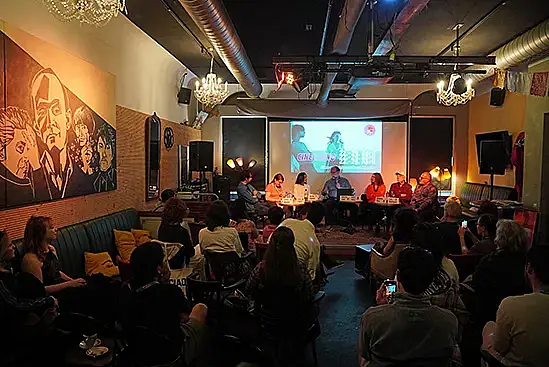
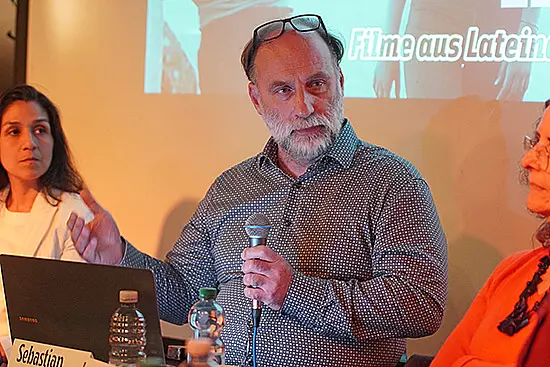
The festival's accompanying program complemented these cinematic perspectives with a rich lineup of political panel discussions, cultural events, and evening gatherings that encouraged dialogue and exchange among visitors. Among these, a panel discussion held on Saturday, April 25, at 4:00 PM at CineSalón im Café Haag brought together guests from Cuba, Paraguay, and El Salvador to discuss human rights in Latin American cinema, with ICGSS Vice Director and Professor Sebastian Thies joining the conversation. Beyond the screenings, the festival's presence of several filmmakers, who engaged directly with audiences through conversations about their work, added further depth to this year's program.