Institut für Evolution und Ökologie

Integrated bird monitoring (IMS)

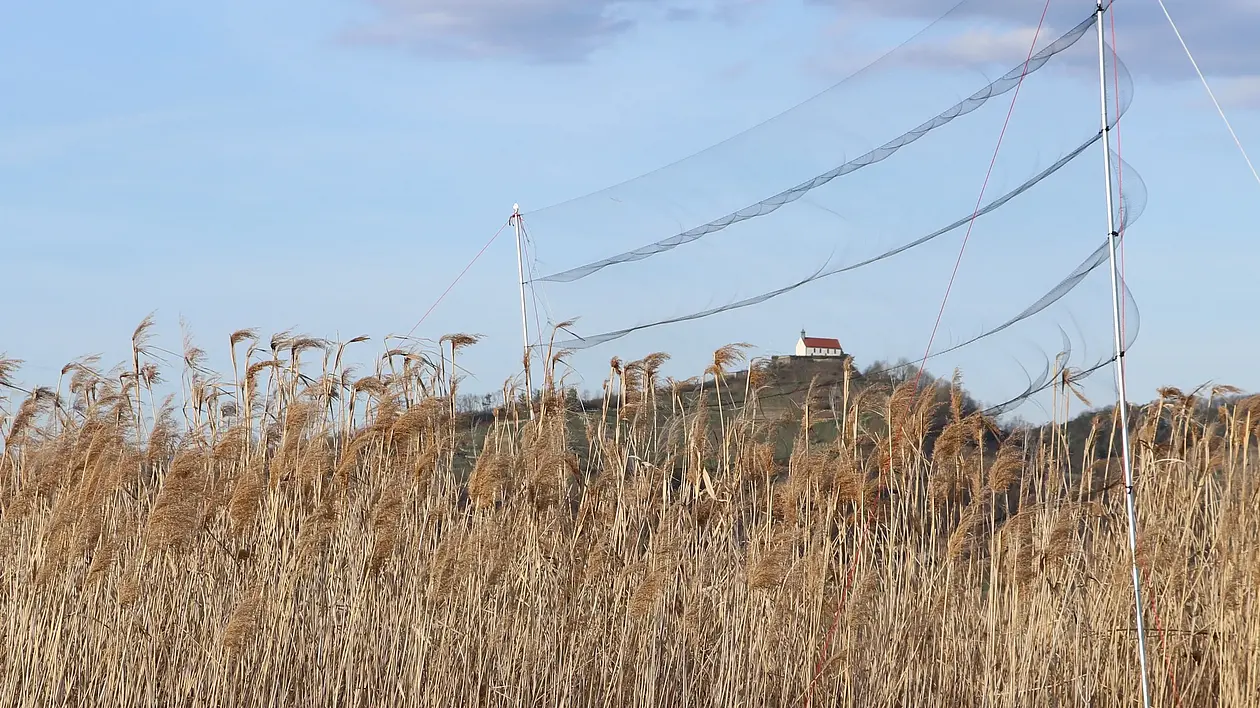
Starting 2026, we participate in the nationwide Integrated Monitoring of Songbird Populations (IMS). Bird ringing data collected in the University's Botanical Garden will help understand the causes of population changes and improve conservation efforts. The project also strengthens environmental education and the training of biology students.

2026-ongoing
University of Tübingen press release.
Coverage and videos by SWR and the Schwäbisches Tagblatt.

Forage crops - safe for farmland birds?

Legume–grass and alfalfa crops are important in organic farming but frequent mowing can cause severe breeding losses in farmland birds. In the KLeVer project, we tested management measures to reconcile forage production with bird conservation. The results identify effective mowing regimes and uncut refuge strips as key elements to support Skylark, Grey Partridge or Corn Bunting.

Several publications in prep.

2022-2025
Ministerium Ländlicher Raum
Press release Uni Tübingen
Funding: MLR: Sonderprogramm zur Stärkung der Biologischen Vielfalt.
People: X.Schlindwein, C.Winter, J.Harfensteller, L.Weinert, M.Gerhold, G.Fesenmayr and many others
Collaborators: Local farmers, Ernährungsrat Rottenburg-Tübingen e.V., Hofgut Martinsberg, Verein VIELFALT e.V., Planungsbüro Geissler-Strobel

Farmland bird conservation

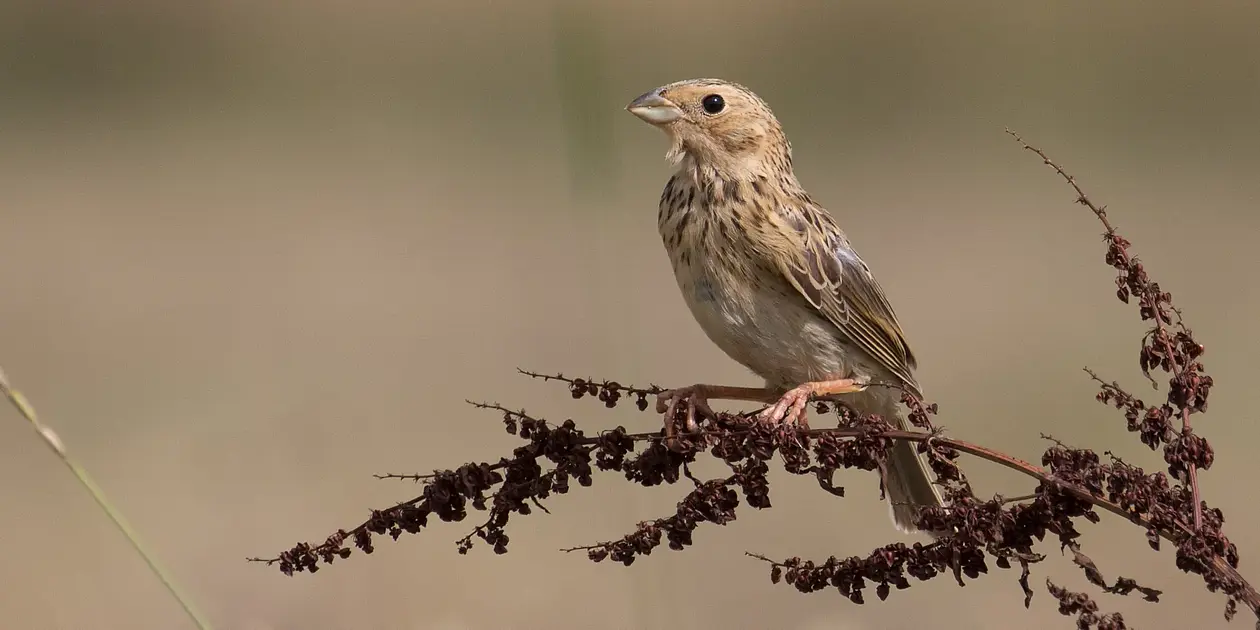
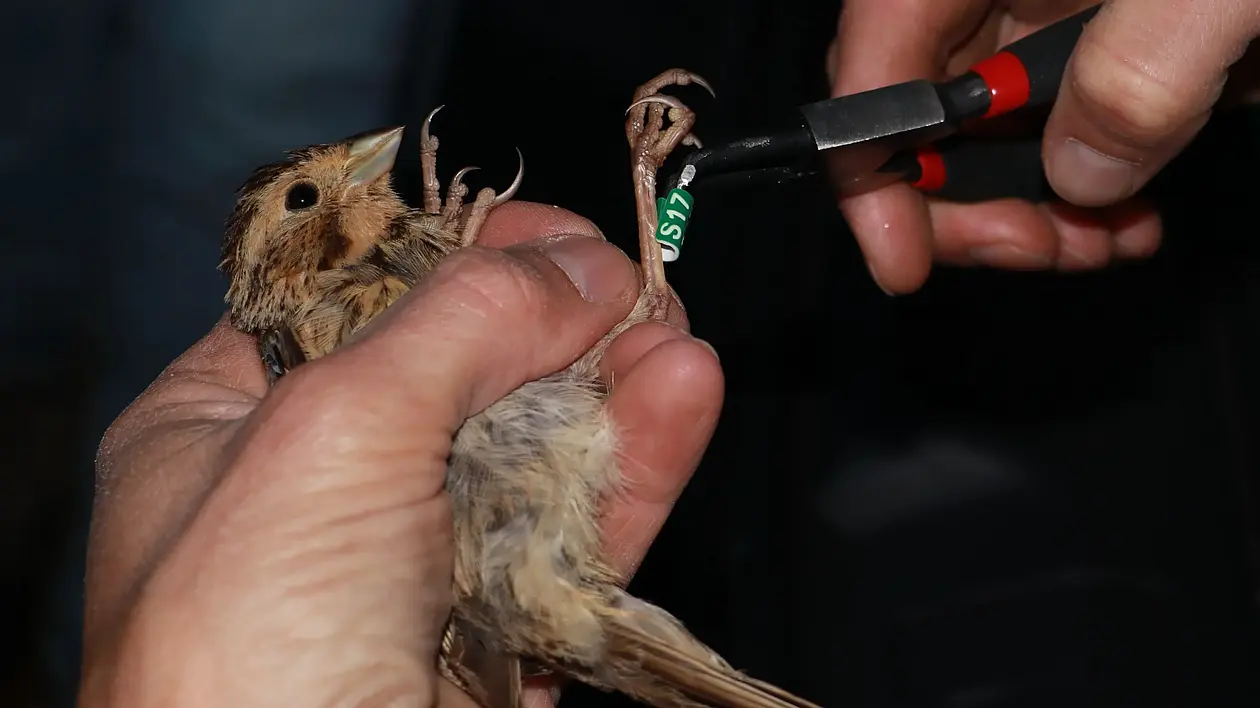
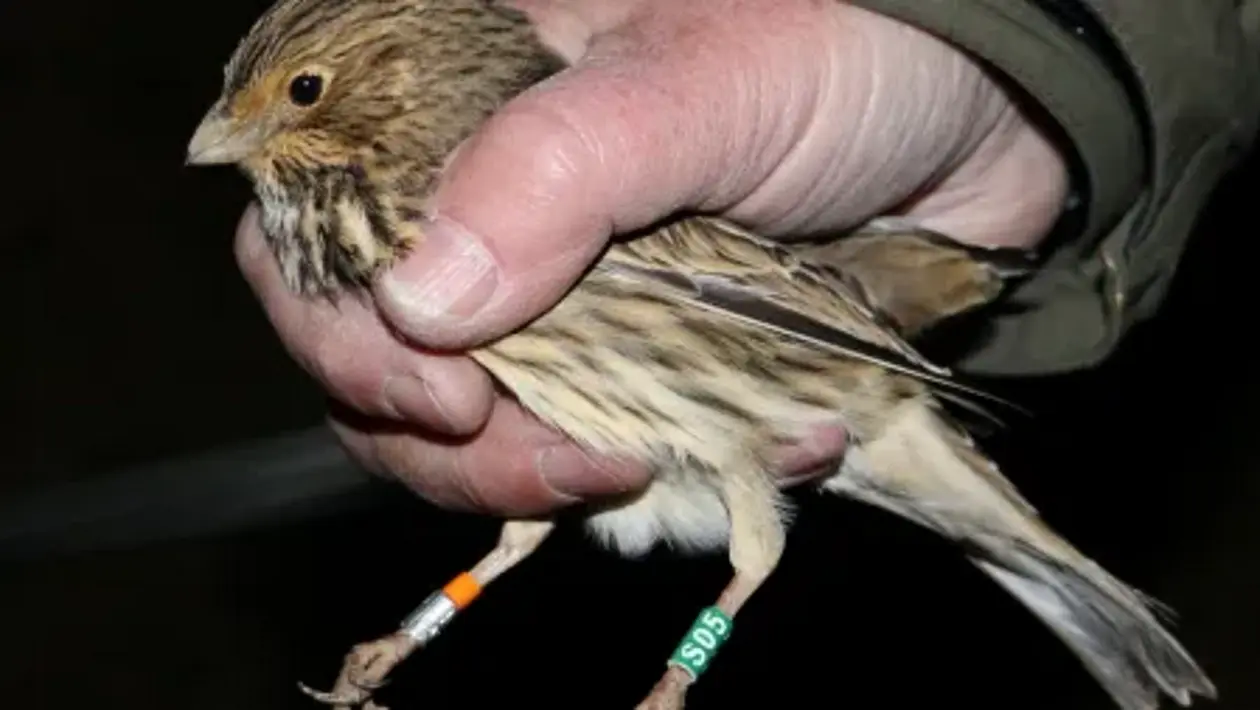
We investigate breeding biology and habitat use of the Corn Bunting (Emberiza calandra) across its Central European range to establish more effective farmland bird conservation strategies. This is complemented by a EU-scale meta-analysis on the effectiveness of agricultural eco schemes (AES).

Anthes et al. (2025): Bird Cons. Int.
Staggenborg et al. (2024): Natursch.Landschaftspfl. BW
Staggenborg & Anthes (2022): Cons. Letters
Staggenborg & Anthes (2018) Vogelwarte
Anthes & Staggenborg (2018) Der Falke
Anthes et al. (2022): Faun. flor. Mitt. Taubergrund

2017-2021
Stifung Naturschutzfonds
ZEISS blog 1 | blog 2
Woche der Umwelt | YouTube
Funding: Stiftung Naturschutzfonds Baden-Württemberg.
Further support by ZEISS spots optics & DO-G

Barcoding nestling diet

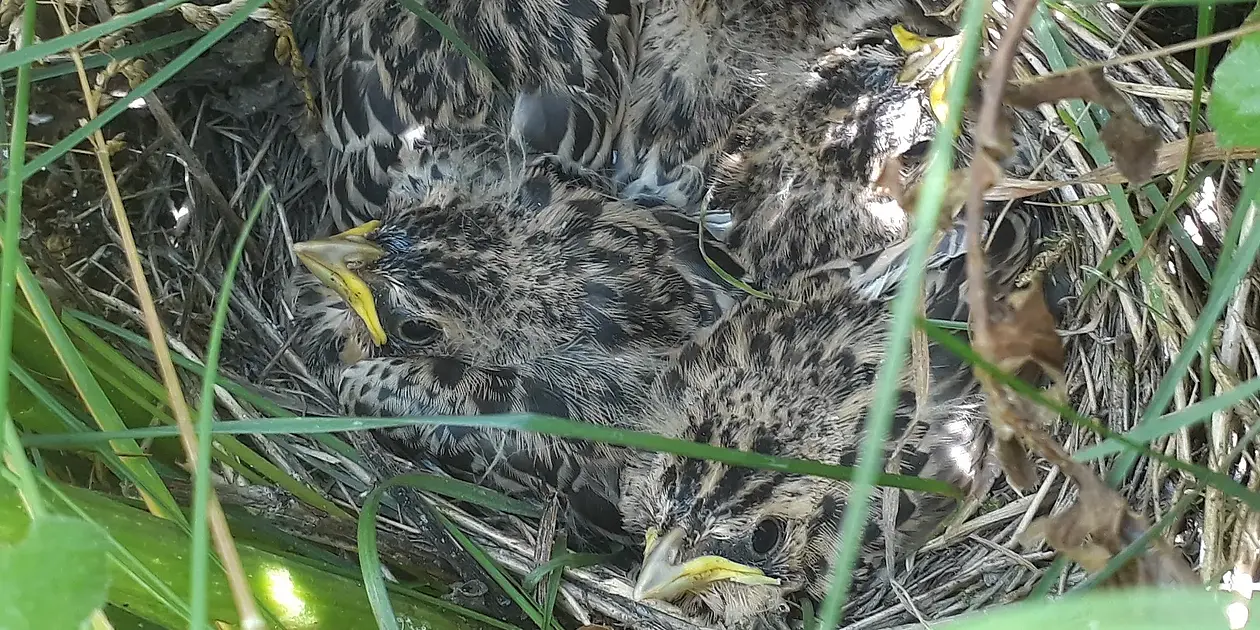
Nestling diet is a key determinant of breeding success, but knowledge of its regional and seasonal variation remains scare. In pilot studies, we use metabarcoding to derive diet components from nestling feces, and evaluate how this can inform conservation of farmland birds.

 2021-2022
Funding: Stöckmann Stiftung.
With: F. Lehle, F. Anger

Guidance for Mixed models and GLMM

(Generalized) Mixed models have become a standard analytical tool in ecology and evolution, but their implementation and thorough assessment remains a challenge. We develop accessible R templates and guidelines that cover many model families and data structures.

Santon et al. (2023): Front. Eco. Evo.
Templage R code: Github

 2021-2023
With: M. Santon, N.K. Michiels, F. Korner-Nievergelt

Biodiversity of abandoned quarry sites

Gypsum, limestone and gravel have been extracted in the Tübingen area for centuries, leaving behind a network of abandoned quarry sites. In collaboration with the Department of Geosciences, we investigate current and historical biodiversity at these sites and develop conservation strategies to maintain high-quality habitats for pioneer species of open, rocky environments. Current focus: birds, butterflies and grasshoppers.

2025-2027
Project website.
Funding: Gips-Schüle-Stiftung.
With: N.Hinze, K.Weinheimer, P.Fahr, T.Czekay, H.Rügner et al.

Small wetlands as conservation hotspots

We assess the conservation value of small wetlands developing on poorly drained soils in riverbeds, often under targeted Lapwing conservation management. Current research focuses on their importance for Jack Snipe (Lymnocryptes minimus), with potential extensions to invertebrates.

2024-2028
t.b.a
With: N.Schöffski, L.Rittner, P.Unterdörfel, S.Helfer, L.Seitz et al.

Flower fields as eco schemes

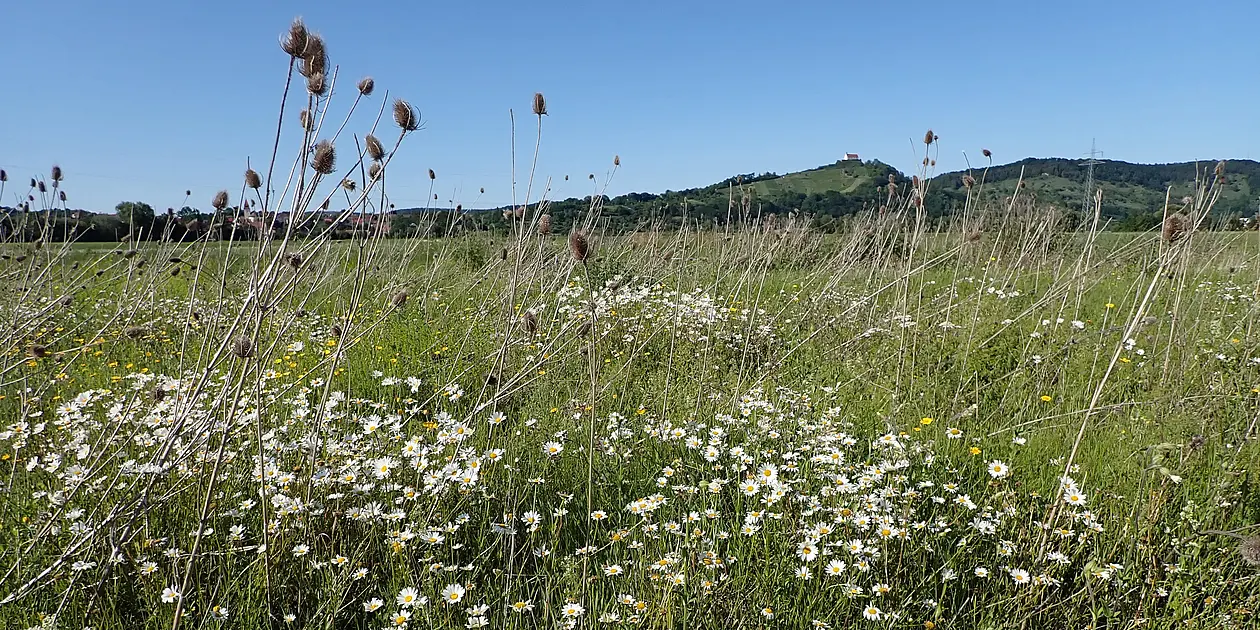
Sown flower fields and flower strips are a core ecoscheme in EU agricultural policy, and frequently used in contractual conservation. Using standardized surveys, we investigate variation in the use of different flower fields types between seasons and target species (farmland birds, leafhoppers).

Mück et al. (2026) Agr. Ecosyst. Env.
Rieger et al. (2021) J. Applied Ecol.

2018-2021
Practicioner's info on flower fields by Regierungspräsidium Video | Leaflet.
With: M.Rieger, L.Stier, S.Mailänder, F.Mück et al.

Trends from monitoring data

Some monitoring schemes conduct standardized surveys in a yearly rotating subset of all study sites within the program. We use generalized additive models to derive tools for robust trend analysis from such irregularly spaced time series..

2021-2025
Rieger et al. (2024): Peer Comm. J.
With: M. Rieger, supported by DDA
Funding: LANUV Nordrhein-Westfalen.
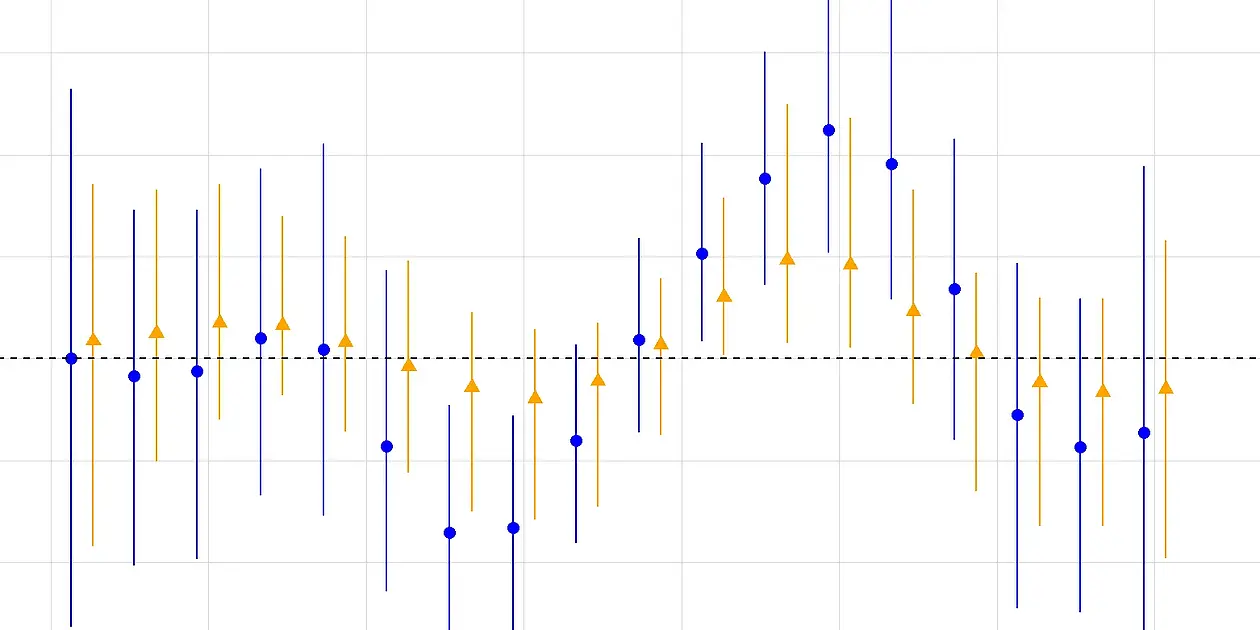
Example Results: NRW breeding bird trends

Species phenologies from citizen science data

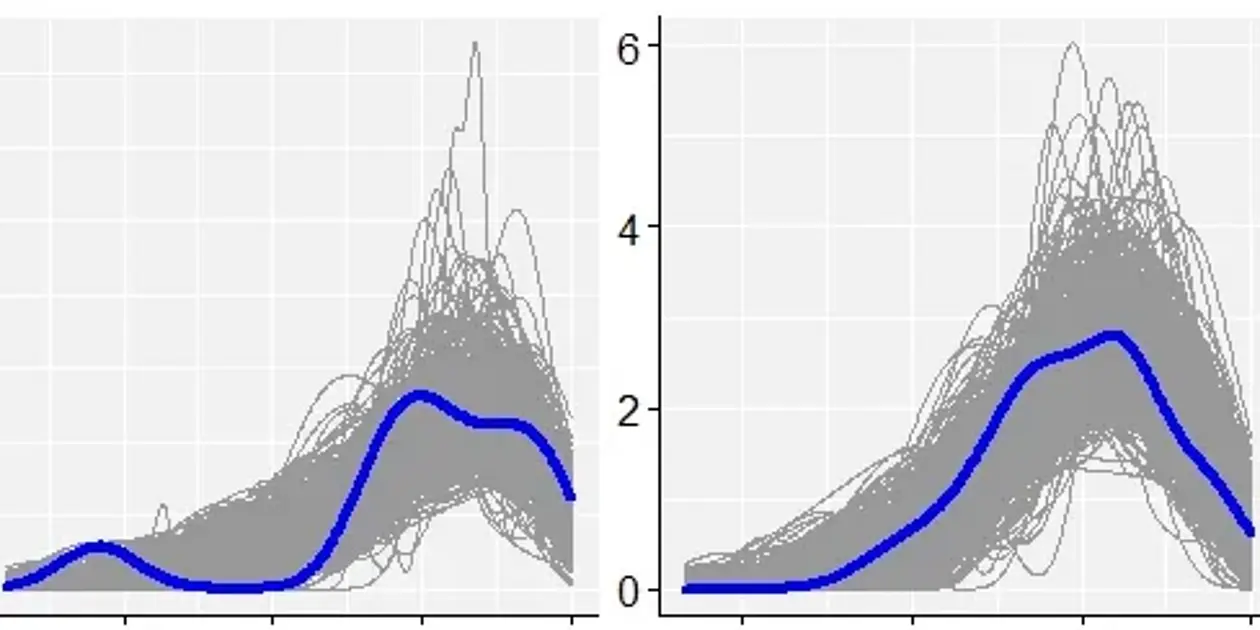
Citizen science data allow detecting even short-term responses of animals to environmental variation. Using bird records from the Ornitho system as a test case, we develop tools to model yearly bird phenologies based on standardized presence-absence surveys.

Anthes (2026) Vogelwarte.
Anthes (2018) Vogelwarte.
phenological data in Hölzinger & Bauer et al. (2018, 2021) Die Vögel Baden-Württembergs.

2015-2022
Phenograms on the OGBW website.
With: S. Brunotte
Partners: OGBW | DDA

Publications

Bold face names highlight BSc- and MSc-student authors.

  • Mück, F., Attinger, A., Bückler, C., Betz, O., Májeková, M. & Anthes, N. (2026): Vegetation succession and mature flower fields enhance leafhopper abundance and diversity in farmland. Agriculture, Ecosystems and Environment.
  • Jensen, A., Grützmann, J., Bairlein, F., Anthes, N. & Schmaljohann, H. (2026): Ortolan buntings (Emberiza hortulana) consistently select breeding territories with structurally diverse crops on well-drained soils. Conservation Science and Practice, e70324. https://doi.org/10.1111/csp2.70324
  • Anthes, N. (2025): Tools zur Aufarbeitung von Ornitho-Daten für die Erstellung ornithologischer Berichte und Auswertungen. Vogelwarte 63: 315-316.
  • Hinneberg, H., Hensel, S., Anthes, N., Tielbörger, K. and Gottschalk, T.K. (2025): Solar radiation determines host choice, larval feeding and survival throughout the life cycle of an endangered open forest butterfly. Conservation Science and Practice: e70094.
  • Mühlenhaupt, M., Hey, R., Starp, M., Anthes, N. … , Schlindwein, X. … , Caspers, B.A. (2025). Citizen science data supports sexual dichromatism but rejects thermal melanism in the European fire salamander (Salamandra salamandra). Preprint on EcoEvoRxiv.
  • Anger, F., Anthes, N., Thomassen, H.A. and Förschler, M.I. (2025). Dispersal, return rates and phenology in an isolated and fragmented population of a declining farmland passerine. Bird Study, in press. DOI: https://doi.org/10.1080/00063657.2025.2455970.
  • Anthes, N., Staggenborg, J. and Handschuh, M. (2025). Spatial and temporal variation in farmland bird nesting ecology: Implications for effective Corn Bunting Emberiza calandra conservation. Bird Conservation International 35: e7
  • Rieger, M.R., Grüneberg, C., Oberhaus, M., Trautmann, S., Parepa, M. and Anthes, N. (2024). Analysing bird population trends from monitoring data with highly structured sampling designs. Preprint on bioRxiv, 2024.06.30.601382
  • Staggenborg, J., Back, K., Debatin, F., Grom, J., Hielscher, S., Schneider, S. et al. (2024). Feldvogelschutz am Beispiel der Grauammer – Erkenntnisse aus großräumigen Untersuchungen zu Raumnutzung und Brutbiologie. Naturschutz und Landschaftspflege Bad.-Württ. 81, 1-78.
  • Anger, F., Förschler, M. I. & Anthes, N. (2023). Variation in reproductive success in a fragmented Meadow Pipit population: a role for vegetation succession? Journal of Ornithology. 10.1007/s10336-023-02121-4
  • Schöffski, N., Anthes, N., Harry, I. & Anger, F. (2023). Breeding success of Meadow Pipit (Anthus pratensis) in different habitats in the southern Black Forest [in german]. Ornithol. Jh. Bad.-Württ. 39: 23-35.
  • Santon, M., Korner-Nievergelt, F., Michiels, N. K. & Anthes, N. (2023). A versatile workflow for linear modelling in R. Frontiers in Ecology and Evolution 11: 10.3389/fevo.2023.1065273.
  • Staggenborg, J. & Anthes, N. (2022). Long‐term fallows rate best among agri‐environment scheme effects on farmland birds — A meta‐analysis. Conservation Letters, e12904.
  • Anthes, N., Hammerschmidt, A., Koch, A. E., Hielscher, S. & Staggenborg, J. (2022). Raumnutzung und Neststandorte der Grauammer im Raum Creglingen. Faun. u. flor. Mitt. Taubergrund, 33, 41-67.
  • Rieger, M., Mailänder, S., Stier, L., Santon, M. & Staggenborg, J. (2021): Optimizing flower fields as an effective farmland eco-scheme also during non-breeding. J. Applied Ecol.
  • Hölzinger, J. & H.-G. Bauer, unter Mitarbeit von N. Anthes et al. (2021): Die Vögel Baden-Württembergs, Band 2.1.2 -  Nicht-Singvögel 1.3, Greifvögel. Ulmer, Stuttgart.
  • Anger, F., Dorka, U., Anthes, N., Dreiser, C. & Förschler, M. I. (2020). Population decline and habitat use of the Alpine Ring Ouzel Turdus torquatus alpestris in the Northern Black Forest (Baden-Württemberg) [in German]. Ornithol. Beob. 117, 38-51.
  • Anthes, N., Götz, H. & Handschuh, M. (2019): Expanding north? Putting the first German breeding record of Black-headed Bunting Emberiza melanocephala into context. Vogelwelt 139: 31-38.
  • Dellwisch, B., Schmid, F. & Anthes, N. (2019): Habitat use of farmland birds during the non-breeding season in the context of the EU agricultural policy [in German]. Vogelwarte 57: 31-45.
  • Anthes, N. (2018). Wege zu einer automatisierten Erstellung von Phänologie-Diagrammen aus Ornitho-Daten. Vogelwarte 56: 407-409.
  • Staggenborg, J. & Anthes, N. (2018). Evaluation von Agrarumweltmaßnahmen am Beispiel der Grauammer Emberiza calandra. Vogelwarte 56: 394-395.
  • Anthes, N. & J. Staggenborg (2018): Die Grauammer als Leitart - Schutzkonzept für Vögel der Agrarlandschaft. Falke 9/2018: 22-24.
  • Hölzinger, J. & H.-G. Bauer, unter Mitarbeit von N. Anthes et al. (2018): Die Vögel Baden Württembergs, Band 2.1.1 -  Nicht-Singvögel 1.2, Entenvögel. Ulmer, Stuttgart.
  • Anthes, N., M. Boschert & J. Daniels-Trautner (2017): Breeding range and population trend of the Corn Bunting Emberiza calandra in Baden-Württemberg [in German]. Ornithol. Jh. Bad.-Württ. 33:27-44.
  • Böhler, E., M. Seidt, N. Anthes, F. Straub & G. Hermann (2015): Habitatpräferenzen der Gelbbauchunke (Bombina variegata) im Waldgebiet Rammert und Konsequenzen für den Schutz der Art. Z. Feldherpetol. 22: 1-20.
  • Seidt, M., S. Geißler-Strobel, M. Kramer, R. Kratzer, F. Straub & N. Anthes (2017): Population size and management of the Grey Partridge Perdix perdix in the administrative district of Tübingen [in German]. Ornithol. Jh. Bad.-Württ. 33:3-12.
  • Vowinkel, K. & N. Anthes (2012): Revierdichten und Bestand des Gartenrotschwanzes in Baden-Württemberg 2011. Ornithol. Jh. Bad.-Württ. 28: 73-92.

Coordination

Nils Anthes
Tenured Lecturer
  +49 7071 29 74617
room E5P19
 email

Funding

Stöckmann-Stiftung
Deutsche Ornithologen-Gesellschaft (DO-G)
Landesanstalt für Umwelt NRW (LANUV)