
09.11.2026
Press Release: Bringing History to Life
What Eyewitnesses Really Bring to the Classroom
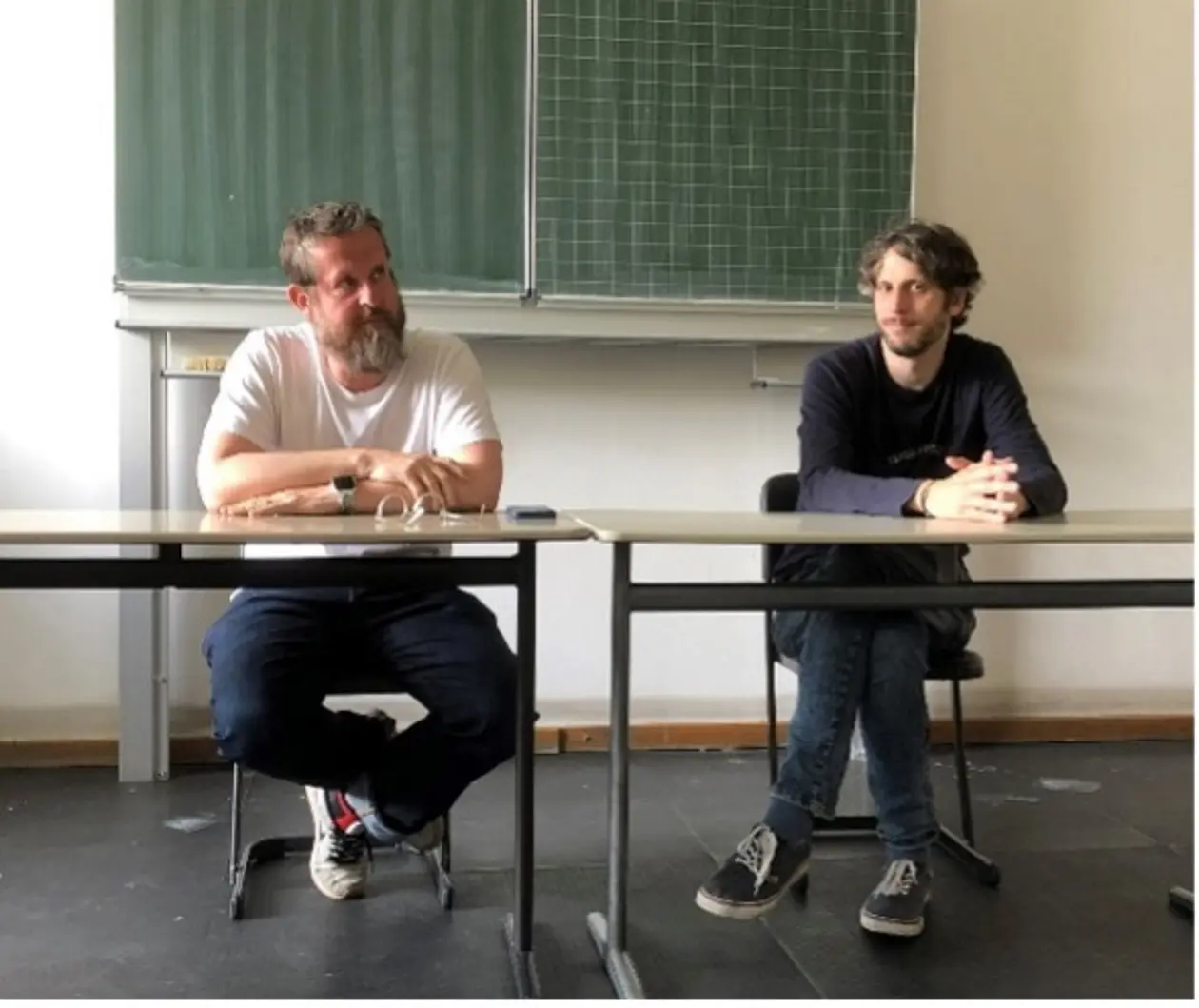
Thirty-seven years after the fall of the Berlin Wall, encounters with eyewitnesses in history classes help students develop a better understanding of how to engage with different perspectives and learn more about the period of German-German transformation following 1989. In many cases, videos offer an excellent alternative to in-person visits. For this to be successful, however, an appropriate pedagogical framework is needed. These are the findings of the largest experimental field study to date on the impact of interviews with eyewitnesses in history classes, conducted by the “Historical Learning” research group at the Hector Research Institute of Education Sciences and Psychology at the University of Tübingen in cooperation with the Center for School Quality and Teacher Education in Baden-Württemberg (ZSL).
Without historical knowledge, it is difficult to understand and contextualize current controversies, such as the recent media discussion about the reunification of East and West. History lessons featuring eyewitnesses promise a personal, vivid approach to this end. Yet the method has its pitfalls: such a visit can overwhelm young people emotionally, causing learning outcomes to suffer. A previous study showed that, after a visit from eyewitnesses, students were less able to understand that these individuals always recount events from their own perspective than students who worked with videos in class.
Educational Framework: Two Key Factors for Learning Success
To minimize the risk of emotional overwhelm and support learning, the Tübingen research group, in collaboration with the ZSL, focused on two key elements when designing the lesson:
- Everyday accounts instead of intense emotions: The young people listened to accounts of everyday life rather than dramatic descriptions.
- Two people with different perspectives: A West German perspective was always contrasted with an East German one. The aim was to make it clear that there is no “single truth” about the past, but rather that different perspectives coexist.
The new study is based on a scientific investigation in which 50 teachers from 41 schools throughout Baden-Württemberg participated, involving a total of more than 1,300 students. The researchers compared three conditions: Through random assignment, teachers either taught a specially developed 9th-grade unit featuring eyewitnesses on the topic of the period of transformation after 1989, with an in-person visit; or they taught the unit using professionally produced videos featuring statements from the same individuals. The third group, serving as the control group, taught the regular curriculum without interviewing eyewitnesses.
“Historical knowledge and critical thinking are indispensable tools in the democratic discourse on divided and reunified Germany,” emphasizes Dr. Christiane Bertram, co-author of the study. “Sharing different memories of a time we all experienced together fosters an understanding of other perspectives—a key skill for living together in a democracy.”
Similar Effects of Live Visits and Videos
The study provides a clear and nuanced picture:
- Strengthening awareness of perspective: A key learning objective—understanding that eyewitnesses always recount events from their personal perspective—was successfully achieved through both the in-person visit and the video format.
- Increased knowledge: Students who were taught using the newly developed unit knew more about the period of transformation than the control group—regardless of whether the witnesses were present in person or a video compilation of them was shown.
- Similar motivation, but more enjoyment during the in-person visit: While the in-person visit was the most enjoyable for the students, the groups showed little difference in the other measures of motivation. This shows that professionally produced videos are, in many respects, an equally effective alternative to a live visit.
- Fewer risks: The risk that an emotionally overwhelming live visit might diminish actual learning outcomes compared to those achieved through videos no longer occurred after the newly developed lesson unit.
Many important skills require more than one class period
The study also highlights limitations: When it came to more advanced, complex skills—such as independently identifying and deconstructing overarching historical narratives—the students who interacted with eyewitnesses did not show a clear advantage. Such in-depth competencies require intensive work and could hardly be measurably fostered in the comparatively short instructional unit totaling 4.5 hours.
“To deliver reliable results for practical application, close collaboration with schools and teachers is essential,” explains study director Dr. Katharina Totter. “Studies like this stand or fall on the willingness of the many, many participants and contributors, all of whom we would like to thank once again.” The research group is continuing its work in this area—including through the “Generations in Dialogue” transfer project in cooperation with the Baden-Württemberg Ministry of Education and Cultural Affairs, in which eyewitnesses from the GDR visit school classes to talk about their experiences before and after the fall of the Berlin Wall.
Freely Available Teaching Materials
The videos from the study—comprising a total of more than 20 classroom videos featuring eyewitnesses to German-German history—are available free of charge on the Baden-Württemberg Teacher Training Server, along with ready-made lesson plans. In addition, the Baden-Württemberg Ministry of Education and Cultural Affairs continues to fund the invitation of eyewitnesses to participate in classroom sessions.
Die Videos der Studie mit insgesamt über 20 Unterrichtsvideos mit Zeitzeuginnen und Zeitzeugen zur deutsch-deutschen Geschichte stehen auf dem Lehrerfortbildungsserver Baden-Württemberg neben ausgearbeiteten Unterrichtseinheiten kostenfrei zur Verfügung. Zudem finanziert das Kultusministerium Baden-Württemberg weiterhin das Einladen von Zeitzeuginnen und Zeitzeugen in den Unterricht.
Publication:
Totter, K., Wagner, W., Bertram, C., & Trautwein, U. (2026). Effects of working with multiple eyewitnesses in history lessons on competencies, knowledge, and motivation: A cluster randomized controlled field trial. Journal of Educational Psychology, 118(4), 624–649. https://doi.org/10.1037/edu0000996
Press contact:
Kristina Laube
presse@lead.uni-tuebingen.de