Interfakultäres Institut für Mikrobiologie und Infektionsmedizin

Postdocs

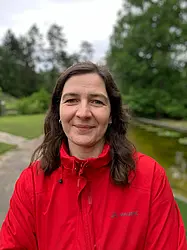
Dr. Martina Adamek

Martina Adamek studied environmental sciences at Bielefeld University, where she decided to focus on the fields of Microbiology and Biotechnology. She finished her diploma thesis in the Proteome and Metabolome research group at Bielefeld University, where she worked on the biosynthesis of Xanthan gum in Xanthomonas camperstris pv. Campestris . For her PhD she moved to the Karlsruhe Institute of Technology (KIT), Institute of Microbiology on Natural and Technical Interfaces (IFG) where she investigated the diversity within the opportunistic pathogenic bacterial species Stenotrophomonas maltophilia and was able to find novel candidate virulence genes of S. maltophiliausing comparative genomics. After finishing her PhD she worked as a postdoc at the University of Heidelberg, Institute of Immunology, developing various PCR applications for the use in clinical routine. Her interest in Microbiology brought her to Tuebingen, where her current research is directed at investigating the mechanisms and the evolutionary processes involved in creating the variety of bacterial natural products.

Room: F-Bau 3H01         Phone: 78835          Email

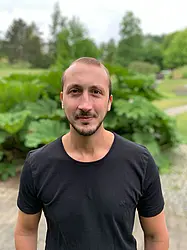
Caner Bağcı

Room: F-Bau 3H01         Phone: 74639          Email

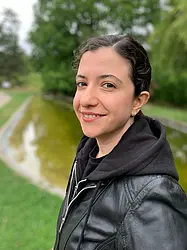
Dr. Jacqueline Wistuba-Hamprecht

Jacqueline completed her Bachelor’s degree in Biology and her Master’s in Bioinformatics at the University of Tübingen. During her Master’s program, she developed a strong interest in machine learning and its potential to build informative and predictive models for complex biological datasets. For her PhD she joined the research group of Nico Pfeifer “Methods in Medical Informatics” at the University of Tübingen where she was working on the development of predictive models to better understand the antibody mediated immunity against human malaria together with collaboration partners of the Tropical Institute Tübingen. Her interest in the interdisciplinary field of applied Machine Learning led her started as a Postdoctoral Fellow at the ZiemertLab in collaboration with Boehringer Ingelheim. Her work focus on exploring task-specific machine learning algorithm to identify a suitable catalyst to streamline the selection process for complex biocatalytic reactions and enhance the development of greener, more efficient industrial processes.

Room: F-Bau 3H01         Phone: 78835           Email

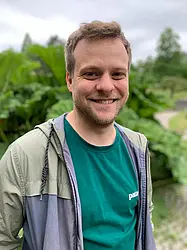
Dr. Timo Negri

Timo Negri studied Biosciences at the Heidelberg University, completing his Bachelor’s thesis in Glycobiology at the Center for Organismal Studies. During his studies, he developed a strong interest in microorganisms, which led him to pursue a Master’s degree in Microbiology at the University of Tübingen. For his Master’s thesis in the Translational Genome Mining for Natural Products group, he explored the microbial natural product biosynthetic potential of different soil types. Fascinated by the great diversity of natural products, he decided to continue his work to access the hidden biosynthetic capacity of soil microbiomes. His PhD work centered on developing culture-independent methods for the discovery of natural products from soil metagenomes. Currently, as a Postdoctoral researcher, he applies these methods alongside synthetic biology approaches to improve the heterologous production of natural products from soil metagenomes.

Room: F-Bau 3N01          Phone: 2973211          Email

PhD Students

Bita Pourmohsenin

Bita Pourmohsenin holds a Bachelor's and Master's degree in Computer Science from Amirkabir University of Technology (Tehran Polytechnic), where she became interested in bioinformatics through her work on algorithms for phylogenetic tree reconstruction. She joined the Ziemert Lab in 2020 as a PhD student at the University of Tübingen. Her research focuses on the evolution and diversity of bacterial secondary metabolites, particularly siderophores, metallophores, and biosurfactants. She is also the lead developer of AutoMLST2, a user-friendly web tool for microbial phylogeny and taxonomy based on the Genome Taxonomy Database.

Room: F-Bau 3K01        Phone: 78870        Email

Davide Paccagnella

Davide Paccagnella studied biology at the University of Tübingen and finished his Bachelor thesis in the field of cyanobacteria. Because of his interest in microbiology, he continued his studies with a Master’s in microbiology. For his master thesis he worked on different actinomycetes clusters obtained through genome mining to identify secondary metabolites with a potential therapeutic application. Due to his interest in the combination of bioinformatics and wet-lab he joined the Ziemertlab team in October 2021, where he works on a EU-funded project. Goal of project is to develop novel hybrid molecules with tailor-made properties obtained from the combination of biosynthetic genes of amphiphilic compounds (biosurfactants and siderophores).

Room: F-Bau 3N01          Email

Turgut Mesut Yilmaz

Turgut Mesut YILMAZ studied bioengineering at Ege University. During his Bachelor’s degree, he focused on Natural Products, virtual biotransformation reactions products and computer aided drug design studies. Then, Turgut Mesut finished his Master’s degree in the bioengineering programme at Ege University. In his master thesis, he was interested in investigating the usage potential of fungal natural products as active agents by molecular modelling methods. Additionally, he developed himself in the fields of isolation and purification of natural products and cell culture during this time. After approximately five years of entrepreneurship experience, Turgut Mesut started his doctoral studies at Ziemert Lab in March 2021. He is working on new tools to predict binding behavior of Natural Products, and synthetic biology approaches.

Room: F-Bau 3N01          Email

Semih Erdogmus

Semih Erdogmus studied bioengineering at Ege University. He focused on microbiology and genetics during his Bachelor's degree. Then, Semih finished his Master's degree in the bioengineering programme at Ege University. During his Masters' degree, he was interested in bioinformatics. In his Master's thesis, titled "Identification of DNA markers through association mapping of Fe, Zn, Ca, Mn, and Mg elements in common bean (Phaseolus vulgaris L.)", he worked on association mapping in plant genetics. Semih started his doctoral studies at Ziemert Lab in January 2023. He is working on a machine learning approach for the prediction of antibiotics' mode of action.

Room: F-Bau 3K01        Phone: 78870        Email

Aleksandra Korenskaia

Aleksandra earned both her Bachelor's and Master’s degrees in biology with a minor in bioinformatics at Novosibirsk State University, where she developed a strong interest in bacterial genomics. Her previous research focused on comparative analyses of microbial genomes, linking genotype to phenotype, and studying bacterial evolution.

Aleksandra joined Nadine Ziemert’s group in September 2023. Her PhD work, as part of the MAGic-MOLFUN consortium, focuses on analyzing the phylogeny and functions of enzymes involved in natural product biosynthesis. The ultimate goal of her project is to build a comprehensive database and web application to facilitate the function prediction of these enzymes.

Room: F-Bau 3K01        Phone: 78870        Email

Noel Kubach

Noel Kubach discovered his interest in bioinformatics during his bachelor’s in biochemistry at the University of Tübingen. He completed biochemistry with a thesis on a reactions database for glycopeptides in our group. He continued to pursue his interest in computational solutions for biological problems during his master's in bioinformatics at the University of Tübingen. He implemented a new approach for long-read classification in the group of Daniel Huson for his thesis. In June 2025, Noel joined our research group as a PhD student and is working on the structure prediction of glycopeptides based on their biosynthetic gene clusters.

Room: F-Bau 3K01        Phone: 78870        Email

Valentin Westphal

Valentin Westphal completed a Bachelor’s degree in Molecular Biology and Biotechnology at the Technical University of Dresden, focusing on minimal selective concentrations at subinhibitory antibiotic concentrations, at which resistance genes are maintained and transferred. This work sparked his interest in microbiology and antibiotic research, leading him to pursue a Master’s degree in Microbiology at the University of Tübingen. In his Master’s thesis, he worked on genome mining approaches to identify and produce potential antibiotic lasso peptide biosynthetic gene clusters from soil metagenomes. Valentin started his doctoral studies in the Ziemert Lab in October 2025, focusing on synthetic biology approaches to improve the heterologous production of natural products and generate novel derivatives.

Room: F-Bau 3N01           Email

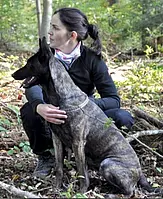
Team Mascot

Kiara

Belgian Shepherd/Good Girl 

Ziemertlab Alumni

  • Dr. Daniel Mannle, Ph.D Student
  • Mark Polster, Bachelor Student
  • Dr. Mohammad Alanjary, Ph.D Student
  • Dr. Helena Sales-Ortells, Postdoc
  • Michelle Schorn, UCSD visiting student
  • Maryam Elfeki, UIC visiting student
  • Kyra Geyer, Master student
  • Frauke Adam, Master Student
  • Katharina Steinke, Master Student
  • Anastasia Leonova, Master Student
  • Monica Daneliuc, Master Student
  • Dr. Shrikant Mantri, Ph.D student
  • Dr. Mehmet Direnç Mungan Ph.D student
  • Dr. Aileen Berasategui-Lopez, Postdoc
  • Dr. Luděk Sehnal, Postdoc
  • Athina Gavriilidou, Ph.D Student
  • Dr. Alyaa Abdelhameed, Postdoc