Uni-Tübingen

AI & Data Science Fellowship Program

Academia meets Industry –
University of Tübingen & Boehringer Ingelheim


The joint AI & Data Science Fellowship Program between the University of Tübingen and Boehringer Ingelheim is setting the next milestone in the development of new perspectives in AI and data science for healthcare.

This partnership offers postdoctoral talents the opportunity to link innovative academic research with application relevance for human and animal healthcare – while hosted at a highly renowned university and working in close cooperation with a leading pharmaceutical. Under supervision of University of Tübingen's Principal Investigators (PIs) and mentorship by Boehringer Ingelheim's scientists, postdoc fellows will benefit from our excellent research infrastructure to deliver outstanding results. Nominated fellows also participate in our exchange program between academia and industry by attending e.g., campus and company visits, networking events, and conferences.

Read more about our Fellows and their projects below.

CONTACT


Prof. Dr. Nico Pfeifer
Program Director

datascience [at] inf.uni-tuebingen.de


Ágnes Molden
Program Coordinator

mm-coordinator [at] inf.uni-tuebingen.de


Particularly in the combination of AI with relevant healthcare and pharmaceutical data, there is great potential to noticeably improve the wellbeing of many people.

Prof. Dr. Nico Pfeifer, Uni Tübingen
We are very excited to work with the fellows to extend our leadership in the development of next-gen AI and data science solutions.

Dr. Brigitte Fuhr, Boehringer Ingelheim


RESEARCH FELLOWS
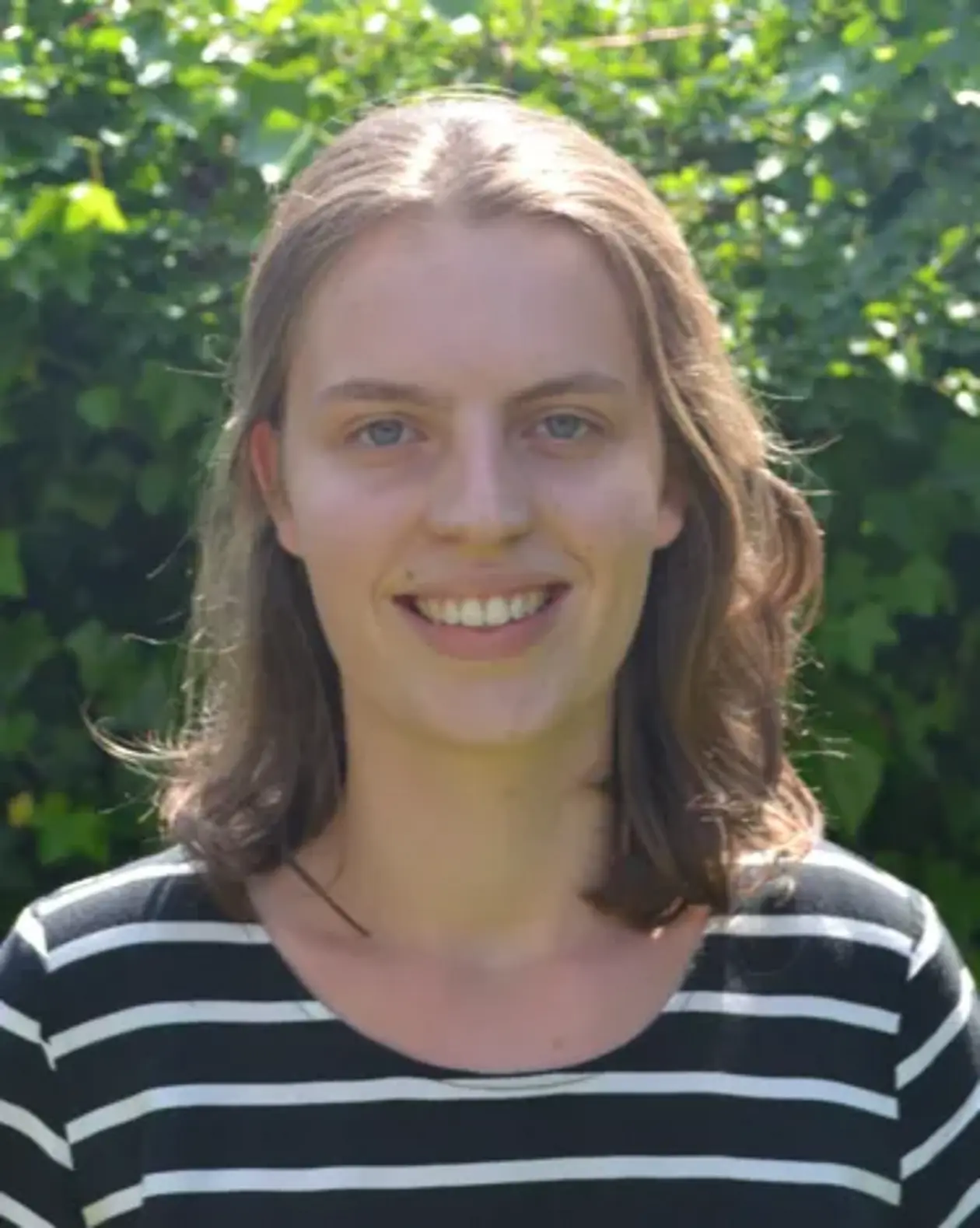
Dr. Floor Burghoorn


Research Interests
  • reinforcement learning
  • decision-making
  • gamified cognitive tasks
  • computational psychiatry
  • data science
Project: Using Gamified Assessments and Machine Learning to Create and Track Cognitive Profiles of Depression

Learning about our environment, and making decisions to achieve desired outcomes are critical for human functioning, and can be disrupted by mental health problems. This project will use machine learning on large-sample data from a gamified assessment system to develop cognitive learning and decision-making profiles to predict symptoms and shifts of depression. Such rapid, cost-efficient and easy-to-implement cognitive markers promise earlier detection of mental health issues and faster treatment.

Email Floor

Dr. Daniel Gedon


Research Interests
  • probabilistic deep modelling
  • modelling of dynamical systems and time series 
  • medical applications
  • model discovery
Project: Simulation-based model discovery for time-series models in quantitative systems pharmacology

This interdisciplinary project aims to develop probabilistic machine learning tools for automatically inferring mechanistic dynamical system models from time series observations. The machine learning tools will be adapted to study disease mechanisms that underly Chronic Kidney Disease by extending existing limited models.

Email Daniel

Dr. Shrestha Ghosh


Research Interests
  • Information Retrieval

  • Natural Language Processing

  • Generative AI

Project: Language Model-guided Cohort Discovery

Medical and pharmaceutical innovation relies on clinical trials as a crucial quality control step. Most trials are delayed or altogether fail due to unrealistic trials design. This project aims to fundamentally change the way in which clinical trials are designed and recruited for, by using foundation models to get better insights into eligible cohorts, recruitment bottlenecks and efficiently discover lessons learned during thousands of historic clinical trials. It lives at the intersection of basic scientific innovation of NLP models and applied impact on the life sciences.

Shrestha’s Website

Email Shrestha

Dr. Olga Graf


Research Interests
  • theoretical foundations of machine learning
  • analog-to-digital conversion algorithms
  • applied mathematics
Project: Anomaly detection for histopathology to optimize drug discovery

We conduct research on anomaly detection for histopathology. The goal is to find any deviation from healthy tissue, such as pathologies, based on image data. The approach should learn the appearance of healthy tissue, be able to take advantage of certain known pathologies, but in particular detect completely new changes. Furthermore, it should be able to improve continuously getting different kind of human feedback from pathologists. Fast detection of anomalous tissue is important for early detection of toxic drug candidates.

Olga's Google Scholar Profile

Contact Olga

Dr. Tobias Renahan (né Theska)


Research Interests
  • Medical Informatics
  • Quantitative Morphology
  • Genomics and Transcriptomics
  • Artificial Intelligence for Healthcare
  • Representation Learning
Project: Learning joint representations of EHR and omics data

The project will work on large biobank data combining EHR and genetic information to learn the best joint representation that improves downstream analyses. Those downstream analyses include disease subtyping, disease risk prediction, and patient stratification.

Contact Tobias

Dr. Lukas Tatzel

 
Research Interests
  • machine learning
  • algorithm and method development
  • computational genomics and large-scale genetic data analysis
Project: Leveraging Large-Scale Genealogies for Genome Wide Association Studies

Genome-wide association studies (GWAS) aim to identify loci in the genome that are causally linked to a disease. However, in large-scale genetic datasets, individuals are related through shared ancestry, which can be represented using ancestral recombination graphs. This project explores how such genealogical information can be combined with machine learning techniques to improve the detection of causal variants – ultimately enabling more effective, targeted treatments.

Email Lukas

Dr. Maik Wolfram-Schauerte


Research Interests
  • Cutting-edge Science and innovative Technologies
  • Single-cell and bulk Transcriptomics
  • Machine Learning to improve biomedical research
  • Human Health & Pharma
Project: Transcriptomics machine learning models

This project will build hybrid transcriptomics machine learning models for drug discovery. Unsupervised learning will be used to build cell-type specific and integrated bulk tissue modules, then supervised learning will be applied to connect those modules to a holistic hybrid machine learning model for transcriptomics.

Contact Maik

Dr. Jacqueline Wistuba-Hamprecht


Research Interests
  • machine learning for infectious diseases

  • enhancing biocatalysis with machine learning

  • adaptation and development of explainable machine learning methods

  • curation of high-quality datasets for ML training

Project: Predictive Biocatalyst Selection for Metabolite Synthesis

Identifying suitable catalysts for chemical transformations is crucial to developing more efficient and environmentally friendly processes. Advances in machine learning and database curation have the potential to accelerate this process in the pharmaceutical industry. This project explores task-specific machine learning algorithms to identify and generate enzymes from the vast and diverse world of bacterial secondary metabolism. This approach aims to streamline the selection process for complex biocatalytic reactions and enhance the development of greener, more efficient industrial processes.

Email Jacqueline

Dr. Mariam Zabihi

 
Research Interests
  • computational neuroscience
  • latent representation learning
  • normative modeling across modalities
  • deep generative models for brain imaging
  • AI applications in mental health
Project: Data-Oriented Synergistic Embedding (DOSE) for Precision Psychiatry

This project develops a multi-modal normative modeling framework based on latent representations learned from structural and functional brain imaging data. We aim to capture individual variation across developmental and clinical dimensions using deep generative models. By aligning latent spaces across modalities and linking them to behavioral and cognitive scores, we seek to enable personalized characterizations of brain function and support stratified approaches in mental health research.

Mariam's Google Scholar Profile

Email Mariam


ALUMNI

Dr. Christoph Hoffmann

 
Research Interests
  • biology with a focus on cell culture, molecular biology and transcriptional regulation
  • molecular medicine in diabetes prevention
  • data science and bioinformatics
Project: Multi-modal deep learning for biomarker discovery in mass spectrometry imaging data

Tissue microenvironment and the spatial organization of cells in the tissue are strongly associated with physiological and pathological processes. Mass spectrometry imaging (MSI) data contains distribution patterns of numerous molecules and their molecular masses. This research project will develop novel machine learning methods to associate MSI data with preclinical phenotypes, with the goal to discover novel molecular markers (as toxicity or efficacy markers or to highlight unexpected metabolic reactions).

Christoph's LinkedIn Profile


MORE INFO

FAQ

  1. How can I apply for a postdoctoral fellowship in this program?
    Open positions will be advertized and linked on this website, including all details and requirements.
     
  2. What is the deadline for applications?
    You can find the deadline in the respective job advertisement.
     
  3. Which qualifications do I have to bring?
    First of all, you have to bring a PhD degree in a relevant field. The detailed description of required qualifications and skills is listed in the job advertisement. Please check out the job board and consider the mentioned pre-requisites.
     
  4. Are PhD graduates outside of Germany eligible to apply?
    Yes. Our Fellowship Program is open to all PhD graduates at all universities both in Germany and other countries.
     
  5. Where will I be employed as a fellow?
    You will be employed and located at the University of Tübingen, as well as receive your salary.
     
  6. How long will I get funded as a fellow?
    The Fellowship Program for each candidate is planned for two years. In exceptional cases, the time can be extended for an additional year.
     
  7. What documents do I have to provide with my application?
    Please consider the information listed in the respective job advertisement for the research project.
    ​​​​​​​
  8. Who will evaluate my application?
    Experienced PIs of the University of Tübingen and scientists from Boehringer Ingelheim are involved in the selection process.
    ​​​​​​​
  9. What percentage of my time is expected to be in the program?
    100% of your time and effort is required to participate in the program, i.e. we offer positions funded full-time.
    ​​​​​​​
  10. Can I apply if I am not enrolled or employed at the University of Tübingen?
    Yes. All graduates with a PhD are invited to apply both from the University of Tübingen and other universities worldwide.
    ​​​​​​​
  11. What benefits do I receive?
    ​​​​​​​We provide remuneration in accordance with the TV-L (collective agreement for public employees of the German federal states) as well as all corresponding benefits, e.g. extensive visa and onboarding assistance, 30 days/year of paid vacation, flexible working hours, discounted public transportation, etc.

Joint Steering Committee & Representatives

University of Tübingen

Methods in Medical Informatics
Prof. Dr. Nico Pfeifer
PfeiferLab

Clinical Bioinformatics
Prof. Dr. Manfred Claassen
Clinical Bioinformatics

Machine Learning Engineering and Technology Transfer 
Prof. Dr. Peter Gehler 
ML Engineering and Technology Transfer 


Boehringer Ingelheim

Head of Central Data Science
Dr. Fabian Heinemann
LinkedIn

Global Head of Computational Biology and Digital Sciences
Maria Fälth Savitski
LinkedIn

Head of Strategic Partnerships - Translational Medicine and Clinical Pharmacology
Alexander Staab
LinkedIn

Site Head Biberach and Member of the Boehringer Ingelheim Germany Executive Committee
Thomas Reith
LinkedIn


PARTNER