



Please introduce yourself and the background of your stay as Research Fellow in Tübingen in one or two sentences.
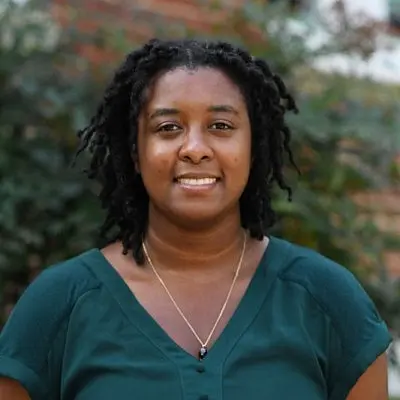
I earned my Ph.D. in Occupational Science from the University of North Carolina at Chapel Hill and my dissertation focused on activism among Black college students and how their engagement in such work impacted their health. I also have a background as an occupational therapist, and that work, along with my interest in activisim, informs my work and has led me to expand disability research among young people.
Which problem or question does your research address and what fascinates you about your research area?
My research helps address ethical concerns in society that affect people with disabilities while also educating others to reduce discrimination and ableism in everyday life. I am particularly interested in exploring how various countries address the needs and concerns of young people with disabilities.
Please briefly outline the social relevance of your research.
People with disabilities deserve to receive healthcare services to meet their needs. Being aware of the ethical concerns of disabled people not only helps the intended group but also benefits everyone in society. By being aware of the limitations within systems, we can work to improve them.
Where do you see future opportunities for international and interdisciplinary cooperation for the university, and what role can an institution like the College of Fellows play in this?
The College of Fellows is the perfect place to foster interdisciplinary collaborations with so many researchers coming together. The institute is a space where research can be expanded through the community provided by the College of Fellows as various experts come together to discuss and learn from one another.