College of Fellows

Proximity in the Future Humanities

The aim of the New Horizons Fellowship is to stimulate research at the University of Tübingen, deepen international contacts and broaden research horizons. New Horizons Fellowships are advertised twice a year by the College of Fellows throughout the university. Current calls are announced on the College's's startpage and in our newsletter (sign up here). 

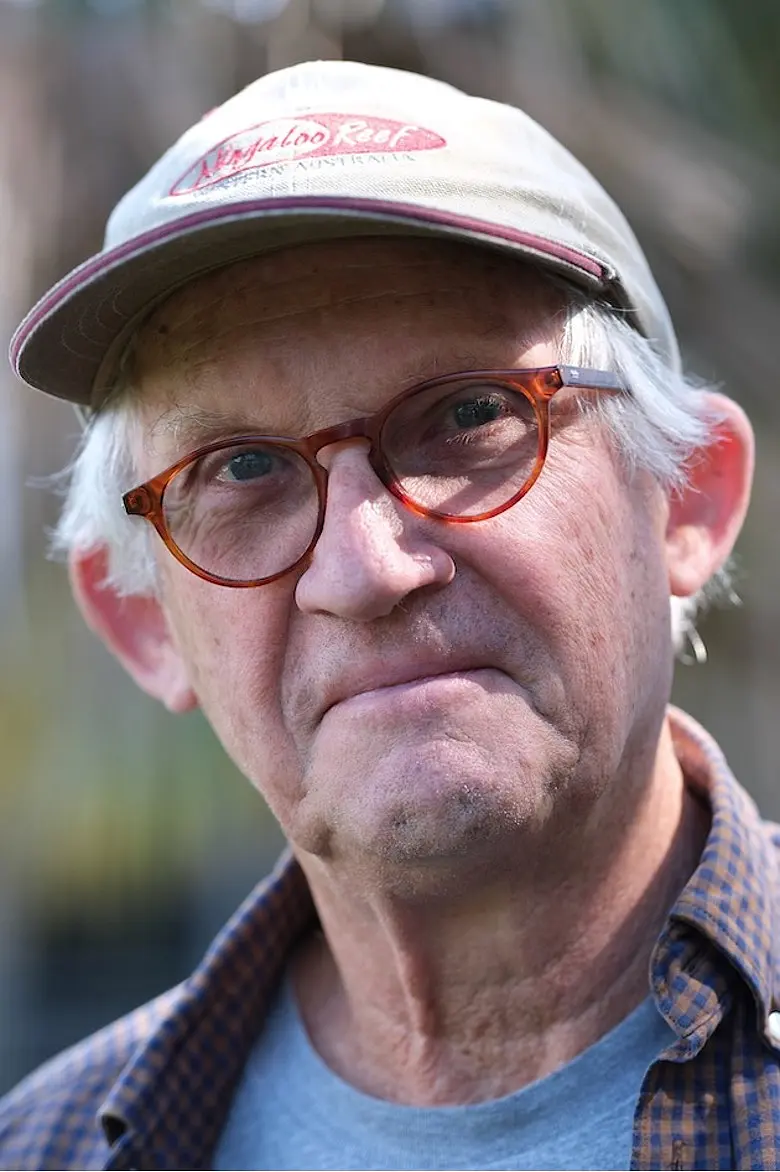
The Focus Group “Proximity in the Future Humanities” is basing its research on the work of Prof. Stephen Muecke, who will be visiting the university as a New Horizons Fellow in September and October 2026.

Focus Group Research Topic

Professor Stephen Muecke (Nulungu Research Institute, Broome, Notre Dame University Australia) is visiting the university as a New Horizons Fellow for a 2-month stay at the College of Fellows from 1 September to 1 November 2026. The focus group includes 15 Professors and 2 postdocs from across four faculties (humanities, social sciences, law and theology) from political science, study of religions, Islamic and Catholic theology, anthropology/ethnology, cultural studies, Global South studies, philosophy and cultural theory, environmental humanities, and international law.
The main facets of Muecke’s research contains a core involvement with the theories and practices of proximity. Muecke’s work can contribute significantly to the focus group’s endeavour to mint ‘proximity’ as an emergent category of critical reflection in the humanities capable of resolving the aporias associated with the long-enshrined notions of ‘difference’ and ‘identity’, across a range of disciplines, for example those named above. Professor Muecke will be the inaugural fellow instigating the establishment of a Focus group on ‘Proximity in the Future Humanities.’ This Focus group builds on the work and the group of the ‘Critical Proximities’ initiative (2022-2025) and will continue the work of crafting and testing the potential and limits of a concept of ‘proximity’ in a series of workshop with Muecke. It aims to forge a paradigm shift within the humanities, from the identity/difference nexus to the more versatile and productive notion of proximity – and ultimately, to enhance the humanities’ contribution to modes of planetary co-existence in troubled times. Muecke’s past work and his ongoing research continues to embrace a practice of proximity to civil-society concerns (and projects) and a theorizing of that proximity. His presence in Tübingen is of enormous benefit to the work of the ‘Proximity in the Future Humanities’ Focus group and its further development, and to that of the university community as a whole. 

Events

Informal meetings in September (College of Fellows)

Oktober 8: Workshop: Urban Critical Zones with Prof. Dr. Stephen Muecke and Prof. Kate Rigby (College of Fellows)

Oktober 13: Workshop on Prof. Isabelle Stengers: “Making sense in Proximity” (College of Fellows)

27. Oktober: Masterclass “Transformation of Humanities” with PD Dr. Tim Lanzendörfer (Frankfurt/Main) (Alte Aula)

29. Oktober: Public Lecture: Prof. Dr. Stephen Muecke (Alte Aula)

More Info and Abstracts

8 October 2026
Workshop on Urban Critical Zones

Workshop on Urban Critical Zones, with Guest Prof. Kate Rigby (Köln)

Thurs 8 Oct, 10:00 am – 5:00 pm
College of Fellows (Rümelinstr. 27/Villa Köstlin) | Common Room 

The notion of urban critical zones promises to fill a gap both in critical zones studies (indexed by the absence till now of CZ observatories in cities) and in urban studies, which customarily place humans agents centre stage while relegating other actors to the status of ‘infrastructure’ and neglecting many other possible actants, thereby demanding an ‘ecologization’ of the discipline. More radically, however, the notion of urban critical zones demands that we revamp the very idea of the city as a bounded given (allowing it to be reconceptualized via the fluid, even ‘uncanny’ notion of the zone), thinking its manifold constitutive processes and flows in a non-linear fashion; and taking on board the types of agency and the repertoire of actants we understand as contributing to the dynamic process of ‘cityness’. 

(3 sessions, interspersed with lunch (catered) and afternoon coffee break). 

13 October 2026
Workshop on Isbabelle Stengers: “Making Sense in Proximity”

Workshop on Isabelle Stengers: “Making Sense in Proximity” 

Tues 13 Oct, 10:00 am – 4:00 pm
College of Fellows (Rümelinstr. 27/Villa Köstlin) | Common Room 

Building upon Alfred North Whitehead’s concept of ‘coherence’ (no idea makes sense without being placed in relation with the other ideas that make up the whole) and Bruno Latour’s notion of ‘matters of concern’ (issues that provide an affirmative platform for thinking rather than mere ‘critique’), Isabelle Stengers proposes a model of ‘making sense in common’ – in which our shared proximity to contemporary crises, even where our opinions may diverge radically, provides a framework for constructive – and vitally necessary – dialogue. The workshop explores what this may mean for our respective projects, whether conceptual, empirical, or activist. 

(3 sessions, interspersed with lunch (catered) and afternoon coffee break). 

27 October 2026
Workshop on Transformations of the Humanities

Workshop on Transformations of the Humanities, with interventions by Stephen Muecke, Russ West-Pavlov, Tim Lanzendörfer, Mamadou Dramé/René Ramírez Gallegos (virtual), Anya Heise-von der Lippe

Tue 27 Oct, 10:00 am – 4:00 pm
Alte Aula (Münzgasse 30)  


Abstract: 
This workshop interrogates the public remit and the constitutive contours of the humanities from a number of points of view: as an assemblage in a universe of distributed agency; as a group of disciplines under pressure in an age of polycrises (from climate change to shifts in the graduate labour market); and as an institutional actant susceptible of transformation by developments originating in the Global South.

(3 sessions: 1: Muecke: Composition; Respondent Lanzendörfer (10-12); 2: Heise-von der Lippe, Applied Humanities; Respondent RWP (12:15-13:45); 3: humanities from the South: RWP) (14:15-16:00); interspersed by catering and coffee break)

29 October 2026
New Horizons Lecture: “Indigenous Australian Philosophy”

29 October 2026, 6:00 pm 
Alte Aula (Münzgasse 30)


Abstract: 
Indigenous Australian Philosophy is emerging as a field that translates some concepts and practices from Indigenous Australia to form a branch of Australian Philosophy, a field that is itself ephemeral. The forms of knowledge that have accumulated over many thousands of years on the continent have mostly been translated into the disciplines of anthropology, history, archaeology, linguistics and some sciences. The door to the philosophy department has, for the most part, remained closed. Young Indigenous scholars are finding ways to open the field up to the knowledge their ancestors bequeathed to them, articulating the concepts and practices found there with critical analysis, with ecological management, with totemism and animism, and with pragmatics. Articulating Indigenous Australian Philosophy in English, in writing, in seminar rooms, has its challenges. But there is no doubt something new will emerge that is relevant to the Australian, and perhaps more global, context.

Participants

Professor Dr. Dr. Russell West-Pavlov

Professor Dr. Dorothee Kimmich

Professor Dr. Astrid Franke

Prof. Dr. Dr. h.c. Lejla Demiri

Jun.-Prof. Dr. Riccarda Flemmer

PD Dr. Anya Heise-Von der Lippe

Prof. Dr. Ingrid Hotz-Davies