The University Equal Opportunities Officer is elected by the Senate for a term of office of two years. She is a professor (or from the academic service) and works on a part-time basis. The university's constitution allows for up to 11 elected deputies - three at central level and eight at decentralized level (for the seven faculties and the Center for Islamic Theology).
The three deputies at the central level relieve the University Equal Opportunities Officer in the central committees by taking on key topics and regularly exchanging information.
The eight decentralized deputies in the faculties are mostly the same person as the Faculty Equal Opportunities Officer. They provide advice and support in decentralized committees and are the contact persons for all questions or conflicts relating to equal opportunities in the dean's offices and in the faculties and subjects. Due to the large number of tasks, the faculties also have equal opportunities commissions in which departments and/or various status groups are represented.
With this large number of deputies, the University of Tübingen has a unique selling point!
The Senate Equal Opportunities Commission is an advisory commission of the Senate, which is made up of an equal number of members from the groups represented in the Senate. It is chaired by the University Equal Opportunities Officer and supported by the Advisory Board of the Faculty Equal Opportunities Officers.
Together they form a strong network of gender equality activists.
+49 7071 29-74958 (Iva Fahrner)
+49 7071 29-77766 (Irene Gust)
equity@uni-tuebingen.de
Geschwister-Scholl-Platz
72074 Tübingen
via Email
To the Equity-Topics
To Team Equity
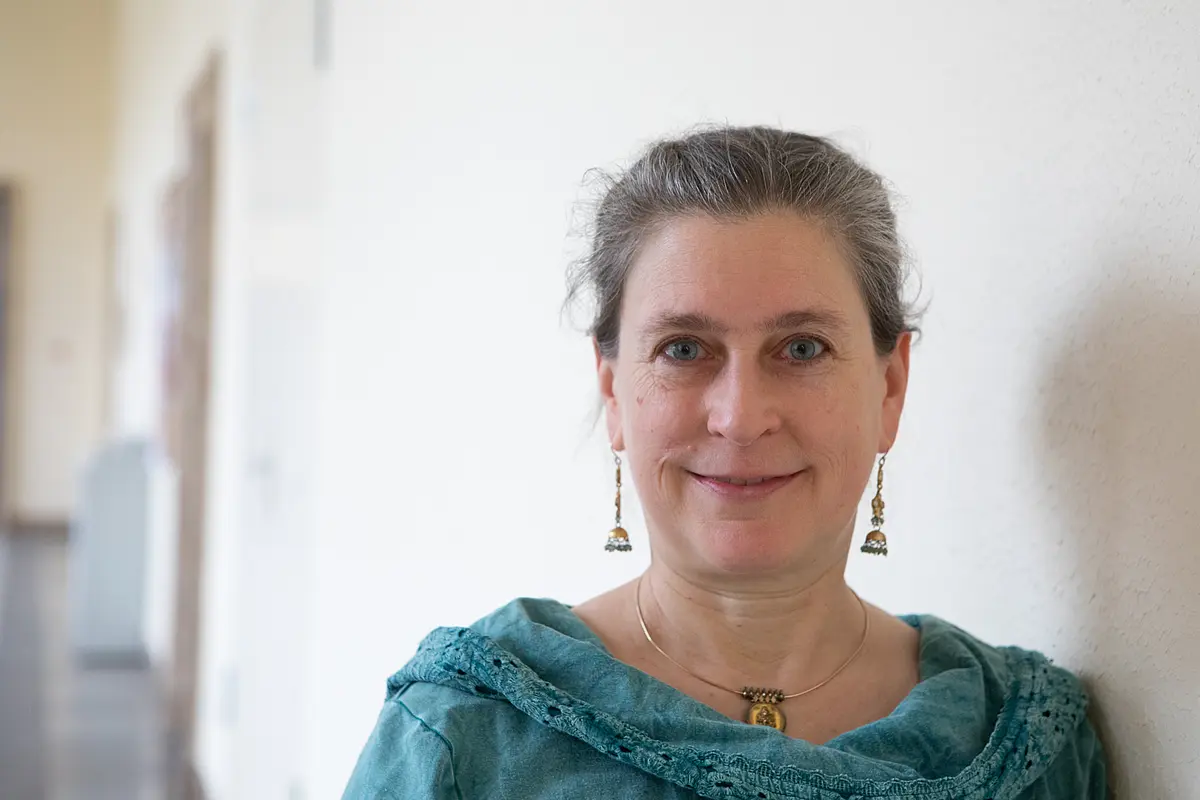
Professor Dr. Heike Oberlin assumed the position of Equal Opportunity Officer at the University of Tübingen on October 1, 2026. Prior to that, she had served as Deputy University Equal Opportunity Officer since March 2024.
Heike Oberlin is an adjunct professor of Indology and the Executive Director of the Department of Indology at the Asia-Orient Institute within the Faculty of Philosophy. She studied Indology and Ethnology at the University of Tübingen and earned her doctorate at the University of Würzburg with a dissertation on the South Indian Sanskrit theater tradition Kūṭiyāṭṭam. In 2013, she completed her habilitation in Tübingen; in 2016, she was appointed Adjunct Professor.
Her scholarly work combines Indology, theater studies, and gender studies. She focuses particularly on actresses and female characters, as well as on issues of gender and social participation in South Asia. She has received numerous awards for her scholarly work and her commitment to German-Indian exchange. In 2008, she received the Ernst Waldschmidt Prize; in 2018, she was named “Scholar in Residence” as part of the Kerala government’s “Erudite Program”; and in 2019, she received the Gisela Bonn Prize from the Indian Council for Cultural Relations for outstanding contributions to German-Indian relations.
For many years, Oberlin is actively involved in academic self-governance and gender equality issues. From 2014 to 2019, for example, she served as the equity officer for the Faculty of Arts and Sciences, where she addressed a wide range of gender equity issues—from supporting early-career faculty and work-life balance to addressing sexual harassment and discrimination, as well as ensuring equal opportunity in tenure and hiring processes. From 2021 to September 2026, she served as an elected member of the University Council.
At the heart of her work as the university’s equal opportunity officer is the legally mandated task of promoting gender equality between women and men in academia and higher education and eliminating existing structural disadvantages (State Higher Education Act). This includes, in particular, ensuring fair opportunities for participation and career advancement, transparent procedures, and the appropriate consideration of gender equality issues in appointments, hiring, the promotion of early-career researchers, and university decision-making processes.
Oberlin combines this mission with a comprehensive understanding of equal opportunity. As a “first-generation academic,” she pays particular attention to the question of how structural conditions can enable or hinder academic careers, or render certain potentials invisible. In doing so, she also focuses on the various status groups within the university. Academic achievement and responsibility are by no means limited to professorships; it is precisely among the so-called mid-level faculty that one finds equally high levels of professional qualification, long-standing experience, and institutional commitment—qualities that are often not adequately recognized within existing career and recognition structures. Oberlin therefore associates the concept of “latent excellence” with the task of identifying and fostering scholarly potential even in areas where it is overlooked due to gender, status, institutional hierarchies, or traditional career paths. In this sense, she views gender equality as a contribution to a university culture in which women and men in research and academic studies are afforded truly equal opportunities for participation, recognition, and professional development.
Professor Dr. Heike Oberlin is supported in carrying out her duties by Team Equity (Gender, Diversity, Care).

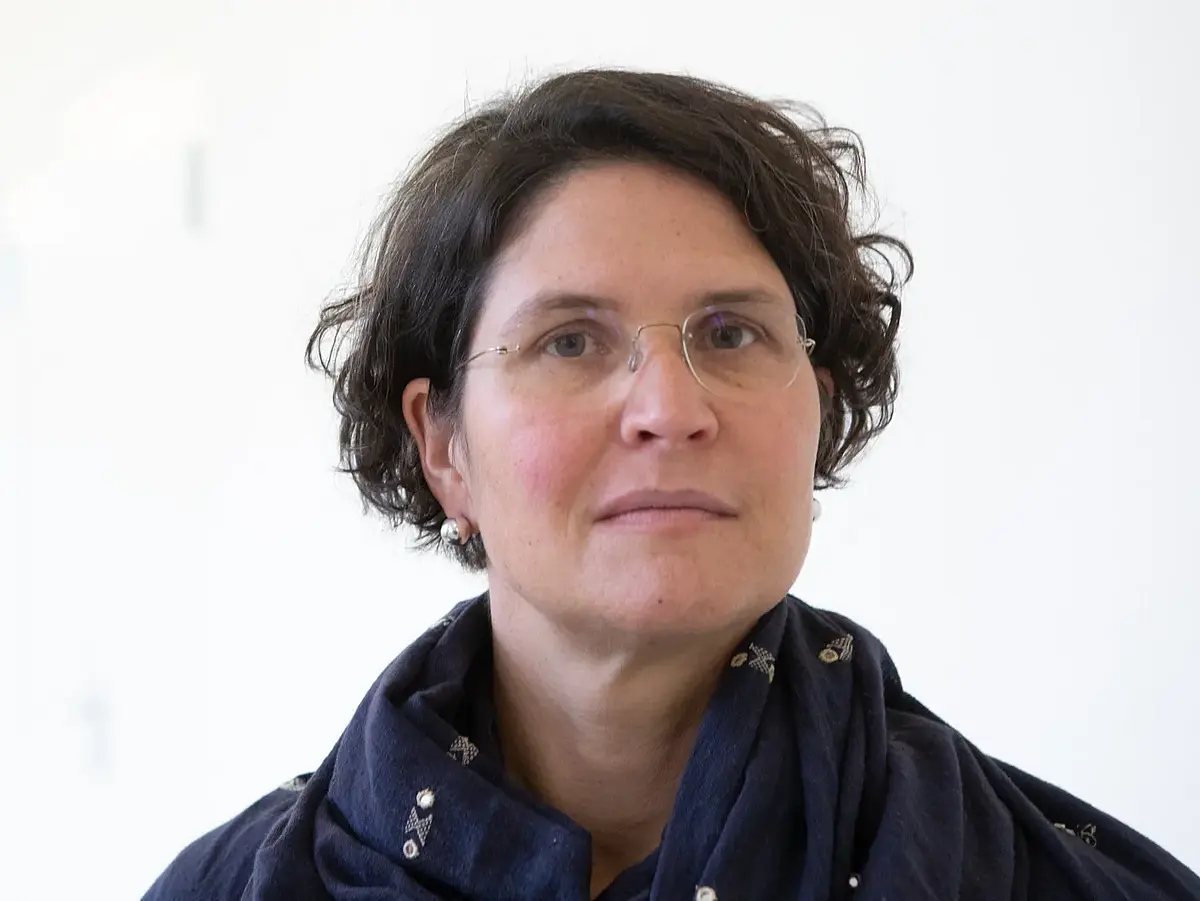
I have been an academic councilor and adjunct professor at the Methods Center of the Faculty of Business, Economics and Social Sciences since 2023, where I am responsible for the Qualitative Methods and Interpretative Social Research department.
Since my studies of Sociology, Scandinavian Studies and Gender Studies in Tübingen and at the Humboldt University of Berlin, I have been dealing with methodological questions of empirical social research as well as questions of gender sociology, related to the topics of work, organization, profession, science and technology research. This has given me an understanding of the mechanisms of gender inequality, from which the university as an organization is not exempt.
As a postdoc at the University of St. Gallen, I empirically investigated how the pursuit of excellence at Swiss and German universities is linked to efforts to increase equal opportunities: there are both synergies and areas of friction between the two concerns. In my gender equality work at the University of Tübingen, I would like to contribute to university organizational development understanding gender equality as a natural, helpful, albeit sometimes uncomfortable part of its work. We will not run out of work, because: Reforms are always incomplete.
work in progress, coming soon!
The University of Tübingen is divided into seven faculties and the Center for Islamic Theology (ZITh). These faculties perform their tasks in research and teaching largely autonomously within the framework of academic self-administration - due to this autonomy, gender equality policy must also be institutionalized decentrally at faculty level. The respective commissions and further information on activities at faculty level can also be found under the links below.
These are the current Faculty Equal Opportunities Officers:
Most faculties regulate the election of their equal opportunities officers, their tasks and the faculty's equal opportunities policy goals and planned measures in a faculty equal opportunities plan.
The Equal Opportunities Officers of the faculties are elected by the Faculty Council; at the same time, they often represent the University Equal Opportunities Officers and their tasks at faculty level as regulated in §4 LHG. They are therefore legitimized in two ways: Firstly as a representative of the University Equal Opportunities Officer and secondly as the Faculty Equal Opportunities Officer elected by the Faculty Council.
The main tasks of the Faculty Equal Opportunities Officer are as follows:
Important information on equal opportunities work at the faculties can also be found in the Handreichung Fakultätsgleichstellungsbeauftragten
The Senate Equal Opportunities Commission is responsible for the topics equity, diversity, gender equality and care.
The Senate Equal Opportunities Commission is an advisory commission of the Senat, which is made up of an equal number of members from the groups represented in the Senate. Its tasks include, in particular, monitoring the effectiveness of equal opportunities measures and developing proposals for updating them. It supports and advises the Equal Opportunities Officers of the University and the faculties and has the right to propose candidates to the Senate for the election of the University Equal Opportunities Officer and her deputies. The Senate Equal Opportunities Commission usually meets once or twice a semester under the direction of the University Equal Opportunities Officer.
Professor Dr. Josef Jochum, Faculty of Science
Substitute: Professorin Dr. Katharina Foerster, Faculty of Science
Prof. Professorin Dr. Birgit Derntl, Faculty of Medicine
Substitute: Professorin Dr. Marcella Esteves Oliveira, Faculty of Medicine
Isis Mrugalla, Faculty of Humanities
Substitute: Dr. Dr. Carsten Köhler, Faculty of Medicine
Dr. Cordula Brand, International Center for Ethics in the Sciences and Humanities (IZEW)
Substitute: Dr. Gero Bauer, Center for Gender and Diversity Research
Evelyn Stange
Substitute: Nathalie Widmann
Jenny Wagner
Substitute: Benedikt Masberg
Gregor Schulte, Faculty of Science
Substitute: Nicole Doppstadt, Faculty of Science
Anja Schreiber, University Library
Substitute:Dr. Regina Keyler, University Archives
The Commission's term of office ends on September 30, 2028. Students until September 30, 2026.