Japanologie

Guest Lectures

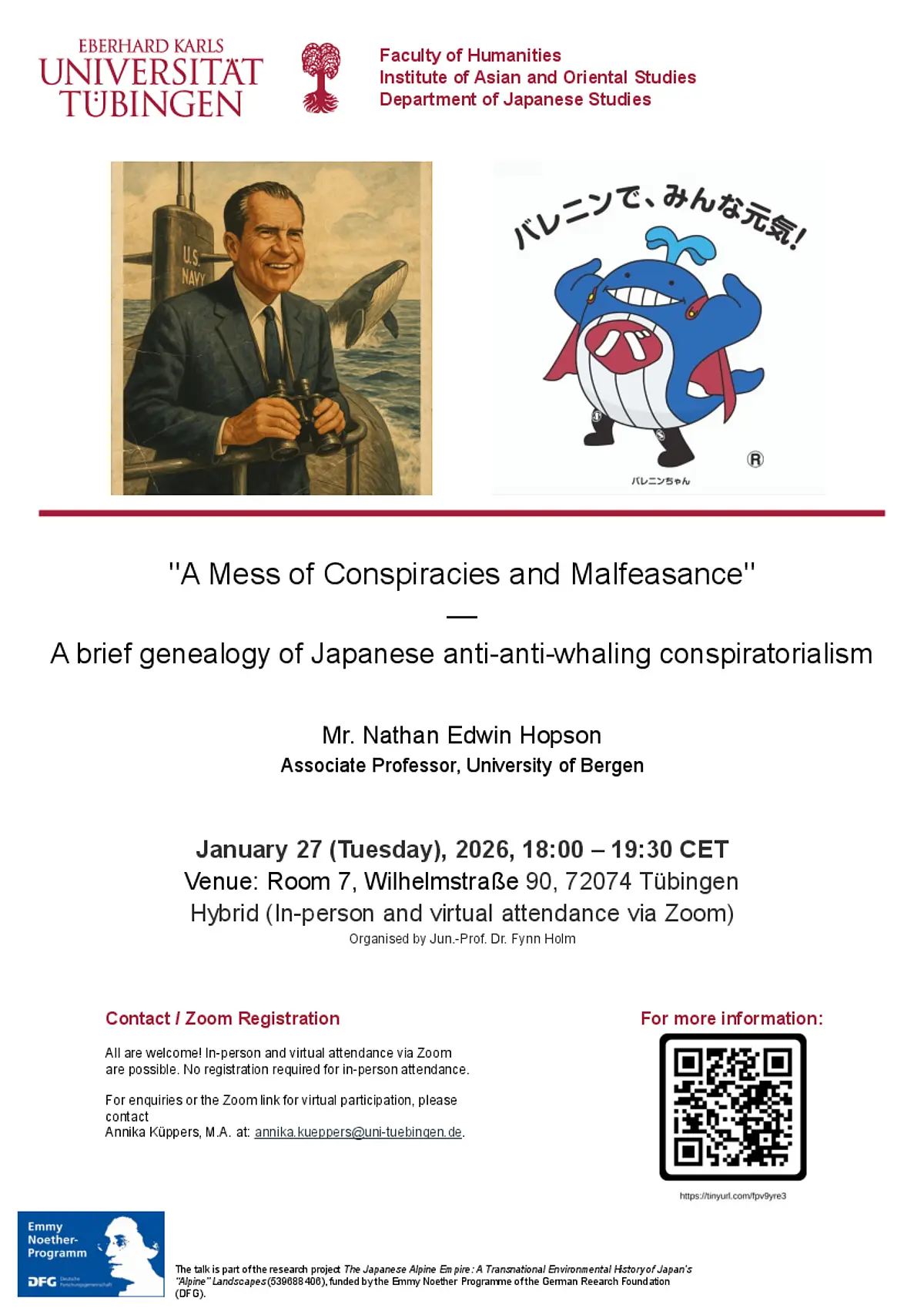
Nathan Hopson: "A Mess of Conspiracies and Malfeasance: A brief genealogy of Japanese anti-anti-whaling conspiratorialism"

Abstract

Japan's anti-anti-whaling movement is enabled by conspiratorial thinking and ressentiment. From its origins in paid PR by the Japan Whaling Association in the 1970s, anti-anti-whaling has deliberately relied on narratives of victimization at the hands of, variously, the Nixon administration, the Pentagon, the "Anglo-American Elite" and "Eastern Establishment" and the environmental movement they created and control, etc., and has accused anti-whaling of being "a mess of conspiracies and malfeasance" founded above all in anti-Japanese racism. In doing so, in addition to boutique concerns of the whaling industry, Japanese anti-anti-whaling has actively engaged with and incorporated Cold-War era American far-right conspiracy theories about "Communism," anti-growth ideologies and world dominance, and more. Through the career of influential anti-anti-whaling propagandist Umezaki Toshio, this presentation explores the history and consequences of this underappreciated aspect of the discourse on whaling, focusing on the consequences of victimization, grievance, and ressentiment to the whaling debate.

About the Presenter

Nathan Hopson is an associate professor at the University of Bergen, Norway. His research focuses on the social history of nutrition science in modern and contemporary Japan and whaling discourses in Japan and Norway. His first monograph is Ennobling Japan’s Savage Northeast (2017) and he is a host for the New Books Network series of academic podcasts.

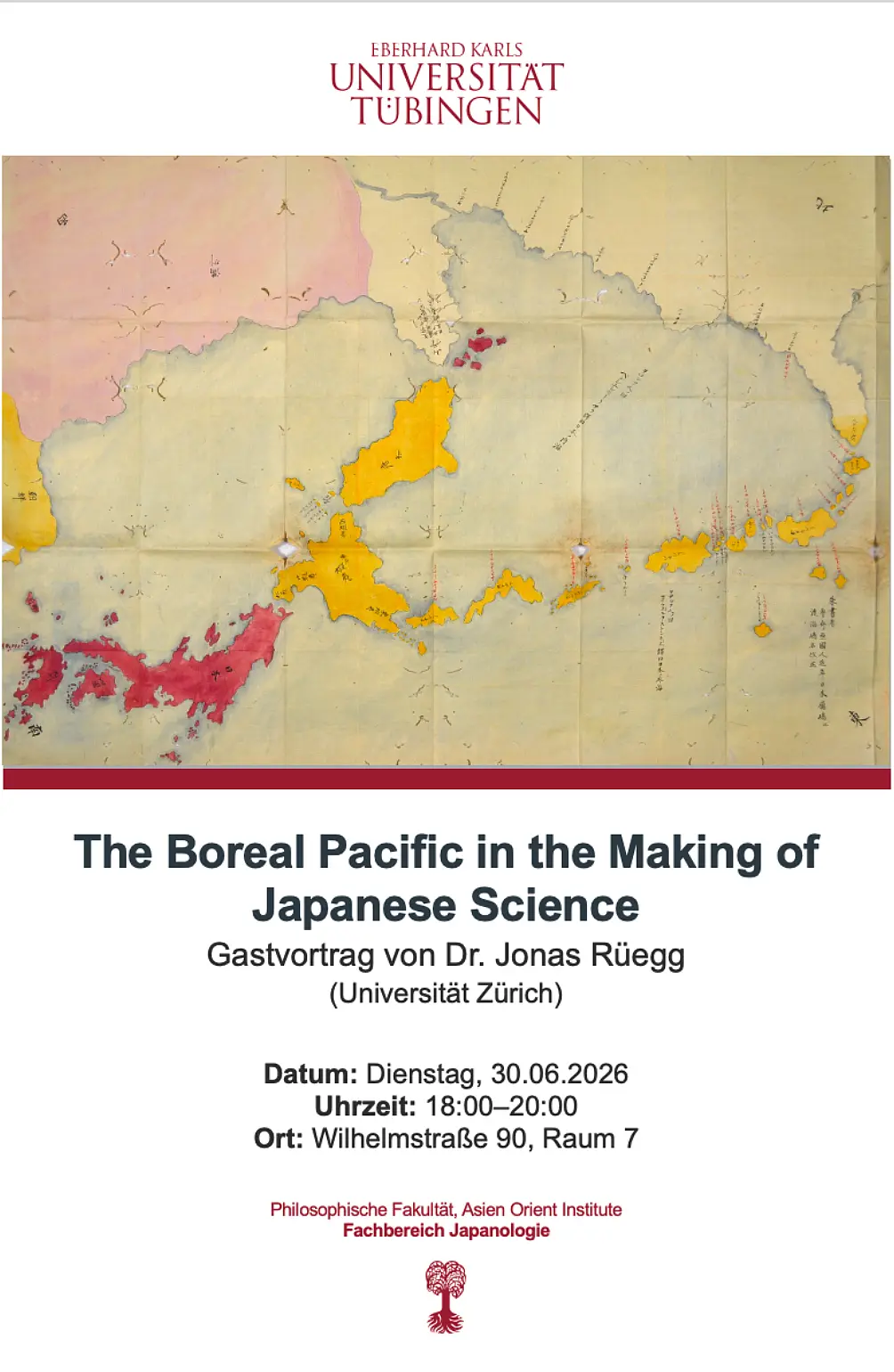
Dr. Jonas Rüegg: "The Boreal Pacific in the Making of Japanese Science"

Abstract

Japan is an archipelago in the Pacific, though its history remains scarcely linked to the Pacific world. This talk foregrounds locations in the Sea of Okhotsk to discuss how a new set of questions arises once historians turn their attention to the material and ecological properties of the ocean and to the metabolic and intellectual processes formed in Japan’s oceanic frontiers. How did currents, winds and migrating animals shape human interaction in the northwestern Pacific? When and where did Japan become an empire? Who were the all but invisible actors on the forefront of this process, and where are their archives? I argue that engaging with the Oceanic context of nineteenth century Japan prompts a reevaluation of its archives, under questions that are otherwise asked pertaining to colonial and post-colonial places of Oceania. 

About the Presenter

Jonas Rüegg is a historian of Japan and the Pacific at the University of Zurich, specializing in environmental and global history of the early modern and modern periods. He holds a PhD from Harvard (2022) and is the author of The Kuroshio Frontier: Empire and Environment in the Making of Japan's Pacific (Cambridge University Press, 2025).

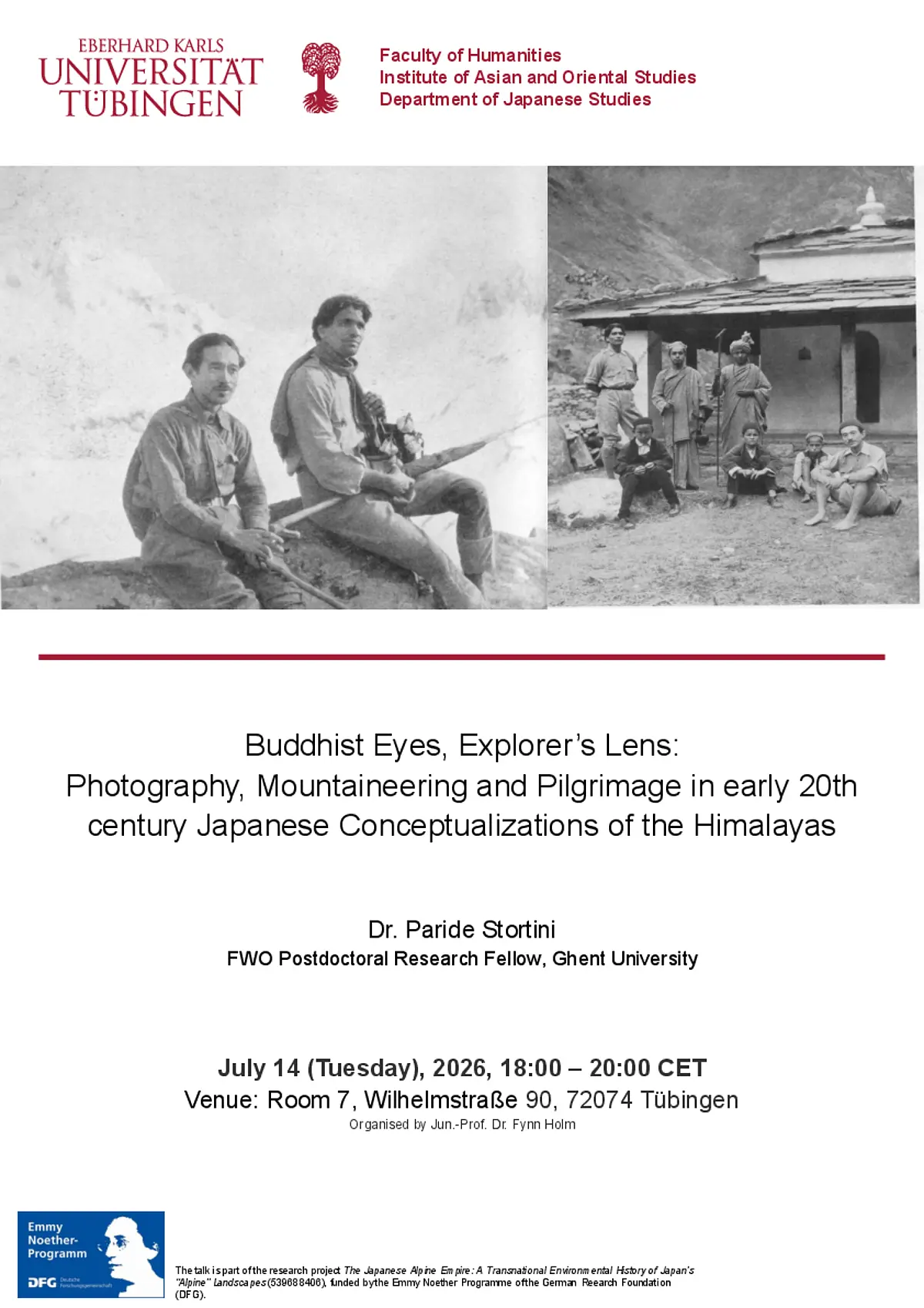
Dr. Paride Stortini: "Buddhist Eyes, Explorer’s Lens: Photography, Mountaineering and Pilgrimage in early 20th century Japanese Conceptualizations of the Himalayas"

Abstract

This presentation will show a compresence, rather than a progressive replacement, of pilgrim and modern mountaineer identities in the earliest Japanese exploration of Central Asian mountain ranges. I will particularly focus on two photographic collections of the Himalayas and Tian Shan ranges that were produced through Buddhist pilgrimage to India and exploration of Buddhist sites in Central Asia (1910s-1930s). Using an interdisciplinary approach that combines religious studies, history, and media theory on photography, I will argue that the combination of photography and embodied experience of mountain climbing did not simply equate to a disenchanting gaze onto the peaks. It could also be deployed within Buddhist discourse that linked together civilization, religion, and the environment.

About the Presenter

Dr. Paride Stortini is an FWO research fellow at Ghent University, which he joined after a JSPS fellowship at Tokyo University. He holds a PhD in history of religions from the University of Chicago. In his dissertation titled "Reimagining India between Science and Religion: Indology and Modernity in Japanese Buddhism", he shows the active role of Japanese Buddhists in redeploying ideas and images on India in scholarship, literature, and visual culture to inform the role of religion in modern Japan. At Ghent University, he is currently developing a second project titled "Building Buddhist Heritage in Postwar Japan: The Silk Road between History and Memory at Yakushiji Temple", in which he explores the concept of “Silk Road” in twentieth century Japan, at the intersection between cultural heritage, religious practices of memorialization and pilgrimage, and media representation of travel and “Buddhist cosmopolitanism,” centering on the case study of the temple and Buddhist community of Yakushiji, Nara Prefecture.