
28.10.2026
New Professorship at the Cluster: Felix Rusche
In October, Felix Rusche was appointed to his W1 Assistant Professorship in "Machine Learning Methods in Economics and Business." In this interview, he talks about his current research and the key priorities he plans to pursue in the future.
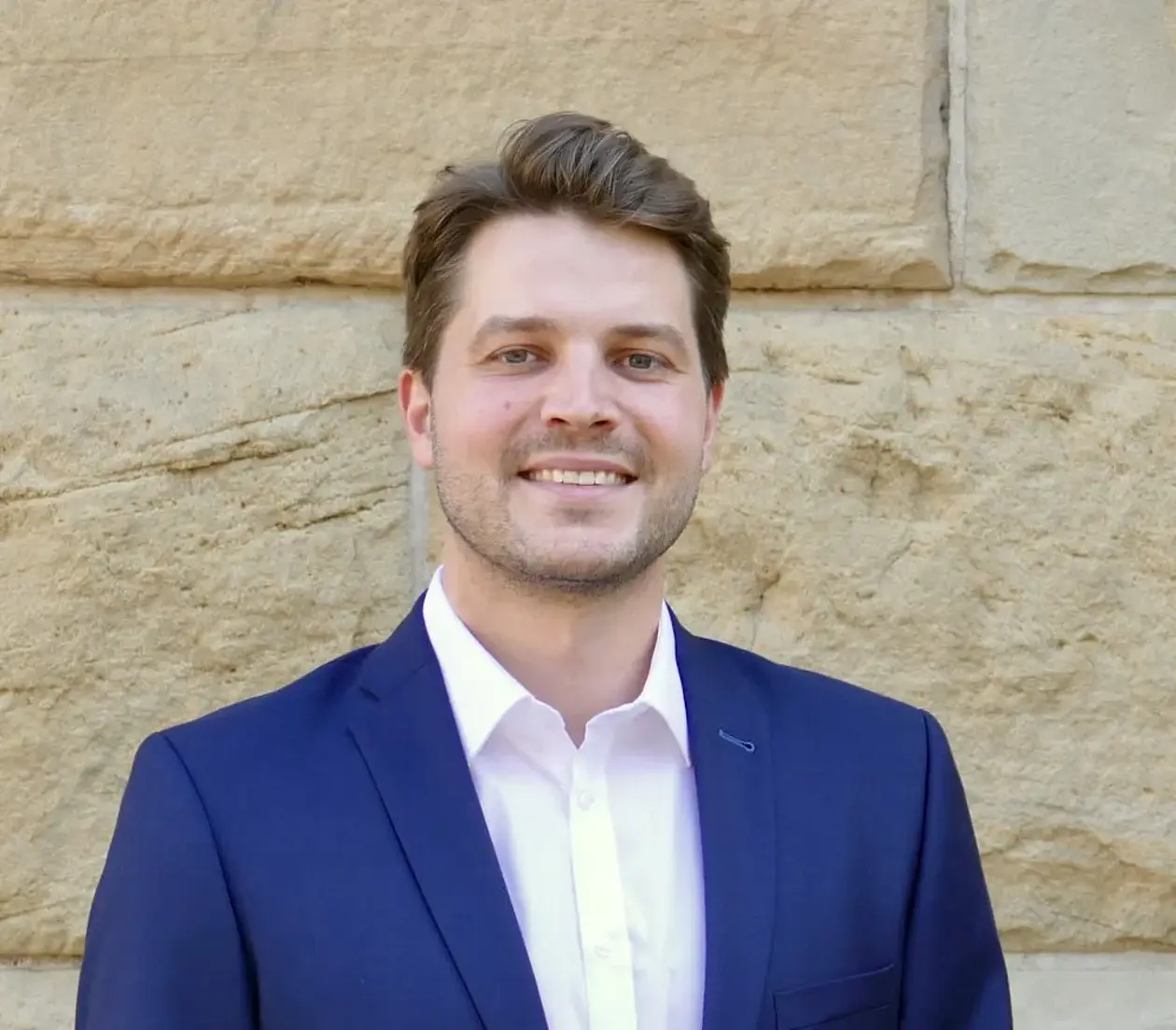
What are you currently working on, and which topics are you particularly focused on?
My research lies in labor and development economics. One focus is on socioeconomic inequality, social norms, and discrimination. For example, in a field experiment involving 20,000 LinkedIn users, my co-authors and I show that contact requests from Black profiles are accepted 13 percent less often than those from white profiles. Discrimination thus begins as early as the professional networking stage. Other projects examine disadvantages faced by young children, people’s own biases, and the impact of local radio stations in India on discrimination against women. Methodologically, these projects combine statistical methods with machine learning to investigate causal relationships and to make text, audio, or images usable for research.
What inspired your passion for your research and field of study?
I am fascinated by how economics makes hard-to-grasp phenomena measurable and allows causal claims to be tested. Unconventional data sources and innovative research designs open up new possibilities: social media can make professional networks visible, while machine learning enables the analysis of text, images, or audio. In the LinkedIn experiment, for example, we were able to vary only the ethnicity of a profile using AI-generated portraits. Deriving reliable conclusions about socially relevant questions from such data is the core of empirical research for me.
What focus areas would you like to prioritize in the future?
I want to use machine learning for empirical economic research—for example, to analyze text, audio, and image data, or to develop new experimental designs. One focus will be on image data. At the same time, I want to bring causal methods from economics into the Cluster of Excellence.
What would you particularly like to convey to students through your teaching?
I want to inspire students to connect economic theory with empirical data. Topics such as AI, the minimum wage, discrimination, and inequality illustrate which research designs allow for credible causal claims. Additionally, I will develop a new course on using machine learning for unstructured data such as images, videos, texts, and audio files. The ability to analyze large datasets is becoming increasingly important in the era of AI and big data.
The interview was conducted by Lena Pinto from the Department of Economics.