
28.10.2026
Confronting Science Denial: Gale Sinatra on Flexible Practices for Science Learning
Why do people doubt or resist scientific findings, and what can teachers do about it?
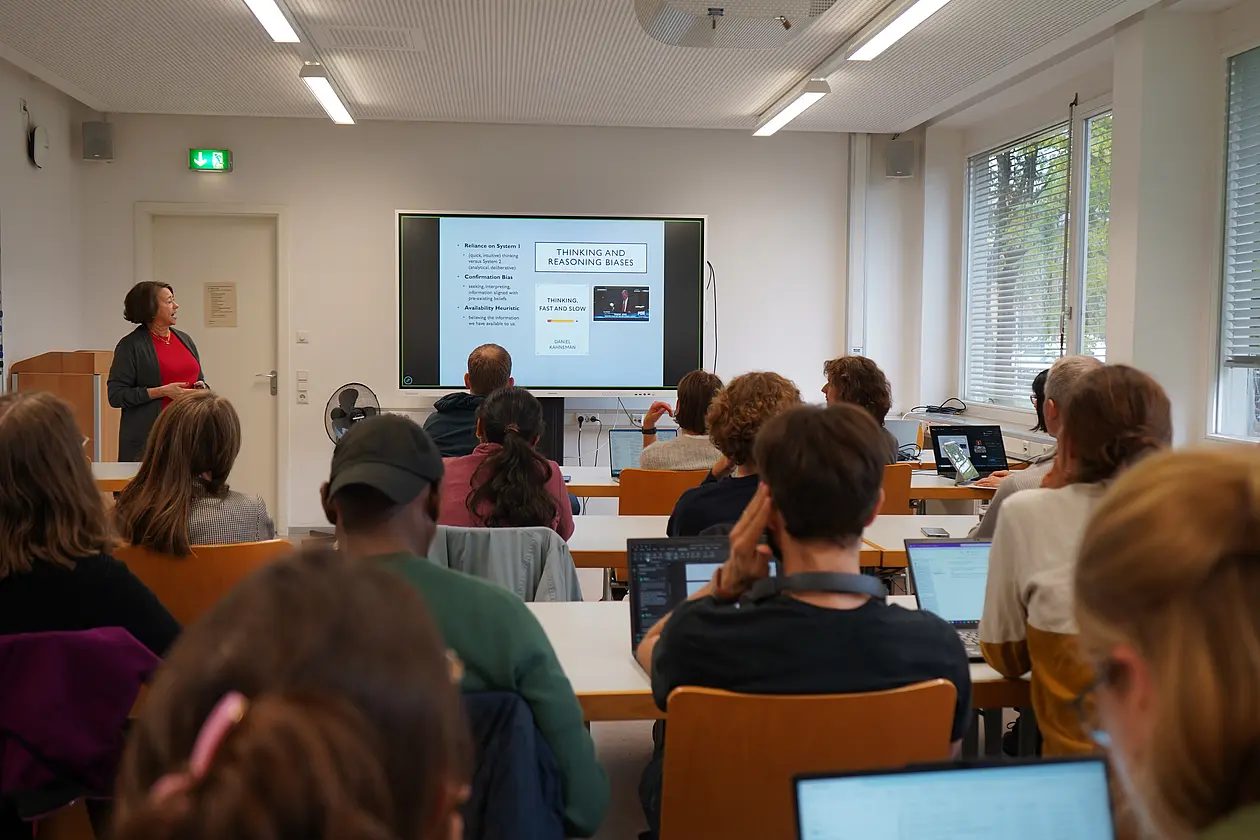
Gale M. Sinatra is Distinguished Professor Emerita of Psychology and Education at the University of Southern California and a member of the National Academy of Education. In her talk “Confronting Science Denial: Flexible Practices to Promote Science Learning and Acceptance” as part of the LEAD Lecture Series, she drew on her book Science Denial: Why It Happens and What to Do About It, co-authored with Barbara Hofer.
Sinatra distinguished between outright denial, which is rare, and the far more common forms of doubt and resistance. These arise especially when scientific findings clash with personal beliefs or social identity. She stressed that we are all susceptible: it is not an “us versus them” issue. Among the factors she discussed were mental shortcuts and cognitive biases, motivated reasoning, the digital media environment, social identity, personal relevance, and trust in sources of knowledge.
The second part of the talk turned to practice. Sinatra presented research-based approaches that teachers can use flexibly in the classroom, including:
- Six steps for sourcing science information online, from pausing before sharing to verifying claims by reading laterally
- Refutation texts, which name a misconception, refute it, and explain the scientific position
- Prebunking and debunking strategies against misinformation
- Photovoice and community science data talks, which connect science to students’ own lives and communities
Her key message: those who understand the psychology behind science resistance can better support students in engaging with scientific evidence, and can start by examining their own biases and motivations.