
22.10.2026
From PISA to Human-AI Teamwork: October LEAD Retreat 2026
Three days in Bad Boll, one big theme (how we learn, teach and work together in the age of AI) and a surprising amount of dancing.
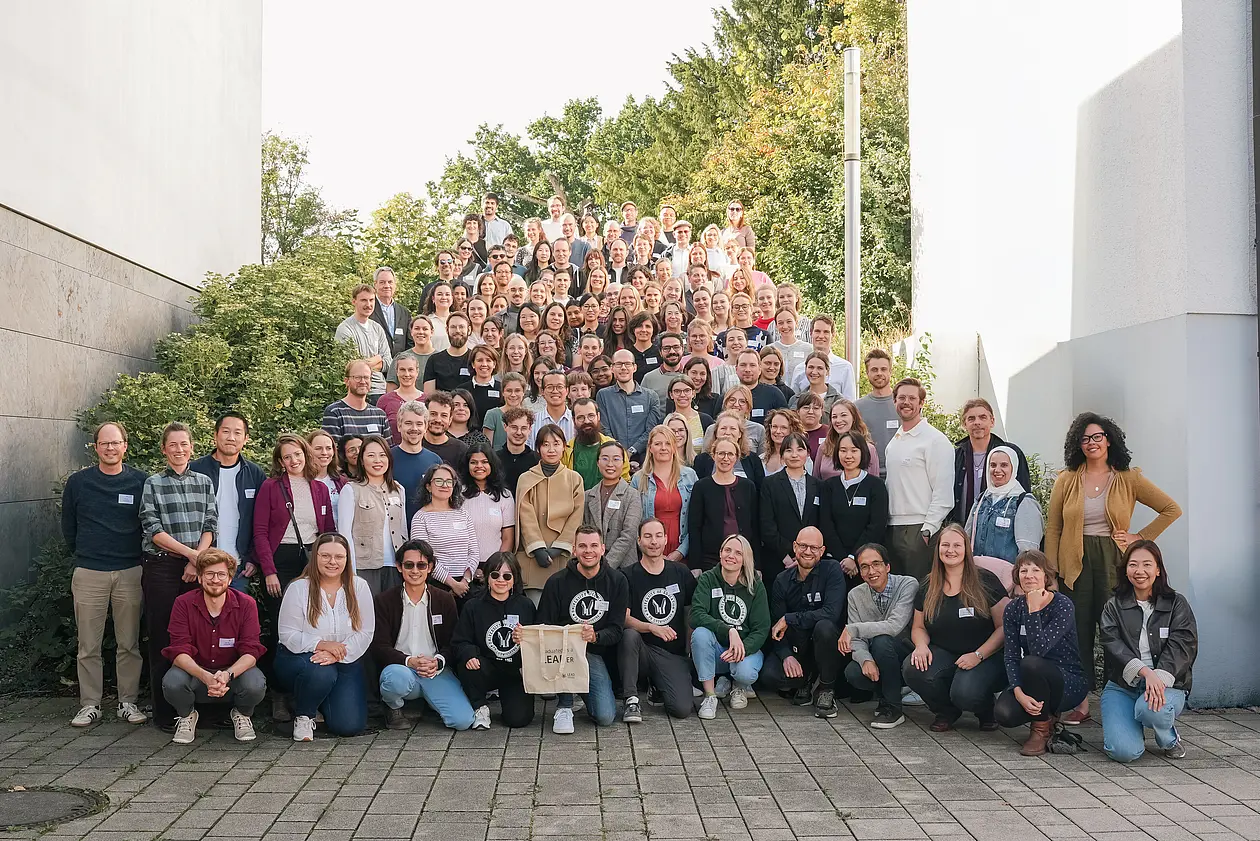
At 7:30 on a Wednesday morning, a bus full of LEAD members left Tübingen for Bad Boll. Three days later it came back a little sleepier, a lot more connected, and with far stronger opinions about PISA than when it left.
Is the PISA apocalypse coming (?)
After the new members introduced themselves and the first poster fair filled the foyer, Ulrike Rangel (IBBW) showed how Baden-Württemberg tries to put data to work for schools. Then a panel with Ulrich Trautwein, Ulrike Rangel and Patrick Kyllonen, moderated by Benjamin Goecke and Janina Täschner, took on the question "PISA 2025: Apocalypse coming (?)". The real debate was less about how bad the numbers are and more about what to do with what we already know: how to get research into real classrooms, who gets lost behind the averages, and how to measure learning when AI sits next to every student. Lunch came with randomized seating, a surprisingly effective way to turn strangers into future collaborators.
Electing a unicorn
In the afternoon, the Hector AI + Education Future Fund took over the Main Room. Nine projects pitched and presented their posters, and everyone present got a vote. The winner: ETQ-AI, a system that gives teachers real-time AI feedback on their teaching, now officially Tübingen's next Unicorn. Right after, Nia Nixon (UC Irvine) asked what happens when an AI joins the team. Her studies suggest that an AI teammate can quietly shift how a group decides, even when nobody told it what to think. Food for thought before dinner.
Keys, lampposts and Easter Island
Thursday began with a keynote by Patrick Kyllonen (ETS) on collaboration. His starting point: schools and tests almost always assess individuals, yet in work and science we solve problems in teams. Are we measuring what is easy to measure rather than what matters, like someone searching for lost keys under the lamppost because that is where the light is? Kyllonen presented studies in which groups solved problems, made decisions and negotiated together, and asked whether teamwork can be measured as a skill of its own. With AI becoming a team member, the question has only become more urgent.
In the afternoon, Shana Carpenter (Oregon State University) put the audience to the test with a question before anyone had learned anything: which religion took over Easter Island after the statues fell? That is exactly her research topic, "pretrieval": asking learners questions before they know the answers helps them remember the material later, even when they cannot answer yet and get no feedback. A single question at the start of a lecture can change what students pay attention to.
In between, poster fairs, the Postdoc Symposium on self-regulated learning in digital environments and four Special Interest Groups kept the foyer buzzing.
Ten minutes between the audience and dinner
The evening belonged to the Science Slam, hosted by Wy Ming Lin: three PhD researchers, ten minutes each, and a hungry audience. Gayatri Nerpagar studies how well musicians can judge how precisely they move. Her participants play guitar without frets and without looking at the fretboard. Those who move more precisely also perceive their movement better, but they are not necessarily more aware of it. Eleni Kanli took on a persistent myth in Spanish classrooms: do multilingual students hold the class back, or are they secret superheroes? Her answer: neither, it depends, and the languages involved matter. And Jakob Schwerter made the case for practice, with help from Ted Lasso, a student who had practiced for exactly three days, and honest data on how hard it is to get students to practice at all. The applause meter crowned Jakob the winner, but all three left with certificates and a roaring audience.
Learning from what doesn't work (yet)
On Friday, Manu Kapur (ETH Zurich) closed the program with a keynote on Productive Failure, followed by a panel on failing productively in academia: a fitting finale for a retreat that was all about learning, together.
Thank you to everyone who spoke, slammed, pitched, presented a poster, danced, or simply showed up. LEAD is its people. See you at the next retreat!