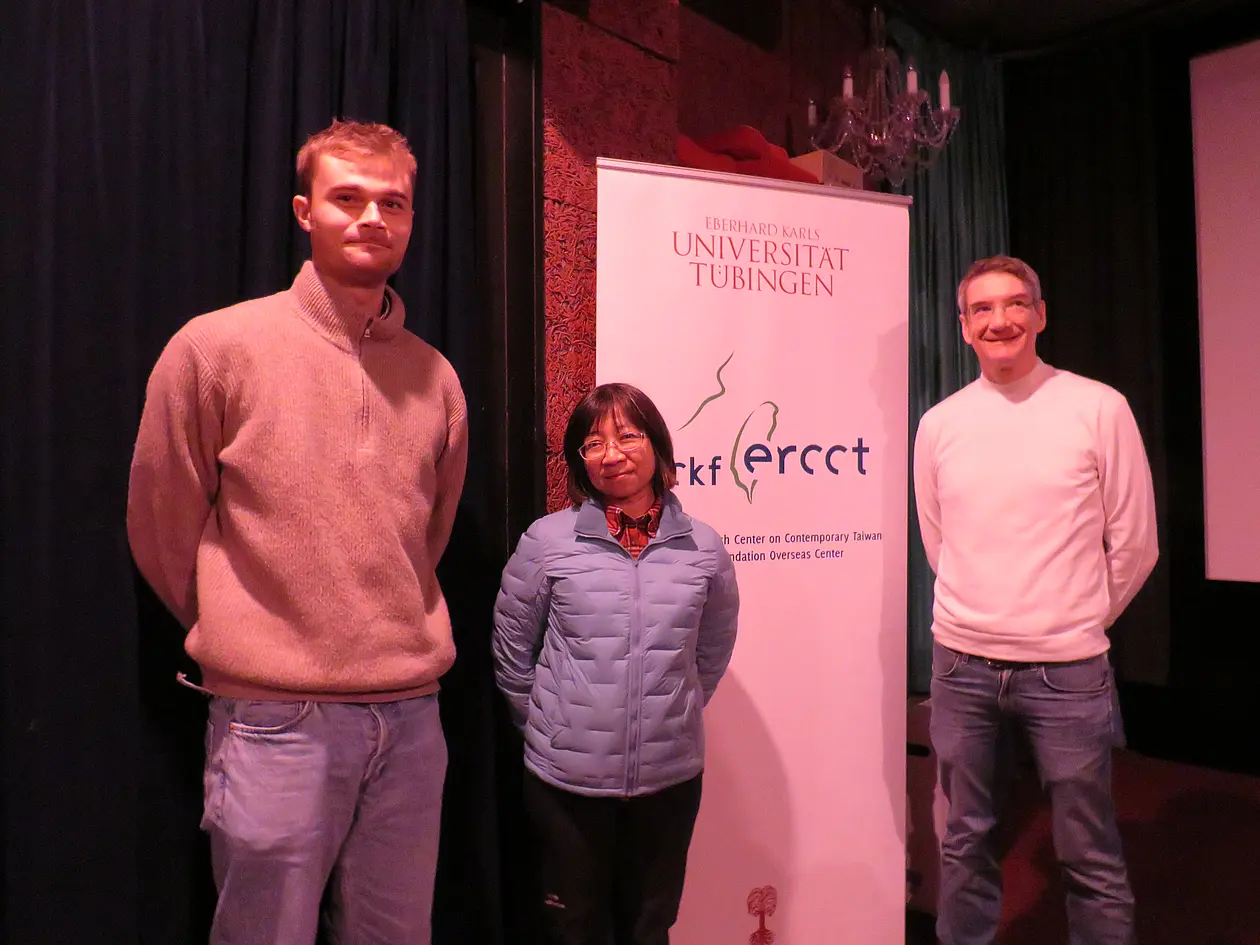
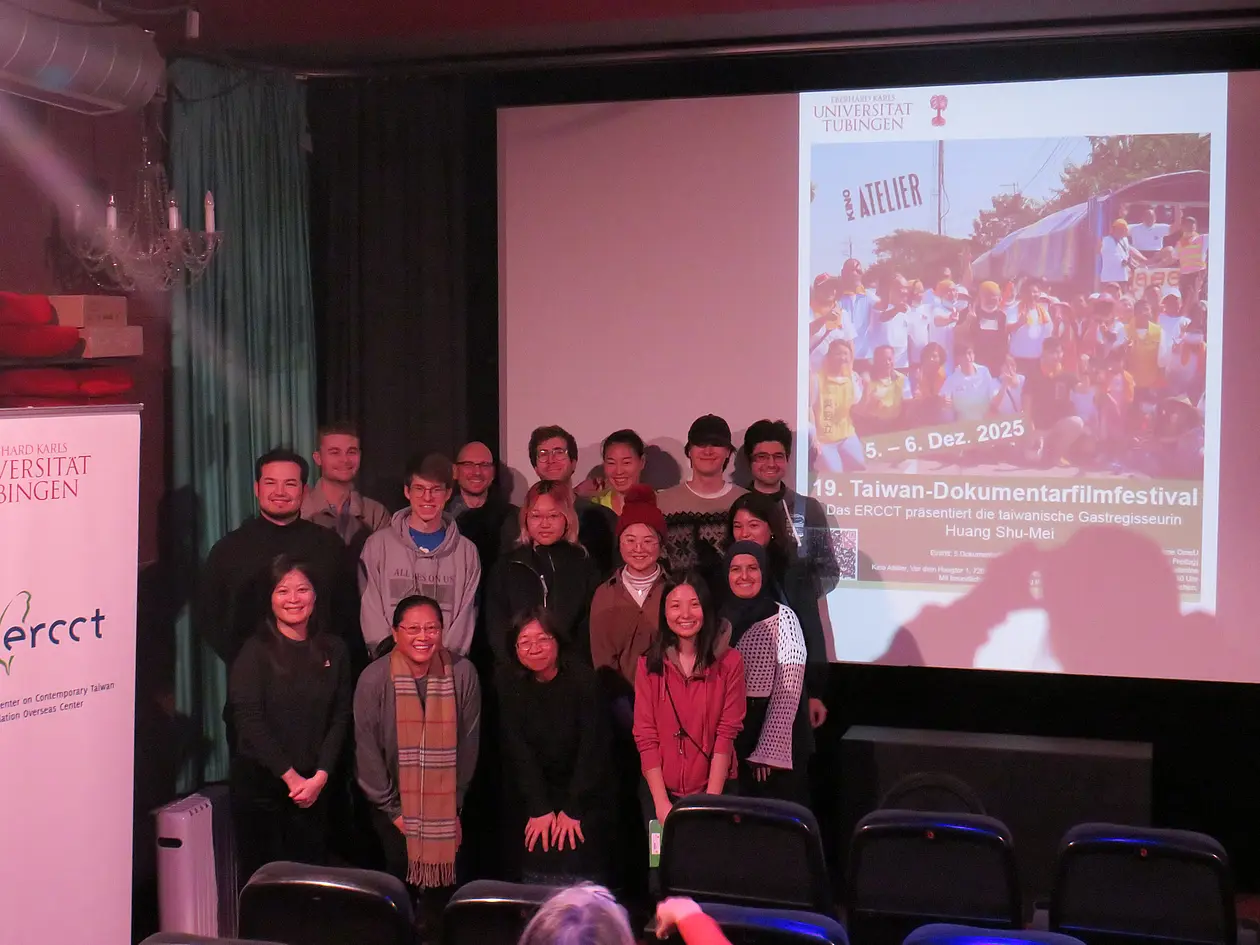
The ERCCT's 19th Taiwan Documentary Film Festival, took place on 5–6 December 2025 at Kino Atelier in Tübingen. Over the course of two days, the festival offered German and international audiences an in-depth cinematic exploration of Taiwan’s environmental challenges, grassroots activism, and human–nature relationships. This year’s edition featured Huang Shu-Mei (黃淑梅) as guest director, one of Taiwan’s most important independent documentary filmmakers working on environmental and social issues.
The festival was honored by the presence of Ms. Wang Ching-Chi, First Secretary of the Taipei Representative Office in Munich, as well as the Press Officer of the Taipei Representative Office in Munich, who attended the event in person. During the opening ceremony, Ms. Wang delivered welcoming remarks on behalf of the Taipei Representative Office, expressing appreciation for the long-standing cultural and academic cooperation with the ERCCT and highlighting the importance of documentary film as a means of fostering mutual understanding between Taiwan and Europe. The ERCCT gratefully acknowledges the generous support of the Taipei Representative Office in the Federal Republic of Germany, Munich Branch Office, which made the festival possible.
Huang Shu-Mei’s work is characterized by long-term engagement, close collaboration with local communities, and a strong ethical commitment to documenting voices that are often marginalized in dominant political and economic narratives. The festival program reflected this focus, bringing together films that address environmental degradation, indigenous ecological knowledge, civic resistance, and the social consequences of Taiwan’s energy transition.
Opening and First Festival Day
The festival officially opened on Friday, 5 December, with a short opening ceremony welcoming guests, students, scholars, and members of the general public. In the opening remarks, the ERCCT emphasized the role of the Taiwan Documentary Film Festival as a long-running platform for cultural exchange and critical reflection, underscoring the importance of documentary film as both an academic and civic medium.
The first screening was A Letter to Future Children (2015), one of Huang Shu-Mei’s most acclaimed works. Set in Taiwan’s mountainous regions, the film traces a century-long history of forest exploitation, environmental destruction, and ecological vulnerability, intensified by natural disasters such as earthquakes and Typhoon Morakot. Combining historical research with personal reflection, the film addresses future generations directly, framing environmental responsibility as an ethical inheritance. The screening set a reflective and emotionally powerful tone for the festival.
After a short break, the audience watched Never Give Up (2022), a documentary focusing on the residents of Longsheng Village in Miaoli County, who resisted illegal industrial waste dumping despite intimidation and violence. The film documents over two decades of grassroots struggle, revealing the tensions between economic development, environmental justice, and local democracy in rural Taiwan.
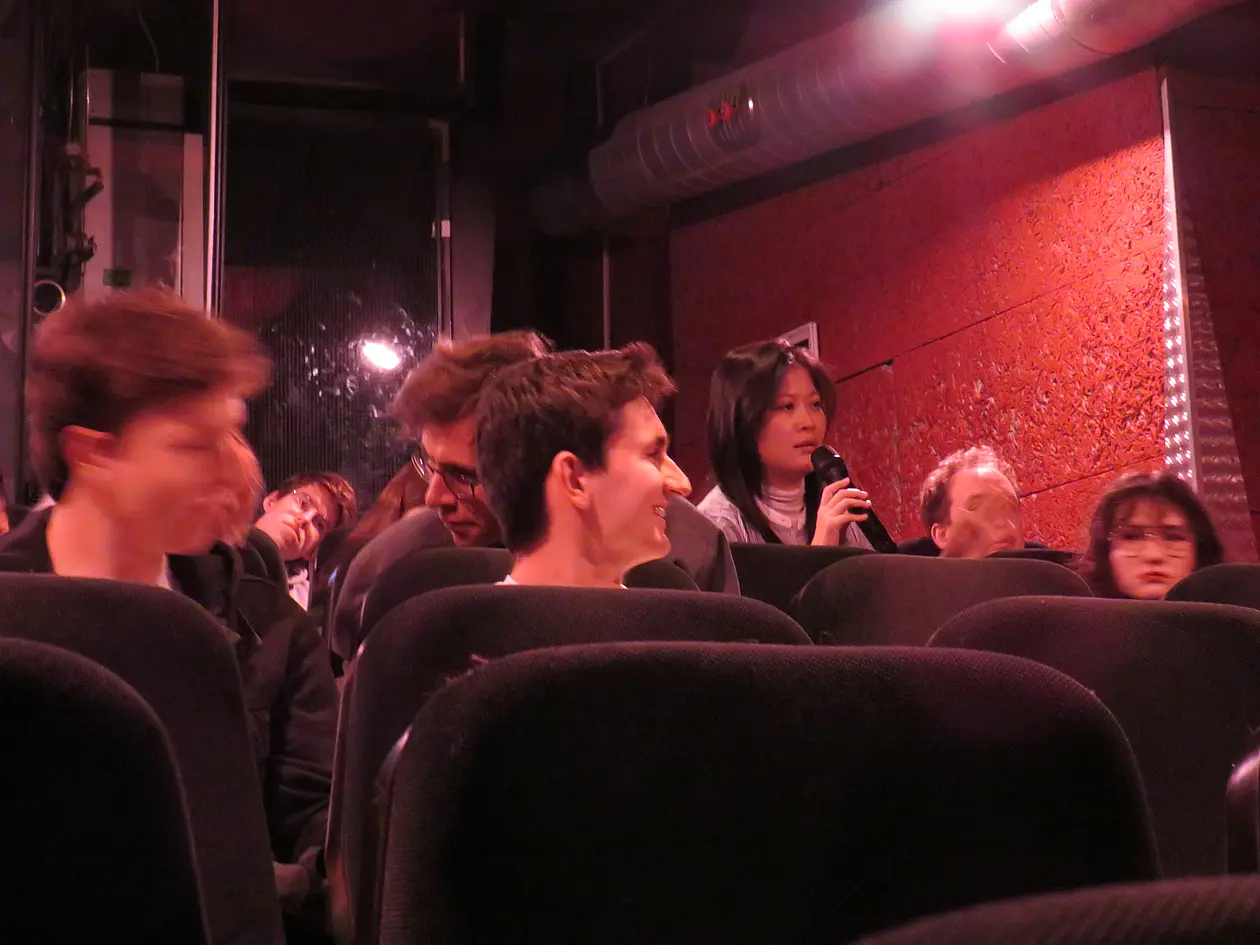
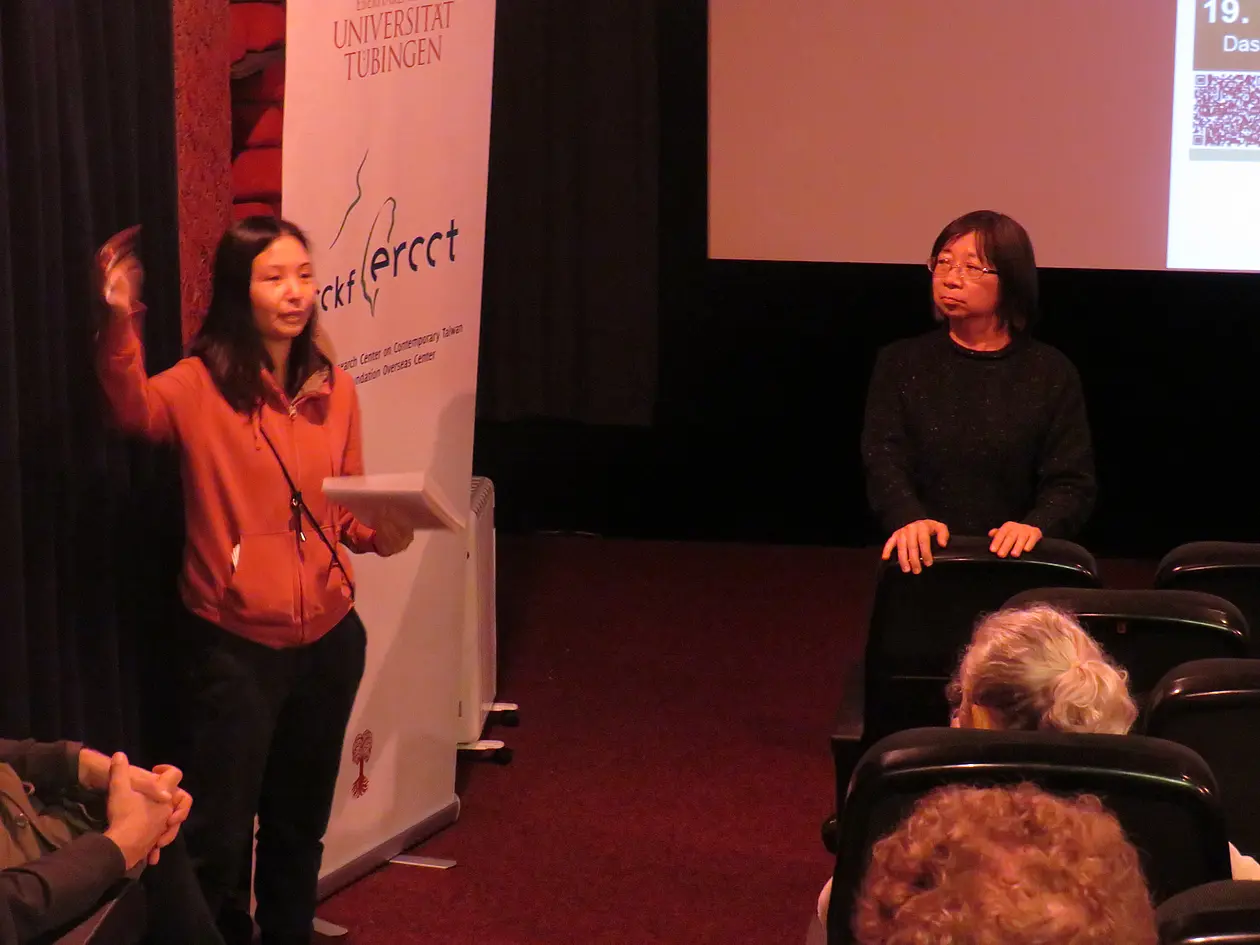
This was followed by the first Q&A session with Huang Shu-Mei, which generated lively discussion. Audience members asked about her long-term fieldwork, the risks faced by activists, and the role of documentary filmmaking in social movements. Huang emphasized patience, trust-building, and responsibility toward filmed communities, underscoring that her films are not merely representations but part of ongoing social processes.
The evening program concluded with Missing Johnny (2017), a feature film directed by Huang Hsi, Huang Shu-Mei’s sister. While stylistically distinct from the documentaries, the film complemented the program by offering a quiet, atmospheric portrait of urban loneliness and fleeting connections in Taipei. Through the intersecting lives of three characters and the symbolic presence of a lost cockatoo, Missing Johnny explored themes of displacement and emotional isolation in contemporary urban Taiwan.