By around 750 CE, through land donations, purchases and transfers, churches and monasteries had come to hold a colossal amount of land, estimated to total around a third of western Europe. To date, however, we lack a proper appreciation of what this wealth meant in concrete terms for eighth- and ninth-century societies at a local level. We need to understand, on the one hand, the ways in which monasteries administered their properties and built social ties with the people living on or near their lands; and on the other, the interpretive frameworks that monastic communities developed in order themselves to understand their landed property. Donors of property, for example, sought to build their relationships with spiritual institutions, both to establish worldly social ties and to secure the salvation of their souls. At the same time, spiritual and intellectual culture interpreted ecclesiastical property as the property of the poor. Monasteries – among the principal bearers of written culture in early medieval Europe – played a crucial role in this complex situation. They developed new and influential documentary practices to catalogue and manage their property, drawing on the ancient knowledge of classical antiquity. Simultaneously, monasteries made use of familiar literary forms, such as hagiography, to make sense of their responsibilities and to establish the special status of their lands as the property of the poor and of the saints.
Our project asks how, in this context, monastic communities specifically dealt with and understood the landed wealth they had gained. It concentrates on four methodological problems:
- Assessing and accounting for regional variations in monasteries’ economies and landholdings;
- Understanding the role of grants and leases of landed property both in the management of monastic estates and in the building of ties with laypeople of various genders and social backgrounds;
- Establishing the significance of measurements in our sources, which describe the size and extent of goods or land, but were not always quantified;
- Tracing the connections between economic life, ecclesiastical institutions and spiritual and intellectual culture, which through their complex interplay shaped monastic life in the Carolingian period.
Our project compares two major monastic institutions: Farfa in Italy and Fulda in Germany. Both of these monasteries possessed substantial land holdings, both were supported by Carolingian rulers, and for both there survive relatively substantial traces of their documentary archives and library collections. Yet for both that documentary record is accessible only through outdated and imperfect printed editions, if at all; and the interaction between those monasteries’ economies and their spiritual and intellectual cultures has scarcely been studied at all.
- Farfa was probably the wealthiest ecclesiastical institution in central Italy after the bishopric of Rome. It has been recognised as one of the most influential spiritual centres in Italy, particularly in the central medieval period and played a significant role in the geopolitics of the region, sitting both actually and metaphorically in a debatable space between papal authority and the peninsula’s dominant secular powers. Much of our evidence for Farfa arises from the work of the Farfa monk Gregory of Catino (d. 1130). He produced the cartulary and collection of leases that we will study in this project, alongside a chronicle, a canon law collection and a topographical index.
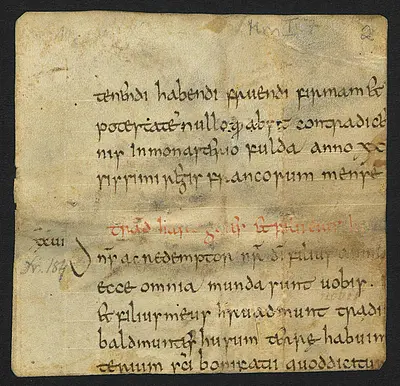
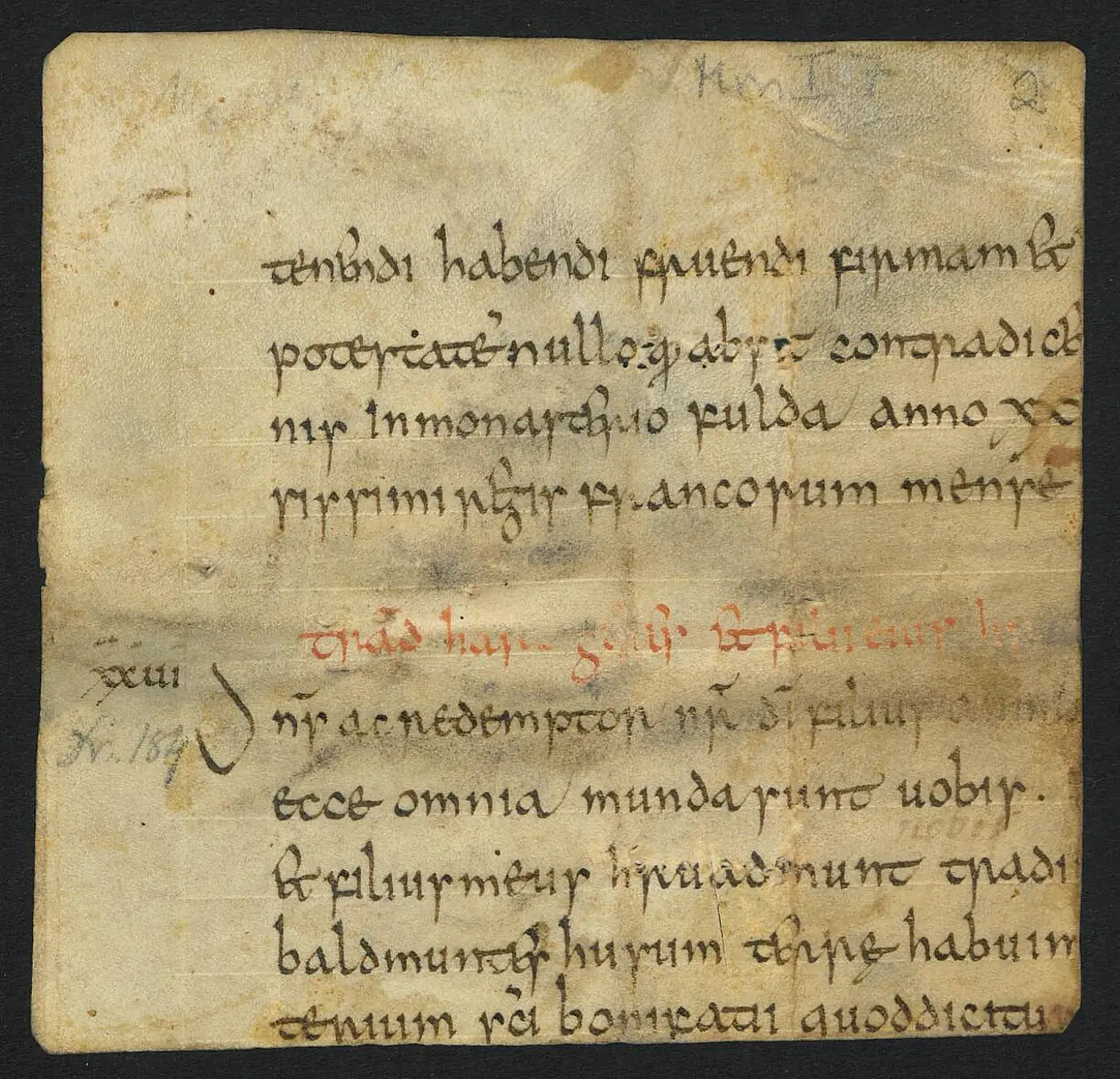
- Fulda, founded by the Anglo-Saxon missionary Boniface, also rapidly became during the eighth century one of the most prominent and wealthy monasteries in the Frankish realm. It gained substantial land holdings throughout the Carolingian world, from northern Italy to Saxony. Despite significant losses, there survives from Fulda both an extensive collection of books and a substantial body of archival documents dating between the ninth and twelfth centuries, including one of the earliest Frankish cartularies, making it an excellent case study for the interactions between economic activity and intellectual and spiritual life. Yet a modern critical edition is still lacking for a large proportion of these documents.
Our project will make available the surviving Carolingian-era documents from both Farfa and Fulda in digital editions designed to reveal rather than conceal medieval archival practices and the processes of ‘cartularisation’. These will enable us to begin to address the methodological problems of leasing and quantification described above. We will then bring together our case studies to compare a) how far monastic economies differed between regions and b) how monastic spirituality and intellectual culture shaped the administration of monastic properties.