
Symposium on “AI and Deepfakes”
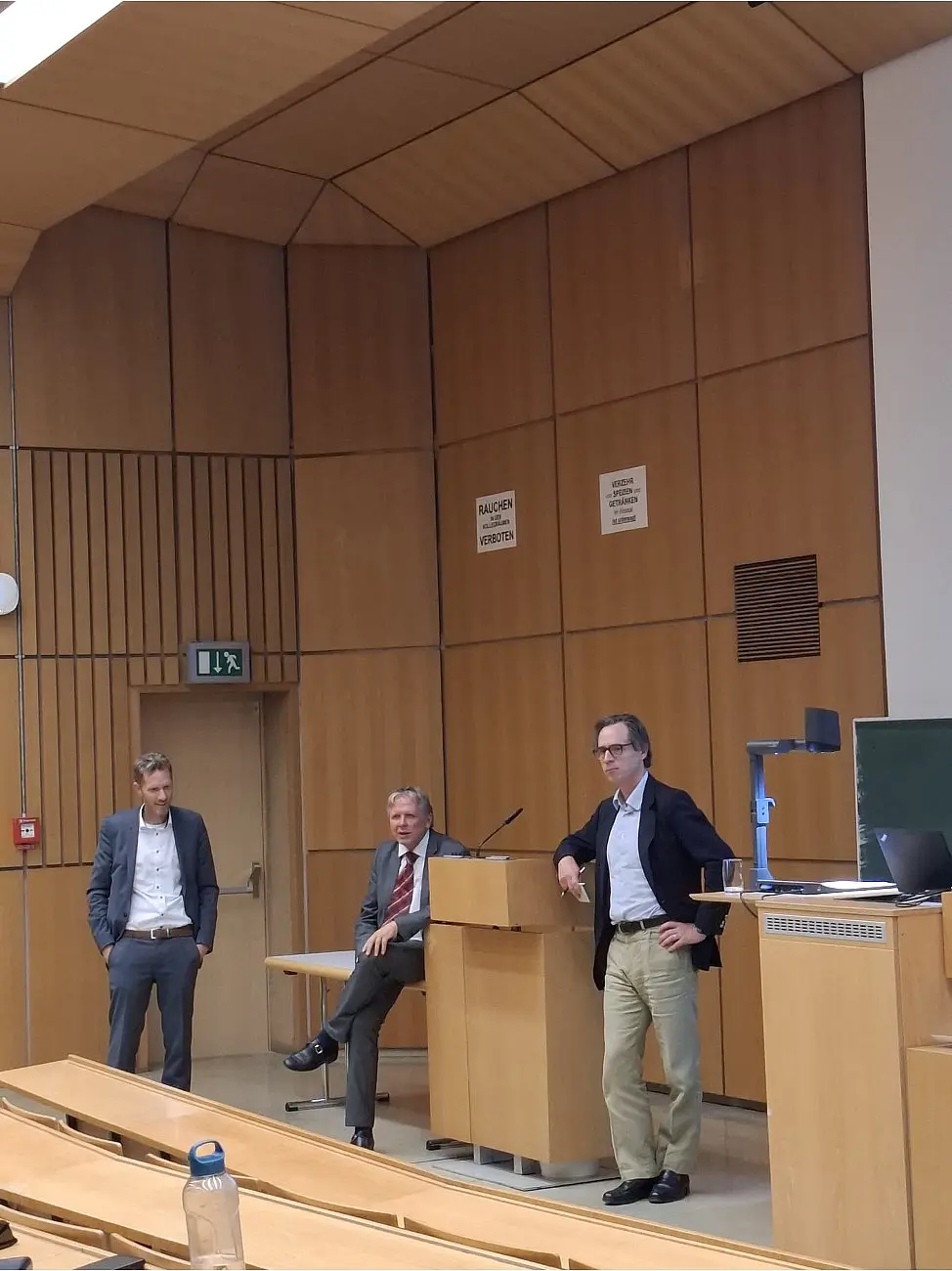
AI MEETS LAW, an informal discussion group at the University of Tübingen, hosted a symposium on the widely discussed topic of “AI and Deepfakes” on July 20, 2026.The two speakers, Mr. Martin Reinhard and Professor Dr. Bernd Heinrich, examined the criminal law implications of deepfakes from different perspectives—on the one hand from the viewpoint of a state ministry of justice, and on the other from the perspective of criminal law scholarship.
Mr. Martin Reinhard, Senior Ministerial Counsellor at the Bavarian State Ministry of Justice, opened the event with an overview of the origins, functioning, and rapid development of deepfakes. He explained that AI-generated images, audio recordings, and videos have now reached a level of quality that often makes them indistinguishable from authentic recordings. His presentation focused on the resulting risks for individuals and society. He demonstrated that deepfakes can be used for identity theft, fraud, blackmail, and reputational damage, and that they also have the potential to influence democratic processes, spread disinformation, and cause significant economic harm. Furthermore, he outlined the current legal framework as well as existing and proposed regulatory approaches, emphasizing that, in addition to legislative measures, effective technical detection methods and greater media literacy are essential to address the challenges posed by deepfakes.
Professor Dr. Bernd Heinrich of the University of Tübingen then addressed the classification of deepfakes under criminal law. He explained that the current German Criminal Code and the German Act on Copyright in Works of Fine Arts and Photography (Kunsturhebergesetz) already cover numerous situations in which AI-generated content is created, used, or distributed for criminal purposes. Referring to various criminal offences, he demonstrated that the existing criminal law already provides effective protection in many areas, while at the same time requiring targeted further development in light of ongoing technological advances. In his view, legislative gaps and the need for reform exist particularly in the field of sexual offences, where deepfakes create new forms of violations of personal rights and where the current legal framework should therefore be adapted to provide better protection for victims.
Following the presentations, a discussion session gave students and other participants the opportunity to ask questions and share their perspectives. The lively exchange highlighted the strong interest in the legal and societal challenges associated with artificial intelligence and deepfakes. Once again, the AI MEETS LAW format, supported and made possible by the Walter Sigle Foundation, demonstrated the importance of interdisciplinary dialogue in developing effective legal responses to AI-related issues.