
Hacking the Law 3.0 in Cambridge 2026: Large Language Models x Law
Since the rise of OpenAI in 2022, large language models (LLMs) and artificial intelligence (AI) have become part of almost every aspect of our daily lives. One of the communities most profoundly transformed by this development has been the software development community. Tasks that once took days or even weeks can now often be completed within hours, giving rise to coding events such as Hackathons (Hacking Marathons) around the world.
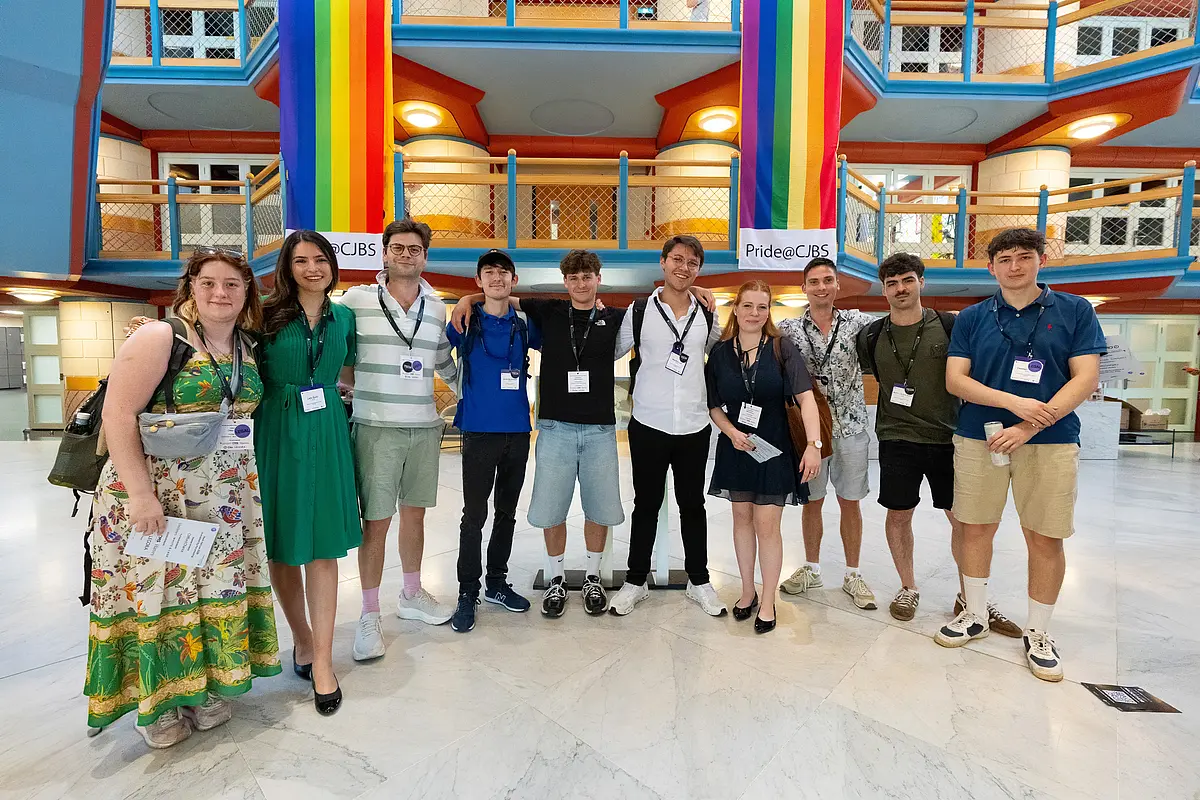
From the 25th to the 28th of June, eight students from the University of Tübingen, including four law students and Bachelor’s and Master’s students in Machine Learning and Computer Science, had the opportunity, thanks to the generous support of the Walter Sigle Stiftung, to participate in the hack_the_law Hackathon in Cambridge.
Over the course of less than two days, teams from across the globe selected one of several real world challenges proposed by leading law firms and legal technology companies.
The hackathon started with the opening ceremony, which featured keynotes framing the weekend’s central theme from two complementary angles. H.E. Mbelwa Kairuki, High Commissioner of the United Republic of Tanzania to the United Kingdom of Great Britain and Northern Ireland adressed the policy, governance and regulatory dimensions of AI in the legal sector. Daniel Martin Katz followed with a technology-focused perspective, highlighting the latest innovations driving the future of AI. Together the two talks set the stage for the weekend ahead, framing the Hackathon within both, the legal background and technological possibility.
Starting the hacking time, the Tübingen delegation split into two teams of four, taking on the challenges “The Sparring Room” proposed by Legora and “AI Hallucination & Citation Checker for legal documents” proposed by White & Case. Team “Techtosterone” developed “Mike T-AI-son”, an AI-powered sparring partner that allows trainee lawyers to practise negotiating and discussing legal agreements and court situations. Team “rel{AI}able“ built a web application capable of identifying hallucinated and mischaracterised citations in legal documents, helping users detect potentially unreliable AI-generated references.
During the limited hacking time, both teams worked with intense focus, relying on close teamwork between law and computer science students. hack_the_law and their sponsors provided a variety of tools for all participants. The Tübingen Teams worked with Anthropic’s Claude Code, Google Cloud’s Platform and lovable among others.
Both teams gained invaluable experience, making the event a tremendous success for everyone involved. Working under intense time pressure, collaborating with teammates they had only just met, and transforming an idea into a working prototype within less than two days provided irreplaceable practical experience. Beyond the technical achievements, the Hackathon also fostered new friendships, international connections, and lasting memories.
Text: Louisa Gärtner & Kim Salmen