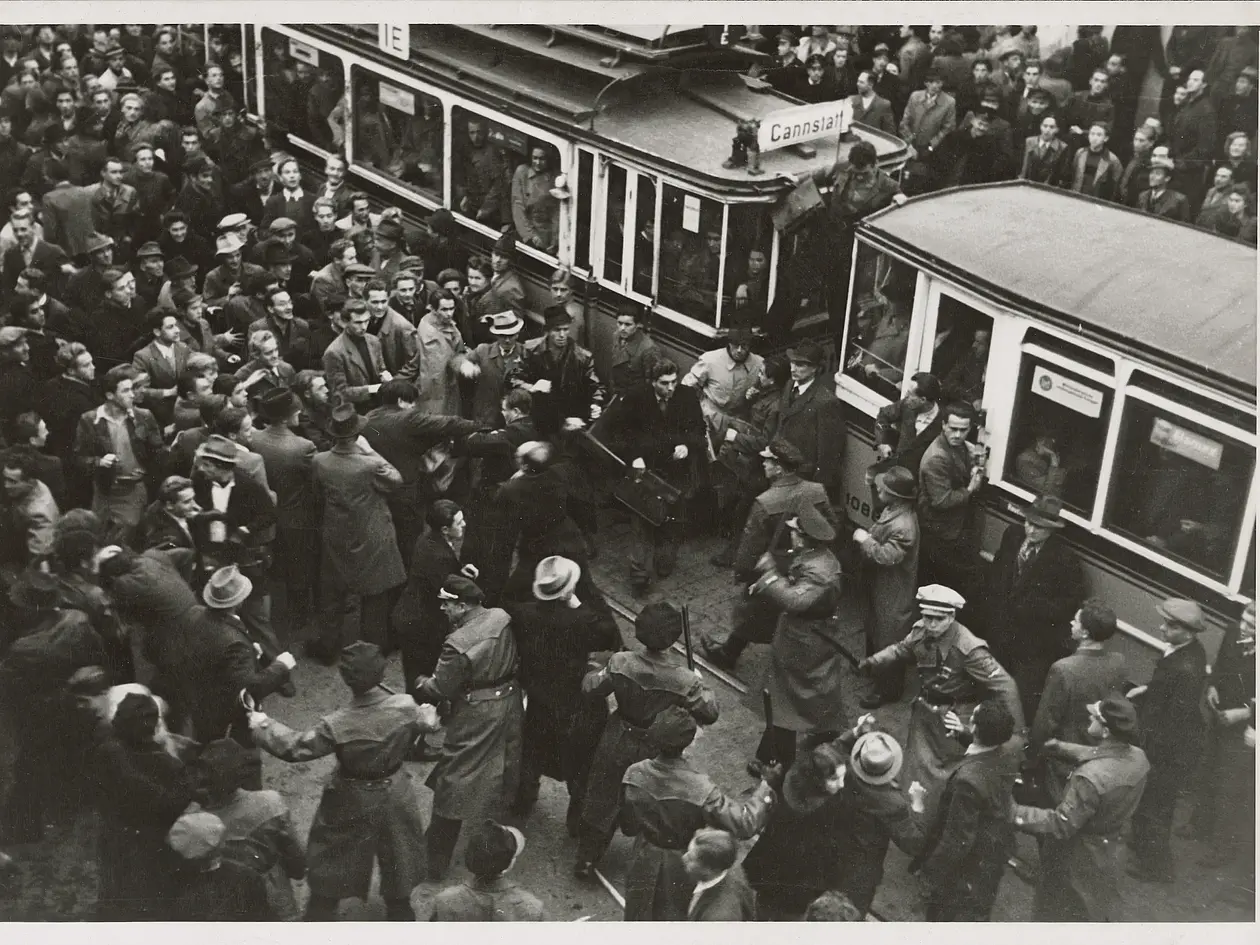
In recent years, historians have increasingly focused on the multifaceted nature of European postwar democracies (see, e.g., Conway 2020; Corduwener 2023). Almost unanimously, they have emphasized the “contained”, “controlled” nature of the first two decades after 1945, effectively declaring this period a sort of golden age of democratic stability. This project posits that postwar democracies during this period were not only “controlled” but also “rough” democracies (see also Nolte 2024 on this concept), in which physical violence remained a persistent feature of democratic conflict resolution. The project is funded by the Gerda Henkel Foundation and is part of its historically oriented sub-program “Democracy as Utopia, Experience, and Threat”. The project is led by Petra Terhoeven (DHI Rome), Robert Kramm (University of Tübingen), and Sonja Levsen (University of Tübingen).
More information.