Institute of Political Science

20.11.2025

Presentation of the "Yearbook of Federalism 2025"

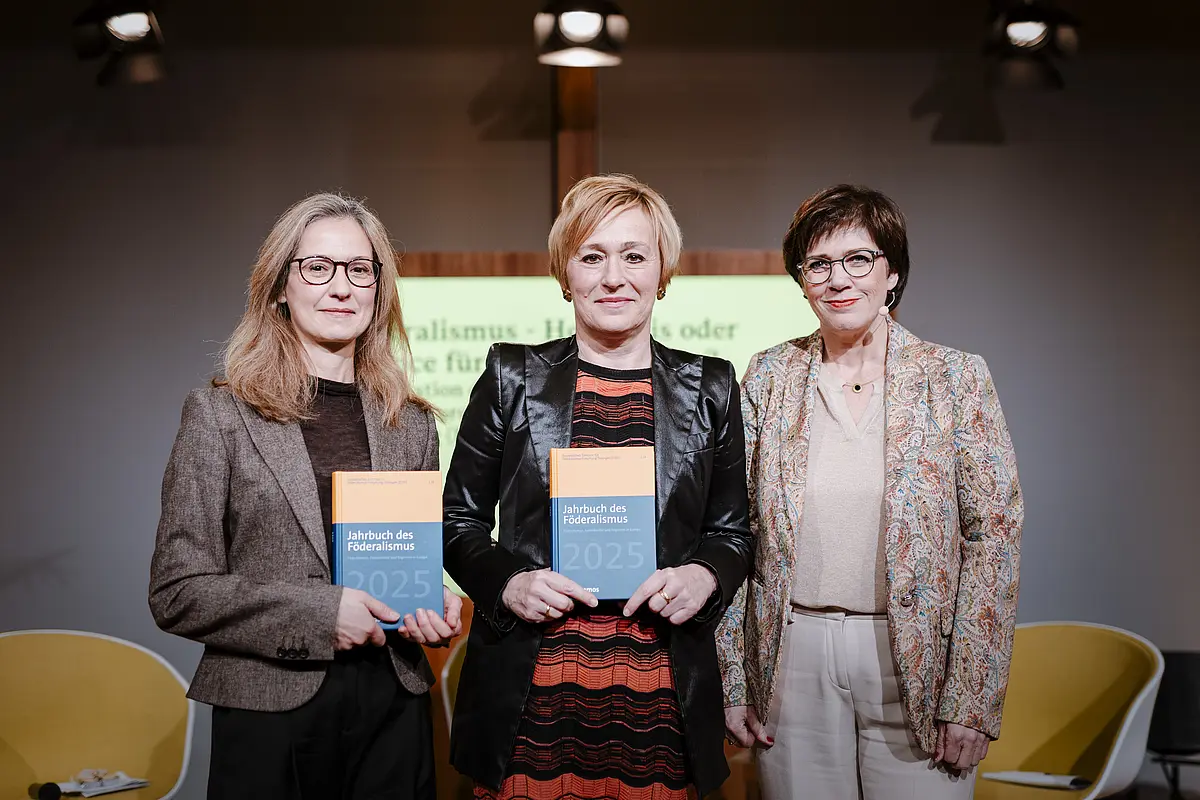
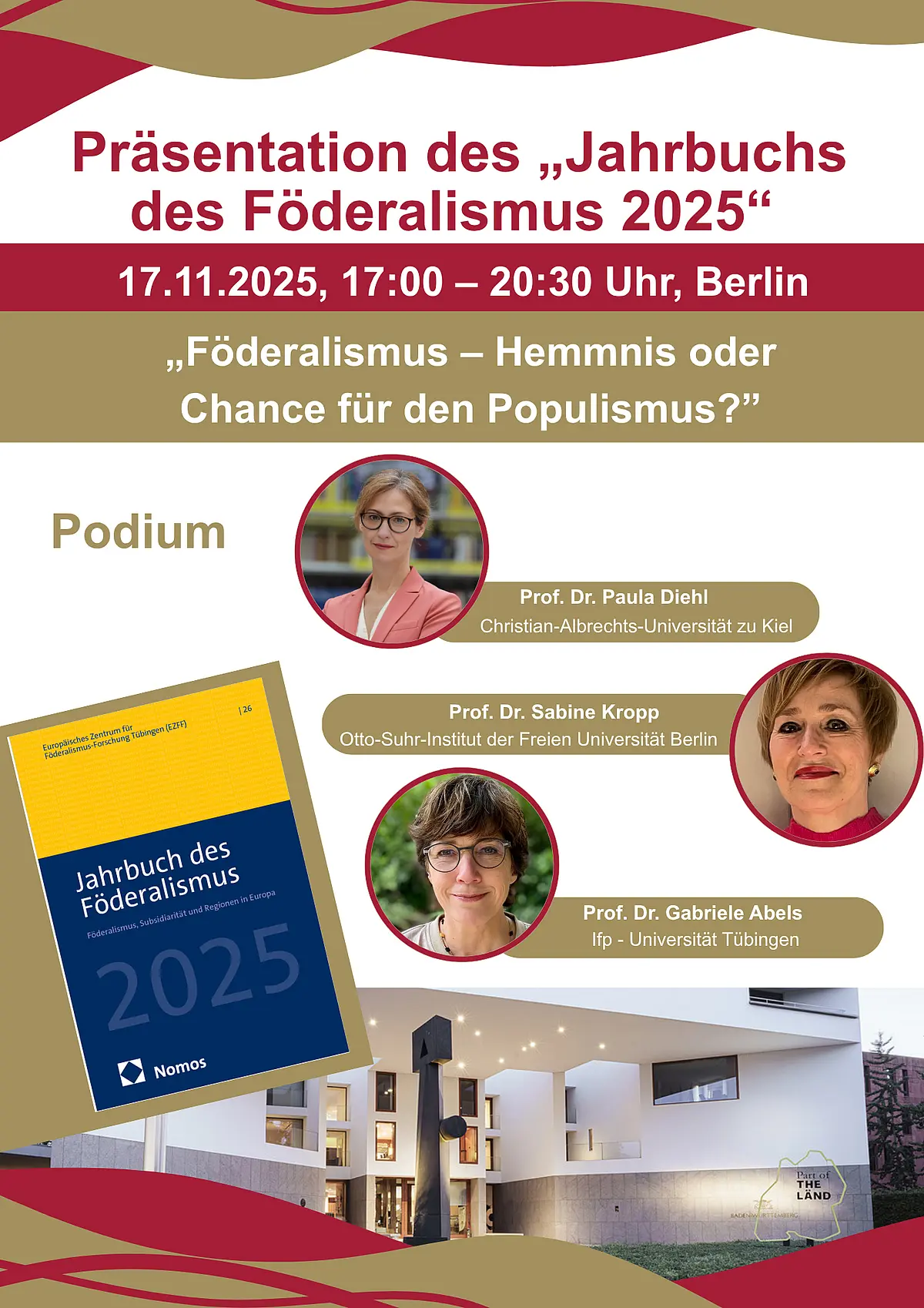
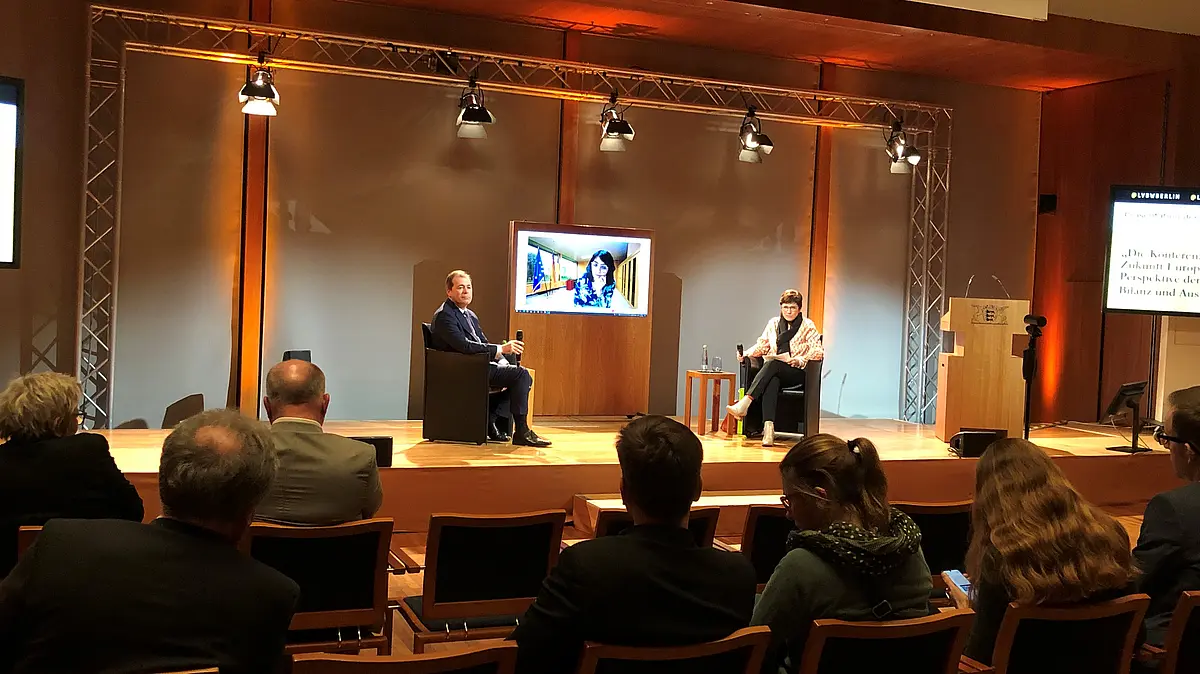
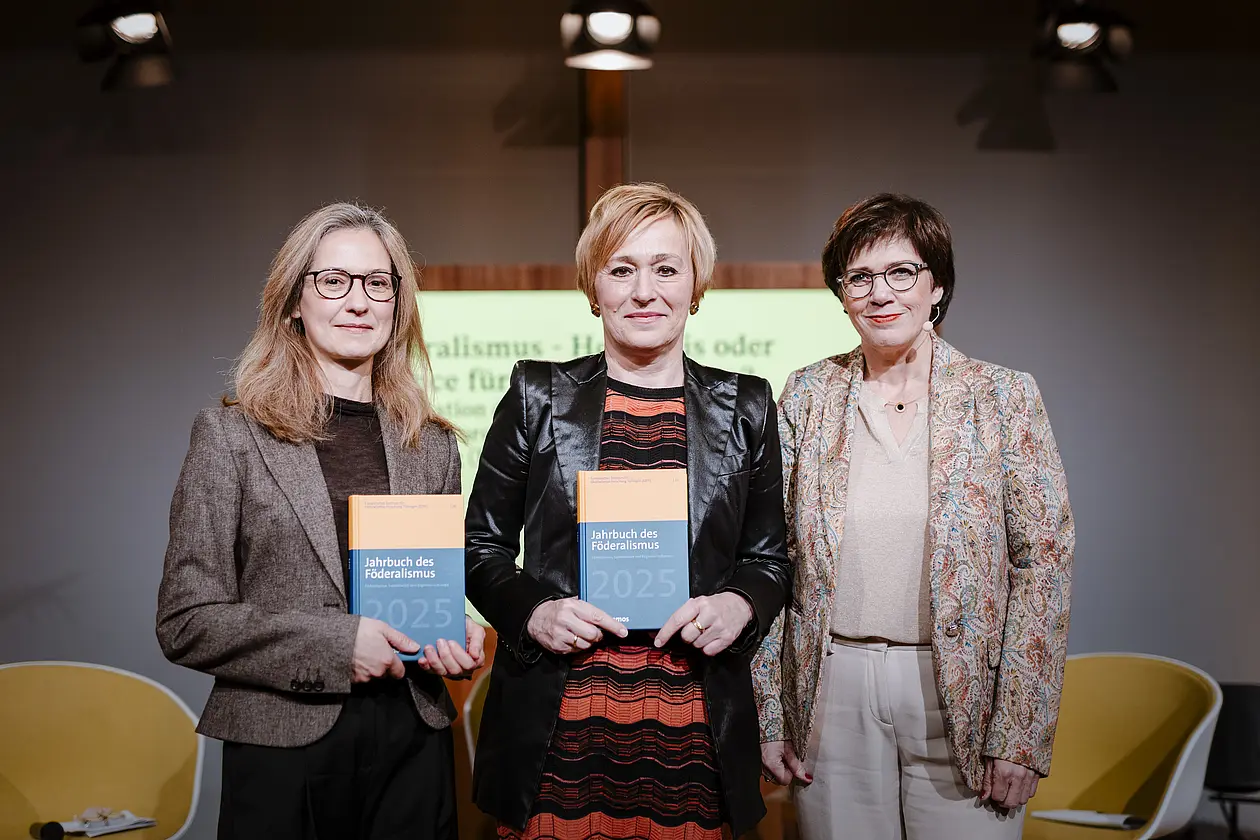
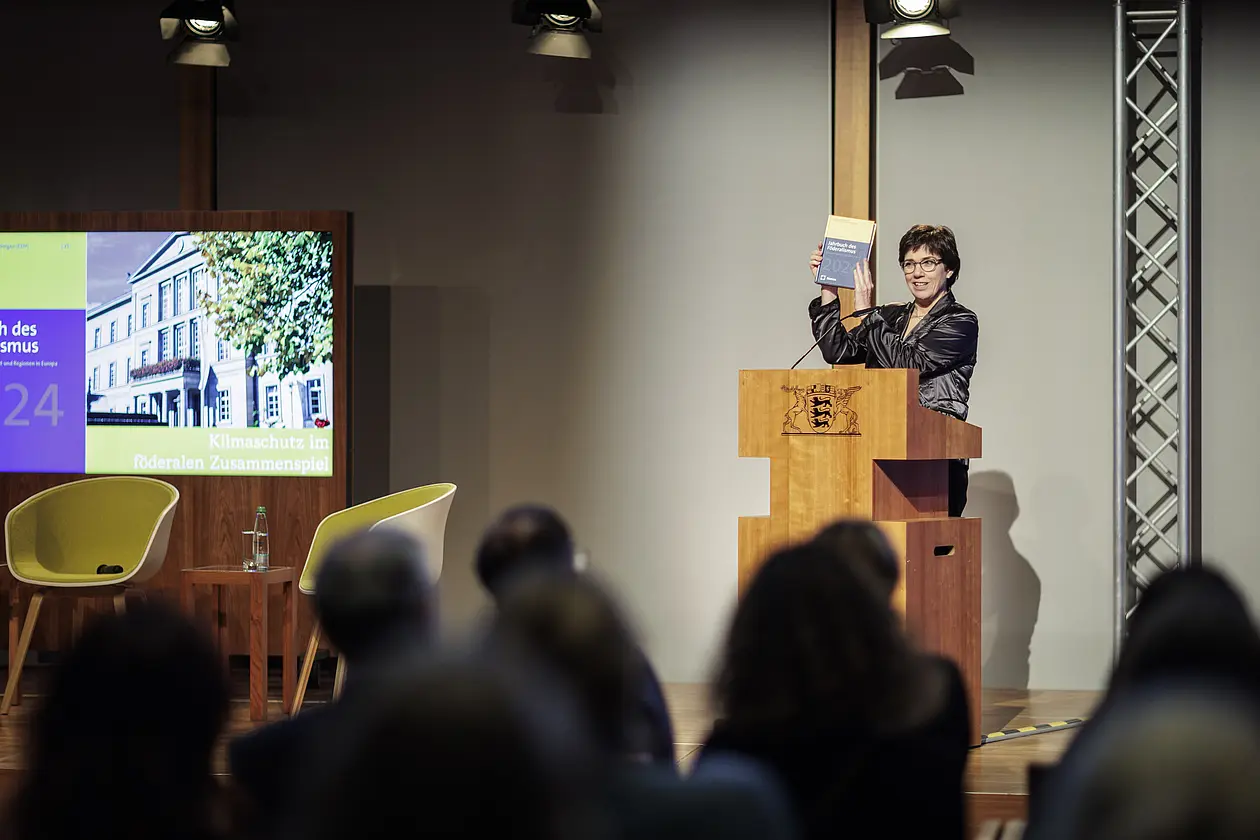
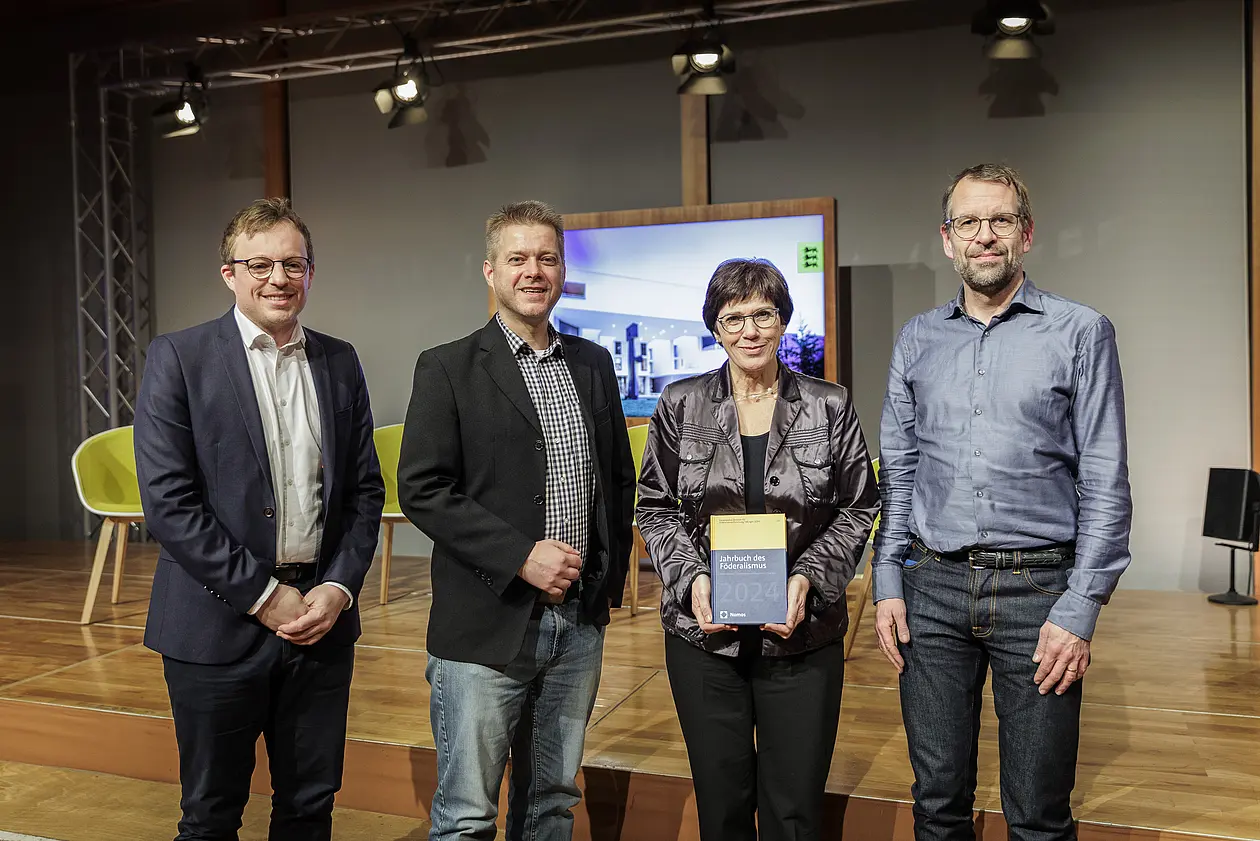
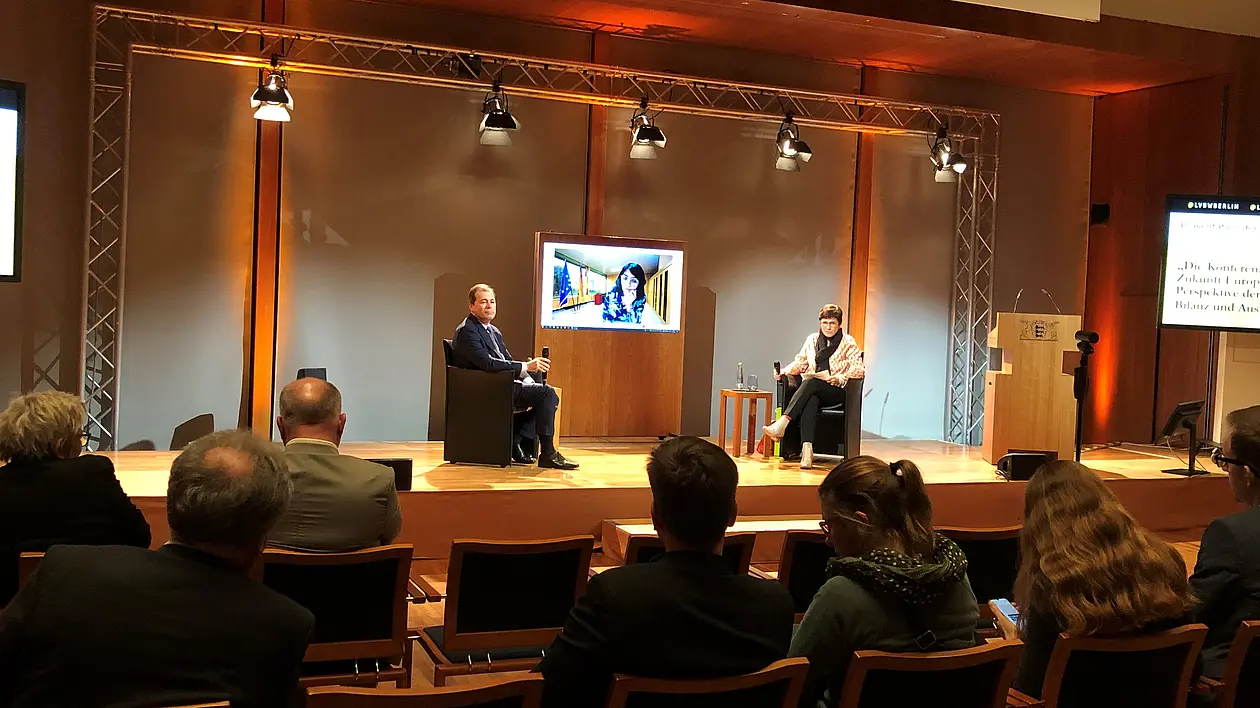
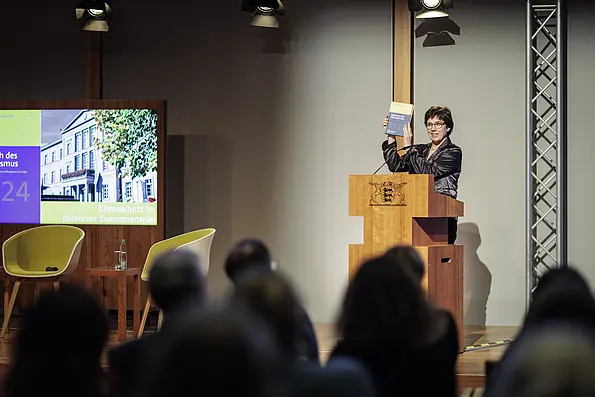
On 17 November 2025, the ECRF officially presented the “Yearbook of Federalism 2025". The event was once again held at the State Representation of Baden-Württemberg in Berlin.

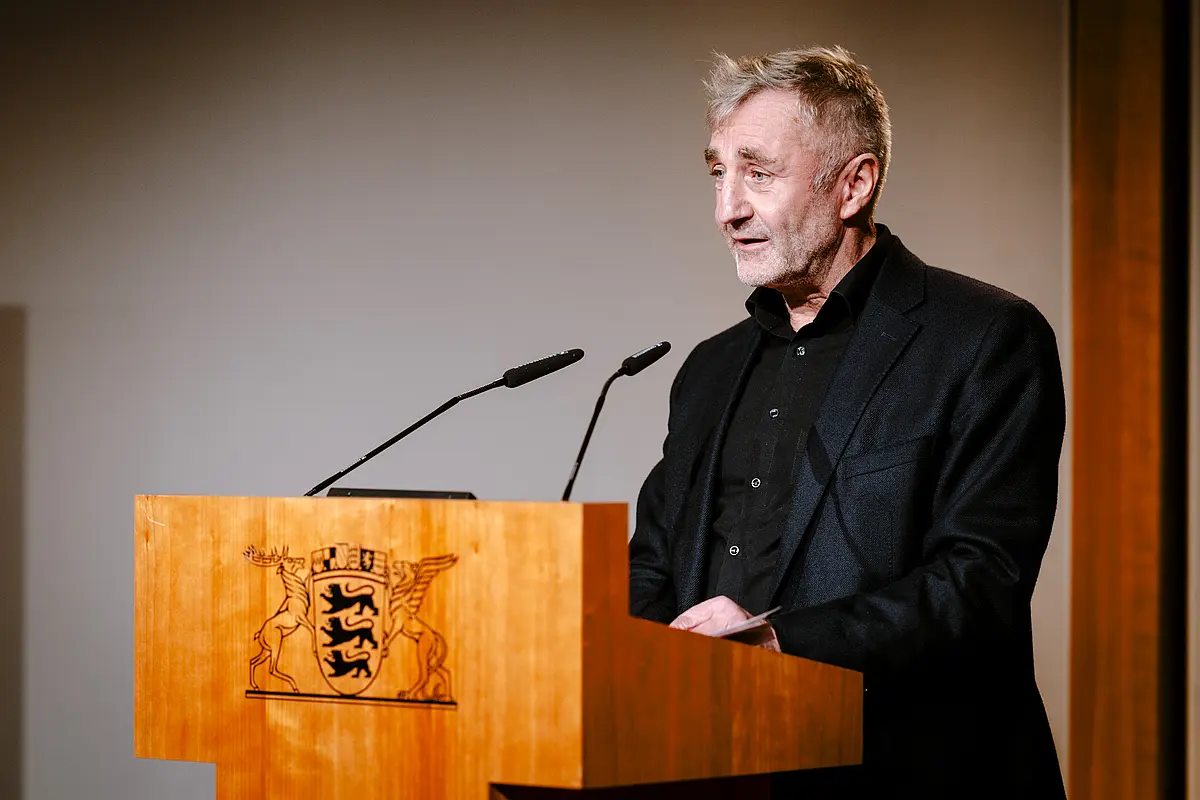
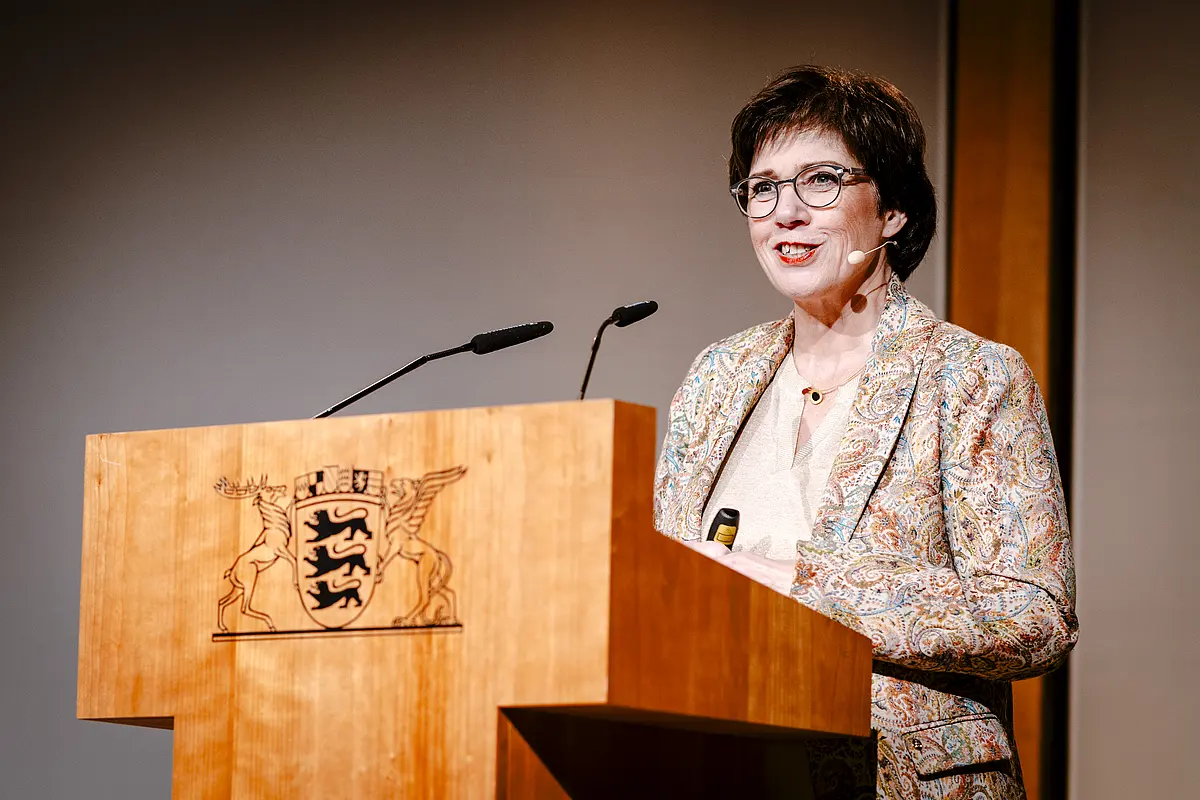
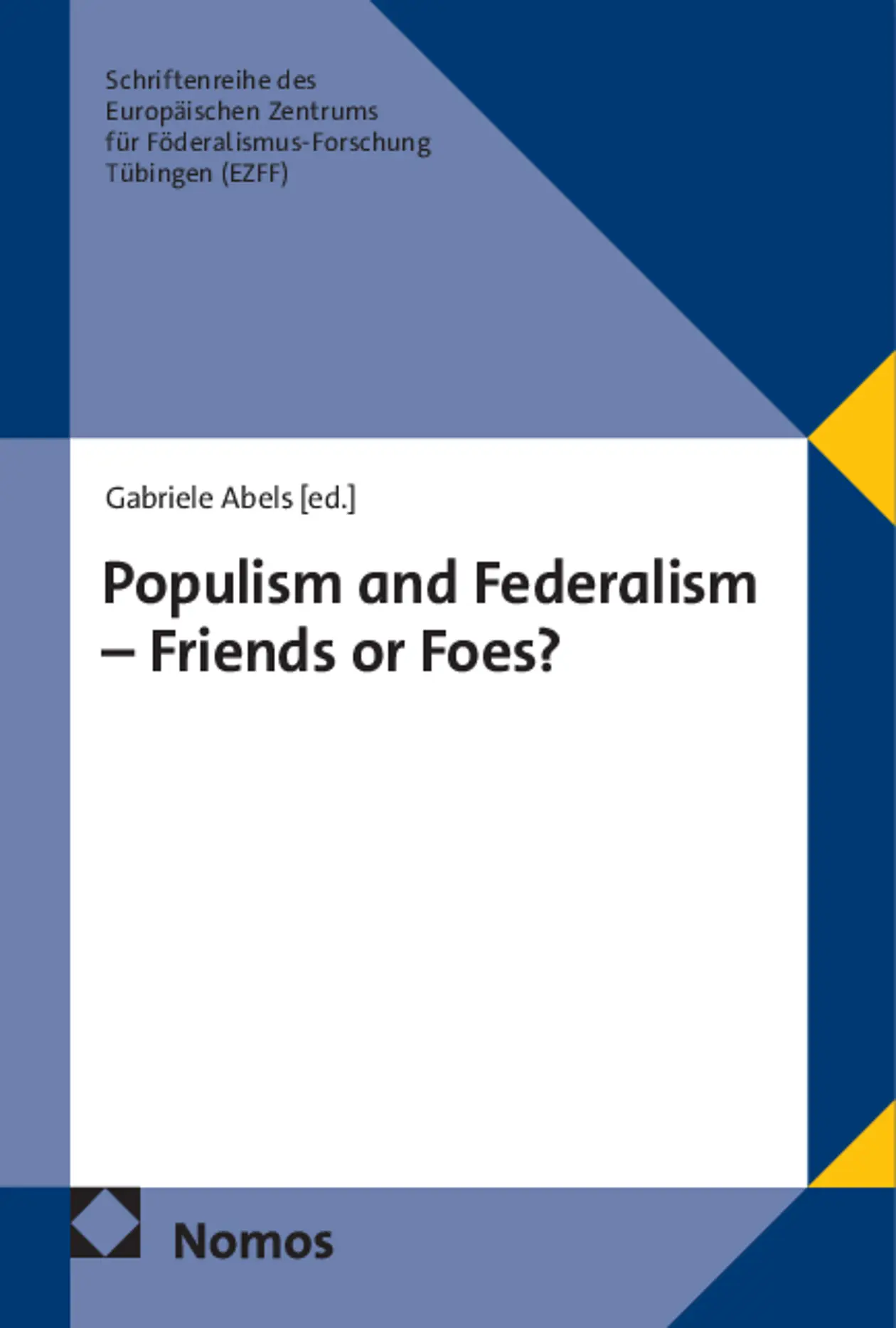
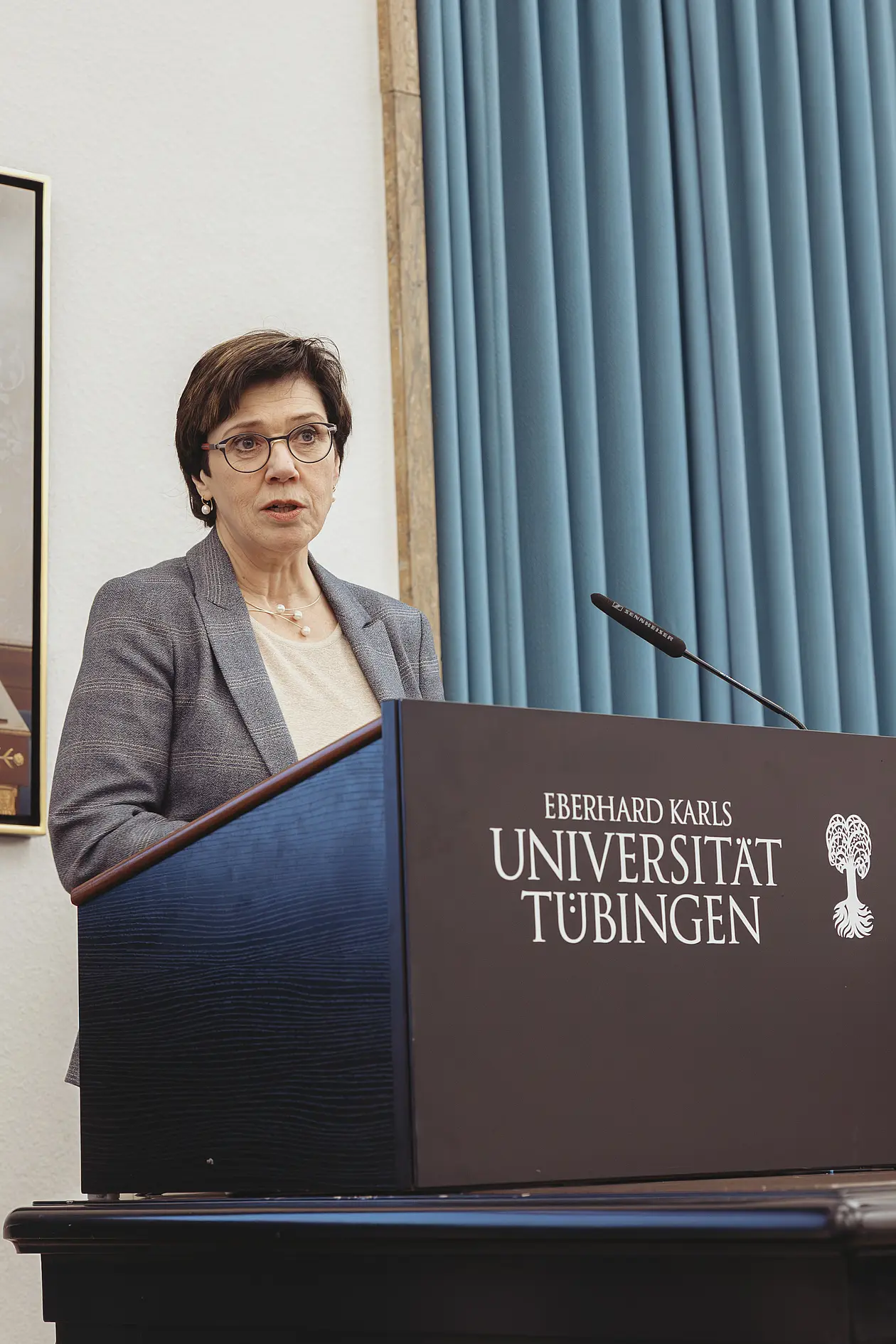
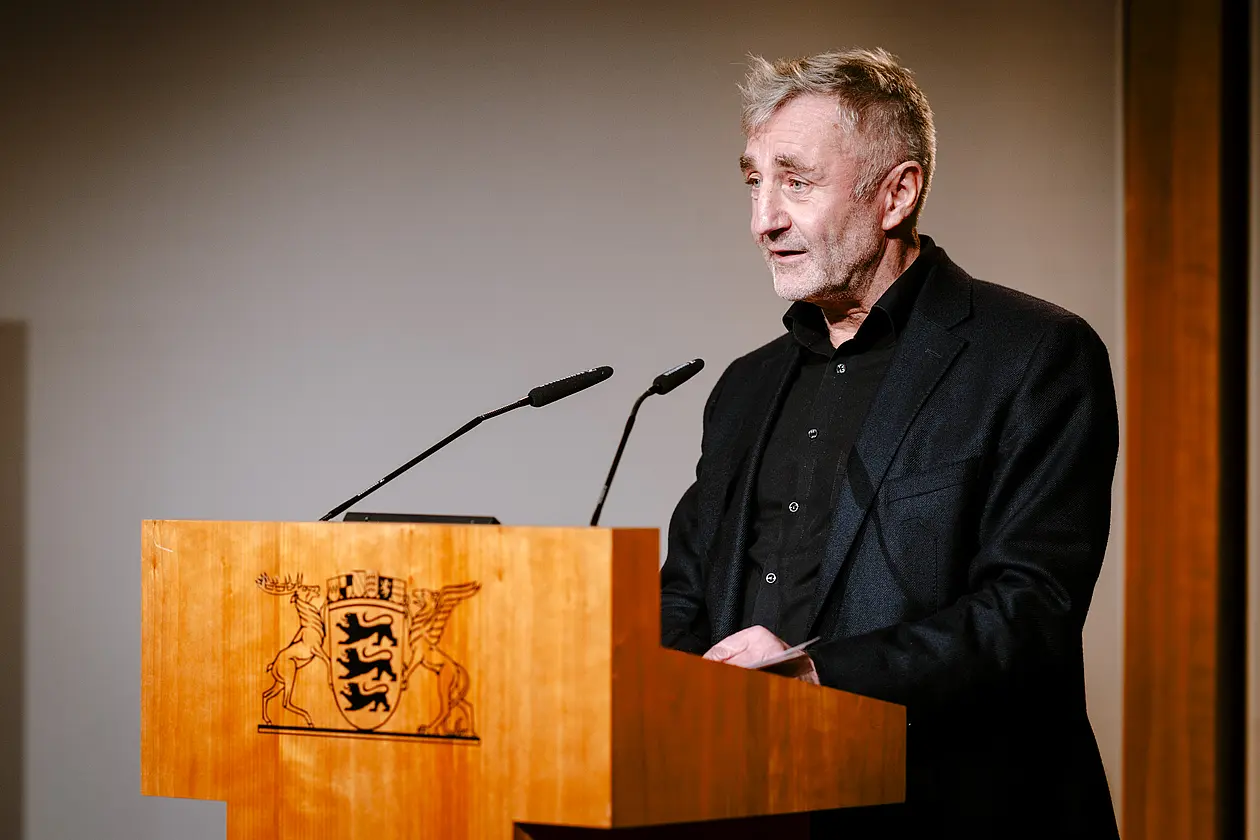
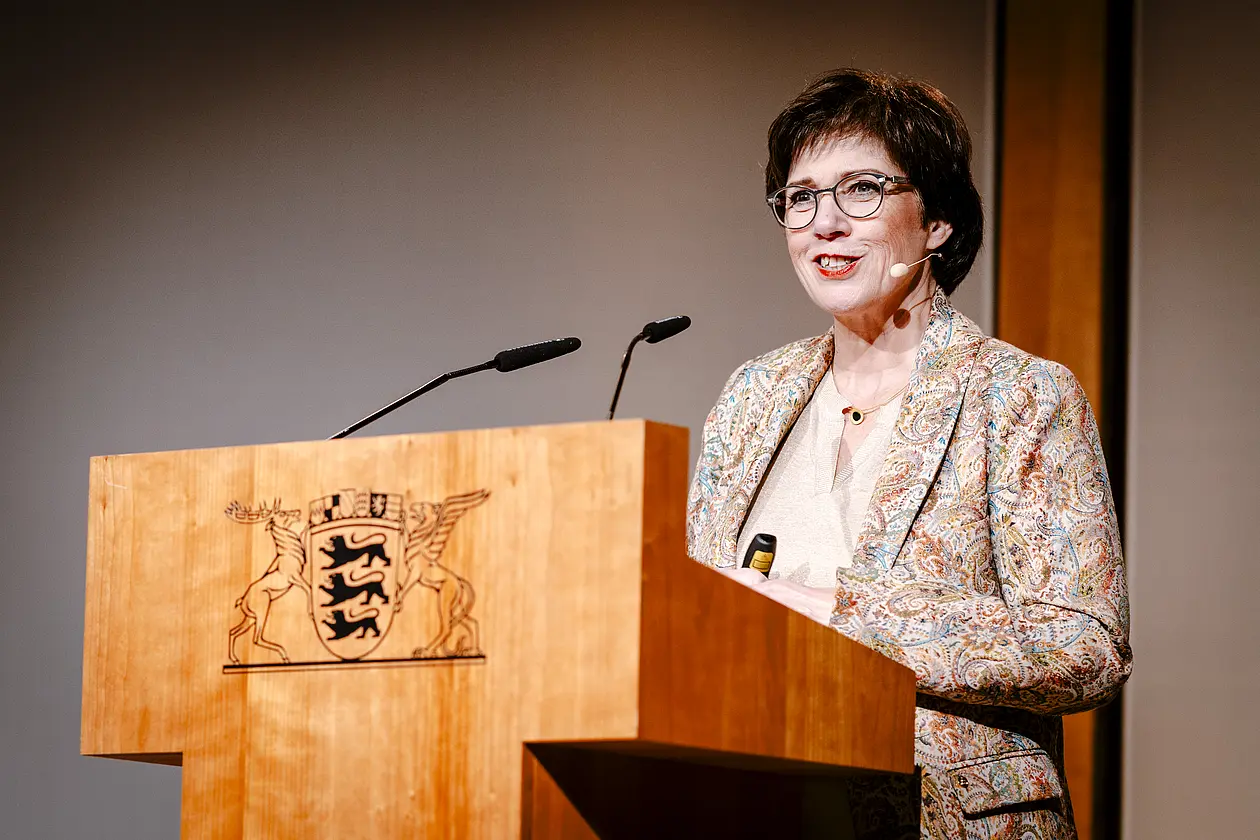
After a pre-reception, where specialities from both Berlin (Currywurst) and from the Ländle (Käsespätzle) were offered, Mr. Ulrich Aierstock, Deputy Head of the State Representation, opened the event and welcomed the guests. Prof. Dr Gabriele Abels, Speaker of the ECRF Executive Board, then presented the topics covered in the Yearbook. She paid particular attention to this year's main topic, ‘Populism and federalism – best friends?’ – a question that is becoming increasingly important in light of recent political developments in many different countries.

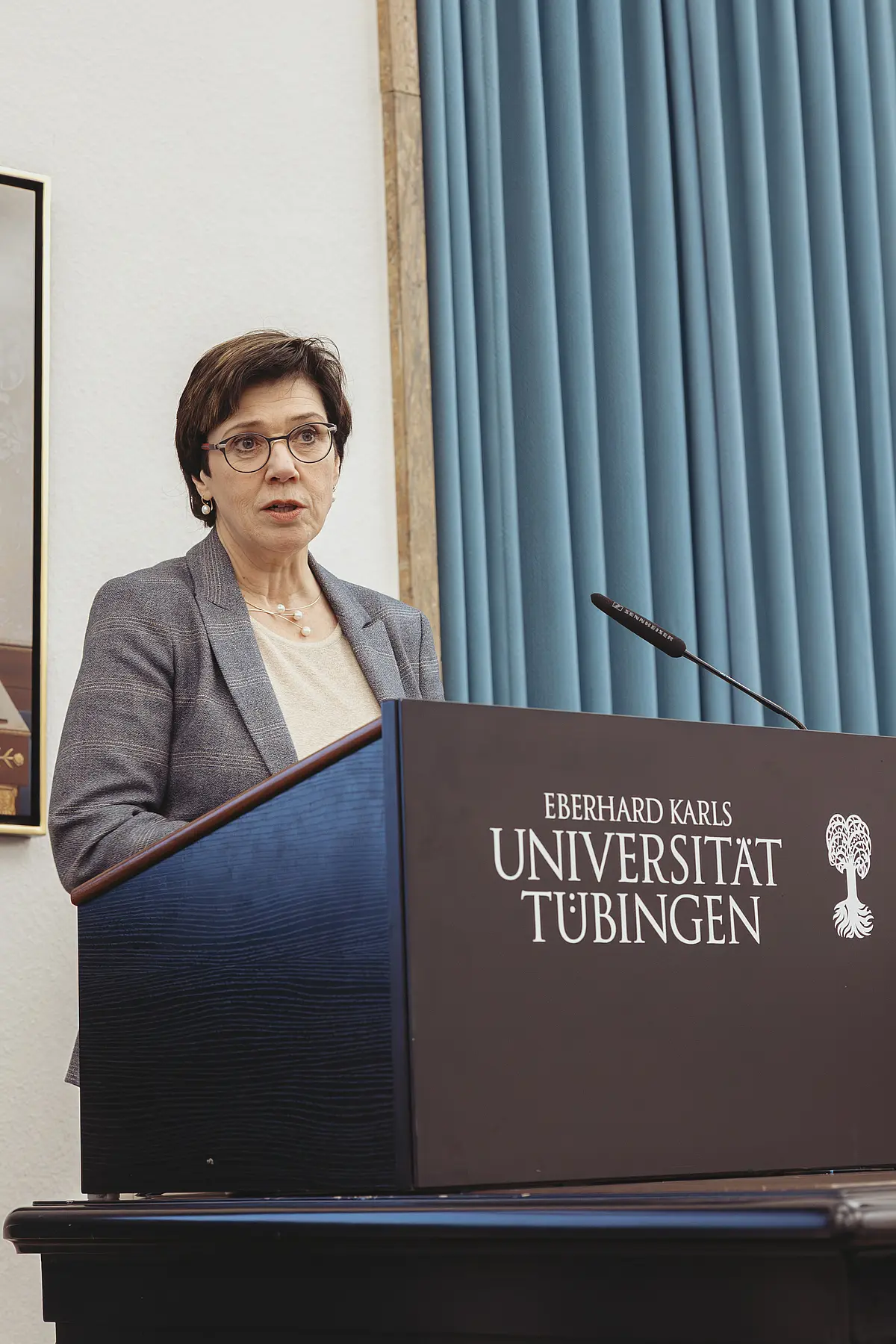
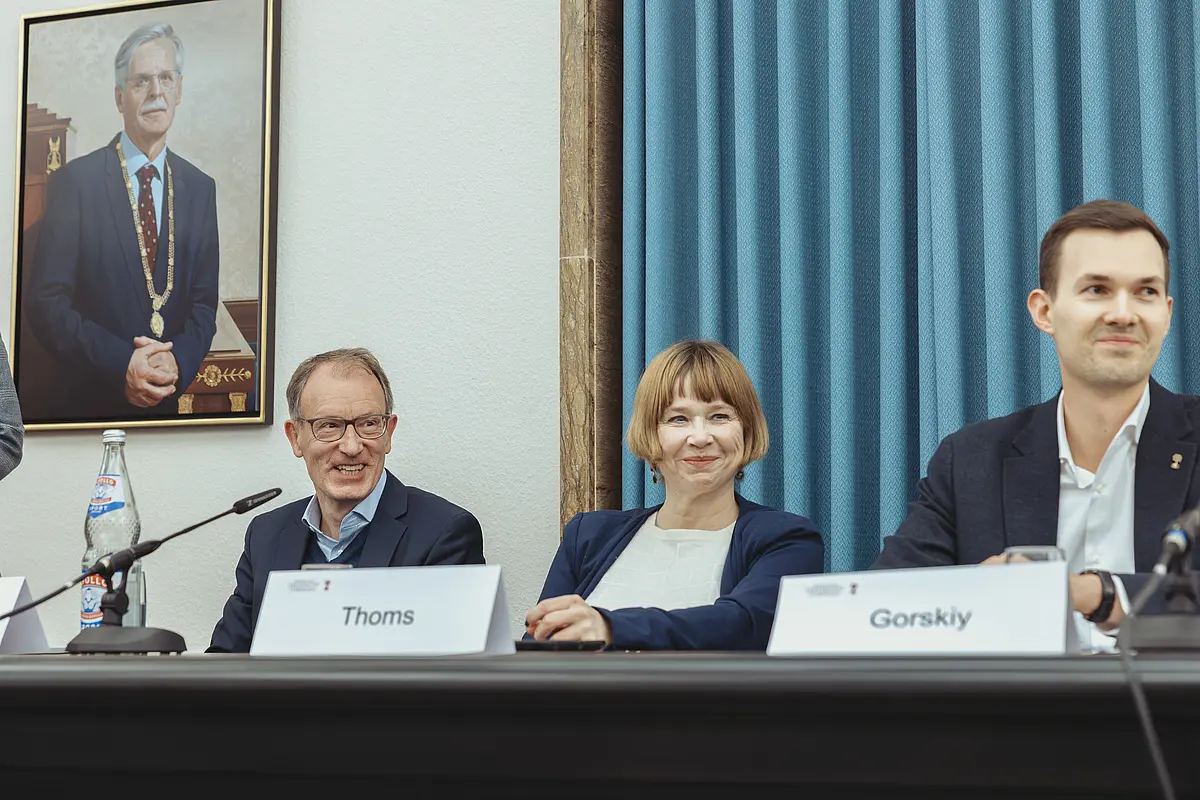
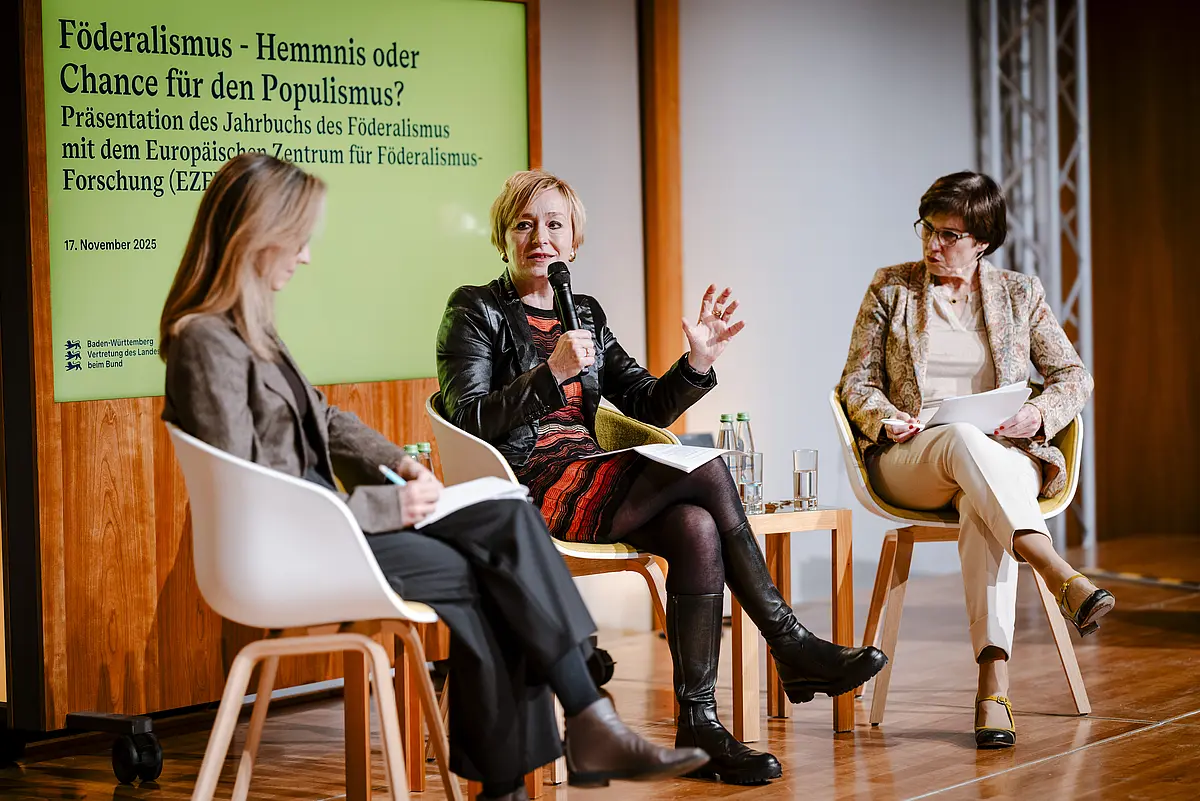
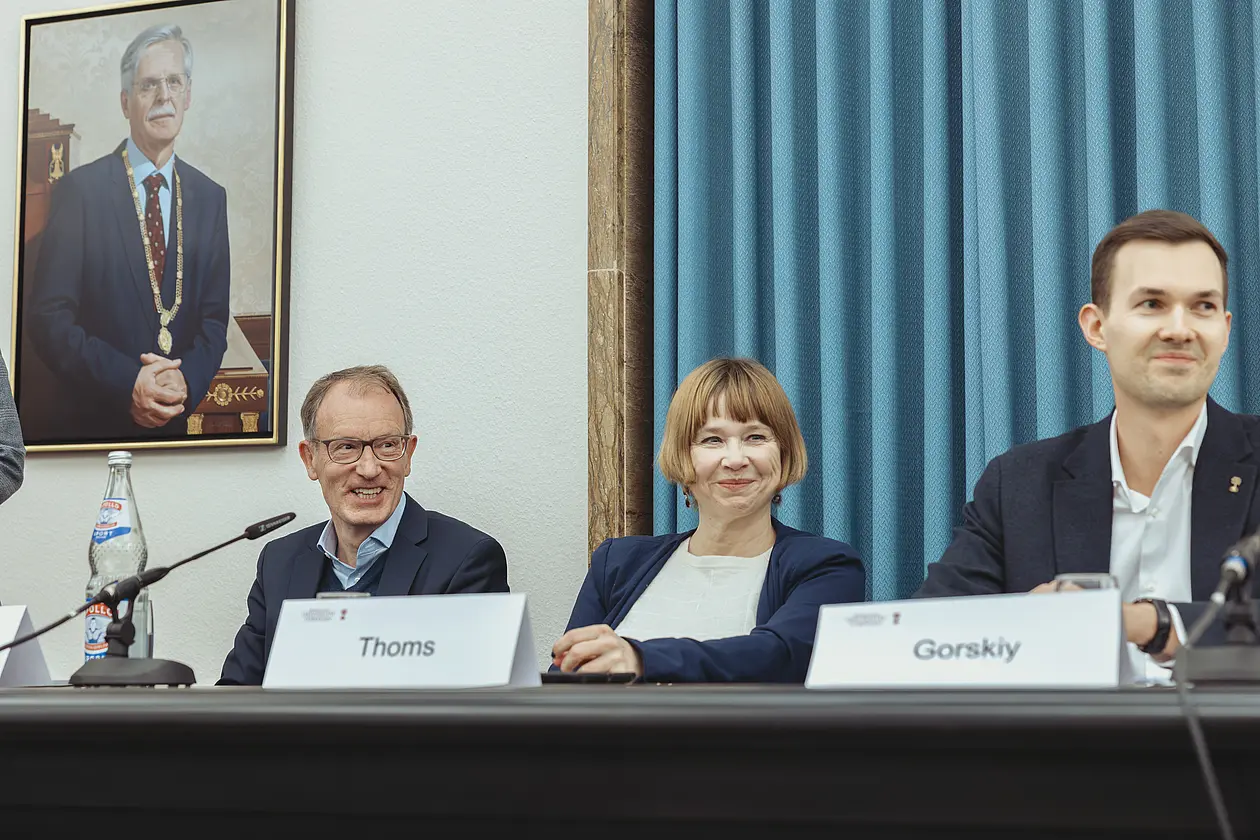
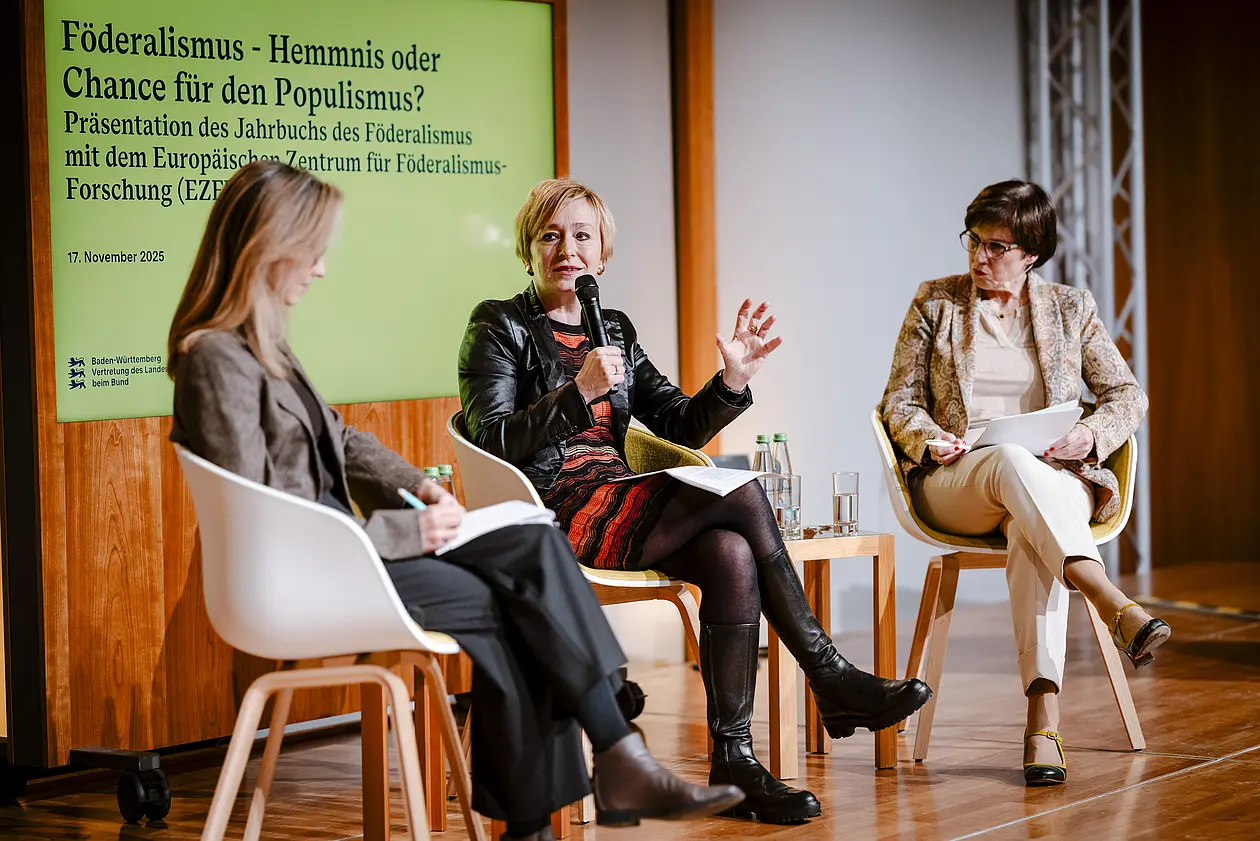
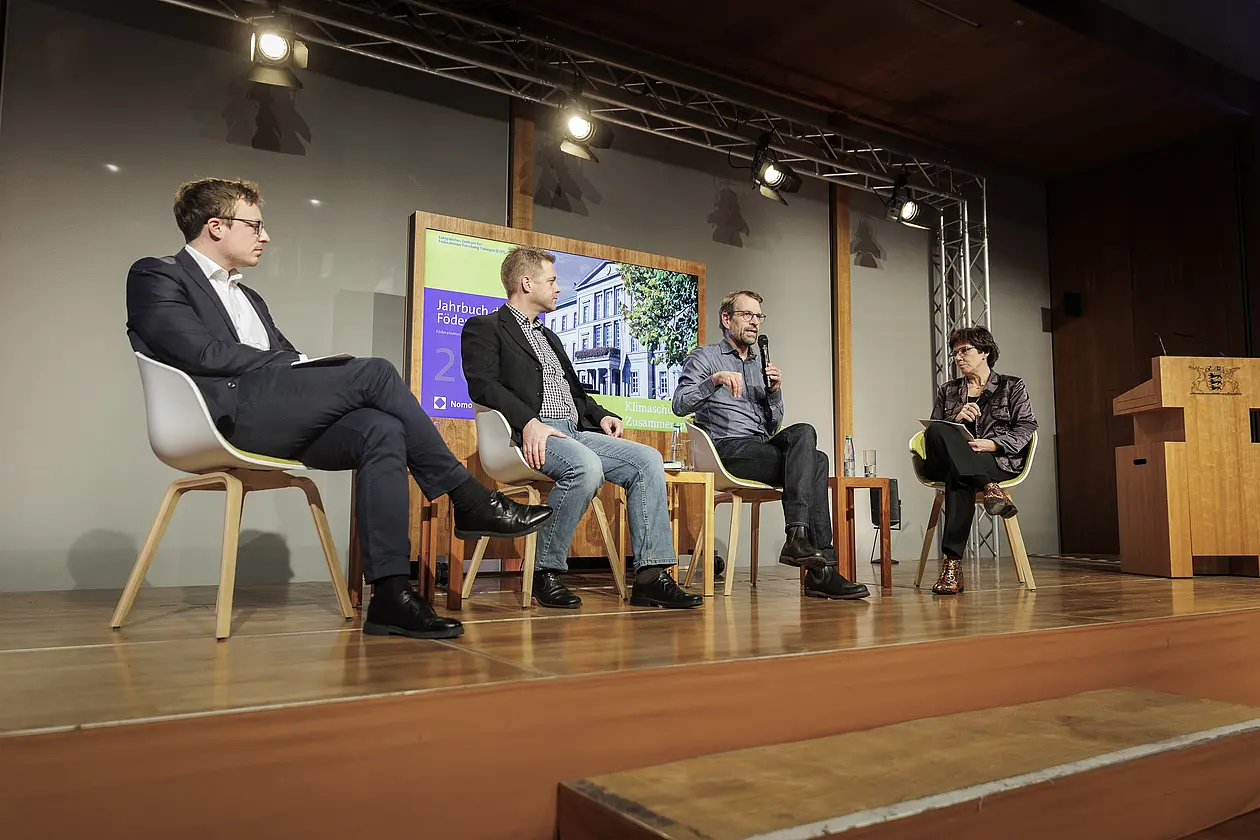
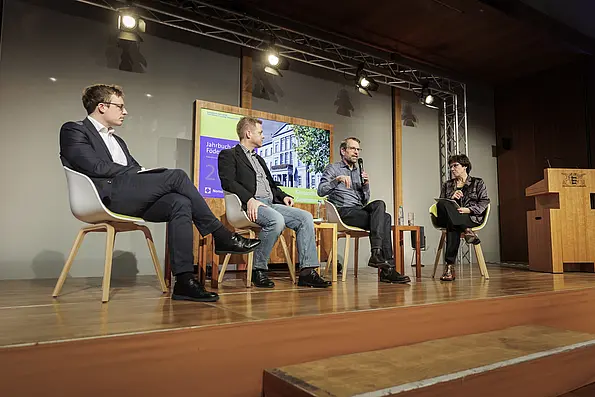
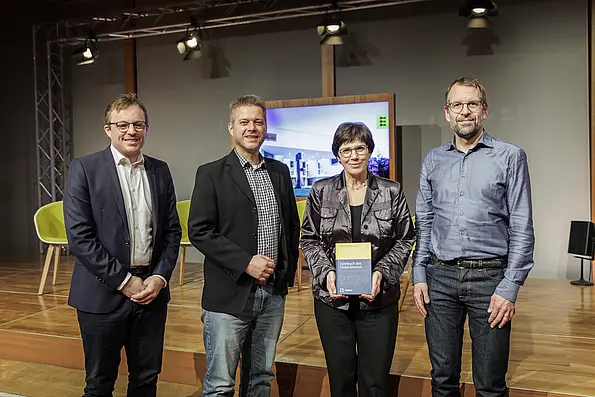
Prof. Abels then discussed the topic ‘Federalism – obstacle or opportunity for populism?’ with Prof. Dr. Paula Diehl, Christian Albrecht University of Kiel, and Prof. Dr. Sabine Kropp, Free University of Berlin. The focus was on the question of whether federal structures provide a fertile environment for populist forces or whether they are particularly well suited to curbing them.

In her opening statement, Prof. Diehl pointed out that the interplay between populism and federalism depends on three fundamental factors that can vary considerably from country to country: the functioning of the political system, the characteristics of the political culture, and the political level at which populist forces operate (federal, state or local?). At the same time, she reminded the audience that, despite some common characteristics, there is no such thing as ‘one form of populism’ and that populist actors can also evolve over time. Furthermore, populism does not always have to be authoritarian in nature, although this is increasingly the case due to its growing adoption by right-wing extremist forces. Normalising populist messages would only lead to even greater radicalisation. According to Diehl, the question of how populism affects the functioning of institutions is of central importance. She used the image of a drunk guest at a party: just as this guest can liven up the atmosphere, populism has the potential to revitalise democracy. At the same time, it could also destroy it. The role of federalism varies in this regard depending on the country and political level: while in the USA, for example, the states have proven to be an effective bulwark against the right-wing populist policies of the federal government, in Austria the populist FPÖ has succeeded in breaking through the cordon sanitaire of the federal parties by participating in state governments.

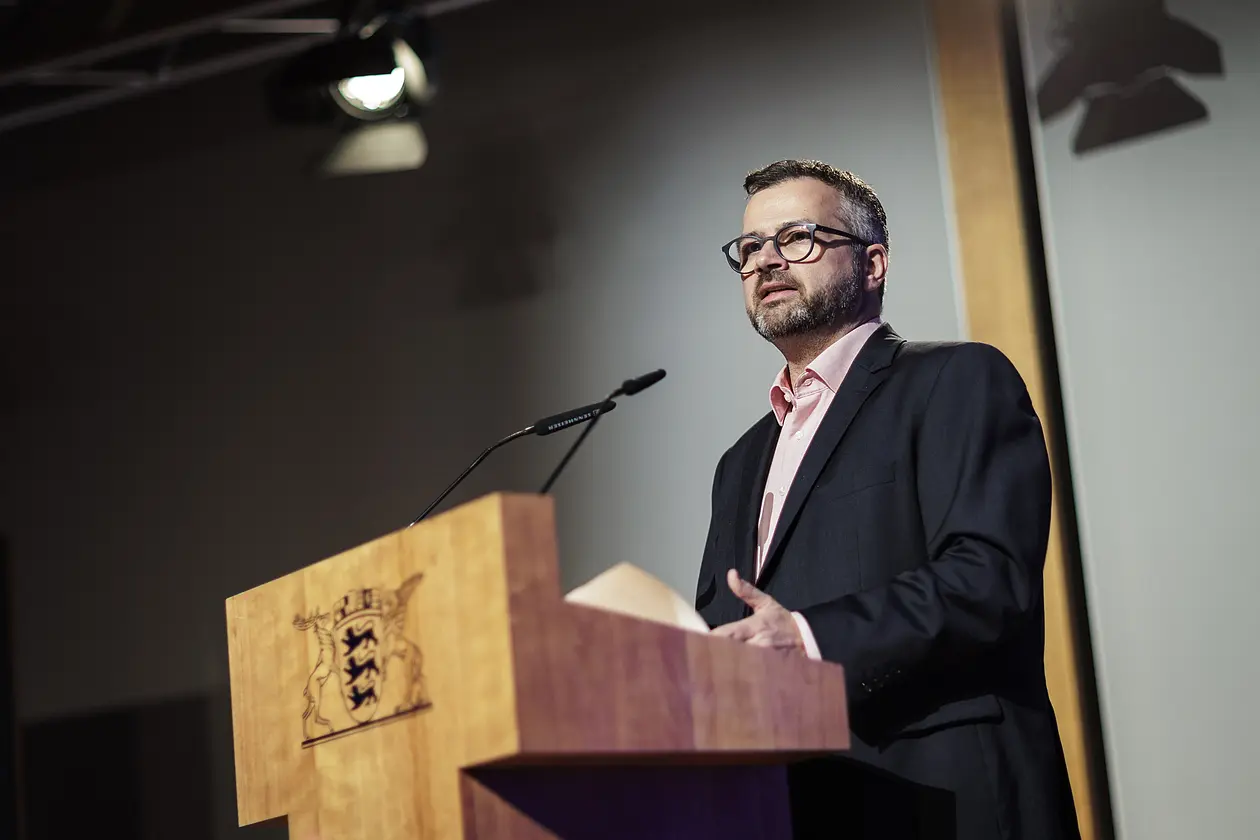
Prof. Kropp agreed with the assessment that a distinction must be made between populism and extremism. The central communication strategy of populism is to blame others, who are held responsible for problems, often in the name of ‘the people’. These may be ‘the elite’ (or ‘those at the top’), but also actors at other political levels in general. In this way, a federal government, for example, could pass on responsibility for failed reforms. Accordingly, populist communication is not only reserved for radical actors, but can also be practised by forces perceived as moderate. The federal structure of a country could be used by populist forces as a means of obstruction. German executive federalism in particular offers numerous opportunities for this, for example in the Bundesrat or the Fachministerkonferenzen. Since these usually work in a consensus-oriented manner and often require unanimity for decisions, even if a populist party is only (co-)governing in one state, this can already have considerable disruptive potential. According to Kropp, the key to strengthening the federal state's defences does not lie in small-scale institutional reforms. Instead, federal structures as a whole need to be made more flexible, for example by abolishing unanimity requirements.

When asked whether the rise of populist forces could be reversed, the two panellists came to a sobering conclusion. According to Prof. Diehl, the situation is more likely to worsen. The increasing coarsening of language, especially on social media, is difficult to reverse. Prof. Kropp similarly pointed out that a feeling of permanent crisis has become established in society, which populist forces know how to exploit. When Prof. Abels asked whether populist parties could be disenchanted by participating in government, Prof. Kropp replied that this was difficult to imagine given the growing influence of forces within the parties that insist on their maximum demands. A ‘let them join in’ approach at the state level could have disastrous consequences given the federal interdependencies and the consensus-oriented system of the Federal Republic. Prof. Diehl pointed to the example of the Rassemblement National in France, noting that the normalisation of populist discourse, coupled with an apparent willingness to compromise on the part of the populist party, could encourage other parties to move closer to them and ultimately tempt them to enter into a government coalition.

Afterwards, the audience had the opportunity to ask the panellists questions. A reception with drinks rounded off the evening.

The ECRF would like to thank Prof. Diehl and Prof. Kropp for the excellent panel discussion and all participants. We would also like to thank the State Representation of Baden-Württemberg for the once again excellently organised event and Nomos-Publishing, which once again provided a book table with a selection of exciting publications.

Further information on the “Yearbook of Federalism 2025”, which also contains an article by Prof. Kropp on the resilience of the German federal state (with Florian Grotz), can be found here.

12.11.2025

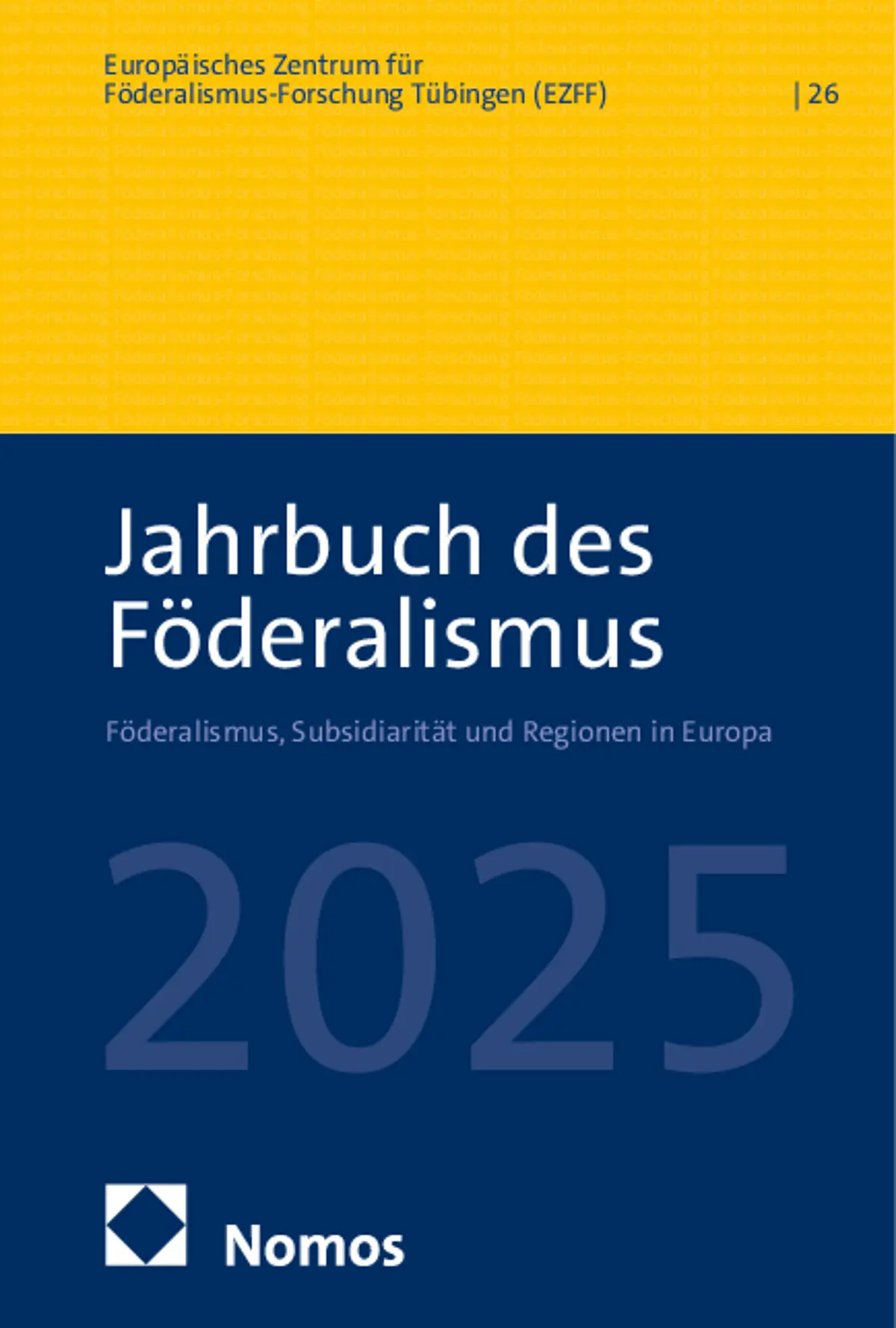
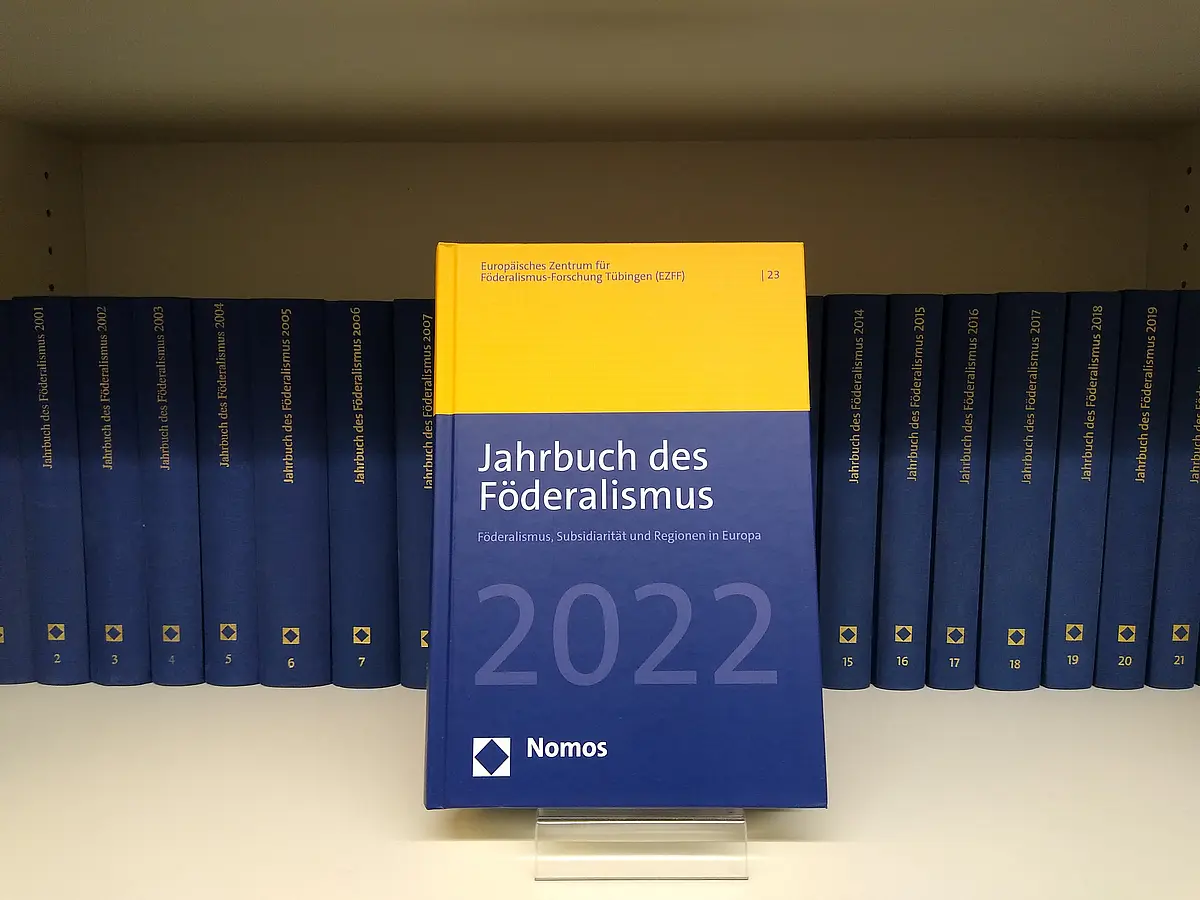
New Publication: Yearbook of Federalism 2025

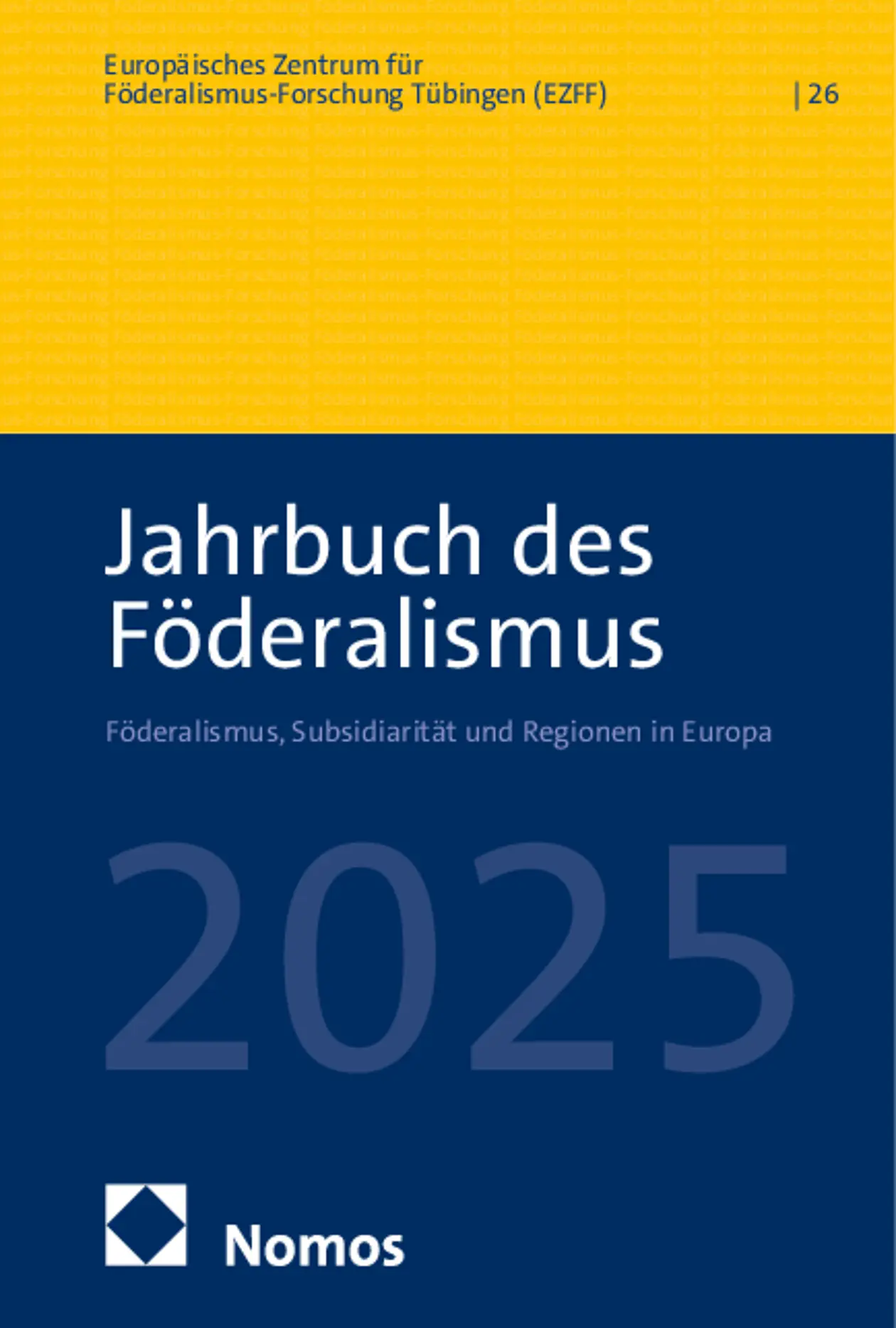
The „Yearbook of Federalism 2025“ is finally here! The 26th volume in this series focuses on the topic of “Populism and Federalism – Best Friends?”.

The global rise of populist forces has long been a topic of concern in politics and academia alike. However, little attention has been paid to the interplay between populism and federalism. This year's edition of the Yearbook therefore focuses on the question of whether federal structures provide a fertile environment for populists or whether they are particularly well suited to curbing them. Eleven articles present insights from various countries. In addition, the Yearbook offers readers a current and comprehensive overview of various aspects of federal and regional structures and politics in 23 additional articles.

2025, 1. edition, 526 pages, 129 Euro
ISBN: 978-3-7560-2004-1 (Print); 
ISBN: 978-3-7489-5542-9 (E-Book)

Contents

We would like to thank all authors who contributed to the Yearbook for the first time or once again this year. We would also like to express our sincere gratitude to Unibund Tübingen e.V., which once again supported us with a generous printing subsidy.

We will present the Yearbook next Monday, 17 November 2025, at the State Representation of Baden-Württemberg in Berlin (Tiergartenstraße 15, 10785 Berlin; 5:00 p.m. to 8:30 p.m.). Further information about this event and the opportunity to register can be found here.
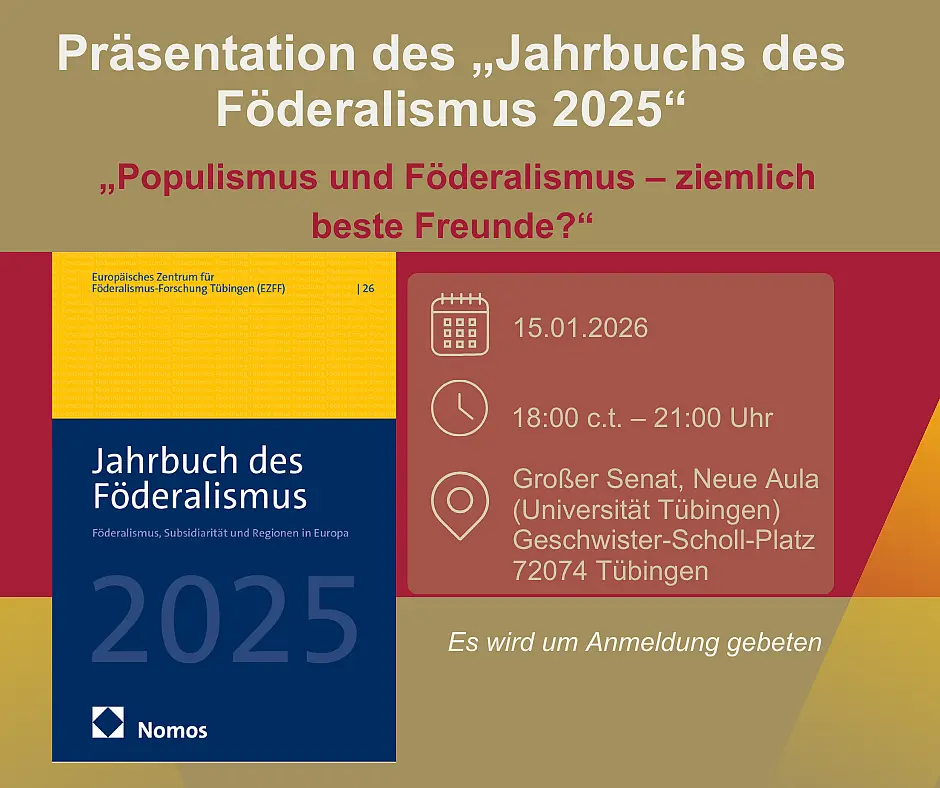
In addition, the Yearbook will also be presented for the first time in Tübingen on Thursday, 15 January 2026. More information about this event will follow shortly, but we would like to cordially invite you to save the date.


29.10.2025

Register now: Presentation of the "Yearbook of Federalism 2025"

The European Centre for Research on Federalism (ECRF) cordially invites you to the presentation of the “Yearbook of Federalism 2025”.

Monday, 17 November 2025,
5 p.m. – 8.30 p.m. CET,
Vertretung des Landes Baden-Württemberg beim Bund, 
Tiergartenstraße 15, 10785 Berlin.
 

Please register for the event here: Registration. Please note that the event will be held in German.

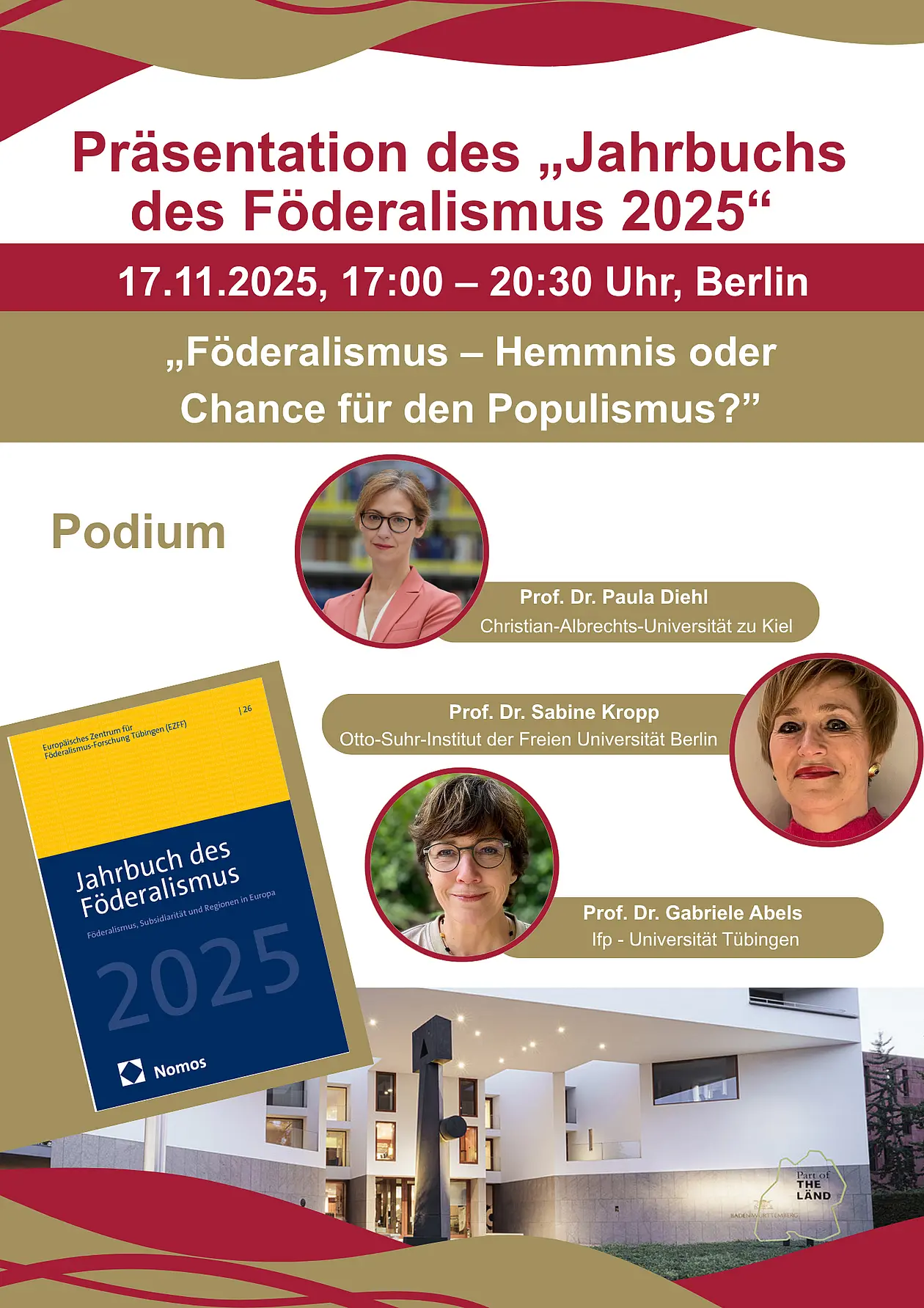
There will be a pre-event reception starting at 5 p.m. At 6 p.m., Mr Ulrich Aierstock, Deputy Head of the State Representation of Baden-Württemberg, will open the evening. Afterwards, Prof. Dr. Gabriele Abels, speaker for the ECRF Executive Board, will present the ‘Yearbook of Federalism 2025’, which this year is dedicated to the interplay between federalism and populism. She will then discuss the topic ‘Federalism – obstacle or opportunity for populism?’ with Prof. Dr. Paula Diehl (Christian Albrecht University of Kiel) and Prof. Dr. Sabine Kropp (Free University of Berlin). Further information can be found on the registration form.


24.09.2025

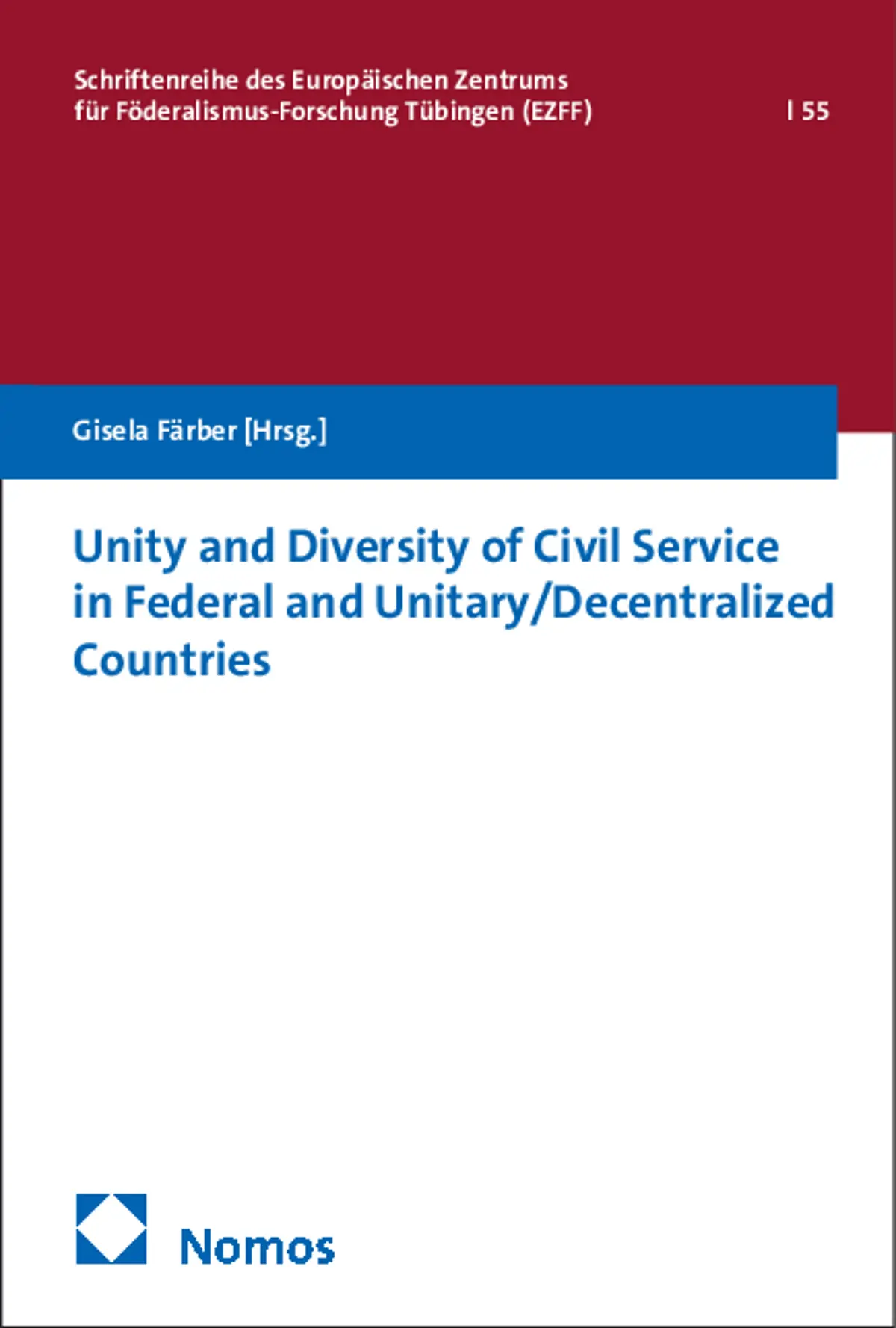
New Publication: Book Series Vol. 55

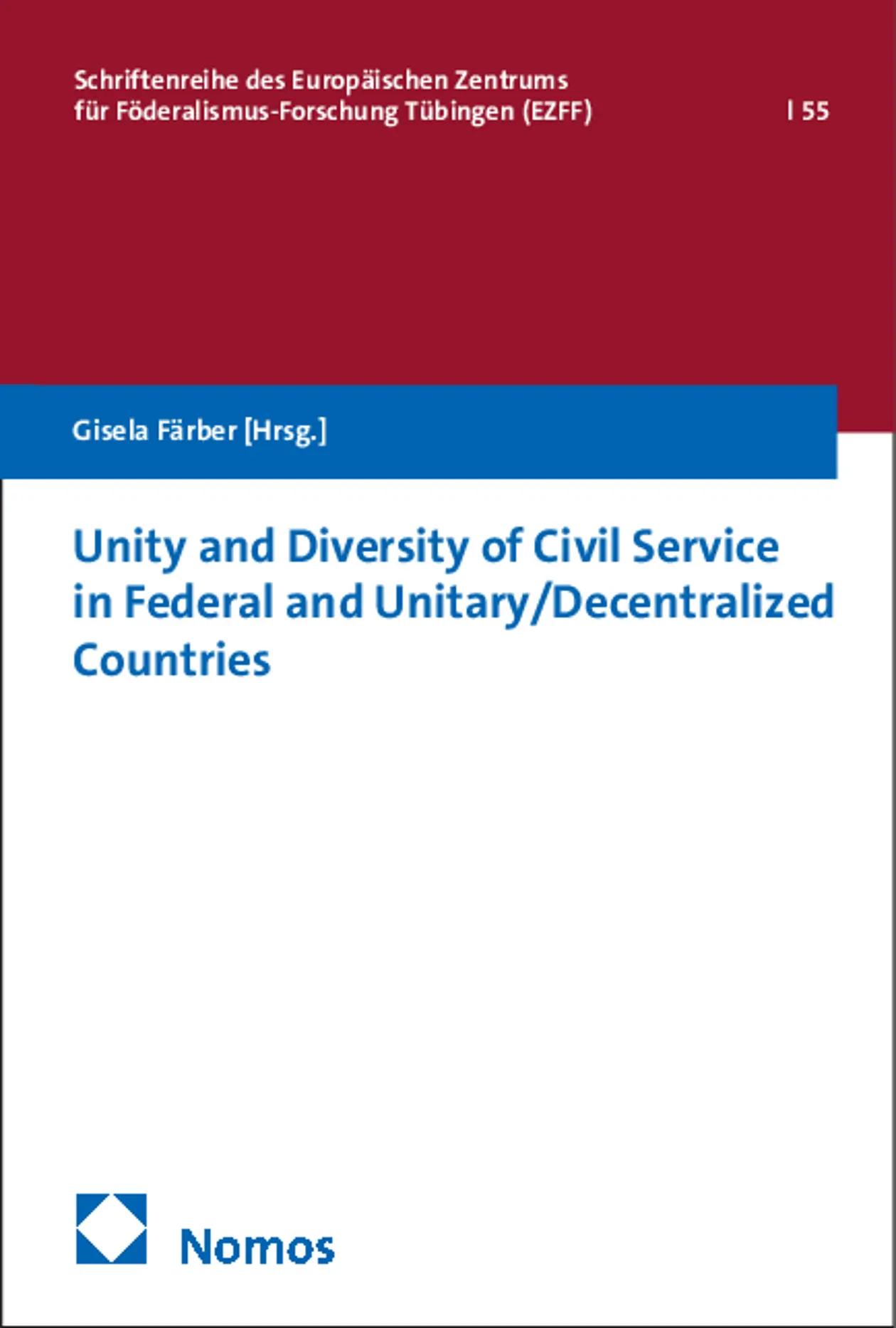
Gisela Färber (ed.): “Unity and Diversity of Civil Service in Federal and Unitary/Decentralized Countries”

In federal or decentralised countries, the civil service or public employment is subject to—specific—intergovernmental rules in each multi-layer system, which are characterised by differences in unity and diversity with regard to employment status, labour contracts, salaries and pensions, which in turn correspond to the intergovernmental relations of the countries in question or are important parts of them. The contributions in this book aim at closing the research gap here by presenting structured reports from four European countries (Switzerland, Austria, Italy, Germany), Canada, Australia, India, South Africa and Ethiopia.

2025, 216 pages, 59 Euro, ISBN 978-3-7560-3338-6

Contents

Further information can be found here.

26.06.2025

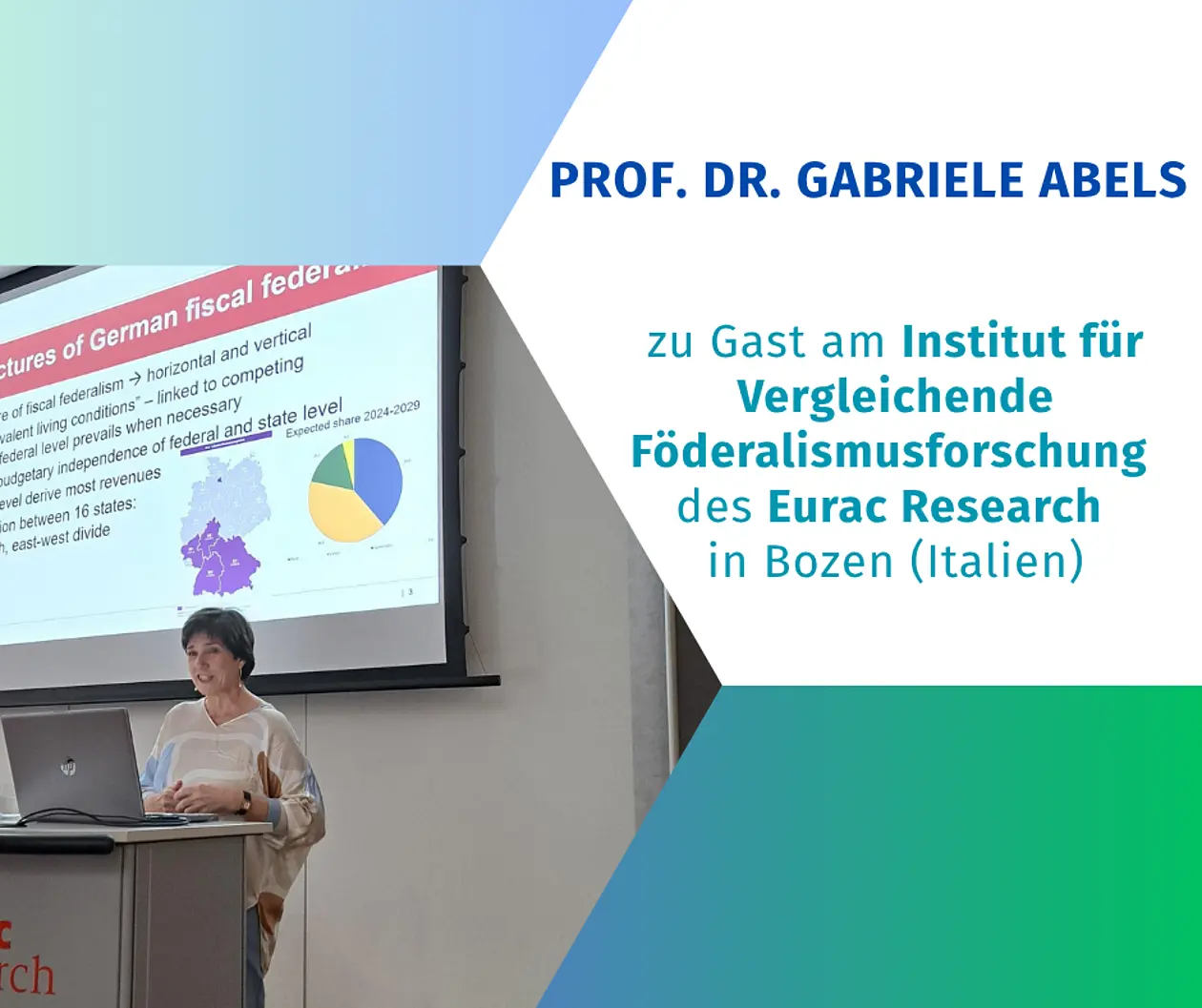
Research stay of Prof. Dr. Gabriele Abels at Eurac Research in Bolzano

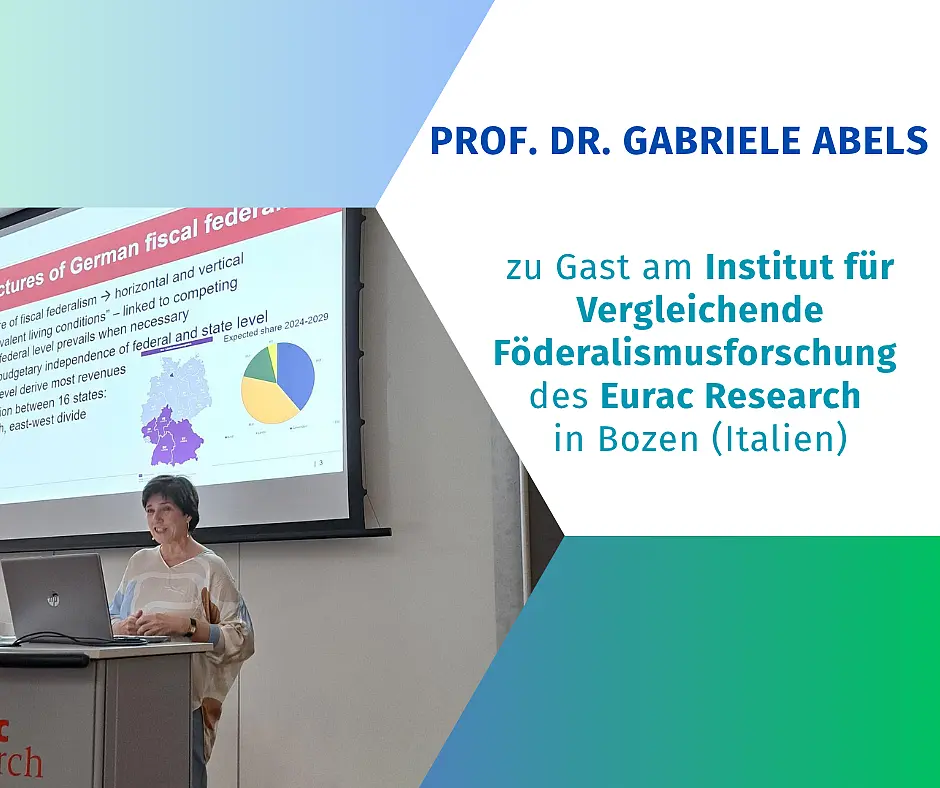
Prof. Dr. Gabriele Abels, speaker for the ECRF and holder of the Chair of Comparative Politics and European Integration at the University of Tübingen, was a guest at the Institute for Comparative Federalism Research at Eurac Research in Bolzano, Italy, from June 10 to 13, 2025.

During her stay with this long-standing partner of the ECRF, she held technical discussions with researchers at the institute and took the opportunity to conduct in-depth research. On June 12, she also gave a lecture on “Reforming the constitutional debt brake – analyzing fiscal federalism and states' rights in Germany”. In it, she analyzed the reform of the debt brake in the Basic Law in the context of German fiscal federalism, addressing, among other things, the role of the Bundesrat, the financial interdependence between the federal government and the states, and the function of the state constitutional courts as rather cautious guardians of state rights. The discussions about the debt brake once again highlight the tensions between federal budgetary control and federal autonomy.

The visit served to foster professional exchange and international networking in comparative federalism research.


11.06.2025

Delegation visit from Mexico

¡Bienvenidos a Tubinga!

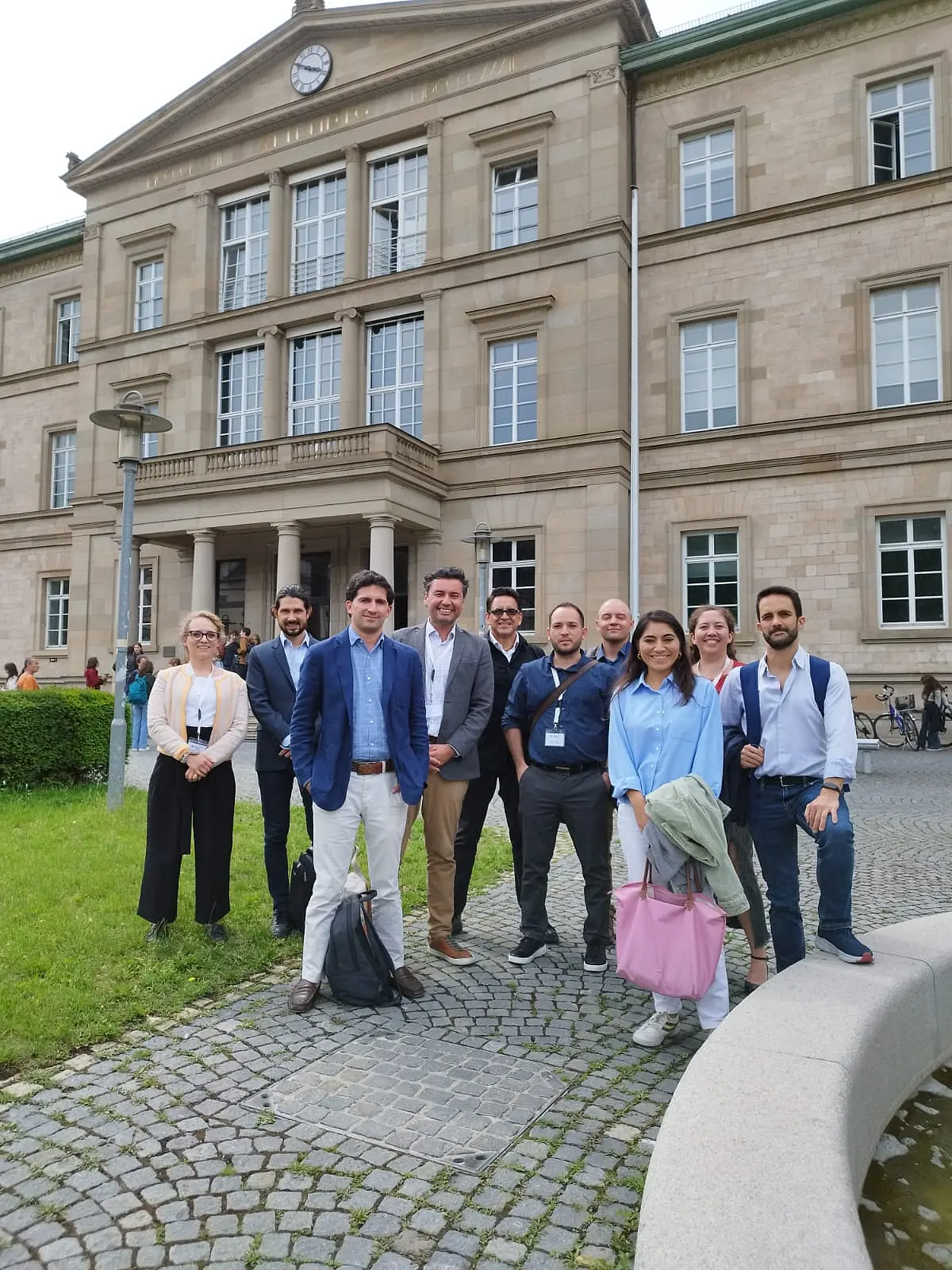
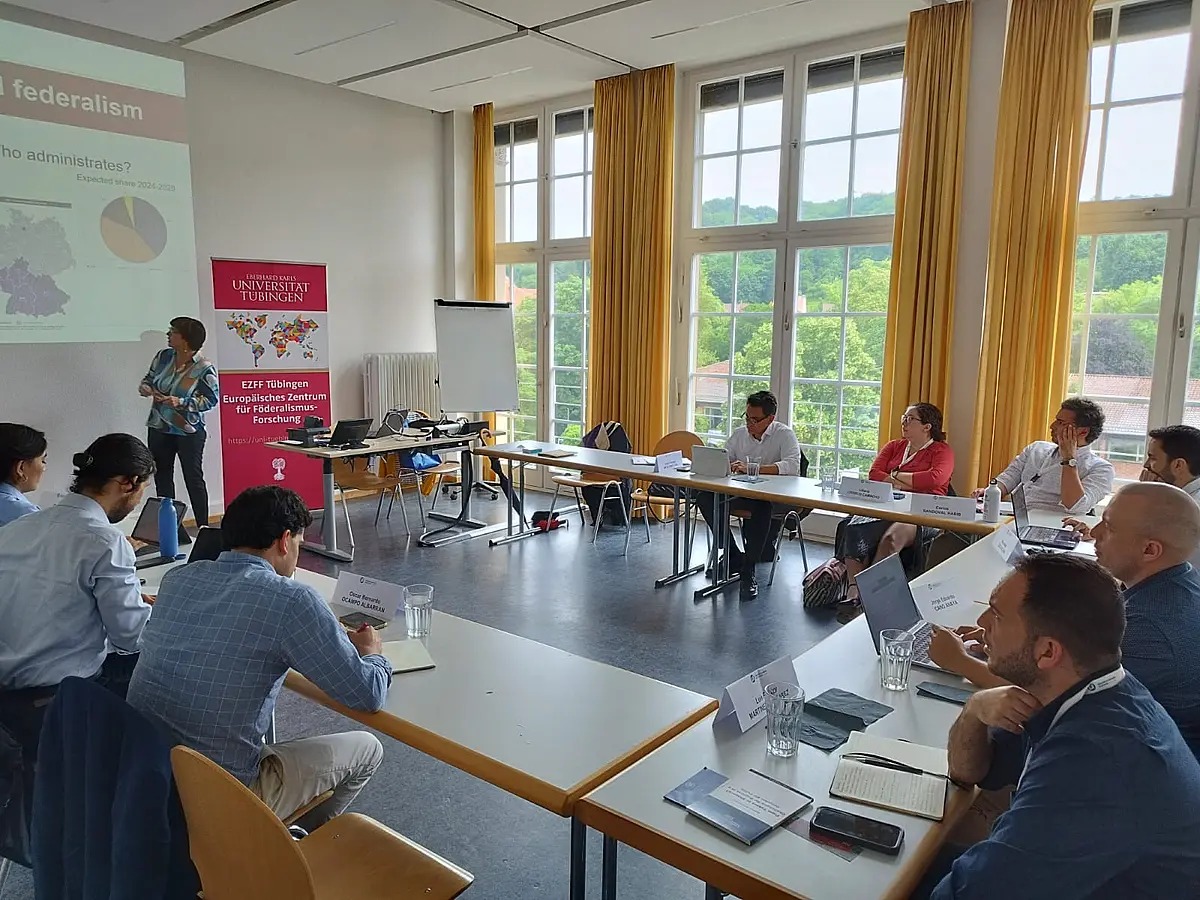
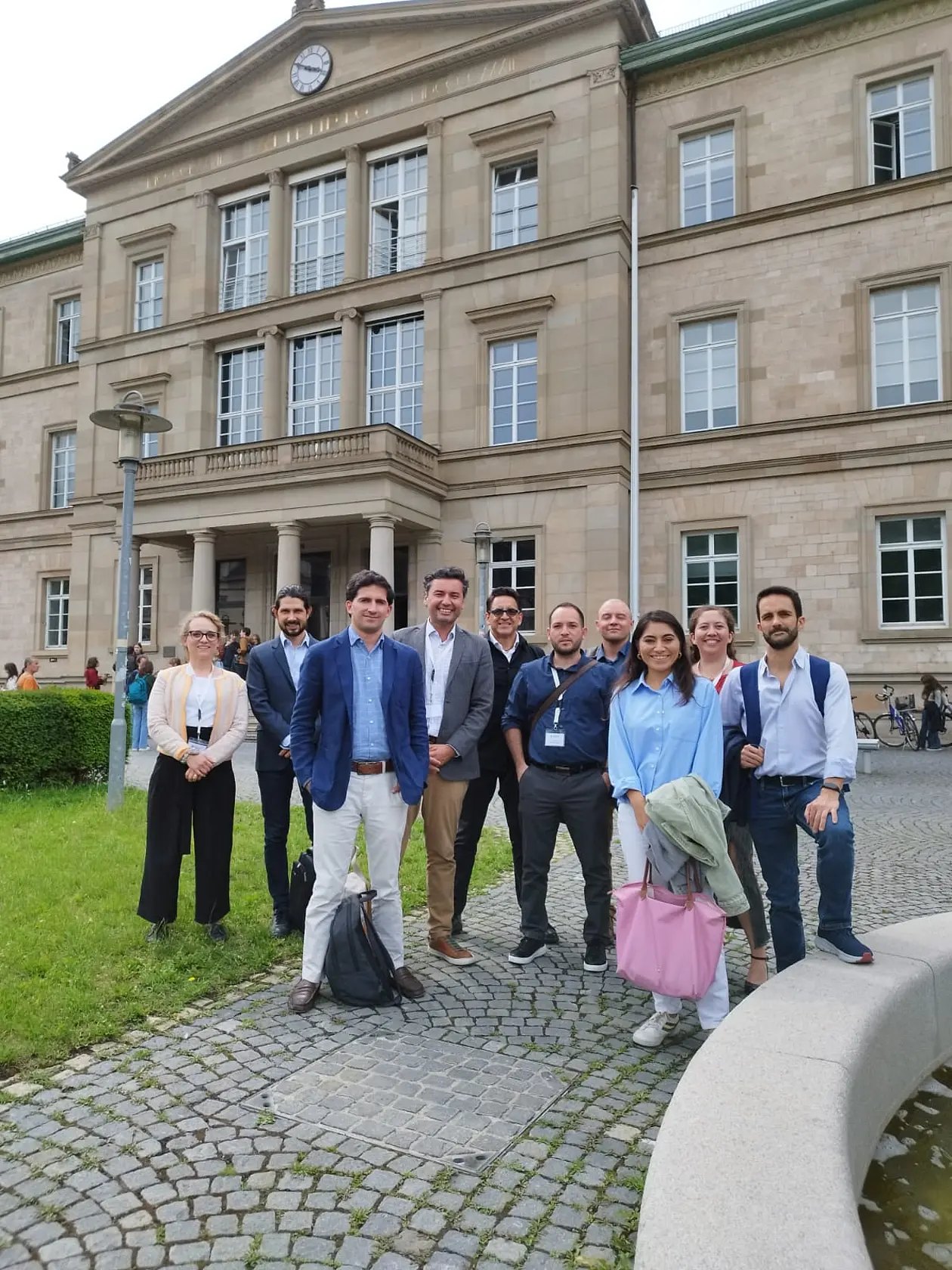
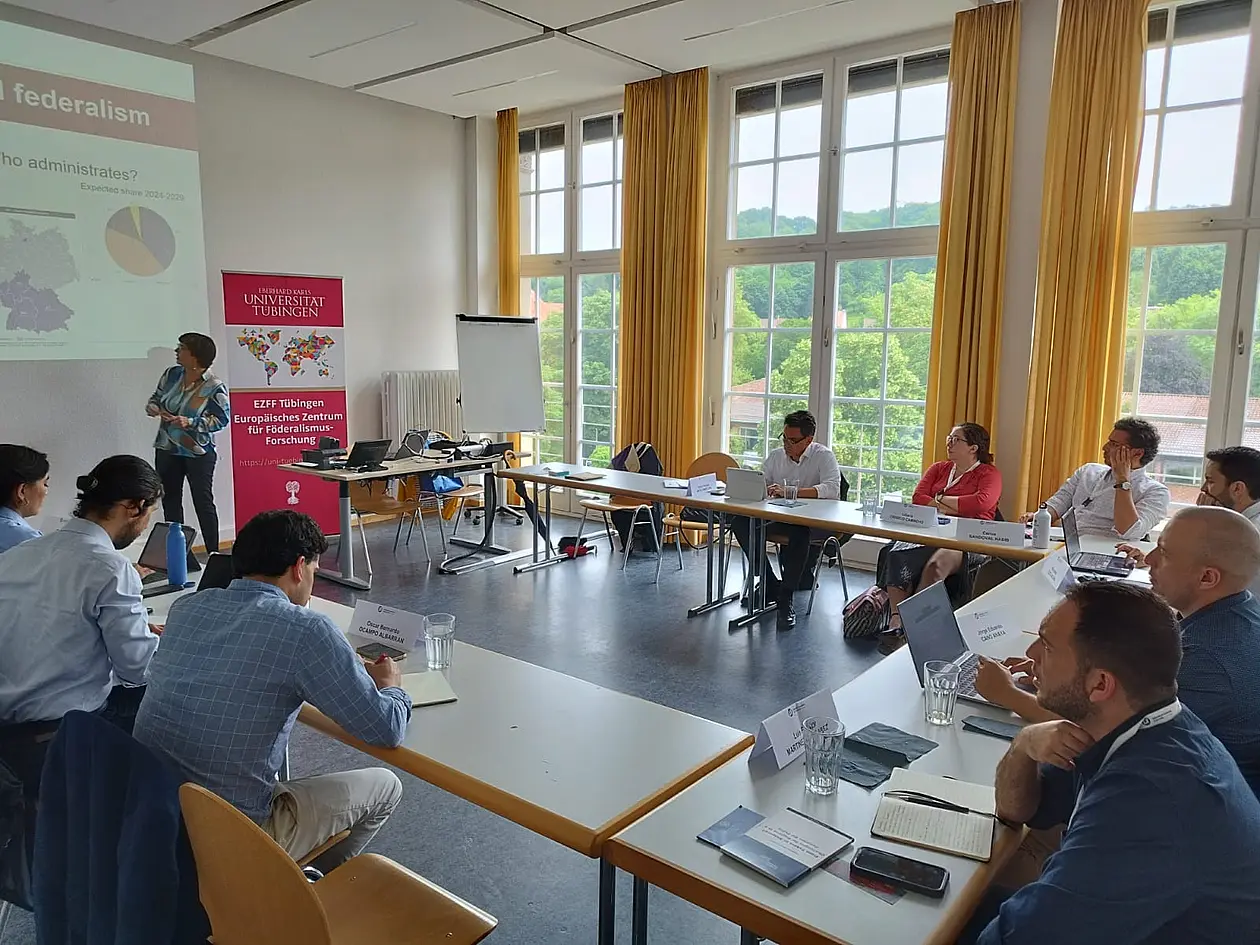
Last week, we welcomed a delegation from Mexico to the University of Tübingen. This visit was part of a study trip organised by the Friedrich Naumann Foundation (Mexico). The participants were experts in the field of economics at the state and municipal level. For one week, they had the opportunity to learn about decentralisation and federalism from representatives of business, politics and academia in Baden-Württemberg and to exchange best practices. 
We were delighted to be part of this exciting programme and to be able to contribute perspectives from federalism research. In her presentation, Prof. Gabriele Abels, spokesperson for the ECRF Executive Board, first outlined the basic features of the German and European multi-level system. The subsequent discussion focused on questions such as: What is the EU doing to promote the development of a social economy? How can local authorities make their voices heard at national and European level? What has been done to reduce the imbalance and tensions between economically stronger and weaker regions? What could Mexico learn from this?
Since its foundation, the ECRF has sought to examine decentralisation, regionalisation and federalisation processes not only in Europe but also in other parts of the world. During this visit, we were able to learn a great deal: in Mexico, federalism enjoys constitutional status, as it does in Germany, but often plays only a minor role in political practice.

We would like to thank the participants for their interest. We would also like to thank the Friedrich Naumann Foundation for the wonderful organisation and cooperation!

¡Hasta la próxima! 


29.04.2025

New Publication: Book Series Vol. 54

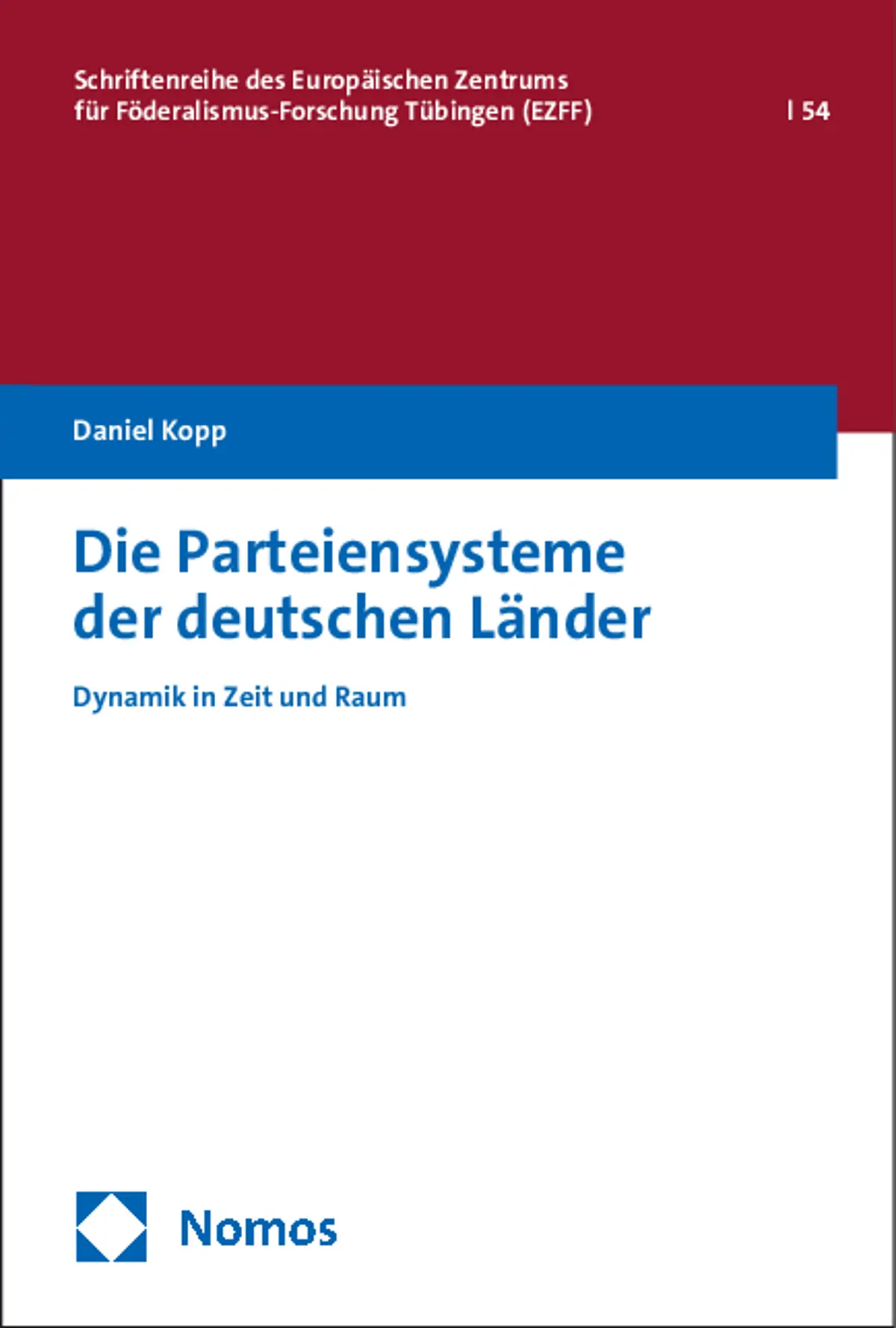
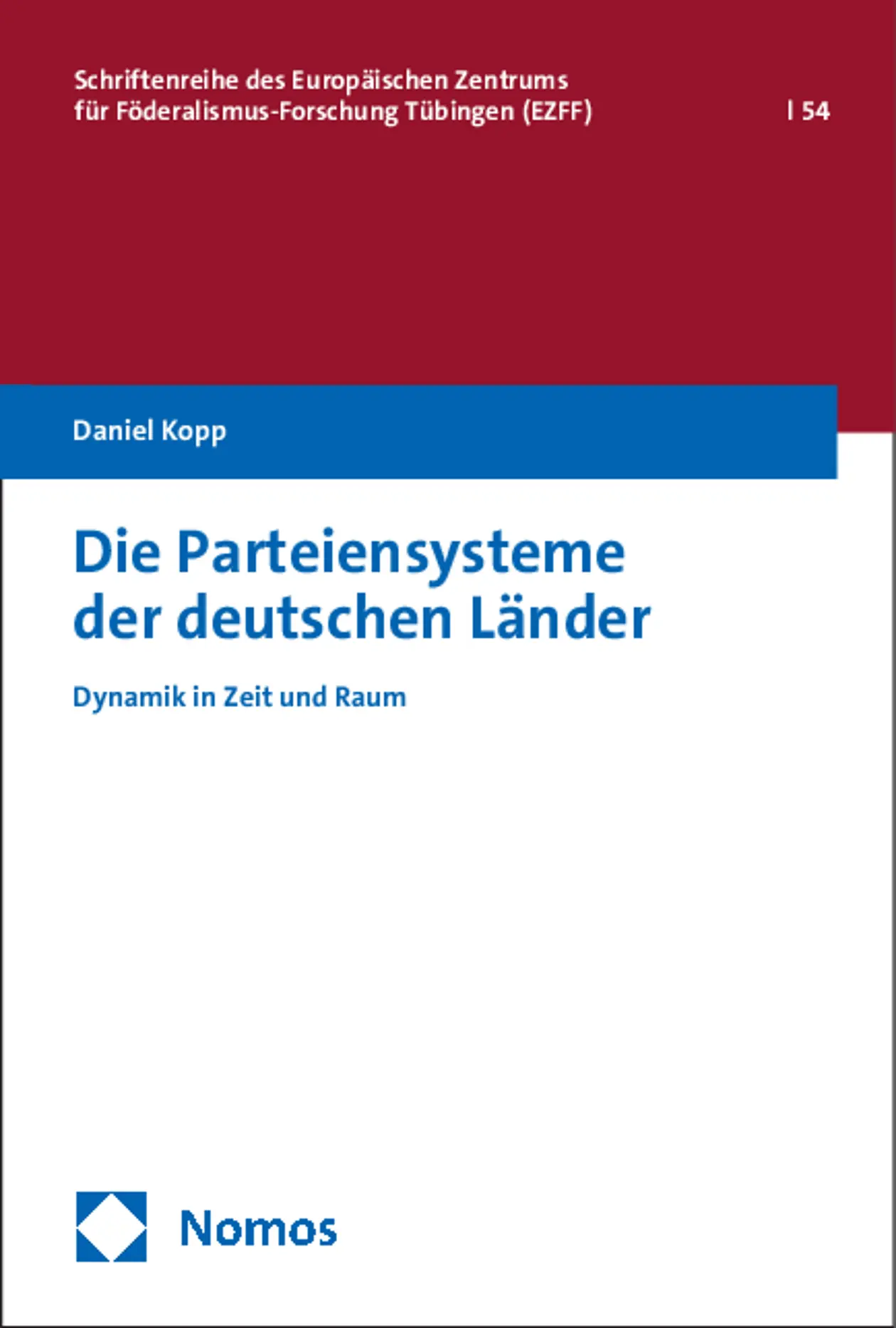
Daniel Kopp: “Die Parteiensysteme der deutschen Länder. Dynamik in Zeit und Raum”

Party competition in Germany has become more fluid and unclear. In the recent past, the party systems of the federal states have lived up to their reputation as a laboratory for experimentation and innovation in party competition. But how have the state party systems developed and how regionalised have they been over the decades? And what does this mean for the German multi-level party system?

This book addresses these questions and analyses the dynamics of the party systems in the German states over more than seven decades in terms of their temporal and spatial dimensions based on a systematic review of political science theory on party systems.

2025, 332 pages, 84 Euro,
ISBN: 978-3-7560-0162-0 (Print)
ISBN: 978-3-7489-5082-0 (E-Book)

Contents
Flyer

Further information can be found here.

03.02.2025

New Publication: Occasional Paper Nr. 44

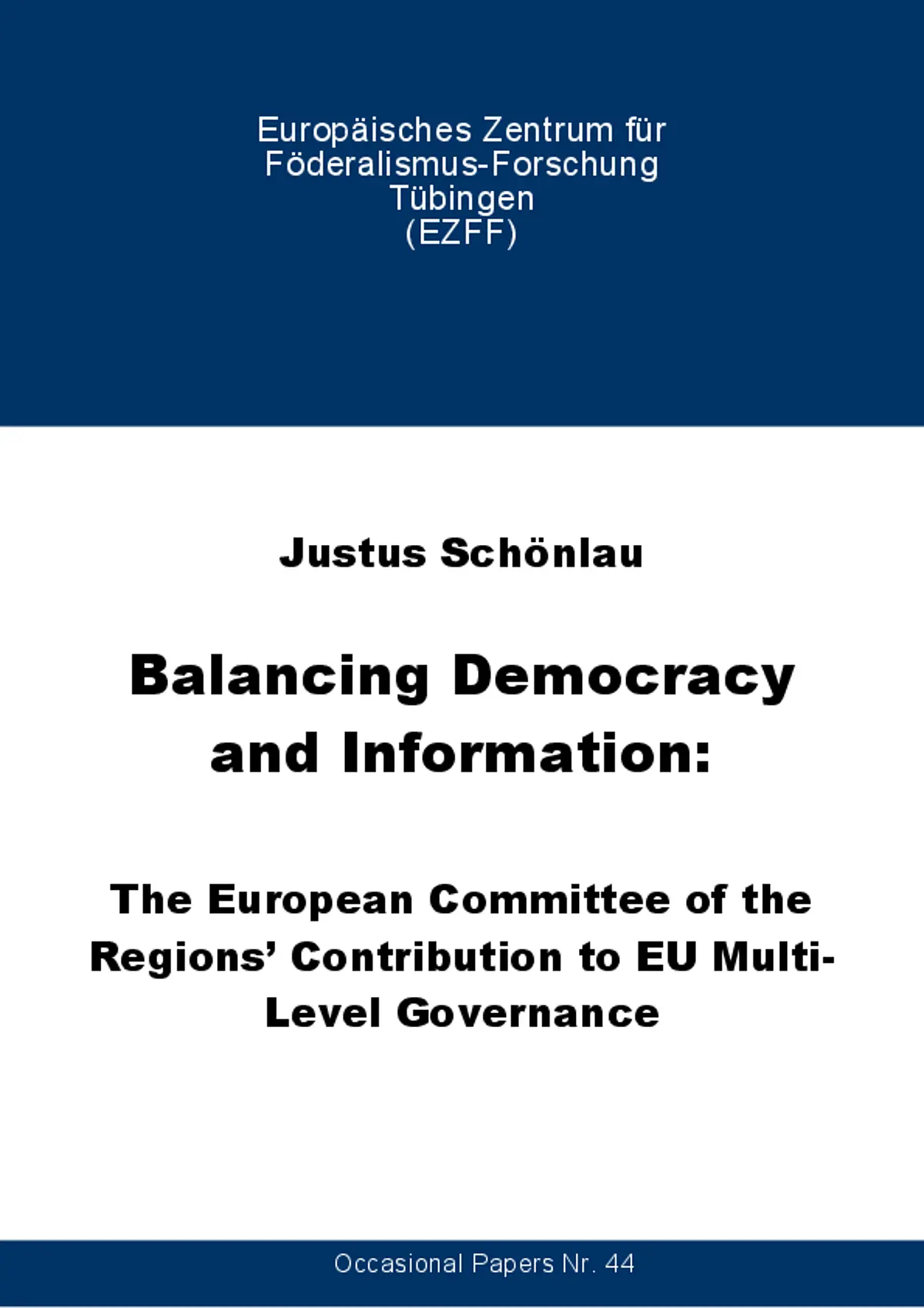
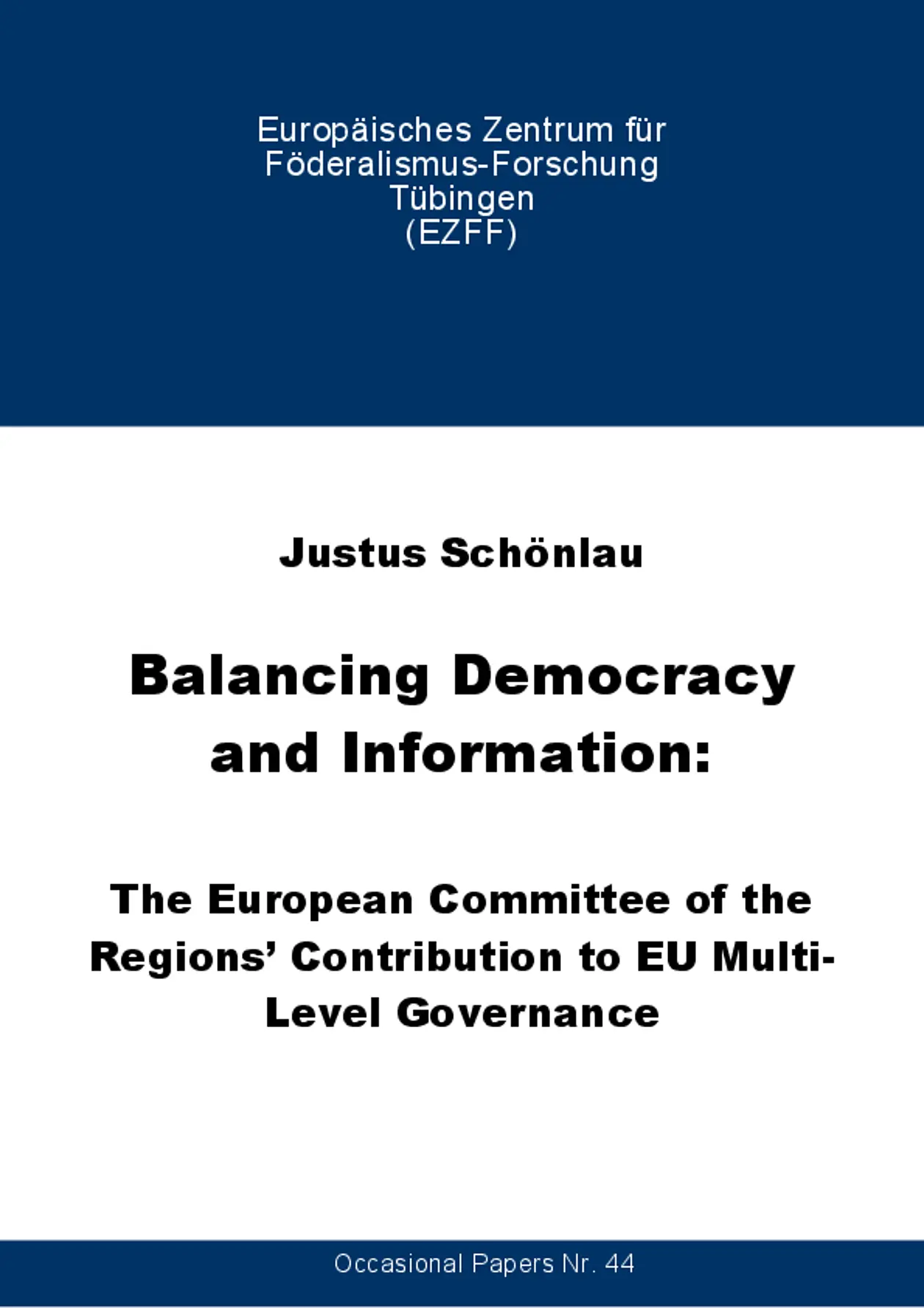
Justus Schönlau: “Balancing Democracy and Information: The European Committee of the Regions' Contribution to EU Multi-Level Governance”

The European Committee of the Regions (CoR) was created by the Maastricht Treaty as a new representative assembly of the EU’s regional and local authorities. In 2024, it celebrated the 30th anniversary of its first plenary session. Since its foundation, the CoR has faced the double challenge of, on the one hand, playing its role as a consultative body in the EU legislative process and, on the other hand, of developing innovative initiatives to make its contribution to EU multi-level governance and policy-making, thereby strengthening its own position. 
Throughout the years, the CoR has developed networks, initiatives and tools to integrate the perspectives and interests of regional and local authorities into EU politics. In this volume, Justus Schönlau examines how these endeavours are reflected in the CoR’s activities for the local implementation of the “European Green Deal” and “Better Regulation”. He also elaborates on how the CoR manages the competing and sometimes conflicting demands – from its members, as well as from its institutional partners and other stakeholders in EU policy-making – for political legitimacy and a two-way information link between the EU and its diverse local and regional levels. 

2025, 32 pages, ISBN 978-3-9818415-3-4
Free E-Book: Schönlau: Balancing Democracy and Information


26.11.2024

Presentation of the “Yearbook of Federalism 2024” – in cooperation with the State Representation of Baden-Württemberg

On 20 November 2024, the ECRF officially presented the ‘Yearbook of Federalism 2024’. This year's presentation was once again held at the State Representation of Baden-Württemberg in Berlin.

After a pre-reception with delicious Swabian specialities, Mr. Iordanis Daniel Mouratidis, Head of Staff of the Plenipotentiary to the Federal Government, welcomed the guests. Prof. Gabriele Abels, Speaker for the Executive Board of the ECRF, then presented the topics of the Yearbook, which is published for the 25th time this year and focuses on the topic of ‘Climate Change – Federal Responses to a Global Challenge’.

Prof. Abels then discussed the topic of ‘Climate Protection in Federal Interaction’ with Dr. Felix Schenuit (EU/Europe Research Division & Research Cluster Climate Policy and Politics; Stiftung Wissenschaft und Politik), Mr. Daniel Willeke (1st Chairman of Bundesverband Klimaschutz; Climate Adaptation Manager of the project Leuchturm LOUISE) and Mr. Michael Schäfer (Managing Director of GermanZero). The discussion centred on the question of whether the German federal system would represent an opportunity or rather an obstacle to an effective climate policy. The panellists were unanimous in their verdict: ‘Both!’

Dr. Schenuit argued that federalism could, to a certain extent, act as a safety net for decisions already made in climate policy: at European level, it would not be easy to reverse the Green Deal. Federalism would also play an important role in damage control in light of the upcoming change of power in the USA: If the Trump administration were to pull out of the Paris Climate Agreement again, states such as California and their climate protection efforts could, to some extent, counteract this. Mr. Willeke spoke out in favour of making climate protection a mandatory task for all federal levels, as the heterogeneity in federal climate protection often stands in the way of effective measures. Mr. Schäfer also agreed with this assessment: He said that it was definitely necessary to ask the question of where federalism was helpful and where standardised regulation should take place instead. He also emphasised that climate protection must be initiated at all federal levels: At supranational or European level, the Green Deal, for example, had been a significant impetus, but numerous exemplary climate protection concepts had also been developed at local level, in cities and municipalities. Nonetheless, much more effort is needed in the municipalities: Just like democracy, climate protection also depends on the commitment of citizens! Mr. Willeke also agreed with this, warning that the financing of all climate protection efforts must be ensured at all levels – temporary funding programmes or projects are neither sufficient nor sustainable. However, he also argued in favour of not investing too much energy in getting everyone and anyone excited about climate protection before concrete measures are taken – it would ‘not be possible to get everyone on board’. The panellists agreed that neither climate protection should be sacrificed to democracy nor democracy to climate protection – a healthy balance must be found instead.

The three panellists also agreed that climate policy should not only focus on mitigating climate change by reducing greenhouse gas emissions, but that more attention should also be paid to adapting to the already unavoidable consequences of climate change. Dr. Schenuit stated in this regard that the latter had long been merely a niche topic at EU level, but was now definitely on the rise and that concrete steps could be expected from the new European Commission. Mr. Willeke also emphasised that both mitigation and adaptation were needed to tackle the climate crisis. At the local level, he said, people could often be more quickly mobilised in favour of adaptation measures, as these usually result from being more directly affected by the consequences of climate change. However, many climate protection measures can often serve both goals at the same time: For example, newly planted trees provide shade and thus offer cooling on increasingly hot summer days, but at the same time make an important contribution to the reduction of climate-damaging greenhouse gases by storing CO2.

The ECRF would like to thank Dr. Schenuit, Mr. Willeke and Mr. Schäfer for the excellent panel discussion and all participants. We would also like to thank the State Representation of Baden-Württemberg for the once again excellently organised event and Nomos-Publishing, which once again provided a book table with a selection of exciting publications this year. 

Further information on the “Yearbook of Federalism 2024”, which also contains an article by Dr. Schenuit on the climate policy of the European Union, and how to order it can be found here.

23.10.2024

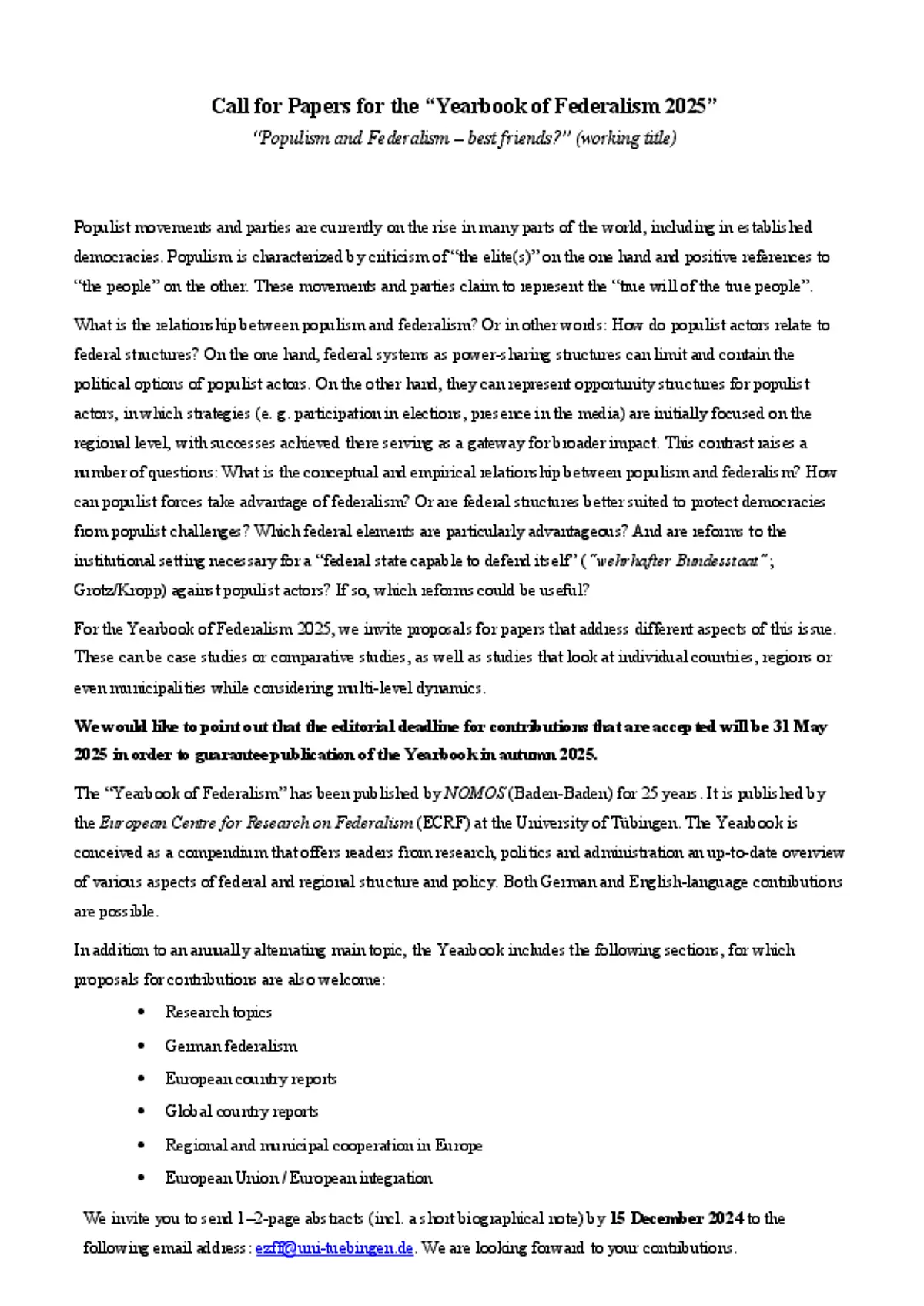
Call for Papers: Yearbook of Federalism 2025

For the Yearbook of Federalism 2025, in addition to our established sections (Research topics, German federalism, European country reports, Global country reports, Regional and municipal cooperation in Europe, European Union / European Integration), we want to focus on the topic of “Populism and Federalism – best friends”.

We invite proposals for papers dealing with these topics. You can find the official Call for Papers here. We invite you to send 1–2 page abstracts (incl. a short biographical note) by 15 December 2024 to the following email address: ezffspam prevention@uni-tuebingen.de. We are looking forward to your contributions.


14.10.2024

Research stay at the ECRF

Over the last few weeks, our centre has hosted a new visiting fellow: Alessandro Sorpresa; lawyer and PhD Candidate in European and International Legal Studies at the University of Verona. His research project aims to explore the main problematic issues and possible development perspectives of asymmetric regionalism.

During his stay, he examined the influence of the European Committee of the Regions on EU multilevel governance and conducted a comparative study between Italy and Germany, focusing on different forms of horizontal and vertical cooperation within regional and federal systems. 

We are happy that we were able to support Alessandro's research. We look forward to his results and wish him the best for his future.

The ECRF is committed to fostering its network of federalism scholars across disciplines and to supporting their research; both through our publications and by offering the opportunity of research visits. Early-career scholars in particular are encouraged to apply for visiting fellowships. 


08.10.2024

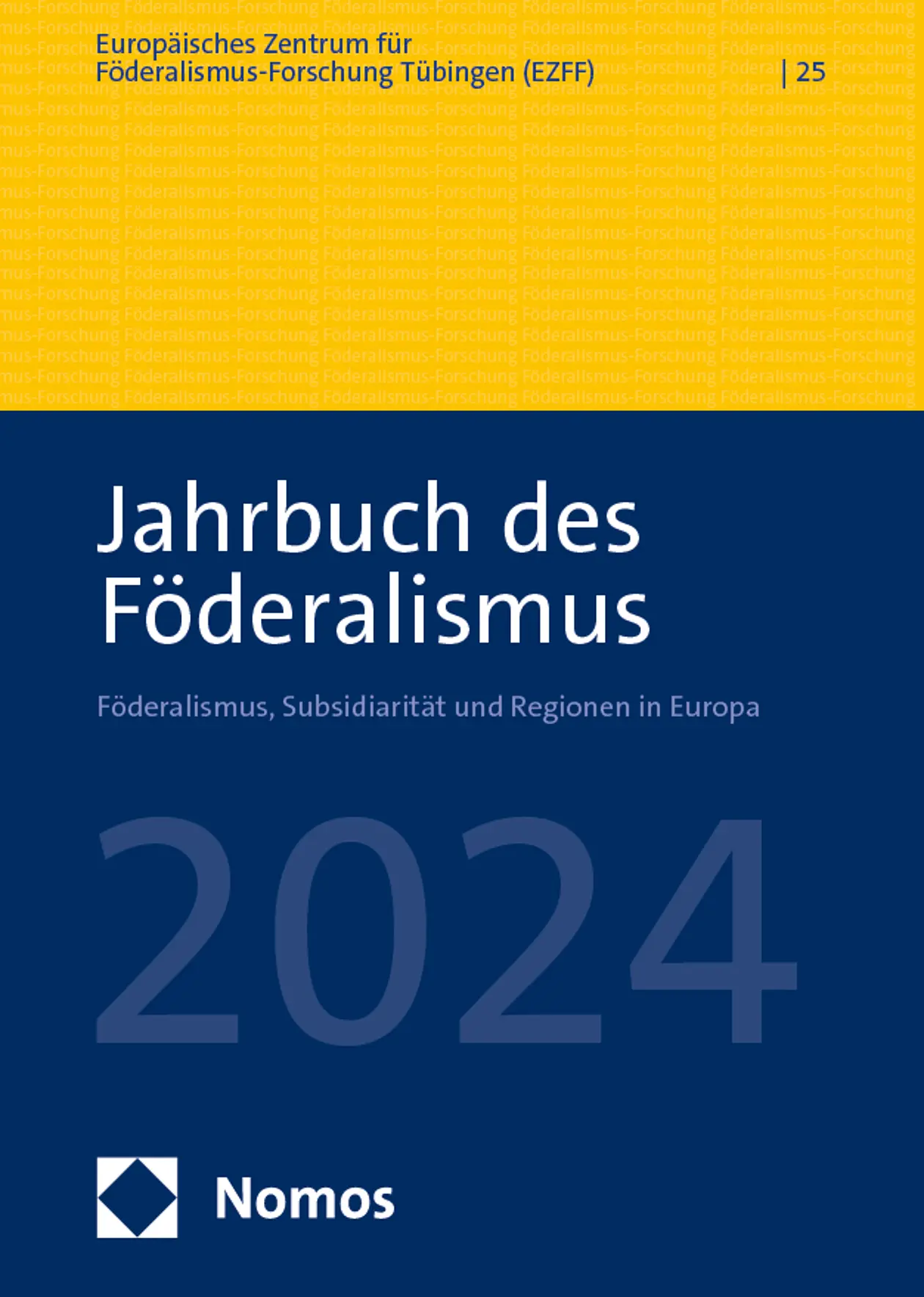
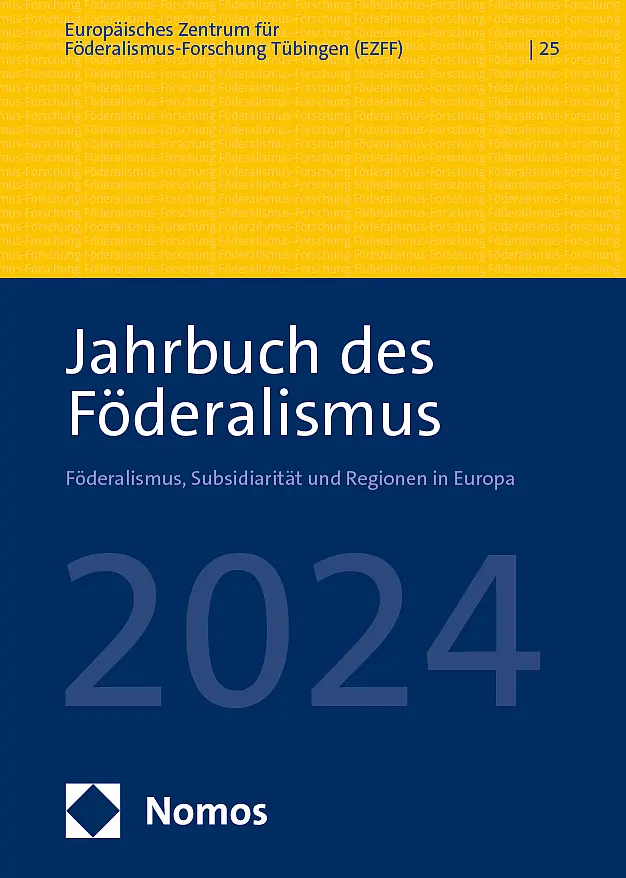
New Publication: Yearbook of Federalism 2024

The “Yearbook of Federalism 2024” is finally here. And it is a very special occasion, as this year marks the 25th anniversary of the Yearbook. That's a reason to celebrate and to say thank you. 

A big thank you goes to all our authors, whose contributions over the past 25 years have made the previous volumes and the current anniversary volume possible. We would also like to thank the University of Tübingen for its ongoing and reliable funding of the ECRF. This year, we are particularly grateful to the Association of Friends of the University of Tübingen (Unibund) and the Association for the Promotion of Political Science at the University of Tübingen (POLIS; with the kind support of the Dr. Steffen Jenner Fund), which support the publication of the Yearbook with a publication grant. We would also like to thank the many Scientific Coordinators who have done the day-to-day work over the past decades and without whose commitment the Yearbook would definitely not be published reliably every fall. We are also grateful to Nomos Publishing, who have supported us from the very beginning with their great expertise in the academic book market. Last but not least, special thanks go to our readers. Many of you have been loyal to us since volume 1 in 2000, others joined us later - and will hopefully remain loyal in the future.

Ever since its inception, the Yearbook has been conceived as a thematically broad compendium, which is intended to provide readers - primarily in politics and administration, in science and research, teaching and studies as well as the interested public - with an up-to-date, reliable and summarizing overview of the various aspects of federal and regional structure and politics on an ongoing basis, without the need for them to carry out their own considerable research. 

This year's yearbook also lives up to this claim: in addition to well-known sections such as “Research topics”, “German federalism” and “European country reports”, this year we are focusing on one of the major topics of our time: “Climate change – federal responses to a global challenge”. A series of articles examines how climate protection is organized in different countries and to what extent federal structures with their complex multi-level structures are beneficial or rather obstructive for climate policy.

Contents
Flyer
2024, 1. edition, 441 pages, 99 Euro, ISBN: 978-3-7560-1786-7 (Print); 978-3-7489-4461-4 (E-Book)

Further information can be found here.


01.10.2024

Save the Date: Presentation of the “Yearbook of Federalism 2024” (Berlin; 20 November 2024)

On November 20, we will be presenting this year's anniversary edition of the "Yearbook of Federalism", once again in the usual manner at the State Representation of Baden-Württemberg in Berlin. In this context, there will be a panel discussion dealing with this year's focus topic of the Yearbook: "Climate change - federal responses to a global challenge". Together with representatives from science, politics and civil society, we will explore whether and how the fight against climate change and adaptation to its consequences can succeed in Germany's federal multi-level system. In view of the numerous extreme weather events and flooding situations this year, this is undoubtedly a highly relevant topic.

Further information on the programme and registration will follow shortly, but we would like to invite you to make a note of this date now. We look forward to your participation!


12.12.2023

New publications of the ECRF

With the year coming to an end, the ECRF is happy announce that the following titles have just been published:


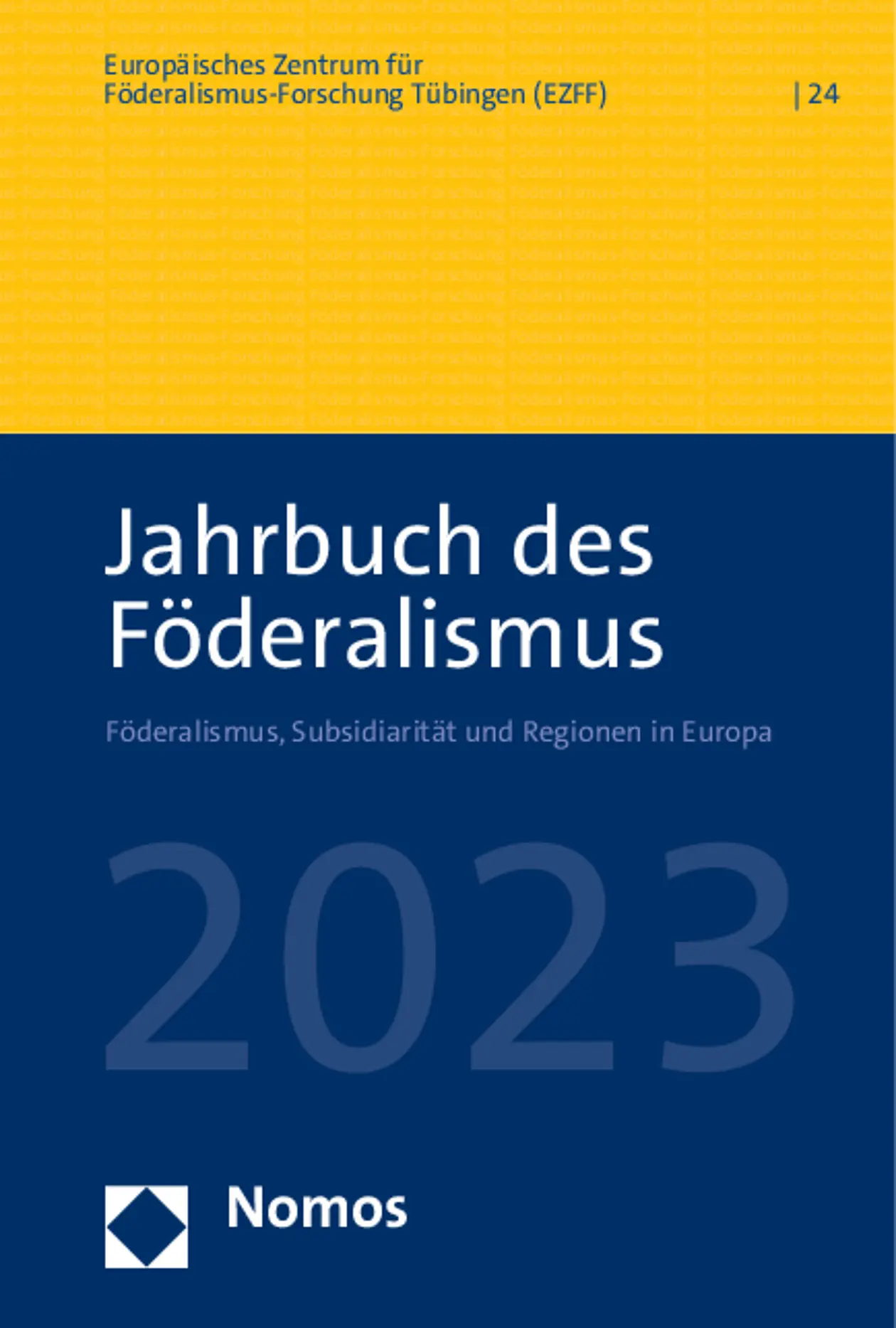
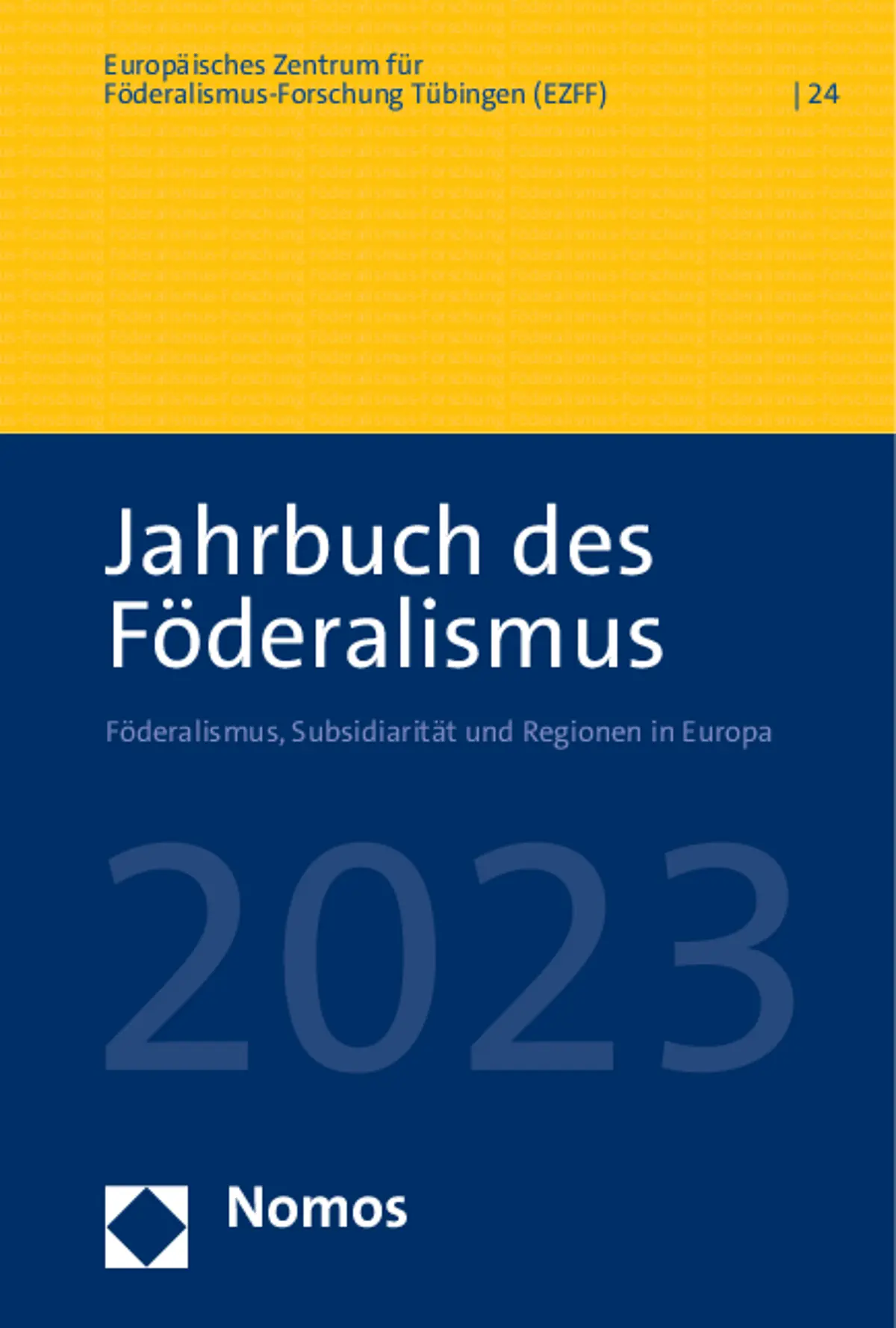
Yearbook of Federalism 2023

Special issue: "Crisis Federalism – Competition for Solutions or Collective Crisis Management?"
2023, 1. edition, 502 pages, 104 Euro
ISBN: 978-3-7560-1348-7 (Print)
ISBN: 978-3-7489-1877-6 (E-Book)

Contents
Flyer
The Yearbook can be purchased here.

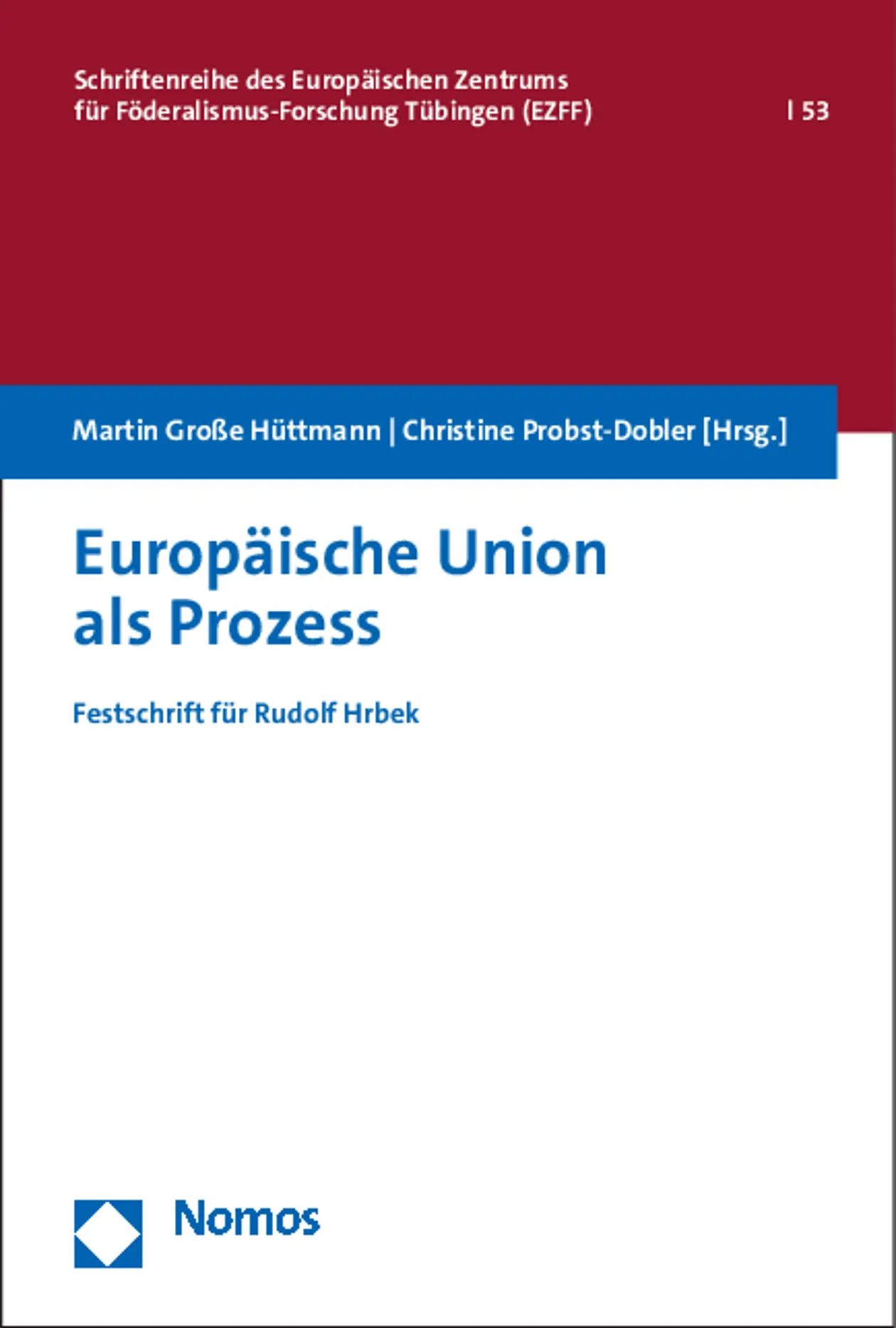
Book Series Vol. 53

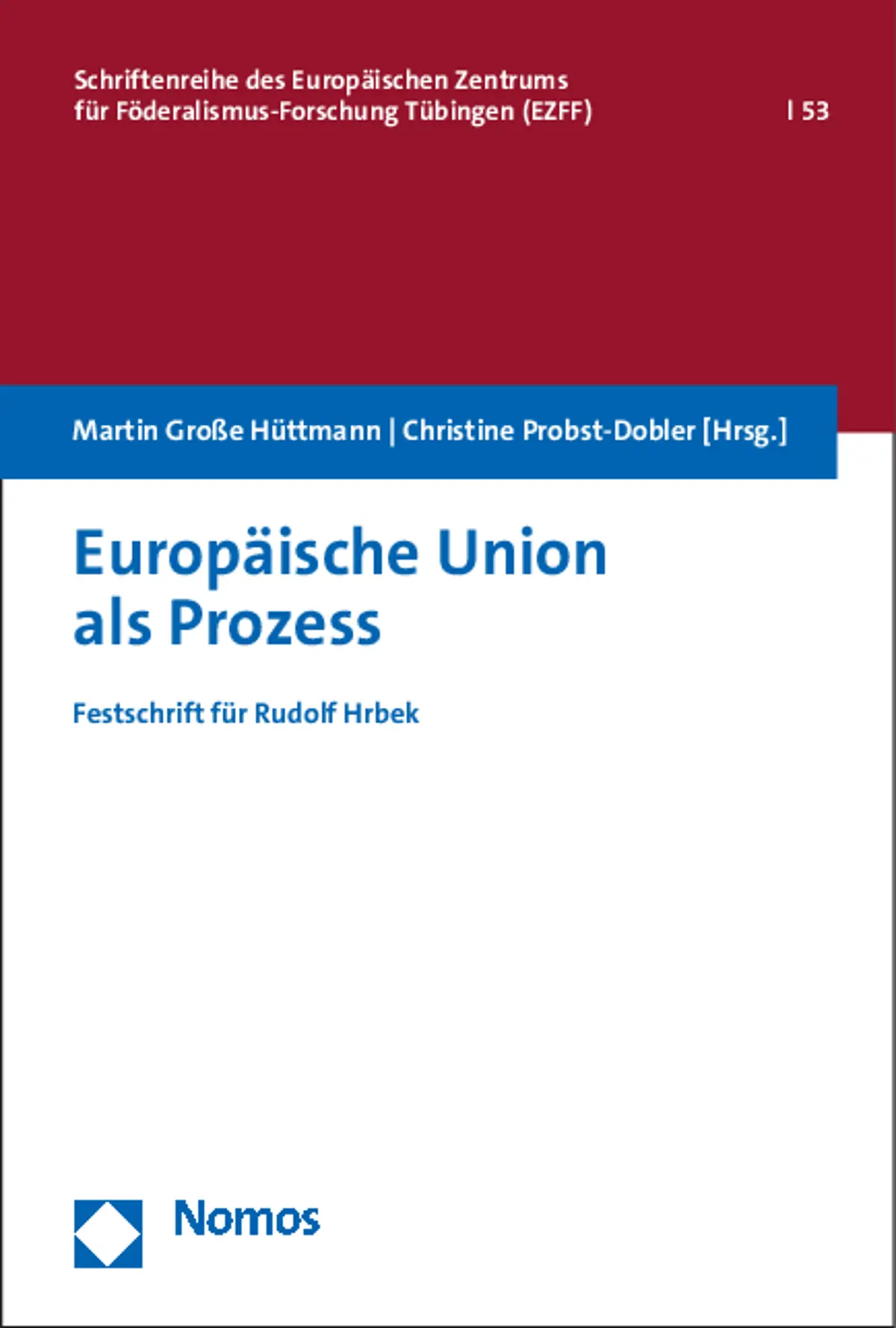
Martin Große Hüttmann / Christine Probst-Dobler (eds.): "Europäische Union als Prozess. Festschrift für Rudolf Hrbek"

2023, 222 pages, 49 Euro
ISBN: 978-3-7560-1247-3 (Print)
ISBN: 978-3-7489-1788-5 (E-Book)

Contents
You can find more information and the possibility to order here.


11.12.2023

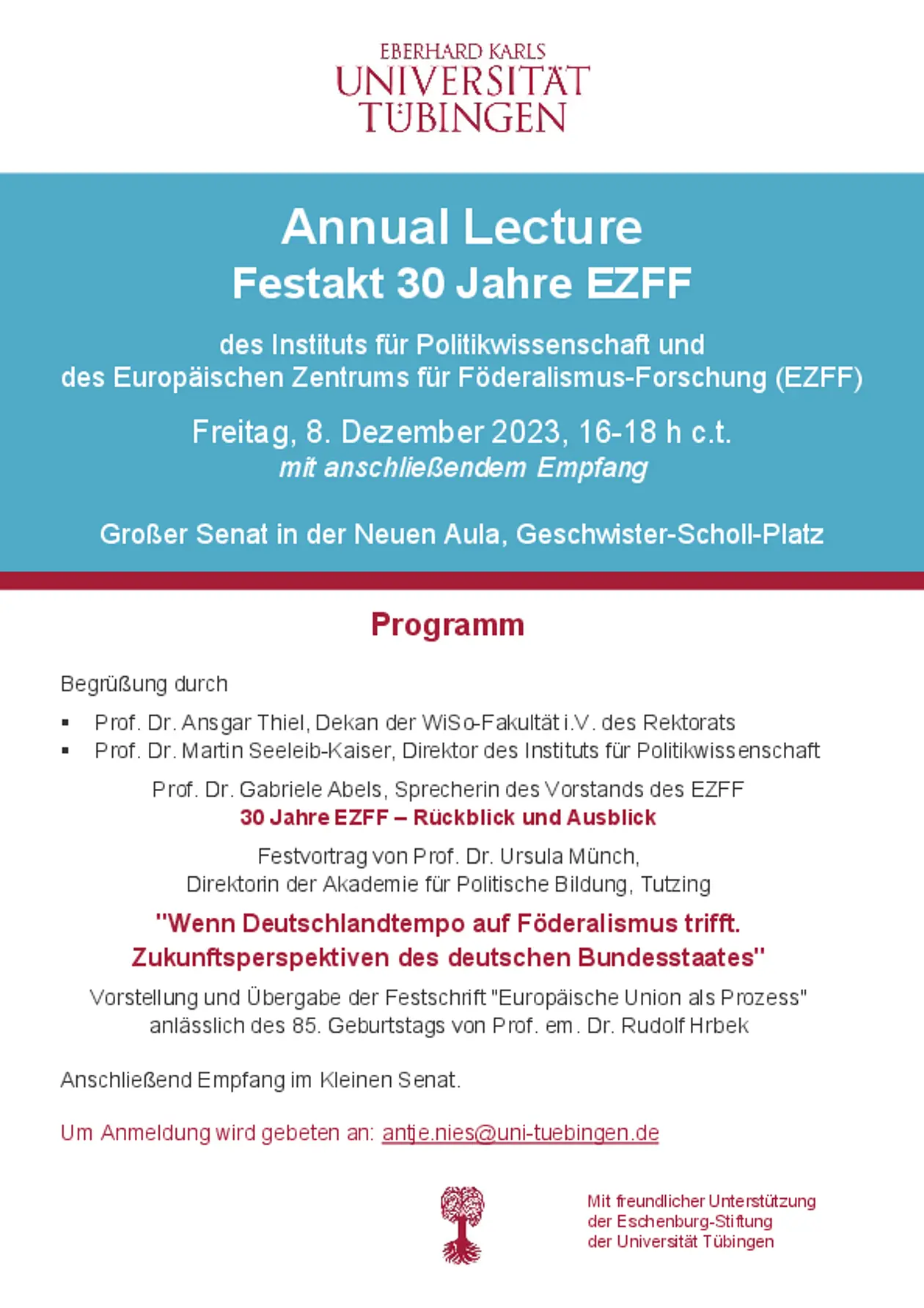
Annual Lecture/Celebration of the 30th anniversary of the ECRF

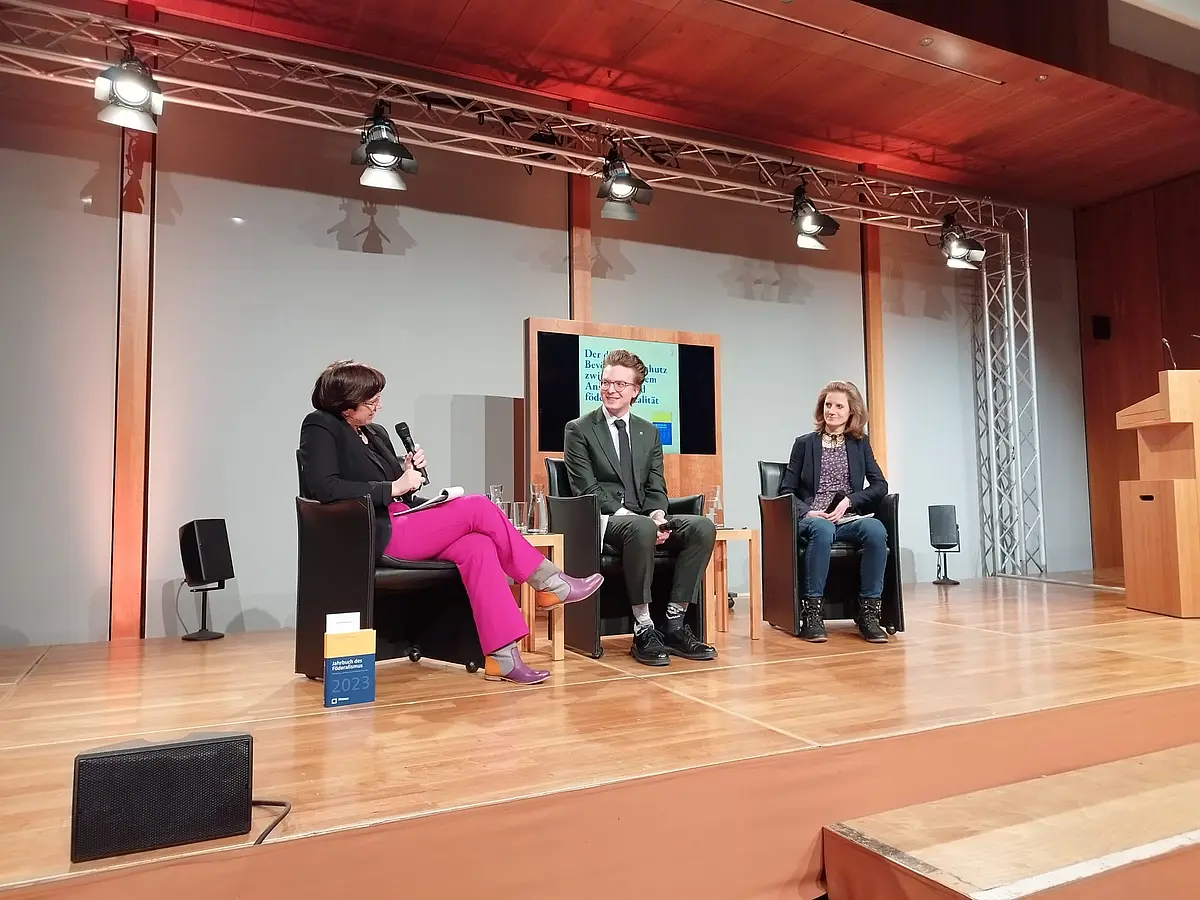
The European Centre for Research on Federalism (ECRF) was founded 30 years ago by Prof. Dr. em. Rudolf Hrbek as an interfaculty centre at the University of Tübingen, in which political science, law and geography are involved. On the occasion of this year's anniversary, the ECRF and the Institute of Political Science (IfP) hosted the Annual Lecture and the celebration "30 Years of ECRF".

After the welcome addresseses by the Dean of the Faculty of Economics and Social Sciences and the IfP Director, Prof. Dr. Gabriele Abels, Spokesperson of the Executive Board, looked back on 30 years of ECRF. This was followed by the keynote speech by Prof. Dr. Ursula Münch, Director of the Academy for Political Education (Tutzing) on the topic "When 'Deutschlandtempo' meets federalism. Future perspectives of the German federal state". After an address by Prof. Dr. Dr. h.c. mult. Peter-Christian Müller-Graff, President of the 'Arbeitskreis Europäische Integration e.V.', Dr. Martin Große Hüttmann, Executive Member of the Board, and Christine Probst-Dobler paid tribute to Prof. Hrbek's life's work and in particular his services to federalism and European research. They then presented him with the commemorative publication "European Union as a Process", which is also published by Nomos Publishing House as volume 53 of the ECRF Book Series. Prof. Hrbek gave the closing speech, in which he reviewed his scientific career and his work with the ECRF.


27.11.2023

Presentation of the Yearbook of Federalism 2023 – in cooperation with the State Representation of Baden-Württemberg

On November 22, 2023, the ECRF officially presented the Yearbook of Federalism 2023. This year's presentation was once again held at the State Representation of Baden-Württemberg in Berlin. You can find a recording of the event here.

After a pre-reception with delicious Swabian specialties, Mr. Rudi Hoogvliet, State Secretary for Media Policy and Plenipotentiary of the State of Baden-Württemberg to the Federal Government, welcomed the guests. Prof. Gabriele Abels, speaker of the ECRF executive board, then presented the topics of the 24th edition of the Yearbook, which this year focuses on the topic of "Crisis Federalism – Competition for Solutions or Collective Crisis Management?".

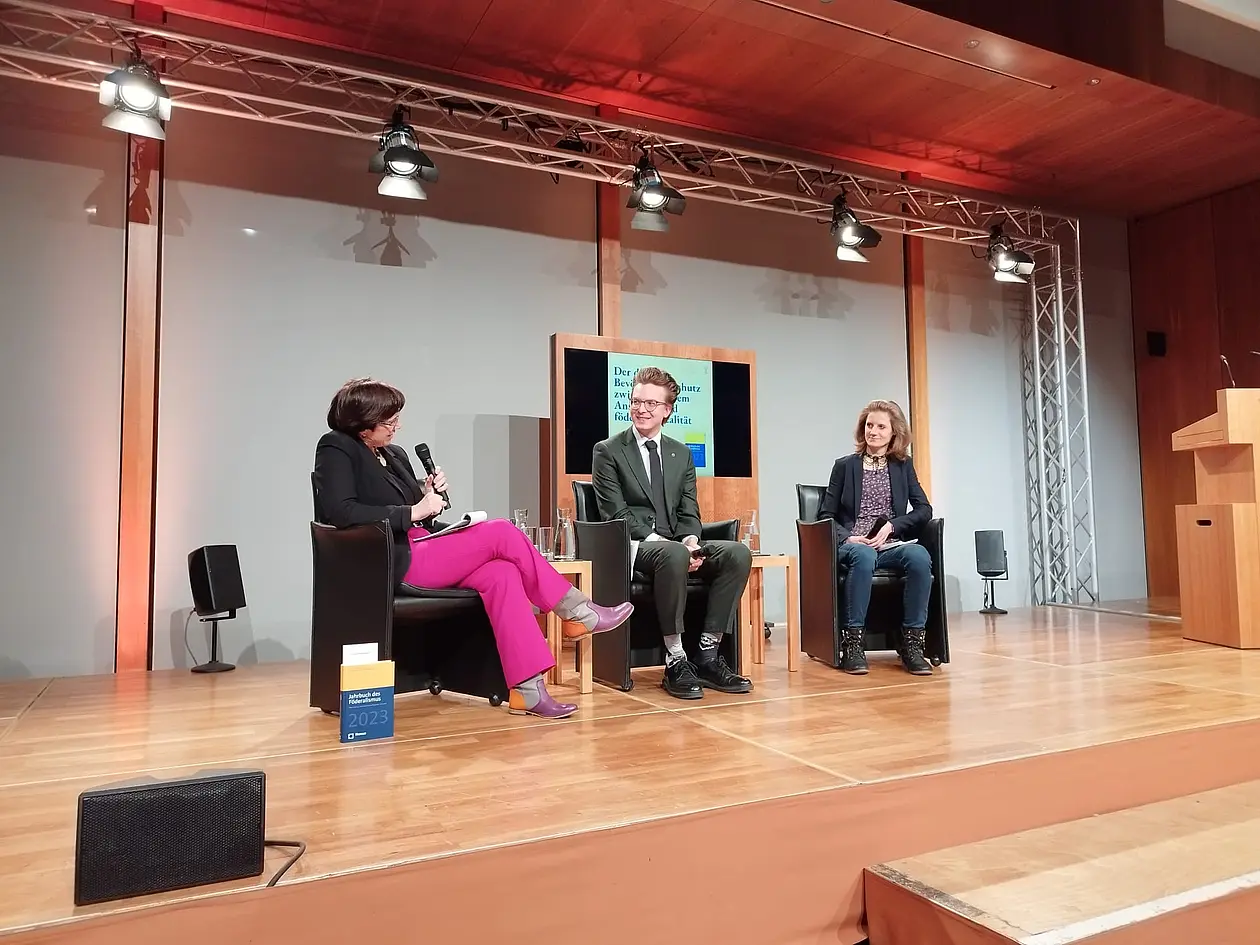
After brief introductory speeches, Prof. Abels discussed the topic of "German civil protection between noble aspirations and federal reality" with Dr. Anna-Lena Hollo, University of Hanover, and Leon Eckert, Member of the Bundestag. There was fundamental agreement that the "uncooperative federalism" in civil protection needs to be reformed. Cross-federal cooperation in the service of - as recent years have shown: urgently needed - better protection of the population from and in cross-border disaster and crisis situations was to be welcomed. However, Dr. Hollo pointed out that this would require a fundamental revision of the constitutional order of competencies for civil protection and the adoption of corresponding constitutional amendments or additions. Mr. Eckert also pleaded for a move away from a "scissors-spreader mentality" in the perception of problems: It must be avoided that the debate on civil protection is dominated by individual disputes, for example about technical equipment. Instead, more attention must be paid to crisis prevention and increasing resilience in the future.

The ECRF would like to thank Dr. Hollo and Mr. Eckert for the excellent panel discussion and all participants. We would also like to thank the State Representation for once again organizing the event so well, as well as Nomos-Publishing, which once again provided a book table with a selection of exciting publications.

Further information about the Yearbook of Federalism 2023, which also includes contributions by Dr. Hollo and Mr. Eckert, and how to order it can be found here.

16.11.2023

Register now: Celebration of the 30th anniversary of the ECRF

The European Centre for Research on Federalism (ECRF) was founded 30 years ago by Prof. Dr. em. Rudolf Hrbek as an interfaculty centre at the University of Tübingen, in which political science, law and geography are involved.

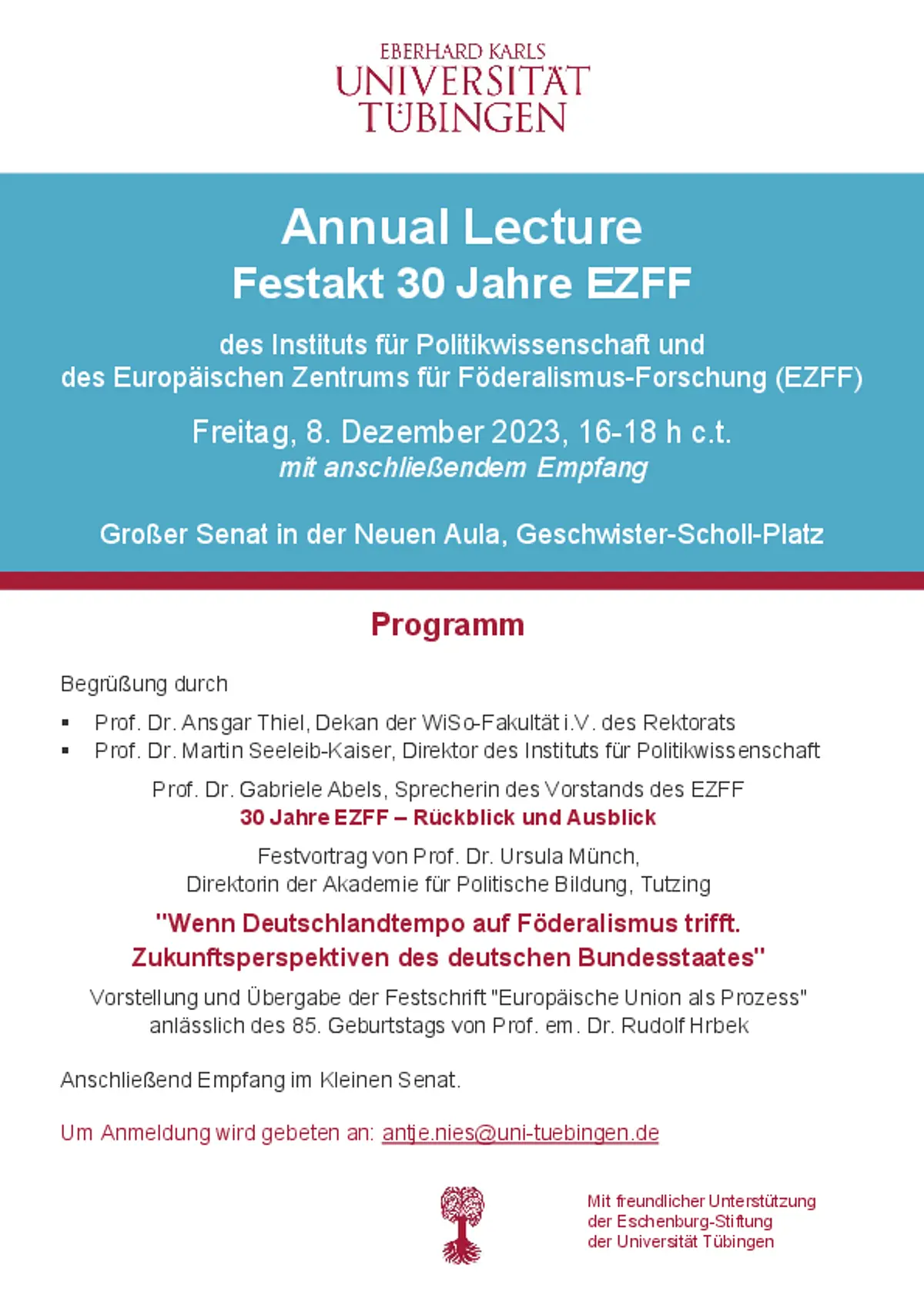
On the occasion of this year's anniversary, the ECRF and the Institute of Political Science (IfP) invite you to the Annual Lecture and the celebration "30 Years of ECRF". As part of the ceremony, the commemorative publication "European Union as a Process" will be presented to Prof. Dr. Hrbek on the occasion of his 85th birthday and in recognition of his services to European and federalism research.

The ceremony will take place on Friday, 8 December 2023, 4-6 p.m. c.t. (Großer Senat in the Neue Aula, Geschwister-Scholl-Platz, 72074 Tübingen) with a review and outlook on 30 years of ECRF by Prof. Dr. Gabriele Abels, Spokesperson of the ECRF Executive Board, and a keynote speech by Prof. Dr. Ursula Münch, Director of the Academy for Political Education, Tutzing, on the topic "When German speed meets federalism. Future perspectives of the German federal state". This will be followed by a reception. Please note that the event will be held in German.

Please register by 1 December 2023 to: antje.niesspam prevention@uni-tuebingen.de. We look forward to your participation!

Invitation
Registration


02.11.2023

Call for Papers: Yearbook of Federalism 2024

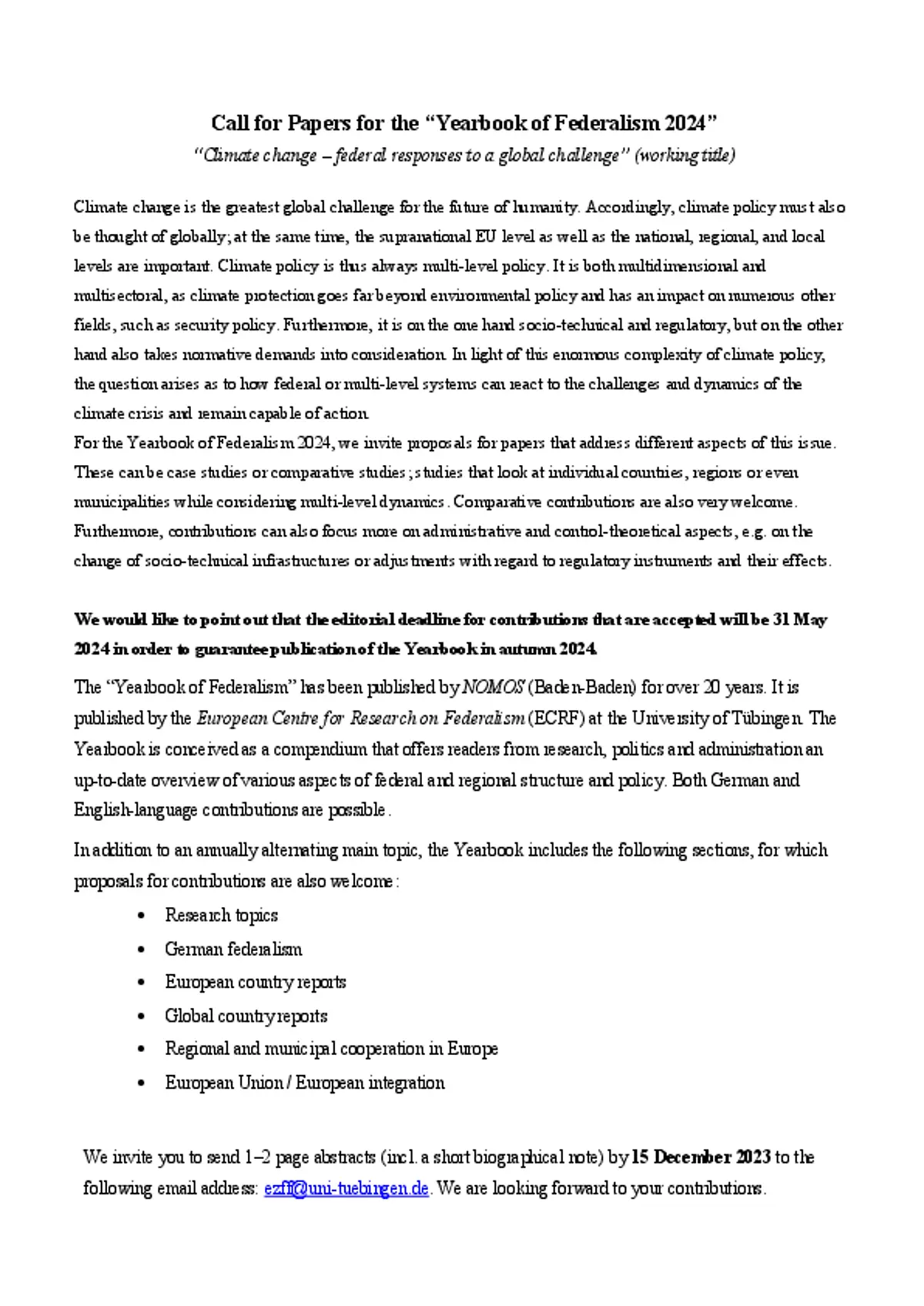
For the Yearbook of Federalism 2024, in addition to our established sections (Research topics, German federalism, European country reports, Global country reports, Regional and municipal cooperation in Europe, European Union / European Integration), we want to focus on the topic of "Climate change – federal responses to a global challenge?"

We invite proposals for papers dealing with these topics. You can find the official Call for Papers here. We invite you to send 1–2 page abstracts (incl. a short biographical note) by 15 December 2023 to the following email address: ezff@uni-tuebingen.de. We are looking forward to your contributions.


30.10.2023

Presentation of the Yearbook of Federalism 2023

The European Centre for Research on Federalism (ECRF) and the State Representative of Baden-Württemberg to the Federal Government, State Secretary Rudi Hoogvliet, cordially invite you to the presentation of the Yearbook of Federalism 2023.

The event will take place on Wednesday, 22 November 2023, 5 p.m. (the presentation will begin at 6 p.m.) at the Landesvertretung Baden-Württemberg, Tiergartenstraße 15, 10785 Berlin. Please note that the event will be held in German.

The topic "German civil protection between noble aspirations and federal reality" will be discussed by Leon Eckert MdB and Dr. Anna-Lena Hollo, University of Hannover, under the moderation of Prof. Dr. Gabriele Abels.

Further information on the event and the possibility to register can be found here.

13.03.2023

New publication: Book Series Vol. 52

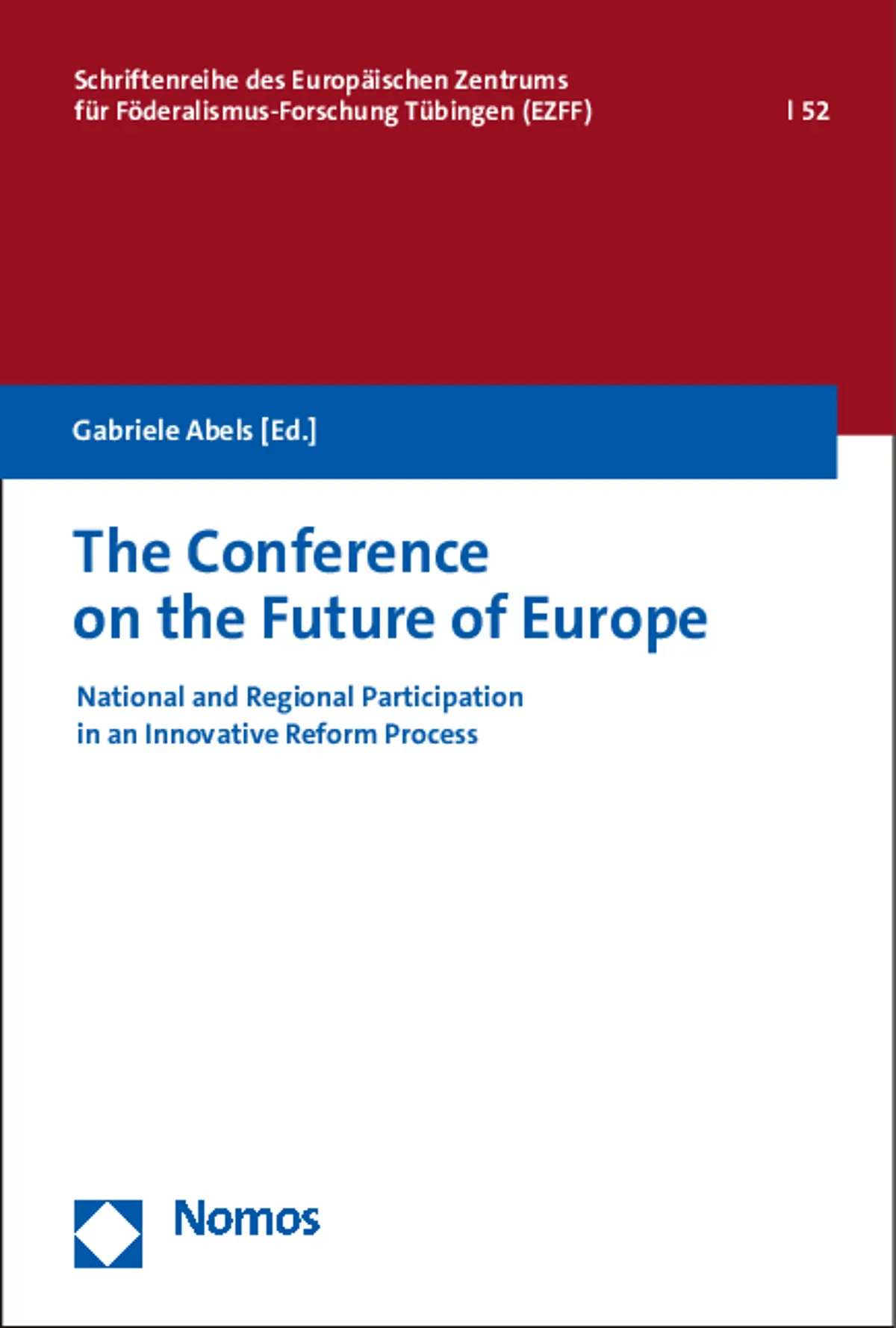
Gabriele Abels (ed.): "The Conference on the Future of Europe. National and Regional Participation in an Innovative Reform Process"

The one-year ‘Conference on the Future of Europe’ came to an end in May 2022. CoFoE is an unprecedented experiment in democracy at EU level. At its heart is the engagement of citizens in deliberative consultations on the future of European integration. This volume includes eleven contributions which examine the process and the results of this innovative dialogue process in select EU member states; the contributions analyse the involvement of national and regional actors as well as EU institutions. Many of the authors from politics, administration and academia personally partook in the conference.
With a preface by the President of the European Committee of the Regions.

You can find more information and the possibility to order here.

2023, 177 pages, 44,-€
ISBN: 978-3-7560-0435-5 (Print)
ISBN: 978-3-7489-3797-5 (ePDF)
Contents
Flyer


21.12.2022

Call for Papers: Yearbook of Federalism 2023

For the Yearbook of Federalism 2023, in addition to our established sections (Research topics, German federalism, European country reports, Global country reports, Regional and municipal cooperation in Europe, European Union / European Integration), we want to focus on the topic of "Crisis Federalism – Competition for Solutions or Collective Crisis Management?". 

We invite proposals for papers dealing with these topics. You can find the official Call for Papers here. Please send your abstracts by 31 January 2023 to the following address: ezffspam prevention@uni-tuebingen.de. We are looking forward to your proposals.


21.11.2022

Presentation of the Yearbook of Federalism 2022 - in cooperation with the State Representation of Baden-Württemberg in Berlin

On 16 November 2022, the ECRF, together with the Representation of the State of Baden-Württemberg to the Federation in Berlin, presented the Yearbook of Federalism 2022 - after a two-year break due to the pandemic, finally again in the context of a live event.

The presentation began with a welcome to the guests by the Head of Service of the Representation, Mr. Andreas Schulze, and a greeting from Ms. Muhterem Aras, President of the State Parliament of Baden-Württemberg, who had connected virtually from Stuttgart for the event. After she presented the range of topics of this year's Yearbook and gave a basic introduction to one of the main topics - the "Conference on the Future of Europe" - Prof. Dr. Gabriele Abels, Spokesperson of the Executive Board of the ECRF, discussed with Ms. Aras and Dr. Mark Speich, State Secretary for Federal and European Affairs, International Affairs and Media of the State of North Rhine-Westphalia and Representative of the State to the Federation, about their experiences from the conference, in which they had actively participated as part of the delegation of the European Committee of the Regions. The discussion also addressed the question of how to ensure a stronger involvement of citizens and regions in political processes at the European level and what the concrete follow-up should look like. Both discussants saw the Member States and the Council as being primarily responsible for this. The audience also participated actively in the discussion with questions and comments.

The ECRF would like to thank Ms. Aras and Dr. Speich for the excellent hybrid discussion, all participants and especially the Representation of Baden-Württemberg to the Federation for the successful event.


15.11.2022

Event notice: Conference "How much federalism can a pandemic take? Dealing with the coronavirus and its consequences" (01./02.12.2022)

Federalism has come under pressure in the Covid 19 pandemic. Everywhere, the "patchwork" of regulation in dealing with the pandemic was criticised. What was allowed in one federal state was forbidden in another. At the same time, the federal states certainly switched back and forth between "Team Vorsicht" (Team Caution) and "Team Freiheit" (Team Freedom). The abbreviation MPK was previously familiar only to insiders, but since then it has become the talk of the town. For the eye was always fixed on the conferences of the Minister Presidents with the then Chancellor.
It is not the first time that the structures of German federalism have come under criticism in times of crisis. The need for reforms to improve the federal state's ability to act was also discussed during security policy crises (for example, in the aftermath of terrorist attacks). In the Covid 19 pandemic, personal concern about state regulation was clearly felt, not least in view of the unprecedented depth of encroachment on citizens' civil liberties.
Against the backdrop of the debates, the question arises as to the capacity to act and the need for reform of federalism in crises, specifically in the pandemic. How can the handling of the coronavirus and its consequences be explained? How efficient were the federal structures in Germany - not least in comparison with other states? Are unitary systems more capable of acting in crises? Are democratic states possibly even too slow in their decision-making processes in crises? What need is there for reform of German federalism and how can it be implemented?

These questions will be discussed at a multidisciplinary symposium organised by the ECRF and the Akademie für Politische Bildung (Scholarship - Education - Public Services) in Tutzing.
You can find the program here. Sign up for the conference with this form.


11.11.2022

New publication: Yearbook of Federalism 2022

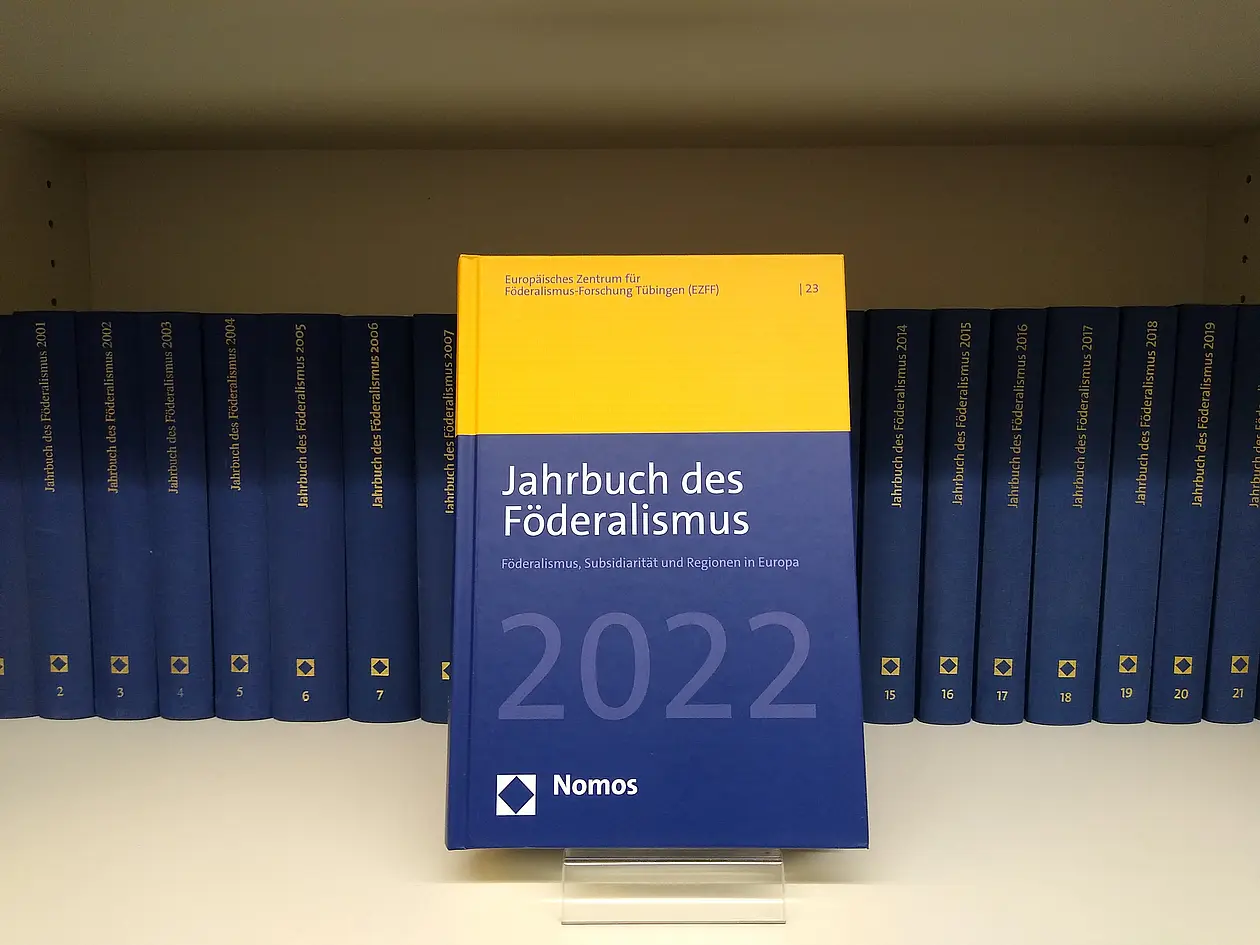
The 23rd edition of the Yearbook of Federalism has been published!
The Yearbook is designed as a compendium that offers readers an up-to-date overview of various aspects of federal and regional structure and policy in 34 contributions.
In addition to German federalism, current research topics, regional cooperation, EU/European integration and state reports, two topics are the focus this year: The English-language section "Conference on the Future of Europe" deals with the question of how individual member states and their regions have participated in this unique discussion process with citizen participation. On the other hand, "70 Years of Baden-Württemberg" looks at topics that were less central in the official commemorative events.

2022, 516 pages, hard cover, 104,– €
ISBN 978-3-7560-0422-5 
E-Book 978-3-7489-3673-2 

Contents
The Yearbook can be purchased here.


27.10.2022

Presentation of the "Yearbook of Federalism 2022"

After two years of hiatus due to the pandemic, the official presentation of the "Yearbook of Federalism 2022" will again take place at the State Representation of Baden-Württemberg in Berlin. This year's main topics of the Yearbook are "The Conference on the Future of Europe - National and Regional Participation" and "70 Years of Baden-Württemberg".

We are pleased to welcome Mrs. Muhterem Aras; President of the State Parliament of Baden-Württemberg, and Mr. Mark Speich; State Secretary for Federal and European Affairs, International Affairs and Media of the State of North Rhine-Westphalia, Representative of the State to the Federation, for a discussion on "The Conference on the Future of Europe from the Perspective of the Regions - Review and Outlook".

Further information about the event and the possibility to register can be found here.

24.08.2022

We have moved!

The ECRF can now be found at Haußerstraße 43, 72076 Tübingen.


29.10.2021

New release: Yearbook of Federalism 2021

Vol. 22

In 2021, ECFF again presents a comprehensive compendium on federalism in Germany and Europe. This year's main topic is "Management of the Corona Pandemic in Federal and Quasi-Federal States".

Further information and ordering options can be found here.


06.10.2021

New release: Occasional Paper Nr. 43
Gabriele Abels (editor): From Takers to Shapers? Challenges for Regions in a Dynamic EU Polity

Summary: Since the 1990s the role of regions in the EU multi-level polity is under construction and has changed in many ways. The currently ongoing Conference on the Future of Europe (CoFoE) provides another window of opportunity for regions to shape the dynamic EU polity.

The three articles put this timely development in a historical perspective by discussing parallels to previous treaty reforms, by analyzing the manifold activities of the Committee of the Regions (CoR) in relation to the CoFoE, and by discussing the role of regional parliaments and their potential contribution to the democratic legitimacy of the EU.

Free E-Book: Abels: From Takers to Shapers?