Monday, 17 November 2025,
5 p.m. – 8.30 p.m. CET,
Vertretung des Landes Baden-Württemberg beim Bund,
Tiergartenstraße 15, 10785 Berlin.
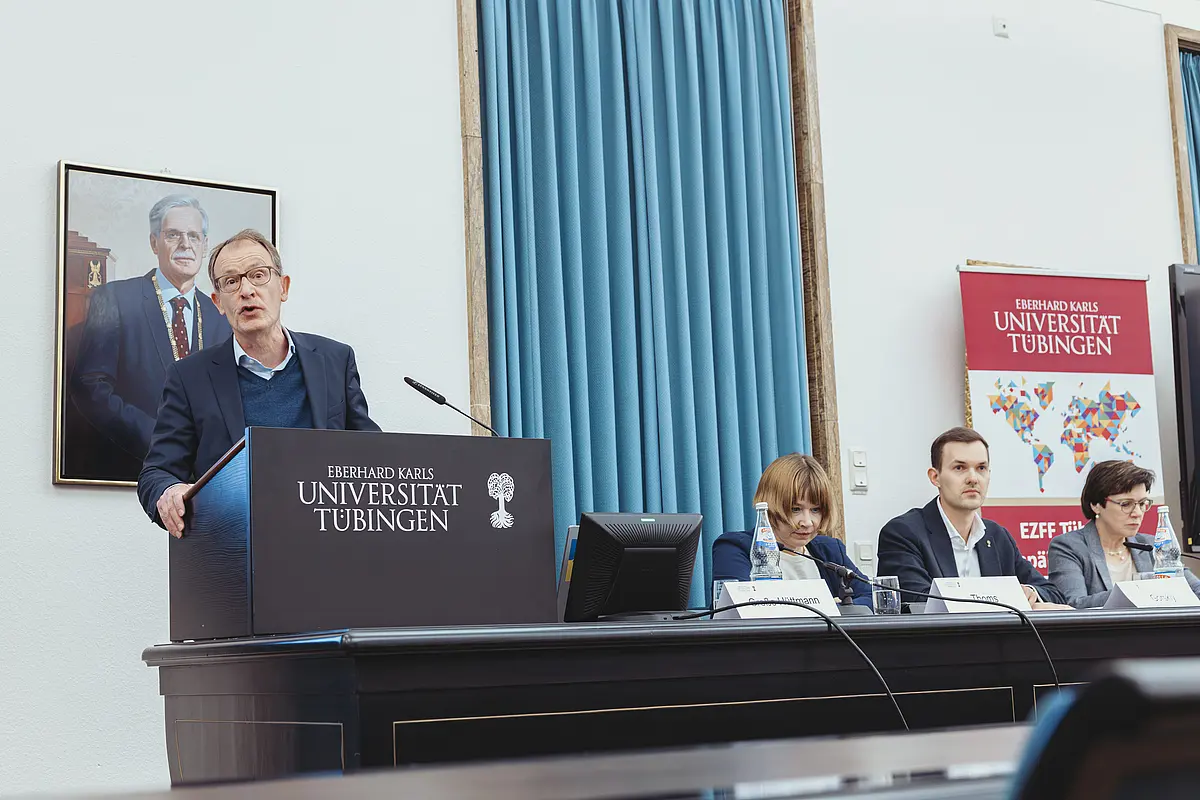
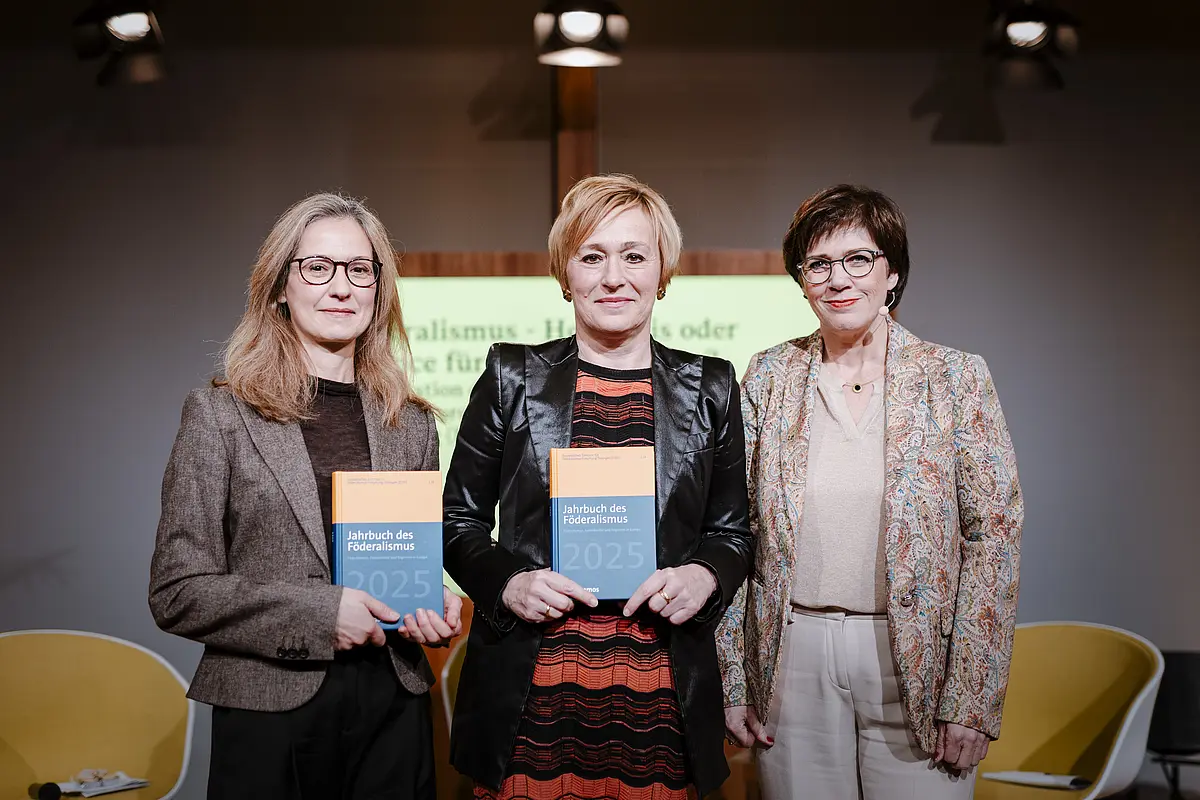
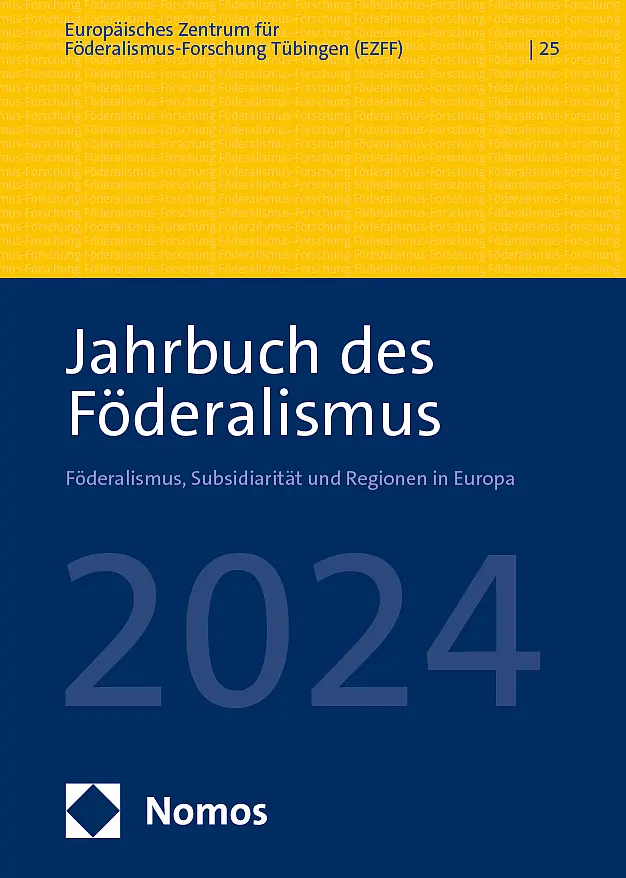
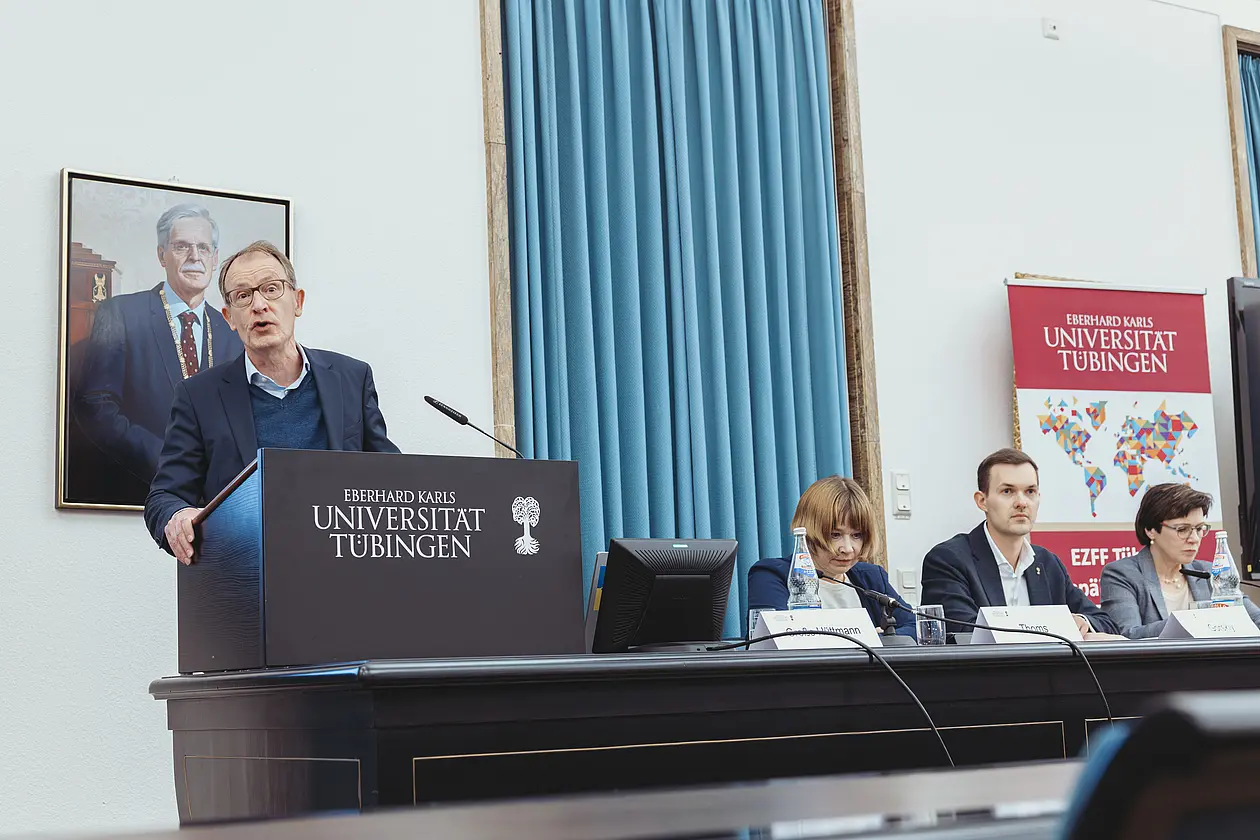
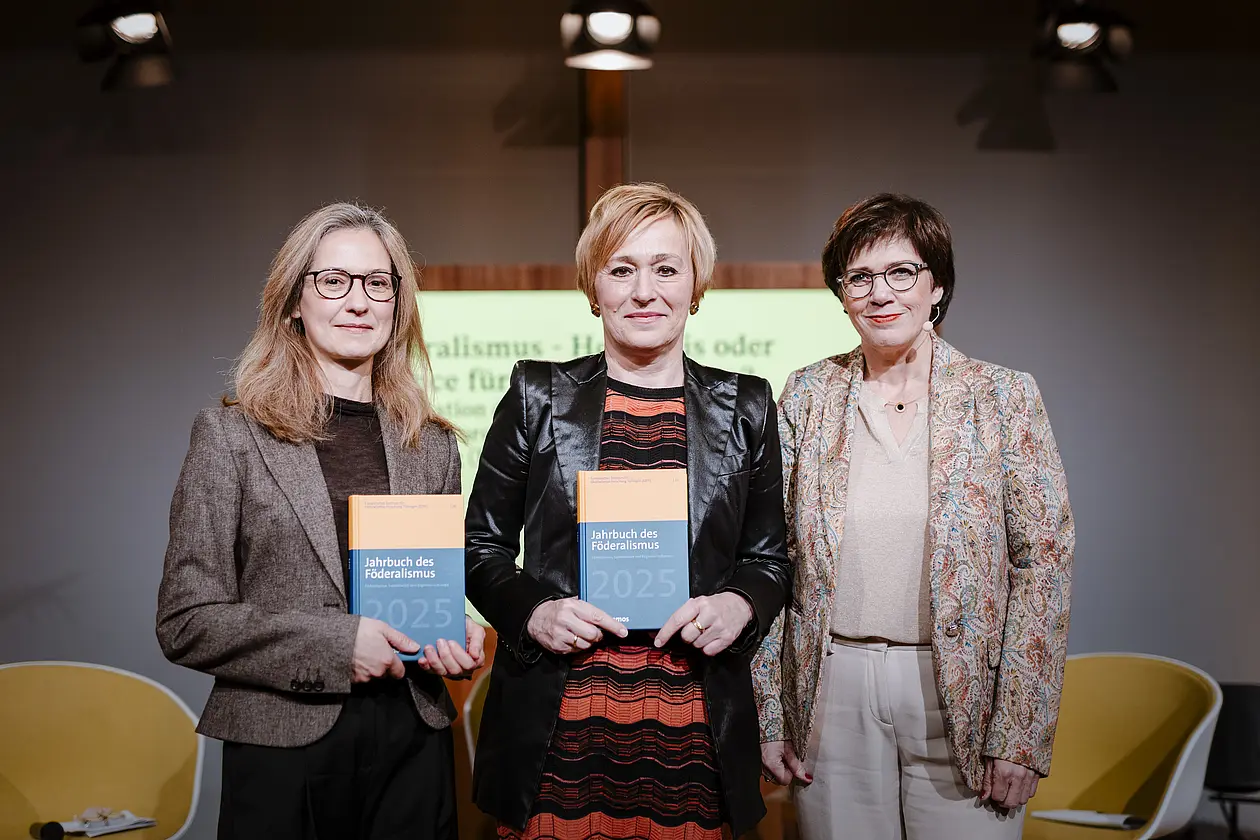
After a pre-reception, where specialities from both Berlin (Currywurst) and from the Ländle (Käsespätzle) were offered, Mr. Ulrich Aierstock, Deputy Head of the State Representation, opened the event and welcomed the guests. Prof. Dr Gabriele Abels, Speaker of the ECRF Executive Board, then presented the topics covered in the Yearbook. She paid particular attention to this year's main topic, ‘Populism and federalism – best friends?’ – a question that is becoming increasingly important in light of recent political developments in many different countries.
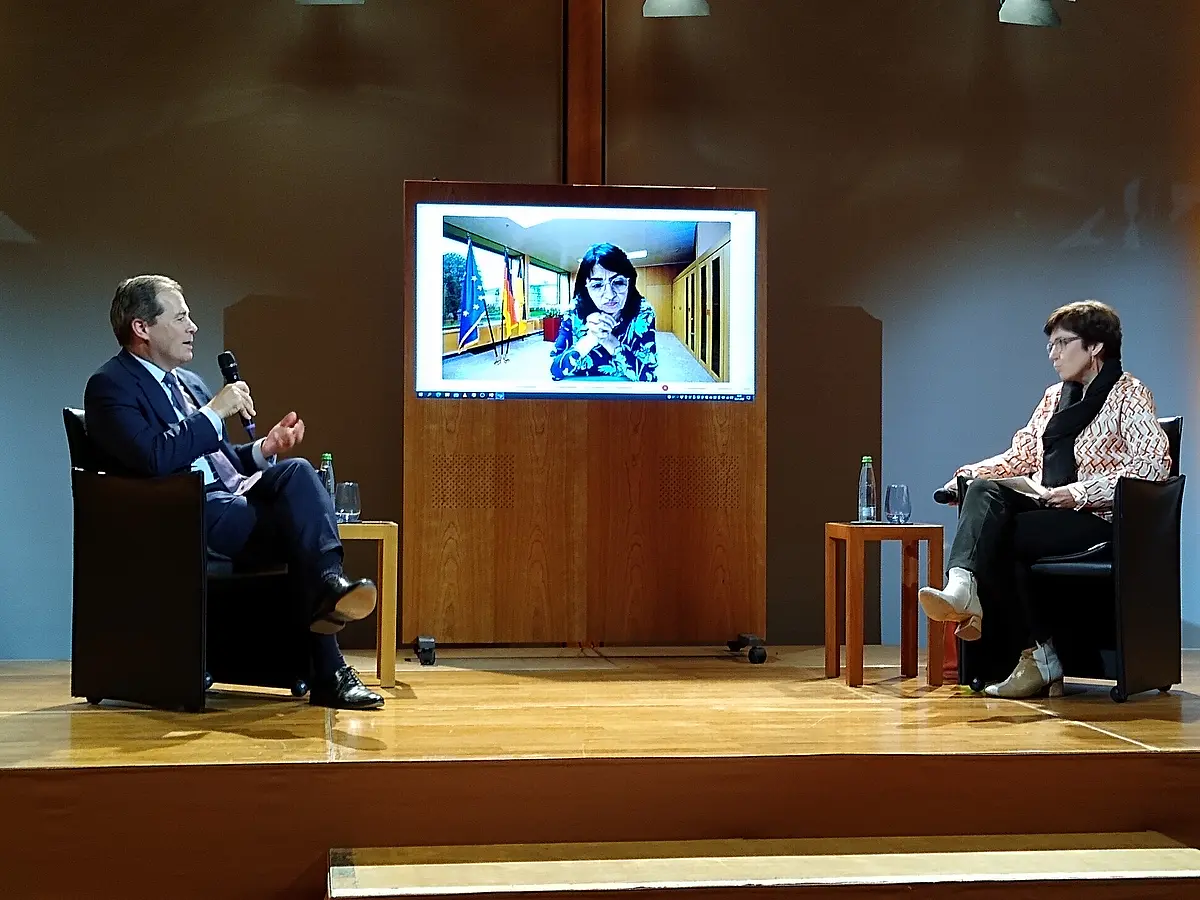
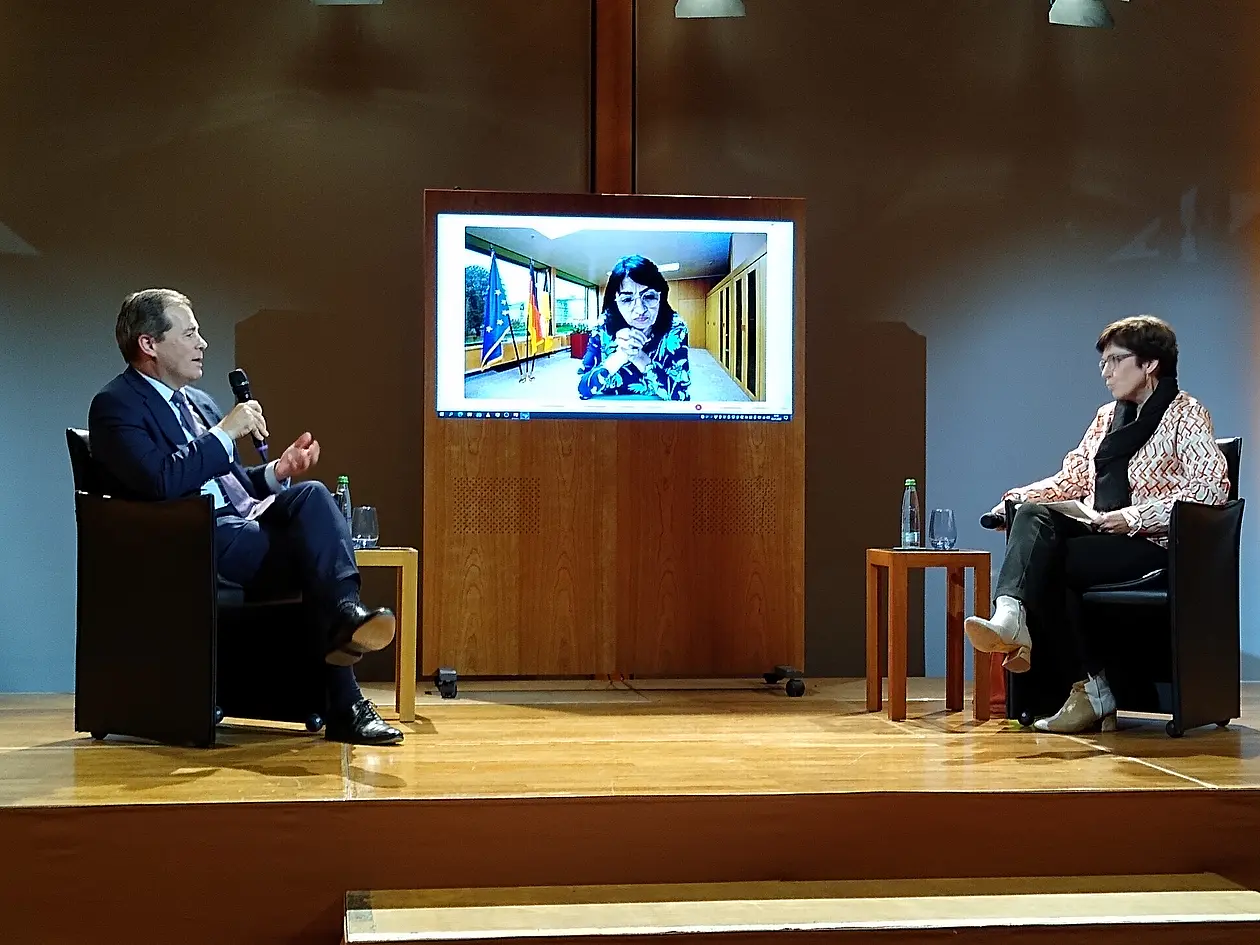
Prof. Abels then discussed the topic ‘Federalism – obstacle or opportunity for populism?’ with Prof. Dr. Paula Diehl, Christian Albrecht University of Kiel, and Prof. Dr. Sabine Kropp, Free University of Berlin. The focus was on the question of whether federal structures provide a fertile environment for populist forces or whether they are particularly well suited to curbing them.
In her opening statement, Prof. Diehl pointed out that the interplay between populism and federalism depends on three fundamental factors that can vary considerably from country to country: the functioning of the political system, the characteristics of the political culture, and the political level at which populist forces operate (federal, state or local?). At the same time, she reminded the audience that, despite some common characteristics, there is no such thing as ‘one form of populism’ and that populist actors can also evolve over time. Furthermore, populism does not always have to be authoritarian in nature, although this is increasingly the case due to its growing adoption by right-wing extremist forces. Normalising populist messages would only lead to even greater radicalisation. According to Diehl, the question of how populism affects the functioning of institutions is of central importance. She used the image of a drunk guest at a party: just as this guest can liven up the atmosphere, populism has the potential to revitalise democracy. At the same time, it could also destroy it. The role of federalism varies in this regard depending on the country and political level: while in the USA, for example, the states have proven to be an effective bulwark against the right-wing populist policies of the federal government, in Austria the populist FPÖ has succeeded in breaking through the cordon sanitaire of the federal parties by participating in state governments.
Prof. Kropp agreed with the assessment that a distinction must be made between populism and extremism. The central communication strategy of populism is to blame others, who are held responsible for problems, often in the name of ‘the people’. These may be ‘the elite’ (or ‘those at the top’), but also actors at other political levels in general. In this way, a federal government, for example, could pass on responsibility for failed reforms. Accordingly, populist communication is not only reserved for radical actors, but can also be practised by forces perceived as moderate. The federal structure of a country could be used by populist forces as a means of obstruction. German executive federalism in particular offers numerous opportunities for this, for example in the Bundesrat or the Fachministerkonferenzen. Since these usually work in a consensus-oriented manner and often require unanimity for decisions, even if a populist party is only (co-)governing in one state, this can already have considerable disruptive potential. According to Kropp, the key to strengthening the federal state's defences does not lie in small-scale institutional reforms. Instead, federal structures as a whole need to be made more flexible, for example by abolishing unanimity requirements.
When asked whether the rise of populist forces could be reversed, the two panellists came to a sobering conclusion. According to Prof. Diehl, the situation is more likely to worsen. The increasing coarsening of language, especially on social media, is difficult to reverse. Prof. Kropp similarly pointed out that a feeling of permanent crisis has become established in society, which populist forces know how to exploit. When Prof. Abels asked whether populist parties could be disenchanted by participating in government, Prof. Kropp replied that this was difficult to imagine given the growing influence of forces within the parties that insist on their maximum demands. A ‘let them join in’ approach at the state level could have disastrous consequences given the federal interdependencies and the consensus-oriented system of the Federal Republic. Prof. Diehl pointed to the example of the Rassemblement National in France, noting that the normalisation of populist discourse, coupled with an apparent willingness to compromise on the part of the populist party, could encourage other parties to move closer to them and ultimately tempt them to enter into a government coalition.
Afterwards, the audience had the opportunity to ask the panellists questions. A reception with drinks rounded off the evening.