Paläoanthropologie

Current and upcoming research projects of our working group

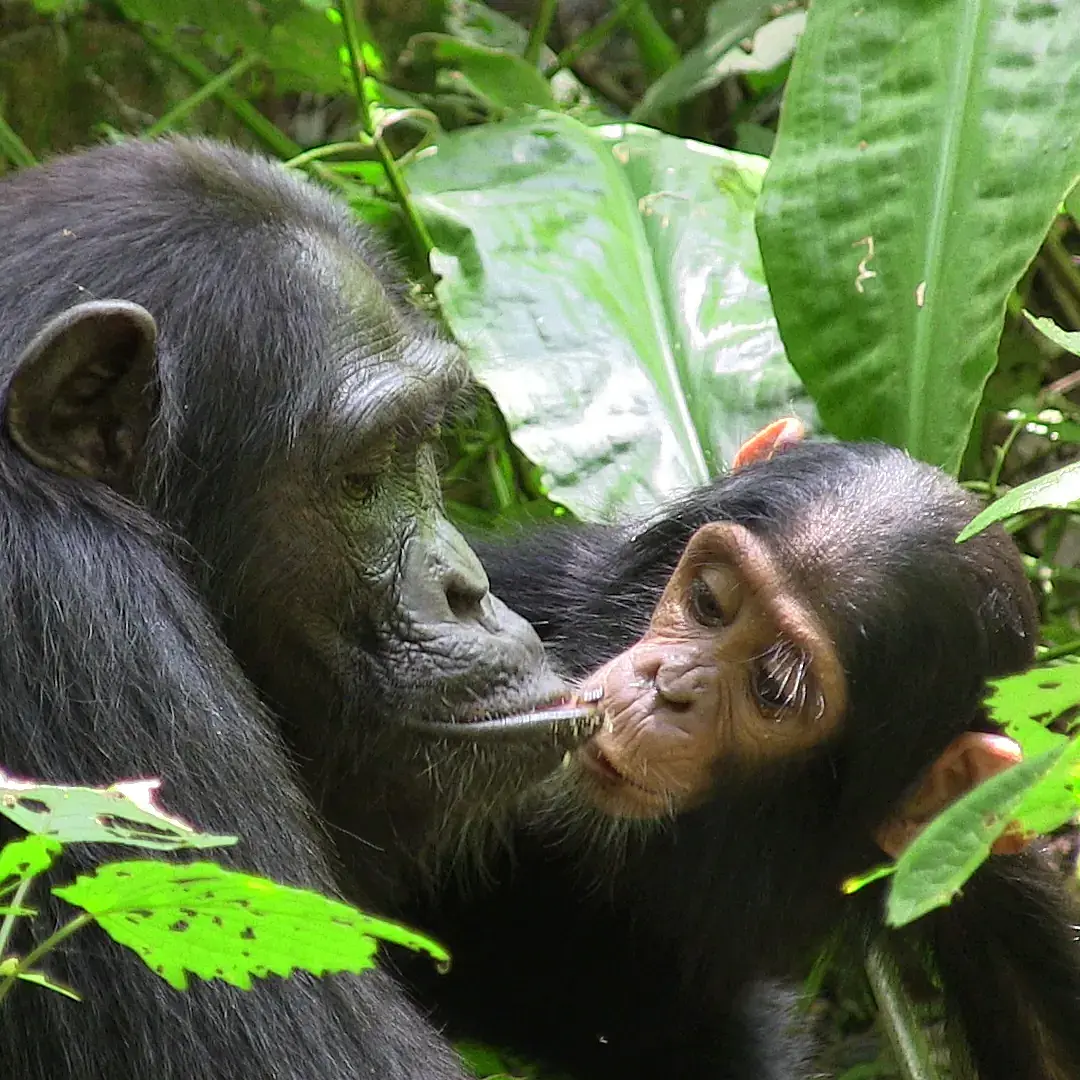
Individual variation and plasticity in the communicative behaviour of chimpanzees

This project examines the extent of individual variation and plasticity in, and the impact of socio-environmental factors on, communicative behaviour in chimpanzees (Pan troglodytes) living in three different research settings. A multimodal approach (i.e. focusing on gestures, vocalisations and facial expressions as a whole), together with a behavioural reaction norm (BRN) framework derived from behavioural ecology, will provide insight into the extent of communicative plasticity in one of our closest living relatives by disentangling variation at the individual, group and research setting levels. Data will be collected from the wild chimpanzees of the Kanyawara community (Kibale National Park, Uganda), the semi-wild chimpanzees of the Chimfunshi Wildlife Orphanage (Zambia), and the captive chimpanzees of Zoo Leipzig and Leintalzoo Schwaigern (Germany).

This research is part of Angele Lombrey's PhD project, funded by a Freigeist Fellowship (VW Foundation) awarded to Dr Marlen Fröhlich, and is being carried out in collaboration with Prof Dr Katie Slocombe and Dr Claudia Wilke from the University of York.

Individual variation and plasticity in the communicative behaviour of orang-utans

This project investigates the influence of socio-environmental factors on the communicative flexibility of wild and captive Sumatran orangutans (Pongo abelii) in coordinating social action. To this end, we will use an integrated multimodal approach and a behavioural reaction norm (BRN) approach to assess within- and between-individual differences. Data on social interactions in the wild will be collected in Suaq (Gunung Leuser National Park, North-West Sumatra, Indonesia), while interactions in captivity will be observed in several European zoos (e.g. Munich and Zurich).

This research is part of Deborah Galeone's PhD project funded by a Freigeist Fellowship (VW Foundation) awarded to Dr Marlen Fröhlich. It is carried out in close collaboration with Dr Caroline Schuppli from the Max Planck Institute for Animal Behaviour and Dr Tatang Mitra Setia from the Universitas National of Jakarta.

Development and plasticity of multimodal communication during social actions in human children

This project investigates individual flexibility and differences in early human communicative behaviour, focusing on the role of gestural and vocal communication in the coordination of social actions. We will use an integrated multimodal approach to assess differences between individuals, age groups and cultural backgrounds. Social interactions will be recorded in day-care centres in Germany and in BaYaka Mbendjele villages in Congo Brazzaville, with focal children between the ages of 1.5 and 2 years or 3 and 4 years. By providing new insights into the communicative plasticity of human children, we aim to better understand the influence of socio-environmental factors on the development of multimodal communication in human children. In later stages of the project, comparisons with several great ape species will provide a better understanding of the evolutionary trajectory of hominin behaviour and communication.

This research is part of Wytse Wilhelm's PhD project funded by a Freigeist Fellowship (VW Foundation) awarded to Dr. Marlen Fröhlich.

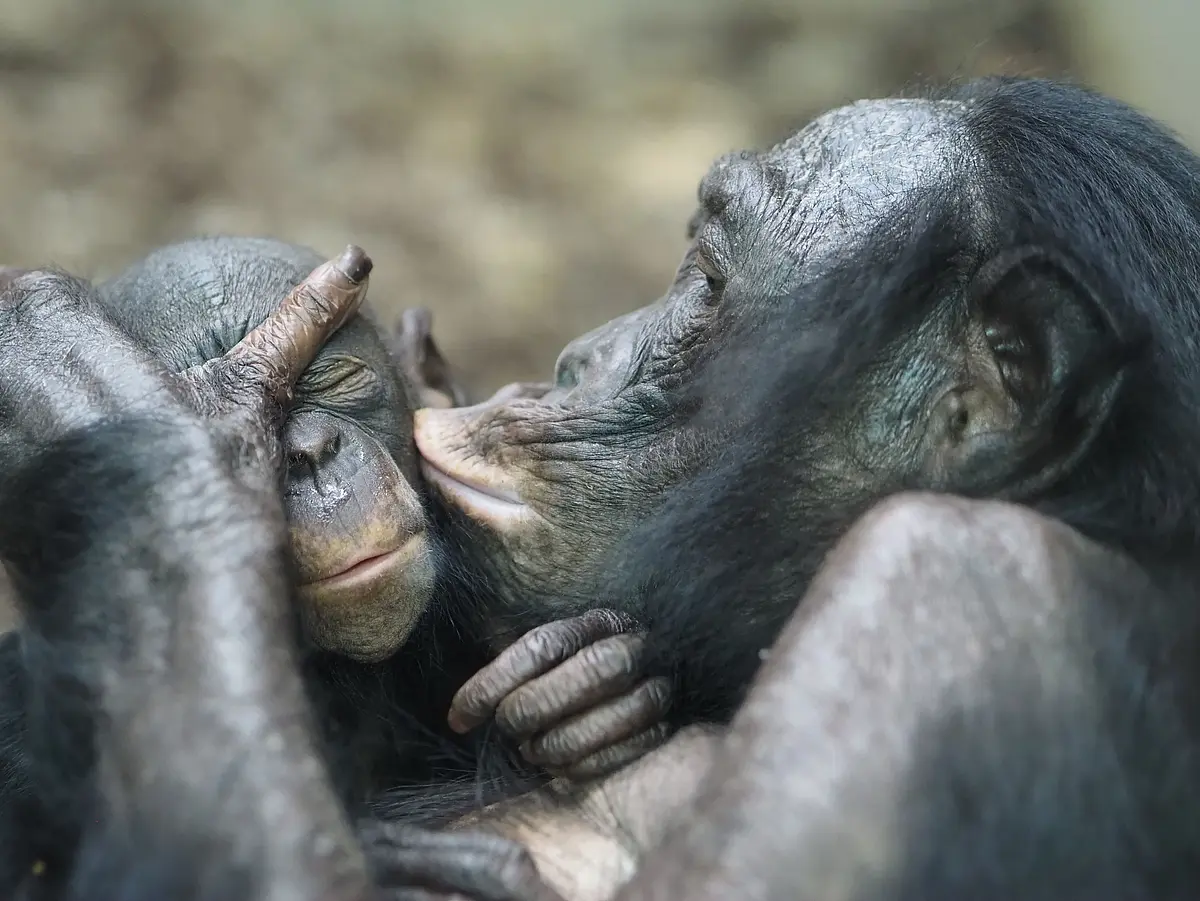
Individual differences and plasticity in the communication behavior of bonobos

This project investigates the communication behaviour of bonobos (Pan paniscus) living in the wild and in zoos, focusing on individual differences and plasticity. Building on the multi-stage, multimodal approach of the overarching Freigeist project, the study pursues three central goals. First, it aims to investigate the extent to which individuals differ in their use of signals. Using a reaction norm approach, consistent individual variation in communication behaviour is separated from environmental variation. Secondly, the communicative repertoires of wild and zoo-kept bonobos will be compared to determine the influence of the socio-ecological environment on signal use. Thirdly, the bonobo data will be compared with corresponding data from other great ape species (chimpanzees, gorillas and orangutans) in order to identify species-specific communication styles.

To collect data from a sufficient number of individuals, we are collaborating with the Kokolopori Bonobo Research Project in the Democratic Republic of Congo and Wilhelma Stuttgart. Additionally, the project incorporates data previously collected from Vallée des Singes in France. Taken together, these findings will contribute to a better understanding of the evolution of primate communication and the cognitive foundations of human language.

This study is being conducted by Dr Mawa Dafreville in collaboration with Dr Martin Surbeck (Harvard University), Dr Raphaela Heesen (University of Konstanz) and Kerstin Ludmann (Wilhelma, Stuttgart). It is part of the Pathways to Language research project, funded by a Freigeist Fellowship awarded to Dr Marlen Fröhlich by the Volkswagen Foundation.