
Department of Geosciences

Master Transdisciplinary Studies of Climate, Environment and Energy (TRACEE)

Are you ready to lead the fight against the world's most pressing challenges —
climate change, energy transitions, and environmental crises?

Join TRACEE, a new Master’s program, offered by the CIVIS European University Alliance!

The program is designed to train experts in the fight against climate change, in the energy transition and in environmental crisis management. It equips you with the knowledge to understand the complex problems in these areas and provides you with the tools to create innovative solutions. A holistic approach is provided by the integration of different perspectives from the natural sciences, social sciences, humanities, and law into the curriculum.

For detailed information on the program, the application and selection process and participation costs, visit TRACEE at Stockholm University, the coordinating university of the program.

TRACEE in a nutshell
  • an innovative transdisciplinary and international Master's program
  • study tracks, allowing you to focus on areas like climate science, energy systems, or environmental law
  • various study locations, experiencing diverse academic cultures and building valuable networks

Apply here!

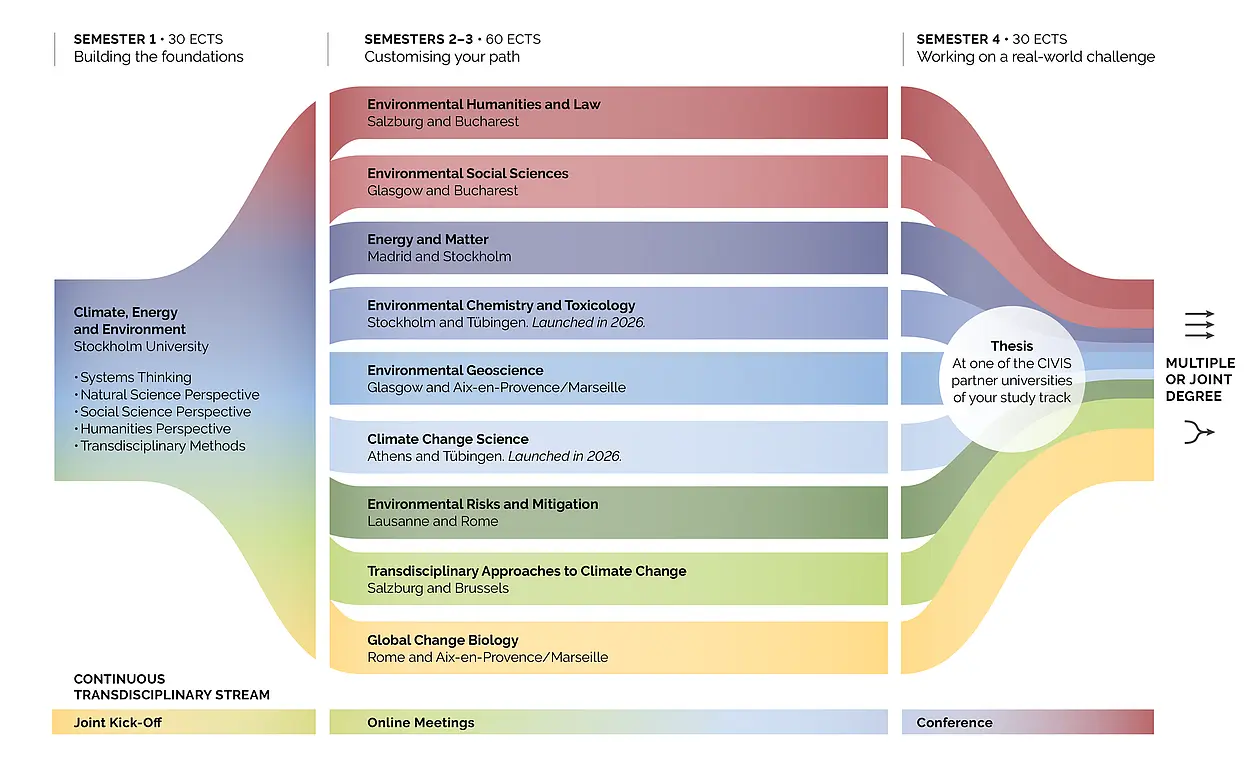
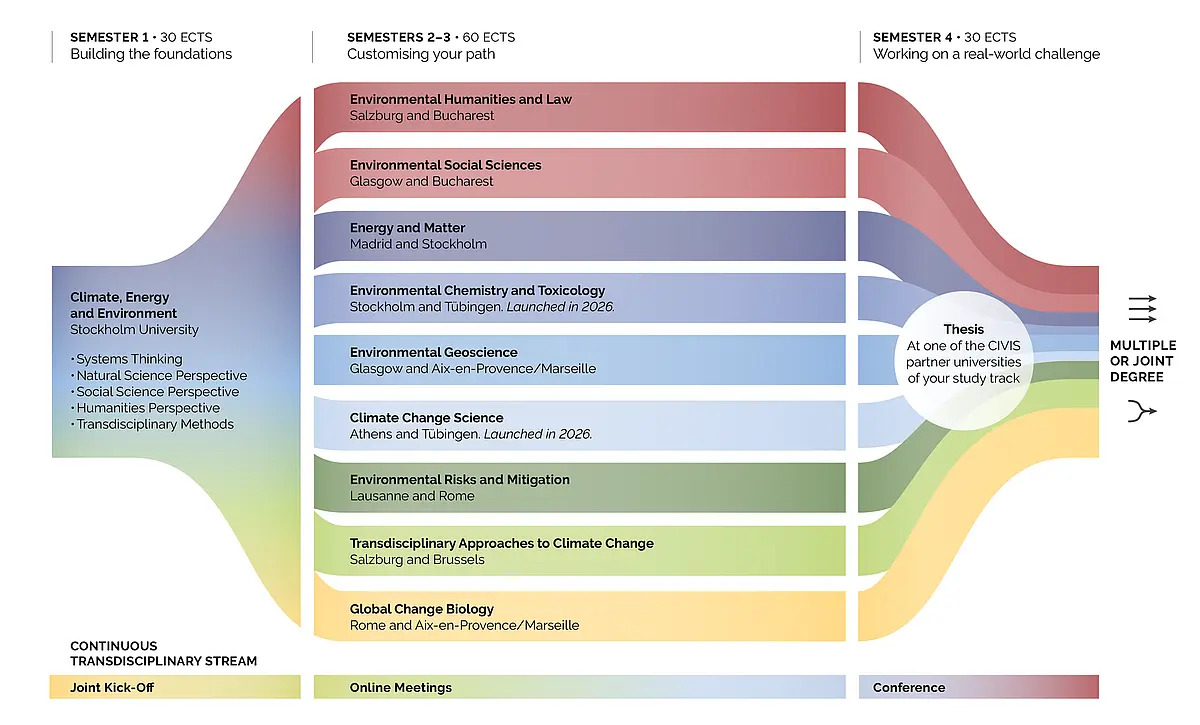
TRACEE's nine study tracks, from which you choose one to specialize in

External content

Actually, you are supposed to see a video here. To display this content (source: www.xyz.de), please click the "Accept" button below. Please note that by viewing the video, data might be transmitted to third parties or cookies may be stored.

For further information see our privacy policy.

TRACEE presentation and Q&A

External content

Actually, you are supposed to see a video here. To display this content (source: www.xyz.de), please click the "Accept" button below. Please note that by viewing the video, data might be transmitted to third parties or cookies may be stored.

For further information see our privacy policy.

What is it like to start a brand-new Master’s across Europe?
We spoke with students about their first impressions.

Study tracks at the University of Tübingen

The Department of Geosciences at the University of Tübingen (UT) participates in the study tracks "Environmental Chemistry and Toxicology" and “Climate Change Science”.
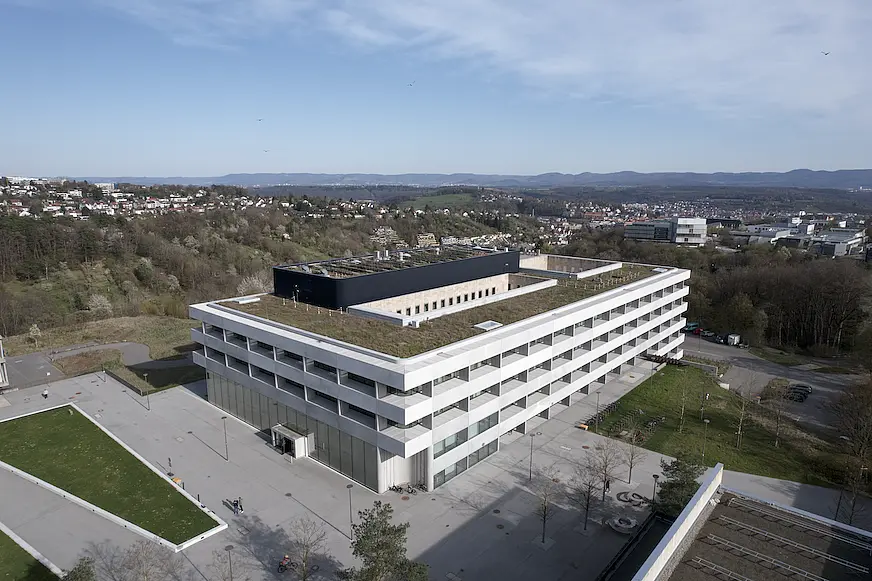
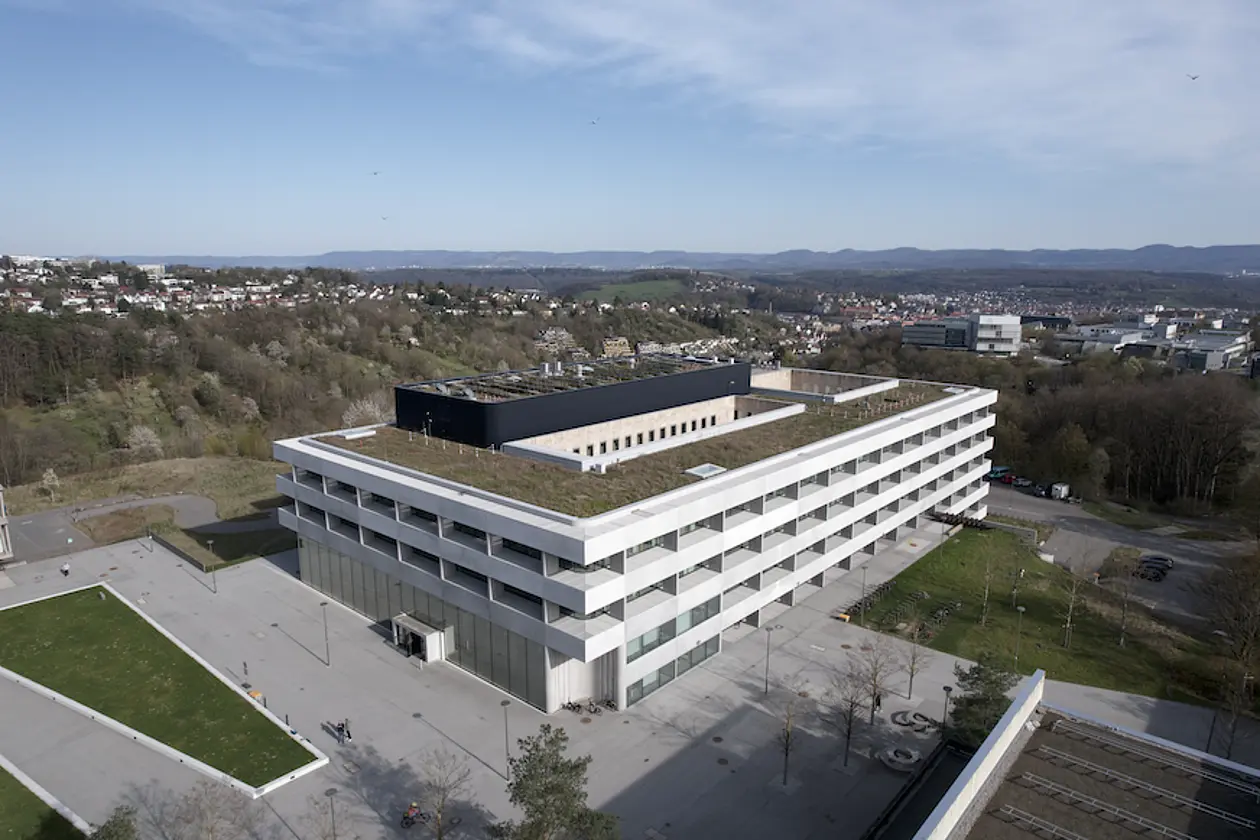
UT is a full university covering virtually all areas in natural and social sciences giving the individual students much space for inter/transdisciplinary projects. The university is one out of eleven excellence universities and has the largest department for terrestrial geosciences in Germany. The department is the only one in Germany with two Excellence Clusters (TERRA and HUMAN ORIGINS). It provides state-of-the art laboratory and field facilities in a new building from 2020.
Tübingen is located in hilly south-western Germany, the bike gets you everywhere you need to go and it is one of the most sought-after student locations in Germany.

Environmental Chemistry and Toxicology (Joint-Degree)

In Environmental Chemistry and Toxicology, co-taught with Stockholm University and University of Bucharest, students will gain a comprehensive understanding of the linkages between physical, chemical, and biological process mechanisms. Students from various science backgrounds will learn to qualitatively and quantitatively address complex processes in soils, water and air as well as in organisms. In addition, students will address the ethical, legal, and regulatory frameworks governing environmental protection, chemical safety, and toxicology and to evaluate environmental risks based on multi-disciplinary approaches.

Student handbook “Environmental Chemistry and Toxicology” track

Learning goals in Environmental Chemistry and Toxicology

The intended learning outcomes of this study track, in addition to the overarching learning outcomes of the program, are:

Knowledge and understanding

  • demonstrate advanced understanding of the fundamental principles of environmental chemistry and toxicology, including the fate and effects of pollutants
  • demonstrate an understanding of the ethical, legal, and regulatory frameworks governing environmental protection, chemical safety, and toxicology

Competence and skills

  • define and analyze environmental problems related to chemical pollution
  • plan and undertake appropriate field and advanced laboratory techniques to identify and quantify environmental contaminants, quantify their fate processes and their toxicity, including methods for environmental sampling, chemical analysis, and bioassays
  • develop and implement models to assess the fate and toxicity of chemicals in different environmental media and various organisms
  • present and interpret chemical and toxicological data and analysis results

Judgement and approach

  • develop strategies to mitigate the environmental and toxicological impacts of chemical pollutants, integrating both scientific and regulatory perspectives
  • promote sustainability and the responsible use of chemicals, considering environmental health and societal implications
Climate Change Science (Joint-Degree)

In Climate Change Science, co-taught with Stockholm University and University of Athens, students will acquire a comprehensive understanding of the climate system including past and present climate variability as well as ongoing climate change. They will gain focused knowledge about how climate is studied using remote sensing atmospheric and climate science and geophysics, ecosystem responses and feedbacks, as well as vegetation and soils in the climate system. Extending beyond the natural sciences, students will learn about sustainability in its broader sense (including renewable energies), and about climate policies. Students will apply the multi-disciplinary skills they have learned about in the study track by conducting a research internship projects in climate science.

Student handbook “Climate Change Science” track

Learning goals in Climate Change Science

The intended learning outcomes of this study track, in addition to the overarching learning outcomes of the program, are:

Knowledge and understanding

  • demonstrate a comprehensive understanding of the Earth's climate system, including its components (atmosphere, hydrosphere, biosphere, lithosphere) and the interactions between them
  • demonstrate insights into climate change policies, international agreements (e.g., Paris Agreement), and the role of governmental and non-governmental actors in climate change mitigation and adaptation

Competence and skills

  • plan and undertake appropriate field and advanced laboratory techniques to quantify environmental processes in the various compartments
  • develop, interpret, and evaluate climate models, including regional and global climate projections, with a focus on uncertainty, data limitations, and predictive capacity

Judgement and approach

  • critically evaluate the scientific principles underlying climate change, including greenhouse gas emissions, feedback loops, and the physical and chemical processes driving global warming
  • analyze and propose effective mitigation and adaptation strategies for addressing climate change, considering technological, policy, and behavioural approaches at the local, national, and global levels
  • reflect on the ethical implications of climate science and policy decisions, and demonstrate an understanding of global responsibilities in the context of climate change and sustainability

Contact for questions regarding

TRACEE in generalEnvironmental Chemistry and ToxicologyClimate Change Science
traceespam prevention@aces.su.seProf. Dr. Christiane Zarfl
christiane.zarflspam prevention@uni-tuebingen.de
Schnarrenbergstr. 94-96, room 4U35
72076 Tübingen, Germany
Prof. Dr. Reinhard Drews
reinhard.drewsspam prevention@uni-tuebingen.de
Schnarrenbergstr. 94-96, room 3U37
72076 Tübingen, Germany