Applied & Environmental Geoscience (AEG) is an international research-oriented study program focusing on the evaluation and solution of environmental problems.
Special emphasis is given to environmental problems in the subsurface such as the pollution of drinking water supplies from groundwater resources, the non-sustainable use of natural resources, the impact of short and long term waste disposal, and the effects of climate and land-use change on soil and water quality.
The program aims for a comprehensive understanding of the physical, chemical, and biological process mechanisms in the geo- and hydrosphere. Students from various science backgrounds learn to qualitatively and quantitatively address complex processes in soils, water and air and to evaluate environmental risks based on multi-disciplinary approaches.
The Cluster of Excellence TERRA - Terrestrial Geo-Biosphere Interactions in a Changing World develops an integrated understanding of how geosphere–biosphere interactions in terrestrial systems respond to and shape environmental change. Students can participate in the research as student helpers and within their theses projects.
External content
Actually, you are supposed to see a video here. To display this content (source: www.xyz.de), please click the "Accept" button below. Please note that by playing the video, in addition to cookies required for video playback, third-party cookies may be set for targeting and advertising purposes, and data may be linked with other services of the third-party provider. Further information and options to withdraw your consent can be found in our privacy policy.
Notice on video cookies
You have consented to video playback cookies. As a result, third-party cookies have also been set for targeting and advertising purposes; where applicable, information may be linked with other services of the third-party provider. Cookie settings can be adjusted at any time via the button in our privacy policy.External content
Actually, you are supposed to see a video here. To display this content (source: www.xyz.de), please click the "Accept" button below. Please note that by playing the video, in addition to cookies required for video playback, third-party cookies may be set for targeting and advertising purposes, and data may be linked with other services of the third-party provider. Further information and options to withdraw your consent can be found in our privacy policy.
Notice on video cookies
You have consented to video playback cookies. As a result, third-party cookies have also been set for targeting and advertising purposes; where applicable, information may be linked with other services of the third-party provider. Cookie settings can be adjusted at any time via the button in our privacy policy.Study Profile
The program is designed for students holding an undergraduate degree in natural sciences or engineering, who are interested in process-oriented, multidisciplinary approaches in environmental geosciences. A good background in mathematics, chemistry, and physics is required. Undergraduate training in geosciences or environmental sciences is helpful but not requested. Capabilities of independent problem solving are important and will be further developed within the educational program.
For an individual study focus, students choose one of three specializations:
- Environmental Chemistry and Environmental Microbiology
- Environmental Physics
- Hydrogeology
Modules of the MSc Geowissenschaften can be chosen as elective courses to combine Applied & Environmental Geoscience with other fields of geology.
Unique Facilities
The Geo- and Environmental Research Center (GUZ) offers extensive laboratory facilities with state-of-the-art experimental and analytical equipment as well as modern field investigation and monitoring equipment. In the new department building, opened in 2020, the GUZ operates modern laboratories for
- standard hydrochemistry covering all major anorganic components
- the analysis of organic micropollutants
- molecular-biological and microbiological analysis
- optical fluorescence and electron microscopy
- geotechnical engineering and hydraulic studies
The GUZ is equipped with modern hydrogeological and geophysical site-investigation devices for pumping/slug tests, tracer tests, geomagnetic and seismic surveying, electrical-resistivity tomography, and ground-penetrating radar. A direct-push device is available for soil/aquifer sampling and installation of piezometers.
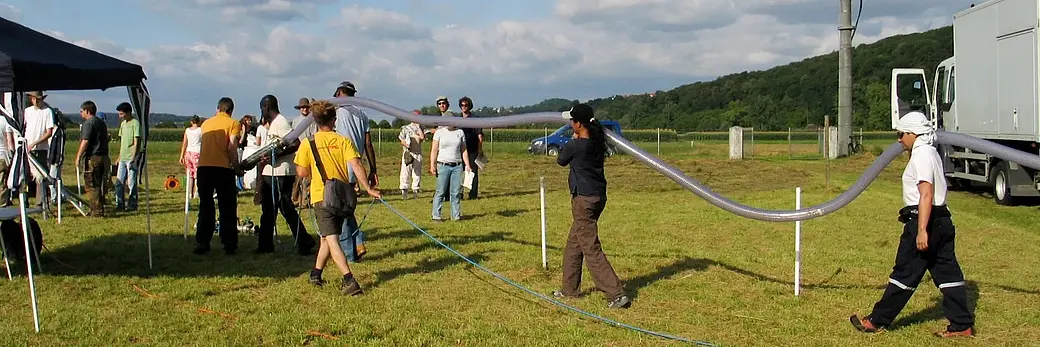
Field courses take place at the Tübingen hydrogeological research site 'Lauswiesen', where a well field is installed and operated for research and education purposes.
Job Perspectives
For graduates, the AEG program opens up a variety of professional fields depending on the chosen specialization and the respective academic background - some are trained in geosciences, others in environmental sciences, chemistry, biology, physics or engineering.
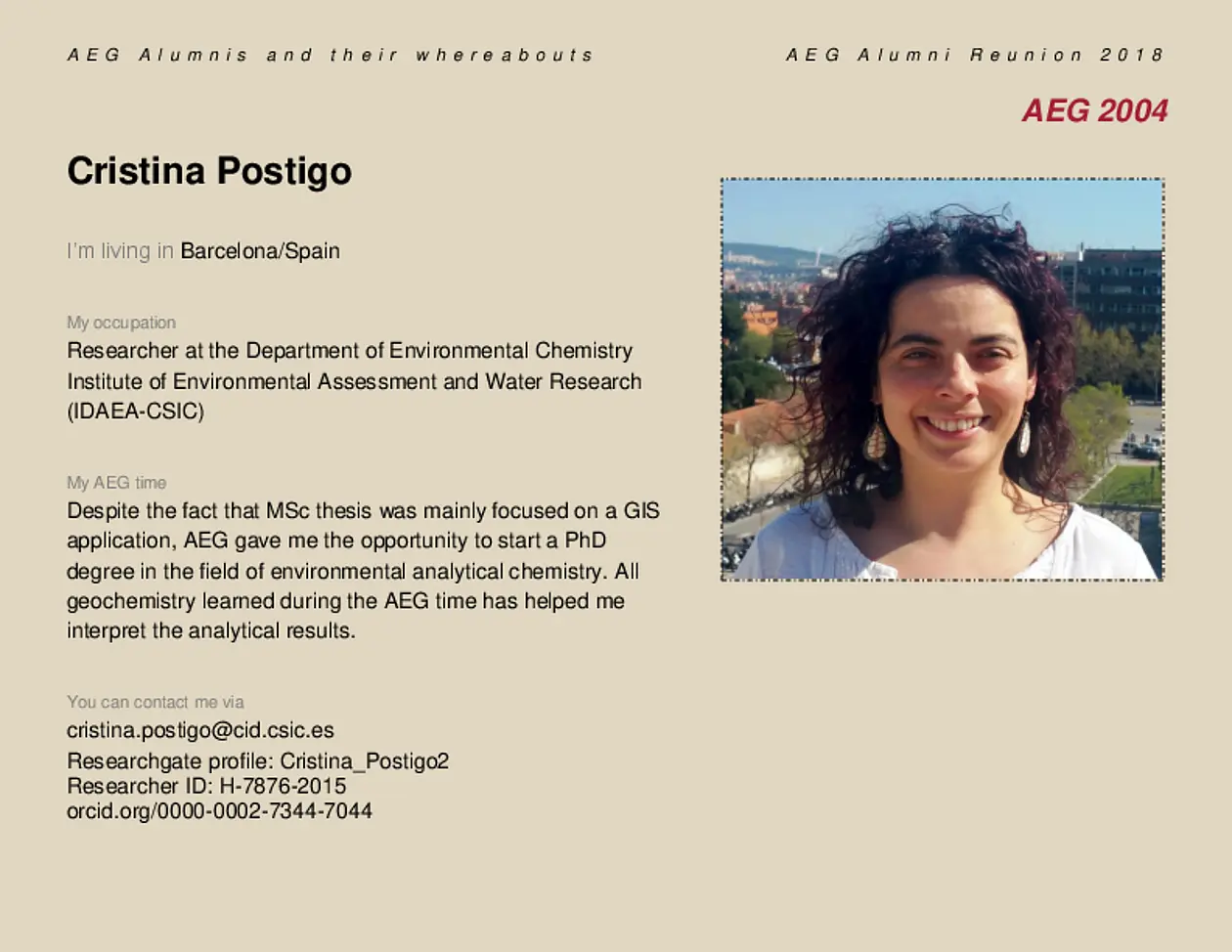
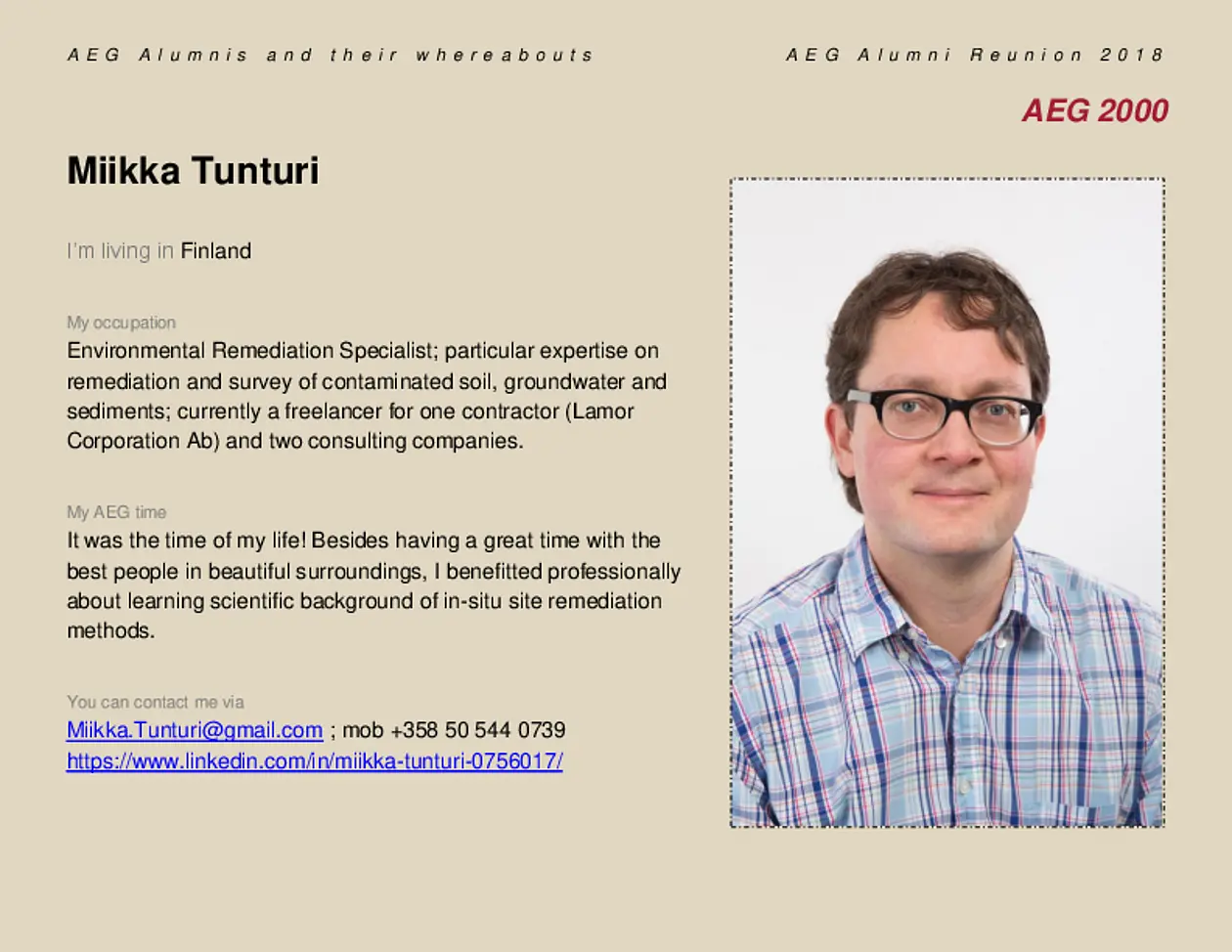
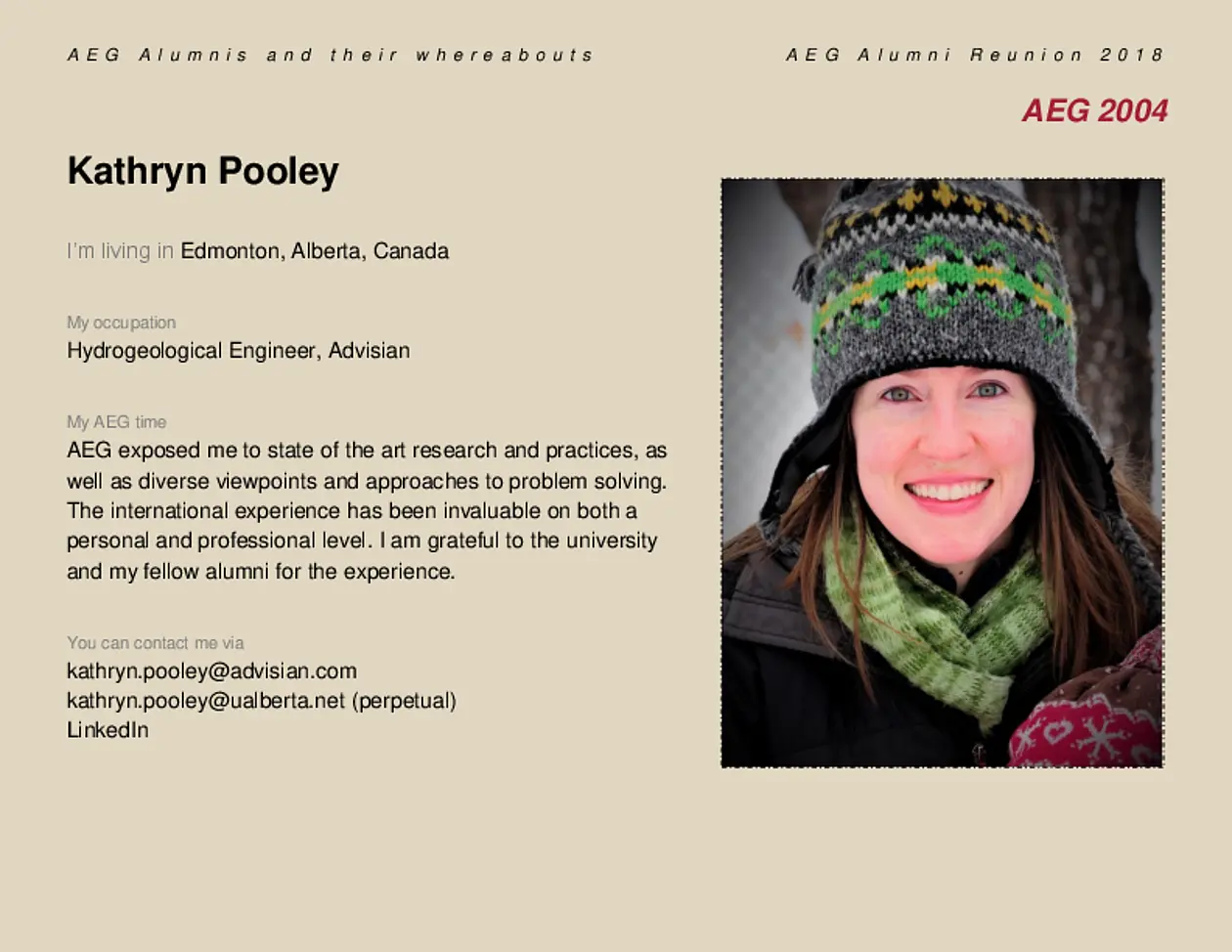
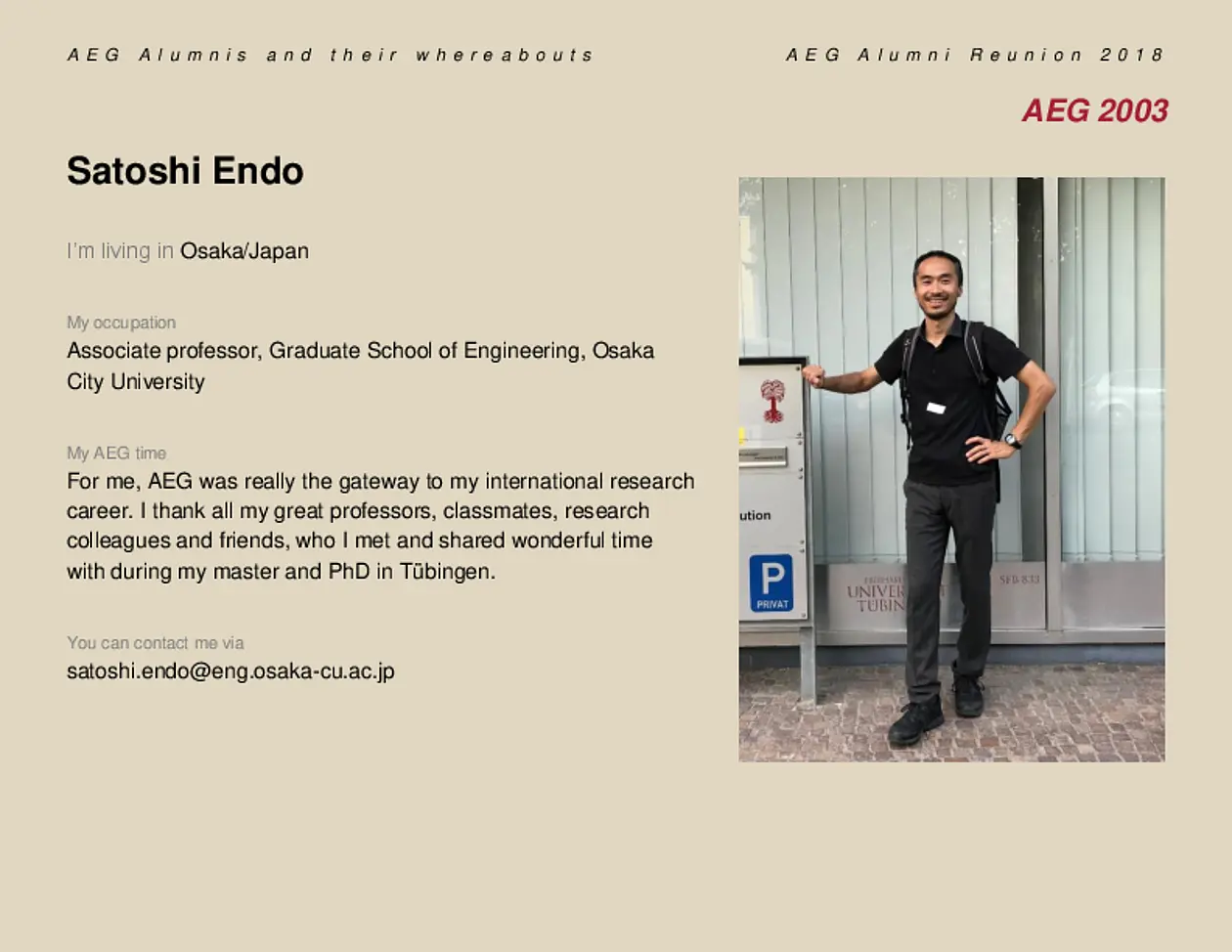
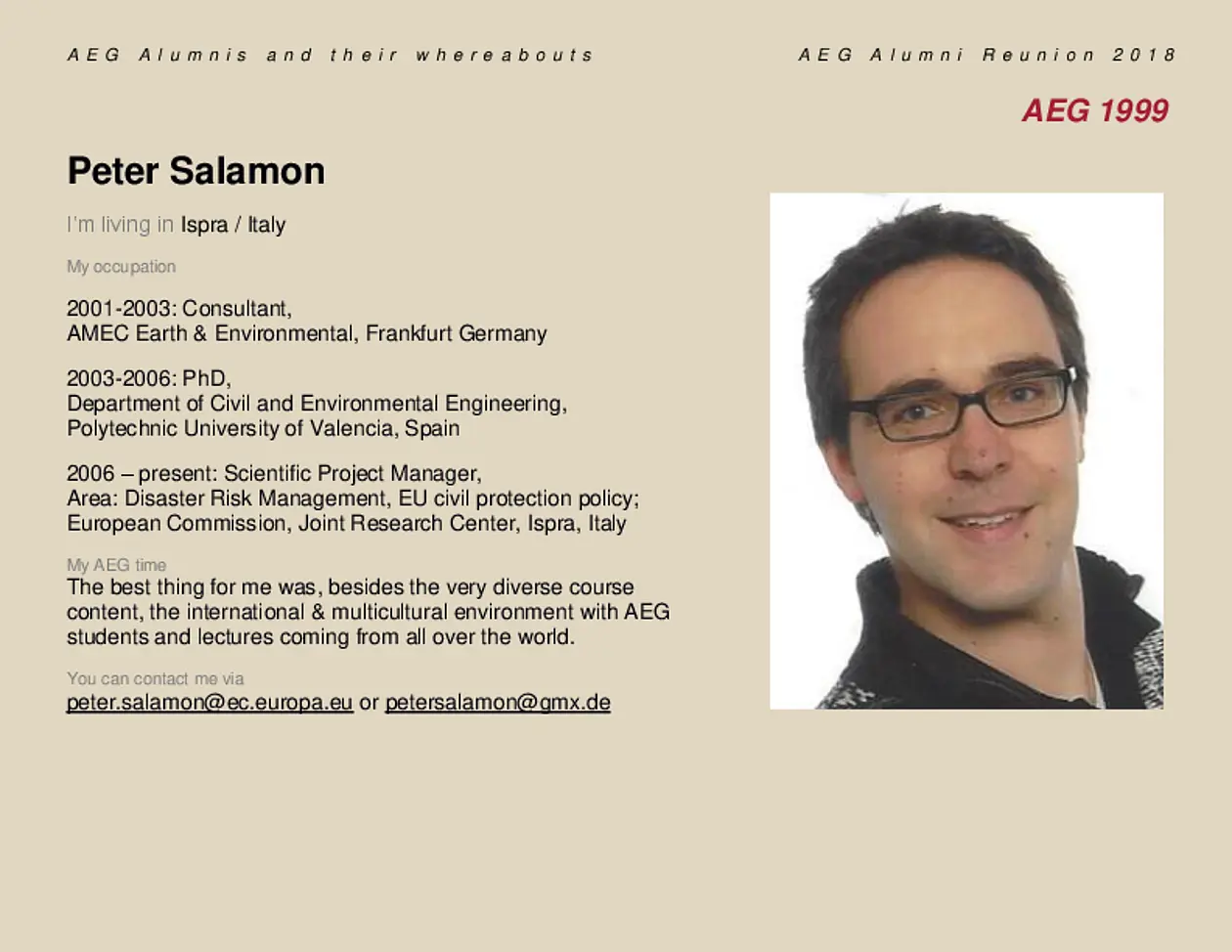
Therefore, AEG alumni are working in a variety of fields.
The key employers for graduates of the AEG program are environmental consultancies working in:
- characterization of sites (hydrogeological, geophysical, chemical and microbiological analysis)
- assessment of environmental risks
- management of water resources
- design and operation of remediation technologies
- modeling of flow and reactive transport in subsurface systems
AEG graduates are also well trained for jobs in environmental agencies, non-governmental organizations, and (re-)insurance companies covering costs of environmental risks and remediation. Furthermore, AEG lays an excellent foundation for doctoral studies in programs of earth sciences, environmental sciences, and environmental engineering.