

19.06.2026
World-Class International Research in Tübingen: A Look Back at Hector Research Week 2026
An intensive week filled with scholarly insights, inspiring encounters, and high-profile guests has come to a close: The Hector Institute for Empirical Educational Research looks back on a thoroughly successful Hector Research Week 2026. From June 15 to 19, 2026, renowned international scholars gathered in Tübingen to discuss current issues in educational research and related disciplines. Here are the highlights:
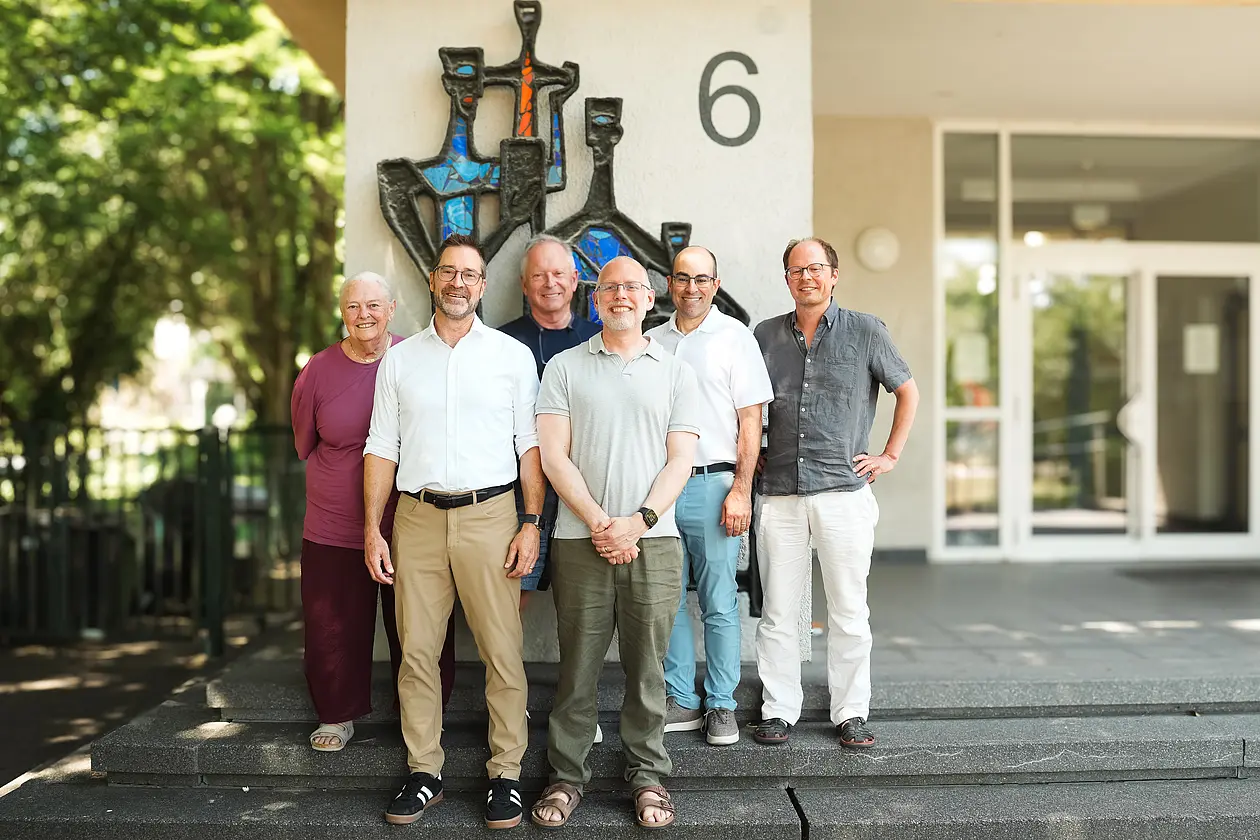
Self-regulation in the spotlight
The event kicked off with HIB Distinguished International Professors Matt Bernacki and Jeffrey Greene (both from the University of North Carolina at Chapel Hill). In their joint presentation, “Taking the ‘self’ in self-regulation seriously: Personalizing and adapting self-regulation research and interventions,” they highlighted how essential self-regulated learning is for educational success—and how important it is to personalize research in this area even further and adapt it to individual needs. PhD students then had the opportunity to present their projects from the “Hector AI + Education Future Fund” and seek input from the international experts.
Poster Session and Book Launch at Hohentübingen Castle
A special highlight was the book launch celebration at Hohentübingen Castle. The focus was on the new book “Motivation, Achievement, and Situated Expectancy-Value Theory – Making One’s Future” by Jacquelynne S. Eccles, Allan Wigfield, Sandra D. Simpkins, and Fani Lauermann. Jacquelynne Eccles (UC Irvine) and Allan Wigfield (University of Maryland) were present in person and answered questions about their work, which synthesizes over 40 years of empirical research on Situated Expectancy-Value Theory (SEVT). At the end, they signed bookmarks related to the book.
The event was preceded by a lively poster session, during which early-career researchers from the Hector Institute presented their current work and received valuable feedback.
Creativity and the Art of Academic Writing
With Paul Silvia (University of North Carolina at Greensboro), author of “How to Write a Lot,” Research Week addressed a topic that concerns all researchers: sustainable writing routines. In an open workshop, participants at all career stages shared the challenges they face in their daily writing lives. In the afternoon, Silvia shifted the focus of his lecture “Everyday Creativity in Daily Life” to the psychology of creativity. He impressively demonstrated that creativity is not a rare flash of inspiration, but rather a dynamic, everyday process that can be wonderfully studied using journaling and experience-sampling methods.
Cultural Perspective: Forms of Testimony
The lecture by renowned emeritus literary scholar Aleida Assmann (University of Konstanz) on the topic “Forms of Testimony” added an interdisciplinary dimension. She highlighted the central cultural significance of eyewitnesses, who have become a primary source of history for young people — particularly in schools — and discussed the unique potential of this form of history education.
A Myth Put to the Test: Growing Through Crises?
The week came to a fitting close with a lecture by HIB Distinguished International Professor Brent Roberts (University of Illinois at Urbana-Champaign) on “Adversity and Growth in Self-Regulation.” Although self-regulation and conscientiousness continue to develop throughout life, the widespread belief that “what doesn’t kill you makes you stronger” often does not hold up to scientific scrutiny. In their research, Roberts and his team found no evidence that life crises and adversity have a positive effect on adolescent development.
The Hector Institute would like to extend its heartfelt thanks to all guests, speakers, and participants who made this week such a vibrant and inspiring experience!
Share


