International Center for Ethics in the Sciences and Humanities (IZEW)

ANKER

"Anchor objects" as focal points for the digital opening and transdisciplinary integration of ethical aspects of Artificial Intelligence in research and innovation processes

News

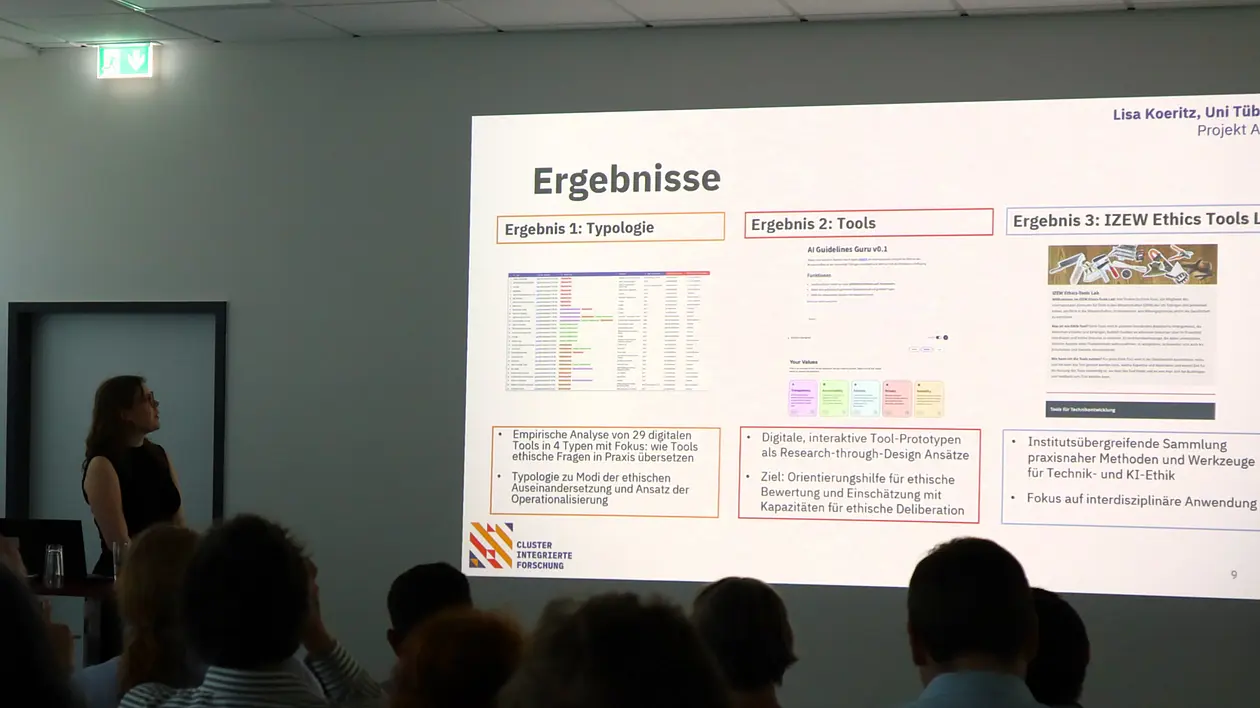
How does responsibility come to AI? The ANKER project team discussed the topic at the conference for integrated research on April 1, 2025 in Düsseldorf. A recording can be found here.

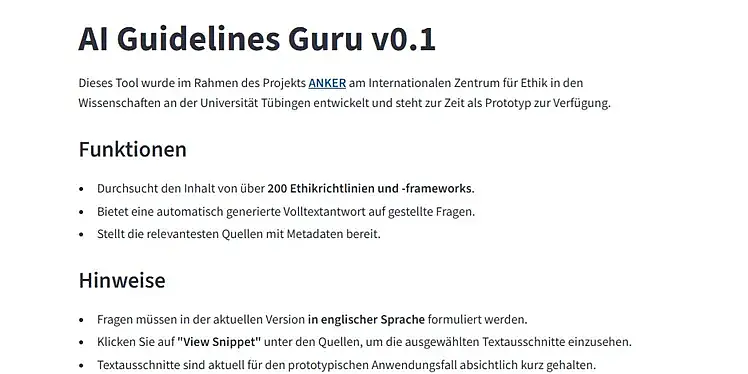
The ANKER project addresses the challenge of ensuring that ethical aspects of artificial intelligence are not only identified but also permanently anchored in the development of technologies with the help of tools. 

To this end, the project conducts a thorough analysis of the needs and requirements to enable the effective anchoring of ethical implications in AI development. Based on these insights, prototypical tools are being developed and implemented. 

Cluster Integrated Research

ANKER is a part of the third sub-cluster „Perspectives of Open Science in digitalised democracy“ in the cluster Integrated Research of the BMBF (Federal Ministry of Education and Research) of Germany

More information can be found on the website of the cluster Integrated Research (in German): https://integrierte-forschung.de/

Insights from the Project

September 2025
Workshop @ STS-CH Conference 2025

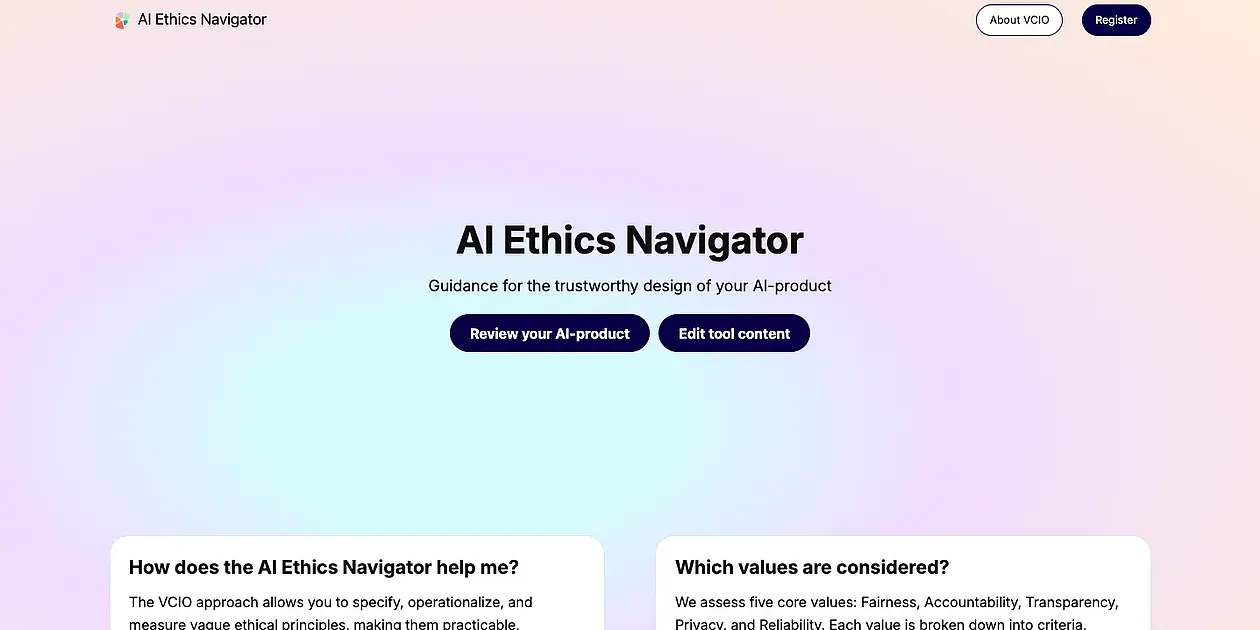
Lisa Koeritz presented the AI Ethics Navigator tool at the STS-CH Conference 2025 in Zurich, CH within the workshop “Generative Methods: Investigating the Use of Generative AI for the Social Study of Science and Technology”, organised with Simon Hirsbrunner and Jana Hecktor 

April 2025
Conference on Integrated Research // Panel "How does responsibility come into AI?"

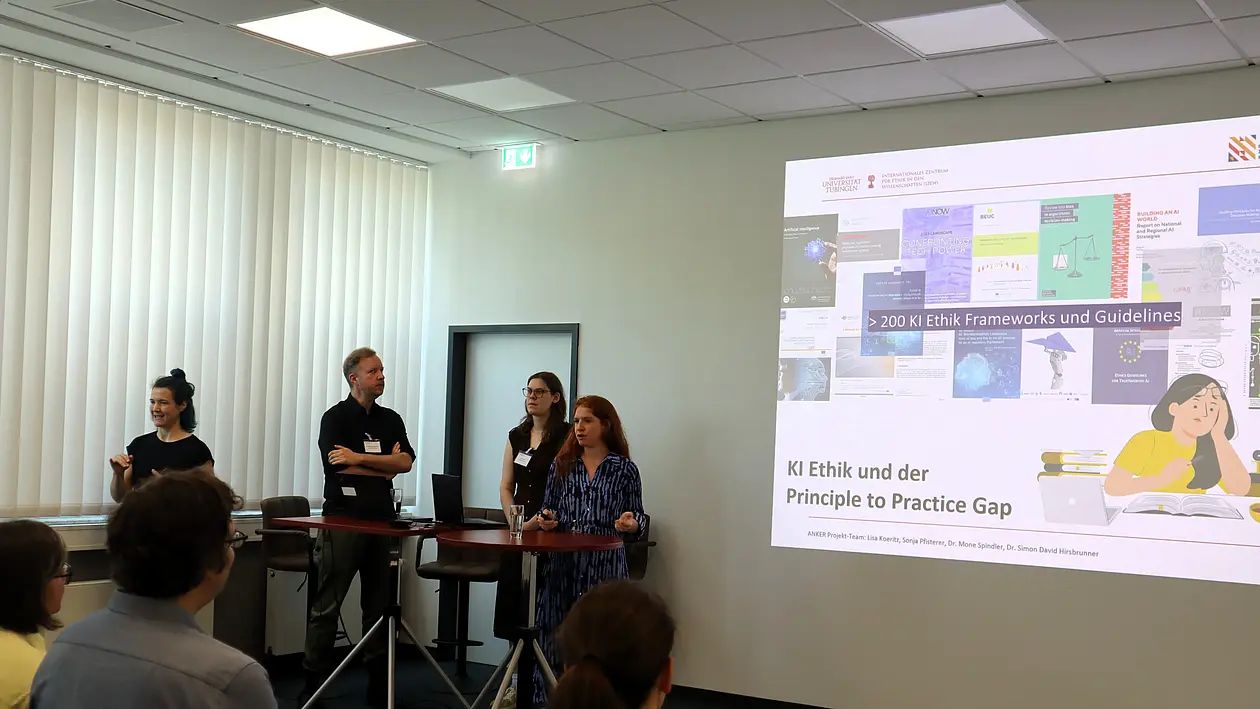
Mone Spindler and Lisa Koeritz presented ANKER at the 5th Conference on Integrated Research and discussed Responsible AI between theory and practice with Leonard Tröder (Birds on Mars). Watch the recording

September 2024
Tool 1 & 1st Ethics Workshop

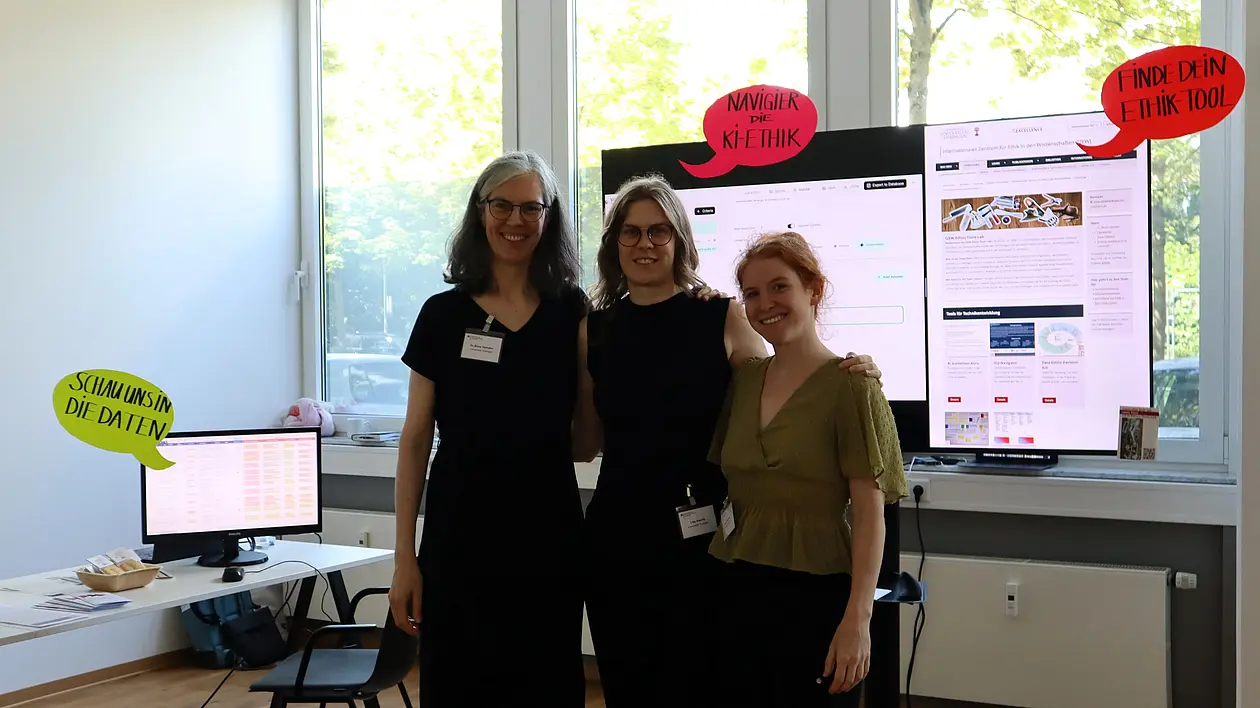
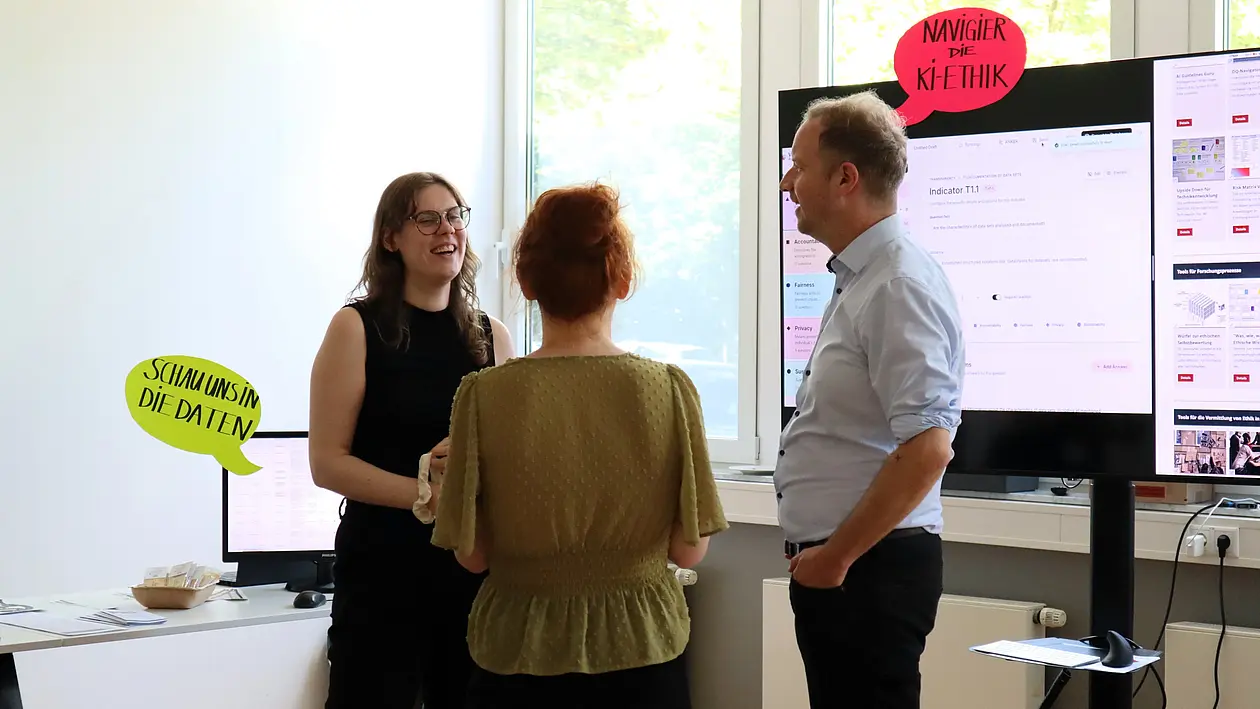
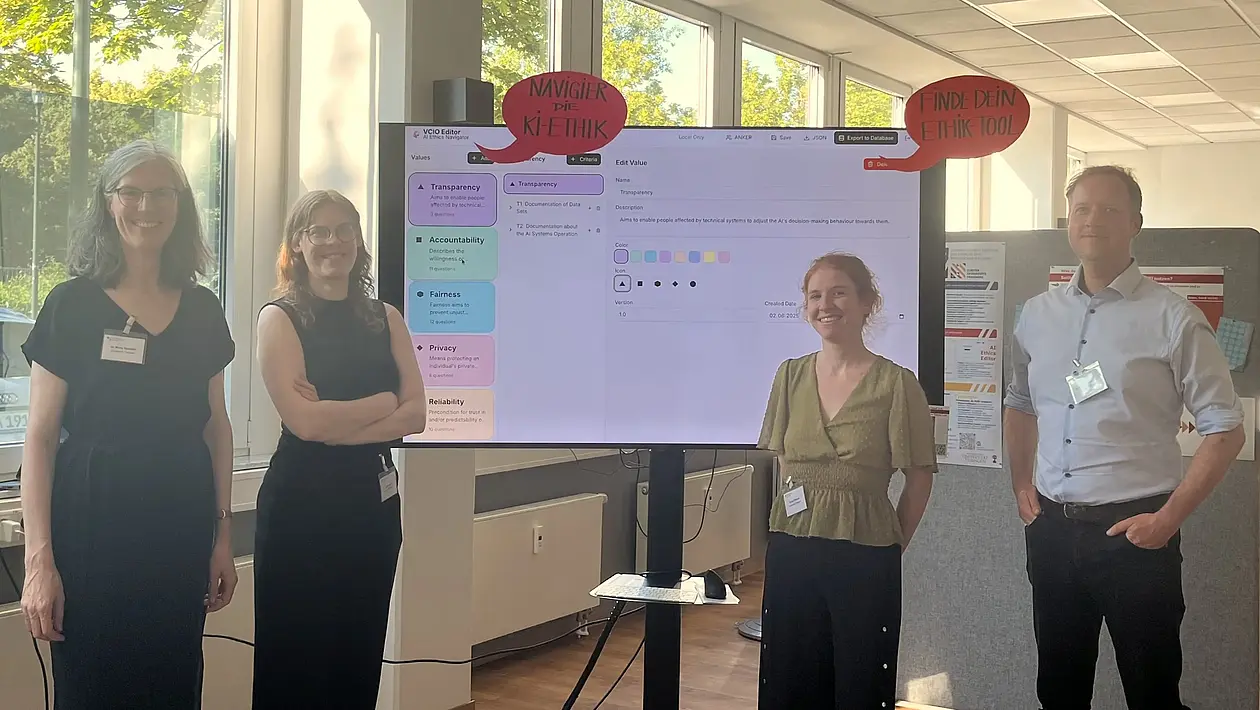
With the AI Ethics Navigator, a first prototypical tool was created as the first anchor object in the ANKER project and tested in the 1st Ethics Workshop together with the researchers from projects of cluster 3 of the Cluster Integrierte Forschung

March 2024
Kick-Off Meeting

The ANKER project team presented the project on March 4, 2024 at the public online kick-off meeting of sub-cluster III within the Integrated Research Cluster. 

Team

Funding

Duration: November 2023 – October 2026

Funding reference: 16SV9223

Funded by the BMFTR

Project Description

While integrated research is generally regarded as a suitable approach for responsible innovation and technology development, the challenges of integrative development are manifold and include epistemic, methodological, communicative and structural aspects. This complexity clearly shows that a systematic approach is needed to develop tools that not only support development in terms of content, but also have the potential to anchor non-technical aspects in the development process. 

To date, systematic research on such tools for integrated research has been lacking and the potential of digital tools has not been fully realized. The ANKER project addresses this gap. It investigates, develops and communicates tools that can serve as "anchor objects" in order to anchor the transdisciplinary negotiation of ethical questions in the heterogeneous forms of knowledge, practices and contexts of the participants as well as in social discourse. From the broad spectrum of integrated research topics, the project focuses on the inclusion of ethical aspects of artificial intelligence (AI) in research and innovation projects.

Specifically, the project pursues a multi-stage approach: it first examines, theoretically and empirically, which characteristics tools must have so that ethical considerations can be effectively anchored in AI development processes. Based on the insights gained, the project team is developing digital tools that are designed to anchor the inclusion of AI ethical aspects. These tools not only aim to provide practicable solutions, but are also intended to serve as a bridge to promote transdisciplinary discussions and negotiations in the field of artificial intelligence between the different forms of knowledge, practices and contexts of the actors involved.

In this context, the integrated research approach plays a key role. Not only are participants in integrative research and development projects the target group of the project, but integrated research is also practiced by the interdisciplinary team (ethics, sociology and computer science) in the project itself.

The aim of the project is to develop a sound understanding of the needs and requirements for tools that effectively anchor ethical considerations in AI development and other areas of integrated research. The tools developed shall not only offer practicable solutions, but also be communicated and optimized together with other project results within the framework of an Open Tools Lab. The lab serves as a platform to support a broad application of the tools and to promote the discussion of ethical aspects in AI development in an open and collaborative environment.

Associated Partners

  • Prof. Dr. Sabine Ammon (TU Berlin)
  • Prof. Dr. Arne Berger (Hochschule Anhalt)
  • Prof. Dr. Christian Djeffal (TU München)
  • Dr. Maximilian Heimstädt (HSU Hamburg)
  • Prof. Dr. Claudia Müller-Birn (Freie Universität Berlin)
  • Prof. Christian Pentzold (Universität Leipzig)
  • Prof. Dr. Sonja Schimmler (TU Berlin / Fraunhofer Fokus)