Center for Plant Molecular Biology

Research Group Grefen

ResearchBackgroundResourcesPublicationsPeopleContact

Site-directed Mutagenesis

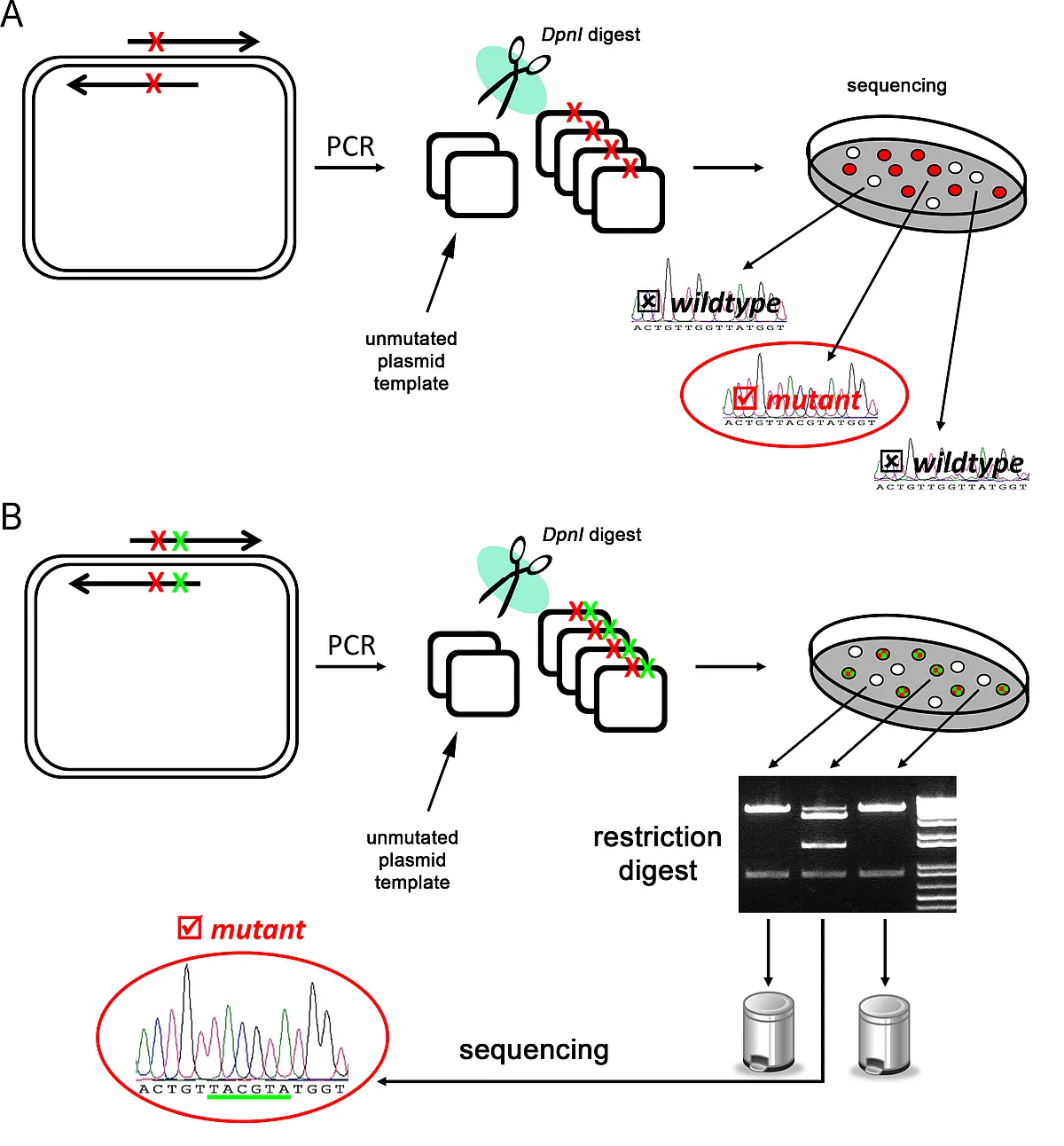
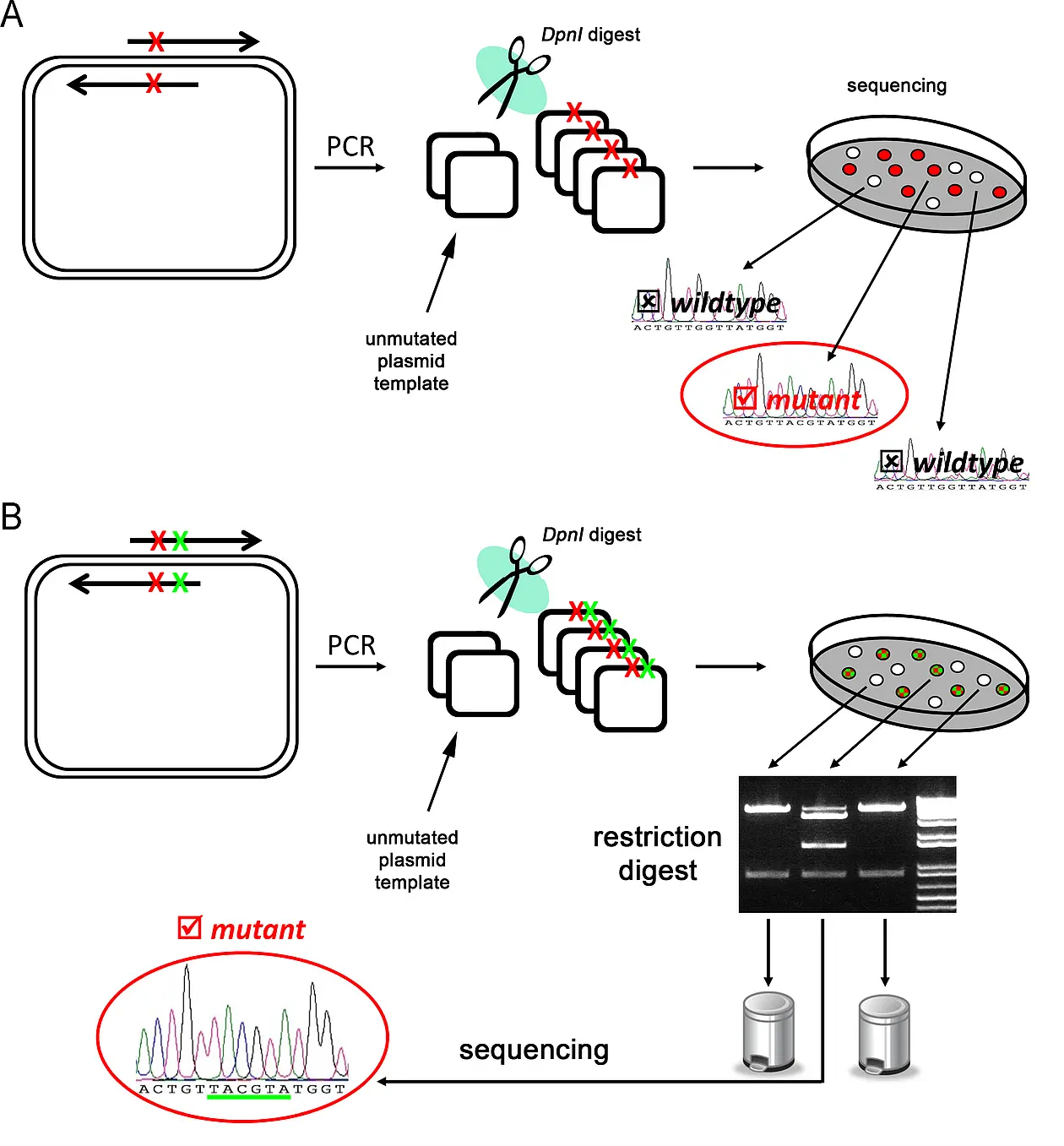
Site-directed Mutagenesis (SDM) is an indispensable tool for structure-function studies. Through a simple PCR reaction with overlapping, complementary oligonucleotide pairs virtually any desired mutation can be introduced in a plasmid-borne gene. The reaction mixture is used to transform E. coli and colonies are screened for mutants through sequencing. To avoid recovery of unmutated template DNA, the PCR reaction is incubated with the restriction endonuclease DpnI which specifically targets and cleaves methylated DNA (see Figure 12).


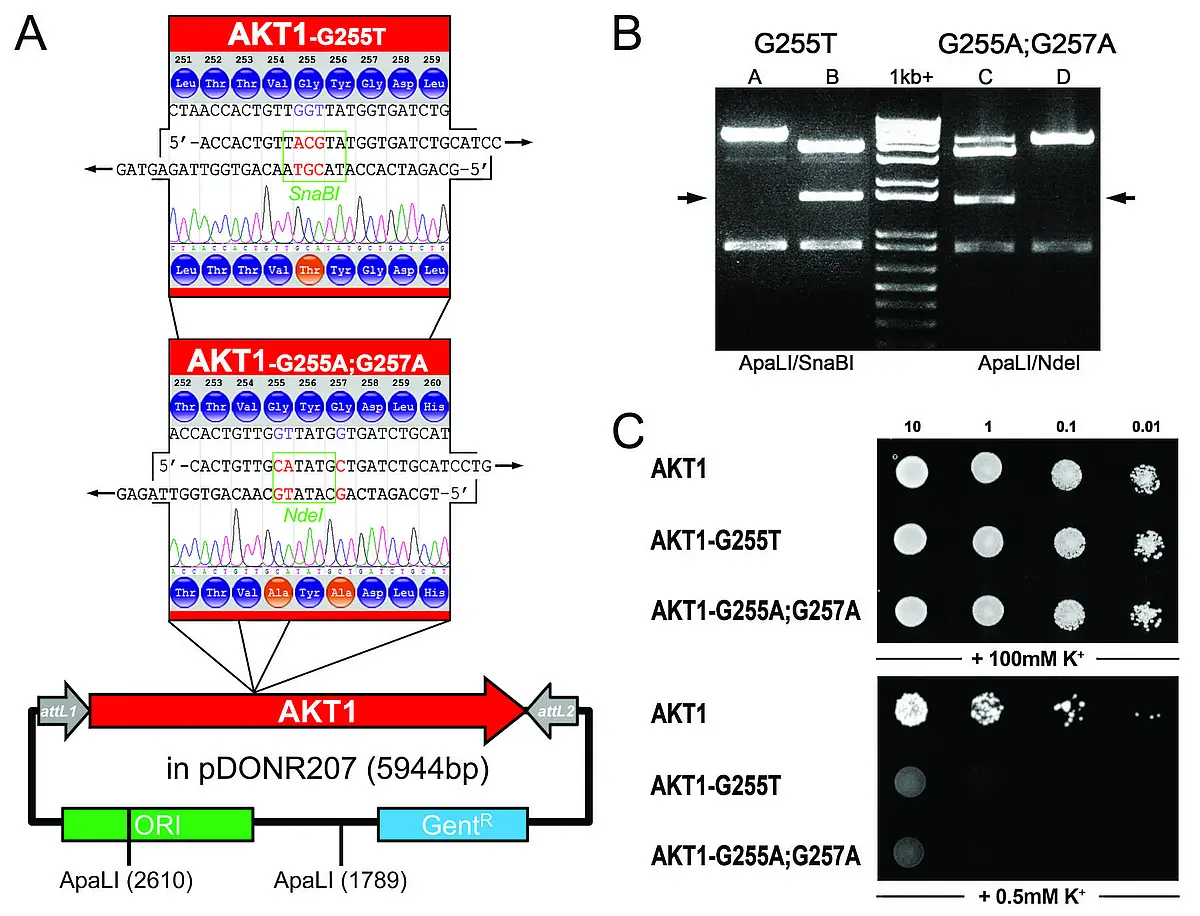
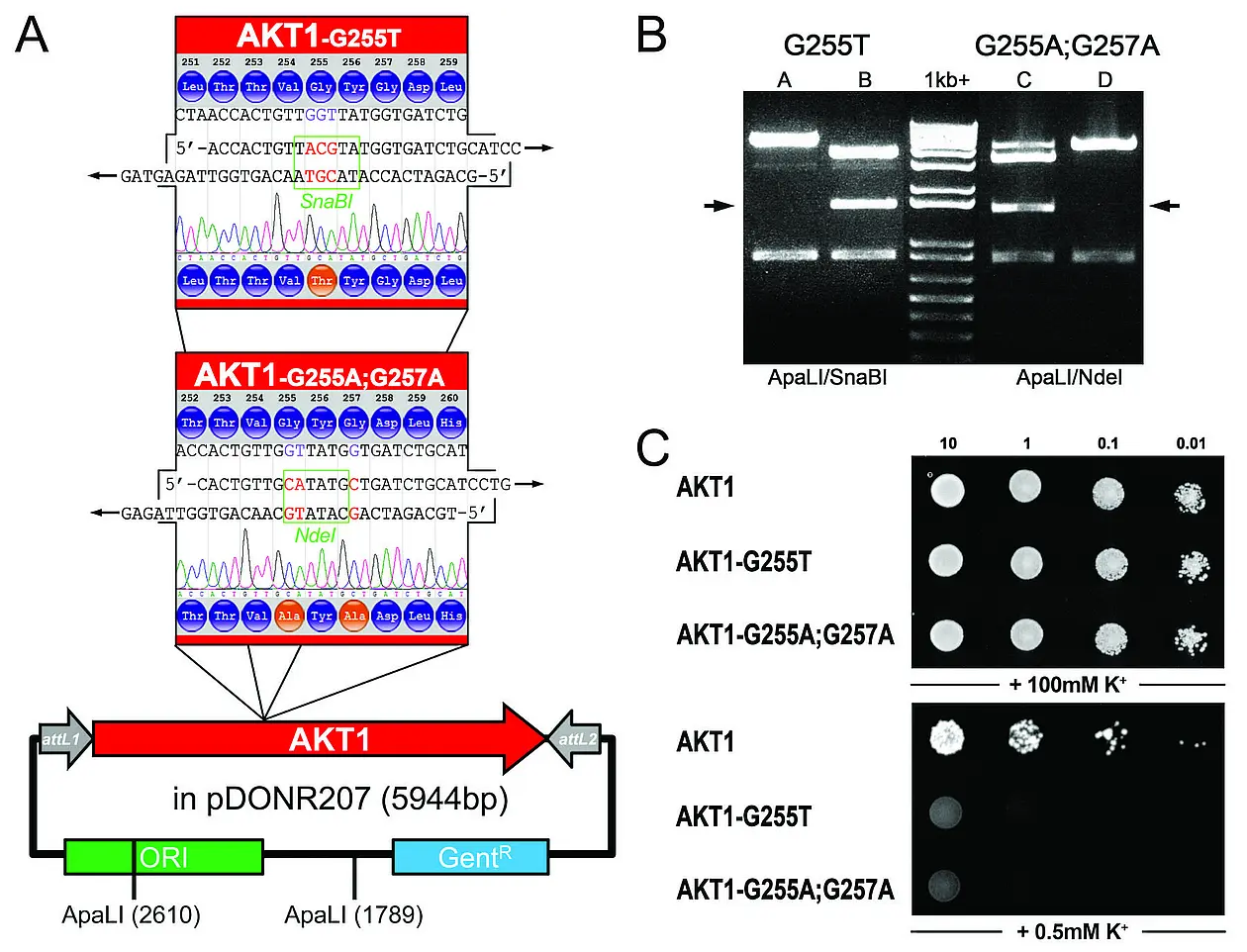
Since PCR does not introduce methylation of the DNA this method reduces the amount of template DNA. However digest with DpnI is sometimes incomplete and does not include cleavage of hemimethylated DNA (template plus mutated strand). An evaluation of all mutated clones generated through SDM in the past five years in our lab (more than 100 different constructs) revealed that a rescue of 20-30% of un-mutated, wildtype plasmids after DpnI digest is inevitable. This means screening more colonies via sequencing which is time-consuming and costly. For that reason some researchers have decided to introduce silent mutations in addition to the desired point mutation which do not alter the protein but allow distinction on DNA level through restriction sites. Designing an oligonucleotide which fulfills this requirement is hard work with pencil and paper and requires skill and time. The silent mutation needs to take into account the frame as well as finding a potential palindromic sequence that is recognized by a certain restriction endonuclease.

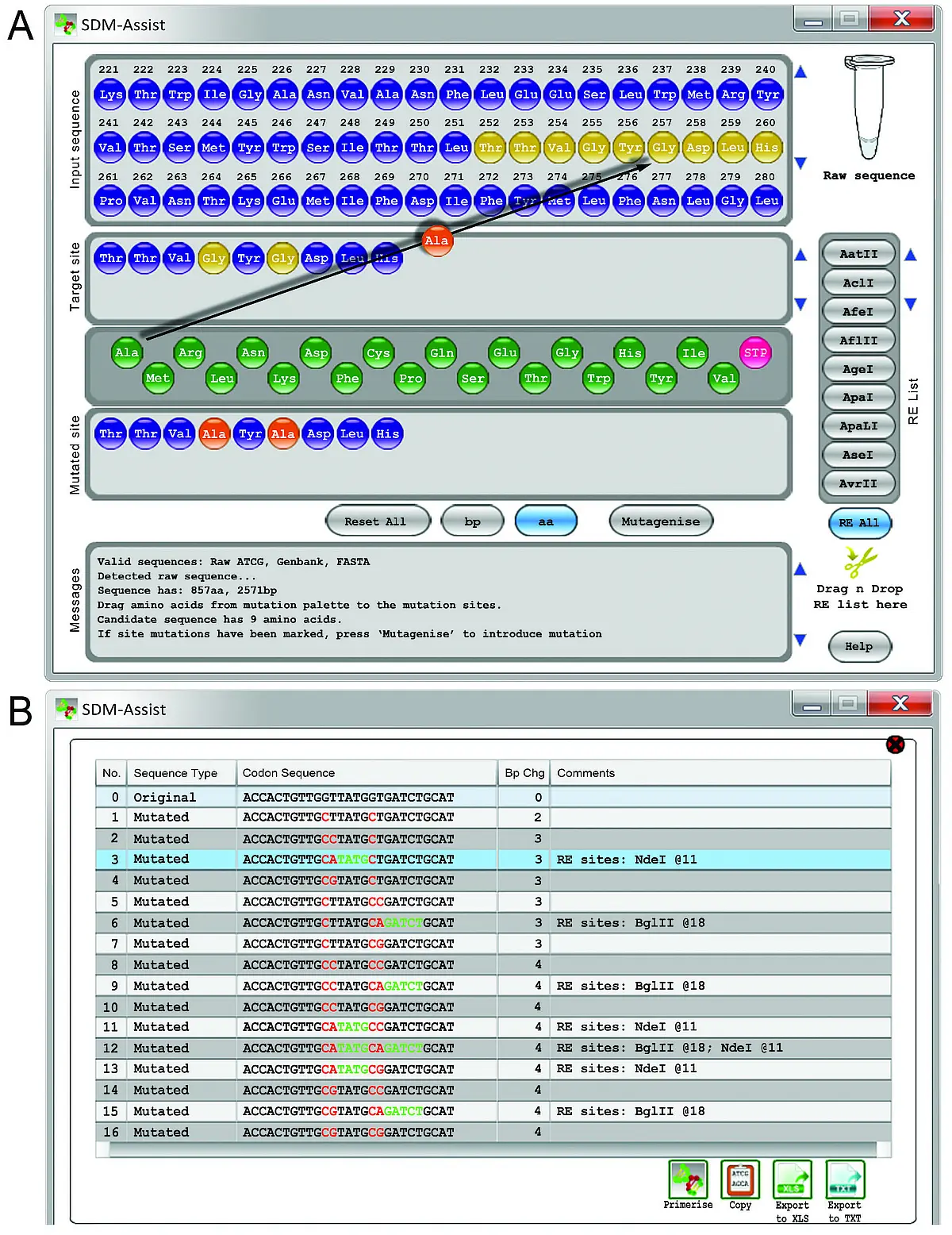
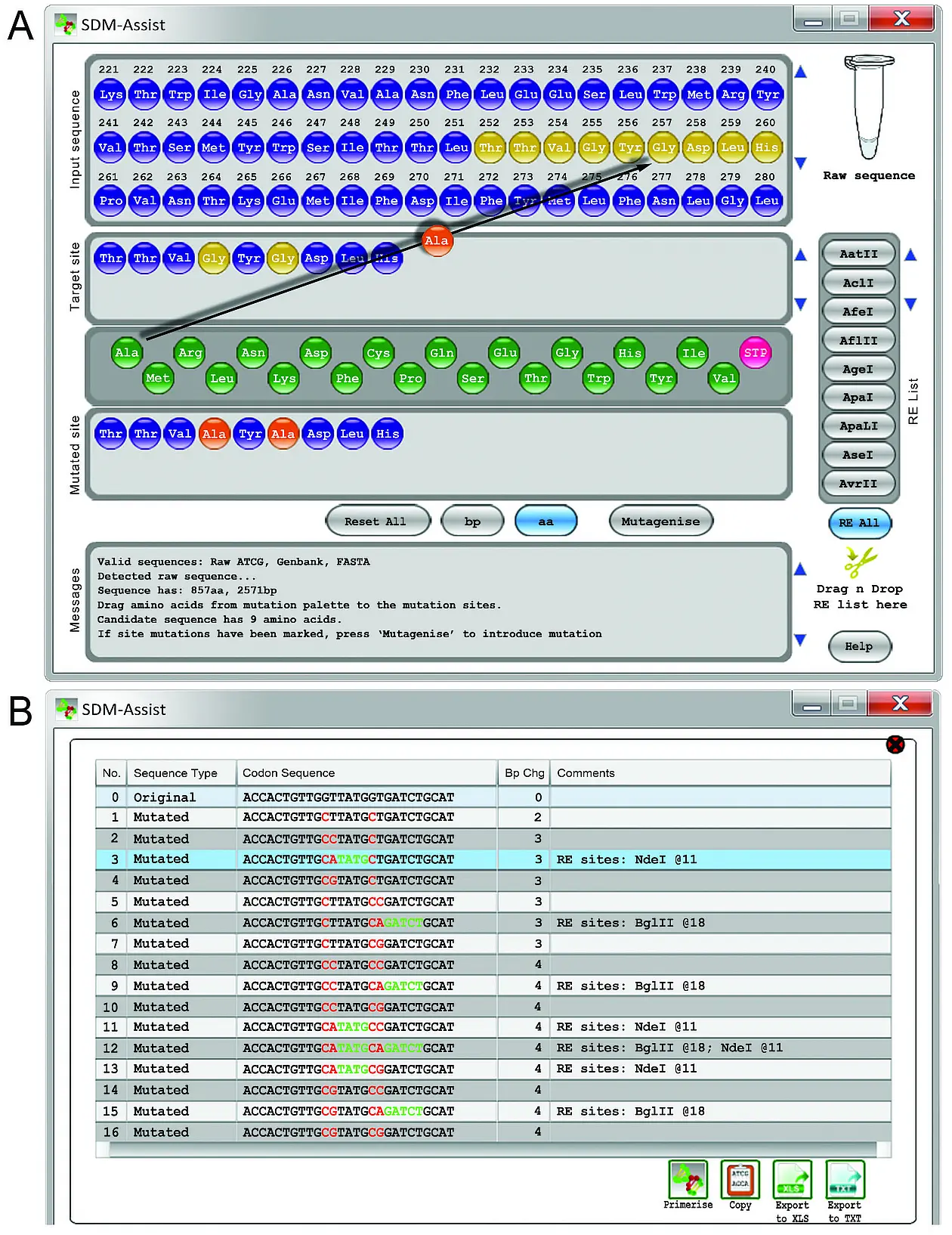
We have programmed a software that allows for simple, reliable and fast detection of SDM primers. SDM Assist will guide the user in three easy steps through the process of primer design allowing to drag and drop the desired mutation directly on the protein sequence, enabling to pick from different “silent” restriction sites and finally offering a range of primers ranked by their thermodynamic parameters. The software is a stand-alone freeware and can be downloaded here. There is also an online video tutorial that provides guidance. For more information download Karnik et al. 2013a or contact us directly.