
News
08.12.2025
Arguing – the Right Way!
Controversy is an essential part of any pluralistic society — and it belongs in our schools.
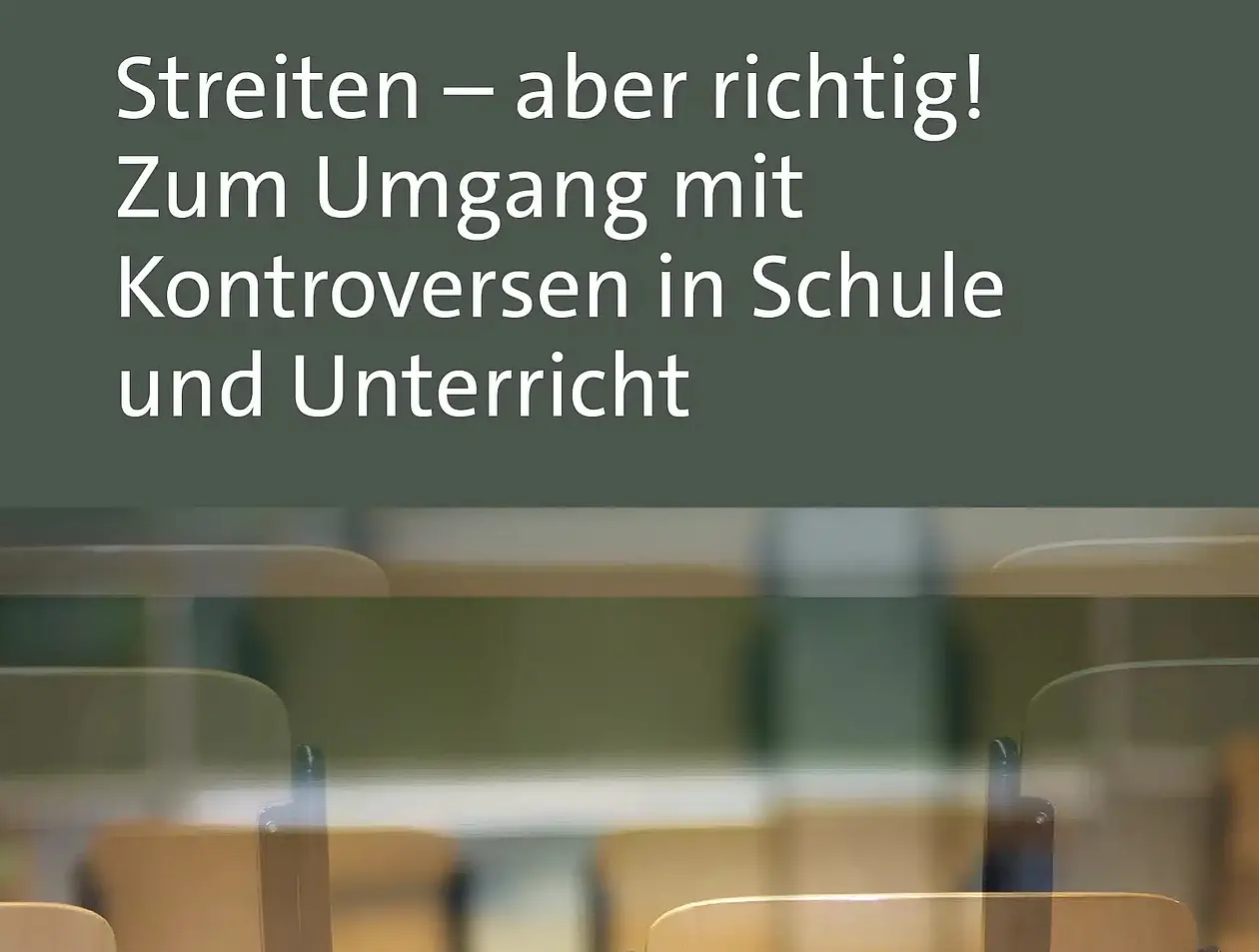
Controversial issues are a sign of a vibrant democratic culture. At the same time, they pose a real challenge for teachers who face them every day when public debates make their way into the classroom.
So what can educators draw on when topics become emotionally charged, when shared points of reference start to crumble, or when lessons suddenly mirror broader social polarization?
Our new edited volume tackles exactly these questions. The contributions explore:
- Didactic and ethical reference points for working with controversial topics
- The role of the Beutelsbach Consensus — including its relevance and its limits beyond political education
- How different subject didactics address controversial issues and translate them into their guiding principles
- Why controversy is a central, cross-curricular concern for all areas of school education
The volume is aimed at teachers, teacher educators, and everyone involved in shaping schooling amid today’s societal debates.
With contributions by Uta Müller, Anja Meitner, Claudia Möller, Julia Hagen, Dominik Balg, Marcus Kindlinger, Victoria Estler, Taiga Brahm, Malte Ring, Uwe Küchler, Wolfgang Polleichtner, Konstantin Broese, Botho Priebe, Salwa Achahboun, Marcel Vondermaßen
Edited by
Dr. Simon Meisch & Dr. Uta Müller, International Center for Ethics in the Sciences and Humanities (IZEW), University of Tübingen
The volume grew out of the expert discussion “The Challenge of Controversy in Schools and Higher Education: Didactic and Ethical Perspectives”, a cooperation between the Special Interest Group: Critical Thinking and Beyond – Normative Questions in Teacher Education and the State Agency for Civic Education Baden-Württemberg.