

29.06.2026
Kristof Meding Becomes a Member of Die Junge Akademie
With his expertise in AI and Law, he helps strengthening the academy’s profile in a key field of the future
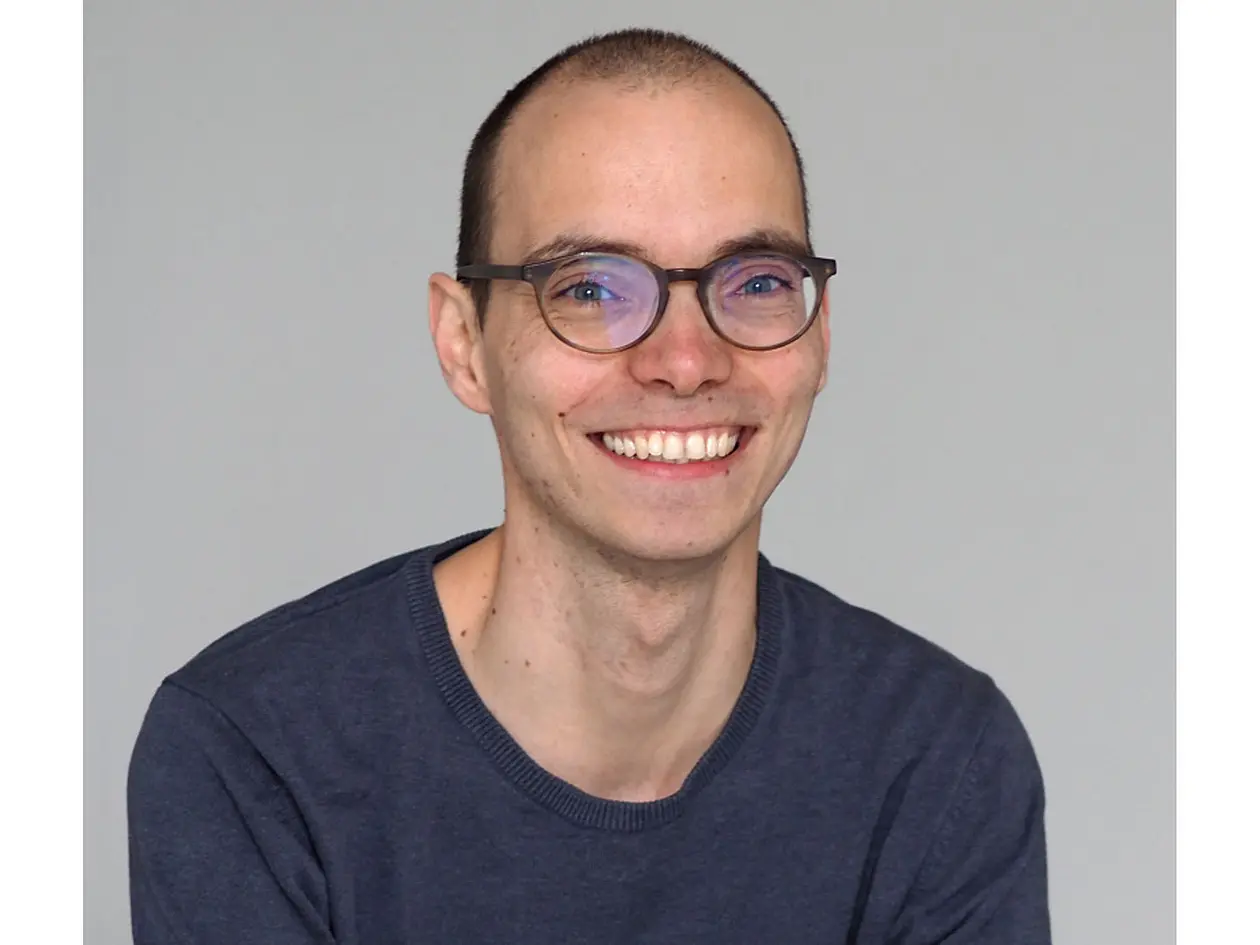
On 27 June 2026, Die Junge Akademie appointed ten scholars as new members. Among them is our cluster member Kristof Meding, who leads the Computational Law Lab at the CZS Institute for Artificial Intelligence and Law at the University of Tübingen.
With the 2026 cohort, Die Junge Akademie gains additional expertise in research fields relevant to addressing key societal challenges. These include, among others, the development and critical reflection of digital technologies, legal, ethical and psychological perspectives on societal change, sustainable energy and mobility systems, as well as climate-, environmental- and behavior-related research.
During their five-year membership, the new members can initiate their own interdisciplinary projects and research groups or participate in existing activities – for example on topics such as climate change, artificial intelligence, or science policy. The 50 members of Die Junge Akademie work and conduct research across disciplines and benefit from a steadily growing network of outstanding scientists and artists. Together, they develop formats at the interface of science, art, society, and politics and provide impetus for the further development of the science system.
The ten new members are:
Prof. Dr. Yuki Markus Asano, Artificial Intelligence, University of Technology Nuremberg
Prof. Dr. Dr. Corinna Coupette, Law/Computer Science, Aalto University and Max Planck Institute for Tax Law and Public Finance
Prof. Dr. Frederic René Hopp, Psychology, Leibniz Institute for Psychology
Prof. Dr. Weihan Li, Energy Storage Technology/Artificial Intelligence, RWTH Aachen
Dr. Kristof Meding, Computational Law, University of Tübingen
Prof. Dr. Franziska Meinherz, Urban and Mobility Geography, Karlsruhe Institute of Technology
Prof. Dr. Eva Pfannerstill, Atmospheric Chemistry, Research Center Jülich and University of Cologne
Dr. Steffen Schneider, Artificial Intelligence/Neuroscience/Statistical Modeling, Helmholtz Munich and KI macht Schule gGmbH
Dr. Luke Dimitrios Spieker, Law, Humboldt-Universität zu Berlin and Max Planck Institute for Comparative Public Law and International Law
Dr. Jessica Szczuka, Human-Computer Interaction/Media Psychology, University of Duisburg-Essen
“Ten impressive individuals are bringing expertise and curiosity to Die Junge Akademie. We look forward to developing new formats with them, setting new accents, and thereby fulfilling our societal responsibility as scholars,” said Dr. Hanna Pfeifer, conflict researcher at the Institute for Peace Research and Security Policy at the University of Hamburg and Chair of Die Junge Akademie.
The ten members of the 2026 cohort were selected by the German National Academy of Sciences Leopoldina, one of the supporting academies of Die Junge Akademie. The German National Academy of Sciences Leopoldina and the Berlin-Brandenburg Academy of Sciences and Humanities alternate responsibility for selecting new members in even-numbered calendar years; in odd-numbered calendar years, the members of Die Junge Akademie themselves elect the new cohort.
After a press release of Die Junge Akademie
Share


