Abang Minko'o 2006 (ABM 06):
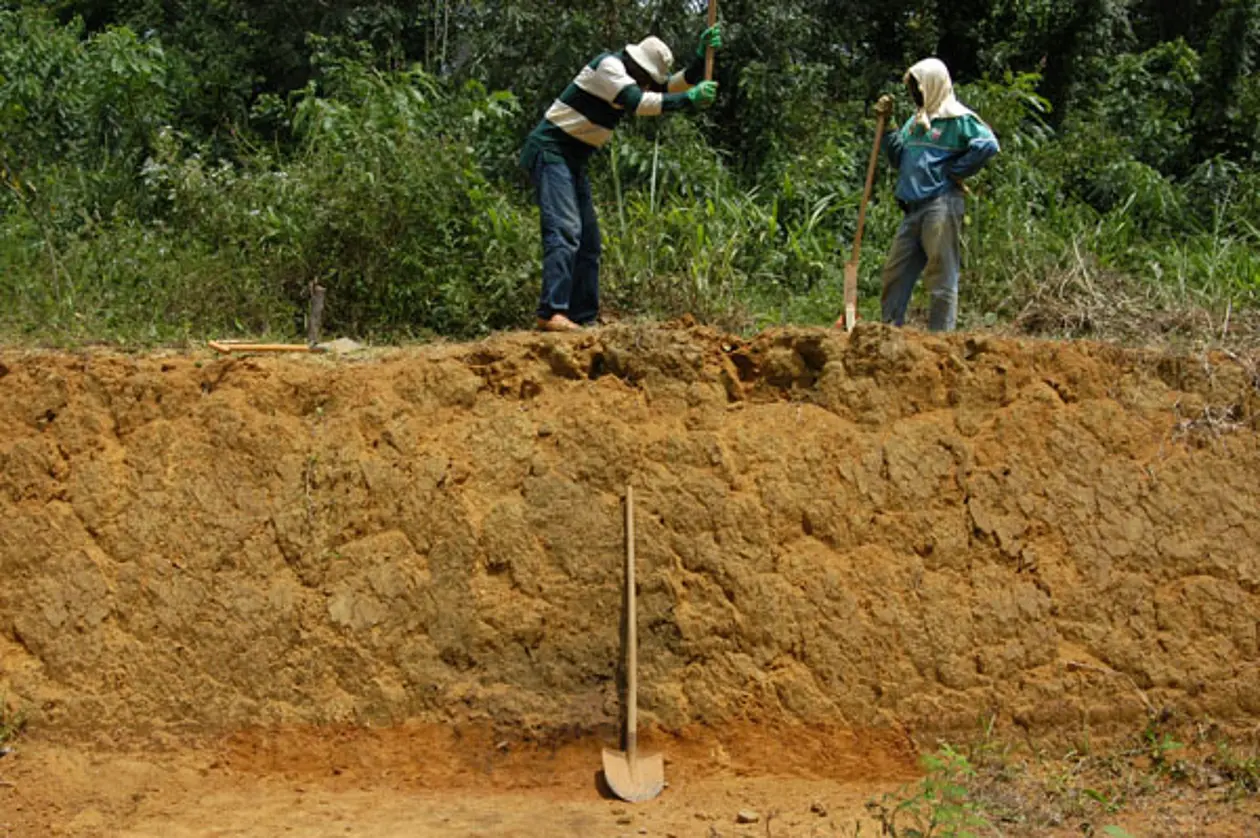
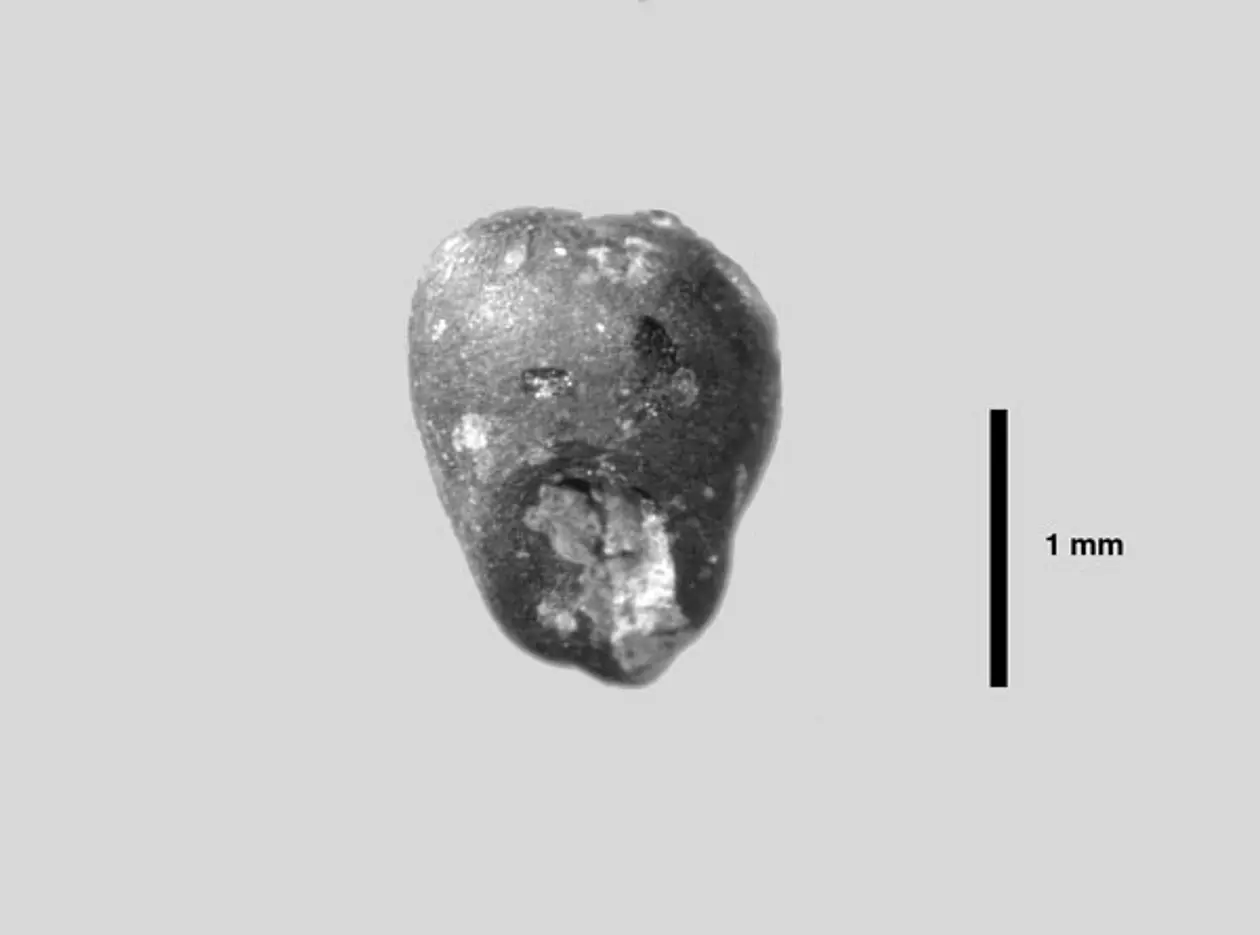
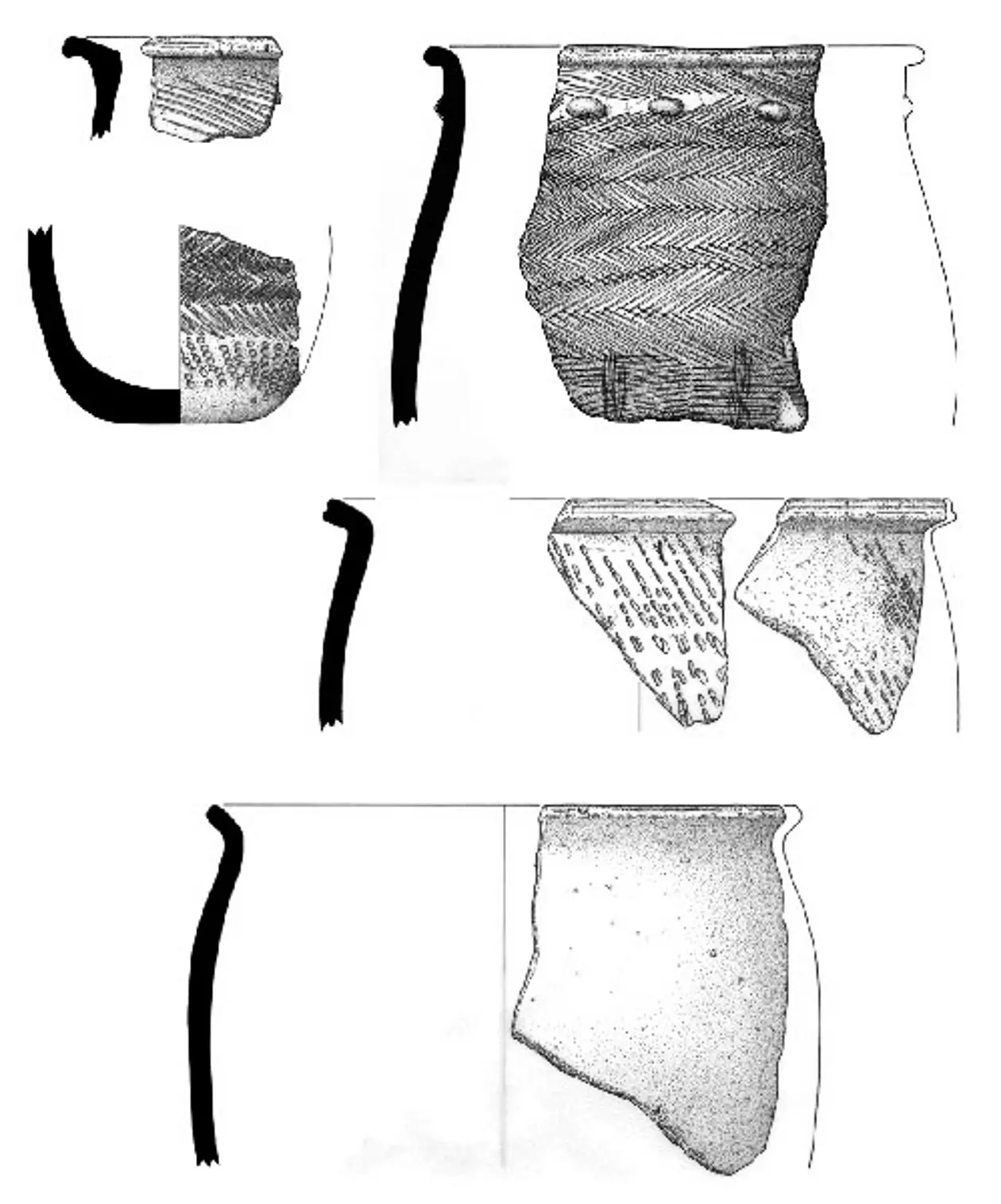
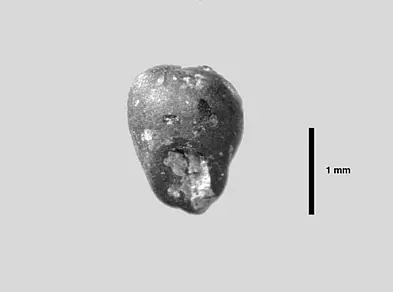
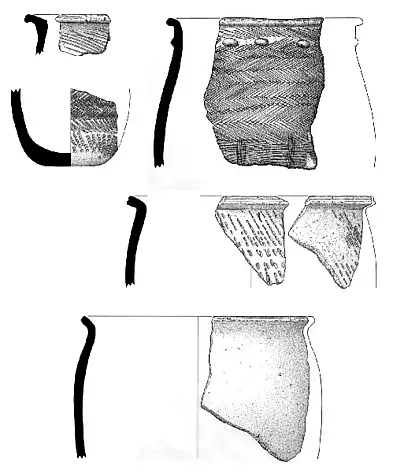
At least ten pits could be discovered during a  reconnaissance of the road along the Transafricana between Ambam and the border to Gabon in 2005 (Fig. 1). Of these, three features were excavated to reveal a few unexpected results. Among others we discovered Pennisetum glaucum (pearl millet; Fig. 2) and a pottery similar to that of Bwambé-Sommet (BWS 04) (see also Eggert et al. 2006 and Fig. 3).
ABM 06/1:
The pit ABM 06/1 mainly contained pottery, stones and charred macrobotanical remains. The ceramics resemble in shape and decoration, with stamped and tocked zig-zags (Fig. 3), those of Bwambé-Sommet , excavated in 2004. Intriguing in this context is the existence of pearl millet at both sites as well as the contemporaneous dating around 2250 BP (Eggert et al. 2006).
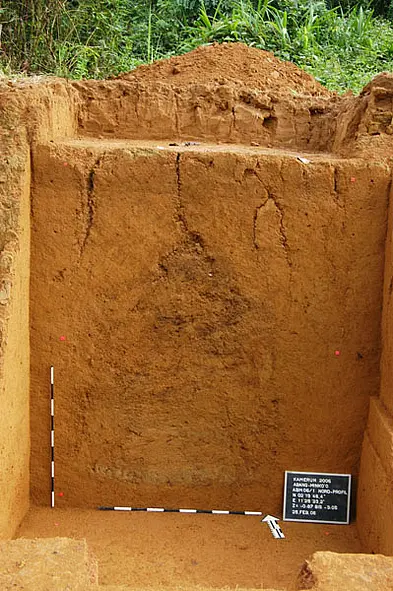
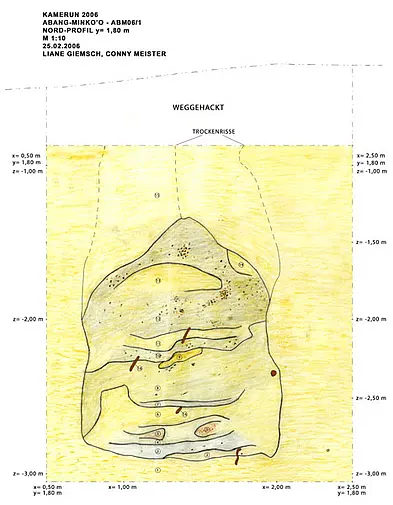
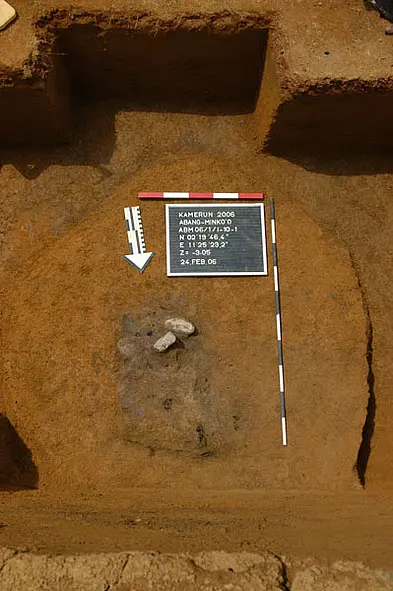
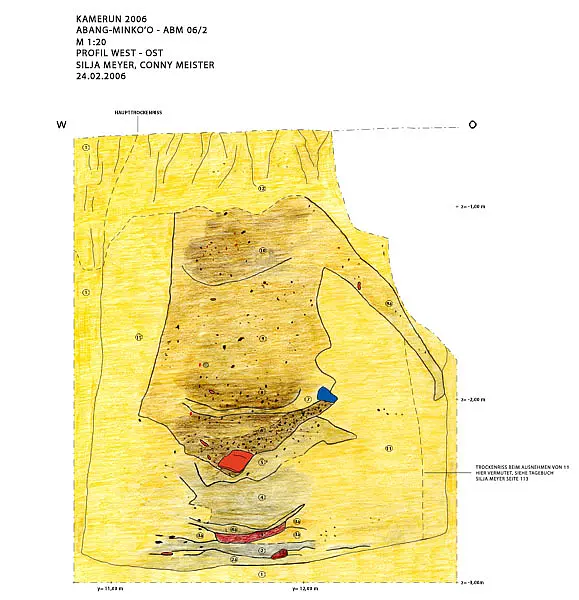
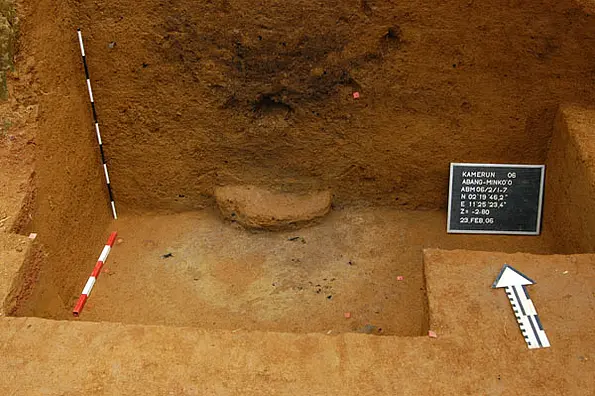
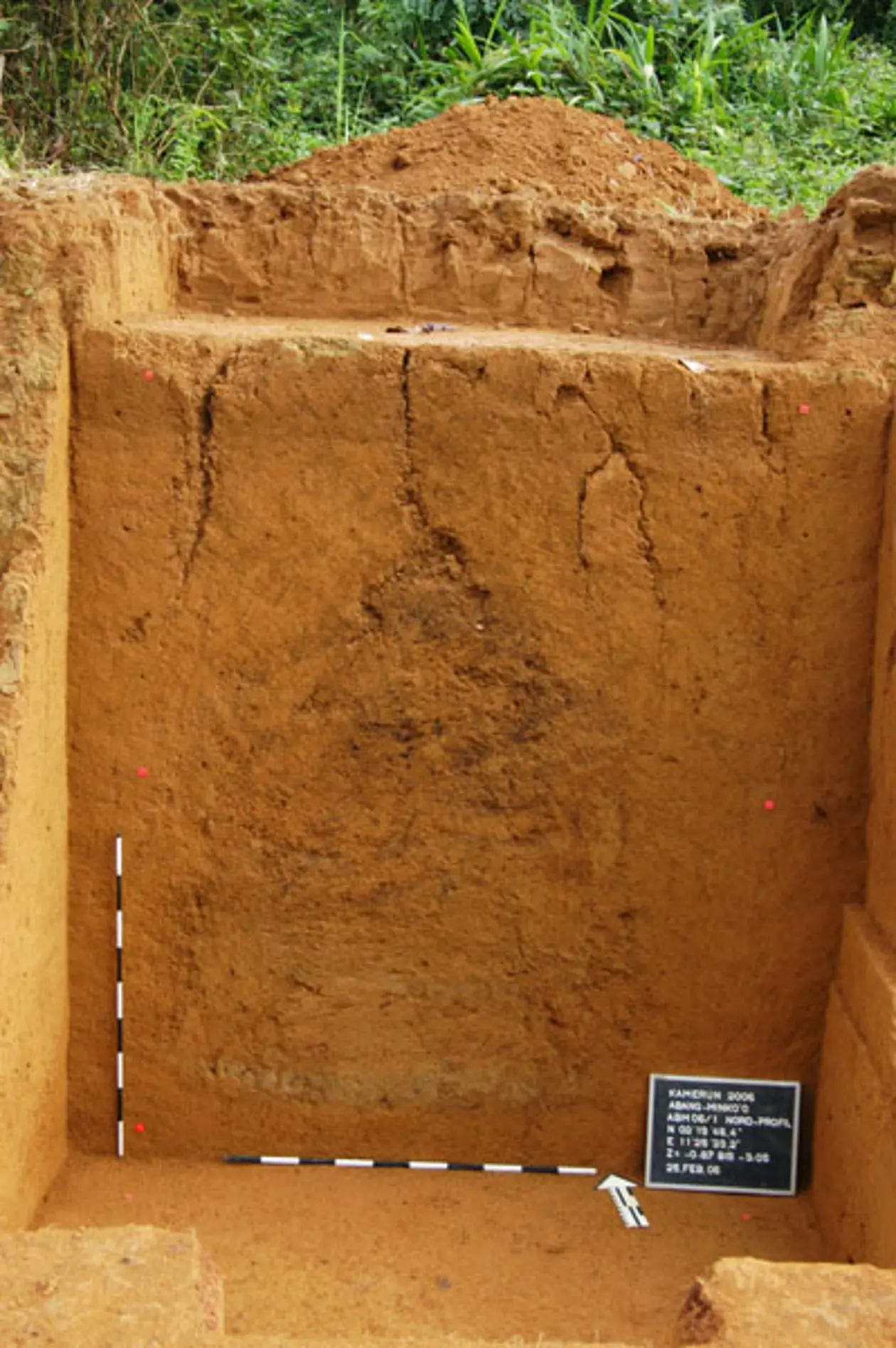
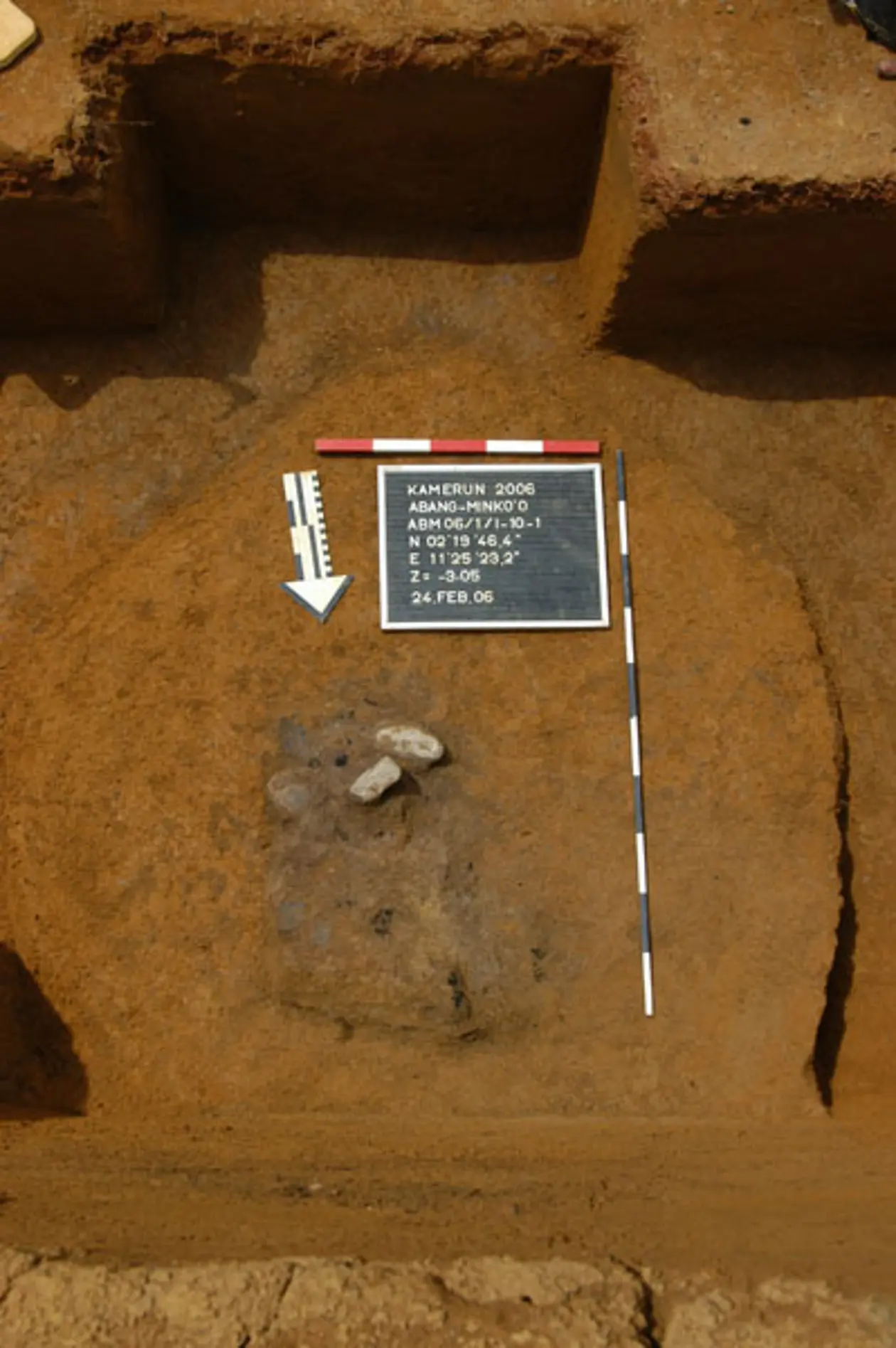
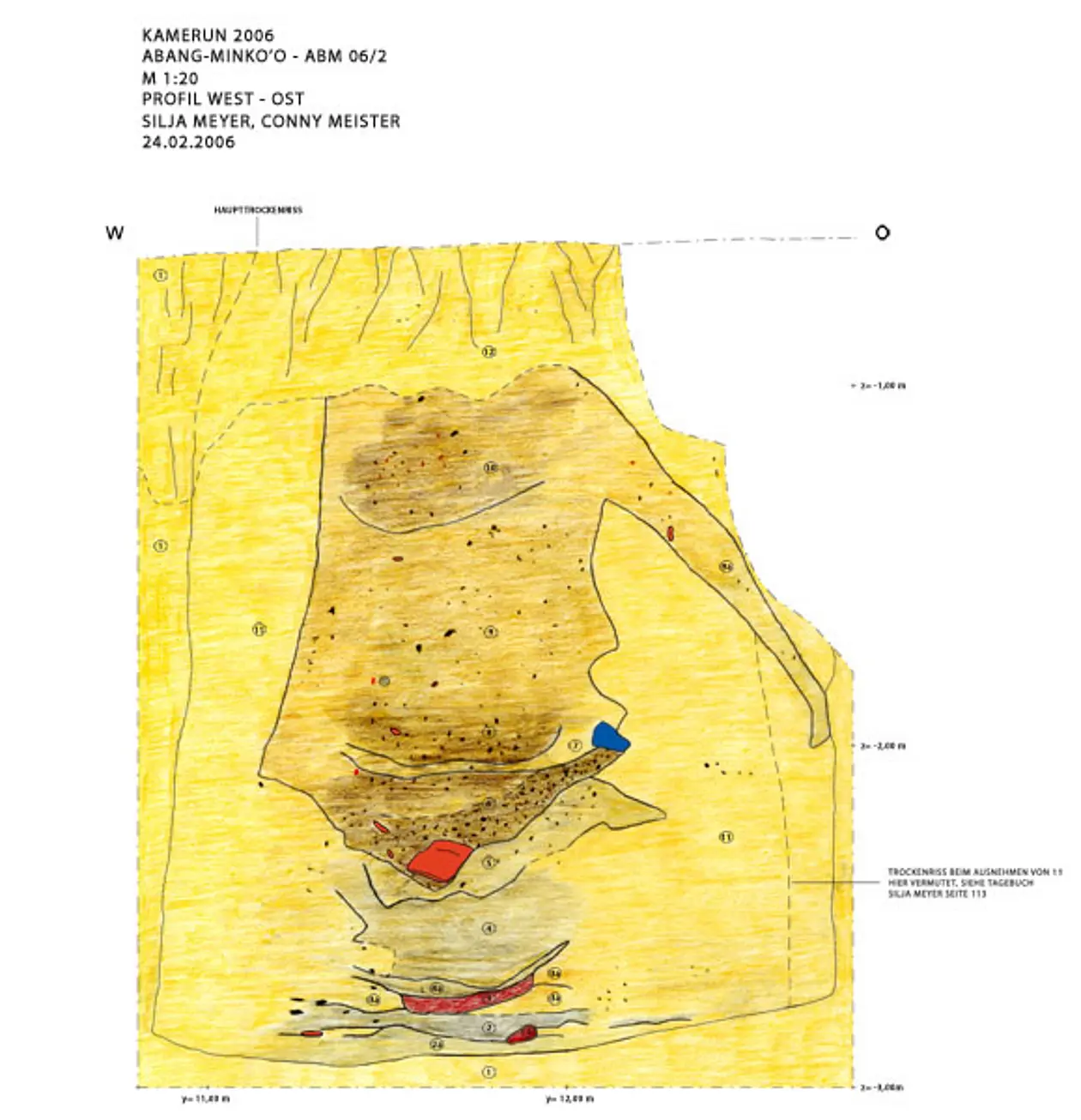
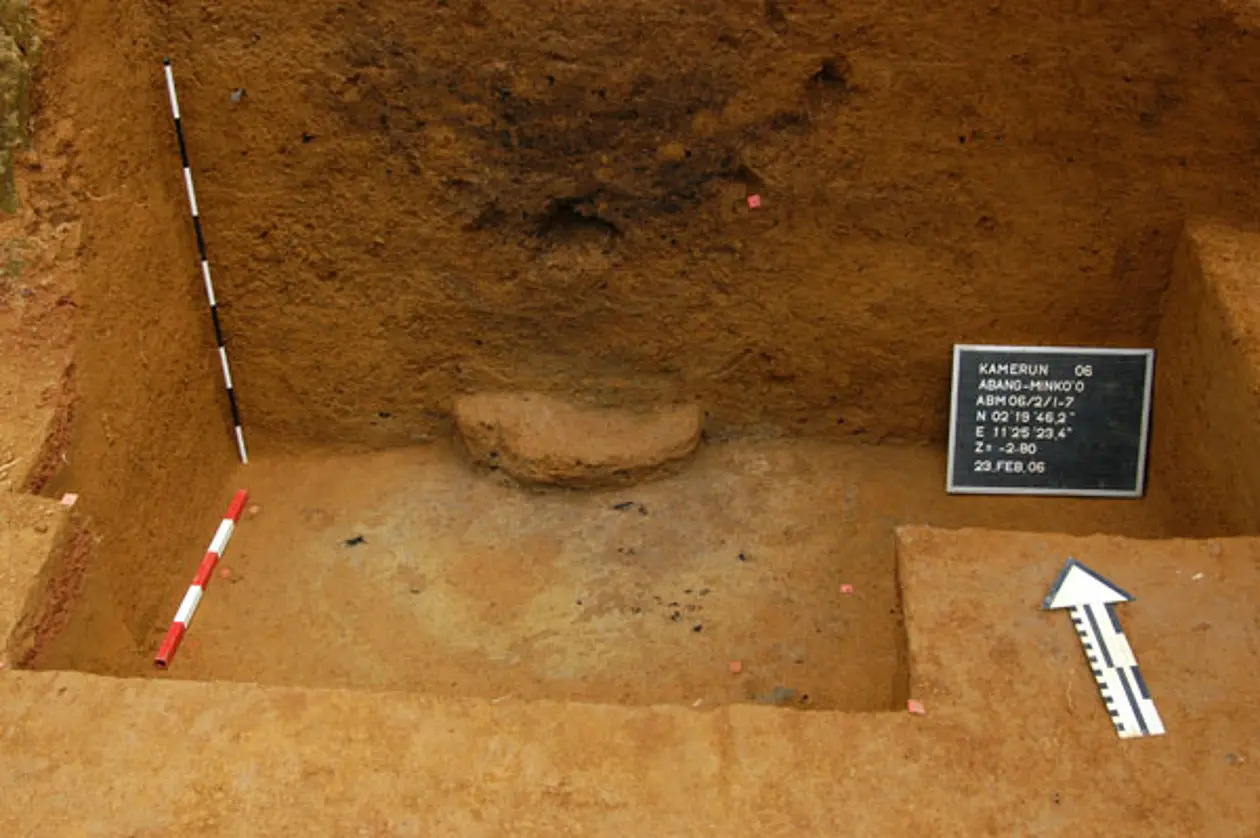
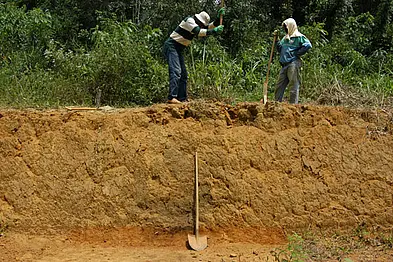
As in Bwambé-Sommet and Akonétye exceeds the pit a depth of 2,50 m (Fig. 4 and Fig. 5). Remarkable was a feature at the bottom of the pit, which consisted of a dark dicoloration and several stones and ceramic fragments, which can be interpreted as tuyère fragments (Fig. 6).