

Maria Pawelec
Research Group Media Ethics, Philosophy of Technology & AI
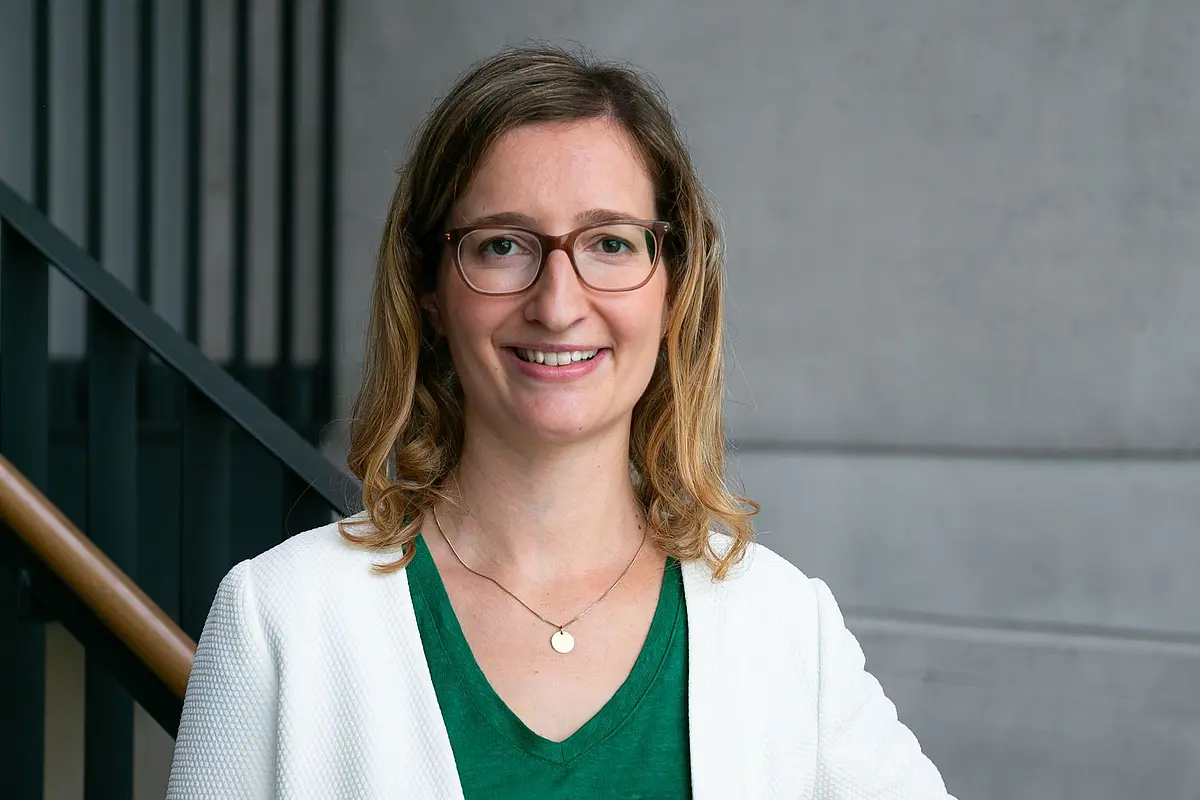
Maria Pawelec studied Politics and Public Administration and Contemporary European Studies in Konstanz, Istanbul, Bath and Berlin. In 2016, she joined the IZEW as a Research Associate working on media and technology ethics. She currently headsthe project “DEEP-PRISMA – Protecting citizens’ privacy and other rights against abuse by deepfakes” at the IZEW and is also researching questions of privacy, ethics, and IT security in the metaverse in the project PriMeta. Her research interests include new technologies and democracy, AI ethics, deepfakes, disinformation, technology and platform governance.
Career
Maria Pawelec studied Politics and Public Administration and Contemporary European Studies in Konstanz, Istanbul, Bath and Berlin. She then worked in the department for “International Relations Europe and its Neighbors” of the Robert Bosch Foundation in Stuttgart. From 2016-2019, she worked as a Research Associate at the IZEW on the project “Ethical implications of IT-export to sub-Saharan Africa (ELISA)”. Additionally, she supported the project Privacy-Arena in and coordinated the preparation of an expert report on behalf of the German Bundestag on the social and psychological impact of technological surveillance. In 2020, she worked on the project “Technological Innovation: Social Science and Ethical Analyses on Governance (TANGO)”. Since 2021, Maria Pawelec has been studying the ethical, political, and societal implications of ‘deepfakes’ and opportunities for their governance. 2022-2025, she researched the prevention of digital desinformation campaign within the project PREVENT. From 2024-2025, she also advised and supported the Federal Agency for Civic Education in creating the dossier “When perceptions deceive - Deepfakes and political reality” and respective educational materials. Since 2025, she is working on questions of privacy and ethics in the metaverse within the project PriMeta. Since 2026, she heads the project She currently leads the project “DEEP-PRISMA – Protecting citizens’ privacy and other rights against abuse by deepfakes” at the IZEW. She also delivers scientific and public talks and workshops on deepfakes, disinformation, and the influence of artificial intelligence on democracy.
Publications
| Journal articles |
|
| Monographs |
|
| Book chapters and conference contributions |
|
| Policy advice |
|
| Project publications |
|
| Further contributions |
|
| Editorial board |
|
Interviews and media appearances
- “Fake Reisetipps von der KI: Mit dem Nordlichtzug durch Norwegen? Vergessen Sie's, es gibt ihn nicht!” [Fake travel tips from AI: Travelling through Norway on the Northern Lights Train? Forget it – it doesn’t exist!], article by Niels Kruse in stern magazine, 25 May 2026.
“Ausrede KI: Wie Deepfakes Vertrauen in echte Inhalte zerstören” [AI as an excuse: How deepfakes are eroding trust in genuine content], article by Sophie Rohrmeier in BR Faktenfuchs, 22 May 2026.
“Wie Deepfakes Vertrauen zerstören” [How Deepfakes Destroy Trust], article by Andrea Wüstholz in the Waiblingen Newspaper, 18 April 2026.
“Wie KI-Fakes bestätigen, was wir sowieso schon glauben” [How AI fakes confirm what we already believe anyway], article by Sophie Rohrmeier in BR Faktenfuchs, 2 April 2026.
“Der Fall Fernandes - Was tun gegen Deepfakes?” [The Fernandes case - What can be done about deepfakes?], discussion on the SWR Kultur Forum with Jacqueline Sittig, Dag Schölper and Marion Theis, 24 March 2026.
“Fake-Accounts und gefälschte Videos: Collien Fernandes zeigt Ex-Mann Christian Ulmen an” [Fake accounts and doctored videos: Collien Fernandes reports ex-husband Christian Ulmen to the police], live interview on Welt TV with Nele Würzbach, 20 March 2026.
“Immer mehr Fake-News und Desinformation: Ein Thema auch in Ihrem Alltag?” ['More and more fake news and disinformation: an issue in your everyday life too?'], discussion (live) in the show “Tagesgespräch” [talk of the day] moderated by Stefan Parrisius on BR (radio) and ARD alpha (television), 6 November 2025.
“Gekommen, um zu bleiben” [‘Here to stay’], article by Andreas Scholz in the Haller Tagblatt, 28 October 2025.
“Experten fordern KI-Regeln für Landtagswahlkampf” [Experts call for AI rules in state election campaign], interview in the Evangelische Zeitung, 19 Oktober 2025.
“Sorgenvoller Blick auf die Landtagswahl" [A worried look at the state election], interview in the Stuttgarter Zeitung, 18 Oktober 2025.
“Disinformation through deepfakes – media manipulation in the age of artificial intelligence”, interview in “Das Gymnasium in Bayern – Die Zeitschrift für Lehrerinnen und Lehrer an Gymnasien und Beruflichen Oberschulen” [The Gymnasium in Bavaria – The magazine for teachers at grammar schools and vocational secondary schools], special issue “Democracy and education in challenging times”, pp. 36–37, September 2025.
- “KI-Stimmen – Täuschend echt?” [AI voices – deceptively real?], interview with Martin Schramm in the podcast “IQ – Science and Research”, BR – Bayerischer Rundfunk, 29 July 2025.
- “KI-generierte Geflüchtete: Kann ein Avatar für echte Schicksale sensibilisieren?” [AI-generated refugees: Can an avatar raise awareness for real-life plights?], Interview with Marcus Richter in “Breitband”, Deutschlandfunk Kultur, 19 July 2025.
“Deepfakes – Vier Learnings von den Stuttgarter Tagen der Medienpädagogik” [Deepfakes - Four Learnings from the Stuttgart Days of Media Education", article by Madeleine Hankele-Gauß, Federal State Media Center Baden-Wuerttemberg, 18 March 2025.
“Satire mit KI-Fakes: Zwischen Humor und Falschinformation” [Satire with AI Fakes: Between Humour and False Information], article by Sophie Rohrmeier, BR24 Faktenfuchs, 15 February 2025.
“Über Geschichte aufklären können: Deepfakes als Chance für die politische-historische Bildung” ["Being able to educate about history: Deepfakes as an opportunity for political-historical education"], radio programme by Sam Howe in “Campus und Karriere”, Deutschlandfunk, 27 January 2025.
“Ein Bild reicht: Warum Deepfakes vor allem Frauen schaden” [One image is enough: Why deepfakes harm women in particular]. Interview with Hannah Moormann, University of Tübingen, 10 January 2025.
„Unmöglich, sich zu schützen“: Erschreckend viele Frauen werden Opfer von Deepfake-Pornografie ["Impossible to protect oneself": A alarming number of women becomes victim of deepfake pornography]. Article by Anika Zuschke, Frankfurter Rundschau, 2 April 2024
«Superwahljahr 2024»: Open AI sagt, Chat-GPT könne nicht für politische Kampagnen eingesetzt werden. Diese Recherche zeigt das Gegenteil. ["Super election year 2024": Open AI says chat GPT cannot be used for political campaigns. This investigation shows the opposite]. Article by Gioia da Silva, Neue Züricher Zeitung, 14 February 2024.
Erste Parteien machen in Sachsen Politik mit künstlicher Intelligenz - Experten warnen. [First parties in Saxony are using artificial intelligence in politics - experts warn]. Article by Jim Kerzig, Freie Presse Sachsen, 22 January 2024.
Wir generieren uns eine eigene Realität. [We are generating our own reality]. Article by Olaf Pollaske in the CHIP magazine 01/2024, 5 January 2024.
Pizza beim Parteitag der Grünen: So bewerten Experten den KI-Fake vom Grünen-Parteitag [Pizza at the Green Party conference: How experts assess the AI fake from the Green Party conference]. Article by Sascha Maier in the Stuttgarter Nachrichten, 30 November 2023.
Let's assume that artificial intelligence replaces us. What then? tagesschau future podcast "mal angenommen" by Kristin Becker and Gábor Halász, 5 October 5 2023.
Dangers of Deepfakes for Media Credibility. Interview on Radio Bremen Zwei, 22 September 22 2023.
Deepfakes – Mediale Glaubwürdigkeit in Gefahr (A threat to media credibility). Interview with Sebastian Wellendorf in the programme "mediasres", 21 September 2023.
Deepfake Music? Wie die Technologie Einfluss auf die Musik nehmen kann. [How the technology can influence music.] 4-part mini-series by Kathrin Schunn, Karlsruhe University of Music, published on the Junge Kulturkanal, 3 September 2023.
You as a clone! Fraud using your voice, report (in German) by Tasnim Rödder for the regional public broadcasting corporation SWR as part of the documentary series "VOLLBILD", 18 July 2023.
Deepfakes: What are the risks, but also the opportunities for our society? Report by Maximilian Brose for the programme "Systemfragen", 1 July 2023 (more information here).
Wie groß ist die Gefahr von Deepfakes? [How big is the danger posed by deepfakes really?], Podcast by the project digilog@bw with Uwe Gradwohl, 17 December 2021.
Deepfakes als Gefahr für die Demokratie: Wie digitale Bild- und Tonfälschungen unser Vertrauen untergraben [Deepfakes as a threat to democracy: How digital image and audio fakes undermine our trust], i
Talks and presentations
| Invited talks |
|
| Conference presentations |
|
Policy advice and science communication
| Policy advice |
|
| Science communication |
|
| Workshops |
|
Awards
2021: Student Best Paper Award of the conference CEPE/IACAP 2021 for the paper "Deepfakes and Democracy (Theory): How Synthetic Audio-Visual Media for Disinformation and Hate Speech Threatens Core Democratic Functions".
Peer Review
- Humanities and Social Sciences Communications (January 2026)
- Information, Communication and Society (December 2025)
- AI & Ethics (November 2025)
- Advice on the structure and content of the handbook Ginsborg, Lisa and Paula Gori (2026): “Disinformation: A Multi-Disciplinary Analysis” (April 2023)
Completed projects
- PREVENT (2022-2025, BMBF): Training approach to communicate individualized, coordinated, and automated measures to prevent digital disinformation campaigns
- digilog@bw (2021-2022, Baden-Württemberg Ministry of Science, Research and the Arts): 'Digitalization in Dialogue'
- TANGO (2020, BMBF): ‘Technological Innovation: Social Science and Ethical Analyses on Governance (TANGO)’
- ELISA (2016-2019): ‘Ethical Implications of IT-Exports to Sub-Sahara Africa‘
- Expert report on behalf of the German Bundestag on the social and psychological impact of technological surveillance (2017)
- Privacy-Arena (2016, BMBF): ‘Research Project for a Cartography and Analysis of the Privacy-Arena’