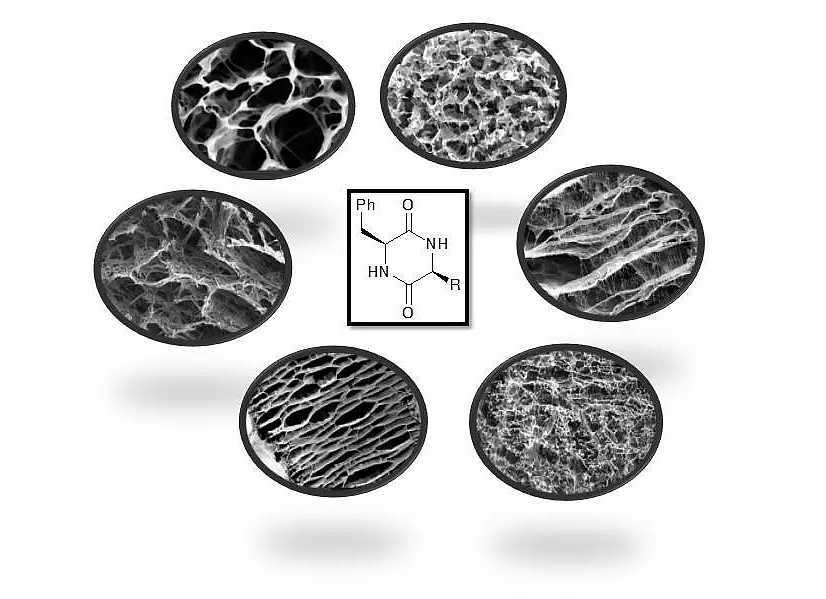
The self-assembly of small peptides is aqueos solutions is a difficult task since hydrogen bonding interactions are heavily disturbed by competing solvent interactions. In general small peptides which are designed to self-assemble in water, for example to generate hydrogels, need to be unnaturally modified either at their N- or C-terminus with highly lipophilic groups to induce strong Van-der-Waals interactions. As an alternative, aromatic residues such as Fmoc-protecting groups, are installed to cause pi-stacking interactions. We could recently find the lowest molecular weight peptide-based hydrogelators based on unmodified proteinogenic amino acids. These cyclic dipeptides (diketopiperazines) can be easily synthesized, are biodegradable and can be combined to form novel hydrogels with easy tunable morphological and mechanical properties. link