

Working Group “AI and Global Justice”
Artificial Intelligence (AI) has long been recognized as a highly transformative technology with the potential to generate societal impacts comparable to those of electricity or the Industrial Revolution. At the same time, critical and decolonial research has shown that the benefits and costs of AI are not distributed equally across the globe, nor is the opportunity to actively shape the development of the technology and related debates. In short, the Global North benefits disproportionately from the current development and deployment of AI, e.g. through advanced connectivity, robust digital infrastructures, widespread technological access, and the economic gains generated by Northern-based Big Tech companies. By contrast, the Global South bears a disproportionate share of the associated social, economic, and environmental costs, including the extraction of raw materials for digital hardware, the exploitation of labor in the clickwork sector, practices of data colonialism, the disposal of digital waste, and the environmental damage caused by the high energy consumption and CO₂ emissions of AI data centers. Beyond these material inequalities, there are also far-reaching epistemic injustices. On the one hand, these injustices concern the unequal visibility and recognition of knowledge and experiences from the Global South related to AI across scientific, ethical, and fictional discourses. On the other hand, they manifest in the marginalization of underrepresented languages, value systems, and forms of knowledge through biased data-driven decision-making systems and generative AI technologies such as image generators and large language models. To adequately address the global challenges arising from the AI-driven transformation of contemporary societies, it is essential to incorporate diverse perspectives rooted in different regional, cultural, and epistemic contexts. This is where the Working Group “AI and Global Justice” comes in.
The Working Group examines how global injustices manifest, intensify, and transform in the context of AI, and explores pathways toward the globally just use of—and critical engagement with—AI technologies in contemporary societies. To this end, we explore challenges to global justice arising in the context of AI and develop approaches to addressing them in collaboration with researchers from both the Global South and the Global North. An interdisciplinary and multi-perspective approach will be adopted, with particular attention to theories, experiences, and practices emerging from the Global South, as well as from other groups that remain underrepresented in dominant AI discourses, including women and indigenous communities. Drawing on approaches such as decolonial theory, diversity-sensitive design, pluriversal design, and Culturally Centered AI, the Working Group seeks to engage with alternative perspectives in order to foster more holistic debates and to develop impulses for more just technological futures.
Members
Lead:
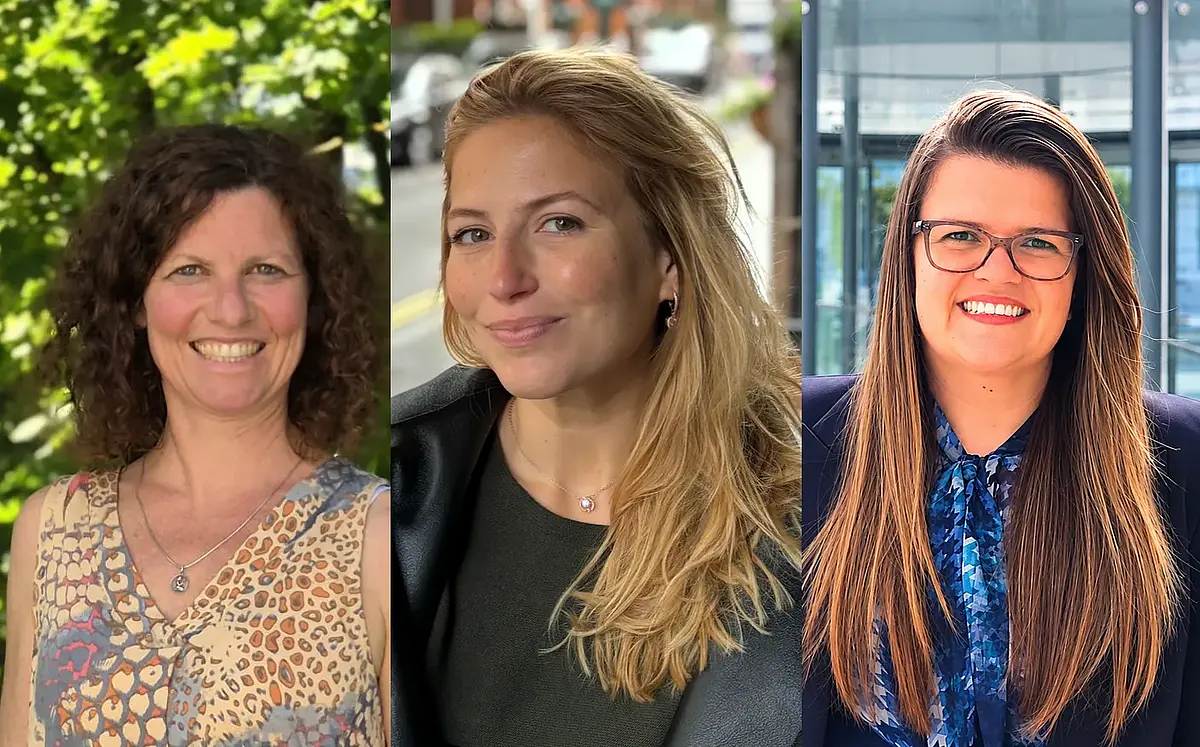
Anne Burkhardt (PhD), Research Associate (AI & Visual Culture; AI & Global Justice), RHET AI Center/Institute of Media Studies, University of Tübingen, Germany. Website: https://uni-tuebingen.de/en/228952. E-Mail: anne.burkhardtspam prevention@uni-tuebingen.de
Beatrice Bonami (PhD), Research Fellow (Planetary Networks of AI Systems; Science and Technology Studies), School of Social and Political Science, University of Edinburgh, UK. Website: https://www.beatricebonami.com/. E-Mail: bbonamispam prevention@ed.ac.uk
Francielle Vargas (PhD), Assistant Professor - Computer Science (Trustworthy AI; Explainable AI; AI Transparency and Accountability; Human-AI Alignment), Data and Artificial Intelligence Initiative (IDIA), Faculty of Physical and Mathematical Sciences, University of Chile, Santiago, Chile. Website: https://franciellevargas.github.io/. E-mail: francielle.alvesspam prevention@uchile.cl []
Associate Members:
Maha Bali (PhD), Professor of Practice (Socially Just Care, Critical Pedagogy, Educational Technology, Critical AI Literacies), Center for Learning and Teaching, The American University in Cairo, Egypt. Website: https://www.aucegypt.edu/fac/maha-bali; https://blog.mahabali.me/bio. E-Mail: balispam prevention@aucegypt.edu
Seydina Ndiaye (PhD), Senior Lecturer (Computer Science), Science, Technology and Digital Department, Cheikh Hamidou Kane Digital University, Dakar, Senegal. Head of FORCE-N program, ALIVE Living Lab; member of UNESCO High-Level Expert Group on AI Policy. Website: https://aiforgood.itu.int/speaker/seydina-moussa-ndiaye/. E-Mail: seydina.ndiayespam prevention@unchk.edu.sn
Julio Cesar Gaitan Bohorquez (PhD), Full Professor, Faculty of Law/Public Law Research Group (Rights of Minorities in Digital Development), Universidad del Rosario, Bogotá, Colombia. Website: https://pure.urosario.edu.co/en/persons/julio-cesar-gaitan-bohorquez-2/; E-Mail: julio.gaitan@urosario.edu.co
Carlos Vinicius Gomes Melo (PhD), Psychologist, Professor and Researcher (Social Psychology; race and ethnic relations; student mental health; democratic communication; AI-mediated persuasion), Institute of Psychology, University of São Paulo, Brazil; Visiting Professor, Federal University of Bahia, Brazil; Founder of EduWellTech, USP/CIETEC-IPEN. Website: https://www.eduwelltech.org. E-Mail: cvgmelospam prevention@usp.br
Caitlin Kirby (PhD), Director, Evidence-Driven Learning Innovation (Culturally Centered AI), Michigan State University, East Lansing, Michigan. Website: https://caitlinkirby.wordpress.com/. E-Mail: kirbycai@msu.edu
Andrés Páez (PhD), Full Professor (Philosophy of AI; Legal Epistemology; Philosophy of Science), Department of Philosophy/Center for Research and Formation in Artificial Intelligence (CinfonIA), Universidad de los Andes, Bogotá, Colombia. Website: https://sites.google.com/site/andrespaez. E-Mail: apaez@uniandes.edu.co
Scott Timcke (PhD), Senior Research Associate (Political Economy & AI; Algorithmic Capitalism; Democratic Development), Centre for Social Change, University of Johannesburg, South Africa/Ethics Lab, University of Capetown. Website: https://health.uct.ac.za/ethics-lab/contacts/scott-timcke. E-Mail: stimckespam prevention@gmail.com
Upcoming events:
Contact:
Dr. Anne Burkhardt
RHET AI Center/Institute of Media Studies
University of Tübingen
Doblerstraße 21/1
Room -2.09
D-72074 Tübingen
Phone: +49-7071-29-73324