Please introduce yourself and the background of your stay as Research Fellow in Tübingen in one or two sentences.
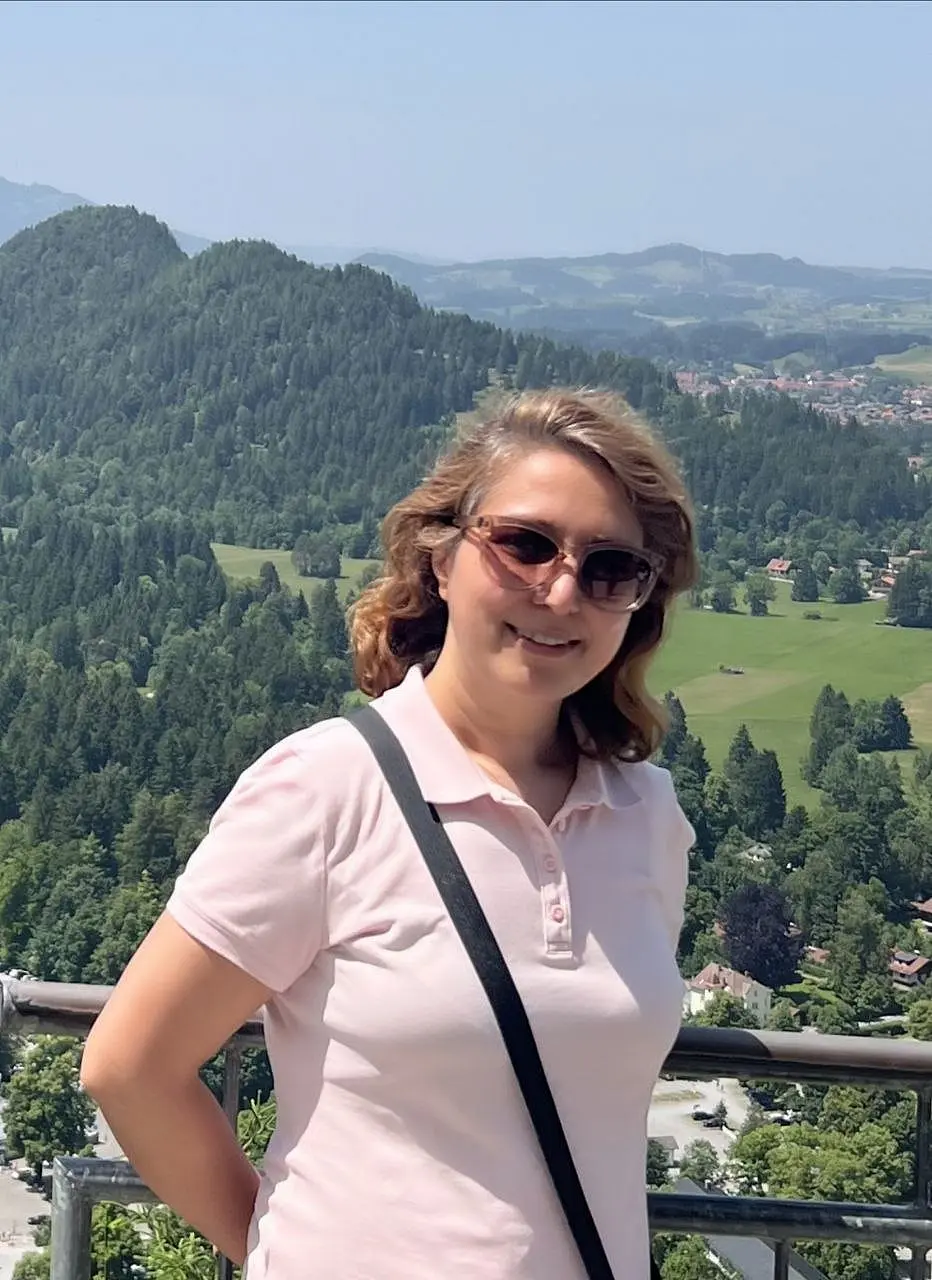
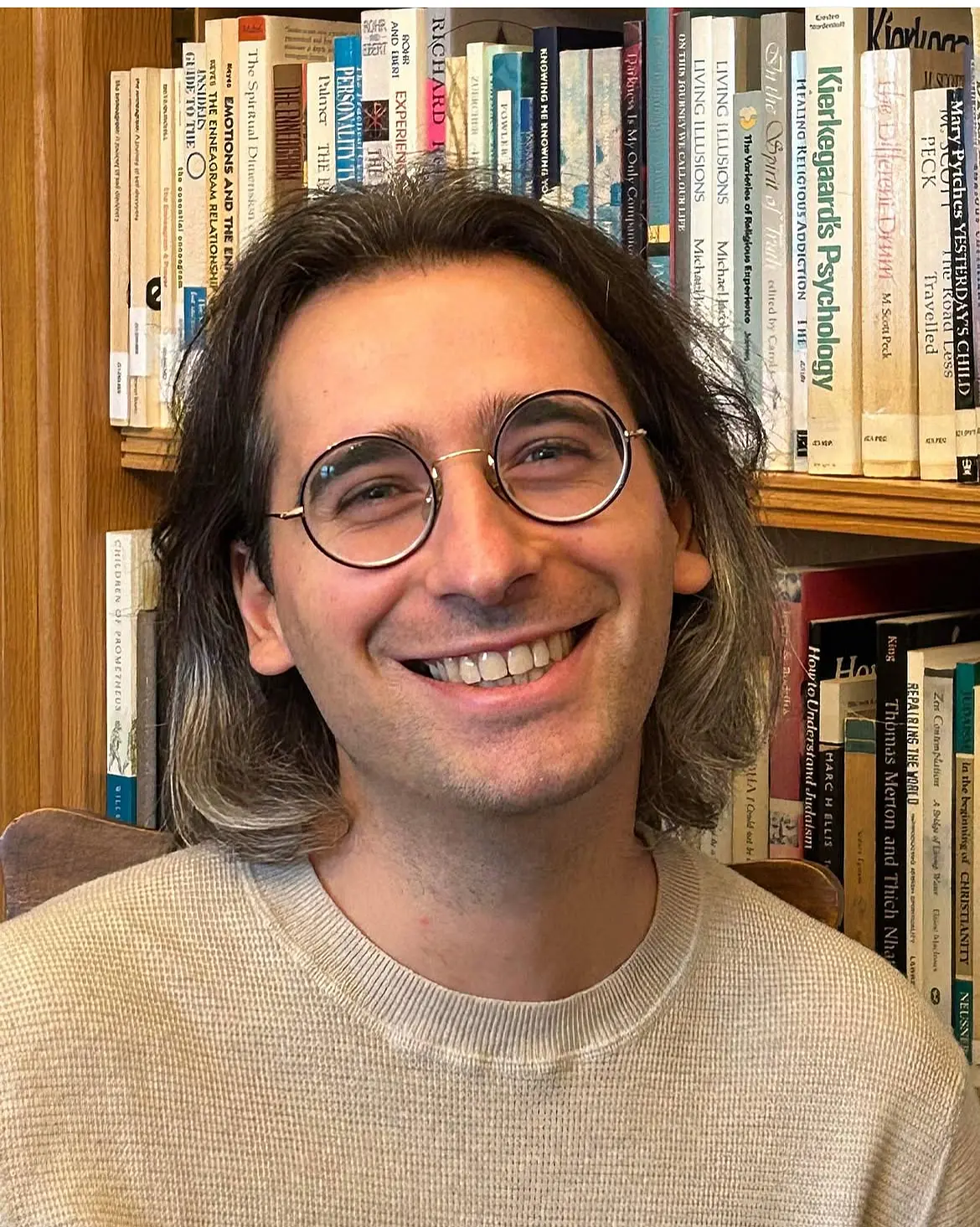
After completing my PhD degree in Portuguese Studies from the University of Oxford, in 2023, with a thesis exploring 20th and 21st-century feminist poetry, I stayed on at Oxford as a tutor, teaching Lusophone Studies at undergraduate level and Women’s, Gender and Sexuality Studies at master’s level. Subsequently, I obtained a half-year position as a counsellor at a mental health charity, where I discovered how to turn my cultural knowledge into practical activities for promoting emotional wellbeing. I am delighted that my current Global Encounters Fellowship in Tübingen has presented me with an opportunity to continue pursuing all of my interconnected interests. My love of the Portuguese-speaking world, cultural studies, and eco-feminism, as well as my newfound interest in the production of emotional wellbeing, all converge in my research project: ‘Eco-Utopias of the ‘We-Earth’ – The Multi-Species Co-Authoring of Culture in Portugal & Brazil’. In this project, I explore utopian ecologies and hopeful environmentalisms in Portugal and Brazil.
Which problem or question does your research address and what fascinates you about your research area?
This postdoctoral fellowship is giving me the chance to broaden my intellectual horizons. I am exploring new avenues of inquiry and experimenting with new ways of conceptualising my research. Currently, I am preparing diverse papers which explore: (1) how cultural artifacts promote inter-species empathy; (2) how Azorean literature, especially the work of surrealist poet Natália Correia (1923-1993), represents island ecosystems; and (3) how Brazilian eco-poets convey the specific biodiversities of their home regions.
As our Earth experiences a sixth mass extinction event, caused by human activity especially in the Global North, I am increasingly motivated to examine the hopeful role played by culture in promoting species conservation and the rewilding of our imaginations. Much like a seedbank or genebank, culture is a storehouse for preserving the dreams and ideas that plants and animals inspire in humans. In this realm of creativity, where human intuitions concerning the inner lives of plants and animals also find expression, we can open a window from our world into theirs. This can help us to de-centre human concerns, overcome our species-based prejudices, and explore the value of empathy.
The intellectual possibilities which open up through such inter-species empathy – epitomised, for example, in the work of Rachel Carson, Donna Haraway, and Vinciane Despret, and indigenous thinkers such as Ailton Krenak and Robin Wall Kimmerer – are what most excite me about working in academia and the environmental humanities right now. For me, there is nothing so liberating as stepping outside of a purely human framework. Achieving this, however partially, makes me feel less oppressed by human social norms, less apocalyptically absorbed by my own species’ follies, and simply more curious about the kaleidoscope of alternative viewpoints and intelligences that are represented across the tree of life. Discovering new texts and films which speculate about how other creatures might think and feel, in as sensitive and non-anthropocentric a way as possible, as well as finding vegan art which refuses to turn animals into mere objects for our consumption and amusement, is thrilling. It feeds my curiosity and strengthens my hope further still.
Please briefly outline the social relevance of your research.
Socially-speaking, the increasingly digital existences we are subjected to by big tech and the ensuing reduction in life’s sensuous qualities have irrefutably negative impacts on our mental health. To counter our alienation from the beauties of nature, it is crucial that we reconnect with our animal selves. By exploring cultural representations of nature, ecocriticism opens our eyes to how artists, writers and filmmakers have already sought to reacquaint us with this suppressed human animality. Here I take inspiration from the lyrical philosophy of David Abram. His books The Spell of the Sensuous (1996) and Becoming Animal (2010) remind us that human beings are indeed, above all else, earthlings: just like any other animal, we long to experience our environments and bodies to the fullest extent made possible by our finely tuned and nature-loving senses.
Any research on plants and animals, and how their unique life-worlds are represented in literature and film, also provokes us to think about another important aspect: how our societies are built to exclude and suppress plants and animals’ own needs and desires. How might we redesign society to give more democratic representation to the species among whom we cohabit the earth? How might caring for other species and nurturing their habitats, via rewilding initiatives, help us to make a more compassionate society in general? And what might we stand to benefit if we turned away from our screens and instead towards the captivating more-than-human world which surrounds us?
Where do you see future opportunities for international and interdisciplinary cooperation for the university, and what role can an institution like the College of Fellows play in this?
In terms of global cooperation, I am pleased to mention that one such collaborative initiative is already in the offing! Alongside my colleague Dr Dorothée Boulanger (University of Oxford) and others who represent a range of disciplines, from literature and languages to geography, history, and indigenous studies, I am co-launching a Critical Animal Studies Reading Group. This discussion group will meet once monthly on Wednesdays (28 October 2026 – 30 June 2027, 5pm-6.30pm UK / 6pm-7.30pm Germany). In view of our encouragingly numerous sign-ups so far, this reading group responds to an evident thirst for more international scholarly dialogues within the environmental humanities.
The College of Fellows is already helping me to promote this new research network amongst colleagues in Tübingen and beyond, for which I am immensely grateful! Accommodating scholars who have pre-existing friendships with fellow academics across the globe, as well as providing a space in which new academic partnerships can be forged, the College of Fellows serves as a hub for the international exchange and circulation of ideas. This hub allows Tübingen to become the beating heart of emergent debates across a variety of fields.
In my view, Tübingen, with its two stunning botanical gardens and its location in the Neckar valley close to the Schönbuch nature park, can make the most of its unique proximity to nature and abundant wildlife by consolidating its position as an international hub for the environmental humanities and sciences. The College of Fellow’s current and commendable focus on the theme of “Making Peace with Nature”, via the Global Encounters Platform, serves as an excellent foundation for a thriving research culture in ecology, environmentalism, and the much-needed greening of all disciplines.