College of Fellows

Alumnae und Alumni

Hier finden Sie eine Übersicht und Profile der Alumnae und Alumni des College of Fellows | CIIS.
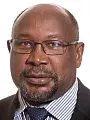
Abiodun Afolabi
Intercultural Studies
Ethik
2023

Fellowship: Intercultural Studies Fellowship
Affiliation (host institution, host scholar): College of Fellows (Center for Interdisciplinary and Intercultural Studies), hosted by Dr. Niels Weidtmann
Stay in Tübingen (from – until): May 2023 – January 2024
Research Project: Eliciting the phenomenology of culture in global environmental ethics
Research Areas: Applied Ethics, Climate Ethics, Environmental Justice, Eco-Phenomenology

Publications

A full list of publications can be found here

Contact:

abiodunafoospam prevention@gmail.com 

abiodun.afolabispam prevention@aaua.edu.ng

Activities at the College of Fellows: Member of the CoF Focus Group “Intercultural Studies”, participation and organisation of workshops z.B. Workshop "Eco-phenomenology: Exploring Eco-phenomenological Concepts and Theories from and for Africa’s Ecological Lifeworld" (13.– 15. Dezember 2023), attending lectures and seminars, writing and publishing articles
About: Dr. Afolabi holds a Bachelor and Honors Degree in Philosophy from Adekunle Ajasin University, Akungba-Akoko, Nigeria. He received his M.A. Degree in Philosophy from the University of Lagos, Lagos, Nigeria. He completed his PhD research at the Department of Philosophy, Rhodes University, South Africa. During his PhD, Dr. Afolabi was a recipient of the prestigious Doctoral scholarship from Allan Gray Center for Leadership Ethics, Rhodes University between 2019-2021. He is also a Research Associate at the University of Pretoria, South Africa. He is currently a faculty member at the Department of Philosophy, Adekunle Ajasin University, Akungba-Akoko, Nigeria. He is keenly interested in the conceptualisation and resolution of peculiar development and global justice problems afflicting vulnerable people around the world, particularly in African societies. His research interests are in the areas of applied ethics, climate change ethics, migration studies, global (environmental) justice, and bio-politics.
Personal Website: http://abiodunafooworld.com/
 

Ada Agada
Intercultural Senior Fellow
Philosophie
2020

Fellowship: Intercultural Senior Fellow 
Affiliation (host institution, host scholar): College of Fellows (Center for Interdisciplinary and Intercultural Studies)
Stay in Tübingen (from – until): 2020 – 2021
Research Project: Consolationism in and beyond African Philosophy: A Systematic Approach to Intercultural Philosophy
Research Areas: African Philosophy, Phenomenology

Publications

Recent book publication: “Consolationism and Comparative African Philosophy: Beyond Universalism and Particularism”. 

More information can be found on our publications webpage

Contact: ada.agadaspam prevention@ciis.uni-tuebingen.de

Activities at the College of Fellows: Member of the CoF Focus Group 'Intercultural Studies'

About Ada: Beginning with the summer semester 2019 until February 2021, Dr. Ada Agada is a Research Fellow at CIIS. Dr. Agada is a George Forster Fellow of the Alexander von Humboldt Foundation. Dr. Agada's research project is entitled "Consolationism in and beyond African Philosophy: A Systematic Approach to Intercultural Philosophy." It is based on the thesis that African philosophy will only be able to assert its relevance in the age of globalization in the context of an intercultural perspective. The new school of thought of "Consolationalism" (philosophy of consolation) leaves behind the tension between tradition and modernity that has long characterized African philosophy. It therefore appears to be particularly suitable for elaborating the intercultural dimension of African philosophy.
 

Ponni Arasu
Global Encounters
Social and Cultural Anthropology
2023

Fellowship: Global Encounters Fellowship
Affiliation (host institution, host scholar): Centre for Asian and Oriental Studies, Department of Social and Cultural Anthropology, hosted by Prof. Karin Polit
Stay in Tübingen (from – until): October 2023 – September 2024
Research Project: "Goddess Worship as resistance, identity and everyday life within global encounters of Indentured Tamil Women"
Research Areas: South Asian Studies, Tamil Studies, Gender Studies, Queer Studies, Critical Caste Studies, Social and Cultural Anthropology, Historical Ethnography

Publications

1. Co-written with Sarala Emmanuel. ‘ “Attempting to commit offences”:Protectionism, surveillance and moral policing of queer women in Sri Lanka’ in *South Asian Popular Culture Special Issue *on LGBTQ Popular Cultures in Contemporary South Asia and its Diasporas: Queer Lives in the Times of New Authoritarianisms. 2023. 


2. Co-written with Vijayalakshmi Segar and Sarala Emmanuel. “Collective
organising for rights among women living with disabilities in Sri Lanka” in
Springer Handbook on 'Sex, gender and health: Perspectives from South Asia'. 2023.


 3. "*Women’s collective food growing in Sri Lanka: Growing alternatives
and Feeding Hope”. Analytical report commissioned by the Law and Society Trust, Colombo with support from the Culinaria Research Centre, University of Toronto, Scarborough. 2022

Contact: mailponnispam prevention@gmail.com
Activities at the College of Fellows: Lunch Talk: "Tamil Thanmai: A historical ethnography of public political lives in Tamilnadu (1950-70)" and "Goddess Worship as resistance, identity and everyday life within global encounters of Indentured Tamil Women"
About: Dr. Ponni Arasu is a feminist researcher, historian, activist, legal practitioner, translator and theatre artist hailing from Chennai and currently based in Batticaloa, Sri Lanka. She is trained in History at the University of Delhi, the Jawaharlal Nehru University and the University of Toronto. Her academic work is on historical ethnographies of contemporary India, with specific focus on social movements such as the Dravidian movement and the women's movement(s). Her PhD research has led her to propose a theoretical framework and methodology called TamilThanmai. She has done research in India and Sri Lanka on the realities of those marginalised on the grounds of their gender, sexuality, caste, class, language, labour, ability, ethnicity, religion etc. for the past twenty years. Her research emerges from and feeds back into movements for social change that she is a part of. She has taught entire courses and guest lectures in the disciplines of history, South Asian studies, Tamil studies, women and gender studies, Caribbean studies and anthropology at the University of Toronto - Canada, University of Minnesota - USA, University of Tubingen - Germany, the University of Jaffna in Sri Lanka, the Tata Institute of Social Studies, Azim Premji University and the University of Pune in India. She has been evolving pedagogic methods of teaching the history and contemporary realities of Sri Lanka with a focus on rigorous research methodology and critical thinking in non-formal and yet consistent teaching spaces to Tamil-speaking students from all over Sri Lanka. This has taken the form of the “Ezhuval: for young women and social change” that she has designed and co-teaches, hosted at the Church of the American Ceylon Mission, Batticaloa. For the past three years she has undertaken research projects in Sri Lanka including on women farmers' collectives; lives and movements for change of women living with disabilities in eastern Sri Lanka; the present realities of LGBTQIA+ individuals and on the status of sex workers. She has produced theatre work with collaborators in India and Sri Lanka on a range of issues which are grounded in using the arts to further the important process of making realities of the marginalised visible and accessible to all. Ponni is also a trained expressive arts therapist practicing primarily in Tamil among women and queer folks from marginalised communities in India and Sri Lanka. She is the Arts and Catalyst Fellowship holder for 2023 at the Studio for Movement Arts and Therapies in Bangalore. She is currently a Global Encounters fellow at the Department of Social and Cultural Anthropology at the University of Tubingen pursuing research on the life of the goddess Mariamman among descendants of largely Dalit indentured workers in Port of Spain, Trinidad and among rural communities in Tamilnadu. She hopes to bring her proposed concept of TamilThanmai as theory and method to this work.
 

Hannah Armstrong
Teach@Tübingen
Skandinavistik
2025

Fellowship: Teach@Tübingen Fellowship
Affiliation (host institution, host scholar): Scandinavian Studies Department, University of Tübingen, hosted by Jun. Prof. Dr. Rebecca Merkelbach 
Stay in Tübingen (from – until): October 2025 – March 2026
Research Project: Islands of the Norse Sea: Íslendingasögur as Island Literature’
Research Areas: Old Norse language and literature, Island Studies, Medievalisms and Medieval Reception, Women’s Intellectual History

Publications: 

  1. [In-preparation monograph] Armstrong, Hannah, Sagalands: Island Medievalism and the Norse North Atlantic (forthcoming).
  2. Armstrong, Hannah and Rebecca Menmuir, ‘Editors’ introduction: Medieval Forgeries /

    Forging the Medieval’, postmedieval: a journal of medieval cultural studies 15, no. 2,

    (2024), 419-435: doi.org/10.1057/s41280-024-00315-4

  3. Armstrong, Hannah, ‘“The Northland of Old”: The Use and “Misuse” of (Medieval)Iceland’, International Medievalisms: From Nationalism to Activism (ed.) Mary Boyle(Woodbridge: Boydell & Brewer, 2023), 95-110: doi.org/10.1515/9781800109087
  4. Armstrong, Hannah, ‘‘Possessed, magical, and dangerous to handle’: Jane Ellen Harrison and the Cambridge Ritualists’, Hellebore 7 (2022), 63-71.
Contact: hannah.armstrongspam prevention@uni-tuebingen.de 
Activities at the College of Fellows: Lecture on “Islands of the Norse Sea: Íslendingasögur as Island Literature”, Teach@Tübingen Fellow Workshop (8. Oktober 2025)

About: Hannah Armstrong recently completed her PhD in English and Related Literature at the University of York (2025) with a thesis titled: ‘Sheaves from Sagaland’: Island Medievalism and the Norse North Atlantic in British Writing (1860-Present). Her doctoral work focused on the phenomenon of ‘saga pilgrimage’, a form of literary tourism which began in the mid-nineteenth century and which saw readers of the medieval Old Norse-Icelandic sagas travel to places such as Iceland to see the sites where their heroes had allegedly lived and died.

During her PhD, research grants from the British Association for Victorian Studies and the Chalke Valley History Trust, as well as the 2023 Peter Foote Memorial Bursary from the Viking Society for Northern Studies, enabled her to undertake fieldwork in both Greenland (Kalaallit Nunaat) and the Faroe Islands. In 2024, she was also a visiting scholar at the Gunnar Gunnarsson Institute in East Iceland.

Currently, she is working on her first monograph, provisionally titled Sagalands: Island Medievalism and the Norse North Atlantic, as well as plannning her next monograph project which will focus on the application of Island Studies perspectives to Old Norse prose literature.


Laurie Atkinson
Humboldt
Anglistik
2022

Fellowship: Humboldt Research Fellowship for Postdoctoral Researchers
Affiliation (host institution, host scholar): University of Tübingen, hosted by Prof. Dr. Matthias Bauer
Stay in Tübingen (from – until): April 2022 – November 2024
Research Project: Co-creative networks in early English literary print
Research Areas: Early modern English literature; English literary publications 1476-1557; History of the Book (manuscript and print) and the evolution of paratexts; late medieval English and Scottish literature; conceptions of authorship; autobiographical writing
Publications: A full list of publications can be found here
Contact: laurie.atkinsonspam prevention@philosophie.uni-tuebingen.de
Activities at the College of Fellows: College of Fellows Humboldt Lecture: "Co-Creativity in Early English Literary Print" (22. November 2023)
About: Laurie Atkinson completed his PhD at Durham University in 2021. He afterwards provided research as an MHRA Postdoctoral Research Associate for the new Cambridge University Press edition of the complete works of Geoffrey Chaucer. Laurie is now a Humboldt Postdoctoral Research Fellow at the University of Tübingen, where he works on early English literary print. His monograph, Ideas of Authorship in the English and Scottish Dream Vision: Skelton, Dunbar, Hawes, Douglas, is scheduled for publication with Boydell & Brewer in March 2024.

Frankie Augustin
ACE Fellow
Health Administration
2023

Fellowship: American Council on Education (ACE) Fellow
Affiliation (host institution): College of Fellows (Center for Interdisciplinary and Intercultural Studies) and the German American Institute (DAI)
Stay in Tübingen (from – until): April 2023
Activities at the College of Fellows: Podiumsdiskussion Leadership in Higher Education: A Transatlantic Dialogue (27. April 2023), hosted by the German American Institute (DAI) and College of Fellows.
About: Dr. Augustin is a Full Professor in the Health Administration Program at California State University, Northridge (CSUN). She earned a bachelor’s degree in Cellular and Molecular Biology, her Master of Science degree in Health Administration, and her doctorate in Policy, Planning and Development. Some of Dr. Augustin’s appointed roles include Interim Department Chair for the Department of Environmental and Occupational Health; Special Assistant to the Dean of the College of Health and Human Development; and Equity Faculty Affiliate for CSUN’s Office of the Provost and the Office of Student Success. Dr. Augustin’s research interests include cultural humility, workplace readiness, eliminating racial equity gaps for African American and Black students, and investigating strategies that increase racial diversity in the healthcare workforce.

Esther Baakman
Teach@Tübingen
Neuere Geschichte
2023

Fellowship: Teach@Tübingen Fellowship
Affiliation (host institution, host scholar): Philosophische Fakultät, Arbeitsbereich Geschichte der Frühen Neuzeit, hosted by Prof. Dr. Christina Brauner 
Stay in Tübingen (from – until): October 2023 – May 2024
Research Project: Representing the Americas in the Dutch Periodical Press, ca 1635-1795; develop a new research project around Discourses of Slavery in early modern Europe. 
Research Areas: Early modern history, colonial history, history of print culture 

Publications:

  1. Baakman, E. (2024). From Valuable Merchandise to Violent Rebels: Depicting Enslaved Africans in the Dutch Periodical Press in the Seventeenth and Eighteenth Centuries. BMGN - Low Countries Historical Review139(3), 24-46.
  2. Baakman, E. (2018). “Their power has been broken, the danger has passed.” Dutch newspaper coverage of the Berbice slave revolt, 1763. Early Modern Low Countries2(1), 45-67.

Contact: 

e.j.baakmanspam prevention@uu.nl

About: I am a historian of early modern colonial history and the history of news My research deals with the intersection of both fields focusing on colonial news in the periodical press, colonial citizenship, and the development of various discourses of slavery in early modern Europe. My current book project, based on my dissertation and provisionally entitled Atlantic Adivces: Representing the Americas in the Dutch Periodical Press, explores how the periodical press consistently covered distant but urgent transatlantic conflicts and developments using the constant flow of communications in the Atlantic world. It reveals how the weekly periodicity of the press brought stories of colonialism and slavery into the lives of European citizens. Alongside my research, I have been teaching in early modern and modern history at Leiden University, Radboud University Nijmegen, and Utrecht University.
 

Smith B. Babiaka
Humboldt
Chemie
2022

Fellowship: Alexander von Humboldt Postdoc Research Fellowship
Affiliation (host institution, host scholar): Interfakultäres Institut für Mikrobiologie und Infektionsmedizin der Universität Tübingen, hosted by Prof. Dr. Heike Brötz-Oesterhelt and Dr. Chambers C. Hughes 
Stay in Tübingen (from – until): September 2022 – September 2025
Research Project: Discovery of novel marine natural products from sponges
Research Areas: Natural Product Drug Discovery and Medicinal Chemistry
Publications: A full list of publications can be found here

Contact: 

babiakasmith2009spam prevention@gmail.com

babiaka.smithspam prevention@ubuea.cm

Activities at the College of Fellows: Humboldt Lecture: "Natural Product-Based Discovery of Novel Lead Compounds From Terrestrial and Marine Ecosystems" ( 10. Januar 2024)
About: Smith B. Babiaka is a Lecturer at the Department of Chemistry at the University of Buea where he was awarded a PhD in Chemistry in March 2019. Since June 2022, he is a Georg Forster Alexander von Humboldt and Georg Forster-Bayer Research Fellow. He is working in the research group of Prof. Dr. Heike Brötz-Oesterhelt and Dr. Chambers C. Hughes at the University of Tübingen. He has been awarded the ARISE Intra-ACP mobility grant, AGNES junior research grant, MINESUP research grant, ACS best poster ward among others. His previous research has been focused on natural product drug discovery of novel lead compounds from nature. He is a member of ACS, RSC, EFMS-YSN & INPST and others. He is a reviewer of manuscripts from Phytochemistry, Frontiers in Natural Products, ChemBioChem, and Natural Product Research and others. He has about thirty-two peer-reviewed journal publications. 

Personal Website: 

https://scholar.google.com/citations?user=5heMRJoAAAAJ&hl=en

https://loop.frontiersin.org/people/912704/overview


Doaa M. Baumi
Teach@Tübingen
Islamische Theologie
2025

Fellowship: Teach@Tübingen Fellowship 
Affiliation (host institution): Center for Islamic Theology
Stay in Tübingen (from – until): April 2025 – March 2026
Research Project: The Development of the Concept of 'Isma (Infallibility) in Islamic Theology 
Research Areas: Islamic theology (kalām), Qurʾānic exegesis, reception of biblical narratives in Islamic literature, Islamic intellectual history, interreligious thought, classical Arabic texts

Publications: 

  1. "Navigating Biblical Narratives in Islamic Thought: From Early Engagement to Ibn Taymiyya's Theorization" (Forthcoming, De Gruyter, January 2026)
  2. "Online Scriptural Reasoning as a Pedagogical Tool for Fostering Intercultural Understanding and Empowering Women: A Case Study from Egypt" (Forthcoming, IJMES – International Journal of Middle East Studies), co-authored with Joel Pierce
  3. "On Teaching Islam Across Cultures," co-authored with Courtney Dorroll and Kimberly Hall (University of Indiana Press, 2019)
  4. Baumi, Doaa M., Dini, Elena, and Feldmann Kaye, Miriam. "Scriptural Reasoning in a Time of Social Distancing." The Journal of Scriptural Reasoning, vol. 20, no. 1, February 2023
  5. Baumi, Doaa M. "Muammad ibn ʿAbd al-Wahhāb al-Ghassānī" in Christian-Muslim Relations: A Bibliographical History (Asia, Africa and the Americas), ed. David Thomas and John Chessworth (Brill: Oct. 2018), vol. 12, pp. 56–59
  6. Book Review: "Biblical Figures in the Qur'an and Muslim Literature" by J. Kaltner & Y. Y. Mirza, in The Bible and the Qur'an: Biblical Figures in the Islamic Tradition
Contact: doaa.baumispam prevention@zith.uni-tuebingen.de
Activities at the College of Fellows: Participation in interdisciplinary seminars and interfaith colloquia; offering a Master's-level course on “Biblical Figures in the Qur'an and Islamic Literature”
About: Doaa M. Baumi is a postdoctoral researcher at the Centre for Islamic Theology, University of Tübingen, where she explores the reception of biblical narratives and the development of theological constructs in classical Islamic thought. She holds a PhD in Islamic Studies from the University of Birmingham, an MA from the University of Chicago, and a BA from al-Azhar University. Her teaching and research focus on kalām, Qurʾān, Islamic intellectual history, and interfaith engagement.

Personal Website: 

LinkedIn Profile


Eleonora Bedin
Teach@Tübingen
Archäologie
2022

Fellowship: Teach@Tübingen Fellowship
Affiliation (host institution, host scholar): Institute of Classical Archaeology, hosted by Prof. Dr. Richard Posamentir
Stay in Tübingen (from – until): October 2022 – September 2023
Research Project: "The Political Side of Motherhood: Kybele from a Protective Deity to the Great Mother"
Research Areas: History and Archaeology of the Graeco-Roman Near East; History of Religions; Cultural Anthropology

Publications

  1. Bedin, E. 2023. Resilience in the Hellenistic Southern Levant. In, A. Yasur-Landau, T. Levy and G. Gambash (eds.), Mediterranean Resilience: Collapse and Adaptation in Antique Maritime Societies, Sheffield: Equinox.
  2. Bedin, E. and G. Gambash. 2022. Expressions of Counter-Globalization: Coexisting Identities in Greco-Roman Ascalon and Gaza emerging from their Local Coinage, Israel Numismatic Review 17, 181-204.
  3. Bedin, E. and G. Gambash. 2021. Soteira, Savior of Ships – Mediterranean Identity in the Hellenistic Period, Mediterranean Studies 29.1, 89-119.
Contact: bedin.eleonora90spam prevention@gmail.com 
Activities at the College of Fellows: Fellow Lunch Talk "The Ancient Mediterranean as a Global Stage: Tracing the Mother Goddess Across Borders" (20. Juli 2023)
About: Eleonora Bedin is a Teach@Tübingen Fellow at the Department of Classical Archaeology, University of Tübingen. She holds both Bachelor's and Master's degrees in Classics from Ca' Foscari University of Venice, with a final thesis on Hellenistic Epigraphy. Recently, she was awarded her Ph.D. at the School of Archaeology and Maritime Cultures at the University of Haifa, Israel.
During her doctoral studies, Eleonora's research focused on the topic of "Micro and Macro Identities in the Graeco-Roman Mediterranean." Her investigations delved into the intricate dynamics of connectivity, religious patterns, imperial dominance, and adaptation strategies that significantly influenced the cultural identities of the period. Through her scholarly endeavors, she aimed to provide valuable contributions to our understanding of the multifaceted interplay between individual and collective identities in the Mediterranean basin during antiquity.
The culmination of her research resulted in the publication of her thesis in three distinct articles, which collectively contribute to painting a multilayered image of the Mediterranean in the Graeco-Roman period. By disseminating her findings through these publications, Eleonora has enriched the scholarly discourse and shed new light on the complexities of the ancient Mediterranean.
Beyond her primary field of interest, Eleonora demonstrates a keen interest in adopting a multidisciplinary approach, skillfully incorporating methodologies from anthropology, epigraphy, archaeology, and literary culture to enhance her investigations. Embracing this holistic perspective, she continually strives to offer fresh insights and uncover novel layers of knowledge within her field of study.
As a Teach@Tübingen Fellow, Eleonora is passionately dedicated to offering a comprehensive understanding of the Graeco-Roman Near East. Her teachings not only explore the dynamics of connectivity, globalization, and regional particularity but also introduce students to the main aspects of Coastal and Underwater archaeology. Through her expertise, she endeavors to illuminate the broader concept of Mediterranean connectivity, making a significant impact on the study and appreciation of ancient civilizations.
 

Jon Beltz
Teach@Tübingen
Kulturen des Alten Orients
2025

Fellowship: Teach@Tübingen Fellowship 
Affiliation (host institution, host scholar): Institute for Ancient Near Eastern Studies, hosted by Prof. Dr. Wiebke Meinhold
Stay in Tübingen (from – until): April 2025 – March 2026
Research Project: Sumerian “Oath Incantations”: A Critical Edition and Study
Research Areas: Mesopotamian Religion, Literature, and Magic, Cuneiform Epigraphy 

Publications: 

Monograph 

Namtar: Deity, Demon, Agent of Fate, under review


Articles 

  1. “The Neo-Babylonian Tablets of the Lawrence Henry Ott collection in the Yale Babylonian Collection.” Orientalia, in press.
  2. “Everyday Magic?: Four Sumerian zi…pa3 Incantations on Amulets.” Journal of Cuneiform Studies, in press.
  3. “The Son of King Kurigalzu on a Kassite Prayer Seal.” Nouvelles Assyriologiques Brèves et Utilitaires 2022/2, #65.
  4. “A Tale of Two Plague Gods.” Biblical Archaeology Review 47/4 (Winter 2021), 58-59. 
Contact: jonathan-david.beltzspam prevention@philosophie.uni-tuebingen.de
Activities at the College of Fellows: Participation in Teach@Tübingen Workshop

About: 

Jon Beltz holds a PhD in Assyriology from Yale University, specializing in the languages, literature, and religions of ancient Mesopotamia. His dissertation was on the Mesopotamian underworld deity/demon Namtar, who functioned as a “grim reaper” figure for the Sumerians, Babylonians, and Assyrians. He has also worked on the usage of inscribed amulets in ancient Mesopotamia and the phenomenon of “magic”. His current work focuses on a group of Sumerian incantations he calls “oath incantations”, which utilize the language of oath-binding to exorcize demons and prevent them from attacking a patient. He is currently producing a critical edition of the late bilingual Sumerian-Akkadian compositions Digir Hul and Lugal Namtar, two lengthy standardized incantations used in ancient Mesopotamia for exorcism and healing from demonic attack. He has studied and published cuneiform texts from the Yale Babylonian Collection and the British Museum. 


Molly Bronstein
Teach@Tübingen
Anglistik
2023

Fellowship: Teach@Tübingen Fellowship
Affiliation (host institution, host scholar): English department, hosted by Prof. Dr. Angelika Zirker und Prof. Dr. Matthias Bauer
Stay in Tübingen (from – until): October 2023 – September 2024
Research Project: The Ovide moralisé’s Middle English Collaborators 
Research Areas: Old and Middle French, Middle English, translation history, Ovid’s medieval reception, creative writing, speculative fiction

Publications:

1. “Marie de Clèves’s ‘Rien ne m’est plus’: Reshaping Widowhood in the Roman de Troyle,” forthcoming in Medieval Feminist Forum.

2. “Marie de Clèves, Duchess of Orléans,” The Palgrave Encyclopedia of Medieval Women’s Writing in the Global Middle Ages. New York: Palgrave Macmillan, 2023. link.springer.com/referenceworkentry/10.1007/978-3-030-76219-3_111-1


For a list of creative publications, see: https://mebronstein.com/

Contact: molly.bronsteinspam prevention@philosophie.uni-tuebingen.de
Activities at the College of Fellows: Teach@Tübingen Workshop (24. November 2023)

About: 

Molly Bronstein earned her PhD in Comparative Literature and Medieval Studies from UC Berkeley in 2022, where she subsequently worked as a lecturer before coming to Tübingen in 2023. Her dissertation focused on Ovid’s medieval reception and argued for a view of the anonymous author of the Old French Ovide moralisé as the leader of a late medieval “team” translation project; she is now expanding on this project to focus on Middle English retranslations of (and “collaborations” with) the Ovide moralisé. She has also written about the Roman de Troyle, Louis de Beauvau’s French translation of Boccaccio’s Il Filostrato, and the poetry of Marie de Clèves, Duchess of Orléans.

In addition to her research, Molly is a graduate of the Clarion Workshop at UCSD and a short fiction writer with publications in Other Terrors: An Inclusive Anthology, Michigan Quarterly Review: Mixtape, Brave New Weird: The Best New Weird Horror, and elsewhere. She teaches creative writing as well as literary studies.

Personal Website: https://mebronstein.com/
Fellow Profile

Veronica Cibotaru
Intercultural Studies
Philosophie
2024

Fellowship: Intercultural Studies Fellowship
Affiliation (host institution, host scholar): College of Fellows (Center for Interdisciplinary and Intercultural Studies), hosted by Dr. Niels Weidtmann
Stay in Tübingen (from – until): October 2024 – March 2026
Research Project: A Phenomenology of Interreligious Dialogue
Research Areas: phenomenology of religion, philosophy of language and AI

Publications

1. Veronica Cibotaru (2025). Phenomenological understandings of the relationship between ethics and the idea of God, Continental Philosophy Review.
2. Veronica Cibotaru (2024). For a contextualist and content-related understanding of the difference between human and artificial intelligence, Phenomenology and the Cognitive Sciences.
3. Veronica Cibotaru (2023). Le problème de la signification dans les philosophies de Kant et Husserl. Paris: Hermann.
4. Veronica Cibotaru (2023). Banal evil - Radical goodness. Reflection on the 60th Anniversary of "Eichmann in Jerusalem", Open Philosophy, vol. 6, no. 1.

Eine vollständige Liste der Publikationen gibt es hier

Contact: cibotaruveronicaspam prevention@gmail.com 
Activities at the College of Fellows: I organize the online series of workshops “Rethinking peace”. 
About: I obtained a PhD in Philosophy in 2021 at the Sorbonne University and at the University of Wuppertal, in the framework of a French-German binational program. Before arriving at the College of Fellows I worked as a postdoctoral research fellow at the School of Philosophy and Cultural Studies of the Higher School of Economics (Moscow), and as a visiting lecturer at the Institute of Philosophy of KU Leuven. In my current project, funded by a College of Fellows Fellowship, I aim at developing a phenomenology of interreligious dialogue and a critical reflection on the treatment of the question of interreligiosity throughout the history of Western philosophy.
 

Samuel J. Cox
Teach@Tübingen
Anglistik
2025

Fellowship: Teach@Tübingen Fellowship
Affiliation (host institution, host scholar): Department of English, hosted by Prof. Dr. Dr, Russel West-Pavlov 
Stay in Tübingen (from – until): April 2025 – March 2026
Research Project: Dust Horizons: Stories from a Fragmented Earth 
Research Areas: Environmental Humanities, Anthropocene Studies, Ecocriticism, New Materialism, Southern Literatures, Global South Studies 

Publications

  1. Cox, Samuel J. [forthcoming] ‘Review: Cambridge Companion to the Australian Novel.Text: Journal of Writing and Writing Courses, April 2025.
  2. ——. ‘Writing from the South: An Interview with Kim Scott.’ Overland no. 255, 2024.
  3. ——. ‘Review: The Cambridge History of the Australian Novel.’ JASAL, vol. 24, no. 2, 2024.
  4. ——.  ‘On the Track to Tourmaline: Randolph Stow’s “dry-souled country.”’ Westerly, vol. 69, no. 1, June 2024.
  5. ——. ‘Textual Encounters of the Bird Kind: Dal Stivens and the Night Parrot.’ Australian Literary Studies, vol. 38, no. 3, 2023, dx.doi.org/10.20314/als.486a89265d.
  6. ——. ‘The Dust of Carpentaria.Motifs [En ligne], vol. 6, 2022, DOI : 10.56078/motifs.806.
  7. ——. ‘I’ll Show You Love In a Handful of Dust: The Material Poetics of Voss.’ JASAL, vol. 22, no. 2, 2022, pp. 1-11.
  8. ——. ‘“The Kingdom of Dust”: Voss as Planetary Epic.’ Australian Literary Studies, vol. 37, no. 3, 2022, pp. 1-27, http://dx.doi.org/10.20314/als.40f6a48016.
  9. ——. ‘On the Track to Tourmaline: Photo Essay.’ Westerly, vol. 67, no. 2, 2022, pp. 109-118.
  10. ——. (2022). ‘Land, Grief, and Returning to Dust: An Interview with Dani Powell.’ The Saltbush Review, vol. 2, 2022, pp. 1-13, https://saltbushreview.files.wordpress.com/2022/07/saltbush-issue-2-land-grief-and-returning-to-dust-cox.docx.pdf
Contact: samuel.coxspam prevention@philosophie.uni-tuebingen.de 
Activities at the College of Fellows: Science Compass Workshop and Teach@Tübingen Fellow Workshop (7.-8. April 2025)
About: About: Samuel J. Cox received his PhD from the University of Adelaide where he rethought notions of land, place and space in Australian literature through the granular and ephemeral nature of dust. He has lectured and taught numerous courses in contemporary literature at the University of Adelaide. Samuel has won the Association for the Study of Australian Literature’s A.D. Hope Prize for his essay on the material poetics of Patrick White’s Voss. He has also won Australian Literary Studies PhD Essay Prize for an essay on the Night Parrot as a paradoxical trickster figure in the work of Dal Stivens and has been highly commended for InASA’s inaugural Kay Schaffer Award for ECRs. Samuel is currently finalising the development of his thesis into a more expansive book, as he focuses on expanding his current research into dust, decay and material poetics to be global in scope. 
 

Marília Denardin Budó
Intercultural Studies
Kriminologie
2024

Fellowship: Intercultural Studies Fellowship
Affiliation (host institution, host scholar): College of Fellows (Center for Interdisciplinary and Intercultural Studies), hosted by Dr. Niels Weidtmann
Stay in Tübingen (from – until): September 2024 – February 2025
Research Project: Racial and colonial dimensions of state-corporate crime.
Research Areas: Criminology, Environmental victims, Transitional justice, Restorative justice, State-corporate crime, Decolonial studies.

Publications:

  1. Budó, M.N., Natali, L., Rodriguez Goyes, D., Sollund, R. and Brisman, A. (2022) (eds.). Introdução à criminologia verde: Perspectivas críticas, decoloniais e do Sul. São Paulo: Tirant lo Blanch.
  2. Budó, M N. (2018). Mídias e discursos do poder. Rio de Janeiro: Revan.
  3. Budó, M N; Cappi, R (2018). Punir os jovens? A centralidade do castigo nos discursos parlamentares e midiáticos. Belo Horizonte: Letramento.
  4. Budó, M N (2013). Mídia e controle social. Rio de Janeiro: Revan.
  5. Budó, M.N.; Garcia, M.D.O. (2024). Decolonial praxis for postponing the end of the world: an epistemological reflection on the criminalisation of ecocide. Environmental politics. Accepted for publication.
  6. Andrade, V.R.P.; Budó, M.N. (2023). From an 'espresso definition' to an 'empowering definition' of restorative justice: a dialogue from the South with Lode Walgrave. The International Journal of Restorative Justice, v.6(3), p. 378-393. doi: 10.5553/TIJRJ.000184. (to be published in Dec. 2023)
  7. Budó, M.N., Pali, B. (2023). Restorative responses to harms caused by asbestos companies. Journal of Victimology, v.15, p.171 - 204, 2023.
  8. Van Buggenhout, M.; Budó, M. N. (2022). Truth, reparation and social justice: Victims’ and academic perspectives on the harms caused by asbestos companies. Criminological Encounters, v.5, p.195 – 203.

A complete list of publications can be found here 

Contact: mariliadbspam prevention@yahoo.com.br
Activities at the College of Fellows: CoF Lunch Talk “Racial and Colonial Dimensions of State-Corporate Harm: Insights From the Asbestos Case to the Climate Crisis” (24. Januar 2025) 
About: Marília Denardin Budó in her Fellow in Focus Profile.
 

Carolina Carrasco Pulido
Humboldt
Biologie
2022

Fellowship: Humboldt Research Fellowship
Affiliation (host institution): Center for Plant Molecular Biology (ZMBP), Cellular Nanosience Department
Research Project: Studying DNA-Rad52 interaction at the single-molecule level
Research Areas: Biophysics of single-molecule, molecular motors, DNA-protein interactions, viruses, atomic force microscopy, magnetic tweezers, optical tweezers and biochemical techniques
Contact: carolina.carrasco-pulidospam prevention@zmbp.uni-tuebingen.de

Activities at the College of Fellows: Humboldt Lecture "Studying DNA-Rad52 Interaction at the Single Molecule Level" (9. Februar 2022)

About: Carolina Carrasco studied Physics at the University of Granada. Because of her interest in the field of single-molecule biophysics, she moved to Madrid to obtain her PhD in Physics at the Universidad Autónoma de Madrid by studying the mechanical response of single viruses upon deformation with Atomic Force Microscopy. After that, she extended her expertise to the Magnetic Tweezers technique at the National Centre of Biotechnology (CNB-CSIC) at Madrid. Her research is focused on understanding DNA repair and replication by motor proteins at the single-molecule level. Understanding the molecular mechanisms of nanomachines is important for molecular biology and medicine because they are involved in cellular repair pathways of which defects are associated with human disease. Currently, she enjoys a Humboldt Fellowship for Experienced Researchers to study DNA-protein mechanisms by using Optical Tweezers at the Cellular Nanoscience Department in the ZMBP, Tübingen University.
 

Deep Chand
Global Encounters
Soziologie
2024

Fellowship: Global Encounters Fellowship
Affiliation (host institution, host scholar): Institute of Sociology, hosted by Prof. Dr. Bani Gill
Stay in Tübingen (from – until): April 2024 – September 2025
Research Project: Neighbourhood and Social Cohesion: Police, Protest, and the Citizenship (Amendment) Act [CAA] in India
Research Areas: State, Police, Sociology of Policing, Citizenship and Democracy, Belonging and Neighborhood, Caste and Education, Ethnography

Publications

  1. Chand, D. (2024). (Re)-production of Caste in the Classroom: A Dalit Perspective, Higher Education (Accepted).
  2. Chand, D. (2023). (Re)-production of Caste Prejudices: Viva-Voce Examination in Higher Education in Eastern Uttar Pradesh. In Dhaneshwar Bhoi & Hugo Gorringe (Eds.), Caste in Everyday Life: Experience and Affect in India. Palgrave Macmillan, London.
  3. Chand, D. (2019). “Equal opportunities in Education: A perspective from below.” Contemporary Voice of Dalit (Sage) 11(1): 55-61. [with Sailu Karre]
  4. Chand, D. (2017). “Parents’ Perception and Experiences of Scheduled Caste Students in Access to Higher Education.” Indian Journal of Dalit and Tribal Social Work 4 (1): 49-86.  
  5. Chand, D. (2017). “Critique of Brahmanical Hegemony: Understanding Indian Caste System through Gramsci.” Journal of Social and Economic Studies XXVII (1): 76-88.
Contact: deep01492spam prevention@gmail.com
Activities at the College of Fellows: Research and Teaching, Research workshop, Participating in GTURN lecture series and South Asia reading group
About: I have an MA and M.Phil. in Social Science from the Tata Institute of Social Sciences (TISS), Mumbai, India. I recently completed my PhD in Sociology from Goethe University Frankfurt, Germany, with a grade of magna cum laude distinction. I am trained in ethnography, discourse analysis and ethnomethodology. My areas of research include State, Police, Sociology of Policing, Citizenship and Democracy, Belonging and Neighborhood, Caste and Education, Ethnography. I have published my research work in national and international academic journals. I have presented my research at the University of Porto, Portugal, the International Studies Association, Nashville, USA and the World Congress of Sociology organised by the International Sociological Association (ISA) in Melbourne, Australia. I also participate in "Varieties of Ethnographic Research", initiated by the Goethe Research Academy for Early Career Researchers (GRADE). 
 

Jan Chromý
Humboldt
Slavistik
2021

Fellowship: Humboldt Research Fellowship 
Affiliation (host institution, host scholar): Slavisches Seminar, hosted by Prof. Dr. Tilman Berger
Stay in Tübingen (from – until): 2021 – 2023 
Research Project: Quantitative Analysis of the Use and Mutual Relationship between Frequent Variables in Common Czech
Research Areas: Language variation, Psycholinguistics, Empirical Linguistic Methodology, Synesthesia
Publications: A full list of publications can be found here
Contact: jan.chromyspam prevention@ff.cuni.cz

Activities at the College of Fellows: Conference Psycholinguistics of Slavic Languages 2022, PsychoSlav2022 (14.–16. Juli 2022)

About: I am an associate professor at the Faculty of Arts, Charles University (Prague). I am the head of the ERCEL lab ("Experimental Research on Central European Languages Lab"). From 2021 to 2023 I am an Alexander von Humboldt Fellow at the University of Tübingen, hosted by Professor Tilman Berger. My project aim in Tübingen lies in the quantitative analysis of language variation in Czech, but I also focus on various psycholinguistic issues, such as language comprehension (how do we understand each other) and the impact of knowledge and use of more than one language on processing the native / first language. Moreover, I am interested in language processing from a cross-linguistic perspective (i.e. to what extent speakers of different languages process language structures differently).
Personal Website: https://ercel.ff.cuni.cz/
 

Alexandra Ciorita
Teach@Tübingen
Nanoscience
2024

Fellowship: Teach@Tübingen Fellowship
Affiliation (host institution, host scholar): Cellular Nanoscience, Schäffer Lab (ZMBP)
Stay in Tübingen (from – until): October 2024 – September 2025
Research Project: The effects of Vinca alkaloid vincamine on microtubule dynamics
Research Areas: Electron microscopy, cellular biology 

Publications:

1. “Single depolymerizing and transport kinesins stabilize microtubule ends” https://doi.org/10.1002/cm.21681

2. “Green Synthesis of Ag-MnO2 Nanoparticles using Chelidonium majus and Vinca minor Extracts and Their In Vitro Cytotoxicity”, https://doi.org/10.3390/molecules25040819

3. “Interaction of Low-Density Polyethylene Nanofragments with Autotrophic and Chemotrophic Bacteria”, https://doi.org/10.1021/acssuschemeng.4c02440

Complete list of publications at Google scholar

Contact: alexandra.cioritaspam prevention@mnf.uni-tuebingen.de
About: Alexandra's research in understanding anticancer mechanisms has led her to explore plant-derived compounds with natural cytotoxic effects on malignant cells. The research conducted by the Cellular Nanoscience group under the leadership of Professor Erik Schäffer focuses on studying molecular machines that orchestrate cellular self-assemblies, particularly emphasizing the cytoskeleton as an essential target for anticancer treatment. 
 

Cansu Civelek
Global Encounters
Soziologie
2024

Fellowship: Global Encounters Fellowship
Affiliation (host institution, host scholar): Sociology Department, hosted by Prof. Boris Nieswand und Dr. Gani Bill
Stay in Tübingen (from – until): April 2024 – September 2025
Research Project: Entangled processes of urban ruination, dispossession, and depoliticization : A spatio-temporal analysis of the Karapınar neighborhood in Eskişehir, Turkey
Research Areas: Urban studies, migration, politicization

Publications:

  1. 2023 Beyond Lawfare: An Analysis of Law’s Temporality through Russian-doll Urbanization from Turkey. PoLAR: Political and Legal Anthropology Review. https://doi.org/10.1111/plar.12543
  2. 2020 Tackling participation beyond the theses of neoliberal urban governance or citizen empowerment. Urban Anthropology and Studies of Cultural Systems and World Economic Development, Special Issue [The Contemporary Turkish State: The Changing Landscape of Political Economy in Turkey] 49(1-2): 39-83. ISSN 0894-6019
  3. 2019 Urban renewal with dancing and music”?: The renewal-machine’s struggle to organize hegemony. Focaal Journal of Global and Historical Anthropology. 84: 47-61. https://doi.org/10.3167/fcl.2019.840104
Contact: civelekcansuspam prevention@gmail.com
About: Cansu Civelek graduated from the Department of Political Science and Public Administration at the Middle East Technical University in Ankara. She received her master’s degree from the Department of Social and Cultural Anthropology at the University of Vienna with a thesis entitled “‘Regeneration on Site’ or Rent-Driven Urban Renewal? An Ethnographic Inquiry into the Karapınar Valley Urban Regeneration Project in Eskişehir, Turkey”. In 2015, she independently financed her first documentary film, “Warning Karapınar! Voices from an Urban Regeneration,” which was derived from her master’s thesis. In 2020, she received her doctoral degree from the Department of Social and Cultural Anthropology at the University of Vienna, with a dissertation entitled “Non-spectacular Policy-making: Urban Governance, Silence, and Dissent in an Abortive Renewal Project in Eskişehir, Turkey.” As a post-doctoral researcher at the Democracy Institute of the Central European University, she focused on her book project titled “Igniting the Spark of the Political,” examining urban policy-making and governance practices of Eskişehir’s municipal government while addressing questions of collective silence and (de)politicization.
With a post-doctoral fellowship at the University of Tübingen's Global Encounters Program, she is developing a research project on neighborhoods of Eskişehir where Afghan refugees reside. The aim is to comprehend the interactions between refugee newcomers and long-standing residents, as well as the mechanisms of claim-making employed by both groups.
 

Austin Collins
Teach@Tübingen
Neuere Geschichte
2024

Fellowship: Teach@Tübingen Fellowship
Affiliation (host institution, host scholar): Institute of Modern History, hosted by Jun. Prof. Dr. Christina Brauner
Stay in Tübingen (from – until): April 2024 – March 2025
Research Project: ‘La ville eut l’éphémère honneur d’être comme la capitale du Royaume': A Spatial History of Charles IX’s Royal Tour of France, 1564-1566
Research Areas: Early Modern France, French Monarchy, French Wars of Religion, Centre & Periphery, Religious Toleration & Co-Existence, Urban History, Visual & Material Culture

Publications:

  1. Peer Reviewed Article: ‘Angoulême: Constructing a Royal Connection on the Forgotten Periphery’ in Religion and Urbanity Online (forthcoming) (https://doi.org/10.1515/urbrel)
  2. Book Review: Kelly Digby Peebles and Gabriella Scarlatta (eds.), Representing the Life and Legacy of Renée de France: From Fille de France to Dowager Duchesse (Palgrave Macmillan, 2021) in Royal Studies Journal 9, no. 2 (2022) (https://doi.org/10.21039/rsj.362)
  3. Podcast: UrbRel podcasts: Corinna Riva & Austin Collins for the KFG ‘Religion & Urbanity: Reciprocal Formations’ Podcast (October 2022) (https://urbrel.hypotheses.org/3435)
  4. Workshop Report: Typologising Cities: Critical Reflections Workshop for the KFG ‘Religion & Urbanity: Reciprocal Formations’ Workshop (May 2022) (https://www.hsozkult.de/conferencereport/id/fdkn-128447)
  5. Blog Post: ‘Finally, a Long-Awaited Research Trip to France!’ for the KFG ‘Religion & Urbanity: Reciprocal Formations’ Blog (April 2022) (https://urbrel.hypotheses.org/2541)
  6. Workshop Report: Guides to Urbanity Workshop for the KFG ‘Religion & Urbanity: Reciprocal Formations’ Workshop (January 2021) (https://www.hsozkult.de/conferencereport/id/fdkn-127461)
Contact: samuel-austin.collinsspam prevention@philosophie.uni-tuebingen.de

About:

I am a historian of early modern European history, with a specialisation in urban, religious, and spatial approaches. My research investigates how monarchical and religious influence interacted with civic authority within urban spaces during the early French Wars of Religion. My current book project, based on my doctoral dissertation and provisionally entitled ‘‘La ville eut l’éphémère honneur d’être comme la capitale du Royaume': A Spatial History of Charles IX’s Royal Tour of France, 1564–1566 (Angoulême, Lyon, Sens)’, explores how royal, civic, and religious actors utilized different urban spaces in France to project their own authority and promote religious toleration and co-existence through royal entrances amid religious warfare. My research incorporates primary source material such as festival books, financial records, correspondences, city council minutes, and maps. Prior to Tübingen, I have taught early modern European seminars at Durham University.


Elise Coquereau-Saouma
Intercultural Studies
Philosophie
2021

Fellowship: Intercultural Studies Fellowship
Affiliation (host institution): College of Fellows (Center for Interdisciplinary and Intercultural Studies)
Stay in Tübingen (from – until): August – Dezember 2021 

Research Project: Interculturalizing our Selves: Inward and Outward Models

Theories in comparative, postcolonial and intercultural theories have not yet led to the integration of contemporary Anglophone Indian philosophy, neither in India nor globally. Neither are the texts available, nor are much secondary resources written, historical or philosophical, to comment the work of post-independence Indian academic philosophers. Paying attention to this lacuna, in the present project I reflect on the margins of our global philosophies and intercultural models that for now remain mostly developed in Western academia, where ‘Indian philosophy’ is restricted to its classical texts and concepts. I argue that the inclusion of contemporary Indian philosophy is not only historically just, but also helpful to think about intercultural models of conceiving our relation to Otherness. Indeed, intercultural theories such as Waldenfels’ distinguish between der Andere (other) and der Fremde (alien). Such theories explain that the intercultural Other is an ‘extra-ordinary’ phenomenon, beyond any categorical order and given understanding. For postcolonial cultures such as India, however, the question cannot be reduced to this alternative of an Other who is different from me and an alien who is radically elsewhere. The specificity of a colonial heritage implies an ‘own’ altered by the other, to the extent that the other became the own, but an own who is also different from the other, due to a process of alienation, hybridity of thoughts, in a search for authenticity. This leads to an interesting difference in conceiving intercultural models. For intercultural theories, the conception is organized around the idea of reaching cultural otherness. They aim at creating adequate forms able to engage with the Other without reducing her to one’s own conceptual framework. However, in a postcolonial world, it is no longer a question of reaching otherness, but of reconnecting with the own – the identity and unity of which raises great complexities. Thus, I propose to consider the differences between two models, the ‘outwardization’ of Otherness and the ‘inwardization’ of Otherness: the first considers that the Other is something out of my reach, that ought to be reached. In the inwardization model, the Other is already part of me, or I am already with her/him, and I have to ‘realize my essentiality’ with Others. The ‘inwardization’, ‘realization’, ‘seeking’ to become what I am by realizing that the reality has never been other than me, are frequent terms in twentieth century India. There two dimensions of my research meet, where the models for framing ‘global philosophy’ emerge from local reception of neglected philosophers.

Research Areas: Contemporary Indian Philosophy, Modern and Contemporary Continental (French-German) Philosophy
Publications: Recent Fellow publications are listed in our Mediathek
Contact: elise.coquereau-saouma@cof.uni-tuebingen.de

Activities at the College of Fellows: Organisation des Workshops: "Freedom from Others or Freedom with Others? Alienation, Independence and Liberation in Contemporary Indian Philosophy" (11. und 13. Dezember 2021); Organisation der GIP Lectures mit Prof. Dr. Bhagat Oinam (18. November 2021) und Prof. Dr. Chakravarthi Ram-Prasad (7. Dezember 2021). 


During my research stay at the College of Fellows, I organised and moderated two lectures collaboratively organized by the College of Fellows and the Society for Intercultural Philosophy (GIP), delivered by Prof. Bhagat Oinam (Jawaharlal Nehru University) and Prof. Chakravarthi Ram-Prasad (Lancaster University): the recordings are available in the section Mediathek. I also organized, introduced and moderated the workshop Freedom from Others or Freedom with Others? Alienation, Independence and Liberation in Contemporary Indian Philosophy, on December 11 and 13, 2021. With these, I wanted to contribute to the Focus Group Intercultural Studies of the College. The two lectures were thought for a broad audience to engage with diverse Indian philosophies (classical Sanskrit texts and indigenous oral accounts from the North-East, in dialogue with phenomenological discourses). The workshop benefitted from the fellowship in Intercultural Studies at the College of Fellows in Tübingen to obtain an academic space that otherwise does not exist, in order to discuss specific developments within contemporary Indian philosophy. The openness of the College of Fellows and the freedom granted to researchers enabled our contemporary Indian research and discussions, and it also created a truly international platform, with most participants from India. Further workshops and conferences organized by my colleagues in Tübingen were fruitful opportunities to think collectively, raise methodological questions or discover new authors and concepts, which helped me clarify my own thoughts on interculturality.

In addition to these events at the College of Fellows, I delivered a lecture in the Course “Geschichte der Philosophie in globaler Perspektive” (History of Philosophy in a Global Perspective) in a seminar organized in cooperation between the Universities of Wuppertal, Freiburg and Hildesheim (online talk). My talk was meant to introduce historiography practiced in contemporary Indian philosophy with special regards to Surendranath Dasgupta’s opus magnum History of Indian Philosophy (in five volumes) and entitled :“How to write the ‘history’ of 3000 years of a subcontinent’s philosophies, in English, during colonization or in the wake of Independence, in one book?”, in a project to diversify the teachings of History of Philosophy up to what it should be, namely a truly global history. It has been an enriching and inspiring experience to see such collaboration between experts of all regional areas to work together for delivering one Course.


The research that was published during my stay is visible in the Publications section on this website, but I worked in the College of Fellows on three other publications which are forthcoming in 2022. The first one is entitled 'Witnessing and Realizing Pluralities' and will be published in J. Madaio and B. Black (Eds), Pluralism and Plurality in Classical and Contemporary India, London: Routledge. The second one is an article that I wrote which will be included in a book that I am editing with two colleagues from Tel-Aviv University, Daniel Raveh and Dor Miller. Our edited volume published by Routledge (London) is called Krishnachandra Bhattacharyya and the Making of Contemporary Indian Philosophy, and my article is entitled 'The Concept of Demand: Krishnachandra Bhattacharyya’s Inner Dialectical Force.' We met regularly to discuss, comment and proofread each contribution and proceed with the editing work during my stay. Finally, I am preparing an article, 'Intercultural Dialogue and Concreativity' for the Festschrift to Prof. Georg Stenger, edited by Lubomir Dunaj, Anke Graness and Murat Ates (Springer). I benefitted immensely from the excellent infrastructures of the College of Fellows that allowed me to focus and have the institutional space for writing these articles, as well as researching the literature required for it.


I also follow Hindi and Sanskrit classes and seminars to continue improving my language skills. Finally, I located and recorded multiple journals, articles and volumes in the field of contemporary Indian philosophy at the University of Tübingen that have had an impact on my publications this semester and will influence the development of my forthcoming research project.


The College of Fellows has provided me immediately with all the needed help and material I could think of. It has been overall an outstanding collegial 'home', and I am most grateful for its welcoming atmosphere and the receptiveness to research in non-classical, non-Western philosophies, and new ideas in general.

About: Elise Coquereau-Saouma works in the area of intercultural philosophy, within which she aims at creating spaces for voices from modern and contemporary Indian philosophy that remain at the margins of the global philosophical canon. Before being a Senior Research Fellow at the College of Fellows, she was a research affiliate at Jawaharlal Nehru University (New Delhi) and a Fellow of the PostDoc Track program of the Austrian Academy of Sciences. She graduated with a PhD from the University of Vienna and Charles University with a work on the saṃvāda experiments, or dialogical experiments between traditional Sanskrit-speaking Indian philosophers and English-trained Indian philosophers led by Daya Krishna. The results of this work will be published in two monographs for Routledge, Intercultural Dialogues: Conceptions, Divergences and Limits and Creativity of Knowledge and Intercultural Dialogue: Thinking with Daya Krishna. She is also the co-editor with E. Freschi of a special issue of Sophia on ‘The Challenge of Postcolonial Philosophy in India: Too Alien for Contemporary Philosophers, too Modern for Sanskritists?’ (2018).
Personal Websites: https://uni-tuebingen1.academia.edu/EliseCoquereauSaouma  https://orcid.org/0000-0002-2411-2010
 

Cassidy Croci
Teach@Tübingen
Skandinavistik
2024

Fellowship: Teach@Tübingen Fellowship
Affiliation: Scandinavian Studies department, University of Tübingen, hosted by Jun. Prof. Dr. Rebecca Merkelbach
Stay in Tübingen (from – until): September 2024 – October 2025
Research Project: Visualizing the Narrative Networks of the Hauksbók Redaction of Landnámabók
Research Areas: Old Norse language and literature, Social Network Analysis, Landnámabók Studies, and interdisciplinary Viking Studies

Publications: 

Monograph
Networks of Settlement in Old Norse Texts: A Social Network Analysis of Landnámabók (The Book of Settlements). Kalamazoo/Berlin: Medieval Institute Publications/De Gruyter [In preparation]


Book Chapter
‘Frá Birni er nær allt stórmenni komit á Íslandi: Bjǫrn buna’s Influence on the Narrative Network of Landnámabók’, in Social Network Analysis and Medieval History, ed. Matthew Hammond, York: Arc Humanities Press [Forthcoming]. 


Public Engagement
‘Interdisciplinary Perspective: Social Networks and Landnámabók’, in Medieval Materialities 1: Lichfield Cathedral (2023), 27-9, Available online at: https://more.bham.ac.uk/medievalmaterialities/wp-content/uploads/sites/63/2023/05/Medieval-Materialities-1-2023.pdf#page=35 

Contact: 

cassidy.crocispam prevention@philosophie.uni-tuebingen.de

cassidycrocispam prevention@gmail.com  

Activities at the College of Fellows: Teach@Tübingen Fellow Workshop (9. October 2024), ‘Visualizing History: Social Network Analysis and Landnámabók (The Book of Settlements)' 
About: Cassidy Croci completed a PhD in English at the University of Nottingham (United Kingdom) with the Centre for the Study of the Viking Age in 2024. From 2022-2023, she was an American-Scandinavian Foundation fellow at the Árni Magnússon Institute for Icelandic Studies in Reykjavík, Iceland, during which time she conducted geographical and historiographical research for her PhD thesis ‘New Methods for the (Land)-taking: Visualising the Sturlubók Redaction of Landnámabók’. As a Teach@Tübingen Fellow, she is currently in the process of adapting her thesis into a monograph as well as expanding her methodology to include the Hauksbók redaction of Landnámbók. 
Her research combines traditional historical and literary methods with Social Network Analysis and Visual Analytics to construct, quantify, and visualize the narrative networks (i.e. people and their relationships) of Old Norse-Icelandic works, particularly Landnámabók ‘The Book of Settlements’ to detect emergent social and geographical pattern. This ultimately provides new insights into how the landnámsöld ‘the settlement period’ (c.870-930 CE) was remembered in the latter half of thirteenth-century Iceland (c.1275-1280 CE).

Nicolas De Maeyer
Humboldt
Theologie
2021

Fellowship: Humboldt Research Fellowship
Affiliation (host institution): Lehrstuhl Kirchengeschichte mit Schwerpunkt Alte Kirche, Evangelisch-Theologische Fakultät, Universität Tübingen 
Stay in Tübingen (from – until): 2021 – 2022 
Research Project: Augustine as preacher of morality: critical edition and content analysis of the Sermones de diuersis of Augustine of Hippo (ss. 341-363)
Research Areas: Latin literature from the Late Antique and Early Medieval period, Patristic theology and exegesis, transmission and reception studies, manuscript studies, textual criticism
Publications: A full list of publications can be found here

Contact: 

nicolas.demaeyerspam prevention@kuleuven.be 

nicolas.demaeyerspam prevention@arts.kuleuven.be 

nicolas.de-maeyerspam prevention@ev-theologie.uni-tuebingen.de

Activities at the College of Fellows: Humboldt Lecture: "The Construction of Patristic Authority in the Middle Ages: the Sermones ad populum of Augustine of Hippo" (12. Januar 2022)

About: Nicolas De Maeyer studied Classical and German philology at the University of Leuven, and received his PhD in Latin Literature from the same university (2019), with a dissertation on the reception of the works and thinking of Augustine of Hippo in the writings of Beda Venerabilis. He is currently postdoctoral researcher at the universities of Leuven (2019-2023) and Tübingen (2021-2022), with a project on Augustine’s Sermones de diuersis. His field of research is the transmission and reception of Patristic literature in Late Antiquity and the Early Middle Ages, with a particular focus on the works of Augustine of Hippo, Patristic sermons and florilegia, Latin homiliaries, and the reconstruction of Medieval libraries. For the Series Latina of the Corpus Christianorum (Brepols Publishers), he is preparing an edition of Bede’s Pauline commentary and of Augustine’s Sermones de diuersis.
 

Philippe Descola
Short Term Fellow
Ethnologie
2022

Fellowship: Short Term Fellow 
Stay in Tübingen (from – until): Juni 2022
Research Areas: Ethnology, Social Anthropology
Publications: Les Natures en question: Colloque de rentrée du Collège de France (2017); La Fabrique des images (2010); Outras naturezas, outras culturas; Anthropologie de la nature: Leçon inaugurale prononcée le jeudi 29 mars 2001; u.w. 
Activities at the College of Fellows: Summer Lecture 2022
About: French anthropologist Philippe Descola is a prominent critic of the nature-culture dualism. Building on ethnographic research in the Ecuadorian Amazon, he distinguishes four different forms of "worlding" as analytic frame for understanding collective life, subjectivity and social relations beyond an ethnocentric naturalism. Descola taught at the École des Hautes Etudes en Sciences Sociales (EHESS) and is emeritus Professor at the Collège de France, as was his teacher Claude Lévi-Strauss. He holds the CNRS gold medal, one of the most renowned academic awards in France.
 

Nora Donoghue
Teach@Tübingen
Altertumswissenschaften
2024

Fellowship: Teach@Tübingen Fellowship
Affiliation (host institution, host scholar): Institut für klassische Archäologie, hosted by Prof. Dr. Richard Posamentir
Stay in Tübingen (from – until): October 2024 – October 2025
Research Project: “At Home in Middle Republican Colonies: Colonial Households and Water Management”
Research Areas: Roman archaeology, art, and history from Iron Age to late Imperial period; Roman colonies of the Republican and early Imperial periods; Household Archaeology; Craft production and ancient weaving technology; Etruscan archaeology

Publications:

  1. Donoghue, N. "Following the Thread: Elite Iconography on Weaving Objects at Poggio Civitate (Murlo)". Arts, vol. 11, no. 1, 2022.
  2. Donoghue, N., and R. Wallace. “A Republican Latin Abecedarium and Writing Exercise from Cosa.” Zeitschrift Für Papyrologie Und Epigraphik, vol. 224, 2023, pp. 297–303.
  3. Tuck, A., Belinskaya, A., N. Donoghue, A. Glennie, K. Kreindler, E. O’Donoghue, and C. Reilly, C. “Excavations at Poggio Civitate (Murlo): The 2023 Field Season”. Etruscan and Italic Studies, vol. 26, no. 1-2, 2022, pp. 102-131.
  4. Tuck, A., N. Donoghue, A. Glennie, K. Kreindler, F. Schmidt. "Excavations at Poggio Civitate (Murlo): The 2022 Field Season". Etruscan and Italic Studies, vol. 26, no. 1-2, 2023, pp. 102-131.
Contact: nora.donoghuespam prevention@philosophie.uni-tuebingen.de 
Activities at the College of Fellows: Teach@Tübingen Fellow Workshop “Adapting to Place: The Variability of Domestic Water Management Systems in Middle Republican Colonies” (9. Oktober 2024) 
About: Nora is a postdoctoral Teach@Tübingen fellow at the Institute for Classical Archaeology at the University of Tübingen. Nora holds a BA in Classical Archaeology from the University of Massachusetts Amherst and an MA in Classical Studies from Columbia University. Recently, she completed her Ph.D. in Classics at Florida State University. Her dissertation, “At Home in Middle Republican Colonies: Colonial Households and Water Management”, examines the development of domestic water management systems of Italian colonies founded between the third and second century B.C. and the impact these systems had for community planning. Nora’s excavation experience in Italy includes Hadrian’s Villa (Tivoli), Cosa Excavations (Ansedonia), and Poggio Civitate Archaeological Project (Murlo). Nora's research encompasses a wide range of fields, including Roman and Etruscan archaeology, postcolonial theory, domestic craft production, and anthropological approaches to household archaeology. In her spare time, Nora is an avid bread baker, supported by her faithful sourdough starter “Doughmitian”, and she also enjoys training her rambunctious dogs, Zoey and Macaroni.
 

Courtney Dorroll
Middle Eastern and North African Studies
2023

Affiliation (host institution): College of Fellows (Center for Interdisciplinary and Intercultural Studies) and the German American Institute (DAI)
Stay in Tübingen (from – until): April 2023
Research Areas:  Middle Eastern and North African Studies/Religion

Publications

  1. Teaching, Self-Care, and Reflective Practice during a Pandemic (PS Political Science, 2022)
  2. Seeing and Hearing Omar Ibn Said (Review of Middle East Studies, 2021)
  3. Creating Virtual Exchanges: Promoting Intercultural Knowledge When Study Abroad Is Not Possible (Transformations: The Journal of Inclusive Scholarship and Pedagogy 2020)
Activities at the College of Fellows: Podiumsdiskussion Leadership in Higher Education: A Transatlantic Dialogue (27. April 2023), hosted by the German American Institute (DAI) and College of Fellows.

About: Courtney Dorroll is a champion of the teacher-scholar model, where faculty research informs the classroom, students participate in research opportunities with their teachers, and the results inform best practices in the job market. She has experience with student-faculty collaborative research within her classroom and in the summer. Her research is focused on the scholarship of teaching and learning where she publishes widely on experiences ranging from self-care pedagogy to teaching difficult topics to virtual exchange pedagogy.

Dorroll played a key part in developing Wofford College, and she previously served as founding coordinator of their Middle Eastern and North African Studies Program and interim Director of their Center for Innovation and Learning. As a 2022-2023 ACE Fellow, Dorroll will shadow the president and senior leaders at Furman University. The fellowship program combines retreats, interactive learning opportunities, visits to campuses and other higher education-related organizations, and placement at another higher education institution to condense years of on-the-job experience and skills development into a single year.


Mohammed Ech-Cheikh
Distinguished Guest Professor
Philosophie
2023

Fellowship: Distinguished Guest Professorship
Affiliation (host institution, host scholar): College of Fellows (Center for Interdisciplinary and Intercultural Studies), hosted by Dr. Niels Weidtmann
Stay in Tübingen (from – until): Januar 2023
Research Project: Arab philosophy and transcultural philosophy
Research Areas: Modern and contemporary Philosophy, Political Philosophy, Philosophy of Religion, Theory of Values, Hermeneutics, Islamic Philosophy and Theology
Publications: The Intellectual and the Power in modern French Thought (1990), Approaches to Modernity and Post-Modernity in Continental Philosophy (1996), The Issue of Modernity in ArabThought (2004), Moroccan intellectuals and Modernity (2004), The theory of Modernity in Hegel’s Philosophy (2008), The Book of Arab Wisdom (2008), The critique of Modernity in Nietzsche’s Philosophy (2009), The critique of Modernity in Heidegger’s Philosophy (2010), Initiation to Philosophy (2013), Initiation to Values (2014), What is Deconstruction? (2015), Ethics (with Heinz Gaube) (2016), Initiation to Islamic philosophy (2018), Philosophical Theology (2020), Introduction to Aesthetics (2021)

Contact: 

mohammed.ech-cheikhspam prevention@ev-theologie.uni-tuebingen.de

Ech_Cheikhspam prevention@yahoo.fr

Activities at the College of Fellows: Fellow Lunch Talk "Would we need to re-read classical Arab philosophers?" (26. Januar 2023)

About: 

- Professor of Political Philosophy, philosophy of religion and philosophy of values, faculty of Humanities Ben Msik, University Hassan II, Casablanca, Morocco
- Head of department of philosophy (faculty of Humanities Ben Msik, University Hassan II, Casablanca, Morocco)
- Coordinator of the Master: Philosophy and society in faculty of Humanities Ben Msik, University Hassan II, Casablanca, Morocco
- Coordinator of the Master: Philosophy of religion, political philosophy and communication in faculty of Humanities Ben Msik, University Hassan II, Casablanca, Morocco
- Member of the committee of Moroccan book prize
- Member of the reading committee of some Arabic revues: “Tabayyoun” (Qatar), “Alfikr alarabi” (Kuwait), “Kitabat falsafia” (Morocco)

Personal Website: 

Mohammed Ech-cheikh | Facebook
 

Victoria "Tori" Smith Ekstrand
Fulbright Schuman Innovation Award
Medienwissenschaften
2025

Fellowship: Fulbright Schuman Innovation Award 
Affiliation (host institution, host scholar): University of Tübingen Media Studies Institute, hosted by Prof. Dr. Guido Zurstiege 
Stay in Tübingen (from – until): September 1 – December 31, 2025 

Research Project: Building Transatlantic Media Law Education and the Prospective U.S. Digital Media Workforce

Purpose: 

This research project aims to equip future U.S.-trained media, journalism, and communication professionals with the knowledge and competencies needed to navigate emerging European Union regulations addressing digital privacy, online competition, and other harms. As these laws increasingly shape global media practices, the project prepares students and professionals not only for work within the EU but also for potential regulatory shifts in the United States. By fostering transatlantic regulatory literacy, the initiative supports a more agile and informed media workforce capable of adapting to evolving legal and ethical standards. 

Research Areas: First Amendment: especially intellectual property and unfair competition (in media), Media Law Education (and AI’s impacts), Academic Freedom

Publications (selected): 

  1. Smith Ekstrand, V., Ring Carlson, C., Coyle, E., Dente Ross, S. & Reynolds, A. (2023). Trager's The Law of Journalism and Mass Communication. Sage Publications Inc.
  2. Smith Ekstrand, V. (2015). Hot News in the Age of Big Data: A Legal History of the Hot News Doctrine and Implications for the Digital Age. Lfb Scholarly Pub Llc.
  3. Smith Ekstrand, V. (2010). Unmasking Jane and John Doe: Online Anonymity and the First Amendment. Communication Law and Policy, 8(4), 405 - 427. 
Contact: torismitspam prevention@email.unc.edu 
Activities at the College of Fellows: Panel Discussion “Academic Freedom under Pressure: Global Challenges and Transatlantic Perspectives”  (12. November 2025); building more connections, especially with Teach@Tübingen students
About: Victoria “Tori” Smith Ekstrand is a professor at the UNC Hussman School of Journalism and Media and recently completed a three-year term at the UNC Graduate School as the Royster Distinguished Professor for Graduate Education, where she directed UNC's premier doctoral fellowship program. She has been a media law and free expression scholar for more than two decades. Her research focuses on critical and interdisciplinary perspectives in media law and free expression, with research on unfair competition among journalism providers, anonymous speech, academic freedom, and media law education. Before that, she worked as a senior executive for The Associated Press at its headquarters in New York City.

Eva Falaschi
Global Encounters
Philologie
2023

Fellowship: Global Encounters Fellowship
Affiliation (host institution, host scholar): Philosophische Fakultät, Philologisches Seminar, hosted by Prof. Dr. Anja Wolkenhauer
Stay in Tübingen (from – until): April 2023 – March 2024
Research Project: “Natural Histories in a Global Perspective. Pliny, Oviedo and the Americas: An Ancient Encyclopedia as a Model to Transfer and Transmit Knowledge”
Research Areas: Latin and Greek Literature, Classical Philology, Early Modern Literature, Classical Archaeology

Publications

  1. Περιηγηταί nel mondo antico. Usi e interpretazioni del termine in una prospettiva cronologica (Studi e Ricerche). Milano: LED, 2021.
  2. E. Falaschi, G. Adornato, A. Poggio (eds.), Περὶ γραφικῆς. Pittori, tecniche, trattati, contesti tra testimonianze e ricezione. Milano: LED, 2019.
  3. Plutarch and Pliny the Elder: Rome, art and artworks. In K. Jażdżewska, F. Doroszewski (eds.), Plutarch and His Contemporaries: Sharing the Roman Empire (Brill’s Plutarch Studies), Leiden: Brill (forthcoming).
  4. The Hermoglyphos Pason and the Enigma of a Stone: Arist. Metaph. 9.8.1050a and its commentaries, Byzantinische Zeitschrift 116.3 (2023), 797-812.
  5. Biografie, trattati e letteratura artistica: problemi di genere e di frammenti. Per una edizione della Kunstgeschichte (FGrHist IV), ASNP 5 ser., 13.1 (2021), 63-89.
  6. More than Words. Restaging Protogenes' Ialysus. The Many Lives of an Artwork between Greece and Rome. In G. Adornato, I. Bald Romano, G. Cirucci, A. Poggio (eds.), Restaging Greek Artworks in Roman Times, 173-190. Milano: LED, 2018.

A full list of publications can be found here

Contact: 

eva.falaschispam prevention@philosophie.uni-tuebingen.de

eva.falaschispam prevention@gmail.com

Activities at the College of Fellows:

Global Encounters Lecture "Natural Histories in a Global Perspective. Pliny, Oviedo and America: An Ancient Encyclopaedia as a Model to Transfer and Transmit Knowledge" (23. Januar 2024)

About:

Eva Falaschi holds a diploma and Ph.D. in archaeology from the Scuola Normale Superiore of Pisa and a Master of Arts in Classics from the University of Pisa. From 2014 to 2020, she was a research fellow at the Scuola Normale, working on the reception of Greek art in Roman Imperial literature and, in particular, in Pliny the Elder’s Naturalis Historia. Between 2021 and 2022, her project on art treatises and artists’ biographies in ancient times was funded by the Center for Hellenic Studies (Harvard University), the James Loeb Gesellschaft / Zentralinstitut für Kunstgeschichte (München), and the Getty Research Institute. Her Global Encounters research aims at a historical analysis of global knowledge formation. It examines the impact of Pliny the Elder's Naturalis Historia (c. AD 70) on the understanding and global transmission of America’s natural history in the 16th century.

Personal Website:

ORCID: 0000-0002-0609-5827
Global Encounters Website
OltrePlinio website: http://www.oltreplinio.it/eva-falaschi/ 
Academia: https://sns.academia.edu/EvaFalaschi 
Researchgate: https://www.researchgate.net/profile/Eva-Falaschi 


Mohammad Mahdi Fallah
Intercultural Studies
Philosophie
2024

Fellowship: Intercultural Studies Fellowship
Affiliation (host institution, host scholar): College of Fellows (Center for Interdisciplinary and Intercultural Studies), hosted by Dr. Niels Weidtmann
Stay in Tübingen (from – until): May 2024 – August 2025
Research Project: Belonging to the In-Betweenness: Phenomenology of Barzaḵi Situation
Research Areas: Intercultural philosophy of religion, phenomenology of belonging

Publications

  1. Fallah, Mohammad Mahdi (2024). “Revisiting Divine Impassibility through Tabatabaʾi Notion of ‘Perfect Human,” Islam and the Contemporary World, vol. 1, Issue 3, Winter 2024, pp. 61-68.
  2. Oppy, Graham; Trakakis, Nick (forthcoming). *The Western History of Philosophy of Religion* (vol. 5), Chief Editor of translation, Mohammad Mahdi Fallah, Tehran: Sales. [Farsi]
  3. Hasker, William; Rogers, Katherin (forthcoming). “Anselm and the Classical Idea of God: A Debate,” trans. Mohammad Mahdi Fallah, in *Philosophy of Religion: The Key Thinkers*, ed. Mahdi Akhavan, Tehran: Lega. [Farsi]
  4. Johnson, David (forthcoming). “Hume and Reports of Miracles,” trans. Mohammad Mahdi Fallah, in *Philosophy of Religion: The Key Thinkers*, ed. Mahdi Akhavan, Tehran: Lega. [Farsi]
  5. Phillips, D. Z. (2023). *Death and Immortality*, trans. Mohammad Mahdi Fallah, Tehran: Parsik. [Farsi]
  6. Smart, Ninian (2023). *The Concept of Worship*, trans. Mohammad Mahdi Fallah, Tehran: Parsik. [Farsi]
  7. Wrathall, Mark (2021). “Between Earth and Sky: Heidegger on Life after the Death of God,” trans. Mohammad Mahdi Fallah, in *Religion after Metaphysics*, Tehran: Qoqnos. [Farsi]
  8. Rehbein, Boike (2021). *Critical Theory after the Rise of the Global South: Kaleidoscopic Dialectic*, trans. Mohammad Mahdi Fallah, Tehran: Teesa. [Farsi]
Contact:  m.mahdi.fallahspam prevention@gmail.com
About: My name is Mohammad Mahdi Fallah. I completed my Ph.D. in philosophy of religion at Allameh Tabataba'i University in Tehran, Iran. My dissertation explored the conceptualization of nihilism in Iran and Japan, focusing on Shayegan and Nishitani. My research interests include intercultural philosophy of religion, Islamic theology and mysticism, and the Kyoto School.

Rita Felski
New Horizons
Ästhetik
2023

Fellowship: New Horizons Fellowship 
Affiliation (host institution, host scholar): Philosophische Fakultät, hosted by Prof. Dr. Dorothee Kimmich; Institut für Erziehungswissenschaft, hosted by Prof. Dr. Markus Rieger-Ladich
Stay in Tübingen (from – until): Oktober 2023
Research Areas:  Ästhetik, Literaturtheorie und Kulturwissenschaften, feministische Theorie, Moderne und Postmoderne 

Publications

  1. Rethinking Tragedy, editor (Baltimore: Johns Hopkins University Press, 2007)
  2. Uses of Literature (Oxford: Blackwell’s, 2008). Blackwell’s Manifesto Series
  3. Comparison: Theories, Approaches, Uses, co-edited with Susan Stanford Friedman (Baltimore: Johns Hopkins UP, 2013)
  4. The Limits of Critique (Chicago: University of Chicago Press, 2015)
  5. Critique and Postcritique, co-edited with Elizabeth Anker (Durham: Duke University Press, 2017)
  6. Character: Three Inquiries in Literary Studies, co-authored with Amanda Anderson and Toril Moi (University of Chicago Press, 2019)
  7. Latour and the Humanities, co-edited with Stephen Muecke (Johns Hopkins University Press, 2020)
  8. Hooked: Art and Attachment (Chicago: University of Chicago Press, 2020)
  9. Love Etc, co-edited with Camilla Schwarz (University of Virginia Press, 2024)
Activities at the College of Fellows: Workshop “Postcritique, Recognition, Life World” (23. – 26. Oktober 2023); Public Lecture "How Not To Talk About Experience" (25. Oktober 2023) 
About: Rita Felski ist John-Stewart-Bryan-Professorin für Englisch an der University of Virginia und Niels-Bohr-Professorin an der University of Southern Denmark (SDU). Sie ist eine führende Wissenschaftlerin in den Bereichen Ästhetik, Literaturtheorie und Kulturwissenschaften, feministische Theorie, Moderne und Postmoderne und hat etwa die Entwicklung der Postkritik und die Diskussion der Akteur-Netzwerk-Theorie (ANT) Bruno Latours in den Literaturwissenschaften maßgeblich geprägt.
Felski hat u. a. The Limits of Critique, Beyond Feminist Aesthetics, The Gender of Modernity, Doing Time: Feminist Theory and Postmodern Culture, Literature After Feminism, das Blackwell Manifesto Uses of Literature und Rethinking Tragedy veröffentlicht und ist ehemalige Herausgeberin von New Literary History. Insbesondere The Limits of Critique wurde vielfach rezensiert und besprochen. Vergleichbare Themen diskutiert der von ihr gemeinsam mit Elizabeth Anker herausgegebene Sammelband Critique and Postcritique. Hooked: Art and Attachment, das der Frage nachgeht, wie und warum Kunstwerke uns fesseln, wurde 2020 veröffentlicht. Vor kurzem hat Felski die Arbeit an einem Buchprojekt über die neue Frankfurter Schule und ihre Bedeutung für die Literaturwissenschaften aufgenommen.


Megan Fieser
New Horizons Fellow
Anorganische Chemie
2025

Fellowship: New Horizons Fellowship
Affiliation (host institution, host scholar): Inorganic Chemistry, hosted by Prof. Dr. Reiner Anwander 
Stay in Tübingen (from – until): May 28 – June 28, October 1 – 31, 2025
Research Project: My research focuses on the development of catalytic methods to improve the sustainability of polymers/plastics. In one thrust, we strive to repurpose waste plastics, to ensure a second or longer life in use. In another thrust, we aim to produce more recyclable/degradable polymers to replace existing, non-degradable materials produced. 
Research Areas: Chemistry, Inorganic, Polymer, Catalysis, Sustainability 
Publications: https://fieserlab.weebly.com/publications.html 
Contact: fieserspam prevention@usc.edu
About: Megan received a B.A. in chemistry at Washington University in St. Louis. She went on to earn her Ph.D. in chemistry from the University of California, Irvine, working with Prof. Bill Evans on the “Spectroscopic and Computational Analysis of Rare Earth and Actinide Complexes in Unusual Coordination Environments and Oxidation States.” She then moved to pursue postdoctoral studies with Prof. Bill Tolman at the University of Minnesota within the NSF Center for Sustainable Polymers. There she collaborated with Prof. Geoff Coates and Prof. Chris Cramer on mechanistic studies of the perfectly alternating copolymerization of epoxides and cyclic anhydrides with an aluminum catalyst and PPNCl co-catalyst. Megan started as a Gabilan Assistant Professor of Chemistry at the University of Southern California in 2018. 
 

Stefano Floris
Humboldt
Archäologie
2022

Fellowship: Alexander von Humboldt Postdoc Research Fellowship
Affiliation (host institution, host scholar): Biblisch-Archäologisches Institut, hosted by Prof. Dr. Jens Kamlah
Stay in Tübingen (from – until): June 2022 – May 2024
Research Project: By the Sea: A Comparative Study of Cremation Rituals as Markers of “Phoenician Identity” from the Levant to Sardinia
Research Areas: Mediterranean Archaeology; Phoenician and Punic Archaeology

Publications

Books

  1.  Floris Stefano, Il tofet di Tharros (= Collezione di Studi Fenici, 52), Roma: CNR Edizioni, 2022, 404 pp. (ISBN: 978 88 8080 532 8 [print edition]; ISBN: 978 88 8080 533 5 [electronic edition])

Publications in Journals

  1. Floris Stefano, From the Levant to Sardinia, via North Africa and Cyprus. Some remarks on the stone thrones known as “stepped altars” from the Tophet of Tharros, in Cartagine. Studi e Ricerche, n. 8/2023, doi: 10.13125/caster/5573 (http://ojs.unica.it/index.php/caster/)
  2. Floris Stefano [corresponding author] – Amadasi Guzzo Maria Giulia, A new inscribed stele from the tophet of Nora. A note on the Punic votive stone monuments reused in the church of Sant’Efisio (Pula, Sardinia), in Rivista di Studi Fenici, n. 50/2022 [2023], pp. 197-218 (https://open.rstfen.cnr.it/index.php/rsf/article/view/184)
  3. Floris Stefano, Gli scavi di Gennaro Pesce nella collina di Su Murru Mannu e la scoperta del tofet di Tharros, in Del Vais C. – Fariselli A.C. (edd.), Gennaro Pesce in Sardegna: vent’anni di ricerche e scavi archeologici fra Nuragici, Punici e Romani. Atti del Convegno (Ravenna, 10-11 dicembre 2019) (= Byrsa. Scritti sull'antico Oriente mediterraneo, n. 37-38/2020), Lugano 2021, pp. 77-102
  4. Floris Stefano, Le raffigurazioni della fauna marina nel Mediterraneo centrale punico: documentazione materiale e valore simbolico, in Progressus n. 2/2019, pp. 29-46 (https://www.rivistaprogressus.it/?numero-rivista=numero-ii-2019);
        7. Francesco Belfiori – Floris Stefano [corresponding author] – Melania Marano, “Sacra Tharrhica Project”: Preliminary Results of 3D Virtual Reconstruction of the Punic-Roman Sacred Areas of Tharros, Sardinia, in Open Archaeology, n. 5/2019, pp. 553-562 (https://www.degruyter.com/document/doi/10.1515/opar-2019-0034/html)
  5. Floris Stefano, Per un bestiario di Tharros punica: iconografie animali dipinte sulla ceramica vascolare dalla collina di Su Murru Mannu, in Incontri di filologia classica n. 17/2017-2018 [2019], pp. 113-134 (https://www.openstarts.units.it/collections/a50100b1-c1fc-4ca1-9e9c-9b0fdcc8c684)
  6. Floris Stefano, Riflessi di iconografie cartaginesi nei temi zoomorfi e fitomorfi della pittura vascolare tharrense in età punica, in Proceedings of the International Congress "Cartagine fuori da Cartagine: mobilità nordafricana nel Mediterraneo centro-occidentale fra VIII e II sec.a.C. (Ravenna. 30th November – 1st December 2018)" (= Byrsa. Scritti sull'antico Oriente mediterraneo, n. 33-34/2018), Lugano 2018, pp. 133-171
  7. Floris Stefano, Gli strumenti agricoli nel mondo punico: inventario preliminare, in Byrsa. Scritti sull'antico Oriente mediterraneo, n. 29-30/2016, 31-32/2017, pp. 145-170;
  8. Floris Stefano, Architettura templare a Tharros – II. Il "Tempio a pianta di tipo semitico" e il "Tempio di Demetra", in Ocnus. Quaderni della Scuola di Specializzazione in Beni Archeologici, n. 24/2016, pp. 47-64;
  9. Floris Stefano, Architettura templare a Tharros – I. Il Tempio monumentale o Tempio delle semicolonne doriche fra tarda punicità e romanizzazione: ipotesi ricostruttiva, in Byrsa. Scritti sull'antico Oriente mediterraneo, n. 25-26/2014, 27-28/2015 [2016], pp. 39-80

Conference and Congress Proceedings

  1. Floris Stefano, I motivi antropomorfi nella pittura vascolare di Tharros in età punica: note su alcuni esempi da Su Murru Mannu, in Proceedings of the IXth International Congress of Phoenician and Punic Studies. Un viaje entre el Oriente y el Occidente del Mediterraneo y sus periferias (Mérida, 21 – 26 October 2018) (= MYTRA, Monografías y Trabajos de Arqueología, 5), Mérida 2020, pp. 1273-1284 (ISBN: 978-84-09-23034-1)

Book Chapters

  1. Floris Stefano, Il Tempio monumentale di Tharros, in Del Vais C. – Guirguis M. – Stiglitz A. (eds.), Il tempo dei Fenici. Incontri in Sardegna dall'VIII al III sec. a.C., Nuoro 2020, pp. 288-291 (ISBN: 978-88-6202-375-7)
  2. Floris Stefano, Il tofet di Tharros, in Del Vais C. – Guirguis M. – Stiglitz A. (eds.), Il tempo dei Fenici. Incontri in Sardegna dall'VIII al III sec. a.C., Nuoro 2020, pp. 330-333 (ISBN: 978-88-6202-375-7)
  3. Floris Stefano, Bibliografia di Giovanni Garbini, in Callieri P. – Fariselli A.C. (eds.), «E non appassisca il tuo germoglio spontaneo». Studi fenici e punici in ricordo di Giovanni Garbini (= Biblioteca di «Byrsa». Nuova Serie. Scritti sull’antico Oriente mediterraneo, 11), Lugano 2019, pp. 11-61 (ISBN: 978-88-97461-17-0);
Contact: ste.florisspam prevention@hotmail.it
Activities at the College of Fellows: Humboldt Lecture Series "History of a Punic City, seen from its Tophet: a Sardinian Perspective" (7. Februar 2024)
About: After studying Classics and Archaeology at the University of Bologna, I earned my doctorate at Ca’ Foscari University of Venice, with a thesis on the “Tophet”-type Phoenician sanctuary of Tharros (West Sardinia). I participated in archaeological missions in Italy, Armenia, Tunisia and Lebanon and I am Field Director of the “Tophet of Bithia (Domus de Maria, South Sardinia) Archaeological Project” led by Ca’ Foscari University of Venice.
Since June 2022, I have been a Humboldt Postdoc Research Fellow at the Biblisch-Archäologisches Institut at the Eberhard Karls Universität Tübingen. My research focuses on Phoenician and Punic Archaeology, with a specific focus on burial customs between the Levant and the Central Mediterranean.
Personal Website: https://orcid.org/0000-0002-2638-444X; https://uni-tuebingen.academia.edu/StefanoFloris 
 

Giordana Franceschini
Teach@Tübingen
Alte Geschichte
2023

Fellowship: Teach@Tübingen Fellowship
Affiliation (host institution, host scholar): Seminar für Alte Geschichte, hosted by Prof. Sebastian Schmidt-Hofner
Stay in Tübingen (from – until): 1 April 2023 – 31 March 2024
Research Project: My T@T fellowship started during the final stages of writing my PhD thesis in Roman History at the Università degli Studi Roma Tre. The project involved the drafting of the first Italian translation of the third book of the De magistratibus populi romani by John Lydus and a new linguistic, historical, and juridical commentary. The next step in my career project was to convert my thesis into a monograph for publication: the course I carried out in the summer semester 2023 broadly shared the structure of this work, i.e. a study on the administration of the Eastern Roman Empire and the political management undertaken by the praetorian prefects in the 6th century through John Lydus’ De magistratibus. The opportunity offered by the Teach@Tübingen Fellowship allowed me to gain essential teaching experience in a German university, which is renowned for its studies in Late Antiquity and Justinian’s Age, to improve my German speaking and reading skills, and to re-examine several issues I tackled in my doctoral studies. The research during my postdoctoral fellowship focused on topics that aroused the interest of scholars in recent years and on the conclusions from the rigid distinction between bad and good officials, which conceals a political intent. The results of my research point in the direction of a concrete outline by John Lydus: the author seems to suggest that the bad prefects who caused the decline of the prefectorial office and of the Roman Empire were engaged in politics detrimental to specific groups, i.e. the curiales and the high bureaucracy. This view is confirmed by Lydus’ association of a temporary upturn in the prefecture’s fortunes to the management of the prestigious post by members of the conservative senatorial class, who preserved and, to a certain extent, strengthened the position of these social groups. The De magistratibus fit into the literary vein of the 6th century Kaiserkritik, which takes up the themes and style of that flourishing in the 4th-5th centuries: the attack is not addressed directly against the emperor, since he is the ultimate and ideal addressee of many of the recriminations to which a positive response is demanded; the focus is instead on his officials, in particular his prefects: it is possible to detect the same pattern also in the previous Ἱστορία Νέα of Zosimus or in the Aegyptius, sive de Providentia of Synesius of Cyrene. The department of Alte Geschichte of the University of Tübingen has been the perfect setting for the drafting of my manuscript: the department is universally renowned for the high level of its studies on Late Antiquity (especially from Theodosius II to Justinian I) and counts among its academics specialists in administration and taxation of the Roman Empire and are deeply engaged in the debate on the Kaiserkritik. I then focused on writing related journal articles: the need to address these topics in a separate publication depended on the perspective in comparison to what is appropriate to address in a commentary. One of the articles I worked on examined Lydus’ religious behaviors: was he a Christian, a Pagan, or a Crypto-Pagan? And is this point important for studies of the De magistratibus? In my article I tried to shed some light on the relations between religious belief, philosophical and political thought and how these influence the writing of Lydus’ work. I also had the opportunity to present this contribution in a workshop “Bearers of Faith: Local Practice, Communal Ritual, and the expression of Religious Identity in the Ancient and Late- Antique Mediterranean, ca. 200 BC – AD 600” held in London in September 2023 at the Institute of Classical Studies. Another article (title: Tre prefetti al pretorio descritti nel De magistratibus di Giovanni Lido: Marino di Apamea, Giovanni di Cappadocia e Foca) focuses on three pretorian prefects of the East who held office in the 6th century. Lydus’ text describes the reforms they promoted (e.g. the abolition of the cursus publicus in the Asian diocese, the establishment of the vindices), as seen from the author’s perspective. My study aims to show the Lydian’s participation in the late antique Kaiserkritik. His classification of the prefects into either virtuous or vicious officials is based on their management of the praetorian prefecture and the social group they favoured. Two social groups are defended in De magistratibus: the administrative elite and the provincial curials. Both of them benefited from the policies of Phocas and opposed the reforms of John the Cappadocian and Marinus of Apamea, who were more inclined to be more receptive to the demands of the central government. During the T@T postdoc, I also applied for a second postdoc, which I won and started on 1 April 2024.
Research Areas: Roman History, Eastern Roman Empire, Byzantine administration and fiscality
Publications: Franceschini G., Tre prefetti al pretorio descritti nel De magistratibus di Giovanni Lido: Marino di Apamea, Giovanni di Cappadocia e Foca, in «La préfecture du prétoire tardo-antique et ses titulaires (IVe-VIe siécle). Études réunies par Pierfrancesco Porena et Olivier Huck» Bari 2023, pp. 539-559 [ISBN 979-12-5995-043-7]; edipuglia.it/catalogo/la-prefecture-du-pretoire-tardo-antique-et-ses-titulaires-iv-e-vi-e-siecle-munera-54/ 
Activities at the College of Fellows: I took part at the Teach@Tübingen Fellows’ workshop (24th November 2023) and I gave a paper on “The Praetorian Prefect John the Cappadocian. Administration and Politics in Justinian I’s Constantinople”.
About: I am currently a Postdoctoral Research Assistant in Tübingen in the new project “Land and Loyalty: the politics of land in the later Roman World (4th-6th c.)”. I obtained this new position immediately after the conclusion of my Teach@Tübingen Fellowship (from April 2023 to March 2024) in the Seminar für Alte Geschichte, Philosophische Fakultät, Eberhard Karls Universität Tübingen. Before then I wrote my PhD dissertation in Rome (Università degli Studi di Roma Tre), producing a linguistic, historical, and juridical commentary on the third book of De magistratibus populi romani (Περὶ ἀρχῶν τῆς ̔Ρωμαίων πολιτείας) by John Lydus. My other research interests include Latin juridical epigraphy, the social and political history of the third century CE, and the power relationships between the center and peripheries in the Late Antique period: these interests have developed in me since the age of fourteen when I became passionate and started studying Latin and Greek.
Personal Website: Academia.edu (https://uni-tuebingen.academia.edu/GiordanaFranceschini)
 

Melissa Frazier
DAAD Fellow
Slavistik
2024

Fellowship: DAAD Fellowship
Affiliation (host institution, host scholar): Slavisches Seminar, hosted by Prof. Dr. Schamma Schahadat
Stay in Tübingen (from – until): April – August 2024
Research Project: Teaching of three classes:  Comparative Romanticism (lecture); Signs of the Material World:  Dostoevsky and 19th c. Science (seminar); Double Thoughts, Double Consciousness: Russian and African American Literatures
Research Areas: Russian and Comparative Romanticism; Dostoevsky; Literature and Science
Publications: see https://www.sarahlawrence.edu/faculty/frazier-melissa.html#previous-courses
Contact: mfrazierspam prevention@sarahlawrence.edu
Activities at the College of Fellows: Workshop “Pushkin in the African-American Imagination” (7. Mai 2024) in cooperation with the d.a.i. 
About: Professor of Russian language and Russian and comparative literature at Sarah Lawrence College in Bronxville, NY USA. Classes in Tuebingen include Comparative Romanticism (lecture); Signs of the Material World: Dostoevsky and 19th c. Science (seminar); Double Thoughts, Double Consciousness: Russian and African American Literatures
Personal Website: https://www.sarahlawrence.edu/faculty/frazier-melissa.html#previous-courses
 

Vittorio Gallese
Humboldt
Neuroscience
2024

Fellowship: Humboldt-Forschungspreis
Affiliation (host institution, host scholar): University of Tübingen
Stay in Tübingen (from – until): Summer semester 2024
Research Areas: Neurophysiology; cognitive neuroscience; social neuroscience; philosophy of the mind 
About: Vittorio Gallese, a professor of psychobiology at the Università degli Studi di Parma since 2006, is regarded as one of the world’s leading experts in the field of social neuroscience. He was a professor of experimental aesthetics at the University of London (2016–2018), an Einstein Visiting Fellow at the Berlin School of Mind and Brain (2016–2020), a KOSMOS Fellow at Humboldt University of Berlin (2013–2014), and a Visiting Professor at the University of California, Berkeley, USA (2002). Gallese is an expert in neurophysiology, cognitive neuroscience, social neuroscience, and the philosophy of the mind, and one of the discoverers of mirror neurons. In his research, he seeks to uncover the functional organization of the brain mechanisms underlying social cognition, such as empathy and sympathy, language, and aesthetic experience. His interdisciplinary work draws on insights and approaches from philosophy as well as psychology and neuroscience.
 

Amin Ghafarpour
Teach@Tübingen
Terrestrische Sedimentologie
2024

Fellowship: Teach@Tübingen Fellowship
Affiliation (host institution, host scholar): Terrestrial Sedimentology research group, hosted by Prof. Dr. Kathryn E. Fitzsimmons
Stay in Tübingen (from – until): August 2024 – July 2025
Research Project: Reconstructing long-term dynamics of high latitude winds from dust deposits in Central Asia
Research Areas: Loess, sedimentology, northern hemisphere climate system
Publications: A full list of publications can be found here
Contact: amin.ghafarpourspam prevention@sedgeo.uni-tuebingen.de 
Activities at the College of Fellows: Research and Teaching
About: I am an Iranian early-career scientist specializing in loess deposits and semi-arid terrestrial environmental change in the Caspian Sea region. My PhD these was on the paleopedology of loess-paleosol sequences in northern Iran near the Caspian Sea using a range of sedimentological and geophysical methods to reconstruct environmental change in wind-blown dust deposits. Through my PhD career I obtained diverse knowledge from the fields of soil science, (paleo) pedology, clay mineralogy, soil micromorphology, sedimentology, rock magnetic, and geochemistry. Our findings; resulted in six international peer reviewed publications, eight international conference presentations and posters, and two prizes.
 

Mehrnoosh Gol Soltani
Teach@Tübingen
Umweltmineralogie
2023

Fellowship: Teach@Tübingen Fellowship
Affiliation (host institution, host scholar): Department of Geosciences, Environmental Mineralogy, hosted by Prof. Dr. Stefan Haderlein 
Stay in Tübingen (from – until): October 2023 –  September 2024
Research Project: Anaerobic ammonium oxidation 
Research Areas: Environmental science and Environmental Chemistry 
Publications: A list of publications can be found here: https://scholar.google.com/citations?user=PHkhZUAAAAAJ

Contact: 

mernoosh.gol-soltanispam prevention@uni-tuebingen.de 

mernooshgolsoltanispam prevention@yahoo.com 

Activities at the College of Fellows: I was Teach@Tübingen fellowship member since October 1, 2023 until  September 30, 2024. During the fellowship period I taught "Biogeochemistry of soil contamination'' course for master students in Geo-and Environmental center (GUZ), Faculty of Science of University of Tübingen and I also focused on anaerobic ammonium oxidation as part of my research.
About: I hold a Ph.D. in Soil Fertility and Biotechnology Management (Chemistry, Soil Fertility and Plant Nutrition) from Iran, graduating as a top student. I focused on agricultural waste recycling, extraction amino acids, synthesis and characterization of nanoparticles, environmental remediation during my PhD thesis. I am currently a researcher at the University of Tübingen in Environmental Mineralogy & Chemistry Group, Center for Applied Geoscience (ZAG).
 

Kamala Naganathan Gomathy
Teach@Tübingen
Ethnologie
2025

Fellowship: Teach@Tübingen
Affiliation (host institution, host scholar): Department of Social and Cultural Anthropology, hosted by Prof. Dr. Karin Polit 
Stay in Tübingen (from – until): April 2025 – March 2026
Research Project: “Relocating health: A ethnographic study of South Asian Migrant women's experiences in Germany” 
Research Areas: Urbanization, Human- Environmental Relations, Migration, Health, Gender 

Publications:  

Articles

  1. Gomathy, K.N. (2024). Technology a Co-actor in Kinning and ‘Desirable’ Aging? Anthropology and Aging https://doi.org/10.5195/aa.2024.552
  2. Gomathy, K.N. (2024). A Case Study of CSR Pratices by Select Agri Companies in Andhra Pradesh, International Journal for Multidisciplinary Research, 6(2), 1-9, https://doi.org/gtnkbb
  3. Gomathy, K.N. (2022). Symmetrical, Non-soverign Cartography as a means for Conservation: Insights from a Participatory Forest Mapping Exercise, Journal of Polititical Ecology 29(1), 94-100. https://doi.org/10.2458/jpe.2371

Book Chapters

  1. Gomathy, K.N. Growing Food and Making Kin in Later life: Towards a More-than-human Approaching to Aging in South Asia, in The Routledge Handbook of Anthropological and Development Studies Approaches to Aging (under review)
  2. Gomathy, K.N. Doing organic rooftop gardening in the city: Multiple knowledge and agents guiding the transition in South Asia, in ‘Urban human-nature partnerships – From The Anthropocene to the Ecocene’ (under review) 
Contact: kngomathy92spam prevention@gmail.com
Activities at the College of Fellows: Participation in the Teach@Tübingen Workshop 

About:

I am an early career scholar. I obtained my doctorate in Social Anthropology from the University of Hyderabad, India in 2024. My doctoral work focused on urban rooftop gardening as a collective health and kin-making practice beyond growing ‘safe’ food. Currently, as a Teache@Tübingen fellow, I teach a course on human-environmental relations. Besides, I am pursuing post-doctoral research on the links between gender, migration, and health. What fascinates me is the process of re-locating one's health in the context of migration. This research is relevant in furthering the understanding of how migrants interact with the host health care system and vice versa; and what are the alternate practices through which they manage their health. Additionally, my membership in the College of Fellows gives me a platform to share my research and meet other international scholars, collaborate with them. 

Personal Website: https://www.linkedin.com/in/gomathy-kn-a271bb78
 

Lorena Grigoletto
Intercultural Studies
Philosophie
2023

Fellowship: Intercultural Studies Fellow 
Affiliation (host institution, host scholar): College of Fellows (Center for Interdisciplinary and Intercultural Studies), hosted by Dr. Niels Weidtmann
Stay in Tübingen (from – until): May 2023 – April 2024
Research Project: Nature, sign, image. Reconfiguration of the Imaginary and Scopic Regimes in post-colonial Mexico (1910-1930)
Research Areas: History of Philosophy, Aesthetics, Semiotics of art, Phenomenology of the image, Postcolonial studies.

Publications

Books

  1. Grigoletto, L. (2022): Lógoi. Sul sentiero “orfico-pitagorico” di María Zambrano (Lógoi. On the “Orphic-Pythagorean” path of María Zambrano). Milan. Mimesis. 236 pp.
  2. Grigoletto, L. ed. (2019): Voci scalze. Declinazioni dell’opera letteraria nel mondo iberico e iberoamericano (Barefoot voices. Declinations of literary works in the Iberian and Ibero-American world), «Pagine inattuali. Rivista di Filosofia e letteratura», Salerno, Arcoiris edizioni. 

Selection of articles

  1. 2023: An art for art: an apology for transparency. In: Seen/Unseen (bilingual edition), Ed. Lenk, B. (Dortmund: Verlag Kettler).
  2. 2023: “Serbatoi celesti”. La foresta come dispositivo di riconfigurazione dello spazio urbano (“Heavenly Reservoirs”. Forest as device for reconfiguring urban space). In: «Mechane. Rivista di filosofia e antropologia della tecnica», n. 4, January 2023.
  3. 2023: Metamorphoriázūsai. Mimicry delle piante e trasduzione + Fiaba estetica: La pianta abitata e l’onagro celeste (Metamorphoriázūsai. Plant mimicry and transduction + Aesthetic fairy tale: The inhabited plant and the celestial onager). In: «PHT (Perfomative Thinking in Humanities)», Ed. R. Diana, n. 3; 55-80; «RTH», n. 10. . ISSN: 2284-0184.
  4. 2017: L’architettura dell’acqua. Alcune riflessioni su pittura e filosofia in Ramón Gaya e María Zambrano (The Architecture of Water. Some reflections on painting and philosophy in Ramón Gaya and María Zambrano). In: «Rocinante. Rivista di filosofia iberica, iberoamericana e interculturale», n. 10, Naples, Italy, 2017, 19-32. ISSN: 2531-6451.

A list of publications can be found here

Contact: 

lorena.grigolettospam prevention@cof.uni-tuebingen.de

lorigrigolettospam prevention@gmail.com

Activities at the College of Fellows: Member of the Focus Group 'Intercultural Studies', participation and organisation of workshops, attending lectures and seminars, writing and publishing articles
About: Lorena Grigoletto holds a PhD in Philosophy from the University of Naples Federico II in cotutelle with the University of Seville. She has gained experience studying and collaborating with various foreign universities and research centres, including the Université Jean Moulin Lyon 3 and the Universidad Nacional Autónoma de México. She is the author of several articles and a monography devoted mainly to the link between ethics and aesthetics and between the aesthetic cognitive paradigm and the scientific paradigm in Spanish and Hispano-American thought. Her professional training has developed along two lines, privileging, in addition to the theoretical humanistic sphere, the artistic one and creative writing. In this direction, for some time now, she has launched, in collaboration with an academic journal of education and philosophy the Märchenphilosophie Transcode Project. Since 2019 she has been an adjunct lecturer in Semiotics of Art and Phenomenology of the Image at the Academy of Fine Arts in Naples and since 2022 she has been Director of a research programme at the Collège International de Philosophie in Paris. She is currently developing a research project on the question of “nature” and its representation, especially in painting, as a means of reconfiguring the imaginary in post-colonial Mexico.
 

Patrick Haggard
New Horizons Fellow
Neurowissenschaften
2024

Fellowship: New Horizons Fellowship
Affiliation (host institution, host scholar): Lehrstuhl für Philosophie mit dem Schwerpunkt Kognitionswissenschaft, hosted by Prof. Dr. Hong Yu Wong
Stay in Tübingen (from – until): several short stays in 2024 and 2025
Research Project: Action and Body: an interdisciplinary mind sciences approach 
Research Areas: Human experimental psychology; consciousness science; neurophysiology

Publications

Selected recent publication:

  1. Haggard, P. (2024). An intellectual history of the “Libet experiment”: embedding the neuroscience of free will. In Proceedings of the Paris Institute for Advanced Study (Vol. 21). https://doi.org/10.5281/zenodo.13341982

A full list of publications can be found here: https://scholar.google.com/citations?user=NqmgC9gAAAAJ&hl=en 

Contact: p.haggardspam prevention@ucl.ac.uk
About: Patrick Haggard obtained his PhD in Experimental Psychology from Cambridge University in 1991.  He was a postdoctoral researcher at Oxford University from 1991 to 1994, before moving to University College London in 1995.  He was promoted to Full Professor in 2004, and became a Fellow of the British Academy in 2014.
 

Philip Harrison
Teach@Tübingen
Klassische Archäologie
2025

Fellowship: Teach@Tübingen Fellowship
Affiliation (host institution, host scholar): Institute for Classical Archaeology, hosted by Prof. Dr. Cristina Murer 
Stay in Tübingen (from – until): April 2025 – March 2026
Research Project: Decoration and the Jewsih diaspora in the Late Antique West (c. AD 300-600) 
Research Areas: Late antiquity, Late Roman Italy, Urban Studies, and Architectural Decoration 

Publications

M.Astolfi, G.F. De Simone, P. Harrison, A. Mesisca, and B. Russell. “Marbe revetment at Aeclanum (Italy): new evidence from three public buildings”, in Asmosia XII, Association for the study of marble and stones in Antiquity (Izmir 8-14 October 2018). 


Louis Henderson
Teach@Tübingen
Wirtschaftsgeschichte
2024

Fellowship: Teach@Tübingen Fellowship
Affiliation (host institution, host scholar): Chair of Economic History, hosted by Prof. Dr. Jörg Baten
Stay in Tübingen (from – until): April – September 2024
Research Project: “Quasi-experimental evidence for marital fertility limitation before the demographic transition, London, c. 1760-1890”
Research Areas: Economic History 

Publications

  1. “The economic history of caring labour: a case stury of breastfeeding”, with Jane Humphries (Oxford), Oxford Review of Economic Policy 41, 3-4 (2025)
  2. “The political economy of skills, occupational entitlements, and social mobility: evidence from industrialising Coventry, 1790-1830”, with Moritz Kaiser (Tübingen), European Review of Economic History, 29, no. 3 (2025).
  3. “The expansion of basic education during ‘deskilling’ technological change in England and Wales, c. 1780-1830,” Economic History Review 78, issue 2 (2025).
  4. “Childhood and community adversity: the New Hartley colliery disaster 1862”, with Moritz Kaiser (Tübingen) and Ryah Thomas (WU Vienna), Local Population Studies 111 (2023).
Contact: L.Henderson2spam prevention@lse.ac.uk
Activities at the College of Fellows: Research and teaching 
About: Louis Henderson is a British Academy Postdoctoral Fellow in Economic History at the LSE. His research explores the role of human capital in economic development, focusing on how schools historically provided both education and childcare. This approach links the history of education with household economics and economic demography. He primarily studies the British Industrial Revolution, with broader interests in eighteenth- and nineteenth-century social and economic history. Louis completed a DPhil in History at the University of Oxford in April 2024 and subsequently held a teaching fellowship at the University of Tübingen. His work has appeared in the Economic History ReviewEuropean Review of Economic History, and Oxford Review of Economic Policy. He has presented at major conferences including ASSA, EHS, EHA, ESSHC, SSHA, ISA, and WEHC. His current project investigates the effects of compulsory schooling laws on household labour supply in North America.
 

Lukas Hoffman
Teach@Tübingen
Germanistik und Internationale Literaturen
2023

Fellowship: Teach@Tübingen
Affiliation (host institution, host scholar): Deutsches Seminar / Internationale Literaturen, hosted by Prof. Dr. Eckhart Goebel
Stay in Tübingen (from – until): October 2023 – September 2024
Research Project: Proto-Political Lyric
Research Areas: Lyric Poetry, German Modernism, Critical Theory, Frankfurt School, Gender and Sexuality Studies, Ecocriticsm, Religious Studies

Publications

Peer Reviewed Papers:

  1. “Abject Eve: A Revolutionary Reading of Lasker-Schüler’s ‘Erkenntnis’.” New German Critique. Forthcoming in Vol. 152, October 2024.
  2. “Love of Things: Reconsidering Adorno’s Criticism of Rilke.” Monatshefte. Volume 114, Number 2, Summer 2022: 242-261.

Book Review:

  1. “Review: Peter Sloterdijk, Making the Heavens Speak: Religion as Poetry. (Cambridge, UK: Polity, 2023), pp. ix + 269, US$20.00, ISBN 978-1-509-54751-7 (pbk).” Journal for Continental Philosophy of Religion. Volume 5, Issue 2, 2023: 232-234.
Contact: lukas.hoffman.phdspam prevention@gmail.com
Activities at the College of Fellows: Presentations at the Teach@Tübingen Fellows’ workshops: “Critical Rilke: Adorno’s Missed Encounters” (24. November 2023) and “Thinking the ‘End of the World’ with Jakob van Hoddis” (10. April 2024)

About: Lukas was born and raised in Denver, Colorado. Graduating Magna cum Laude from the University of Colorado with a BA in German Studies, Lukas continued his academic journey at the Carolina-Duke Graduate Program in German Studies, earning his Ph.D. in May 2023. His dissertation, Faithful Form: On Religion and Politics in German Modernist Lyric, explores the latent relationship between religion and politics in the poetry of Else Lasker-Schüler, Georg Trakl, Rainer Maria Rilke, and Paul Celan.

Lukas's research spans multiple disciplines, including German modernism, the avant-garde, poetry, critical theory, gender studies, and ecocriticism. He approaches literature not merely as an aesthetic artifact, but as a vital contribution to historical, philosophical, economic, and political discourses. Currently, Lukas is exploring the structural affinity between Rilke's poetics and Theodor Adorno's critical theory in his upcoming book project, Critical Rilke: Adorno's Missed Encounter. Additionally, he has begun co-editing a collected edition on the early Frankfurt School and poetry.

Beyond his academic pursuits, Lukas can be found on the hiking trails around Tübingen, tent-camping in the mountains, or snowboarding in the winter. His outdoor pursuits not only offer a refreshing break from scholarly pursuits but also inspire a sense of adventure and resilience that enriches his commitment to research.


Murtala Ibrahim
Global Encounters
Politikwissenschaft
2024

Fellowship: Global Encounters Fellowship
Affiliation (host institution, host scholar): Institute of Political Science, hosted by Prof. Dr. Andreas Hasenclever
Stay in Tübingen (from – until): April 2024 – March 2025
Research Project: The Middle East Geopolitics of Religion and the Emergence of Global Salafi and Shia Identities in the Anguwan Rogo Neighborhood of Jos, Nigeria 
Research Areas: Anthropology of religion and politics of religion

Publications

  1. Ibrahim, M. (2022): Sensational Piety: Practices of Mediation in the Nigerian Pentecostal and Islamic Religious Movement. London: Bloomsbury Publishers. https://www.bloomsbury.com/us/sensational-piety-9781350282308/ - Refereed articles
  2. Ibrahim, M. (2022). Theoretical exploration of literature on Pentecostalism and media in Africa. Religion Compass, e12452. doi.org/10.1111/rec3.12452
  3. Ibrahim, M. (2022). The clash of sound, image and light: Inter- and intra-religious entanglements and contestations during Mawlūd celebrations in the city of Jos, Nigeria. Africa, 92(5), 759-779. ttps://www.doi.org/10.1017/S0001972022000663.
  4. Ibrahim, M. (2020). Spatial Piety: Shia Religious Processions and the Politics of Contestation of Public Space in Northern Nigeria. In: Balkenhol, M., van den Hemel, E., Stengs, I. (eds) The Secular Sacred. Palgrave Politics of Identity and Citizenship Series. Palgrave Macmillan, Cham. https://doi.org/10.1007/978-3-030-38050-2_5
  5. Ibrahim, M. (2020). "The Sites of Divine Encounter: Affective Religious Spaces and Sensational Practices in Christ Embassy and NASFAT in the City of Abuja", Affective Trajectories: Religion and Emotion in African Cityscapes, Hansjörg Dilger, Astrid Bochow, Marian Burchardt, Matthew Wilhelm-Solomon, Durham. NC. Duke University Press. Pp. 78-97. https://doi.org/10.1215/9781478007166-005
  6. Ibrahim, M. (2017). Oral transmission of the sacred: Preaching in Christ Embassy and NASFAT in Abuja. Journal of Religion in Africa, 47(1), 108-131. https://doi.org/10.1163/15700666-12340100
Contact: mubraheemspam prevention@gmail.com
Activities at the College of Fellows: 
• Data analysis, background research, and annotated bibliography
• Writing of two articles to be published in peer journals
• Working on new project proposal through collaboration with colleagues
• Presenting my research at the College of Fellows and at least two international conferences
About:
Trained in Religious Studies (University of Jos, Nigeria), I received my Ph.D. at the Department of Philosophy and Religious Studies, Utrecht University in 2017. After concluding a one-year research fellowship at the Institute of Cultural Anthropology, Freie University Berlin, I became a postdoctoral researcher at the Department of Cultural Anthropology, Utrecht University from 2020 to 2023.
 

Melissa Jane Johnston
Humboldt
Neurobiologie
2021

Fellowship: Humboldt Research Fellowship
Affiliation (host institution): Animal Physiology, Institute of Neurobiology
Stay in Tübingen (from – until): November 2021 – October 2023
Research Project: Tempus fugit: Interval timing in crows
Research Areas: Comparative cognition, avian neurophysiolog,; interval timing

Contact:

melissa.johnstonspam prevention@biologie.uni-tuebingen.de  

milliej.johnstonspam prevention@gmail.com

Activities at the College of Fellows: Humboldt Lecture "Tempus Fugit: Interval Timing in Crows" (10. November 2021)

About: Melissa (Millie) Johnston studied psychology for her Bachelor of Science at the University of Otago (Dunedin, News Zealand) from 2011–2013. Staying at Otago, she then completed her Master of Science (2014–2015) and doctorate in the Department of Psychology (2016–2019). Her postgraduate research focused on higher-order cognitive abilities in pigeons associated with the nidopallium caudolaterale (NCL), a brain region considered to be the avian homologue to the mammalian prefrontal cortex. Here she used both temporary lesion and electrophysiology techniques to investigate the role of the NCL in various working memory and serial-order tasks. During her doctorate, she was awarded an Elman Poole Travelling Scholarship to support her during a research visit to Ruhr Universität Bochum where she helped establish an open arena for jackdaw research. Millie has continued her NCL research in Tübingen first as a postdoc and now Humboldt Fellow at Eberhard Karls Universität Tübingen. Her current research investigates the role of the NCL in interval timing behaviour in crows.
 

Asia Kalinichenko
Humboldt
Chemie
2023

Fellowship: Philipp Schwartz-Initiative der Alexander von Humboldt-Stiftung
Affiliation (host institution, host scholar): Institute of Physical and Theoretical Chemistry, hosted by Dr. Nicolae Barsan
Stay in Tübingen (from – until): April 2023 – March 2025
Research Project: AI-enabled, novel, reagentless analytical method for monitoring contaminants in edible oils and rapid quality assessment
Research Areas: Gas sensors and their application for food analysis; Food chemistry; Chemical data science, including data mining and deep machine learning.

Publications: 

  1. Kalinichenko A. Electronic nose combined with chemometric approaches to assess authenticity and adulteration of sausages by soy protein / A. Kalinichenko, L. Arseniyeva // Sensors and Actuators, B: Chemical. – 2020. – Vol. 303. – No. 127250. – P. 1-10.https://www.sciencedirect.com/science/article/abs/pii/S0925400519314492
  2. Kalinichenko A.A. Intelligent multisensor system for analytical control of sausages / A.A. Kalinichenko, L.U. Arseniyeva // Methods and Objects of Chemical Analysis. – 2019. – Vol. 14. – No. 2. – P. 57-72. 
     http://www.moca.net.ua/en/19/14_2_1m.html
  3. Kalinichenko A.A. Feature extraction methods for electronic nose responses / A.A. Kalinichenko, L.U. Arseniyeva, U.P. Butsenko // Methods and Objects of Chemical Analysis. – 2017. – Vol. 12. – No. 3. – P. 112-122. http://www.moca.net.ua/en/17/12_3_2m.html 
Contact: asya.kalinichenkospam prevention@ipc.uni-tuebingen.de
Activities at the College of Fellows: Humboldt Lecture "Food safety and quality assessment using gas sensors and chemometrics: the edible oils case" (10. Januar 2024)

About: Currently, I am a postdoctoral researcher at the Institute of Physical and Theoretical Chemistry of Eberhard Karls University of Tuebingen, and an associate professor at the Department of Foodstuff Expertise at the National University of Food Technology (NUFT) in Kyiv, Ukraine.  
In 2011 I received a B.Eng. degree at the Faculty of Chemistry at Oles Honchar Dnipro National University, Ukraine, followed by an M.Tech. degree from the National University of Food Technologies in 2012. In 2021, I successfully defended my Ph.D. in Analytical Chemistry with a thesis titled “Intelligent Multisensor System for Identification and Quality Assessment of Food Products”. 
In 2012 I started my teaching career as an assistant professor at the Department of Analytical Chemistry of NUFT and then worked in the same position at the Department of Foodstuff Expertise. In September 2021 I was appointed as associate professor at NUFT. I was a lecturer and course author for "Instrumental methods of analysis: express methods", "Food allergens"; course co-author for "Chemical and biological sensors"; in charge with lab and practical works for "Analytical chemistry", "Food quality and safety control", etc. 

I started my research career, which is focused on the application of artificial intelligence and analytical sensors to food analysis, during my PhD studies. I performed my research work as senior research scientist between 2015 and 2018, I supervised the "Identification, quality and safety assessment of food products using sensor systems with artificial intelligence" research project, which was financed by the Ministry of Education and Science of Ukraine. Since 2022 I am a reviewer for Journal of Chemistry and Technologies and Ukrainian Journal of Food Science. 


Abbed Kanoor
Intercultural Studies and Global Encounters
Philosophie
2022

Fellowship: Intercultural Studies Fellowship, Global Encounters Fellowship 
Affiliation: College of Fellows (Center for Interdisciplinary and Intercultural Studies)
Stay in Tübingen (from – until): 2021, September 2022 – May 2023
Research Project: Zwischen. Über die Erfahrung der interkulturellen Situation
Research Areas: French and German Philosophy, Phenomenology
Publications: Recent Fellow publications are listed in our Mediathek
Contact: abbed.kanoor@cof.uni-tuebingen.de

Activities at the College of Fellows: Member of CoF Focus Group 'Intercultural Studies'; Global Encounters Lecture “Return of Ideologies – A Critical Analysis in the Light of Intercultural Phenomenology” (7. Februar 2023); moderator at the lecture 'Recht auf Exil'; organizer of the workshop "Métissage"; Section Moderation at GIP Annual Conference 2021

About Abbed: Dr. Abbed Kanoor holds a PhD from the Universities of Paris IV La Sorbonne and Bergische Universität Wuppertal. His research interests include German and French phenomenology, philosophy of interculturality, philosophical anthropology, and philosophy of culture. In his current research project „Zwischen. Über die Erfahrung der interkulturellen Situation“ he is working on a phenomenological approach to interculturality and, related to this, on a philosophical approach to the question of intercultural identity.
 

Han-luen Kantzer Komline
Humboldt
Theologie
2022

Fellowship: Humboldt Research Fellowship
Affiliation (host institution, host scholar): Protestant Faculty of Theology, hosted by Prof. Dr. Volker Henning Drecoll
Stay in Tübingen (from – until): June 2022 – July 2023
Research Project: The Idea of the New in Early Christian Thought
Research Areas: Christian Theology, History of Christianity, Systematic Theology 

Publications:

  1. Augustine on the Will: A Theological Account (OUP, 2020)
  2. Fourth edition of Turning Points, co-authored with Mark Noll and David Komline (Baker Academic, 2022). 

A full list of publications can be found here

Contact: han-luenspam prevention@westernsem.edu
Activities at the College of Fellows: Attendance and presentation at Humboldt Lecture Series "The Idea of the New in Early Christian Thought" (8. Februar 2023)
About: Han-luen Kantzer Komline is Associate Professor of Church History and Theology at Western Theological Seminary in Holland, Michigan, USA and the author of Augustine on the Will: A Theological Account (Oxford University Press, 2020), which received the Lautenschläger Award for Theological Promise in 2020.  Her research focuses on early Christian theology.  Many of her publications concern topics in Augustine or his relationship to other thinkers, ranging from Ambrose and Cyprian to Karl Barth and Marilynne Robinson.  She has also published on more recent figures such as John Calvin, Jürgen Moltmann, and Erich Przywara, and serves as co-editor of the International Journal of Systematic Theology.  Kantzer Komline’s research has been supported by fellowships from the Fulbright Commission, the Louisville Institute, the Augustinian Institute at Villanova, and the Humboldt Foundation.  Her current book project, The Idea of the New in Early Christian Thought, analyzes how Christians of late antiquity conceptualized and defended the innovative character of the Christian faith.
Webpage: https://www.westernsem.edu/faculty/kantzer-komline/ und https://westernsem.academia.edu/HanluenKantzerKomline
 

Workineh Kelbessa
Humboldt
Philosophie
2022

Fellowship: Humboldt Research Fellowship
Affiliation (host institution): College of Fellows (Center for Interdisciplinary and Intercultural Studies) 
Stay in Tübingen (from – until): 2022
Research Project: Remapping global realities: the need for building a more sustainable and inclusive world
Research Areas: African philosophy, indigenous knowledge, environmental ethics, development ethics, climate ethics, water ethics, globalization, and the philosophy of love and sex 

Publications

  1. African Environmental Philosophy, Injustice, and Policy" (2022),
  2. Environmental Injustice and Disposal of Hazardous Waste in Africa" (2022),
  3. "Africa's Response to the COVID-19 Pandemic and Guiding Ethical Principles" (2022). 

A full list of publications can be found here

Contact:

workinehspam prevention@aau.edu.et

workineh-kelbessa.golgaspam prevention@izwew.uni-tuebingen.de

About: Workineh Kelbessa is Professor of Philosophy at Addis Ababa University, Ethiopia. He holds a Ph.D. in Philosophy from the University of Wales, Cardiff, now Cardiff University, United Kingdom, an MA in Development Studies from the International Institute of Social Studies of Erasmus University Rotterdam, the Netherlands, and a BA in Philosophy from Addis Ababa University, Ethiopia. Kelbessa has taught philosophy at Addis Ababa University since 1988. He was the Head of the Department of Philosophy from 2001 to 2004, 2006 to 2007, and from 2016 to 2019.

He has held visiting posts at various institutions including the University of Rostock, Stellenbosch University, the University of Greifswald, the Technical University of Dresden (TU Dresden), the Eberhard Karls University of Tübingen, and the University of Oxford. He has traveled widely and visited various universities and has given invited lectures and conference papers in Africa, Europe, America, Asia and Australia. He served as a member of UNESCOs World Commission on the Ethics of Scientific Knowledge and Technology (COMEST) from 2012-2019. He was also a member of the International Panel on Social Progess (IPSP) and a Research Fellow of the Alexander von Humboldt Foundation. He is currently a member of the Ethiopian Academy of Sciences and serves as a member of several other international professional associations. Moreover, he was a member of the Editorial Board of Environmental Ethics and has served on the Editorial Boards of various journals including Health Care Analysis, the African Journal of Environmental Ethics and Values, and the Journal of Agricultural and Environmental Ethics. Currently, he is a Visiting Research fellow of the Alexander von Humboldt Foundation at the Eberhard Karls University of Tübingen.

Webpage: Workineh Kelbessa | College of Social Sciences (aau.edu.et)
 

Hyunjin Kim
Humboldt
Geowissenschaften
2023

Fellowship: Humboldt Research Fellowship
Affiliation (host institution): Environmental Biotechnology Group, Department of Geosciences
Stay in Tübingen (from – until): March 2023 – February 2025
Research Project: Power to Protein
Research Areas: Environmental biotechnology: anaerobic fermentation process for producing caproic acid, ecology studies of biogas reactors, omics studies for the methanogen, techno-economic analysis for the bio-succinic acid production, and single-cell protein production by fixing carbon dioxide with renewable energy
Publications: A full list of publications can be found here
Contact: hyunjin.kimspam prevention@mnf.uni-tuebingen.de
Activities at the College of Fellows: Fellow Lunch Talk on "Acetate to Protein: Conversion of Simple Chemicals to Feeding the World" (1. Februar 2024)
About: I’m working as a postdoc in the Environmental Biotechnology Group at the University of Tübingen with a Humboldt fellowship. My research topic is developing processes for making valuable products (such as fuels, chemicals, and protein) from waste materials. I received my Ph.D. from Hanyang University, Seoul, South Korea, working on the chain elongation process for producing caproic acid from useless biomass. I am currently researching protein production from acetate that is produced by fixing carbon dioxide with renewable energy.
Personal Website: https://www.researchgate.net/profile/Hyunjin-Kim-5
 

Pamela Klassen
Short Term Fellow
Religious Studies
2024

Fellowship: Short Term Fellow
Affiliation (host institution, host scholar): Department of Social and Cultural Anthropology, hosted by Prof. Dr. Gabriele Alex
Stay in Tübingen (from – until): December 2024
Research Project: I’m now working on two projects: a book about the public memory of gold rushes in settler colonies and an ongoing collaboration with Kay-Nah-Chi-Wah-Nung Historical Centre, the site of ancient burial mounds stewarded by the Rainy River First Nations
Research Areas: Colonialism, treaties, museums, and public memory
Publications: A full list of publications can be found here
Contact: p.klassen@utoronto.ca
Activities at the College of Fellows: Lecture “Drawing Water: Toward an Elemental Theory of Religion”, College of Fellows Lecture Series (11. December 2024)

About: Pamela Klassen is Professor of Study of Religion at the University of Toronto. Her current research focuses on religion, colonialism, treaties, and public memory in North America and Turtle Island, including a collaborative project on mounds and earthworks created and stewarded by Indigenous peoples around the Great Lakes and its rivers. Her books include The Story of Radio Mind: A Missionary’s Journey on Indigenous Land (U Chicago Press, 2018) and Ekklesia: Three Inquiries in Church and State (U Chicago Press, 2018). Her public-facing work includes the digital storytelling project, “Kiinawin Kawindomowin Story Nations” (storynations.utoronto.ca), a collaboration with her students and the Kay-Nah-Chi-Wah-Nung Historical Centre, which lies along Manidoo Ziibi, or the Rainy River, in Treaty #3 Territory, northwestern Ontario.

Her ties to the University of Tübingen include holding a Humboldt Fellowship at the Institut for Ethnology and serving as Distinguished Professor of the Anthropology of Modern Religion in the Ludwig-Uhland-Institut, which also hosted her as a recipient of the Anneliese Maier Research Award from the Humboldt Foundation. She has also been a Visiting Professor at Harvard University and the University of Queensland in Brisbane. 

Joshua Kumbani
Teach@Tübingen
Ältere Urgeschichte & Quartärökologie
2025

Fellowship: Teach@Tübingen Fellowship
Affiliation (host institution, host scholar): Institute for Prehistory & Early Prehistory, hosted by Prof. Dr. Nicholas Conard
Stay in Tübingen (from – until): April 2025 – March 2026
Research Project: Music archaeology of Southern Africa 
Research Areas: Music archaeology, rock art, experimental archaeology 

Publications

  1. Dordevic, Z., Kumbani, J. and Alvarez-Morales, L. (Submitted book chapter). Sacred soundscapes of Medieval World: The role of percussion instruments in landscape sacralistaion.
  2. Kumbani, J and Díaz-Andreu, M. (Submitted). Animated motifs: a systematic analysis of dance scenes in the rock art of the Zimbabwean Plateau. Southern African Field Archaeology.  
  3. Kumbani, J and Díaz-Andreu. (Submitted). Dance scenes from Free State, KwaZulu Natal, Eastern Cape and Western Cape Provinces in South Africa. TELESTES: An International Journal of Archaeomusicology and Archaeology of Sound.
  4. Kumbani, J and Díaz-Andreu. (Submitted book chapter). Dance scenes of the rock art of the Central Limpopo basin (South Africa and Zimbabwe): a systematic study.
  5. Kumbani, J and Díaz-Andreu, M. 2024. The art of music. The representation of musical instruments in the rock art of Zimbabwe. Azania: Archaeological Research in Africa.
  6. Kumbani, J and Díaz-Andreu, M (Submitted). Animated motifs: a systematic analysis of dance scenes in the rock art of the Zambezi and Save river basins (Zimbabwe). African Archaeological Review.
  7. Scherzinger, M.R and Kumbani, J. (Submitted) Mbira Key from the Later Iron Age excavated at the Medieval City of Great Zimbabwe. Global Anthology of Sources in the History of Music Theory.
  8. Kumbani, J. 2023. Drumming things up: a possible depiction of a drum at Grootvlei 158 (Oakdene), South Africa. The South African Archaeological Bulletin 78(218): 3-10.
  9. Kumbani, J. 2023. Idiophones or palettes? An analysis of flat bone and shale implements from Matjes River site, southern Cape of South Africa. Critical Arts 37(1): 72-86, DOI: 10.1080/02560046.2023.2220368
  10. Kumbani, J. and Vogels, O. 2022. Musicals bows in the Rock Art of Southern Africa. Oxford Research Encyclopaedia of Anthropology. Musical Bows in the Rock Art of Southern Africa | Oxford Research Encyclopaedia of Anthropology.
  11. Rust, R., Kumbani, J., Rusch, N. and Wurz, S. 2022. Flute-playing in the rock art of the Klein Karoo and Cederberg, South Africa; a link to ancient sound. Rock Art Research: The Rock Art Research: Journal of the Australian Rock Art Research Association (AURA). 39(1): 104-113.
  12. Kumbani, J. 2020. Music and sound-related archaeological artefacts from southern Africa from the last 10,000 years. Azania: Archaeological Research in Africa 55: 217-241.
  13. Kumbani, J., Bradfield, J., Rusch, N. and Wurz, S., 2019. A functional investigation of southern Cape Later Stone Age artefacts resembling aerophones. Journal of Archaeological Science: Reports 24: 693-711.
  14. Mercader, J., Patalano, R., Favreau, J., Itambu, M., Kumbani, J. and Marufu, H., 2016. Acheulean prepared core technologies from the eastern Zimbabwe escarpment, Maunganidze. Journal of Archaeological Science: Reports 8: 47-62.
Contact: joshkumbanispam prevention@gmail.com 
Activities at the College of Fellows: Participation in Teach@Tübingen Workshop, Teaching Music Archaeology, Experimental Archeology and Rock art of Southern Africa at the Department of Early Prehistory and Quaternary Ecology  
About: Joshua Kumbani is a Zimbabwean archaechologist who specialises in the music archaeology of Southern Africa. His research interest lies in surveying for archaeological artefacts in existing archaeological collections that could have been used for music and sound production in the past and conductin archaeological experiments. His research encompasses rock art research focusing on evidence of musical expressions depicted in the art. 
 

Kina Kunz
Teach@Tübingen
Politikwissenschaft
2025

Fellowship: Teach@Tübingen Fellowship
Affiliation (host institution, host scholar): Institute of Political Science, hosted by Prof. Dr. Andreas Hasenclever
Stay in Tübingen (from – until): April 2025 – March 2026
Research Project: “Navigating the Rise of China: The Foreign Policy Decision-Making of Japan and South Korea”
Research Areas: East Asian international relations, US Foreign policy, conflict management, and decision-making processes 

Publications: 

Selection of Opinion and Analysis Pieces 

  1. Kunz, K. (21 June 2024). Asia Studies in Aotearoa. The Context. https://www.thecontextasiapacific.org.nz/asiastudies/
  2. Kunz, K. (15 May 2024). South Korea & Japan's Response to China. Asia Media Centre. https://www.asiamediacentre.org.nz/opinion-and-analysis/south-korea-and-japans-response-to-china
  3. Kunz, K. (24 May 2023). Why South Korea and Japan's Radar Link Plan Might Be Bad News for China. NK News: Korea Pro. https://koreapro.org/2023/05/why-south-korea-and-japans-radar-link-might-be-bad-news-for-china/
  4. Kunz, K. (3 May 2023). New Zealand-China Relations Under Prime Minister Hipkins: Changes on the Horizon? 9DASHLINE. https://www.9dashline.com/article/new-zealand-china-relations-under-prime-minister-hipkins-changes-on-the-horizon 

Books Under Contract 

  1. Kunz, K. (expected 2026). The Foreign Policy Decision Making of Japan and South Korea: Navigating the Rise of China. Routledge.
  2. Shibata, R., & Kunz, K. (expected 2025). Competing Victimhood and Intergenerational Responsibility: Resolving the Rift between Japan and Korea. Routledge. 

Journal Article in Preparation

Kunz, K. Flashpoints, Threat, and Leverage: How Geography Shaped Japan's and South Korea's Diverging Responses to China's Rise (1992-2022).

Contact: kunzkinaspam prevention@gmail.com 
Activities at the College of Fellows: Participation in Teach@Tübingen Fellow Workshop 

About: Since obtaining my PhD at the University of Otago, I have worked as a researcher for the Toda Peace Institute and am now a Teaching Fellow at the University of Tübingen. My research interests include international relations in the Asia-Pacific region, state decision-making processes, and conflict management. 

My current research project examines the decision-making processes of Japan and South Korea in response to the rise of China. For this research, I conducted extensive field work in South Korea and Japan, including a stint as a Waseda Visiting Research Fellow. 

I have taught courses on international relations theory and New Zealand foreign policy, and worked as a teaching assistant for various courses, including introduction to international relations, Chinese foreign policy, and US foreign policy. 

As a freelance writer and researcher, I have contributed articles to NK News, the Asia New Zealand Foundation, 9Dashline, and The Context. 


Charlotte Lafont
Teach@Tübingen
Geomikrobiologie
2024

Fellowship: Teach@Tübingen Fellowship
Affiliation (host institution, host scholar): Group of Geomicrobiology, hosted by Prof. Dr. Andreas Kappler 
Stay in Tübingen (from – until): October 2024 – September 2025
Research Project: The Role of Iron and Manganese Redox Cycles in Carbon Tranformation During Permafrost Thaw 
Research Areas: Biochemistry 
Contact: charlotte.lafontspam prevention@ifg.uni.tuebingen.de
Activities at the College of Fellows: Participation in the Teach@Tübingen Workshop 

About:

I am a biogeochemist specializing in the role of microorganisms in redox processes within environmental systems. Currently, as a T@T Fellow at the University of Tübingen, I focus on investigating the interaction between carbon cycling and iron and manganese redox cacyles in permafrost soils. 

Previously, I worked at the Institut de Physique du Globe de Paris, where my research centered on improving passive mine water treatment systems by studying the removal processes and microbial dynamiccs in these environments. 


Janet Langat
Teach@Tübingen
Katholische Theologie
2024

Fellowship: Teach@Tübingen Fellowship
Affiliation (host institution, host scholar): Faculty of Catholic Theology, hosted by Dr. Sebastian Pittl. Other hosts: Prof. Dr. Johanna Rahner and Prof. Dr. Michael Schüßler
Stay in Tübingen (from – until): April 2024 – March 2025
Research Project: Jesus for Africans: Challenges and Prospects for Liberation theology 
Research Areas: Urban Youth, African Religions and Intercultural theology 

Publications

  1. Langat, J. C. & Muriuki, W* (2022) “Youth Evangelization as the Intrinsic Role of the Church: A Case of St Peter Claver’s Catholic Parish, Nairobi County”. Hekima Review Journal of theology, Governance and Peace Studies, May 2022, Issue No. 64.
  2. Wachege, P. N.* & Langat, J. C.” (2022) “Ecclesial Community and Servant Models towards Holistic Shepherding of the Youth in St Peter Claver’s Catholic Parish, Nairobi County”. Hekima Review: Journal of Theology, Governance and Peace Studies, December 2022, Issue No. 65.

Contact: 

janet.langatspam prevention@kath-theologie.uni-tuebingen.de

taiyanessespam prevention@gmail.com

Activities at the College of Fellows: Teach@Tübingen Fellow Workshop (10. April 2024)

About: Research interests in contemporary African youth and the challenges they face, culturally, religiously and in matters of faith in a fast changing world. I am intrigued also by how Liberation and Inculturation theology can be utilized by the youth as they try to find their (religious) identity.
 

Diana Liao
Humboldt
Tierpsychologie
2019

Fellowship: Humboldt Research Fellowship
Affiliation (host institution): Animal Physiology, Institute of Neurobiology
Stay in Tübingen (from – until): November 2019 – January 2023
Research Project: Investigating the behavioral and neural foundations of vocal flexibility in corvid songbirds
Research Areas: Communication, social behavior, comparative cognition, neural circuit dynamics.
Publications
Liao DA, Brecht KF, Johnston M, & Nieder A. (2022) Recursive sequence generation in crows. Science Advances, 8(44), eabq3356

Contact: 

diana.a.liaospam prevention@gmail.com

diana.liaospam prevention@biologie.uni-tuebingen.de

Activities at the College of Fellows: Humboldt Lecture "Vocal Flexibility in Crows" (08. Februar 2023)
About: Dr. Diana Liao is interested in the evolution of complex cognitive and social behaviors using the comparative approach. She first got interested in cognitive neuroscience during her bachelor studies at Johns Hopkins University. She then did a doctorate at Princeton University studying vocal interactions and development in marmoset monkeys. For her postdoc, she switched animal species and traveled to Germany on a Humboldt fellowship to study the complex vocal capabilities of crows at the University of Tübingen.


Roberta Locatelli
Humboldt
Philosophie
2022

Fellowship: Humboldt Research Fellowship
Affiliation (host institution): Philosophisches Seminar
Stay in Tübingen (from – until): Januar 2022
Research Project: Tempus fugit: Interval timing in crows
Research Areas: Philosophy of mind and philosophy of psychology, with a focus on the philosophy of perception, introspection, and consciousness, the metaphysics of colour, epistemology
Contact: roberta.locatellispam prevention@uni-tuebingen.de

Activities at the College of Fellows: Humboldt Lecture: "The Puzzle of Colour and the Perspectival Nature of Perception" (12. Januar 2022)

About: Roberta Locatelli is an Alexander von Humboldt Fellow at the philosophy department of the University of Tübingen. Before that, she was a postdoctoral DAAD PRIME Fellow at the same department. She earned her doctorate from the University of Warwick and the University Paris-1. She works in the philosophy of mind and psychology, with a specific focus on the philosophy of perception, and on the metaphysics of colour and other observational properties.
Website: https://locatellirobe.wixsite.com/robertalocatelli
 

Sarah Lohmann
Teach@Tübingen
Anglistik und Literatur
2022

Fellowship: Teach@Tübingen Fellowship
Affiliation (host institution, host scholar): Institute of English Languages and Literatures, hosted by Prof. Dr. Ingrid Hotz-Davies
Stay in Tübingen (from – until): Juli 2022
Research Project: Publication of thesis ‘The Edge of Time: The Critical Dynamics of Structural Chronotopes in the Utopian Novel’ alongside other publications; teaching of courses 'Women Writing Worlds: Feminist Utopian Literature through the Ages’ and ‘Ghosts and Others: Systems, Selves and the Supernatural in Gothic Literature’
Research Areas: feminist utopian literature, utopian studies in general, science fiction, systems theory, climate fiction, Gothic literature and analytic philosophy
Publications: A full list of publications can be found here: https://orcid.org/0000-0003-2798-8939
Contact: sarah.lohmann@gmail.com

Activities at the College of Fellows: Fellow Lunch Talk 

“Utopian Chronotopes and the Feminist Utopia as Critical Thought Experiment” (20. Juli 2022)

About: Sarah Lohmann is a Teaching and Research Fellow under Professor Ingrid Hotz-Davies in the Department of English as part of the Teach@Tübingen programme. She previously completed her PhD in English literature under the supervision of Professors Patricia Waugh and Simon James at Durham University in England, following the completion of two master's degrees, in English literature and gender studies and in analytic philosophy, at the University of St Andrews in Scotland. She also previously attained a First-Class joint undergraduate degree in English literature and philosophy at St Andrews, bringing her total time spent in the UK so far up to 13 years - enough time to attain citizenship and develop a fondness for ceilidh dancing and academic pub culture.

Sarah’s research and teaching focus on feminist utopian literature, utopian studies in general, science fiction, systems theory, climate fiction, Gothic literature and analytic philosophy. Her PhD thesis presented a case for the classification of utopian literature in terms of structural Bakhtinian chronotopes based on systems theory, with a particular focus on the feminist ‘critical utopias’ of Joanna Russ, Marge Piercy and Ursula K. Le Guin. At the University of Tübingen, Sarah taught a course last semester entitled 'Women Writing Worlds: Feminist Utopian Literature through the Ages’, which further developed her work on feminist utopias, and this semester, she is teaching one entitled ‘Ghosts and Others: Systems, Selves and the Supernatural in Gothic Literature’, which also builds on the systems-theoretical chronotope framework she developed in her PhD thesis. After recently publishing a book chapter on utopia as living organism for a Festschrift in the Ralahine Utopian Studies Series, Sarah is currently working on further publication projects, including the publication of her thesis and of a commissioned book-length introduction to Marge Piercy's Woman on the Edge of Time. She is also continually developing her pedagogical practice, including recently becoming a Fellow of the Higher Education Academy (FHEA) and attaining a masters-level Postgraduate Certificate in Academic Practice (PGCAP), the highest teaching qualification available to early-career university lecturers in the UK.

Personal Website: www.sarahlohmann.com

Further information on her work can be found in her interview with the SFRA Review as an 'up and coming science fiction scholar'. Sarah is happy to be contacted (for example via the contact form on her website) regarding possible collaborations as well as postdoctoral and funding opportunities for the future.


Maristella Lunardon
Teach@Tübingen
Psychologie
2025

Fellowship: Teach@Tübingen Fellowship
Affiliation (host institution, host scholar): Department of Psychology, hosted by Prof. Hans-Christoph Nürk 
Stay in Tübingen (from – until): April 2025 – March 2026
Research Project: Implicit measures of mathematical anxiety 
Research Areas: Numerical cognition, individual differences in mathematical learning, psychophysiology

Publications

  1. Lunardon, M., Cerni, T., & Rumiati, R. I. (2022). Numeracy Gender Gap in STEM Higher Education: The Role of Neuroticism and Math Anxiety. Frontiers in Psychology, 13, 856405. https://doi.org/10.3389/fpsyg.2022.856405
  2. Lunardon, M., T., & Rumiati, R.I. (2024). Field of study and gender modulation of the effect of personality and math anxiety on numeracy. The Journal of Psychology: Interdisciplinary and Applied. 1-29. https://doi.org/10.1080/0223980.2024.2352706
  3. Lunardon, M., Lucangeli, D. Zorzi, M., Sella, F. (2023). Math computerized games in the classroom: an Number Line Training in Primary School Children. Progress in Brain Research, 276, 1-33. https://doi.org/10.1016/bs.pbr.2022.11.001
  4. Lunardon, M., Decarli, G., Sella, F., Lanfranchi, S. Gerola, S., Cossu, G., & Zorzi, M. (2023). Low discriminative power of WISC cognitive profile in developmental dyscalculia. Research in Developmental Disablities, 136, 104478. https://doi.org/10.1016/j.ridd.2023.104478
  5. Lunardon, M., Cerni, T., Zanon, M., & Rumiati, R.I. (2024). Psychological correlates of numeracy in higher education. PsyArXiv. https://doi.org/10.31234/osf.io/adnw9

Eine vollständige Liste der Publikationen finden Sie hier: https://scholar.google.it/citations?user=VpWV0rUAAAAJ&hl=it

Contact: maristella.lunardonspam prevention@uni-tuebingen.de
Activities at the College of Fellows: Participation in Teach@Tübingen Fellow Workshop 

About: Maristella Lunardon earned her PhD in Cognitive Neuroscience in 2024 from the International School for Advanced Studies (SISSA) in Trieste, Italy. Her research focuses on individual differences in numeracy performance, using a combination of cognitive tests, self-report questionnaires, and physiological measures such as skin conductance, heart rate variability, and salivary cortisol concentration.

In addition, her academic interests include numerical development and interventions for children with both typical and atypical development.

Maristella Lunardon is also a licensed psychologist in Italy.


Francesco Marchionni
Teach@Tübingen
Anglistik
2025

Fellowship: Teach@Tübingen Fellowship
Affiliation (host institution, host scholar): Department of English, hosted by Prof. Dr. Christoph Reinfandt 
Stay in Tübingen (from – until): April 2025 – March 2026
Research Project: Forgetting the Present, Remembering the Past: History, Philosophy and Poetry in European Romanticism 
Research Areas: Romanticism, Comparative Romantic Studies, Philosophy and Poetry in European Romanticism 

Publications

  1. Marchionni, Francesco, Promethean Grief in Byron and Shelley: Subjectivity, Knowledge and Art. (Under contract with Liverpool UP)
  2. Hamilton, Paul, Marchionni Francesco (Eds.), Giacomo Leopardo: Reading, Reception and Legacy in Europe. (Legenda, 2026)
  3. Marchionni, Francesco, ‘Giacomo Leopardi’s Promethean Weltanschauung', in Contaminazioni leopardiane, ed. by Olmo Calzolari, Alessandra Aloisi and Emanuela Tandello (Milano: Mimesis, 2024), pp. 136-144
  4. (Forthcoming) Marchionni, Francesco, “' Il rimembrar delle passate cose”: Giacomo Leopardi between ricordanza and dimenticanza', in Giacomo Leopardi. Reading, Reception and Legacy in Europe, edited by Paul Hamilton and Francesco Marchionni
  5. Marchionni, Francesco, “And making death a Victory”: Sceptisim and Personal Conflict in Childe Harold's Pilgrimage I-II and ‘Prometheus’, The Byron Journal, 48:1 (2020), 45-56
  6. Marchionni, Francesco, ‘Performing the Promethean Self in Childe Harold’s Pilgrimage III-IV and Cain', Essays in Romanticism, 31:2 (2024), 133-150
  7. (Forthcoming) Marchionni, Francesco, ‘Promethean Nihilism in Giacomo Leopardi’s Canti and Operette Morali', Forum for Modern Language Studies 
Contact: francesco.marchionnispam prevention@uni-tuebingen.de 
Activities at the College of Fellows: Participation in Teach@Tübingen Fellow Workshop 
About: Originally from Italy, Francesco lived in the UK for 12 years where he eventually completed a PhD at Durham University in 2023. While his training as a Romanticist was mostly focused on British Romanticism, his research interests have recently moved to a more comparative approach to the discipline. In fact, Francesco's interests are the ramifications of Romanticism in Europe in literature and philosophy. His first monograph Promethean Grief in Byron and Shelley: Subjectivity, Knowledge and Art (under contract with LUP) is a first attempt at placing Byron and Shelley within a continental tradition of intellectual history. He is also one of the co-editors of the volume Giacomo Leopardi: Reading, Reception, Legacy in Europe. His current project examines the genealogy of (Neo)Platonism in the literary and intellectual history of European Romanticism. 
 

Riccardo Marin
Humboldt
Informatik
2022

Fellowship: Alexander von Humboldt Postdoc Research Fellowship
Affiliation (host institution): University of Tuebingen, Tubingen AI center
Stay in Tübingen (from – until): June 2022 - ongoing
Research Project: Functional shape matching for implicit representations
Research Areas: Computer vision, computer graphics, artificial intelligence, 3D shape analysis, Virtual Humans
Publications: A full list of publications can be found here
Contact: rmarinvrspam prevention@gmail.com
Activities at the College of Fellows: Humboldt Lecture "Connecting the (Digital) Dots: Studying relations in 3D geometries for human virtualization" (7. Februar 2024)
About: Riccardo Marin has obtained his PhD in Computer Science at the University of Verona. He has been a Post Doctoral researcher at Sapienza University of Rome, and now at the AI Center of the University of Tübingen in the Real Virtual Humans Group. He is a Member of the ELLIS Society, a Humboldt Fellow, and is now funded by a Marie Sklodowska-Curie Individual Fellowship. His research focuses on 3D Shape Analysis, Geometric Deep Learning, and Virtual Humans.
Personal Website: https://riccardomarin.github.io/
 

Àlex Mas-Sandoval
Global Encounters
Archäologie
2023

Fellowship: Global Encounters Fellowship 
Affiliation (host institution, host scholar): Institute for Archaeological Sciences (INA,) Archaeo- and Paleogenetics Group, hosted by Jun. Prof. Dr. Cosimo Posth
Stay in Tübingen (from – until): six short stays between June 2023 and March 2024
Research Project: Social inequalities and population genetic structure across time and space
Research Areas: Population genetics, genetic anthropology

Publications

  1. Mas-Sandoval, A.; Sara, M.; Fumagalli, M.  (2022). The genomic footprint of socioeconomic stratification in admixing American populations. bioRxiv doi.org/10.1101/2022.11.16.516754
  2. Mas-Sandoval, A., Jin, C., Fracassetti, M., & Fumagalli, M. (2022). ngsJulia: population genetic analysis of next-generation DNA sequencing data with Julia language. F1000Research, 11(126), 126. doi.org/10.12688/f1000research.104368.2
  3. Mas-Sandoval, A.; Pope, N.S.; Nielsen, K.N.; Altinkaya, I.; Fumagalli, M.; Korneliussen, T.S. (2022). Fast and accurate estimation of multidimensionalsite frequency spectra from low-coverage high-throughput sequencing data. GigaScience, 11. doi.org/10.1093/gigascience/giac032
  4. Arauna, L.R., Bergstedt, J.; Choin, J; Mendoza-Revilla, J; Harmant, C; Roux, M; Mas-Sandoval, A; Lémée, L; Colleran, H; François, A; Valentin, F; Cassar, O; Gessain, A; Quintana-Murci, L; Patin, E (2022). The genomic landscape of contemporary western Remote Oceanians. Current Biology 32, 1-11. doi.org/10.1016/j.cub.2022.08.055
  5. Versulys, T.M.M; Mas-Sandoval, A.; Flintham, E.O.; Savolainen, V. (2021). Why do we pick similar mates, or do we? Biology Letters, 17. doi.org/10.1098/rsbl.2021.0463
  6. Castro e Silva, M. A.; Nunes, K.; Lemes, R. B.; Mas-Sandoval, A.; Guerra Amorim, C. E.; Krieger, J. E.; Mill, J. G.; Salzano, F. M.; Bortolini, M. C.; Pereira, A. C.; Comas, D.; Hünemeier, T. (2020). Genomic insight into the origins and dispersal of the Brazilian coastal natives. Proceedings of the National Academy of Sciences, 117(5), 2372–2377. doi.org/10.1073/pnas.1909075117
  7. Mas-Sandoval, A.; Arauna, L. R.; Gouveia, M. H.; Barreto, M. L.; Horta, B. L.; Lima-Costa, M. F.; Pereira, A. C.; Salzano, F. M.; Hünemeier, T.; Tarazona-Santos E.; Bortolini M. C.; Comas, D. (2019). Reconstructed lost Native American populations from Eastern Brazil are shaped by differential Jê/Tupi ancestry. Genome Biology and Evolution. doi.org/10.1093/gbe/evz161
  8. Secolin, R.; Mas-Sandoval, A.; Arauna, L. R.; Torres, F. R.; de Araujo, T. K.; Santos, M. L.; Rocha, C. S.; Carvalho, B.S.; Cendes, F.; Lopes-Cendes, I.; Comas, D. (2019). Distribution of local ancestry and evidence of adaptation in admixed populations. Scientific Reports, 9(1), 13900. doi.org/10.1038/s41598-019-50362-2
  9. Arauna, L. R.; Mendoza-Revilla, J.; Mas-Sandoval, A.; Izaabel, H.; Bekada, A.; Benhamamouch, S.; Fadhlaoui-Zid K.; Pierre Zalloua P.; Hellenthal G, Comas, D. (2016). Recent historical migrations have shaped the gene pool of Arabs and Berbers in North Africa. Molecular Biology and Evolution, 34(2), 318–329. doi.org/10.1093/molbev/msw218
Contact: alex.massandovalspam prevention@unibo.it
Activities at the College of Fellows: Talk at College of Fellows; Global Encounters Lecture "The genetic footprint of racial and gender hierarchies" (12. Dezember 2023)

About: Àlex Mas-Sandoval is a population geneticist that studies how evolutionary processes driven by social structure and cultural changes impact the genetic diversity of populations. He got his PhD at the Institut de Biologia Evolutiva (UPF), in Barcelona, and at the Universidade Federal do Rio Grande do Sul, in Porto Alegre. There he focused on the reconstruction of the precolonial demographic history from admixed populations of Brazil. Then, during a Postdoc at Imperial College London, he studied how social hierarchies constrain the mating patterns and the admixture dynamics of the populations of the Americas. As a postdoctoral researcher at Università di Bologna, he is focused on understanding the socioeconomic factors that drive assortative mating in these populations.

Dr. Mas-Sandoval is currently a short-term visiting researcher at Universität Tübingen in the framework of the Global Encounters platform, aiming to disentangle how social inequalities and population stratification have impacted a wide range of populations across time and space.


Tetjana Midjana
Humboldt
Rhetorik
2022

Fellowship: Philipp Schwarz Initiative of the Alexander von Humboldt Foundation
Affiliation (host institution, host scholar): Institute of Rhetoric, hosted by Prof. Dr. Joachim Knape
Stay in Tübingen (from – until): 1999 – 2005, since April 2022
Research Project: Periphrase from 1999 – until 2005, Rhetoric of presidential war speeches in the war of aggression against Ukraine, since April 2022
Research Areas: Stylistics, Textual Linguistics, Rhetoric
Publications: A full list of publications can be found here
Contact: tetjana.midjanaspam prevention@web.de
Activities at the College of Fellows: Humboldt Lecture "Die Kriegsrhetorik von Wolodymyr Selenskyj und Wladimir Putin und ihre besonderen Merkmale" (13. Dezember 2023)
About: Tetjana Midjana studierte deutsche Sprache und Literatur an der Universität Lwiw in der Ukraine. Von 1999 bis 2004 war sie Doktorandin bei Prof. Joachim Knape am Seminar für Allgemeine Rhetorik der Universität Tübingen und promovierte zum Thema „Periphrase“. Seit 2005 ist sie Dozentin am Lehrstuhl für Deutsche Philologie an der Universität Lwiw (Ukraine). 
Seit 1. April 2022 hat sie einen Forschungsaufenthalt am Seminar für Allgemeine Rhetorik. Das Projekt wird von der Universität Tübingen und der Philipp Schwartz-Initiative der Alexander von Humboldt-Stiftung finanziert.
Fellow Profile

Marina Mínguez Rosique
Teach@Tübingen
Strafrecht
2023

Fellowship: Teach@Tübingen
Affiliation (host institution, host scholar): Faculty of Law, hosted by Prof. Dr. Jörg Eisele, Chair of German and European Criminal Law and Law of Criminal Procedure, Criminal Business Law and Criminal Computer Law 
Stay in Tübingen (from – until): September 2023 –  February 2024
Research Project: Multiculturalism and Exculpation 
Research Areas: Criminal Law 

Publications

Selected recent publications:

Monograph

  1. Mínguez Rosique, M., “El principio de humanidad de las penas como límite constitucional al legislador penal” [The Principle of Humane Punishment as a Constitutional Limit on Criminal Law Lawmakers], Madrid: Marcial Pons, 2025 (Forthcoming).

  2. Mínguez Rosique, M., “Penas crueles e inusuales. El debate sobre los límites constitucionales al castigo en los Estados Unidos” [Cruel and Unusual Punishment. The Debate Over Constitutional Limits on Punishment in the US], Barcelona: Atelier, 2020, 216 pp. 

Journal Article

  1. Mínguez Rosique, M., “Retroactividad favorable… ma non troppo?” [Favorable Retroactivity… ma non troppo?"], Anuario de la Facultad de Derecho de la Universidad Autónoma de Madrid, vol. 28 (2024), pp. 287-309.

  2. Castellví Monserrat, C. & Mínguez Rosique, M., “Con sigilo y sin preservativo. Tres razones para castigar el stealthing” [Silently and Unprotected: Three Arguments for Punishing Stealthing], Diario La Ley, vol. 9962 (2021), pp. 1-21.

Book Chapter

  1. Pérez Manzano, M. & Mínguez Rosique, M., “Las interpretaciones contra reo y el principio de sujeción estricta del juez penal a la ley” [Interpretations Contra Reo and the Principle of Strict Subjection to Criminal Law], Estudios penales en homenaje al Profesor Juan Carlos Carbonell Mateu, Valencia: Tirant lo Blanch (2025), pp. 1095-1013.

Contact: 

marina.minguezspam prevention@uam.es

About: Marina Mínguez Rosique is an Associate Professor of Criminal Law at the Universidad Autónoma de Madrid. After graduating in Law and Political Science from the Universidad Autónoma de Madrid, she completed two master’s degrees in criminal law (Universidad de Barcelona and Universidad Pompeu Fabra) and, in 2019, she earned her PhD in Law with a dissertation on the principle of humane punishment as a constitutional limit on criminal law lawmakers. This work was awarded the highest distinction, as well as the university’s Extraordinary Doctorate Award. Her primary research line focuses on the principles and guarantees of criminal law, alongside other lines of research encompassing the criminal protection of privacy, sexual offenses, and crimes against public administration. She has conducted research stays at the Buffalo Criminal Law Center (University at Buffalo, NY, USA), the Washington College of Law (American University, Washington, D.C., USA), the European Court of Human Rights, and the Humboldt University of Berlin. During the winter semester of the 2023–2024 academic year, she held a Teach@Tübingen Fellowship at the University of Tübingen under the supervision of Prof. Dr. Eisele, where she conducted research on multiculturalism and exculpation, and delivered the course titled "The Influence of ECtHR Case Law on the Principles of Criminal Law" at the Faculty of Law.
 

Margaret Mishra
Short Term Fellow
Global South Studies
2024

Fellowship: Short Term Fellow
Affiliation (host institution, host scholar): College of Fellows (Center for Interdisciplinary and Intercultural Studies), hosted by Dr. Niels Weidtmann and Prof. Dr. Dr. Russel West-Pavlov
Stay in Tübingen (from – until): Dezember 2024 – Januar 2025
Research Project: Margaret Mishra is a senior lecturer in the School of Law and Social Sciences at the University of the South Pacific. Her recent articles aim to recover minor historical fragments relating to women in Fiji during the period of indenture and colonialism
Research Areas: Indian Indenture studies, History, Women's Resistance, Fijian feminisms, Gender Studies
Publications: A full list of publications can be found here
Contact: mishra_mspam prevention@usp.ac.fj
Activities at the College of Fellows: CoF Lunch Talk “The Curious Case of Montowinie (E-Pass 887½)” (6. Dezember 2024)
About: Margaret Mishra is passionate about research in the archives and her book titled 'Women, Indenture, and Resistance: Girmitiya Women in the Fiji Islands 1879-1920' is being published by Oxford University Press (India Academic). Her research focuses on feminism in the Pacific, indentured women’s activism and minor history. Some of her recent publications include: “Your Woman is a Very Bad Woman: Revisiting Female Deviance in Colonial Fiji” (2016); “The Suspicious Death of Depot Baby 7480: Maternal Negligence in Colonial Fiji” (2016); “Mawlee’s Murder: A Minor Historical Event” (2013); and “Between Women: Indenture, Morality and Health” (2012). Margaret hails from Suva. She completed her BA and MA degrees at the University of the South Pacific before pursuing her Phd at Monash University in Melbourne. Margaret has taught ethics at the Fiji National University and the University of the South Pacific in Fiji and gender studies and literature at Victoria University in Melbourne.

Sudesh Mishra
New Horizons
Global South Studies
2024

Fellowship: New Horizons Fellow
Affiliation (host institution, host scholar): College of Fellows (Center for Interdisciplinary and Intercultural Studies), hosted by Dr. Niels Weidtmann and Prof. Dr. Dr. Russel West-Pavlov
Stay in Tübingen (from – until): December 2024 – January 2025
Research Areas: Diaspora Studies, Global South Studies, Creative Research (Poetry), Hindi Cinema since 1947, Subaltern Studies and Minor History, Commodities in Literature, Climate Change

Publications: Current publication: Commodities and Literary Studies: Cambridge Critical Concepts, S. Mishra and C. Vandertop (eds.), New York: Cambridge University Pres (2025). 


A full list of publications can be found here

Contact: sudesh.mishraspam prevention@usp.ac.fj
Activities at the College of Fellows: CoF Lecture “The Leonidas Fijians: A Minor History” (8. Januar 2025)

About: 

Sudesh Mishra is a global authority in the field of diaspora studies and his monograph, Diaspora Criticism, is widely cited and taught in many universities. Sudesh contributed a chapter entitled ‘The Global South: Modernity and Exceptionality’ to The Global South and Literature (Cambridge UP, 2018), and another entitled ‘Narrating the South Asian Diaspora,’ to volume 10 of the Oxford History of the Novel in English (Oxford UP, 2019). His fifth volume of poetry, The Lives of Coat Hangers, appeared with Otago UP in 2016. More recently, a chapter entitled ‘Kidnapped by a Band of Western Philosophers,’ featured in New Oceania: Modernism and Modernity in the Pacific (Routledge, 2020) and he contributed a commissioned chapter on the actress Helen to Indian Film Stars (British Film Institute and Bloomsbury, 2020). A short dispatch on the Covid-19 situation in Suva appeared in Harvard Review, May 25, 2020. Professor Mishra is happy to supervise projects in any of the following areas: Diaspora Studies; Global South Studies; Creative Research (Poetry); Hindi Cinema since 1947; Subaltern Studies and Minor History; Commodities in Literature; and Climate Change and Literature.


Carlos Nazario Mora Duro
Global Encounters
Soziologie
2022

Fellowship: Global Encounters Fellowship 
Affiliation (host institution, host scholar): Institut für Soziologie, Universität Tübingen, hosted by Prof. Dr. Boris Nieswand
Stay in Tübingen (from – until): September 2022 – August 2023
Research Project: Integration process of migrants in the post-pandemic period, focusing on Mexican migration to Germany
Research Areas: Sociology of Religion; Migration and Integration; and the use of Information Technologies and Social Networks in social and cultural changes

Publications

  1. The Aim Was Not To Meet a German and Marry: Experiences of Mexican Women in Intermarriages in Berlin in Max Planck Institute for Social Anthropology Working Papers (209). ISSN 1615-4568, 2022.
  2. Religión en los procesos de integración: una mirada a la migración mexicana en Alemania (Religion in Integration Processes: Overview of Mexican Migration in Germany) in Korpus 21, vol. 4, no. 5, 2022: 345-361.
Contact: cmoraspam prevention@colmex.mx
Activities at the College of Fellows: Global Encounters Lecture Series Migration for Love, Education and Work. An approach to recent Mexican migration to Germany (22. November 2022)
About: Carlos Nazario Mora Duro holds a PhD in Social Sciences from El Colegio de México (El Colmex), and a Master in Social Sciences from the Facultad Latinoamericana de Ciencias Sociales (Flacso Mexico). Between 2018 and 2020, he was a research fellow at the Max Planck Institute for Social Anthropology, conducting a project on the migration experience of Mexicans in the city of Berlin. Afterwards, he was a research associate at The Centre for Advanced Studies in the Humanities and Social Sciences: “Multiple Secularities - Beyond the West, Beyond Modernities” at the University of Leipzig. Member of the National System of Researchers in Mexico, level 1. He is also part of the International Graduate Program “Between Spaces” of the University of Berlin, of the International Research Network for the Study of Science & Belief in Society, and of the International Society for the Sociology of Religion.
Personal Websites:
 https://www.researchgate.net/profile/Carlos-Nazario-Mora-Duro; https://scholar.google.es/citations?user=e67juRkAAAAJ&hl=es 


Karim Mosani
Teach@Tübingen
Mathematik
2023

Fellowship: Teach@Tübingen Fellowship
Affiliation (host institution, host scholar): Department of Mathematics, hosted by Prof. Dr. Carla Cederbaum 
Stay in Tübingen (from – until): March 2023 – March 2024
Research Project: Trapped Photon Region 
Research Areas: General Relativity: 1) Gravitational Collapse, 2) Spacetime Singularities, 3) Behavior of Null Geodesics (photons), 4) Low Regularity 

Publications:

  1. Giulio Sanzeni and Karim Mosani, Geodesic causality in Kerr spacetimes with a  M,
    Journal of Geometry and Physics, 216, 105589 (2025), arXiv: 2504.17763.
  2. Kharanshu N. Solanki, Karim Mosani, Omkar Deshpande, Pankaj S. Joshi, Tipler Naked Singularities in N Dimensions, Class. Quantum Grav. 41 165012 (2024), arXiv: 2404.02940.
  3. Karim Mosani, Dipanjan Dey and Pankaj S. Joshi, Strong curvature naked singularities in spherically symmetric perfect fluid collapse, Phys. Rev. D 101, 044052 (2020), arXiv: 2001.04376.

A full list of publications can be found here: https://sites.google.com/view/karim-mosani/research-publications?authuser=0

Contact: karim.mosanispam prevention@univie.ac.at
Activities at the College of Fellows: Teaching of courses on Special Relativity and Advanced Mathematical Relativity for students in mathematics and physics.
About: Karim Mosani is currently a postdoctoral researcher at the Faculty of Mathematics, University of Vienna. He obtained his PhD from BITS Pilani, India (Goa Campus) in 2022 with a thesis titled Aspects of visible singularities in gravitational collapse. He held postdoctoral positions at Ruhr University Bochum and the University of Tübingen (T@T Fellow).
Personal Website: https://sites.google.com/view/karim-mosani/home?authuser=0 
 

Somak Mukherjee
Teach@Tübingen
Environmental Humanities
2024

Fellowship: Teach@Tübingen Fellowship 
Affiliation (host institution, host scholar): Faculty of Humanities, Institute of German Language and Literatures (Comparative Literatures/International Literatures), hosted by Prof. Dr. Eckart Goebel, Dr. Dan Poston 
Stay in Tübingen (from – until): October 2024 – September 2025
Research Project: "Elemental Cities: Material Ecology and Narratives of Precarity in Urban Cultures"
Research Areas: Environmental humanities, urban studies, contemporary global Anglophone literature, materialist aesthetics, film and media studies

Publications:  

  1. “Pyropolis: Locus of Fire in Nabarun Bhattacharya’s Harbart.” in Eric Prieto, Liam Lannigan, and Anni Lappella (ed.), Cities Under Stress: Urban Discourses on Crisis, Resistance, Resilience, and Renewal. New York: Palgrave Macmillan, 2024. (In Press).
  2. (Under Review) “Industrial Breeze: Figurations of Urban Air in Satyajit Ray’s Calcutta Trilogy.” In Manishita Dass and Usha Iyer (ed.). Locating the Indian New Wave in Global Art and Political Cinema Circuits, Oxford University Press, 2025.
  3. “Kinship, Knowledge, and Nationhood in Shyam Benegal’s Kalyug.” In Sneha Kar Chaudhuri and Ramit Samaddar (ed.), ReFocus: The Films of Shyam Benegal, Edinburgh: Edinburgh University Press, 2022. 100-117.
  4. “King Lear on the Marathi Stage: on V.V. Shirwadkar’s Natasamrat,*” Jadavpur University Essays and **Studies* Volume 31 (2017): 187-215.
  5. "Infernal Encounters: Streets and Interpretation in Mrinal Sen’s Calcutta Trilogy.” *Humanities Underground*, September 24, 2015. Web.

Contact: 

somak.mukherjeespam prevention@philosophie.uni-tuebingen.de 

somakmukherjeespam prevention@umail.ucsb.edu 

Activities at the College of Fellows: Global Encounters Lecture Series “The French Jesuit Relations as Theology and Travel Literature in Charles II’s Library” (29 Mai 2024)

About:

Somak Mukherjee is a Postdoctoral fellow at the Department of  Modern German Literature at the Faculty of Philosophy in the University of Tubingen in Germany. His interests lie at the intersection of environmental criticism, materialist aesthetics, urban history, cinema and media studies, and visual culture. He recently completed his PhD at the Department of English, University of California, Santa Barbara. His current book manuscript in progress, tentatively titled *Elemental City: Ecology, Media, and Narratives of Crisis in Postcolonial Calcutta*, explores how the literary and mediatic representation of classical elements, such as earth, air, fire, and water, imagine conditions of urban crisis, with Calcutta as the model site.  Somak’s teaching and research has been supported by the Mellon Foundation, Interdisciplinary Humanities Center (IHC) of UC Santa Barbara, Dean’s Prize for Teaching Fellowship at UCSB, and UCSB Graduate Division Dissertation Fellowship, among others. His academic articles have been published, or under review by journals *Amerasia, Critical Humanities, or *edited volumes of Edinburgh University Press, Palgrave Macmillan, and Oxford University Press. His public writings have appeared in various print and digital publications in South Asia, including *Huffington Post*, *Frontier,* *Scroll,* *The Citizen*, *Daily Star*, *Anandabazar Patrika*, and Humanities Underground.


Olisa Godson Muojama
Global Encounters
Geschichtswissenschaften
2024

Fellowship: Global Encounters Fellowship
Affiliation (host institution, host scholar): Institute of Didactics of History and Public History, hosted by Prof. Dr. Bernd-Stefan Grewe
Stay in Tübingen (from – until): April 2024 – September 2025
Research Project: Neighbourhood Encounters in Anglo-German Colonial Frontiers in West Africa, 1884-1914
Research Areas: Global History, Colonial History, International Political Economy, Intellectual History

Publications

  1. Olisa Muojama.‘Victims of Nationality: German Civilian Internment in British West Africa during the Second World War.’ Journal of World History Vol. 37. No. 3 (Sept. 2024)
  2. Mattin Biglari and Olisa Muojama, ‘Global Histories of Environment and Labour in Asia and Africa.’ In Emily O’Gorman, William San Martin, Mark Carey, Sandra Swart. The Routledge Handbook of Environmental History (Oxon and New York: Routledge 2024), 247-260
  3. Gertschen, A. and Olisa Muojama, ‘Multinational Enterprises.’ In Unger, C. R.; Borowy, I. and Pernet, C. A. The Routledge Handbook on the History of Development (Oxon and New York: Routledge, 2022). 278-296.
  4. Olisa Muojama, ‘Cocoa Marketing Board and Sustainable Cocoa Economy in Colonial Nigeria. African Economic History Vol.47. No.1 (2019): 1-31
Contact: olisamuospam prevention@gmail.com
Activities at the College of Fellows: At the College of Fellows, I will form a focus group with the other Global Encounters Fellows. I will also collaborate with the members of Global Encounters platform and become part of the College’s academic life. 
I will work for 12 months analyzing the data generated from the field work and from the archives to posit my research questions, with the help of my host, Prof. Dr. Bernd-Stefen Grewe. I will consult the University library, as well as company and national archives in Berlin/Koblenz. I will also write out manuscripts on the proposed research project for consideration for publication in high impact journal, and continue to work on my larger project.  I will make presentation of my project to the university community for a feedback an input of other fellows and scholars. 
About: Dr. Olisa Godson Muojama is an Associate Professor in the Department of History, University of Ibadan, Ibadan, Nigeria. His research cuts across African History, global history, economic history, and colonial history. He is a fellow of Global Encounters, Eberhard Karls Universität Tübingen, Germany (2024-2025). He was a Fellow in Global History at the Munich Centre for Global History, Ludwig-Maximilians-Universität München, Germany (2022). He was a Laurette of the Council for the Development of Economic and Social Research in Africa (CODESRIA), Dakar, Senegal (2016). He was also a Fellow of the African Humanities Program (AHP) of the American Council of Learned Societies (ACLS) from 2011 to 2012. He is the Principal Investigator/Principal Faculty in Nigeria of the Global History Lab (GHL), University of Cambridge, formerly of Princeton University, New Jersey, USA. He is the author of The Nigerian Cocoa Industry and the International Economy in the 1930s: A World-Systems Approach. He has also published in specialist journals such as African Economic History 47, no.1 (2019): 1-31 (Wisconsin) and Journal of World History 35, no. 3 (2024, upcoming). His current post-doctoral research is on Deutsch-Westafricanisches Begenungen, 1840-1990.
 

Norihito Nakamura
Intercultural Studies
Philosophie
2023

Fellowship: Intercultural Studies Fellowship
Affiliation (host institution, host scholar): College of Fellows (Center for Interdisciplinary and Intercultural Studies), hosted by Dr. Niels Weidtmann
Stay in Tübingen (from – until): April 2023 – March 2024
Research Project: Kenosis and Eschatologies in an Intercultural and Contemporary Perspective
Research Areas: History of Philosophy, German Classical Philosophy in the 19th century, critical theory, political theology, aesthetics

Publications

Articles

  1. Nakamura, N. (2023). „Philosophische Religion“ als Souveränitätskritik. Die Lesung des Spätwerks Schellings Philosophie der Offenbarung als „politische Theologie”. In: Schelling-Jahrbuch, 31, edited by Schelling-Gesellschaft Japan. [forthcoming]
  2. Nakamura, N. (2023). Das Unbehagen in dem Naturrecht: Was bedeutet Neue Deduction des Naturrechts in der Entstehungsgeschichte von politischer Philosophie Schellings?. In: Schelling-Studien, 10, edited by Internationale Schellling-Gesellschaft. [forthcoming]
  3. Nakamura, N.(2022). Schelling zwischen Orthodoxie und Revolution. Interpretationsgeschichte über sein politisches Denken im deutschen Sprachraum in der zweiten Hälfte des 20. Jahrhunderts. In: Schelling-Jahrbuch, 30,pp.86-87, edited by Schelling-Gesellschaft Japan.
  4. Nakamura, N. (2021). Der Gedanke Schellings über „Asystasie“ und „Freiheit”“. In:『哲学』Philosophy, 72, pp. 141-151, edited by The Philosophical Association of Japan.

Books

  1. Lofts, S., Nakamura, N., Wirtz, F., eds. (2023). Miki Kiyoshi and the Crisis of Thought. Chisokudō Publications. [forthcoming]
  2. Menke, Christoph. (2022). Kraft: Ein Grundbegriff ästhetischer Anthropologie [力:美的人間学の根本概念]. 人文書院. [Japanese Translation, as co-translator]
Contact: norihito.nakamuraspam prevention@cof.uni-tuebingen.de
Activities at the College of Fellows: Member of the CoF Focus Group “Intercultural Studies”, participation and organisation of workshops, attending lectures and seminars, writing and publishing articles
About: Dr. Norihito Nakamura studied intercultural studies at the University of Kobe, and received his PhD at the Graduate School of Human and Environmental Studies from Kyoto University (2023), with a dissertation about Political Philosophy of F. W. J. Schelling. From 2016 to 2017, he was an exchange student at Freie Universität Berlin. His recent interest is in the political philosophy of apocalyptic discourses with an intercultural perspective, especially focusing on Ernst Bloch, Paul Tillich, Kiyoshi Miki, Keiji Nishitani, and Kazo Kitamori. He has worked as a translator of various papers and books such as Christoph Menke, Fredric Jameson, Iain Hamilton Grant, Markus Gabriel and Adrian Johnston.
 

Dalia Nassar
Humboldt
Philosophie
2022

Fellowship: Humboldt Research Fellowship
Affiliation (host institution): College of Fellows (Center for Interdisciplinary and Intercultural Studies) 
Stay in Tübingen (from – until): May 2022 – July 2023
Research Project: Romantic Empiricism: Nature, Art, and Ecology from Herder to Humboldt
Research Areas: History of Philosophy, Nineteenth-century German philosophy, environmental philosophy, aesthetics, ethics

Publications
Books

  1. Romantic Empiricism: Nature, Art, and Ecology from Herder to Humboldt (Oxford University Press 2022)
  2. Women Philosophers in the Long Nineteenth Century: The German Tradition (ed. with Kristin Gjesdal, OUP 2021)
  3. The Romantic Absolute: Being and Knowing in German Romantic Philosophy (Univ of Chicago Press 2014)
  4. The Relevance of Romanticism: Essays on German Romantic Philosophy (ed. Oxford University Press 2014).

Articles

  1. Nassar, D. (2022). Knowing well: Goethe, Bildung, and the ethics of scientific knowledge. British Journal for the History of Philosophy, 30(4), 646-665.
  2. Nassar, D. (2022). The Human Vocation and the Question of the Earth: Karoline von Gunderrode's Philosophy of Nature. Archiv fur Geschichte der Philosophie, 104(1), 108-130.
  3. Nassar, D. (2022). The Challenge of Plants: Goethe, Humboldt and the Science of Life. In Luca Corti and Johannes-Georg Schulein (Eds.), Nature and Naturalism in Classical German Philosophy, (pp. 79-100). London: Routledge.
Contact: dalia.nassar@sydney.edu.au
Activities at the College of Fellows: Humboldt Lecture “From Romantic Empiricism to the Embodied History of Trees” (11. Januar 2023); attending workshops and talks; giving a paper in a colloquium 
About: Dalia Nassar is Associate Professor of Philosophy at the University of Sydney. Her research sits at the intersection of environmental philosophy, aesthetics, and the history of German philosophy. She is the author of two books including, most recently, Romantic Empiricism: Nature, Art, and Ecology from Herder to Humboldt (Oxford, 2022), and editor of several books, including an anthology of works by women philosophers in the long nineteenth century.
Personal Website: Associate Professor Dalia Nassar (sydney.edu.au)
 

Eric Nelson
Phänomenologie
2023

Affiliation (host institution): College of Fellows (Center for Interdisciplinary and Intercultural Studies) 
Stay in Tübingen (from – until): April 2023
Research Areas: Phenomenology, hermeneutics, and critical social theory / Comparative philosophy / Ethics / Philosophy of nature and environment / Philosophy and religion

Publications

  1. Heidegger and Dao: Things, Nothingness, Freedom (Bloomsbury, 2023)
  2. Daoism and Environmental Philosophy: Nourishing Life (London: Routledge, 2022)
  3. Levinas, Adorno, and the Ethics of the Material Other (Albany: SUNY Press, 2020)
  4. Chinese and Buddhist Philosophy in Early Twentieth-Century German Thought (London: Bloomsbury, 2017)
Activities at the College of Fellows: Gastvortrag "Daoist wuwei in the Anthropocene" (18. April 2023)
About: Eric S. Nelson is Professor of Philosophy at the Hong Kong University of Science and Technology. He has published on Chinese, German, Jewish, and intercultural philosophy. He is the author of Heidegger and Dao: Things, Nothingness, Freedom (Bloomsbury, 2023), Daoism and Environmental Philosophy (Routledge, 2020), Levinas, Adorno, and the Ethics of the Material Other (SUNY Press, 2020), and Chinese and Buddhist Philosophy in Early Twentieth-Century German Thought (Bloomsbury, 2017).


Georg Nöffke
Teach@Tübingen
Anglistik
2023

Fellowship: Teach@Tübingen
Affiliation (host institution, host scholar): Department of English, hosted by Prof. Dr. Dr. Russel West-Pavlov
Stay in Tübingen (from – until): April 2023 – September 2024
Research Project: Styles of Tragic Will: Shakespeare and Cinematic Adaptions from Southern Africa 
Research Areas: Modernism, Postmodernism, Shakespeare in Southern Africa, intertextuality, film theory, adaptions studies, ephemerality studies 
Publications: ORCiD: https://orcid.org/0000-0002-4030-1268 
Contact: georg.noffkespam prevention@up.ac.za
Activities at the College of Fellows: Science Compass Workshop (13. April 2023) & Teach@Tübingen Fellow Workshop (10. April 2024) 
About: Dr Georg Nöffke was the recipient of a 2023/2024 “Teach@Tübingen” fellowship from the University of Tübingen. He has published peer-reviewd articles on Sylvia Plath, Tedd Hughes, and contemporary film. He is interested in twentieh-century literature, Modernism, Postmodernism, intertextuality, film theory, Shakespeare in Southern Africa, adaption studies, and ephemerality studies. His MA focused on the intertextual dialogue between Ted Hughes and Sylvia Plath in selected poems. His PhD investigated cosntructions of daughterhood, wifehood, and motherhood in Plath's poetry; the study situated Plath as an artist operating within and against Romantic and Modernist traditions of exemplary suffering. Dr Nöffke is a lecturer in the Department of English at the University of Pretoria. 
 

James Ogude
Intercultural Studies
Philosophie
2018

Fellowship: Intercultural Studies Fellowship 
Affiliation (host institution): College of Fellows (Center for Interdisciplinary and Intercultural Studies)
Stay in Tübingen (from – until): 2018
 

Hye Min Oh
Global Encounters
Asien-Orientwissenschaften
2025

Fellowship: Global Encounters Fellowship
Affiliation (host institution, host scholar): Faculty of Humanities, Insitute of Asian and Oriental Studies, hosted by Jun. Prof. Dr. Yewon Lee 
Stay in Tübingen (from – until): March 2025 – March 2026
Research Project: Alternative Facts Built on Memes in the Politics of Division – Formation of Post-Truth Knowledge and Finding the Way Out
Research Areas: Anti-Feminist Backlash, Epistemic Justice, Feminist Pedagogy, Young Generation, New Media, Intersectionality and Cultural Diversity, Korean Society 

Publications

  1. 2025. 02 You are the 20,000th person to ask me this question - the indefatigable Femi answers. Taehak Publishing/Nal Pub. Paju. ISBN: 979-11-681033-0-6 http://aladin.kr/p/PzmPM
  2. 2024. 02 Epistemic Vulnerability of Korean Budding Feminists in the Era of Post Feminism Reboot Doctoral Dissertation, Ewha Women's University https://dspace.ewha.ac.kr/handle/2015.oak/267226
  3. 2024. 01 The ‘Tal-jo’ Diary of a Matriarch – Ain’t I a Woman? In: Reading bell hooks together. Dongnyokpub. Paju. ISBN: 978-89-729711-4-6http://aladin.kr/p/dQFXD
  4. 2022. 12 The Strangers in the Feminist Classroom. In: Equality in the Classroom, now. Dongnyokpub. Paju. ISBN: 978-89-729707-1-2 http://aladin.kr/p/FQiFe
  5. 2022. 06 Feminist Pedagogy through the Silence in a Time of Backlash. In: Women’s Studies Review, 39(1). Korean Women’s Institute at Ewha Women’s University. Seoul. ISSN: 15987698 https://www.kci.go.kr/kciportal/landing/article.kci?arti_id=ART002853596
  6. 2021. 06 The Political Responsibility of “No. 1 Orphan Exporter” and the Appearance of Compassionate Korean. In: Memory&Vision, 44. Korea Democracy Foundation. Seoul. ISSN: 1599712x https://kiss.kstudy.com/Detail/Ar?key=3889946
  7. 2019. 12 Well-Grounded Anxiety Becoming Hate: A Focus on the Discourses of Recognizing Refugees’ and Women’s Fear. In: Gender and Culture, 12(2). Keimyung University Institute of Women’s Studies. Daegu. ISSN: 20056354 https://www.kci.go.kr/kciportal/ci/sereArticleSearch/ciSereArtiView.kci?sereArticleSearchBean.artiId=ART002550145
  8. 2019. 06 Encounters with ‘Ugly Koreans’ and the Construction of the ‘Other’. In: Memory&Vision, 40. Korea Democracy Foundation.Seoul. ISSN: 1599712x https://kiss.kstudy.com/Detail/Ar?key=3683340

Contact: 

eoberangspam prevention@gmail.com

hye-min.ohspam prevention@philosophie.uni-tuebingen.de

Activities at the College of Fellows: Global Encounters Fellowship – Politics of Division

About: Dr Hye-min OH is a feminist scholar, writer, filmmaker, and educator. She holds a PhD in Women’s Studies from Ewha Women’s University in Seoul and an MA in Gender and Diversity from the Freie Universität Berlin. Her dissertation, entitled ‘Epistemic Vulnerability of Korean Budding Feminists in the Era of Post-Feminism Reboot.' focused on the contemporary and generational context, examining the impact of feminism and anti-feminism backlash on the young generation. 

Following the emergence of the #MeToo movement in the arts sector, she has taught mandatory feminist courses at the Korea National University of Arts in Seoul for six years. In an educational environment characterized by acceptance and resistance, she cultivated her interest in feminist pedagogy. She participated in numerous projects to develop educational content and published academic papers and books. In addition to her previous activities, she has expressed a desire to research the current situation in which alternative knowledge, defined as information that deviates from established facts and is often used to manipulate public opinion, is replacing and influencing reality. To this end, she was awarded a Global Encounters Fellowship at the Eberhard Karls University Tübingen, Germany, where she is currently engaged in research to identify responses to this phenomenon from a transnational perspective, with a particular focus on resilience and institutionalization.

Ryōsuke Ōhashi
Intercultural Fellow
Philosophie
2025

Fellowship: Intercultural Fellow 
Affiliation (host institution, host scholar): College of Fellows (Center for Interdisciplinary and Intercultural Studies), hosted by Dr. Niels Weidtmann
Stay in Tübingen (from – until): 2025
Activities at the College of Fellows: CoF Lecture “Geheimnis des ‘Mooses’ im ‘Steingarten’ - eine interkulturell phänomenologische Betrachtung” (24. September 2025)
 

Yuta Okada
Intercultural Studies
Philosophie
2025

Fellowship: Intercultural Studies Fellowship
Affiliation (host institution, host scholar): College of Fellows (Center for Interdisciplinary and Intercultural Studies), hosted by Dr. Niels Weidtmann 
Stay in Tübingen (from – until): October 2025 – March 2026
Research Project: Intercultural Philosophy of Technology 
Research Areas: Phenomenology, Existential Philosophy, Japanese Philosophy, Intercultural Philosophy, Philosophy of Technology

Publications

  1. Yuta Okada (2025) “The dialogue as silence ―From ‘From a Dialogue on language’ to intercultural philosophy,” in Heidegger-Forum No.19, pp. 53-66 (in Japanese)
  2. Yuta Okada (2025) “The Intersection and Divergence of Heidegger and Miki Kiyoshi: On Technology and Nature,” in Menschenontologie Vol. 3, pp. 23-35 (in Japanese)
  3. Yuta Okada (2022) “The Problem of Trueness in Heidegger’s The Origin of the Work of Art,” in Arche No. 30, pp. 67-77 (in Japanese)

A full list of publications can be found here: https://researchmap.jp/YutaOkada

Contact: Nowhereman5811spam prevention@yahoo.co.jp
Activities at the College of Fellows: Member of the CoF Focus Group Intercultural Studies, participation and organisation of workshops, attending lectures and seminars, writing and publishing articles
About: Yuta Okada received his PhD from the Graduate School of Human and Environmental Studies, Kyoto University, in 2024 with a thesis on Heidegger’s concept of truth and community. He is currently a special-appointed researcher at Tohoku University and a JSPS Postdoctoral Fellow. His main research interests include the interpretation of Heidegger from a perspective of intercultural philosophy and the study of Japanese philosophy from the perspective of the reception of Heidegger’s philosophy. He has recently begun work on a research project concerning Heidegger and the philosophy of technology. He received the Kansai Society of Philosophy Research Encouragement Award in 2022 and the Watanabe Jiro Prize from the Japanese Heidegger Forum in 2024.
 

Jonathan Chimakonam Okeke
Intercultural Fellow
Philosophie
2022

Fellowship: Intercultural Fellow 
Affiliation (host institution, host scholar): College of Fellows (Center for Interdisciplinary and Intercultural Studies), hosted by Dr. Niels Weidtmann
Stay in Tübingen (from – until): 2022 
Research Project: The Structure of Conversational Thinking
Research Areas: African Philosophy, Intercultural Philosophy, Aesthetics
Publications: Recent Fellow publications are listed in our Mediathek
Contact: jonathan.okekespam prevention@up.ac.za

Activities at the College of Fellows: Member of the CoF Focus Group 'Intercultural Studies'; Section Moderation at GIP Annual Conference 2021

About Jonathan: Jonathan O. Chimakonam PhD is a senior lecturer at the University of Pretoria, South Africa. He taught at the University of Calabar, Nigeria for several years. He was a Research Associate at the University of Johannesburg (2017-2019). His teaching and research interests cover the areas of African Philosophy, Intercultural Philosophy, Logic, Environmental Ethics and Postmodern/postcolonial/decolonial thought. He aims to break new grounds in African philosophy by formulating a system that unveils new concepts and opens new vistas for thought (Conversational philosophy); a method that represents a new approach to philosophizing in African and intercultural philosophies (Conversational thinking); and a system of logic that grounds both (Ezumezu). His articles have appeared in refereed and accredited international journals.


Martin Pácha
Teach@Tübingen
Osteuropäische Geschichte und Landeskunde
2023

Fellowship: Teach@Tübingen 
Affiliation (host institution, host scholar): Institute for Eastern European History and Area Studies, hosted by Prof. Dr. Klaus Gestwa
Stay in Tübingen (from – until): October 2023 – September 2024
Research Project: "The Ways towards Religious Freedom between Socialism and Postsocialism in Czechoslovakia”
Research Areas: Communism; Czechoslovakia; Roman Catholic Church; atheism; religious minorities; student’s internationalism

Publications

Journal Articles

  1. “The Limits of Religious Plurality: The Pentecostal Movement in Post-Stalinist Czechoslovakia.” (Politics, Religion & Ideology, 2022/23:4, p. 407-423, DOI: 10.1080/21567689.2022.2144259)
  2. Randák, Jan – Pácha, Martin. “(O)hledání komunistické výchovy.” [The Search for Communist Education] (Moderní dějiny 2022/1, p. 121-130.)
  3. „To bych nebyl bolševikem, abych z boje utíkal: Příklad sekularizačních snah rané komunistické diktatury v Československu.” [„I wouldn´t be a Bolshevik to run away from a fight.” : Example of Secularization Efforts of Early Communist Dictatorship in Czechoslovakia] (Kuděj, 1-2/2020, p. 51-60.)
  4. “Possibilities of Research into the Catholic Church in the Czech lands in the Early Stage of the Communist Dictatorship.” (Czech Journal of Contemporary History, vol. VIII, 2020, p. 29-44.) ; for the Czech version see: “Možnosti výzkumu katolické církve v českých zemích v raném období komunistické diktatury.” (Soudobé dějiny, 2-3/2019, p. 350-362.)
  5. “Losing the „Universal” : Mihály Horváth and František Palacký.” (ÖT KONTINENS, No 2015/2.ELTE, BTK, BUDAPEST, 2018, p. 103-116.)


Book Chapters 

  1. “A Cross to Bear for a Socialist Childhood.” In: Henschel, Frank; Winkler, Martina; Randák, Jan;  Dudeková Kováčová, Gabriela (ed.) Variations and Transformations of Childhood in the Bohemian Lands and Slovakia. Vandenhoeck & Ruprecht, 2022, p. 129-151.


Reports and others

  1. Kurz, Michal – Pácha, Martin – Švarná, Eliška. “Obrazy vody: Jihočeské přehrady a jejich otisk v krajině a společnosti”. [Images of Water: South Bohemian Dams and Their Imprint in Landscape and Society]. Masarykův ústav a Archiv AV ČR, 2023. (Exhibition catalogue)
  2. Randák, Jan – Pácha, Martin. “Centrum pro dějiny vědění jako akademický "start-up". Rozhovor se švédskými historiky Johanem Östlingem a Davidem Larssonem Heidenbladem.” [Center for the History of Knowledge as an academic “start-up”. Interview with Swedish historians Johan Östling and David Larsson Heidenblad] (Dějiny a současnost, 44(7)/2022, p. 32-34.)
  3. Dušková, Lucie – Pácha, Martin. “Working all Night: modernity, night shifts and the temporal organization of labour across political and economical regimes.” (H-Soz-Kult, 2020, 7.)
  4. “Working All Night: Modernity, Night Shifts and the Temporal Organization of Labour across Political and Economical Regimes” (Historie – Otázky – Problémy 1/2020, p. 192-195.)
Contact: martin.pachaspam prevention@philosophie.uni-tuebingen.de 
About: I am a postdoctoral researcher at The Czech Academy of Sciences, Institute of Contemporary History and a Teach@Tübingen fellow at the Institute for Eastern European History and Area Studies at the University of Tübingen. I focus on the history of relations between the Communist Party and the religious organizations in post-World War II Czechoslovakia. I also research student internationalization in the context of the Cold War.
 

Francesco Padovani
Humboldt
Griechische Philologie
2023

Fellowship: Humboldt Research Fellowship
Affiliation (host institution, host scholar): Philologisches Seminar, hosted by Prof. Dr. Irmgard Männlein-Robert
Stay in Tübingen (from – until): Januar 2023
Research Project: Plutarch als Literat: Studien zum platonischen Dialog in der früheren Kaiserzeit
Research Areas: Ancient Greek Literature, Classical Philology, Ancient Philosophy, History of Religion, Literary Theory, Comparative Literature
Contact: padovanifrancesco89spam prevention@gmail.com

Activities at the College of Fellows: Humboldt Lecture “Rethinking the Platonic Dialogue in the Early Imperial Age: The Case of Plutarch” (11. Januar 2023)

About: Francesco Padovani is currently Alexander von Humboldt Fellow at the Ancient Philology Department of the University of Tübingen. He had already been awarded with a DAAD postdoctoral grant at the same Department (2019). He is alumnus of the Scuola Normale Superiore di Pisa, where he has also defended his PhD dissertation about the etymologies of the divine names of Plutarch`s works. He has conducted his researches mainly in Italian and German institutions. His research interests cross the boundaries between literature, philosophy and ancient religious studies, focusing on Plutarch of Chaeronaea, Plato and the history of Platonism. In the last few years, he has also intensively explored the fields of classical reception studies, literary theory and translatrion.
 

Cristóbal Pagán Cánovas
Humboldt
Linguistik
2022

Fellowship: Humboldt Research Fellowship
Affiliation (host institution, host scholar): Department of Quantitative Linguistics, hosted by Dr. Harald Baayen
Stay in Tübingen (from – until): 2022
Research Project: FORMULEARN: Chunking in verbal art and speech
Research Areas: Quantitative linguistics, cognition and poetics, conceptual integration, 4E cognition, time across language and the arts, oral poetry, and multimodal communication
Contact: cpcanovasspam prevention@um.es

Activities at the College of Fellows: Humboldt Lecture “Modeling the Multimodal Flow of Human Communication: Big Data and Novel Quantitative Approaches (8. Dezember 2021)

About: I am a Ramón y Cajal Researcher (tenure-track research professorship funded by national grant scheme) at the Department of English Philology, University of Murcia. I co-direct the Daedalus Lab, the Murcia Center for Cognition, Communication, and Creativity. From 2019 to 2022, I am also an Alexander von Humboldt Fellow in Quantitative Linguistics at the University of Tübingen, hosted by Professor Harald Baayen. I am a member of the Red Hen Lab, an international consortium for research into multimodal communication. I am the Principal Investigator of the Spanish National Grant (Knowledge-Generation Program): Creativity and cognition in the expression of time across modalities (CREATIME). I have been a EURIAS fellow at the Netherlands Institute for Advanced Studies, an FBBVA Leonardo Fellow at the Institute for Advanced Studies in the Humanities and the AHRC project History of Distributed Cognition, University of Edinburgh, a postdoctoral fellow at the Classics Faculty of the University of Oxford (Emotions: The Greek Paradigm, ERC AdG to A. Chaniotis), and a Linguistics-Poetics Tandem Fellow (FRIAS: German Excellence Initiative) at the Freiburg Institute for Advanced Studies. I was also a Marie Curie Fellow at the universities of Murcia, Case Western Reserve, California San Diego, and Oxford.
Personal Website: https://sites.google.com/site/cristobalpagancanovas/   https://daedalus.um.es/
 

Rodolfo Palomo-Briones
Humboldt
Geowissenschaften
2021

Fellowship: Humboldt Research Fellowship
Affiliation (host institution): Center for Applied Geoscience (ZAG) 
Stay in Tübingen (from – until): April 2021 – March 2024
Research Project: Assessment of caproate production with defined cultures
Research Areas: Environmental biotechnologies → anaerobic biotechnology, Biohydrogen production (dark fermentation), Anaerobic chain elongation (reverse ß-oxidation), Microbial ecology (metagenomics, metatranscriptomics, and metabolomics), Synthetic microbial communities, Lignocellulosic residues as feedstock in anaerobic biotechnologies
Contact: rodolfo.palomo-brionesspam prevention@mnf.uni-tuebingen.de

Activities at the College of Fellows: Humboldt Lecture "Production of Biofuels and Feedstocks with Anaerobic Microbiomes" (9. Februar 2022)

About: I was born in the sunny city of Torreón, Mexico, in 1989. A short time later, my family and I moved to a small and beautiful town called Maravatío (meaning beauty land, in purépecha), where I received my elementary education. Then, I studied Biochemical Engineering from 2006 to 2010 at the Instituto Tecnológico de Morelia (Morelia, Mexico), from which I graduated in 2011 after defending my bachelor thesis about microbial fuel cells. From 2011 to 2013, I studied a master´s degree in environmental sciences at the Instituto Potosino de Investigación Científica y Tecnológica (IPICYT, San Luis Potosí, Mexico); I investigated the biofiltration of organic compounds coupled to heterologous proteins production. From 2013 to 2014, I worked as an associate researcher to investigate wastewater reuse in gold mining activities (San Luis Potosi, Mexico). From 2015 to 2018, I did my doctoral studies in environmental sciences about microbial communities in biohydrogen (H2) production from organic residues (IPICYT, San Luis Potosí, Mexico). In 2019-2020 I worked as a postdoc investigating the H2 and methane (CH4) potential of lignocellulosic residues. In 2021, I was granted a Georg Forster Research Fellowship from the Alexander von Humboldt Foundation to do research on chain elongation with anaerobic microbiomes in the Environmental Biotechnology Group at the University of Tübingen (Tübingen, Germany).
Personal Website: https://www.researchgate.net/profile/Rodolfo-Palomo-Briones
 

Sergio Pérez-Gatica
Intercultural Studies
Philosophie
2025

Fellowship: Intercultural Studies Fellowship 
Affiliation (host institution, host scholar): College of Fellows (Center for Interdisciplinary and Intercultural Studies), hosted by Dr. Niels Weidtmann
Stay in Tübingen (from – until): April 2025 – March 2026
Research Project: "Cultural Renewal and Anticolonial Emancipation. From Husserl's Phenomenology to the Latin American Liberation Philosophy”
Research Areas: Phenomenology, Violence Research, Latin American Liberation Philosophy 

Publications:

Recent publications (selection)

  1. Pérez-Gatica, S. (2024). Is Violence a Limit Phenomenon? A Critical Approach from the Perspective of Transcendental Phenomenology and Public Health Studies. Human Studies (published online 31 July 2024). https://doi.org/10.1007/s10746-024-09750-5
  2. Pérez-Gatica, S. (2024). Phenomenological Method and Violence Research. The Leuven Philosophy Newsletter, 31, 30-33. https://hiw.kuleuven.be/en/study/alumni/newsletter/newsletter-31-2024.pdf/view
  3. Pérez-Gatica, S. (2023). The Distinction between ‘First’ and ‘Universal’ Philosophy in Husserl’s Cartesian Meditations: On a Basic Precondition for the Transformation of Philosophy into a Rigorous Science. In Daniele De Santis (ed.), Edmund Husserl’s Cartesian Meditations. Commentary, Interpretations, Discussions. Baden-Baden: Karl Alber, pp. 481-495.
  4. Pérez-Gatica, S. (2023). La recepción temprana del concepto ‘mundo de la vida’ en la filosofía de habla hispana. Valoración crítica de un episodio decisivo en la historia de la fenomenología entre Alemania, España y México. In Matei Chihaia et al. (eds.), Caminos cruzados: filosofía y literatura del exilio español en América Latina. Madrid: Iberoamericana, pp. 413-433. https://doi.org/10.31819/9783968694030
  5. Pérez-Gatica, S. (2022). ¿Funcionarios de la humanidad? La fenomenología, la UNESCO y el exilio español en México. Investigaciones Fenomenológicas, 19, 159-171. https://doi.org/10.5944/rif.19.2022.34319  
  6. Pérez-Gatica, S. (2022). Philosophy between Wisdom and Science – Luis Villoro’s Critique of Husserl’s Phenomenology. The New Yearbook for Phenomenology and Phenomenological Philosophy, 20, 115-121. https://doi.org/10.4324/b23070
  7. Pérez-Gatica, S. (2021). Die Diskussion zwischen José Gaos und Luis Villoro über den Begriff der Lebenswelt – Kritische Auswertung einer entscheidenden Episode der Rezeptionsgeschichte von Husserls Phänomenologie in Spanien und Mexiko. Husserl Studies, 37(3), 271-286. https://doi.org/10.1007/s10743-021-09293-y  
  8. Pérez-Gatica, S. (2020). Anfang und Methode. Zur Verwandlung der Ersten Philosophie in eine Grundlagenwissenschaft bei HusserlDissertation published by KUPS, Universität zu Köln, 279 pp. https://kups.ub.uni-koeln.de/62926/
Contact: sergioperezgaticaspam prevention@yahoo.com

About: Sergio Pérez-Gatica holds a PhD in Philosophy from the University of Cologne (2020), where he studied the methodological renewal of First Philosophy in Edmund Husserl's phenomenology. From 2021 to 2024, he was a postdoctoral fellow and lecturer at the Center for Phenomenology and Continental Philosophy - Husserl Archives, KU Leuven, contributing to the collective project “Functionaries of Humanity”: Phenomenology, the UNESCO, and the Problem of Universalism in Science and Culture

His current research explores the application of phenomenological methods to intercultural philosophy and the study of violence, with recent publications engaging themes in phenomenology, violence research, and Latin American philosophy. 


Blair Proctor
Global Encounters
Soziologie
2025

Fellowship: Global Encounters Fellowship
Affiliation (host institution, host scholar): Department of Sociology, hosted by Prof. Dr. Boris Nieswand and Jun. Prof. Dr. Bani Gill 
Stay in Tübingen (from – until): April 2025 – March 2026
Research Project: Necropower: Perpetual Exploitation of Black Geographies in New Orleans & Johannesburg - The Quest for Human Liberation

Research Areas: 

  • Geography (Black Geogrpahies/Urban Planning/Exclusionary Zoning/ Public Policy)
  • Africana Studies (African Diaspora Studies/ African American Diaspora Studies/ African Studies)
  • Sociology (Historical/ Whiteness Studies/ Race, Class, and Gender/ Urban Sociology/ Environmental Justice/ Social Justice/ Social Problems/ Sociology of Culture/ Sociology of the Body/ Race and Health)

Publications

  1. “Coloured South African Politics and the New Orleans Afro-Creole Protest Tradition,” in the edited volume The African World in Dialogue: An Appeal to Action! Teresa N. Washington, ed. Oya’s Tornado’s Books, 2016.
  2. “Coloured South African Consciousness: Blurring the Lines of Identity Formation and Space,” in the edited volume New Frontiers in the Study of the Global African Diaspora: Between Uncharted Themes and Alternative Representations. Glenn A. Chambers, Rita Kiki Edozie, and Tama Hamilton-Wray, co-ed. Michigan State University Press, 2018.
  3. “Race, Space and Urban Renewal in New Orleans: From Plessy through Katrina,” in Architecture_Media_Politics_Society (AMPS) Journal Proceedings Series 24.2: ISSN 2398-9467, Jason Montgomery, ed. UCL Press. February, 2022.
Contact: proctorbspam prevention@newpaltz.edu
Activities at the College of Fellows: As a potential fellow, I propose to collaborate with my Tübingen hosts Dr. Boris Nieswand and Dr. Bani Gill in the Global-Tübingen Urbanities Network (G-Turn). I plan to incorporate my former Urban Planning and Geographer skills from the City of Phoenix Development Services and Public Transit departments and my current interdisciplinary field as a Black-Studies scholar and Urban Sociologist. Enganing with G-Turn would be an opportunity to contribute to projects centered on diversity, community development, sustainbility, and civic engagement. 
About: Blair M. Proctor, PhD, is an Assistant Professor of African History in the Department of Black Studies, State University of New York (SUNY) and New Paltz. Dr. Proctor is also a Research Associate with the Centre for Diversity Studies at the University of the Witwatersrand. Dr. Proctor is a former Fulbright U.S. Scholar in South Africa, for a project titeled: Westbury Rising: Promoting Yourself - CEO of your lives for the makings of a better community. Dr. Proctor's latest article "Necropower" in New Orleans: Plantation Politics and the Perpetuation of Black Geographies within the COVID-19 Era," published in the December issue of GeoJournal Springer Nature. Dr. Proctor's article “Jazz, Vice, Geography, and Revolution: The Triumph and Fall of the Harlem & Sophiatown Renaissances (1920-1948)” in the Safundi journal, Routledge - Taylor & Francis., April 2025. Anticipated. Additionally, Dr. Proctor's contribution “Host or Home in the Motherland?: Questions of Forgetting Mother, Diaspora, Circularity, & ‘Aliyah’ to Ghana, " to the edited volume Sacred Cutlures in Politics, Roberta Sabbath and Daniel Nii Aboagye Aryeh, co-ed. DeGruyter Academic Press, September 2025. Anticipated.

Marika Pulkkinen
Research Fellow
Theologie
2023

Fellowship: Personal research grant by the Finnish Cultural Foundation
Affiliation (host institution): Center for Religion, Culture and Society 
Stay in Tübingen (from – until): September 2023 – August 2024
Research Project: Postdoctoral monograph project Evoking Shame, Honor, Desire, and Disgust through Vocabulary of Sex Work in the Ancient Jewish Sources and in the New Testament.
Research Areas: Biblical Studies, Emotions Studies, Affect Theories

Publications
Journal articles:

  1. “Teaching through the Psalms. Allusions to the Wilderness Tradition in 1 Corinthians 10,1–10 and the Origin of the Passage”, The Function of Psalms and Prayers in the Late Second Temple Period. Edited by Mika S. Pajunen & Anne Katrine de Hemmer Gudme. Scandinavian Journal of Old Testament vol. 33/2, 2019, 244–263.

Articles in thematic volumes:

  1. ”Erotiikka, seksityö ja seksuaalinen väkivalta raamatunteksteissä ja Twin Peaks -televisiosarjassa ja -elokuvassa” [published in Finnish, ”Erotics, Sex Work and Sexual Abuse in the Biblical Texts and in Twin Peaks”], in Raamattu ja populaarikulttuuri [The Bible and Popular Culture]. Edited by Susanna Asikainen & Marika Pulkkinen. Helsinki: Publications of the Finnish Exegetical Society 124, 2023, 282–306.
  2. “Psalms as Prophecy: Paul’s Use of Psalms in First Corinthians 15 and the Source of the Psalm Text”, Scriptures in the Making: Texts and Their Transmission in Late Second Temple Judaism. Edited by Raimo Hakola, Jessi Orpana, and Paavo Huotari. Contributions to Biblical Exegesis & Theology. Leuven: Peeters, 2022, 345–365.
  3. “Psalmit kasvattavat suosiotaan: Psalmien käyttö opetuksessa ja profetiana Paavalilla” [Published in Finnish, “The Use of Psalms as Prophecy and in Teaching in Paul], Kirjakääröistä digiraamattuun: pyhän tekstin idea, muoto ja käyttö. [From Scrolls to Digital Bible: Idea, Form, and Function of Sacred Text]. Edited by Jutta Jokiranta and Nina Nikki. Helsinki: Publications of the Finnish Exegetical Society 122, 2021, 68–92.DOI: https://doi.org/10.1080/09018328.2019.1686286
  4. “Psalmit”, [Published in Finnish, “Psalms”] Sisälle Septuagintaan. [Introduction to the Septuagint.] Edited by Anneli Aejmeleaeus, Miika Tucker, and Katja Kujanpää. Helsinki:  Publications of the Finnish Exegetical Society 116, 2018, 167–180. http://hdl.handle.net/10138/325397
  5. “’There is no one righteous’: Paul's Use of Psalms in Romans 3”, Functions of Psalms and Prayers in the Late Second Temple Period. Edited by Mika S. Pajunen & Jeremy Penner. BZAW 486. Berlin: De Gruyter, 2017, 384–409. DOI: https://doi.org/10.1515/9783110449266-020

Edited volume

  1. Raamattu ja populaarikulttuuri. [Published in Finnish, The Bible and Popular Culture] Edited by Susanna Asikainen & Marika Pulkkinen. Helsinki: Publications of the Finnish Exegetical Society 124, 2023, 430 pp.

Monograph dissertation

  1. Paul’s Use of Psalms: Quotations, Allusions, and Psalm Clusters in Romans and 1 Corinthians. PhD Dissertation. University of Helsinki, 2020. http://urn.fi/URN:ISBN:978-951-51-6041-6
Contact: marika.pulkkinenspam prevention@helsinki.fi
Activities at the College of Fellows: Fellow Lunch Talk “Slut-Shaming – Ancient and Modern: Sexual Slander, Shame, and Honor in the Biblical Texts” (24. Januar 2024)
About: Marika Pulkkinen holds a PhD in Theology in the field of Biblical Studies (June 2020, University of Helsinki). In her PhD dissertation, Paul’s Use of Psalms: Quotations, Allusions, and Psalm Clusters in Romans and 1 Corinthians (http://urn.fi/URN:ISBN:978-951-51-6041-6), she specialized in Pauline studies, Septuagint Studies, and Psalms Studies. She worked as a PhD Candidate in the Centre of Excellence in Changes in Sacred Texts and Traditions (2014–2019) funded by the Academy of Finland. In addition, during her PhD project, she worked two semesters as an associate member of the Research Training Group “Ambiguity – Production and Perception” (led by Prof. Matthias Bauer) at Eberhard Karls Universität Tübingen (2014–2015). In her current postdoctoral project Evoking Shame, Honor, Desire, and Disgust through Vocabulary of Sex Work in the Ancient Jewish Sources and in the New Testament, she takes into account a broader set of sources (The prophetic books of the Hebrew Bible/the Septuagint; Graeco-Roman sources, Dead Sea Scrolls) as well as multidisciplinary methods (emotions studies, affect theories). During the calendar year 2022, Marika Pulkkinen worked as a visiting scholar and an associate member of the ERC project Honour in Classical Greece at the University of Edinburgh with her personal research grant by the Finnish Cultural Foundation.
 

Raluca Rădulescu
Humboldt
Germanistik
2023

Fellowship: Alexander von Humboldt Postdoc Research Fellowship
Affiliation (host institution): College of Fellows (Center for Interdisciplinary and Intercultural Studies) 
Stay in Tübingen  (from – until): September – Dezember 2023
Research Project: Koloniale Seefahrten in der deutschen Literatur im 19. und 20. Jahrhundert
Research Areas: Postcolonial Studies, Intercultural Literature, Migrant Literature
Publications: Selected publications:
Die Fremde als Ort der Begegnung. Untersuchungen zu deutschsprachigen südosteuropäischen Autoren mit Migrationshintergrund. Hartung Gorre 2013; Monologe und Dialoge der Moderne. Gottfried Benn, Paul Celan, José F. A. Oliver. LIT 2016; with Lucia Perrone Capano, et al.: Interkulturelle Blicke auf Migrations bewegungen in alten und neuen Texten. Frank und Timme 2018; Von Orchideen und Migranten. Überlegungen zu einer Anthropologie der Wurzellosigkeit. In: Anna Warakomska, Mehmet Öztürk (ed.): Geschichte und Geschichten. Peter Lang 2019; Hölderlins Hyperion: eine europäische Flüchtlingsgeschichte? In: Matthias Bauer et al. (ed.): Grenz-Übergänge. Zur ästhetischen Darstellung von Flucht und Exil in Literatur und Film. Transcript 2019.
Contact: raluca.radulescuspam prevention@lls.unibuc.ro
Activities at the College of Fellows: Humboldt Lecture Series "Koloniale Seefahrten in der deutschen Literatur" (13. Dezember 2023)
About: Raluca Rădulescu, Prof. Dr. phil., since 2019 Professor of Intercultural German Studies at the Institute of Germanic Languages and Literatures, University of Bucharest. PhD in 2008 on contemporary Romanian-German literature. Research interests: Exile literature, migration literature, cultural theory, modernist poetry, intermediality. From February 2021 fellow of the Alexander von Humboldt Foundation in Trier and Flensburg with a project on colonial sea voyages in German-language literature of the 19th and 20th centuries.
Webpage: Raluca Radulescu | UniBuc - Universitatea din București


Michael Raposa
New Horizons
Systematische Theologie
2025

Fellowship: New Horizons Fellowship
Affiliation (host institution, host scholar): Systematic Theology I, hosted by Prof. Dr. Gesche Linde
Stay in Tübingen (from – until): January – June 2025
Research Project: American Pragmatism, Theory of Religion, and Theology" (an exploration of philosoophical pragmatism as a resource for contemporary scholars of religion and theologians)
Research Areas: philosophy of religion; philosophigal theology; pragmatism; semiotics; Charles S. Peirce; contemporary Roman Catholicism

Publications

  1. Theosemiotic: Religion, Reading, and the Gift of Meaning (Fordham University Press, 2020)
  2. Meditation and the Martial Arts (University of Virginia Press, 2003);
  3. Boredom and the Religious Imagination (University of Virginia Press, 1999),
  4. Peirce's Philosophy of Religion (Indiana University Pressm 1989).
Contact: mlrspam prevention@lehigh.edu
Activities at the College of Fellows: Focus Group on philosophical pragmatism and the study of religion (5 sessions, with 5 preparatory discussions of readings); Lecture “Philosophical Pragmatism and the Ethics of Attention” (5. Februar 2025); presentation/participation in Workshop “Mundanity, Everydayness and God(s): Philosophical and Intercultural Perspectives” (3.-4. März 2025); New Horizons Konferenz  “Charles S. Peirce's Neglected Argument for the Reality of God. Contemporary Perspectives” (9.-11. Juni 2025), co-hosted with Prof. Gesche Linde.

About: Michael L. Raposa is a Professor of Religion Studies and the E.W. Fairchild Professor of American Studies at the Lehigh University. Raposa has served as president of the Charles S. Peirce Society, the Semiotic Society of America, and the Institute for American Religious and Philosophical Thought. 

A faculty profile and a complete resume can be found here

Corey Ratch
Teach@Tübingen
Kunstgeschichte
2024

Fellowship: Teach@Tübingen Fellowship
Affiliation (host institution, host scholar): Institute of Art History, hosted by Prof. Dr. Megan Luke
Stay in Tübingen (from – until): October 2024 – September 2025
Research Project: Rendering Bodies: The Slaughterhouse in Modern Art and Photography (book)
Research Areas: Modernism with a focus on Surrealism and photography; nonhuman animals; death, violence, and trauma; history of colonialism, racism, and dehumanization 

Publications

  1. “Pineal/Perineal: The Anthropological Divide at Monkey Hill,” react/review: a responsive journal for art & architecture 4: “Subversion Zones: Bodies and Spaces at the Threshold” (2024)
  2. “Pastoral Abstraction in Theo van Doesburg’s Study for Composition VIII (The Cow), 1917,” MRC Dossier 8, The Museum of Modern Art (2022)
  3. “The Movement of the Fashioned Self: Richard Hamilton’s Fashion-Plate,” UBC Undergraduate Journal of Art History 3 (2012)
Contact: corey.ratchspam prevention@columbia.edu 
About: Corey Ratch holds a Ph.D. in art history from Columbia University and specializes in interwar French and German art and photography. His work is motivated largely by critical animal studies, posthumanism, and biosemiotics, focusing on depictions of nonhuman animals in art, how discourses of animality intersect with race, gender, and class, and how we are affected by images of violence and dismemberment.


Juan Rivera
Intercultural Studies
Anthropologie
2020

Fellowship: Intercultural Studies Fellowship 
Affiliation (host institution, host scholar): College of Fellows (Center for Interdisciplinary and Intercultural Studies), hosted by Dr. Niels Weidtmann
Stay in Tübingen (from – until): 2020
Research Project: Indigenous Conceptualizations of Land, Belonging and Ownership in Contemporary Extractivist Andes
Research Areas: Anthropology, Amerindian Studies, Extractivism, Ownership, Ontologies, Anthropocene, Nature-cultures

Publications

  1. 2020 "Encarnando un héroe en los Andes: el 'capitán' de la herranza a la luz de las noticias de algunos cronistas sobre el ritual del warachikuy". In Gunsenheimer, Antje; Cruz, Enrique Normando; Pallán Gayol, Carlos (eds): El otro héroe: estudios sobre la producción social de memoria al margen del discurso oficial en América Latina. Göttingen: Bonn University Press, pp. 351-364.
  2. 2021 “Do que estamos falando quando falamos de música nos Andes? Notas sobre as condições de existência e a fetichização da alteridade no estudo da música indígena dos Andes peruanos contemporâneos”. Hawò, [S. l.], v. 1, p. 1–32, 2021. URL: https://www.revistas.ufg.br/hawo/article/view/65663
  3. 2021 Review essay on: "Valeri, Valerio, Classic Concepts in Anthropology; Viveiros de Castro, Eduardo, The Relative Native: Essays on Indigenous Conceptual Worlds; and Abramson,  Allen, and Martin Holbraad, Framing Cosmologies: The Anthropology of Worlds". In Religion and Society: Advances in Research 12 (2021): 1–5. Doi:10.3167/arrs.2021.1201OF1
  4. 2022 Re-enchantment and correspondence in the Anthropocene [Long review] (Ingold, Tim. Correspondences. viii, 230 pp., bibliogr. Cambridge: Polity, 2020. £15.99 and Taussig, Michael. Mastery of non-mastery in the age of meltdown. 192 pp., illus., bibliogr. Chicago: Univ. Press, 2020). In Journal of the Royal Anthropological Institute 28: 1365-1367. https://doi.org/10.1111/1467-9655.13829
  5. 2022 "Indigenous Divergences from the Sacrifice Zones and Rehabilitations of Extractivism". The Journal of Latin American and Caribbean Anthropology, 27: 165-170. https://doi.org/10.1111/jlca.12597
  6. 2022 "¿20 años pensando el Perú? El valle de Chancay (1962-1982) como ejemplo de la reducción de la etnografía a una ‘sobrevivencia’ de ‘lo andino’", in Vicente Blanco, Javier Dámaso, Pedro Tomé Martín, Ignacio Fernández Mata y Susana Asensio Llamas (coords.): Salvajes de acá y de allá. Memoria y relato de nos-otros. Liber Amicorum de Luis Díaz Viana. Valladolid: Ediciones Universidad de Valladolid, pp. 251-262. ISBN: 978-84-1320-192-4.
  7. 2022 "Algunas miradas foráneas y nativas en la constitución del área Cañaris", in Clua, M., Ventura, M., Mateo, J.-Ll. (eds) 2022 Áreas culturales. Antropología en un mundo de fronteras, Barcelona: Ed. Bellaterra, pp.199-217. ISBN: 9788419160089.
  8. 2022 "Contiendas y apropiaciones en el tratamiento ritual de animales. Una mirada extraandina de la herranza". In: Lucila Bugallo; Penelope Dransart and Francisco Pazzarelli (eds): Animales humanos, humanos animales. Relaciones y transformaciones en mundos indígenas sudamericanos. Buenos Aires: Universidad Nacional de Córdoba, pp. 213-242.
Activities at the College of Fellows: Member of the CoF Focus Groups 'Intercultural Studies' and ‘Interdisciplinary Anthropology’
Contact: juan.riveraspam prevention@ciis.uni-tuebingen.de
About: Juan Rivera´s research examines cosmologies among indigenous groups of the Andes of South America, particularly Quechua-speaking people of central and Northern Peruvian highlands. Among his publications are "Non-Humans in Amerindian South America" (Berghahn Books, 2019), “Andean Musical Expressions. Ethnographic notes on materialities, ontologies and alterities” (In: The Andean World. Routledge. 2019), "Indigenous Life Projects and Extrativism" (co-edited with C. Ødegaard, Palgrave Macmillan, 2018), "Warriors and Caimans surrounding the Andes: Recent approaches to indigenous peoples of the South American lowlands in contexts of violence and transformations" (Social Anthropology 25, 2017), "Recent methodological approaches in ethnographies of human and non-human Amerindian collectives" (Reviews in Anthropology 48, 2019), and "La vaquerita y su canto. Cantos rituales ganaderos en los Andes peruanos contemporáneos" (Ethnographica, 2016). He has also co-produced a video installation and a set of four films named "The Owners of the Land. Culture and the Spectre of Mining in the Andes" (Coalface, 2013).
 

Elena Robakiewicz
Teach@Tübingen
Geowissenschaften
2023

Fellowship: Teach@Tübingen Fellowship
Affiliation (host institution, host scholar): Department of Geoscience, hosted by Dr. Annett Junginger
Stay in Tübingen (from – until): October 2023 – March 2024
Research Project: Changing Hydroclimate across Africa
Research Areas: Limnology, Micropaleontology, Hydro/Geochemistry, Archaeology

Publications:

Elena Robakiewicz, Andreas G. N. Bergner, Carolina Rosca, Simon Kübler, Veronika Schöttle, Jens Mingram, Martin Trauth, Annett Junginger, “35,000 Years of Moisture Availability and Productivity at Lake Nakuru, Kenya” Draft in Hand.

Contact: erobakiespam prevention@uni-koeln.de 
About: I am a geologist trained in reconstructing past environments in Africa with an interest in how past climates have impacted past peoples. After completing my PhD in geosciences at the University of Connecticut and Tübingen Universität, I joined the Teach@Tübingen program to teach a course for Master’s students on Paleoenvironmental Proxies. I am now working on the HESCOR (Human and Earth System Coupled Research) at Universität zu Köln where I am working on building a database that brings together human and earth datasets.
 

Andrew Russo
Global Encounters
Islamische Theologie
2025

Fellowship: Global Encounters Fellowship
Affiliation (host institution, host scholar): Center for Islamic Theology, hosted by Prof. Dr. Erdal Toprakyaran
Stay in Tübingen (from – until): April 2025 – March 2026
Research Project: Valorous Defeat: North African Narratives of the Morisco Expulsion
Research Areas: Mediterranean History, Europe and MENA, Migration and Diaspora Studies, Religious conflict and coexistence, Orientalism, Slavery and Captivity

Publications:

  1. “Memories of the Morisco Expulsion in the Writings of Muammad Ibn ʿAbd al-Rafīʿ.” The Journal of the Middle East and Africa 13.4 (2022): 435-450.
  2. “The North Atlantic in the Islamic Cartographic Imaginary,” Viator 51.1 (2021): 35-45.
  3. (Book Review) Autobiography and Letters of a Spanish Nun. ed. Susan Diane Laningham. trans. Jane Tar. Toronto and Tempe: Iter Press and Arizona Center for Medieval and Renaissance Studies, 2016. The Sixteenth Century Journal. L.2 (Summer 2019): 525-6.
Contact: a.elmer.russospam prevention@gmail.com

Activities at the College of Fellows:

At the College of Fellows, I will form a focus group with the other members of the current Global Encounters cohort. I plan to participate fully in College of Fellows academic life and work collaboratively with the other Global Encounters Fellows. I will spend my time in Tübingen preparing a book manuscript for publication, as well as other article length projects. I will also take part in several symposia and workshops.

About: 

I am a historian of the late medieval and early modern period, with a focus on religious, cultural, and migration histories. I earned my PhD in History from the University of Rochester in 2024. My research has been supported by Fulbright-Hays, the Renaissance Society of America, and the American Institute of Maghrib Studies, among others. My current book project “Valorous Defeat: North African Narratives of the Morisco Expulsion” examines how memory, conflict, and religious identity interact during migratory processes and diasporic communities and is based on archival research in Morocco, Tunisia, and Spain.


Shabaan HamadnAllah Ali Salim
Teach@Tübingen
Asien-Orient-Wissenschaften
2024

Fellowship: Teach@Tübingen Fellowship
Affiliation (host institution, host scholar): Institute of Asian and Oriental Studies, hosted by Dr. Regula Forster
Stay in Tübingen (from – until): April 2024 – February 2025 
Research Project: Between operation and allegory: the 14th century alchemist al-Jildakī
Research Areas: Alchemy, history of science, critical edition, old manuscripts

Publications

  1. “Abū l-Qāsim al-ʿIrāqī and his book “Sharḥ dīwān Shudhūr al-dhahab” (The explanation of the poetry collection called: The Splinters of Gold), an article which was published in the MUST university (Cairo) magazine for the humanities (Vol 3/ issue 4) (page 179- 204) (summer 2023).
  2. Al-Jildakī, ‘Izz al-Dīn Aydamir b. Alī: “al-Taqrīb fī asrār al-tarkīb, part III (The approach, on the secrets of composition), study and edition, MA thesis.
  3. Al-Sīmāwī, Abū l-Qāsim Muḥammad b. Aḥmad: “Sharḥ dīwān Shudhūr al-dhahab” (The explanation of the poetry collection called: The Splinters of Gold), study and edition, Phd thesis (book publication forthcoming).
Contact: shaban.hamadnallahspam prevention@philosophie.uni-tuebingen.de

Activities at the College of Fellows: 
I had the honor to participate in:

  • (Workshop Science Compass) on April 9, 2024
  • (Fellow Workshop for ALL T@Tü) on April 10, 2024
  • And waiting curiously for more next events!
About: Currently, I’m a postdoctoral researcher hosted by Prof. Dr. Regula Forster at the Institute of the Asian-Oriental Studies of Tübingen University. I obtained my PhD in April 2023 from the Institute of Arab Research and Study in Cairo with a dissertation introducing a critical edition with a study for “Sharḥ dīwān Shudhūr al-dhahab” (The explanation of the poetry collection called: The Splinters of Gold) by the important 13th-century Arab alchemist al-Sīmāwī al-ʿIrāqī, Abū l-Qāsim Muḥammad b. Aḥmad. Over 7 years working on treatises for al-Mjrītī, al-Jildakī and al-Sīmāwī with intense work to produce a perfect critical edition for the books of study, and complete biographies for these alchemists (as much as possible), besides having been a chemist/ biochemist (my major in my BSc was chemistry/ biochemistry from science faculty) working in laboratories for 8 years, I found myself with deep eager redirect my study, interest, career towards the history of science, specially chemistry and Occult sciences.
 

Mykola Saltanov
Philosophie
2023

Fellowship:  Intercultural Studies Fellowship 
Affiliation: College of Fellows - Center for Interdisciplinary and Intercultural Studies; host: Dr Niels Weidtmann
Stay in Tübingen: March – November 2023
Research Project: „Der interkulturelle Dialog und die Anerkennung vor den Herausforderungen der Globalisierung“
Research Areas: German classical and modern practical philosophy
Publications: A full list of publications can be found here
Contact: mykola.saltanovspam prevention@karazin.ua
Activities at the College of Fellows: Member of the CoF Focus Group “Intercultural Studies”, participation and organisation of workshops, work on a monograph and in the library, attending lectures and seminars, writing and publishing articles
Dr. Mykola Saltanov graduated with honors from the Faculty of Philosophy (2010), postgraduate studies (2013) of  V. N. Karazin Kharkiv National University. In 2014, at Oles Honchar Dnipro National University, defended his doctoral  thesis, called  "The problem of recognition in German classical and modern practical philosophy" (specialty - History of Philosophy). Participated in international scientific conferences and summer schools in Germany, Austria, Spain, Armenia, Moldova, China, etc.
From November 2014 to February 2015, as a scholarship holder of the German Academic Exchange Service (DAAD), conducted research at the Goethe University (Institute of Philosophy) in Frankfurt am Main. In March 2015, as a scholarship holder of the Austrian Academic Exchange Service (OeAD), conducted research at the University of Vienna (Faculty of Philosophy). In 2018 took part in summer school training at the University of Ingolstadt-Eichstadt (Bavaria, Germany). In 2022, he conducted research in the field of bioethics at the University of Münster (Germany) at the Institute of Ethics, History and Theory of Medicine.
Webpage: http://philosophy.karazin.ua/ua/kafedra/staff_tpf/saltanov.html
 

Olusegun Samuel
Philosophie
2021

Affiliation: Research Fellow at the Center for Intercultural Studies
Research Project: Building environmental justice and sustainability from within the African space
Research Areas: African Philosophy, Intercultural Philosophy, Environmental philosophy, Ethical and Epistemological theory, Philosophy of race, and justice towards the environment.

Publications

Recent Fellow publications are listed in our Mediathek


  1. Samuel, O.S (2023) “Ubuntu and the Problem of Belonging” Ethics, Policy, and Environment, available at https://doi.org/10.1080/21550085.2023.2179818.
  2. Samuel, O.S (2023) “Addressing fragmented human-nonhuman interactions through ubuntu ‘mixed’ ethics,” The Philosophical Forum, 00, 1–23. https://doi.org/10.1111/phil.12335.
  3. Samuel, O.S. and Fayemi, A.K. (2020) “A Critique of Thaddeus Metz’s Modal Relational Account of Moral Status" Theoria 67 (1): 28-43. DOI: doi/org/10.3167/th.2020.6716202.
  4. Samuel, O.S and A.K, Fayemi (2019) “Afro-communal Virtue Ethic as a Foundation for Environmental Sustainability in Africa and Beyond" South African Journal of Philosophy, 38 (1): 75-95. https://doi.org/10.1080/02580136.2019.1581393
  5. Fayemi, A.K. and Samuel, O.S (2014), “Africa versus the West on Reparation,” Peace Review, 26 (3): 380- 389. doi.org/10.1080/10402659.2014.937997

Contact:

olusegun-steven.samuelspam prevention@fsci.uni-tuebingen.de

samuelolusegunstevenspam prevention@gmail.com

Activities at the College of Fellows: Member of Cof focus Group: ‘Intercultural Studies

About: I studied Philosophy at Bachelor, Master, and PhD levels. After my bachelor’s degree, I won a Faculty Prize, an award for the Best Graduating Student, Faculty of Arts, Lagos State University, Nigeria in 2011. I obtained my master’s degree (Distinction) from University of Lagos, Nigeria, in 2014. I received my PhD from University of New South Wales (UNSW), Australia in 2021. My PhD dissertation addressed environmental concerns, focusing on issues of inter-and-intra-species fragmentation, displacement, and wellbeing. My research drew me to different intellectual spaces, including ecological ethics, notion of wellbeing, gender and ubuntu (in African philosophy), thereby helping to chart a new path for engaging environmental problems. My candidature was supported by an Australian Government University International Postgraduate Award (UIPA), a scholarship that covered both the fee component and a stipend. Over the course of my candidature, I also received other grants and awards, including the Faculty of Arts and Social Sciences Top-Up Scholarship, Arts & Social Sciences Higher Degree Research Equity Scholarship, and Higher Degree Research Career Development Grant in 2020. I was appointed as a tutor in Truth and Existence (ARTS 1360), for which I graded the quizzes, assignments, and examinations.
Project: Since graduation I have been awarded a Research Fellowship in Intercultural Studies by the Eberhard Karls University of Tuebingen, Germany, where I am considering a different issue, that of decolonising indigenous epistemological and ethical values. I am focusing on how a decolonised lens could help address the issue of environmental injustice and sustainability in and beyond the African space. My project entitled “Building environmental justice and sustainability from within the African space” aims to show how the African ideas of ubuntu (between 1999-2021), and its philosophical values can help shape a more interlocking and participatory approach to environmental justice and sustainability. My project draws attention to the complex and pluralistic dimensions of socio-ecological problems. In order to enrich my work, I seek a robust advice in intercultural philosophy from Dr Niels Weidtmann (my host), and I am very grateful to collaborate with research fellows in intercultural studies gathering in his group.
 

John Sanni
Philosophie
2025

Fellowship: Intercultural Studies 
Affiliation: College of Fellows, hosted by Dr. Niels Weidtmann
Stay in Tübingen (from - until): June 2024 – May 2025
Research Project: Violence and Decolonisation: A Phemenological Approach
Research Areas: Philosophy
Publications: A full list of publications can be found here
Contact: john-sodiq.sannispam prevention@cof.uni-tuebingen.de
Activities at the College of Fellows: Symposium and Workshop


Horácio Santa Vieira
Astrophysik
2022

Fellowship: Humboldt Research Fellowship 2022
Affiliation: Theoretical Astrophysics, Institute for Astronomy and Astrophysics, Department of Physics
Research Project: Study of the interaction between gravitational fields and quantum systems
Research Areas: My field of study is Physical Sciences, in which my main research line is Gravitational Physics and Cosmology, in particular Quantum Gravity and Quantum Cosmology, whose subfield of study is Theoretical and Mathematical Physics.
Publications: Recent Fellow publications are listed in our Mediathek
Contact: horacio.santana.vieiraspam prevention@hotmail.com

Activities at the College of Fellows: Humboldt Lecture on Perturbations, Heun Functions and Quasispectrum in Black Holes Physics (10. November 2021)

About: Bachelor in Physics from the Federal University of Paraíba (Brazil, 2013), Master of Science in Physics and PhD in Physics from Federal University of Paraíba (Brazil, 2014-2018), in which I focused my studies on the interaction of quantum systems with gravitational fields, and on the quantum cosmology approaches used to find the wave function of the universe. I had a one-year term as Visiting PhD Student at Tufts University (United States, 2017-2018), in which I worked on the quantum fluctuations of the spacetime geometry and its signature in the gravitational waves. As a CNPq Postdoctoral Fellow at Federal University of Paraíba (Brazil, 2018-2019), I developed a new simply technique to find the scalar resonant frequencies of both acoustic and astrophysical black holes. As a CAPES Postdoctoral Fellow at University of São Paulo (Brazil, 2019-2020), I investigated the dynamical interpretation of the quantum relativistic cosmology. As a Humboldt Postdoctoral Fellow at University of Tübingen (Germany, 2020-present), I have developed a new simply technique, which uses the polynomial condition of the Heun functions, to study the resonant frequencies related to the quasibound states.
Personal Website: https://orcid.org/0000-0003-0909-2717
 

Hermílio Santos
Soziologie
2023

Fellowship:  CAPES Lectureship programme in cooperation between CAPES (Brazilian Higher Education Agency) and the University of Tübingen
Affiliation: Interdisciplinary Center for Global South Studies (ICGSS); Hosts: Prof. DR. Sebastian Thies and Prof. Dr. Susanne Goumegou
Research Project: "Black Heiresses: Biographical Narratives of three generations of black women in the same family in three slave economy regions in Brazil"
Research Areas: Sociology, Biographical Research, Social Phenomenology, sociological documentary filmmaking
Publications: A full list of publications can be found here
Contact: hermiliospam prevention@pucrs.br
I am Professor of Sociology at the School of Humanities (Pontifícia Universidade Católica do Rio Grande do Sul, Brazil). I am the head of CAES-PUCRS (Center for Economic and Social Analysis). From April to July 2023 I am the Visiting Professor of the CAPES  Chair (Brazilian Higher Education Agency) at the University of Tübingen.
Since 2018 I am the President of the Research Committee "Biography and Society" of the International Sociological Association (ISA) and a documentary filmmaker. So far I concluded 6 sociological documentary films, and right now I am working simultaneously in the production of 3 documentary films and 3 documentary series, among them "Black Heiresses", with 5 episodes. The first two episodes should be ready to screen by the end of next year.
Webpage: https://uni-tuebingen.de/universitaet/aktuelles-und-publikationen/newsletter-uni-tuebingen-aktuell/2023/1/forschung/7/
 

Joaquín Serrano del Pozo
Teach@Tübingen
Mittelalterliche Geschichte
2024

Fellowship: Teach@Tübingen Fellowship
Affiliation (host institution, host scholar): Institute of Medieval History, hosted by Prof. Dr. Steffen Patzold
Stay in Tübingen (from - until): April 2024 – March 2025
Research Project: “Relics, war, and power: political and military uses of Christian relics in Byzantinum and medieval West (c. 600-1200 C.E.).”
Research Areas: Late Antique, medieval and Byzantine history, Medieval & Byzantine culture of war; war & society in the Middle ages, The veneration of Christian relics; supernatural beliefs & material culture

Publications:

  1. Serrano del Pozo, J. (2025). "The oath of the Byzantine army in AD 917 and the relic of the True Cross: some remarks on the meaning of the episode"." Byzantion Nea Hellás, v. 44 (submitted and currently under peer-review).
  2. Serrano del Pozo, J. (2024), “The labarum of Constanine as a charismatic object.”, Interdisciplinary Journal for Religion and Transformation in Contemporary Society (JRAT), Special Issue: Charisma, Popularity, Power. University of Vienna, Brill (submitted and currently under peer-review)
  3. Serrano del Pozo, J. (2024), “Review of: Espejo Jáimez, Gontalo (ed.), Jorge de Pisidia. Panegíricos. Estudio preliminar, traducción, notas y comentarios (Granada, 2021)” https://jlarc.cardiffuniversitypress.org/articles/10.18573/jlarc.131
  4. Serrano del Pozo, J. (2024), “Review of: ”Juan Antonio Àlvarez-Pedrosa, Enrique Santos Marinas. Las vidas de Constatntino-Cirilio y Metodio de Tesalónica. Madrid: CSIC, 2022" in: Revista de Historiografie, vol. 39, 2024, pp. 629-632: https://doi.org/10.20318/revhisto.2024.8811

A full list of publications can be found here

Contact:

joaquin.serranospam prevention@philosophie.uni-tuebingen.de

serranojoaquin91spam prevention@gmail.com

About: I am a historian of Late Antique and Eastern Roman ("Byzantine") culture. I am interested in the study of medieval war from a sociocultural perspective, in the veneration of Christian relics, and in the relations between literary, material and iconographic sources. Being originally from Chile, I completed a BA and MSt in History at the Pontifical Catholic University of Chile.
 

Sofie Schiødt
Kulturen des Alten Orients
2024

Fellowship: Humboldt Research Fellowship
Affiliation: Institute for Ancient Near Eastern Studies, host: Prof. Dr. Christian Leitz
Stay in Tübingen (from - until): October 2023 – October 2024
Research Project: "Drugs, Treatments, and Healers: The Practice of Medicine in Ancient Egypt"
Research Areas: Egyptology, philology, ancient Egyptian medicine and magic, history of science, social history
Publications: Recent Fellow publications are listed in our Mediathek
Contact: sofie.schiodtspam prevention@gmail.com
Activities at the College of Fellows: Humboldt Lecture: "Medical Practice in Ancient Egypt: Who, What, and How?" (9. November 2022)
About: I am a postdoctoral researcher at the Institute for Ancient Near Eastern Studies, hosted by Prof. Dr. Christian Leitz. I obtained my PhD in 2021 from the University of Copenhagen with the dissertation Medical Science in Ancient Egypt: A Translation and Interpretation of Papyrus Louvre-Carlsberg (pLouvre E 32847 + pCarlsberg 917). The dissertation presented a preliminary text edition of a 6-meter-long papyrus—the second-longest medical text surviving from ancient Egypt—which I finalized for publication during a subsequent postdoc at the University of Copenhagen funded by the Carlsberg Foundation and Edubba Foundation. My main research interests lie in ancient Egyptian medicine and magic, science and technology, and social history. I am co-director of the international, interdisciplinary research project Scientific Papyri from Ancient Egypt in Cross-Cultural Perspective, which aims to advance the field of ancient science by publishing unedited textual sources and by facilitating advanced papyrological training of early career scholars. My background is primarily in philology, but I also have considerable archaeological and osteological training.


Masatake Shinohara
Philosophie
Oktober 2023

Research Areas: Contemporary Continental Philosophy, Environmental Humanities, Architecture, and Art
Publications: His publications include Kokyo Kukan no Seiji Riron [Political theory of public space] (Jimbun Shoin, 2007), Kukan no tame n i : Henzaika suru Suramuteki Shakai no Nakade [For spaces: In omnipresent slum-like world] (Ibunsha, 2011), Zen-Seikatsuron: Tenkeiki no Kokyo Kukan [All theories of living: public space in transformation] (Ibunsha, 2012), and Ikirareta Nyu Taun: Mirai Kukan no Tetsugaku [New town that would have survived: philosophy of future space] (Seidosha, 2015).
Activities at the College of Fellows: GIP Lecture "An Undecided Dimension of Depth: On the Question of the Place in the Thought of Kitaro Nishida"
Stay in Tübingen: 31 October – 3 November 2023
About: Masatake Shinohara was born in 1975 in Kanagawa Prefecture, Japan. After graduating from the Faculty of Integrated Human Studies, Kyoto University, he went on studying at the Graduate School of Human and Environment Studies of the same university for a doctoral program. He currently serves as a specially appointed associate professor at Osaka School of International Public Policy, Osaka University. His publications include Kokyo Kukan no Seiji Riron [Political theory of public space] (Jimbun Shoin, 2007), Kukan no tame n i : Henzaika suru Suramuteki Shakai no Nakade [For spaces: In omnipresent slum-like world] (Ibunsha, 2011), Zen-Seikatsuron: Tenkeiki no Kokyo Kukan [All theories of living: public space in transformation] (Ibunsha, 2012), and Ikirareta Nyu Taun: Mirai Kukan no Tetsugaku [New town that would have survived: philosophy of future space] (Seidosha, 2015). In 2016, he participated in Venice biennale as a vice-curator of Japan pavilion. He contributed to formulate the main conception of “En”, and to become a mediator through which plural architects communicate and share the idea. 
 

Aditya Singh
Empirische Bildungswissenschaft
2024

Fellowship: Teach@Tübingen 
Affiliation (host insitution, host scholar): Hector Institute for Empirical Educational Research, host: Michiko Sakaki
Stay in Tübingen (from - until): April 2024 – March 2025
Research Project: Understanding curiosity from a knowledge network perspective
Research Areas: Learning Motivation
Publications: A full list of publications can be found here
Contact: aditya.singhspam prevention@wiso.uni-tuebingen.de
About: Aditya Singh is interested in exploring the processes that underlie ‘autonomous’ information seeking. He is currently investigating the role of prior knowledge in curiosity. He is also looking for ways to incorporate curiosity motivation in classrooms.  He has a Bachelor’s in Electronics and Communications Engineering from National Institute of Technology Kurukshetra, and a PhD in Cognitive Science from Indian Institute of Technology Gandhinagar.
 

Ruth Sonderegger
Philosophie
2025

Fellowship: New Horizons Fellowship
Affiliation (host insitution, host scholar): Prof. Dr. Markus Rieger-Ladich 
Stay in Tübingen (from - until): June 22 – July 5, 2025
Research Project: “Towards an Aesthetics of Sociality” 
Research Areas: Aesthetics; Cultural Studies; Critcal Theory; Philosophy of Critical Race; Politica Philosophy; Post- and Decolonial Studies 

Publications

  1. Philosophie und Rassismus (co-edited with Franziska Dübgen und Marina Martinez Mateo), Velbrück, 2025; open access: https://www.nomos-elibrary.de/10.5771/9783748962816.pdf
  2. “Felipe Guaman Poma de Ayalas Erste neue Chronik und gute Regierung. Eine einführende Annäherung”, in: Lucile Dreidemy, Johannes Knierzinger, David Mayer, Clemens Pfeffer (eds.), Stimmen des Antikolonialismus. Eine globalhistorische Spurensammlung 1615-1915, mandelbaum 2025, pp. 70-84 (co-author: Imayna Caceres) 

A full list of publications can be found here: Homepage at the Academy of Fine Arts Vienna 

Contact: r.sondereggerspam prevention@akbild.ac.at 
About: Since 2009 Ruth Sonderegger has been Professor of Philosphy and Aesthetics Theory at the Academy of Fine Arts Vienna. She completed her PhD in Philosophy (1998) at the Free University Berlin. From 2001 to 2009 she worked as Associated and Full Professor at the Philosophy Department of the University of Amsterdam. Currently she is part of the research project (together with Katja Diefenbach and Pablo Valdivia) Perception, Rights and Valorization in Colonial Modernity: On the Nexus of Primitive Accumulation, Race, and Western Aesthetics (https://accumulation-race-aesthetics.org/) which is funded by Volkswagen Stiftung. She is also part of the transversal.at publishing collective: https://transversal.at/books/ 
 

Georg Stenger
Philosophie
2008

Fellow Profile

Affiliation: Intercultural Fellow am College of Fellows - Center for Interdisciplinary and Intercultural Studies 2008Universität Wien.

Naomi Thurston
New Horizons Fellow
Religionswissenschaften
2025

Fellowship: New Horizons Fellowship
Affiliation (host insitution, host scholar): Faculty of Protestant Theology, hosted by Prof. Dr. Volker Henning Drecoll
Stay in Tübingen (from - until): 8 September – 21 December 2025
Research Project: The research project focuses on conceptual approaches in Christianity’s Sinicization and beyond, examining how various approaches are debated, rejected, or received. Apart from presenting the religious policy or United Front campaign of religious Sinicization, the project examines how scholars of religion, theologians, and critics historicize Christianity in China, engaging a spectrum of commitments and debates around this complex and compelling history.
Research Areas: Christianity in China 

Publications

Books & edited Volume

  1. Moltmann in China: Reception and Dialogue (forthcoming from Routledge)
  2. 《靈基壹築:見證百年香港社區故事》。香港:一八四一,2024。(林皓賢、霍揚揚、德詩婷合著)(Joint authorship)

Selected articles

  1. “Chinese Theology and Alternative Sinicizations: Theological Reception History and Moltmann’s Theology in Greater China,” Neue Zeitschrift für Systematische Theologie und Religionsphilosophie (forthcoming in 2025)
  2. "New Political Theology in Beijing: Jürgen Moltmann’s Dialogue with Chinese Humanists", Exchange 53, 3 (2024): 204-232, doi: doi.org/10.1163/1572543x-bja10077.
  3. 阿坎族的整體社群關係與東亞社會的祖先傳統” (translation of the article following by Zhang Yong 張勇), Christian Studies Centre on Chinese Religion and Culture, Jan. 2024, www.csccrc.org/news_tc.php.
  4. Relating to the Whole Community in Akan and East Asian Ancestral Traditions,” in: Filosofia Theoretica: Journal of African Philosophy, Culture and Religions Vol. 11, Submission: November 5, 2021 Acceptance: January 24, 2022

Book chapters

  1. “Scholar, Critic, Scribe: Zha Changping 查常平’s Humanist Criticism,” in Modern Chinese Theologies III (Academic and Diasporic), edited by Chloë Starr. (Fortress Press, 2024).
  2. “Imported insider/outsider boundaries: the case of contemporary Chinese Christianity researchers,” in: The Insider/Outsider Debate: New Perspectives in the Study of Religion, edited by George D. Chryssides and Stephen E. Gregg (Equinox, 2019).

Eine vollständige Liste der Publikationen finden Sie hier: https://www2.crs.cuhk.edu.hk/faculty-staff/teaching-faculty/naomi-thurston 

Contact: naomielainethurstonspam prevention@cuhk.edu.hk

Activities at the College of Fellows: 

Focus group with “Lektüretreffen” (three meetings scheduled); CoF lecture; book talk

About: Naomi Thurston is a scholar of contemporary Chinese Christianity based at The Chinese University of Hong Kong (CUHK). Her research focuses on the contributions of Chinese intellectuals to issues in contextual and academic theology and Christian studies. She has translated the writings of contemporary Chinese scholars in the fields of art criticism and Christian thought and currently serves as director of the China Christianity Studies Group and as Associate Editor of Ching Feng: A Journal on Christianity and Chinese Religion and Culture, while serving on the editorial committees of three other journals in the field (Chinese and English).
 

Ashwin Tripathi
Teach@Tübingen
Anthropologie
2025

Fellowship: Teach@Tübingen Fellowship
Affiliation (host institution, host scholar): Methods Centre, Faculty of Economicy and Social Sciences, hosted by Prof. Dr. Ursula Offenberger
Stay in Tübingen (from – until): April 2025 – March 2026
Research Project: Exploring Research Approaces in Social Gerontology 
Research Areas: Demographic transitions, Cultures of Ageing, Anthropology of Life-course, Critical Gerontology 

Publications

  1. Tripathi, A, Samanta, T. (2023). Third Agers in India: Empirical Evidence from Longitudinal Aging Studies in India (LASI), 2017-2018 (Journal of Applied Gerontology)
  2. Tripathi, A; Samanta, T (2023). Social Engagement as leisure: Does it moderate the association between subjective wellbeing and depression in later life? (Frontiers in Sociology)
  3. Tripathi, A; Samanta, T (2023). “I don’t want to have the time when I do nothing”: Aging and reconfigured leisure practices during the pandemic Ageing International
  4. Tripathi, A; Samanta, T (2022) Leisure as self-care in the times of the pandemic: Insights from a time-use diary study in India, Leisure Studies
  5. Isaacson, M; Tripathi, A; Samanta, T; D'ambrosio, L; Coughlin J. 2020. ‘Giving voice to the environment as the silent partner in aging: Examining the moderating roles of gender and family structure in older adult wellbeing,’ International Journal of Environmental Research and Public Health.

Book Chapters 

  1. Tripathi A. 2021. ‘Social Care and Habitus Transformation in the Elderly Indian Immigrants in Belfast (United Kingdom)’ in Joshi, P. C., & Mahajan, C. Introduction: Emerging Challenges in Indian Medical Anthropology.
  2. Lubit, A., Marshall, T., & Tripathi, A. (2021). Editorial Note Celebrating Twenty-Five Years of the Irish Journal of Anthropology: Editors' Introduction to Special Issue Irish Journal of Anthropology, 24(1), 4-7. 8.
  3. Tripathi, A. 2021. ‘Rethinking Transnational Care: The Nature of Nurture among Indian Families in Belfast, Northern Ireland,’ in Rajan, et al (2021). Handbook on Aging, Health and Social Policy, Springer Nature. 

Contact:

ashwin.tripathispam prevention@wiso.uni-tuebingen.de

tripathi.ashwin05spam prevention@gmail.com

Activities at the College of Fellows: 

  1. Workshop Participation in Teach@Tübingen Induction Workshop
  2. Workshop Leader at the Spring School of the Methods Center – Writing in Qualitative Research (Academic Writing and Publishing Practices)
  3. Teaching “Social Gerontology” at the Methods Center
About: Ashwin Tripathi has joined the Methods Centre in the Faculty of Economics and Social Science where she will explore research approaches in Transitions Research (with special focus on Ageing Studies). She has completed her PhD from the Indian Institute of Technology, Gandhinagar (India), Master’s from Queen’s University of Belfast (UK) and Bachelor’s from the University of Delhi (India). Her work lies at the intersection of Aging, Leisure and Time-Use Studies, where she has previously explored how older Indians understand and experience leisure (free) time in their post-retirement lives. She holds expertise in both qualitative and quantitative methods and conducts inter-disciplinary research in Social Sciences.
 

Havva Sinem Uğurlu
Protestantische Theologie
2024

Fellowship: Global Encounters Fellowship
Affiliation (host insitution, host scholar): Faculty of Protestant Theology, hosted by Prof. Dr. Birgit Weyel
Stay in Tübingen (from - until): November 2023 – October 2024
Research Project: The Source of Knowledge in Practical Theology (in terms of Christian and Islamic Perspective)
Research Areas: Philosophy of religious education, pedagogy, and didactics of formal and non-formal Islamic religious education 

Publications:​​​​​​ 

  1. Uğurlu H.S. (2021). Specialization Training in Higher Religious Education: A Perspective Focused Consideration Through Examples of Religious Counseling Education from Different Countries, İslami Araştırmalar Dergisi (Islamic Researches Journal) 32(2), 387-409.
  2. Uğurlu H.S. & Çalal A. (2019).  Opinions of The Divinity Faculty Students on Religious Knowledge: A Case Study of Ankara University Divinity Faculty.  Dini Araştırmalar (Religious Researches Journal) 22(56), 327-352., Doi: doi.org/10.15745/da.608609.
  3. Uğurlu, H.S. (2024). “Religious Knowledge in Preaching Between Institutionalism and Individuality: The Turkish Experience”. in Rationalities of Preaching Contemporary Practices of Religious Speech. Ed. Weyel, B.; Kretzschmar, G.; Stetter, M., De Gruyter in press
  4. Ege, R. & Uğurlu, H.S.  (2022). “The Social Work Function of the Mosque in Intercultural Settings and Being a Bridge of Religious Officials”, in Moschee 2.0 - Aktuelle Herausforderungen und Zukunftsperspektiven, Ed. Behr H.H.; Karakoç, B., Waxmann;
  5. Uğurlu, H.S. &Tosun, C. (2021). “Listening to the Needs of Immigrants: A Qualitative Research in Turkey”, in Care, Healing and Human Well-Being within the Interreligious Discourse, Weis, H.; Lootens, D. Breadvick, L., SIPCC.
  6. Tosun, C & Uğurlu, H.S. (2018). “Islamic Pastoral Care and Counseling with Migrants in Turkey”. in Where are we? Pastoral Environments and Care for Migrants. Ed: Schipani, D., Walton, M., Lootens, D., SIPCC.
Contact: sugurluspam prevention@ankara.edu.tr
Activities at the College of Fellows: T@T Fellow Workshop 10 April 2024 - 'Is it a tool: a 3D-morphometrical approach to Aurignacian burin-cores'

About:

Havva Sinem Uğurlu holds a PhD in Religious Education from Ankara University in Türkiye. She has been working in Ankara University Divinity Faculty, Department of Religious Education as an Assistant Professor for two years. Between 2011 and 2022 she also worked as a research assistant at this department. During the 2021-2022 academic year, she conducted/started her postdoctoral research under Teach@Tübingen Fellowship at the University of Tübingen. While she was conducting her project, she also taught lectures at the Center of Islamic Theology of the University of Tübingen. She specializes in the field of higher religious education, pedagogy, and didactics of formal and non-formal Islamic religious education. Currently, Dr. Uğurlu continues the second part of her postdoctoral project as a Global Encounters Platform fellow at the Tübingen University Faculty of Protestant Theology.

Personal Website: https://avesis.ankara.edu.tr/sugurlu
 

Francesco Valletta
Ältere Urgeschichte und Quartärökologie
2024

Fellowship: Teach@Tübingen
Affiliation (host insitution, host scholar): Department of Early Prehistory and Quaternary Ecology, hosted by Prof. Dr. Nicholas Conard
Stay in Tübingen (from - until): 1 April 2024 – 30 September 2024
Research Project: 3D-Morphometric analysis of Aurignacian burin-cores form Hohle Fels cave
Research Areas: Prehistory

Publications:

  1. Centi, L, Valletta, F, Zaidner, Y. 2023. To err is human: Knapping expertise and technological variability at Nesher Ramla Upper Sequence (Israel), Journal of Archaeological Method and Theory, 30: 103-126. DOI: doi.org/10.1007/s10816-022-09594-2
  2. Grosman, L, Muller, A, Dag, I, Goldgeier, H, Harush, O, Herzlinger, G, Nebenhaus, K, Valletta, F, Yashuv, T and Dick, N. 2022. Artifact3-D: New software for accurate, objective and efficient 3D analysis and documentation of archaeological artifacts, Biehl, P.F. (ed.) PLoS ONE, 17(6): e0268401. DOI: doi.org/10.1371/JOURNAL.PONE.0268401
  3. Valletta, F, Dag, I and Grosman, L. 2021. Identifying Local Learning Communities During the Terminal Palaeolithic in the Southern Levant: Multi-scale 3-D Analysis of Flint Cores, Journal of Computer Applications in Archaeology, 4(1): 145. DOI: doi.org/10.5334/jcaa.74
  4. Valletta, F and Grosman, L. 2021. Local Technological Traditions in the Early and Middle Epipaleolithic of Ein Gev Area, Journal of Paleolithic Archaeology, 4(2): 10. DOI: doi.org/10.1007/s41982-021-00079-4
  5. Pedergnana, A, Cristiani, E, Munro, N, Valletta, F and Sharon, G. 2021. Early line and hook fishing at the Epipaleolithic site of Jordan River Dureijat (Northern Israel), PLoS ONE, 16(10): e0257710. DOI: doi.orghttps://doi.org/10.1371/journal.Pone.0257710
  6. Valletta, F, Smilansky, U, Goring-Morris, A N and Grosman, L. 2020. On measuring the mean edge angle of lithic tools based on 3-D models – a case study from the southern Levantine Epipalaeolithic, Archaeological and Anthropological Sciences, 12(2): 49. DOI: doi.org/10.1007/s12520-019-00954-w
  7. Sharon, G, Grosman, L, Allué, E, Barash, A, Bar-Yosef Mayer, D E, Biton, R, Bunin, E J, Langgut, D, Melamed, Y, Mischke, S, Valletta, F and Munro, N D. 2020. Jordan River Dureijat: 10,000 Years of Intermittent Epipaleolithic Activity on the Shore of Paleolake Hula, PaleoAnthropology, 2020: 34–64. DOI: doi.org/10.4207/PA.2020.ART141
  8. Grosman, L, Shaham, D, Valletta, F, Abadi, I, Goldgeier, H, Klein, N, Dubreuil, L and Munro, N D. 2017. A human face carved on a pebble from the Late Natufian site of Nahal Ein Gev II, Antiquity, 91(358): e2. DOI: doi.org/10.15184/aqy.2017.122
  9. Valletta, F, Fontana, F, Bertola, S and Guerreschi, A. 2016. The Mesolithic lithic assemblage of site VF1-sector III of Mondeval de Sora (Belluno, Italy). Economy, technology and typology, Preistoria Alpina, 48: 73–81
  10. Berto, C, Luzi, E, Guerreschi, A, Fontana, F and Valletta, F. 2016. Small mammals from Mondeval de Sora (San Vito di Cadore, Belluno): paleoenvironmental differences between early and late Holocene, Preistoria Alpina, 48: 69–7
  11. Fontana, F, Thun Hohenstein, U, Bertola, S, Guerreschi, A, Petrucci, G, Ziggiotti, S, Rinaldi, G, Turrini, M C and Valletta, F. 2012. The Early Mesolithic Occupation of Mondeval De Sora (Belluno, Dolomites): a residential site or a hunting camp?, Journal of Biological Research - Bollettino della Società Italiana di Biologia Sperimentale, 85(1): 80–84. DOI: doi.org/http://dx.doi.org/10.4081/jbr.2012.4070
Contact: francesco.vallettaspam prevention@mnf.uni-tuebingen.de
Activities at the College of Fellows: T@T Fellow Workshop 10 April 2024 - 'Is it a tool: a 3D-morphometrical approach to Aurignacian burin-cores'

About:

I obtained my BA and MA degrees in Prehistoric Archaeology at Ferrara University (ITALY) with theses focusing on the lithic assemblages of the high-elevation Mesolithic site of Mondeval de Sora.
In 2021 I got my PhD in Archaeology at the Hebrew University of Jerusalem (ISRAEL), conducting my doctora project at the Computational Archaeology Laboratory, the Institute of Archaeology. My dissertation focused on the development of a series of 3D-based digital tools for quantitatively analyzing lithic artifacts and their application for tracking the transmission of specific cultural traits during the Epipalaeolithic of the Southern Levant.
Subsequently I participated in research projects focusing on different prehistoric contexts in Europe and the Levant, in which I further developed the set of tools that I introduced during my PhD project and applied them to a wide array of different research questions.
I'm currently teaching and conducting my research at the Department of Early Prehistory and Quaternary Ecology, where I have the opportunity of studying the artifact from the Hohle Fels cave, a key-site for investigating (among other topics) the earliest population of anatomically and behaviorally modern humans in Europe.


Amanda Vernon
Anglistik
2025

Fellowship: Teach@Tübingen 
Affiliation (host insitution, host scholar): English department, hosted by Prof. Dr. Matthias Bauer
Stay in Tübingen (from - until): October 2024 – September 2025
Research Project: The Spiritual Roots of Victorian Therapeutic Reading
Research Areas: Victorian literature; theology and literature; literary form; George MacDonald; Victorian reading practice.

Publications

  1. ‘Speaking with the Dead: Resurrective Reading and Pneumatological Imagination in George MacDonald,’ Victorians: A Journal of Culture and Literature, no. 146, Winter 2024. In press.
  2. ‘Prayer (Literature),’ in Encyclopedia of the Bible and Its Reception (EBR), Vol. 24, eds. Constance M. Fure, et. al., De Gruyter. In press.
  3. ‘You Are How You Read? Ethical Reading and Christian Poetics,’ (c. 3,000 words) Among Winter Cranes: The Quarterly of the Christian Poetics Initiative, Vol. 7.1, Winter 2024, 1-9.
  4. ‘Introduction,’ with Daniel Gabelman, Unsaying the Commonplace: George MacDonald and the Critique of Victorian Convention, ed. by Daniel Gabelman and Amanda B. Vernon. Winged Lion Press, 2024.
  5. ‘Uncommon Interpretation: Reading Dante in Charles Kingsley and George MacDonald’s Fairytales,’ in Unsaying the Commonplace: George MacDonald and the Critique of Victorian Convention, ed. by Daniel Gabelman and Amanda B. Vernon. Winged Lion Press, 2024.
  6. ‘A Form of (Spiritual) Knowing: Word-Music and the Verticality of Prayer in George MacDonald,’ (c. 8,000 words) Victorian Review, Vol. 47.2, Fall 2021, 281-297. 
Contact:  amanda.vernonspam prevention@philosophie.uni-tuebingen.de 
About: Amanda B. Vernon received her PhD from Lancaster University where she researched the relationship between theology and literary form in the work of the Victorian writer George MacDonald. She has taught at Lancaster and Anglia Ruskin Universities, and in 2019 she held a short-term fellowship at Yale’s Institute of Sacred Music, where she undertook work on the George MacDonald Collection at the Beinecke Library. Amanda is co-editor (with Daniel Gabelman) of Unsaying the Commonplace: George MacDonald and the Critique of Victorian Convention (2024), and a contributor to the forthcoming Cambridge Companion to George MacDonald. Her monograph, Reading with the Trinity: Theology and Literary Form in George MacDonald is under contract with Manchester University Press. Amanda’s current project evaluates the work of Victorian writers as a significant untapped resource for therapeutic reading practice, due to their interest in literature as materially and spiritually curative. 
Personal Website: amandabvernon.com
Fellow Profile

Ritu Vij
Soziale Theorie
Mai 2023

Fellow Profile 

Research Areas: Social theory; International Political Economy; Social Policy and Civil Society; Affect and Political Subjectivity.

Publications

  1. Precarity and International Relations (Palgrave Macmillan, 2020)
  2. Hegelian Encounters: Subjects to International Relations (Palgrave Macmillan, 2014)
  3. Globalization and Welfare: A Critical Reader (Palgrave Macmillan, 2007)
  4. Japanese Modernity and Welfare: State, Civil Society and Self in Contemporary Japan (Palgrave Macmillan, 2007).
Activities at the College of Fellows: Global Encounters Lecture "De-Pathologizing Precarity" (4. Mai 2023)
Stay in Tübingen: May 2023
About: Ritu Vij joined the Department of Politics and International Relations in 2006, after completing a two-year fellowship at Keio Univerity (Tokyo) as the recipient of a Fellowship awarded jointly by the Social Science Research Council (USA) and the Japan Society for the Promotion of Science (JSPS). Her doctoral degree is from the Graduate School of International Studies (GSIS), at the University of Denver, USA. She has been affiliated with several universities in Japan including, Kobe, Meiji Gakuin, Meiji, Ritsumeikan and Tokyo Universities. In the UK, her research has been funded by the British Academy, the Carnegie Trust of Scotland, the British International Studies Association and the University of Aberdeen.

Eduardo Viveiros de Castro
Anthropologie
September 2023

Fellow Profile 

Research Areas: Anthropology, Perspectivism, Multinaturalism

Activities at the College of Fellows: Masterclass "Anthropology of Perspectivism"; Public Lecture "Indigenous Multinaturalism from a Cosmopolitical Point of View"

Stay in Tübingen: September 2023

About: Eduardo Viveiros de Castro is an internationally renowned Brazilian anthropologist whose work focuses on the ethnography of indigenous peoples of the Amazon and on the development of a decolonial anthropology through concepts such as "controlled equivocation", "perspectivism" and "multinaturalism". He has published numerous books and articles at the forefront of Americanist ethnology, among them: "From the Enemy’s Point of View: Humanity and Divinity in an Amazonian Society" (1992); "Cosmological Deixis and Amerindian Perspectivism" (1998); "Exchanging Perspectives: The Transformation of Objects into Subjects in Amerindian Ontologies" (2004); "Perspectival Anthropology and the Method of Controlled Equivocation" (2004); "The Inconstancy of the Indian Soul: The Encounter of Catholics and Cannibals in Sixteenth-century Brazil" (2011); "Cosmological Perspectivism in Amazonia and Elsewhere" (2012); and "The Ends of the World" (with philosopher Déborah Danowski, 2016). 
Viveiros de Castro is Professor of Anthropology at the National Museum of the Federal University of Rio de Janeiro. He has previously taught at École des Hautes Études en Sciences Sociales in Paris, the University of Chicago, and at the University of Cambridge. 

Janet Ward
Moderne deutsche und jüdische Kultur
April 2023

Research Areas: Modern German and Jewish cultural and intellectual history; Holocaust studies; modernism and visual culture; urban and architectural history; border studies; human rights and migration; memory studies; Weimar Germany, Nazism, World War II, and Cold War Europe.
Publications: Author of over 35 peer-reviewed articles and essays; and author/coeditor of eight books: Sites of Holocaust Memory (forthcoming); Fascism in America: Past and Present (forthcoming); Transnationalism and the German City (2014); Walls, Borders, Boundaries: Spatial and Cultural Practices in Europe (2012); Post-Wall Berlin: Borders, Space and Identity (2011); Weimar Surfaces: Urban Visual Culture in 1920s Germany (2001); German Studies in the Post-Holocaust Age: The Politics of Memory, Identity, and Ethnicity (2000); and Agonistics: Arenas of Creative Contest (1997). Editor of a special issue on “Confronting Hatred: Neo-Nazism, Antisemitism, and Holocaust Studies Today” for The Journal of Holocaust Research (2021); and coeditor of a special issue (“Terror, Trauma, Memory”) on the Oklahoma City bombing for the journal Social Science Quarterly (2016).
Activities at the College of Fellows: American Council on Education Fellows visit. Roundtable participant, Podiumsdiskussion Leadership in Higher Education: A Transatlantic Dialogue (27. April 2023), hosted by the German American Institute (DAI) and College of Fellows.
Stay in Tübingen: April 2023
About: Janet Ward, Brammer Presidential Professor of History and Faculty Fellow for Strategic Initiatives (DFCAS) at the University of Oklahoma, is an American Council on Education (ACE) Fellow with Yale University, working on global engagement and affiliated with Yale’s Office of International Affairs. She is a member of the American Council of Learned Societies’ Leadership Institute for a New Academy (LINA) funded by the Mellon Foundation. Prof. Dr. Ward recently served as the University of Oklahoma’s inaugural Faculty Director of the Arts and Humanities Forum, and as Senior Associate Vice President for Research and Partnerships. She has received awards from the ACLS, DAAD, Fulbright, Getty Research Institute, NEH, Summer Institute for Israel Studies, and the U.S. Holocaust Memorial Museum. Her professional service includes the immediate past Presidency of the German Studies Association (2021 and 2022) which has members from over 40 countries. Prof. Dr. Ward received her Ph.D. from the University of Virginia, her M.A. from the University of Pennsylvania, and her B.A. (First Class Combined Hons.) from the University of London. As an undergraduate Janet spent a transformative year abroad as a DAAD-Stipendiatin at the University of Tübingen, and she is always delighted to return to Swabia. 


Daniel Weiss
Protestantische Theologie
2022

Fellowship: Humboldt research Fellowship
Affiliation: Faculty of Protestant Theology
Stay in Tübingen: August – November 2022; May – July 2023
Research Project: 'Jesus-followers and Non-minim in Tannaitic Literature'
Research Areas: Jewish Studies, Inter-religious Relations, Philosophy of Religion

Publications

  1. Modern Jewish Philosophy and the Politics of Divine Violence (forthcoming 2023, Cambridge University Press)
  2. Tsimtsum and Modernity: Lurianic Heritage in Modern Philosophy and Theology (co-edited, 2021, De Gruyter)
  3. Scripture and Violence (co-edited, 2020, Routledge)
  4. Interpreting Interreligious Relations with Wittgenstein: Philosophy, Theology and Religious Studies (co-edited, 2019, Brill)
  5. Purity and Danger Now: New Perspectives (co-edited, 2016, Routledge)
  6. Paradox and the Prophets: Hermann Cohen and the Indirect Communication of Religion (Oxford University Press, 2012).  

A full list of publications can be found here.

Contact: dhw27spam prevention@cam.ac.uk
Activities at the College of Fellows: Humboldt Lecture "Revisiting Early Jewish-Christian Relations" (9 November 2022)
About: Daniel H. Weiss is Polonsky-Coexist Senior Lecturer in Jewish Studies, Faculty of Divinity, University of Cambridge. He is author of Paradox and the Prophets: Hermann Cohen and the Indirect Communication of Religion (2012) and Modern Jewish Philosophy and the Politics of Divine Violence (forthcoming 2023), among other publications, and co-editor of multiple books, including Scripture and Violence (2020). Actively involved in the Cambridge Interfaith Programme, he is a recent recipient of a Humboldt Research Fellowship for Experienced Researchers.
Personal Websites:
 https://www.divinity.cam.ac.uk/directory/daniel-weiss

Weiao Xing
Neuere Geschichte
2024

Fellowship: Global Encounters Fellowship
Affiliation (host insitution, host scholar): Institute of Modern History, hosted by Professor Renate Dürr
Stay in Tübingen (from - until): January 2024 – January 2025
Research Project: Historical narratives and linguistic knowledge in early modern transatlantic encounters
Research Areas: Social and cultural history; Early modern history; Colonial American history; History of books; Literary history; Historical sociolinguistics
Publications:  Please see the following ORCID link: https://orcid.org/0000-0001-6692-954X
Contact: weiao.xingspam prevention@philosophie.uni-tuebingen.de 
Activities at the College of Fellows: The Global Encounters Lecture Series, ‘The French Jesuit Relations as Theology and Travel Literature in Charles II’s Library’, 29 May 2024.

About:

Weiao Xing is a cultural and literary historian of the early modern Atlantic world, focusing on English/French-Indigenous encounters from the late 16th to the early 18th centuries. Weiao earned his PhD in History from the University of Cambridge in 2023 and was previously trained in translation studies, historical sociolinguistics, and liberal arts. For his doctoral research, Weiao integrated digitised primary sources with rare books and manuscripts consulted in the UK, France, Canada, and the US. In 2023, Weiao undertook short-term visiting fellowships at the British Library’s Eccles Centre for American Studies, the Huntington Library, and the Massachusetts Historical Society.


Yibing Qian
Sinologie
2024

Fellowship: Teach@Tübingen Fellowship
Affiliation (host insitution, host scholar): Department of Chinese Studies, hosted by Prof. Dr. Huang Fei
Stay in Tübingen (from - until): April 2024 – March 2025
Research Project: German Naturalists' Academic Influence in the North China Branch of the Royal Asiatic Society 
Research Areas: Cultural exchanges between China and the Western world; dissemination of Chinese material culture into the West; diffusion of Western natural history into the East (19th-20th centuries); natural history education in 20th-century China 

Publications:

Monograph

  1. The Biography of Wen Yumei《步行者:闻玉梅传, co-author (second author), Science and Technology of China Press, January 2021

Journal Articles

  1. “Opportunity or Challenge? The Establishment of the NCBRAS in the Context of Scientific Imperialism”, Journal of Dialectics of Nature (forthcoming)
  2. “From Medicine to Popular Beverage: The Spread of Singlo (松萝) Tea in Europe during the 17th to the 19th Centuries”, Chinese Medicine and Culture, 2023(3), pp. 258–264
  3. “The Parallel Development of National Rejuvenation and the Popularization of Science: The Transformation of Chinese Natural History Education in the Context of Nationalism (1902–1948)” 《民族复兴与科学传播并行——近代民族主义语境下的博物学教育变迁(1902—1948)》, Studies in Dialectics of Nature, 2022(5), pp. 75–82
  4. “Trade as a Driver of Health: World Trade and Medical Products in the Modern Era” 《贸易为健康的驱动力:近现代以来的世界贸易与医药产品》, The Paper.cn – Private History, April 16, 2018
  5. “Wen Yumei: The Pioneer of the Chinese Therapeutic Hepatitis B Vaccine” 《闻玉梅:中国治疗性乙肝疫苗开拓者》, China Science Daily, December 11, 2017
Contact: qianyibing2011spam prevention@163.com 

Activities at the College of Fellows:

Science Compass Workshop and Teach@Tübingen Fellow Workshop with a talk on “Science, Industry and Education: The Positioning and Transformation of the Shanghai Museum (R.A.S) from 1874 to 1948”, 9-10 April 2024

About: Yibing Qian received her PhD in Chinese History from Fudan University in 2023. During her doctoral studies, she also spent time as a visiting student at York University in Toronto in 2020, where she focused on the History of Science. Her dissertation explores the scientific activities of the North China Branch of the Royal Asiatic Society (NCBRAS) and examines how natural knowledge circulated between Western naturalists working in China and European scholarly communities from the mid-19th to mid-20th century. As a Teach@Tübingen Fellow in the Department of Chinese Studies at the University of Tübingen. She develops a new project on the overlooked academic influence of German members within the NCBRAS. While often regarded as a British scholarly institution due to its affiliation with the Royal Asiatic Society in London, the NCBRAS also included German naturalists whose contributions to scientific exchange between China and Europe have not received adequate scholarly attention. Her research aims to reevaluate this dynamic and provide a more nuanced understanding of Sino-European knowledge networks.
 

Hora Zabarjadi Sar
Philosophie
2020

Affiliation: Intercultural Fellow am College of Fellows - Center for Interdisciplinary and Intercultural Studies 2020/21
Research Project: To Which Home Do We Belong? Phenomenology of Interculturality and the Problematic of 'Belonging'
Research Areas: Western Philosophy, Phenomenology
Publications: Recent Fellow publications are listed in our Mediathek
Contact: hora.zabarjadi-sar@cof.uni-tuebingen.de

Activities at the College of Fellows: Member of the CoF Focus Groups 'Belonging' and 'Intercultural Studies'; Section Moderation at GIP Annual Conference 2021

About Hora: Dr. Hora Zabarjadi Sar completed her PhD at the University of Queensland in Australia in 2020 with the thesis "The Other at the Threshold: A Husserlian Analysis of Ethics and Violence in the Home/AlienEncounter." In her current research project, "To Which Home do We Belong? Phenomenology of Interculturality and the Problematic of 'Belonging'" she works from a phenomenological perspective in engagement with postcolonial theory on the 'culturally other'.